
Superquark
Season 21
20149 episodes
Episodes
 E1
Episode 1
2014-07-03
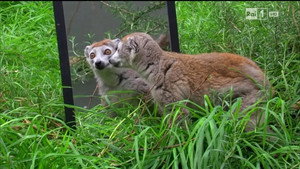
The first episode of SuperQuark opens with a magnificent BBC documentary that explores the intelligence of our closest relatives in the natural world: the primates. They make up an incredibly large family, and to observe them, we will travel to various corners of the globe, from India and Madagascar to Borneo and even Peru. We will encounter everything from the tiny pygmy marmoset, no larger than a tennis ball, to the vibrantly colored, "technicolor" mandrill. For the first time, we will see them all together, in a sort of parade, revealing just how diverse yet remarkably similar they truly are. Orangutans, bonobos, and macaques will demonstrate not only their natural talents but also their ability to adapt to new situations. Drones are now ubiquitous; operators on the ground pilot these reconnaissance aircraft to track down human smugglers and drug traffickers. But would you have ever imagined that someone is now attempting to fly civilian passengers in pilotless aircraft?
 E2
Episode 2
2014-07-10 · 115m
Fascinating and surprising, thanks to the images of exceptional beauty, the documentary of the second episode of SuperQuark, Francia Selvaggia. You don't have to go too far to discover unusual and extraordinary things in nature: even in our Europe, areas that have remained similar to those that existed thousands of years ago continue to exist. We will fly over unsuspected places in little-known areas of France. Woods, mountains, forests, caves, abysses, far from concrete and machines, which take us back to an era in which agriculture did not even exist, and animals had full freedom to live in their territories. What do we know about hepatitis C, a very widespread and dangerous infection that can remain hidden for up to 20 years? Paolo Magliocco and Andrea Pasquini have heard the leading experts in Italy and Switzerland for this investigation. Science in football. a world of mathematics behind the scenes of the popular game of football.
 E3
Episode 3
2014-07-17 · 119m
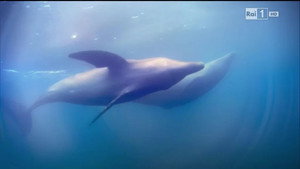
The third episode of SuperQuark opens with a documentary from the fantastic BBC series Spy in the Wild, this time, hidden cameras spy on dolphins. We take a closer look at the world of this marine mammal, one of the most fascinating and intelligent creatures in the animal kingdom. For the first time, we can follow them through all their adventures, thanks to special cameras mounted on underwater devices that mimic the appearance and rapid movements of fish, allowing them to secretly film behaviors that have rarely been observed until now. Why do potholes form in road surfaces, and why are there no techniques for laying asphalt that is completely pothole-proof? SuperQuark investigates the physics behind potholes, featuring a special report followed by a discussion in the studio with Paco Lanciano and Piero Angela.
 E4
Episode 4
2014-07-24
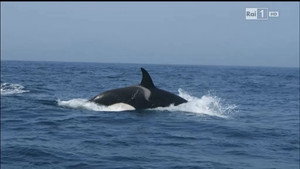
In the fourth episode of SuperQuark, the BBC series “a spy in the pack” continues. Our underwater journey among dolphins and cameras hidden inside fake underwater animals will resume: turtles, nautiluses, rays, tuna. It will be possible to observe large schools of dolphins feasting among sharks and we will discover the tricks of killer whales to capture seals. The “artificial spies” have made excellent sequences, but the squid camera will unfortunately end up miserably in the jaws of a hungry predator. The time is now ripe for an unprecedented medical revolution, the 3D printing of complex organs for human transplants. Barbara Bernardini met a young patient who received a printed bladder. Superquark followed a major intervention by Italian cooperation: the restoration of the Roman city of Volubilis, a little-known architectural complex on the edge of the Sahara desert, which once again tells us about the power of Ancient Rome.
 E5
Episode 5
2014-07-31
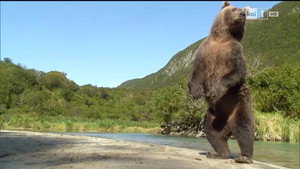
SuperQuark goes to Alaska, the place where, thanks to a protection policy, there is the highest concentration of grizzlies. These large bears can only find food for half the year, the other half they will have to live holed up, consuming the fat accumulated during the summer. For this reason it is important to be able to settle in the right territories, those richest in food. But since they all have the same need, competitions and clashes often arise. The BBC documentary makers remained isolated in these lands for 5 months, to film the grizzlies in action, also taking risks. The result is a very close portrait of these gigantic bears, also through a family story: that of a bear who must not only accumulate fat, but defend her cub. Next we will investigate the Rosetta space mission, the probe that will land on the tail of a comet next August. Then Paco Lanciano and Piero Angela in the studio will show how the Foucault pendulum works.
 E6
Episode 6
2014-08-07 · 122m
The documentary of the sixth episode of SuperQuark will be a journey inside the brain of anthropoid apes, to discover their surprising qualities. How far can their intelligence go? Their ability to understand? This evening we will discover many hidden aspects of the life of primates, surprisingly similar to ours. Just like us, they often use tools to solve their problems, but even more interesting is to discover that these animals feel emotions, or that they recognize themselves in the mirror. It will be quite an effect to see orangutans sheltering from the rain using a branch full of leaves as an umbrella, or bonobos lighting a fire. A report by Rossella Li Vigni will talk about the use of shock waves in medicine. Then Paco Lanciano and Piero Angela in the studio will show us, with their experiments, experiments how shock waves are formed.
 E7
Episode 7
2014-08-14 · 117m
In the seventh episode of SuperQuark with David Attenborough we will enter the labyrinths of courtship among animals. In species where the game is played by two, the male, in order to be accepted and to be able to fertilize the female, must show all his qualities, in tournaments in which he competes with other competitors. There are those who strut, those who sing, those who dance, those who show off their strength, and often they also have to fight. We will see how a polar bear must fight hard to conquer his female. They are stories of clandestine love and also of devotion. Like that of a lizard, tender and faithful to the end. The paths of love (and courtship) are infinite. The new technologies that allow us to keep under control, from Rome, the invasions of locusts, still a real scourge today, in 25 countries in Africa and Asia. In the report by Giovanni Carrada and Giulia De Francovich. Healers and supporters of alternative treatments always offer us new remedies.
 E8
Episode 8
2014-08-21
The documentary of the eighth episode of SuperQuark will have as its protagonist the most likeable animal, the funniest, but endowed with exceptional qualities and great courage, its characteristics are special: it walks upright, has no legs, has wings, but does not fly in the air but under water. It is naturally the penguin. Made in the very harsh and freezing areas of Antarctica, what the documentary tells is a kind of family story of a king penguin, who at the age of three returns to the island on which he was born, called by the instinct of reproduction. An overcrowded island, inhabited by 6 million penguins. There he must find his life partner, with whom he will have to generate that single egg that will represent the only chance of his offspring. The great circulation of travellers in the world has also created a great circulation of viruses that can spread rapidly.
 E9
Episode 9
2014-08-28 · 121m
The latest episode of SuperQuark opens with a fantastic journey in search of the first flying animals, which glided in the skies of prehistory. They were reptiles that had developed characteristics that proved suitable for flight, with feathers and real wings. Paleontologists, digging in various parts of the world, have now managed to find many fossilized remains of these first "flying monsters". We will follow David Attenborough in this in-depth investigation that will reveal many little-known aspects of this story. For millions of years all these animals flew above the dinosaurs in a primitive and wild land. Extraordinary geographical reconstructions will allow us to see these flying reptiles again in their natural environment. Going at 1000 miles per hour with the wheels attached to the ground: Barbara Brernardini went to England to discover Bloodhound, the fastest car in the world, the one that will break every record.