

Acting
Irma Lozano
Born — Died
1943-08-24 — 2013-10-21
Place of birth
Monterrey, Nuevo Leon, Mexico
Known for
Acting
Credits
41 titles
Known for
 7.1
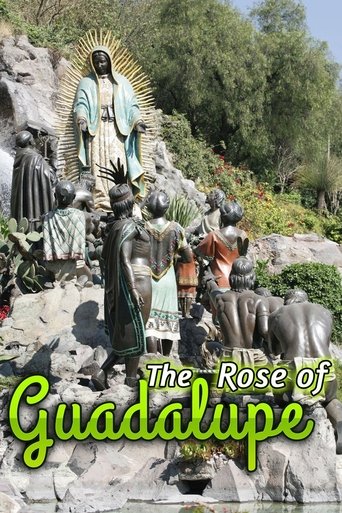
Stories about people who get into problems who use the help of Virgin Mary and where a rose appears and their problems are solved.
La rosa de Guadalupe
2008
 9.0
Mundo de Juguete is a telenovela produced in Mexico by Televisa in 1974. It is a remake of telenovela Papá Corazón. This telenovela holds the record for having the second longest run ever for a Latin American telenovela, with a total of 605 episodes. Most telenovelas run for an average of six to eight months; the shortest ones run about four months, and the longest up to a year. Many "Mundo de Juguete" fans believe that either all or some of the tapes and film from the telenovela were lost when Televisa collapsed during the 1985 earthquake. Televisa has been secretive regarding which tapes were lost during that earthquake, so there is no way of confirming this. However, such claims can be disputed, considering that the Telenovela has been repeated on television several times after 1985. During the nineties, it was repeated on Mexico City Canal 9. For a period of time, it was also shown on Unicable or on Telenovelas Televisa remade the telenovela in 2000, and called it "Carita de Angel".
Mundo de Juguete
1974
 8.0
No synopsis available yet.
El amor tiene cara de mujer
1971
 7.0
The story tells the story of Diana (Maria Sortè), a highly successful fashion designer married to an unreliable and lying man, Giacomo, and of Gianluca (Enrique Novi), a widower with a 10-year-old girl, Arianna. Diana, after discovering that Giacomo has another wife and two children, Davide and Chicco, abandons him, and leaves for a cruise with her friend Gloria. On the ship he meets Gianluca in the company of Viviana, who is actually staying with him for money. The meeting between Gianluca and Diana is one of those that are not forgotten and, what seemed only physical attraction, turns into true love. Diana is introduced by Gianluca to her daughter and immediately wins her sympathy.
Mi segunda madre
1989
 7.6
Mujeres Asesinas is a series that shows the dark side of women who have been mistreated or abused and become cruel murderers. The series shows how violence and death can overcome the feminine mind.
Killer Women
2008
 8.0
Amor de nadie is a Mexican telenovela produced by Carla Estrada for Televisa and originally broadcast on Canal de las Estrellas from September 10, 1990, to June 14, 1991. Created by Eric Vonn, with literary editing by Marcia del Río, the telenovela stars Lucía Méndez, Saúl Lisazo, Fernando Allende, and Bertín Osborne. It was Lucía Méndez's final telenovela as a leading actress for Televisa during this period. The story follows Sofía Hernández, a young woman from a humble mining town who dreams of leaving her difficult life behind. After suffering betrayal and hardship, she moves to Mexico City to pursue a career as a model. Along the way, she faces jealousy, ambition, family conflicts, and complicated relationships while searching for love and a better future.
Amor de nadie
1990
Film credits

1990s · 1 titles

1980s · 2 titles


1970s · 12 titles
 6.6
A beautiful gypsy named Yesenia has no set path in life. During a caravan trip she meets Osvaldo who is enrolled in the militia, they both fall in love despite their differences and social prejudices.
Yesenia
1971
 5.5
Three young women are ready to marry, but their father inserts himself into the decision-making process.
La rebelion de las hijas
1970
 6.0
Mauricio Garcés plays a composer who tries to seduce several women. The actor performs the song "Soy tan hermoso", which became a popular hit a t the time.
Tápame contigo
1970
 4.5
A child grows up to seek revenge on the man that raped and murdered his parents.
The Naked Man
1976
 6.0
Mother works as a servant to send her daughter to an expensive private school. Naturally, the daughter meets the son of her mother's employer at a mixer...
Cruz de amor
1970
 6.2
Biopic about a General in the Mexican Revolution. Sequel: Persecucion y muerte de Benjamin Argumedo.
Benjamín Argumedo el rebelde
1979
 5.8
The owner of a beauty salon and her employees discuss their lives and their struggles to get ahead in life.
El amor tiene cara de mujer
1973
No synopsis available yet.
Sangre derramada
1975
 6.8
The story revolves around Laura, a white singer, and Angustias, her longtime black friend, with both mothers dedicated to the education of their daughters: Alicia and Roberta. Trouble ensues when Laura’s daughter, Alicia, falls in love with Ricardo, a young black medical student.
Rosas blancas para mi hermana negra
1970
 5.8
A woman who fancies herself an aristocrat rejects a potential suitor because he's not of her class. Also: their adult children have their own drama, a bit inflected with hippie-ish values.
El medio pelo
1972
 4.3
No synopsis available yet.
Los perturbados
1972
 4.8
No synopsis available yet.
La derrota
1975
1960s · 9 titles
 5.1
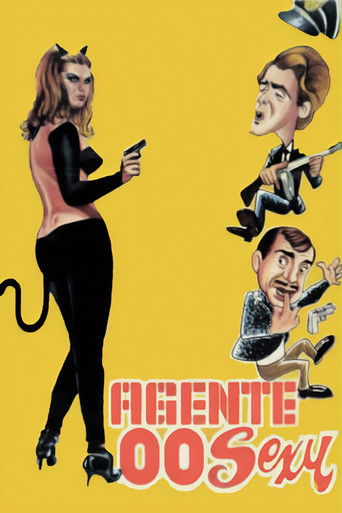
The beautiful Agent 00 is sent by the girlfriend of a mafia boss to catch his band of miscreants.
Agente 00 Sexy
1968
 8.0
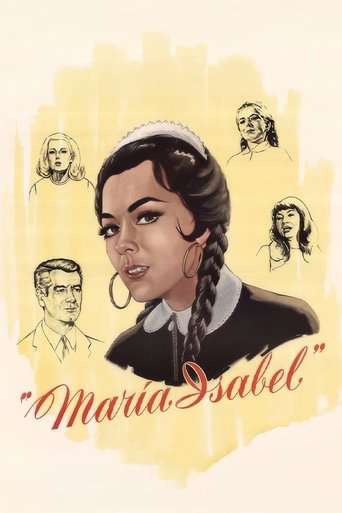
A woman jumping from the poverty of the countryside to the splendor of wealth in the city without losing its simplicity
María Isabel
1967
 4.1
Successful fashiondesigner D'Maurice seduces married women while he pretends to be gay in order to avoid arousing suspicion among his clientele's husbands
Modisto de Señoras
1969
 4.0
Three parallel romances among young people working in a steel mill.
Al rojo vivo
1969
 7.0
Mauricio, millionaire, and irreclaimable Don Juan, lives only for and to seduce women of every class and condition. With the help of his butler manages to capture the hearts of many to abandon and then having a panic marriage.
Don Juan 67
1967
 7.2
No synopsis available yet.
The Right to Be Born
1966
 5.4
The love affairs of two couples, modern parents a couple of troubled teens.
El día de la boda
1968
 7.4
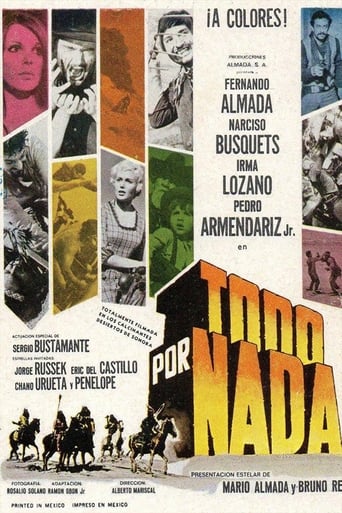
Gunfighters kill all family members of farmer brothers Mario and Fernando Almada, after the tragic event, they seek revenge.
Todo Por Nada
1969
 4.8
A story where the Cristero Rebellion creates a story of love, passion, and betrayal. When the Federal Rosas and his lover arrive in a town, a local woman feels strangely attracted to him. The woman will surrender under the pretext that the population is liberated when in reality she wants to consummate the passion that ignites her.
Memories of the Future
1969
Series credits
7.1Stories about people who get into problems who use the help of Virgin Mary and where a rose appears and their problems are solved.
La rosa de Guadalupe
2008
9.0Mundo de Juguete is a telenovela produced in Mexico by Televisa in 1974. It is a remake of telenovela Papá Corazón. This telenovela holds the record for having the second longest run ever for a Latin American telenovela, with a total of 605 episodes. Most telenovelas run for an average of six to eight months; the shortest ones run about four months, and the longest up to a year. Many "Mundo de Juguete" fans believe that either all or some of the tapes and film from the telenovela were lost when Televisa collapsed during the 1985 earthquake. Televisa has been secretive regarding which tapes were lost during that earthquake, so there is no way of confirming this. However, such claims can be disputed, considering that the Telenovela has been repeated on television several times after 1985. During the nineties, it was repeated on Mexico City Canal 9. For a period of time, it was also shown on Unicable or on Telenovelas Televisa remade the telenovela in 2000, and called it "Carita de Angel".
Mundo de Juguete
1974
8.0No synopsis available yet.
El amor tiene cara de mujer
1971
7.0The story tells the story of Diana (Maria Sortè), a highly successful fashion designer married to an unreliable and lying man, Giacomo, and of Gianluca (Enrique Novi), a widower with a 10-year-old girl, Arianna. Diana, after discovering that Giacomo has another wife and two children, Davide and Chicco, abandons him, and leaves for a cruise with her friend Gloria. On the ship he meets Gianluca in the company of Viviana, who is actually staying with him for money. The meeting between Gianluca and Diana is one of those that are not forgotten and, what seemed only physical attraction, turns into true love. Diana is introduced by Gianluca to her daughter and immediately wins her sympathy.
Mi segunda madre
1989
7.6Mujeres Asesinas is a series that shows the dark side of women who have been mistreated or abused and become cruel murderers. The series shows how violence and death can overcome the feminine mind.
Killer Women
2008
8.0Amor de nadie is a Mexican telenovela produced by Carla Estrada for Televisa and originally broadcast on Canal de las Estrellas from September 10, 1990, to June 14, 1991. Created by Eric Vonn, with literary editing by Marcia del Río, the telenovela stars Lucía Méndez, Saúl Lisazo, Fernando Allende, and Bertín Osborne. It was Lucía Méndez's final telenovela as a leading actress for Televisa during this period. The story follows Sofía Hernández, a young woman from a humble mining town who dreams of leaving her difficult life behind. After suffering betrayal and hardship, she moves to Mexico City to pursue a career as a model. Along the way, she faces jealousy, ambition, family conflicts, and complicated relationships while searching for love and a better future.
Amor de nadie
1990
 6.0
No synopsis available yet.
Balada por un amor
1989
 8.3
The story follows the life of Diana, a pre-teen who lives in a neighborhood called Buenaventura. Diana and Christian, who has just moved to Mexico due to his parents' divorce, quickly become best friends, despite their families hatred for each other. However, the neighbors of Buenaventura are in danger of losing their homes, their school and much more, because the evil old Severiano plans to tear down the neighborhood and build an enormous shopping mall in its place. To accomplish his plan, Severiano is willing to resort to any means, and will provoke a series of disasters to drive the inhabitants away.
Misión S.O.S
2004
 6.7
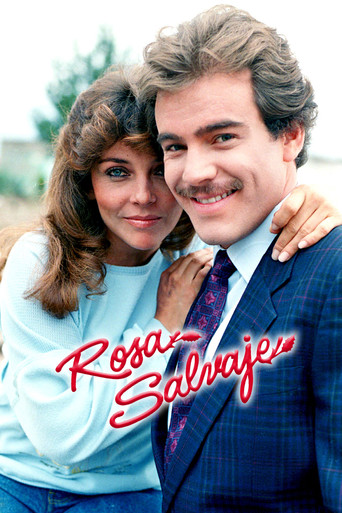
The drama tells the story of Rosa, who lives with her godmother in a very poor neighborhood; she is a simple girl who dresses like a boy. She was abandoned by her mother, Paulette. One day, Rosa goes to a mansion to steal apples and meets the owner of the house, Ricardo.
Rosa Salvaje
1987
 6.3
La Verdad Oculta is a Mexican telenovela, fusion and remake of two telenovelas, one of which is El Camino Secreto; the other is Al Final del Arco Iris, a novela produced by Ernesto Alonso in 1982, written by María Zarattini and José Rendón. Probably because the telenovela is a fusion, there are two sets of protagonists: The actors playing the protagonists of La Verdad Oculta are Galilea Montijo, Gabriel Soto, Alejandra Barros and Eduardo Yáñez, and one of the antagonists is played by Julio Alemán. The telenovela was under the production of Emilio Larrosa. Mexico's Canal de las Estrellas aired the telenovela from February 27, 2006 to August 11, 2006. Univision aired it from August 31, 2010 to March 7, 2011 at 12am central. The story is distinctive in that three artifacts are practically characters in their own right and have their own stories: 1 a piece of paper with writing on it, 2 diamonds, and 3 a pair of cuff links. The story of these artifacts gets quite complicated.
La Verdad Oculta
2006
 5.5
Mexican telenovela starring Erika Buenfil and Eduardo Santamarina with the antagonic role of the star actress Claudia Islas. It was produced by Televisa. This telenovela contained 145 episodes and is a remake of Marcha nupcial.
Marisol
1996
 9.0
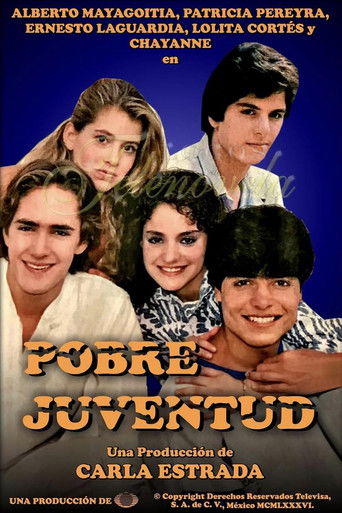
No synopsis available yet.
Pobre juventud
1986
 8.8
El Niño que Vino del Mar is a Mexican children's telenovela produced by Mapat L. de Zatarain for Televisa and originally broadcast on Canal de las Estrellas from April 19 to August 27, 1999. Based on the radio serial El pequeño Lord by Olga Ruilópez, it was adapted for television by Lourdes Barrios, Georgina Tinoco, and Dolores Ortega. The telenovela stars Imanol Landeta, Natalia Esperón, and Enrique Ibáñez. The story follows Felipín, a young boy who survives a shipwreck while traveling to reunite with his father, the wealthy Duke of Oriol. Rescued by the kind-hearted Nisa, he begins a new life in a coastal town, unaware that powerful enemies are determined to keep him away from his family and inheritance. As secrets from the past emerge, Felipín's courage and innocence help reunite his loved ones and restore justice.
El Niño que Vino del Mar
1999
 7.3
No synopsis available yet.
Vivir un poco
1985
No synopsis available yet.
El amor ajeno
1983
 10.0
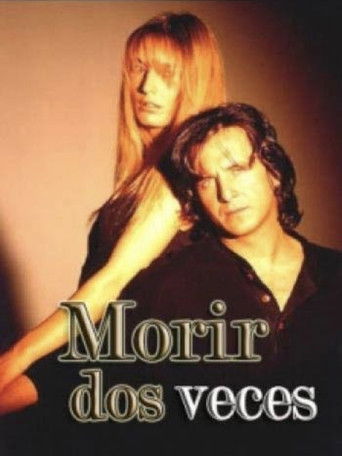
Morir dos veces is a Mexican telenovela produced by José Rendón for Televisa and originally broadcast on Canal de las Estrellas from February 26 to May 10, 1996. Created by José Rendón, with adaptation by Ximena Suárez, co-adaptation by Alfonso Espinosa, and literary editing by Martha Carrillo, the telenovela stars Eduardo Palomo and Carina Ricco. The story follows Silvana, a devoted wife whose life is shattered when her husband, Cristóbal, suddenly dies under mysterious circumstances. As the police uncover his connections to organized crime and suspect Silvana of murder, she becomes entangled in a dangerous web of deception, revenge, and betrayal. Meanwhile, the man everyone believed to be dead returns with a new identity, determined to destroy those who betrayed him.
Morir dos veces
1996