

Acting
Dieter Laser
Born — Died
1942-02-17 — 2020-02-29
Place of birth
Kiel, Germany
Known for
Acting
Credits
63 titles
Dieter Laser (February 17, 1942 – February 29, 2020) was a German actor. He is known to English speaking audiences for his roles in Lexx and The Human Centipede (First Sequence), for which he won "Best Actor" at the Austin Fantastic Fest. In 1975 he was awarded the German Film Award in the category of Best Actor for the title role in John Glückstadt. Description above from the Wikipedia article Dieter Laser, licensed under CC-BY-SA, full list of contributors on Wikipedia.
Known for
 4.7
4.7Every evening at 6:45 p.m. sharp, a prominent guest takes a seat on the red sofa—and DAS! provides daily updates on what's hot in the north.
DAS!
1991
 6.2
6.2Tatort is a long-running German/Austrian/Swiss crime television series set in various parts of these countries. The show is broadcast on the channels of ARD in Germany, ORF in Austria and SF1 in Switzerland.
Scene of the Crime
1970
 6.2
6.2Polizeiruf 110 is a long-running German language detective television series. The first episode was broadcast 27 June 1971 in the German Democratic Republic, and after the dissolution of Fernsehen der DDR the series was picked up by ARD. It was originally created as a counterpart to the West German series Tatort, and quickly became a public favorite.
Polizeiruf 110
1971
 3.7
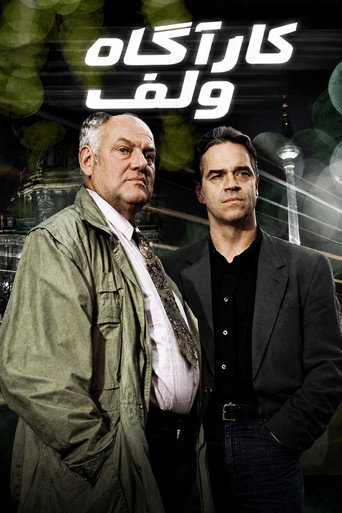
3.7Wolffs Revier is a German television series.
Wolffs Revier
1992
 7.0
7.0A Time Prophet predicted that Kai would be the one to destroy the divine order in the league of the 20,000 planets, someday that will happen, but not today. Today a cowardly security guard, an undead assassin, a female with a body designed for sex and a robot head madly in love with her all make up the crew of the spaceship Lexx, the most powerful weapon in the two universes.
Lexx
1997
No synopsis available yet.
German Film Award
1951
Film credits
2010s · 2 titles
 3.7
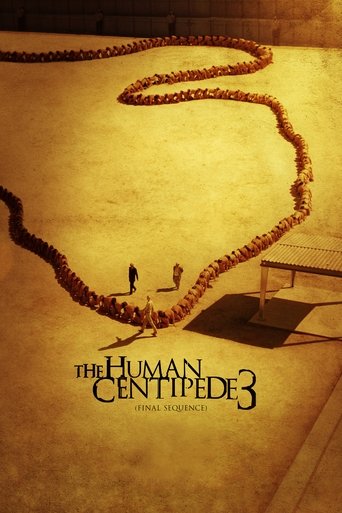
3.7Taking inspiration from The Human Centipede films, the warden of a notorious and troubled prison looks to create a 500-person human centipede as a solution to his problems.
The Human Centipede 3 (Final Sequence)
2015
 7.0
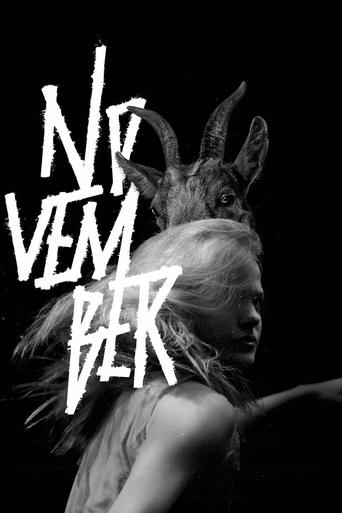
7.0In a poor Estonian village, a group of peasants use magic and folk remedies to survive the winter, and a young woman tries to get a young man to love her.
November
2017
2000s · 10 titles
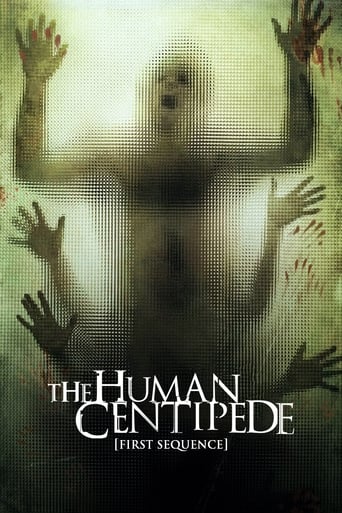 5.2
5.2During a stopover in Germany in the middle of a carefree road trip through Europe, two American girls find themselves alone at night when their car breaks down in the woods. Searching for help at a nearby villa, they are wooed into the clutches of a deranged retired surgeon, who has a very disturbed vision.
The Human Centipede (First Sequence)
2009
 6.0
6.0Kati and Steffi have been best friends forever. Now that their love lives are heating up, they're hitting the books less and going out to nightclubs more. But when Steffi sees her father out with another woman, her life begins to spiral out of control.
Big Girls Don't Cry
2002
 5.3
5.3Successful architect Robert has a one-night stand with a mysterious lady in red. The next day they meet again, but Carolin is now a corporate lawyer working on a major contract for Robert ...
I Am the Other Woman
2006
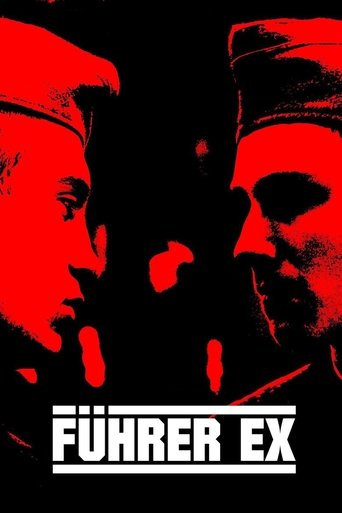 6.3
6.3Ingo Hasselbach, whose parents were Communist Party members in East Germany during his childhood, has lived at both ends of the political seesaw. The question of how people reach a change of heart is a profound one; Hasselbach describes the external forces that led to his founding Germany's first neo-Nazi political party and the internal ones that led him away from it five years later.
Führer Ex
2002
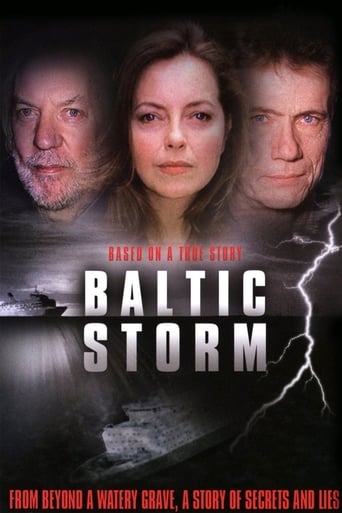 5.1
5.1A journalist from Berlin, Germany, and a Swedish lawyer discover the truth behind the sinking of the "MS Estonia" in 1994, where more than 850 people drowned.
Baltic Storm
2003
 6.9
6.9Story of the successful author Dr. Jekyll. One day, Hyde, one of his invented characters, detaches himself from the story and enters Jekyll's life. With the help of the fairy Jeanny, Hyde takes away Jekyll's penis, and later also his hair and teeth, and increasingly pushes him out of his successful life.
Suck My Dick
2001
No synopsis available yet.
Die achte Todsünde: Das Toskana-Karussell
2002
No synopsis available yet.
Meine grüne Freiheit - Ein Frühling in Irland
2000
No synopsis available yet.
Der Solist - Kuriertag
2003
After Martin Lamm's wife Esther announces that she hired someone to kill him, the famous writer's life changes rapidly. Just hours later Esther is found at the bottom of a river.
Recycled
2000
1990s · 14 titles
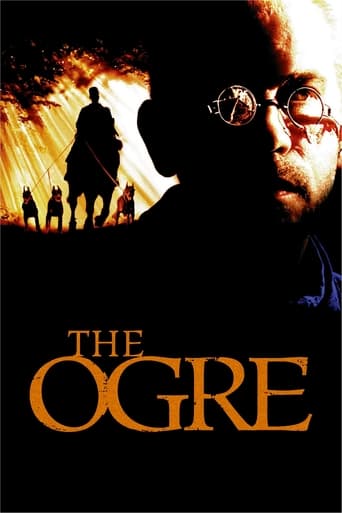 6.4
6.4Frenchman Abel Tiffauges is a naive man who lives a simple life working as a mechanic. Falsely accused of being a child abuser, he is recruited as a soldier when World War II begins, but is captured soon and taken to the heart of Nazi Germany.
The Ogre
1996
 5.8
5.8Celebrated Swedish opera star Karin Anderson is slated to appear in an internationally-telecast production of Tannhauser. Ms. Anderson balks at the notion of working with obscure Hungarian conductor Zoltan Szanto. The much-anticipated production may never get off the ground, thanks to labor-management difficulties, intramural jealousies, and clashing egos. Amidst all this chaos, the mismatched Anderson and Szanto fall in love.
Meeting Venus
1991
 9.0
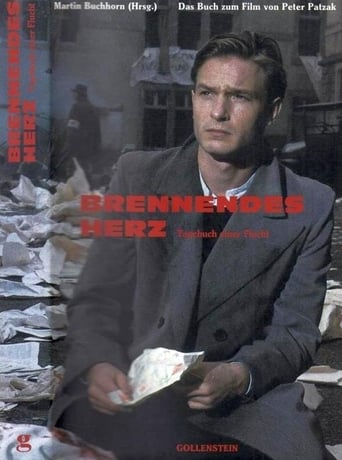
9.0Follows the life of the famous German politician, writer, and communist activist, Gustav Regler, from his birth in 1898, in the Saar, through the two World Wars and his many travels, until his death in 1963 in India.
Burning Heart
1995
 10.0
10.0An American historian (Mr Webster) comes to Berlin to visit an old man who claims to be the real Adolf Hitler and to be 103 years old. The Hitler who died in 1945, the old man says, was just one of his six doubles - one for each weekday - while Hitler himself retired into a bunker below the S-Bahn tracks and married a second time.
Conversation with the Beast
1997
A drama directed by Martin Buchhorn based on the novel by Günter Grass. At the center of the film is artist Marcus Frank, who is informed by a talking rat about the imminent end of the world. Unfortunately, he does not take the signs of time seriously and rats conquer the earth, which cannot be stopped even by atomic bombs..
Die Rättin
1997
 6.2
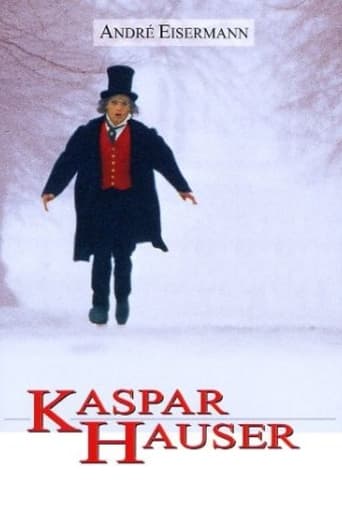
6.2In May 1828, a feral boy aged around 16 was found in Nuremberg. Kaspar Hauser, as he is called, can only speak a few indistinct words and knows nothing about his origins or family. The film depicts the - presumed - circumstances under which Hauser was held captive in complete isolation in a hiding place from infancy onwards. From this emerges the picture of an intrigue involving high circles of aristocratic society. Five years after his liberation, in December 1833, Kaspar Hauser died as a result of a stab wound inflicted by an unknown perpetrator.
Kaspar Hauser
1993
 6.5
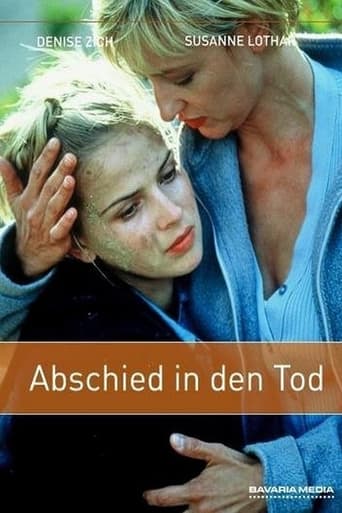
6.5A German high school graduate travels to Australia against her mother’s wishes to meet her uncle there. On the way, she joins two young Australians who have been caught by the drug investigation network, and thus calls her mother into action.
Backlands
1999
No synopsis available yet.
Schmetterlingsgefühle
1996
 6.0
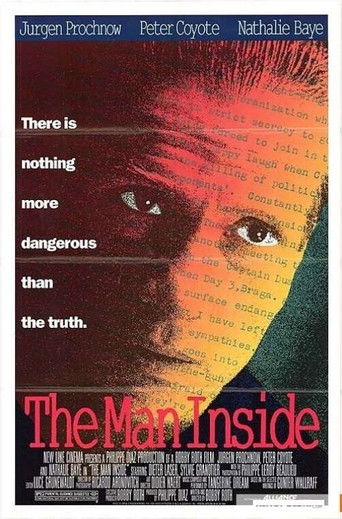
6.0Gunter Wallraff is a journalist seeking to expose the unethical journalism practiced by The Standard, a very popular and powerful German newspaper. He goes undercover, using forged identity papers and at great personal risk, to join their staff. Once there, he sees how they don't just report the news, but manufacture it to suit the personal political agenda of the paper's leaders.
The Man Inside
1990
 8.0
8.0No synopsis available yet.
Gefangen im Jemen
1999
Romantic comedy about an elderly intellectual and a young casual worker
Erhöhte Waldbrandgefahr
1997
A private detective is hired in the USA to locate the heiress to a fortune worth millions. When he discovers that she has died of a heroin overdose, he passes off an accomplice as the person he is looking for. But suddenly others also come forward to claim the inheritance.
Mörderisches Erbe - Tausch mit einer Toten
1998
German two-part miniseries about the westerns staying at a popular hotel in Shanghai as the Japanese invasion of China also known as the Second Sino-Japanese War begins in 1937 as a precursor to WWII.
Hotel Shanghai
1997
No synopsis available yet.
Glück auf Raten
1996
1980s · 5 titles
 4.8
4.8In the 26th century the inhabitants of Utopia have so lost their individuality, which varies in number. They live in glass houses (this was written before the invention of television), which allows the political police, called “Keepers” can easily supervise them. They all wear the same uniform and usually turn to each other or as a ”cipher-so” or "UNIFEM" (uniform). They feed on artificial food and rest hour marching in fours in a row the anthem of the One State, pouring out of the loudspeakers. As they are allowed to put a break on the hour (known as the ”sexy time“), draw the curtains of their glass houses. At the head of the One State is one called The Benefactor, which are replaced every year the whole population, usually unanimously. The guiding principle of the State is that happiness and freedom are incompatible.
We
1982
No synopsis available yet.
Don Quichottes Kinder
1981
No synopsis available yet.
Kennwort Schmetterling
1981
A condom salesman arrives at the hotel “Der Wilde Mann.” He wants to install a vending machine there. The owner refuses. During the night, he discovers that the hotel owner is a filmmaker who shoots strange movies in his hotel.
Der wilde Mann
1988
No synopsis available yet.
Ein gutes Land
1982
1970s · 13 titles
 7.0
7.0After a chance encounter with a wanted man, a woman is harassed by the police and press until she takes violent action.
The Lost Honor of Katharina Blum
1975
 6.4
6.4Nine fictitious documentaries and films reflect the mood of late 1970s Germany, particularly the two-month period in 1977 when a businessman was kidnapped by the RAF (Red Army Faction). The kidnap had been made to orchestrate the release of the original leaders of the RAF, aka the Baader-Meinhof.
Germany in Autumn
1978
No synopsis available yet.
Die Mutter
1971
 9.0
9.0Monk Medardus, administrator of the relic chamber of a Capuchin monastery, drinks from the elixirs of the devil and is confronted with the dark sides of his soul.
Die Elixiere des Teufels
1976
 6.9
6.9A man is wrongfully imprisoned for five years. Once out, he hears about his wife's supposed adventures outside of their marriage and becomes increasingly jealous.
The Glass Cell
1978
Erik Reger’s roman à clef examines the development of the Rhineland industrial region from 1918 to 1928, using the Risch-Zander steelworks as a case study: Strikes, the Emperor’s visit, revolution, workers’ and soldiers’ councils, the occupation of the Ruhr, the fighting following the Kapp Putsch, and inflation characterize the desperate situation of the industrial proletariat. The content cannot be retold: it is not about individuals, but at best about sociologically balanced specimens of a species. It is about the sociocultural complex of the Ruhr region, about heavy industry as its organizing center; it is about those involved, from the laborers to the managers; and finally, about the political parties, from the KPD to the NSDAP.
Union der festen Hand
1979
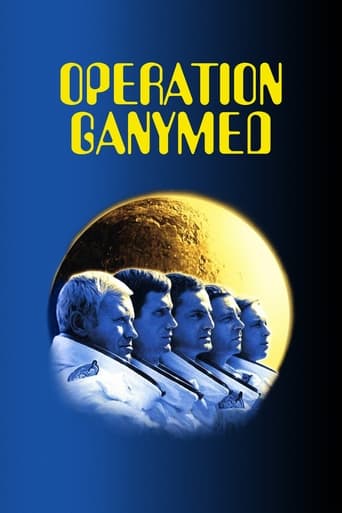 5.1
5.1A spaceship returns to Earth after several years of space exploration and finds it desolate. Landing in what they believe is Mexico, the crew decides to travel north, and try to find out what happened to Earth during the years they were gone.
Operation Ganymed
1977
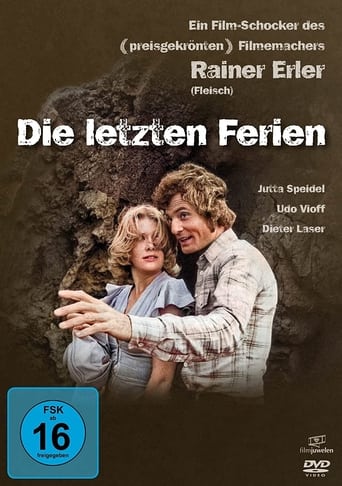 3.7
3.7A young woman is going on holiday with her parents. She narrowly escapes when her holiday fling tries to kill her, only to find out that this nasty encounter was not quite as accidental as it first seemed.
The Last Holidays
1975
No synopsis available yet.
Ermittlungen gegen Unbekannt
1974
No synopsis available yet.
Väter und Söhne
1979
The film addresses the failure of the individual in anonymous urban society. The film begins as men attempt to break out of their anonymity and reveal themselves. In doing so, they encounter social rules that are not suited to them. The film asks how men can survive in a chaotic city by remaining silent.
Desaster
1973
No synopsis available yet.
Die Geburtstagsfeier
1978
Adapted from the novel Die Döppelgänger by Theodor Storm, this black-and-white drama tells the tragic story of a war veteran who, in 1860, returns to his home in Schleswig Holstein after serving a term for robbery. There he finds nothing but hardship and rejection, save from the town's mayor and a young servant girl, whom he marries. Ridiculed and abused, with practically no work, he turns to drink and one night accidentally kills his wife. The child of their marriage is taken away from him, and at this point he is left with the options of becoming a robber, starving to death, or emigrating.
John Glückstadt
1975
Series credits
4.7Every evening at 6:45 p.m. sharp, a prominent guest takes a seat on the red sofa—and DAS! provides daily updates on what's hot in the north.
DAS!
1991
6.2Tatort is a long-running German/Austrian/Swiss crime television series set in various parts of these countries. The show is broadcast on the channels of ARD in Germany, ORF in Austria and SF1 in Switzerland.
Scene of the Crime
1970
6.2Tatort is a long-running German/Austrian/Swiss crime television series set in various parts of these countries. The show is broadcast on the channels of ARD in Germany, ORF in Austria and SF1 in Switzerland.
Scene of the Crime
1970
6.2Polizeiruf 110 is a long-running German language detective television series. The first episode was broadcast 27 June 1971 in the German Democratic Republic, and after the dissolution of Fernsehen der DDR the series was picked up by ARD. It was originally created as a counterpart to the West German series Tatort, and quickly became a public favorite.
Polizeiruf 110
1971
3.7Wolffs Revier is a German television series.
Wolffs Revier
1992
7.0A Time Prophet predicted that Kai would be the one to destroy the divine order in the league of the 20,000 planets, someday that will happen, but not today. Today a cowardly security guard, an undead assassin, a female with a body designed for sex and a robot head madly in love with her all make up the crew of the spaceship Lexx, the most powerful weapon in the two universes.
Lexx
1997
No synopsis available yet.
German Film Award
1951
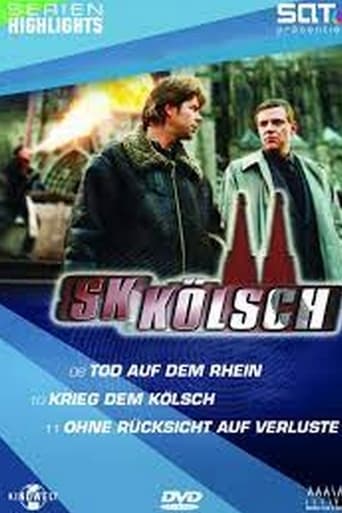 5.5
5.5SK Kölsch is a German television series.
SK Kölsch
1999
 4.8
4.8Rosa Roth is a German television series.
Rosa Roth
1994
 7.4
7.4Die Cleveren is a German television series that was produced from 1998 to 2003 on RTL. It is about a nation wide special unit of the German Bundeskriminalamt, dealing with serial offenders. The main characters are the profiler Dr. Dominik Born and a policewoman of the BKA, who co-ordinates the necessary steps to be taken by the local police authorities.
Die Cleveren
1998
 8.0
8.0No synopsis available yet.
A.S. Gefahr ist sein Geschäft
1995
No synopsis available yet.
Pantoffelkino
2013
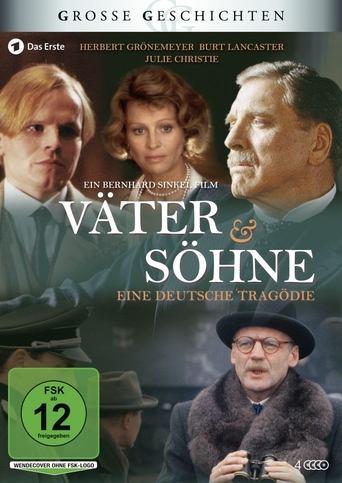 7.0
7.0Follows two wealthy families in Germany during the first half of the 20th century. One of them is German, the other one Jewish.
Fathers and Sons: A German Tragedy
1986
 3.0
3.0An employee of a real estate company falls for an impostor.
Gier
2010
 4.0
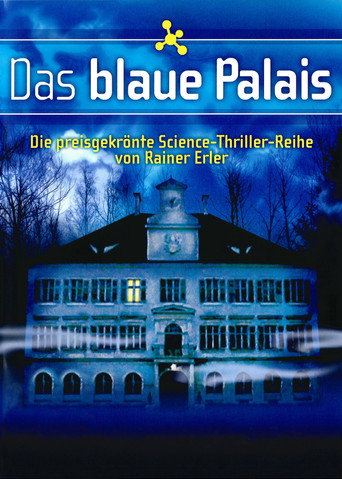
4.0Das Blaue Palais is a series of five TV feature films written and directed by German author and filmmaker Rainer Erler. All five stories about the research and findings of an interdisciplinary scientific project have also been published as novels by Goldmann in 1978, 1979 and 1980. The series had an international cast. It was shot in Bavaria, Scotland, USA and Asia.
Das Blaue Palais
1974
 10.0
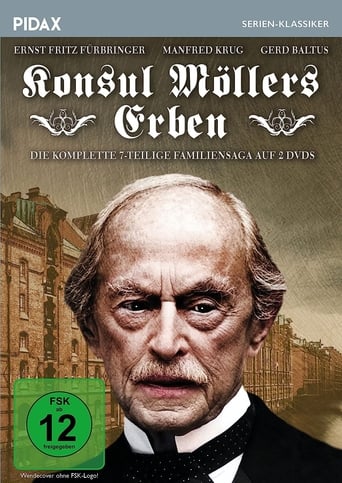
10.0No synopsis available yet.
Konsul Möllers Erben
1983
 7.0
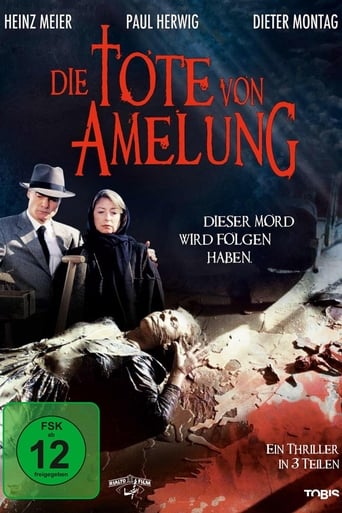
7.0Die Tote von Amelung follows the mysterious case of a woman found dead under strange circumstances in the small village of Amelung. A local journalist, determined to uncover the truth, investigates the woman's death, uncovering hidden secrets and dark histories within the community. As the journalist digs deeper, he finds himself tangled in a web of lies, deception, and betrayal, where nothing is as it seems, and everyone has something to hide. With mounting tension and a chilling atmosphere, The Dead Woman of Amelung is a gripping exploration of mystery, suspense, and the darkest corners of human nature.
The Dead Woman of Amelung
1995