

Directing
Sut Jhally
Place of birth
Kenya
Known for
Directing
Credits
45 titles
Sut Jhally is Professor of Communication at the University of Massachusetts at Amherst and founder and Executive Director of the Media Education Foundation (MEF). He is one of the world's leading scholars looking at the role played by advertising and popular culture in the processes of social control and identity construction. The author of numerous books and articles on media (including The Codes of Advertising and Enlightened Racism) he is also an award-winning teacher (a recipient of the Distinguished Teaching Award at the University of Massachusetts, where the student newspaper has also voted him "Best professor"). In addition, he has been awarded the Distinguished Outreach Award, and wa…
Known for
 6.6
6.6This video shows how the foreign policy interests of American political elites-working in combination with Israeli public relations stratgies-influence US news reporting about the Middle East conflict. Combining American and British TV news clips with observations of analysts, journalists and political activists, Peace, Propaganda & the Promised Land provides a brief historical overview, a striking media comparison, and an examination of factors that have distorted U.S. media coverage and, in turn, American public opinion.
Peace, Propaganda & the Promised Land
2004
 8.1
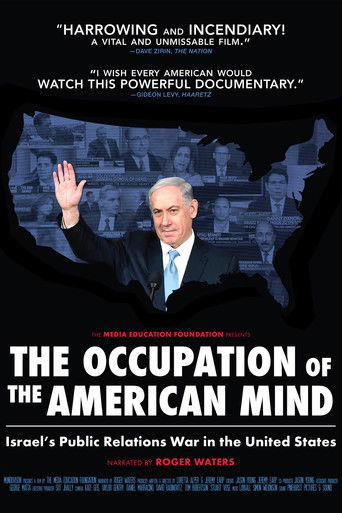
8.1Over the past few years, Israel's ongoing military occupation of Palestinian territory and repeated invasions of the Gaza strip have triggered a fierce backlash against Israeli policies virtually everywhere in the world—except the United States. This documentary takes an eye-opening look at this critical exception, zeroing in on pro-Israel public relations efforts within the U.S.
The Occupation of the American Mind
2016
Tough Guise systematically examines the relationship between pop-cultural imagery and the social construction of masculine identities in the U.S. at the dawn of the 21st century.
Tough Guise: Violence, Media & the Crisis in Masculinity
1999
 NR
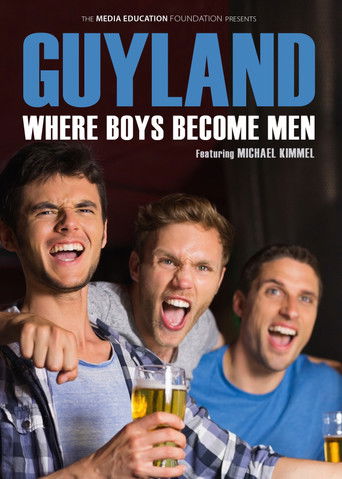
NRIn this powerful new film based on his bestselling book, sociologist Michael Kimmel maps the troubling social world where boys become men -- a new stage of development he calls "Guyland." Arguing that the traditional adult signposts and cultural signals that once helped boys navigate their way to manhood are no longer clear, Kimmel provides an astonishing glimpse into a world where more and more young men are trying desperately to prove their masculinity to other young men -- with frequently disastrous consequences for young women and other young men. Guyland offers a way for all of us -- parents, young men and women, community members, and professors and administrators -- to envision new ways to support young men as they navigate this often perilous world.
Guyland
2015
Arguing that advertising not only sells things, but also ideas about the world, media scholar Sut Jhally offers a blistering analysis of commercial culture's inability to let go of reactionary gender representations. Jhally's starting point is the breakthrough work of the late sociologist Erving Goffman, whose 1959 book The Presentation of the Self in Everyday Life prefigured the growing field of performance studies. Jhally applies Goffman's analysis of the body in print advertising to hundreds of print ads today, uncovering an astonishing pattern of regressive and destructive gender codes. By looking beyond advertising as a medium that simply sells products, and beyond analyses of gender that tend to focus on either biology or objectification, The Codes of Gender offers important insights into the social construction of masculinity and femininity, the relationship between gender and power, and the everyday performance of cultural norms.
The Codes of Gender
2010
 10.0
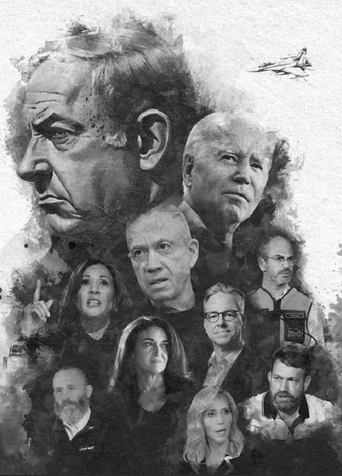
10.0In an exclusive new documentary, Max Blumenthal rips the cover off the media deceptions and atrocity hoaxes Israel pushed after October 7 to create political space for its gruesome assault on the Gaza Strip. Blumenthal exposes the US mainstream media's role as a megaphone for the Israeli government, introducing new lies even after their initial ones were debunked. Atrocity Inc raises serious questions about the official narrative of October 7, while revealing how Israel's army has consciously engaged in the same hideous atrocities which it falsely accused Palestinian militants of committing.
Atrocity Inc.
2024
Film credits
2010s · 4 titles
8.1Over the past few years, Israel's ongoing military occupation of Palestinian territory and repeated invasions of the Gaza strip have triggered a fierce backlash against Israeli policies virtually everywhere in the world—except the United States. This documentary takes an eye-opening look at this critical exception, zeroing in on pro-Israel public relations efforts within the U.S.
The Occupation of the American Mind
2016
Arguing that advertising not only sells things, but also ideas about the world, media scholar Sut Jhally offers a blistering analysis of commercial culture's inability to let go of reactionary gender representations. Jhally's starting point is the breakthrough work of the late sociologist Erving Goffman, whose 1959 book The Presentation of the Self in Everyday Life prefigured the growing field of performance studies. Jhally applies Goffman's analysis of the body in print advertising to hundreds of print ads today, uncovering an astonishing pattern of regressive and destructive gender codes. By looking beyond advertising as a medium that simply sells products, and beyond analyses of gender that tend to focus on either biology or objectification, The Codes of Gender offers important insights into the social construction of masculinity and femininity, the relationship between gender and power, and the everyday performance of cultural norms.
The Codes of Gender
2010
 NR
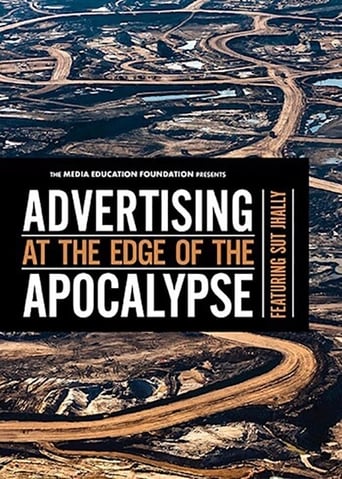
NRIn this highly anticipated sequel to his groundbreaking, ADVERTISING AND THE END OF THE WORLD, media scholar Sut Jhally explores the devastating personal and environmental fallout from advertising, commercial culture, and rampant American consumerism. Ranging from the emergence of the modern advertising industry in the early 20th century to the full-scale commercialization of the culture today, Jhally identifies one consistent message running throughout all of advertising: the idea that corporate brands and consumer goods are the keys to human happiness. He then shows how this powerful narrative, backed by billions of dollars a year and propagated by the best creative minds, has blinded us to the catastrophic costs of ever-accelerating rates of consumption.
Advertising at the Edge of the Apocalypse
2018
 NR
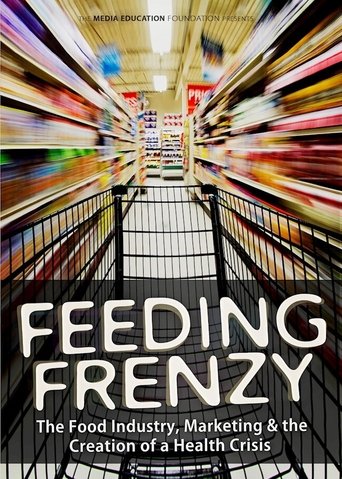
NRIn the past three decades, obesity rates in the US have more than doubled for children and tripled for adolescents, and 70% of adults are now obese or overweight. The result has been a widening epidemic of obesity-related health problems, including coronary heart disease, high blood pressure, stroke, and Type 2 diabetes. While discussions about this spiraling health crisis have tended to focus on the need for more exercise and individual responsibility, FEEDING FRENZY trains its focus squarely on the responsibility of the processed food industry and the outmoded government policies it benefits from. It lays bare how taxpayer subsidies designed to feed hungry Americans during the Great Depression have enabled the food industry to flood the market with a rising tide of cheap, addictive, high calorie food products, and offers an engrossing look at the tactics of the multi billion-dollar marketing machine charged with making sure that every one of those surplus calories is consumed.
Feeding Frenzy: The Food Industry, Obesity and the Creation of a Health Crisis
2013
Behind the camera
6.6This video shows how the foreign policy interests of American political elites-working in combination with Israeli public relations stratgies-influence US news reporting about the Middle East conflict. Combining American and British TV news clips with observations of analysts, journalists and political activists, Peace, Propaganda & the Promised Land provides a brief historical overview, a striking media comparison, and an examination of factors that have distorted U.S. media coverage and, in turn, American public opinion.
Peace, Propaganda & the Promised Land
2004
Tough Guise systematically examines the relationship between pop-cultural imagery and the social construction of masculine identities in the U.S. at the dawn of the 21st century.
Tough Guise: Violence, Media & the Crisis in Masculinity
1999
NRIn this powerful new film based on his bestselling book, sociologist Michael Kimmel maps the troubling social world where boys become men -- a new stage of development he calls "Guyland." Arguing that the traditional adult signposts and cultural signals that once helped boys navigate their way to manhood are no longer clear, Kimmel provides an astonishing glimpse into a world where more and more young men are trying desperately to prove their masculinity to other young men -- with frequently disastrous consequences for young women and other young men. Guyland offers a way for all of us -- parents, young men and women, community members, and professors and administrators -- to envision new ways to support young men as they navigate this often perilous world.
Guyland
2015
Arguing that advertising not only sells things, but also ideas about the world, media scholar Sut Jhally offers a blistering analysis of commercial culture's inability to let go of reactionary gender representations. Jhally's starting point is the breakthrough work of the late sociologist Erving Goffman, whose 1959 book The Presentation of the Self in Everyday Life prefigured the growing field of performance studies. Jhally applies Goffman's analysis of the body in print advertising to hundreds of print ads today, uncovering an astonishing pattern of regressive and destructive gender codes. By looking beyond advertising as a medium that simply sells products, and beyond analyses of gender that tend to focus on either biology or objectification, The Codes of Gender offers important insights into the social construction of masculinity and femininity, the relationship between gender and power, and the everyday performance of cultural norms.
The Codes of Gender
2010
Arguing that advertising not only sells things, but also ideas about the world, media scholar Sut Jhally offers a blistering analysis of commercial culture's inability to let go of reactionary gender representations. Jhally's starting point is the breakthrough work of the late sociologist Erving Goffman, whose 1959 book The Presentation of the Self in Everyday Life prefigured the growing field of performance studies. Jhally applies Goffman's analysis of the body in print advertising to hundreds of print ads today, uncovering an astonishing pattern of regressive and destructive gender codes. By looking beyond advertising as a medium that simply sells products, and beyond analyses of gender that tend to focus on either biology or objectification, The Codes of Gender offers important insights into the social construction of masculinity and femininity, the relationship between gender and power, and the everyday performance of cultural norms.
The Codes of Gender
2010
10.0In an exclusive new documentary, Max Blumenthal rips the cover off the media deceptions and atrocity hoaxes Israel pushed after October 7 to create political space for its gruesome assault on the Gaza Strip. Blumenthal exposes the US mainstream media's role as a megaphone for the Israeli government, introducing new lies even after their initial ones were debunked. Atrocity Inc raises serious questions about the official narrative of October 7, while revealing how Israel's army has consciously engaged in the same hideous atrocities which it falsely accused Palestinian militants of committing.
Atrocity Inc.
2024
10.0In an exclusive new documentary, Max Blumenthal rips the cover off the media deceptions and atrocity hoaxes Israel pushed after October 7 to create political space for its gruesome assault on the Gaza Strip. Blumenthal exposes the US mainstream media's role as a megaphone for the Israeli government, introducing new lies even after their initial ones were debunked. Atrocity Inc raises serious questions about the official narrative of October 7, while revealing how Israel's army has consciously engaged in the same hideous atrocities which it falsely accused Palestinian militants of committing.
Atrocity Inc.
2024
 6.7
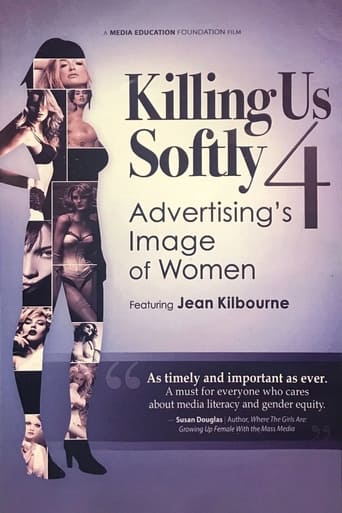
6.7The documentary focuses on images of women in advertising, in particular on gender stereotypes, the effects of advertising on women's self-image and the objectification of women's bodies.
Killing Us Softly 4: Advertising's Image Of Women
2010
 6.5
6.5Cultural theorist Stuart Hall offers an extended meditation on representation. Moving beyond the accuracy or inaccuracy of specific representations, Hall argues that the process of representation itself constitutes the very world it aims to represent, and explores how the shared language of a culture, its signs and images, provides a conceptual roadmap that gives meaning to the world rather than simply reflecting it. Hall's concern throughout is the centrality of culture to the shaping of our collective perceptions, and how the dynamics of media representation reproduce forms of symbolic power.
Stuart Hall: Representation & the Media
1997
6.5Cultural theorist Stuart Hall offers an extended meditation on representation. Moving beyond the accuracy or inaccuracy of specific representations, Hall argues that the process of representation itself constitutes the very world it aims to represent, and explores how the shared language of a culture, its signs and images, provides a conceptual roadmap that gives meaning to the world rather than simply reflecting it. Hall's concern throughout is the centrality of culture to the shaping of our collective perceptions, and how the dynamics of media representation reproduce forms of symbolic power.
Stuart Hall: Representation & the Media
1997
 5.2
5.2Big Bucks, Big Pharma pulls back the curtain on the multi-billion dollar pharmaceutical industry to expose the insidious ways that illness is used, manipulated, and in some instances created, for capital gain. Focusing on the industry's marketing practices, media scholars and health professionals help viewers understand the ways in which direct-to-consumer (DTC) pharmaceutical advertising glamorizes and normalizes the use of prescription medication, and works in tandem with promotion to doctors. Combined, these industry practices shape how both patients and doctors understand and relate to disease and treatment. Ultimately, Big Bucks, Big Pharma challenges us to ask important questions about the consequences of relying on a for-profit industry for our health and well-being.
Big Bucks Big Pharma - Marketing Disease and Pushing Drugs
2006
 NR
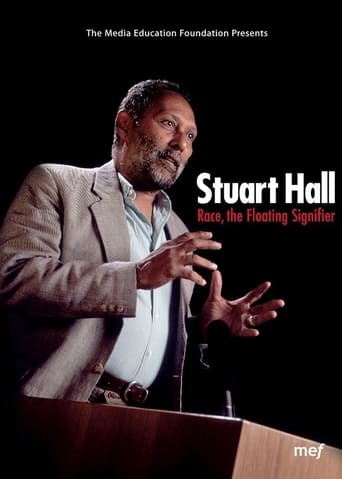
NRStuart Hall offers an accessible and clarifying analysis of the social construction of race and racial difference. He explores how variations in people's appearances come to be mistaken for essential differences. He traces how these misinterpretations function both to express and to reproduce dominant power relations. And he argues for more rigorous engagements with identity, representation, and contingency capable of acknowledging and respecting difference without essentializing it. An ideal introduction to how cultural studies intervenes in debates about race, representation, identity, and power.
Stuart Hall: Race, The Floating Signifier
1997
 7.0
7.0Destroying the myth of the 'liberal media,' the documentary shows how corporate interests influence the news coverage of key events.
The Myth Of The Liberal Media
1998
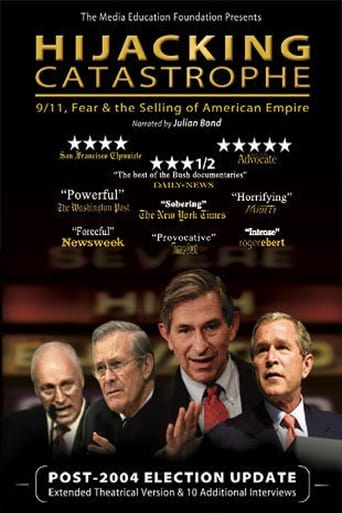 7.0
7.0This documentary places the Bush Administration's original justifications for war in Iraq within the larger context of a two-decade struggle by neo-conservatives to dramatically increase military spending while projecting American power and influence globally by means of force.
Hijacking Catastrophe: 9/11, Fear & the Selling of American Empire
2004
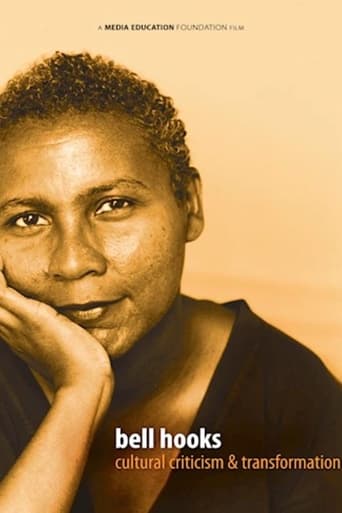 NR
NRbell hooks is one of America's most accessible public intellectuals. In this two-part video, extensively illustrated with many of the images under analysis, she makes a compelling argument for the transformative power of cultural criticism.
bell hooks: Cultural Criticism & Transformation
1997
NRbell hooks is one of America's most accessible public intellectuals. In this two-part video, extensively illustrated with many of the images under analysis, she makes a compelling argument for the transformative power of cultural criticism.
bell hooks: Cultural Criticism & Transformation
1997
 NR
NRSocial and developmental psychologist and author Lynn Phillips explores the line between consent and coercion in this thought-provoking look at popular culture and the ways real girls and women navigate their heterosexual relationships and hookups.
Flirting with Danger: Power & Choice in Heterosexual Relationships
2012
NRSocial and developmental psychologist and author Lynn Phillips explores the line between consent and coercion in this thought-provoking look at popular culture and the ways real girls and women navigate their heterosexual relationships and hookups.
Flirting with Danger: Power & Choice in Heterosexual Relationships
2012
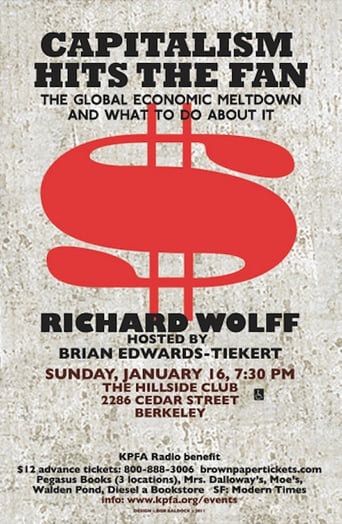 7.0
7.0With breathtaking clarity, renowned University of Massachusetts Economics Professor Richard Wolff breaks down the root causes of today's economic crisis, showing how it was decades in the making and in fact reflects seismic failures within the structures of American-style capitalism itself. Wolff traces the source of the economic crisis to the 1970s, when wages began to stagnate and American workers were forced into a dysfunctional spiral of borrowing and debt that ultimately exploded in the mortgage meltdown. By placing the crisis within this larger historical and systemic frame, Wolff argues convincingly that the proposed government "bailouts," stimulus packages, and calls for increased market regulation will not be enough to address the real causes of the crisis, in the end suggesting that far more fundamental change will be necessary to avoid future catastrophes.
Capitalism Hits the Fan
2009
 6.1
6.1This documentary dissects a slanderous aspect of cinematic history that has run virtually unchallenged form the earliest days of silent film to today's biggest Hollywood blockbusters. The film explores a long line of degrading images of Arabs--from Bedouin bandits and submissive maidens to sinister sheikhs and gun-wielding "terrorists"--along the way offering devastating insights into the origin of these stereotypic images, their development at key points in US history, and why they matter so much today.
Reel Bad Arabs: How Hollywood Vilifies a People
2006
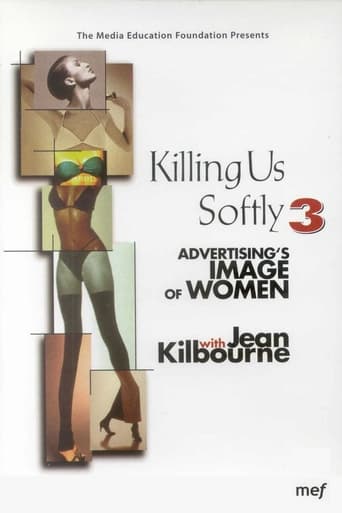 6.2
6.2Jean Kilbourne's pioneering work helped develop and popularize the study of gender representation in advertising. Her award-winning Killing us Softly films have influenced millions of college and high school students across two generations and on an international scale. In this important new film, Kilbourne reviews if and how the image of women in advertising has changed over the last 20 years. With wit and warmth, Kilbourne uses over 160 ads and TV commercials to critique advertising's image of women. By fostering creative and productive dialogue, she invites viewers to look at familiar images in a new way, that moves and empowers them to take action.
Killing Us Softly 3: Advertising's Image of Women
2000
NRIn this highly anticipated sequel to his groundbreaking, ADVERTISING AND THE END OF THE WORLD, media scholar Sut Jhally explores the devastating personal and environmental fallout from advertising, commercial culture, and rampant American consumerism. Ranging from the emergence of the modern advertising industry in the early 20th century to the full-scale commercialization of the culture today, Jhally identifies one consistent message running throughout all of advertising: the idea that corporate brands and consumer goods are the keys to human happiness. He then shows how this powerful narrative, backed by billions of dollars a year and propagated by the best creative minds, has blinded us to the catastrophic costs of ever-accelerating rates of consumption.
Advertising at the Edge of the Apocalypse
2018
NRIn this highly anticipated sequel to his groundbreaking, ADVERTISING AND THE END OF THE WORLD, media scholar Sut Jhally explores the devastating personal and environmental fallout from advertising, commercial culture, and rampant American consumerism. Ranging from the emergence of the modern advertising industry in the early 20th century to the full-scale commercialization of the culture today, Jhally identifies one consistent message running throughout all of advertising: the idea that corporate brands and consumer goods are the keys to human happiness. He then shows how this powerful narrative, backed by billions of dollars a year and propagated by the best creative minds, has blinded us to the catastrophic costs of ever-accelerating rates of consumption.
Advertising at the Edge of the Apocalypse
2018
 NR
NRIn this important lecture delivered at the University of Massachusetts, Edward Said takes aim at one of the central tenets of recent foreign policy thinking -- that conflicts between different and "clashing civilizations" (Western, Islamic, Confucian) characterize the contemporary world. "The real question is whether in the end we want to work for civilizations that are separate, or whether we should be taking the more integrative, but perhaps more difficult path, which is to see them as making one vast whole, whose exact contours are impossible for any person to grasp, but whose certain existence we can intuit and feel and study." - Edward Said
Edward Said: The Myth of "The Clash of Civilizations”
1998
 NR
NRFor more than three decades, transnational corporations have been busy buying up what used to be known as the commons -- everything from our forests and our oceans to our broadcast airwaves and our most important intellectual and cultural works. In This Land is Our Land, acclaimed author David Bollier, a leading figure in the global movement to reclaim the commons, bucks the rising tide of anti-government extremism and free market ideology to show how commercial interests are undermining our collective interests. Placing the commons squarely within the American tradition of community engagement and the free exchange of ideas and information, Bollier shows how a bold new international movement steeped in democratic principles is trying to reclaim our common wealth by modeling practical alternatives to the restrictive monopoly powers of corporate elites.
This Land Is Our Land
2010
 NR
NRIn one of Stuart Hall's most famous lectures, Hall speaks with dazzling precision about the responsibilities of intellectuals in the face of undemocratic structures of power, injustice, racism, and inequality.
Stuart Hall: Through the Prism of an Intellectual Life
2021
 NR
NRThe line between sexual consent and sexual coercion is not always as clear as it seems -- and according to Harry Brod, this is exactly why we should approach our sexual interactions with great care. Brod, a professor of philosophy and leader in the pro-feminist men's movement, offers a unique take on the problem of sexual assault, one that complicates the issue even as it clarifies the bottom-line principle that consent must always be explicitly granted, never simply assumed. In a nonthreatening, non-hectoring discussion that ranges from the meanings of "yes" and "no" to the indeterminacy of silence to the way alcohol affects our ethical responsibilities, Brod challenges young people to envision a model of sexual interaction that is most erotic precisely when it is most thoughtful and empathetic.
Asking For It: the Ethics & Erotics of Sexual Consent
2010
 NR
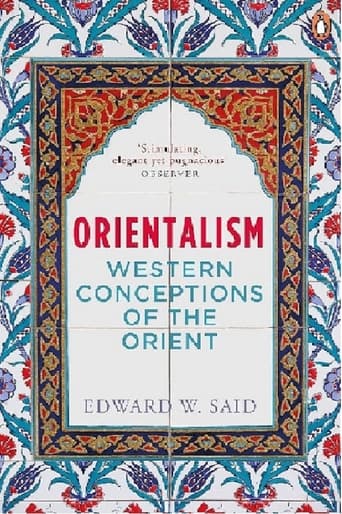
NREdward Said's book Orientalism has been profoundly influential in a diverse range of disciplines since its publication in 1978. In this engaging and lavishly illustrated interview he talks about the context within which the book was conceived, its main themes, and how its original thesis relates to the contemporary understanding of "the Orient" as represented in the mass media. "That's the power of the discourse of Orientalism. If you're thinking about people and Islam, and about that part of the world, those are the words you constantly have to use. To think past it, to go beyond it, not to use it, is virtually impossible, because there is no knowledge that isn't codified in this way about that part of the world." -Edward Said
Edward Said On Orientalism: "The Orient" Represented in Mass Media
1998
 6.4
6.4There's a bad mood rising against the corporate brands. No Logo is the warning on the label. In the last decade, No Logo has become a cultural manifesto for the critics of unfettered capitalism worldwide. As the world faces a second economic depression, No Logo's analysis of our corporate and branded world is as timely and powerful as ever. Equal parts cultural analysis, political manifesto, mall-rat memoir, and journalistic exposé, No Logo is the first book to put the new resistance into pop-historical and clear economic perspective. It tells a story of rebellion and self-determination in the face of our new branded world.
No Logo
2003
 NR
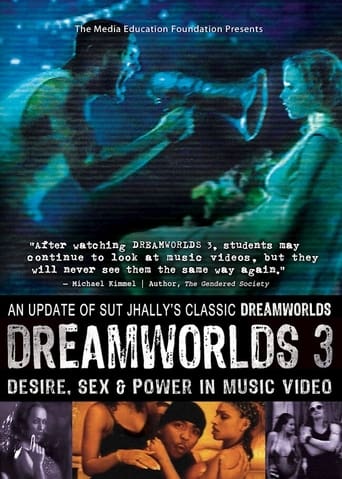
NRDreamworlds 3 examines the stories contemporary music videos tell about girls and women, and encourages viewers to consider how these narratives shape individual and cultural attitudes about sexuality. Illustrated with hundreds of up-to-date images, Dreamworlds 3 offers a unique and powerful tool for understanding both the continuing influence of music videos and how pop culture more generally filters the identities of young men and women through a dangerously narrow set of myths about sexuality and gender. In doing so, it inspires viewers to reflect critically on images that they might otherwise take for granted.
Dreamworlds 3: Desire, Sex, and Power in Music Video
2007
NRDreamworlds 3 examines the stories contemporary music videos tell about girls and women, and encourages viewers to consider how these narratives shape individual and cultural attitudes about sexuality. Illustrated with hundreds of up-to-date images, Dreamworlds 3 offers a unique and powerful tool for understanding both the continuing influence of music videos and how pop culture more generally filters the identities of young men and women through a dangerously narrow set of myths about sexuality and gender. In doing so, it inspires viewers to reflect critically on images that they might otherwise take for granted.
Dreamworlds 3: Desire, Sex, and Power in Music Video
2007
 NR
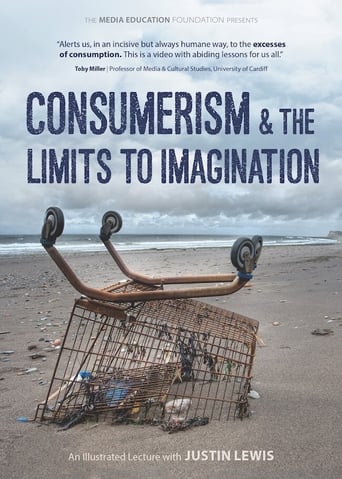
NRConsumer capitalism dominates our economy, our politics, and our culture, even though a growing body of research suggests it may be well past its sell-by date. In this illustrated presentation based on his latest critically acclaimed book, media scholar Justin Lewis makes a compelling case that consumer capitalism can no longer deliver on its promise of enhancing quality of life, and argues that changing direction will require changing our media system and our cultural environment. After showing how consumer capitalism has become economically and environmentally unsustainable, Lewis explores how our cultural and information industries make it difficult to envision other forms of human progress by limiting critical thinking and keeping us locked in a cycle of consumption. And he argues that change will only be possible if we take culture seriously and transform the very way we organize our media and communications systems.
Consumerism & the Limits to Imagination
2014
Focusing directly on the world of commercial images, Sut Jhally asks some basic questions about the cultural messages emanating from this market-based view of the world: Do our present arrangements deliver what they claim -- happiness and satisfaction? Can we think about our collective as well as our private interests? And, can we think long-term as well as short-term?
Advertising and the End of the World
1998
Focusing directly on the world of commercial images, Sut Jhally asks some basic questions about the cultural messages emanating from this market-based view of the world: Do our present arrangements deliver what they claim -- happiness and satisfaction? Can we think about our collective as well as our private interests? And, can we think long-term as well as short-term?
Advertising and the End of the World
1998
Focusing directly on the world of commercial images, Sut Jhally asks some basic questions about the cultural messages emanating from this market-based view of the world: Do our present arrangements deliver what they claim -- happiness and satisfaction? Can we think about our collective as well as our private interests? And, can we think long-term as well as short-term?
Advertising and the End of the World
1998
 NR
NRWrestling with Manhood is the first educational program to pay attention to the enormous popularity of professional wrestling among male youth, addressing its relationship to real-life violence and probing the social values that sustain it as a powerful cultural force. Richly illustrating their analysis with numerous examples, Sut Jhally and Jackson Katz - the award-winning creators of the videos Dreamworlds and Tough Guise, respectively - offer a new way to think about the enduring problems of men's violence against women and bullying in our schools.
Wrestling with Manhood
2003
NRWrestling with Manhood is the first educational program to pay attention to the enormous popularity of professional wrestling among male youth, addressing its relationship to real-life violence and probing the social values that sustain it as a powerful cultural force. Richly illustrating their analysis with numerous examples, Sut Jhally and Jackson Katz - the award-winning creators of the videos Dreamworlds and Tough Guise, respectively - offer a new way to think about the enduring problems of men's violence against women and bullying in our schools.
Wrestling with Manhood
2003
 NR
NRDeepa Kumar, a leading scholar on Islamophobia, argues that U.S. media have turned Arabs and Muslims into the new face of terror, even though only a tiny fraction of Muslims and Arabs have ever committed a terror attack, and terror attacks by homegrown right-wing violent extremist groups have far outnumbered attacks by Muslims and Arabs since Sept. 12, 2001.
Constructing the Terrorist Threat: Islamophobia, The Media & The War on Terror
2017
Edward Said's book ORIENTALISM has been profoundly influential in a diverse range of disciplines since its publication in 1978. In this engaging (and lavishly illustrated) interview he talks about the context within which the book was conceived, its main themes and how its original thesis relates to the contemporary understanding of "the Orient." Said argues that the Western (especially American) understanding of the Middle East as a place full of villains and terrorists ruled by Islamic fundamentalism produces a deeply distorted image of the diversity and complexity of millions of Arab peoples.
On 'Orientalism'
1998