

Acting
Jean Négroni
Born — Died
1920-12-04 — 2005-05-28
Place of birth
Constantine, Algeria, France
Known for
Acting
Credits
41 titles
Jean Négroni (4 December 1920 – 28 May 2005) was a French actor and theatre director particularly known for his voice work, such as his role as the narrator in La Jetée (1962). Jean Négroni was educated in theater by Albert Camus, and was an early companion of Jean Vilar at the Théâtre National Populaire and at the Festival d'Avignon. Négroni founded the Maison des arts et de la culture de Créteil at Créteil in 1968, and was its director until 1978. Négroni's career was marked by his portrayal of Robespierre — first on an episode of the television program La caméra explore le temps, and later in the theater under the direction of Robert Hossein. Négroni provided the voice of the narrator …
Known for
 8.0
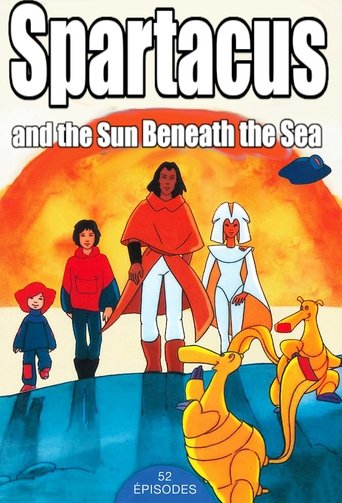
8.0The Arkadians are a civilization that survived a great cataclysm and moved to the center of the earth, thriving under the power of their artificial sun, The Tehra, until one day it began to fail. In desperation, the Arkadians broke the ancient law and entered the Forbidden Archives to search for an answer. They used their special powers and created a messenger to the people above, naming her Arkana. She meets up with Matt and Rebecca, two ordinary kids from the surface world, Bic and Bac, two strange anteaters from Arkadia, and Spartakus, a mysterious warrior. Together they search the worlds of the strata for a way to save a people and possibly the world.
Spartakus and the Sun Beneath the Sea
1985
 6.8
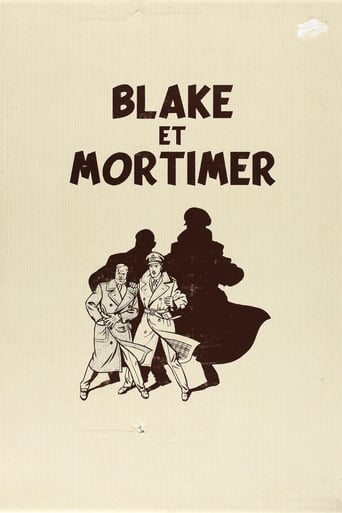
6.8Blake and Mortimer is an animated television series, based on the Blake and Mortimer comic book by Edgar Pierre Jacobs. The series was directed by Stéphane Bernasconi, and produced by Ellipse, and shown in 1997. The first nine stories were used in this series, as well as four brand new stories, devised by the creators: The Viking's Bequest, The Secret of Easter Island, The Alchemist's Will, and The Druid. New writers, mostly connected to the production company as writers, dialogists or translators, were asked to come up with original plotlines which used the characters of Jacobs' stories, respected the magical/scientific Universe, but rang interesting changes.
Blake and Mortimer
1997
 7.2
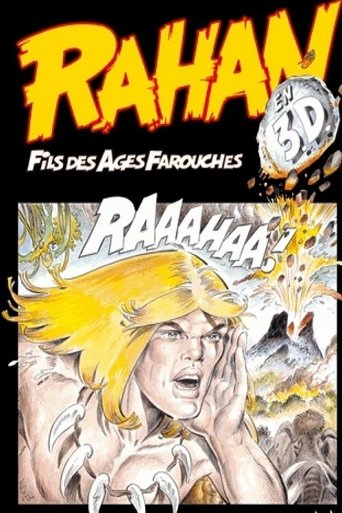
7.2No synopsis available yet.
Rahan, fils des ages farouches
1987
 7.6
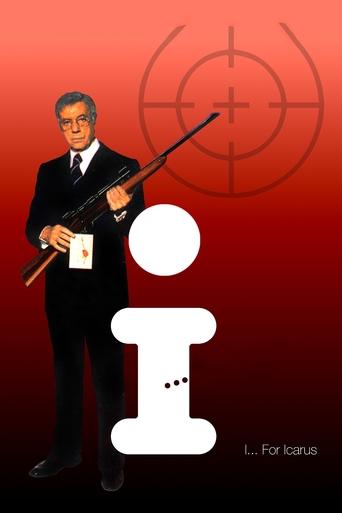
7.6Following the assassination of President Marc Jarry, a member of the investigation committee refuses to sign off on the committee's final findings.
I... for Icarus
1979
 7.9
7.9A man confronts his past during an experiment that attempts to find a solution to the problems of a post-apocalyptic world caused by a world war.
La Jetée
1962
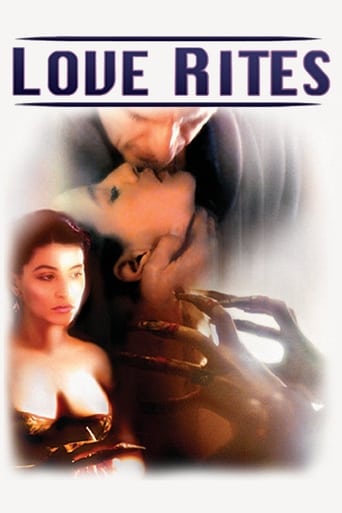 4.7
4.7Hugo, a vain clothing buyer, meets Myriam on a train and pursues a relationship with her. He is delighted to learn she is a prostitute and has no idea she has more in mind than Hugo bargained for.
Love Rites
1987
Film credits
2010s · 1 titles

2000s · 1 titles
1980s · 3 titles
4.7Hugo, a vain clothing buyer, meets Myriam on a train and pursues a relationship with her. He is delighted to learn she is a prostitute and has no idea she has more in mind than Hugo bargained for.
Love Rites
1987
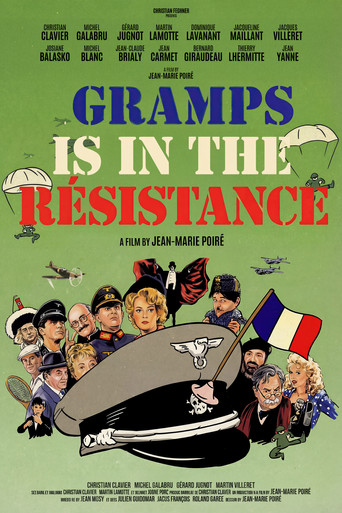 6.9
6.9It is 1943 in Paris. Like so many others, the Bourbelle family's home has been taken over by the Germans and they now live in their cellar. Little do they know that the son, Guy-Hubert Bourdelle, is far from being the cowardly hairdresser he pretends. He is in truth the Germans’ most feared opponent: le super-résistant!
Gramps Is in the Resistance
1983
 8.0
8.0Pierre Choderlos de Laclos, author of "Dangerous liaisons", finds himself in prison and confronting the marquise de Merteuil. Together they discuss his characters of the marquise and vicomte de Valmont and the web of circumstance and intrigue that connects Laclos's work and life.
Dangerous liaisons
1980
1970s · 5 titles
7.6Following the assassination of President Marc Jarry, a member of the investigation committee refuses to sign off on the committee's final findings.
I... for Icarus
1979
 6.5
6.5L'Alpagueur is a free-lance spy from the French secret agency. He's put on the investigation about L'epervier, a serial-killer who employs young boys to help him robbing banks before killing them.
Hunter Will Get You
1976
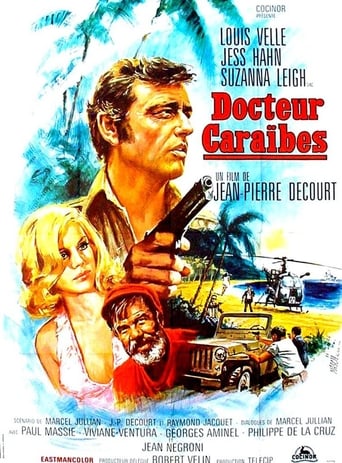 10.0
10.0The islands of the Caribbean Sea. Tiberio, an astonishing junk dealer, runs a store selling bits and pieces of wreckage fished here and there... A certain Jeff, a sailor with a passion for the bottle... "works" with Tiberio, perfecting old maps showing ships with precious cargoes lying around. Jeff is attacked with a machine gun by "the sea lice" gangsters led by a certain Nero, in the service of a disturbing character, Denniger, who haunts the area aboard his yacht. A young local doctor, nicknamed Doctor Caraïbe, comes to Jeff's rescue.
Docteur Caraïbes
1970
 9.5
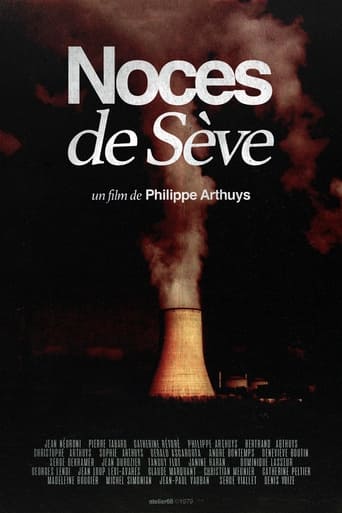
9.5An anti-nuclear parable, the film tells the story of villagers who each year traditionally hold "sap weddings", thus paying homage to the forest. But a nuclear power plant must be built there. The film was presented in competition at the Thonon-les-Bains festival in 1978.
Noces de Sève
1979
 8.0
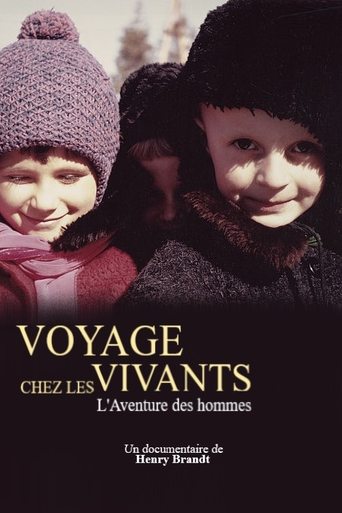
8.0No synopsis available yet.
Voyage chez les vivants - L'Aventure des hommes
1970
1960s · 21 titles
7.9A man confronts his past during an experiment that attempts to find a solution to the problems of a post-apocalyptic world caused by a world war.
La Jetée
1962
 7.7
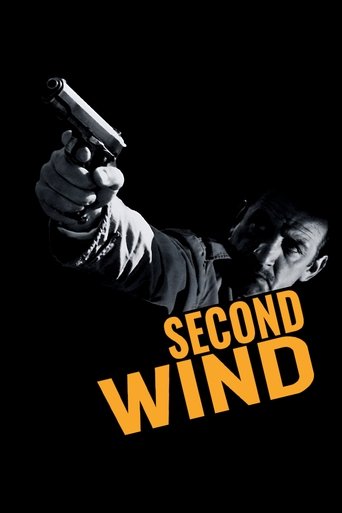
7.7A gangster escapes jail and quickly makes plans to continue his criminal ways elsewhere, but a determined inspector is closing in.
Le Deuxième Souffle
1966
 6.3
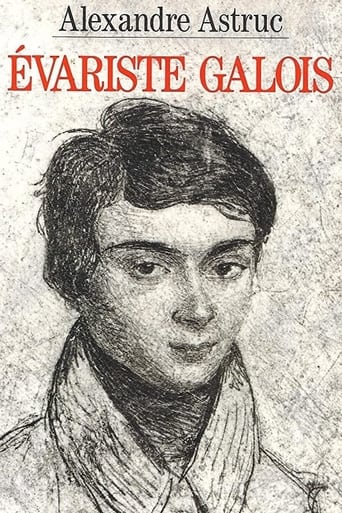
6.3Galois is practicing shooting in preparation for a duel the very next day. His last night.
Évariste Galois
1965
 NR
NRThis documentary is a portrait of Proust composed of recollections by those who knew him. Intercut with reading from his works.
Marcel Proust - Portrait Souvenir
1962
 8.0
8.0A gambling countess comes by a secret three card combination that wins her a fortune, but she is allowed to use it only once and not gamble again. She passes on the info twice, and the recipients both die violently. She is warned that if she passes it on again, she too will die. Many years later, a young soldier discovers that the countess has the secret, and he resolves to get it out of her.
The Queen of Spades
1965
 6.5
6.5An interesting mixture of filmed scenes with Belmondo and archival footage regarding cultural aspects of all kind around Paris, starting at the end of the 19th century and ending in the mid-1960's. Jean-Paul Belmondo leads us through the movie starting as a young photographer around 1900, a reporter in both world-wars and doing fictional interviews with lots of celebrities.
God Chose Paris
1969
 NR
NRJean Ravel's A Distant Gaze (D'un lointain regard) is a 12-minute observance of people on the streets backed by Michel Legrand music.
From a Distant Gaze
1964
 6.5
6.5Light is everywhere. Sunlight illuminates the beauty of solitary landscapes. Twilight, on the other hand, illuminates New York City, a city both swarming with people and spectral. This is a mysterious spectacle, enhanced by Rimbaud's poetry and Michel Legrand's music.
Illuminations
1963
 6.2
6.2Morbihan is one of the poorest regions in Brittany. Joseph, a 33-year-old farmer, can no longer live off the land. He is hired at the fancy new plant that has just opened where he enters a world of rote work. Fortunately he can go home to his farm every evening, far from the large urban centers where workers must usually live.
Les enfants de Néant
1968
 9.0
9.0From April to July 1794, Robespierre forms a triumvirate with Saint-Just and Couthon. He plans to instate his ideal based on virtue and in times of revolutionary crisis, on terror. In May, he establishes the Cult of the Supreme Being. However, he still has numerous enemies...
Terror and Virtue: Robespierre
1964
We join the idyllic world of conductor Petre Mihajlovski, whose slow, narrow-gauge Macedonian train was built in 1895, and runs from Prespa to Ohrid. Here are charming scenes of laundry washed by the lake, the soapy water heated in large copper kettles.
Ohrid Express
1965
 7.0
7.0In the year that Cannes Film Festival handed out awards to Federico Fellini for La Dolce Vita, L'Avventura by Michelangelo Antonioni, and Kagi by Kon Ichikawa -- 'Le Sourire' won the Palme d'Or for Best Short Film in 1960. This quiet and intelligent film is a remarkable interpretation of a young monks perspective into a world of meditation, sacred geometry, and coming of age. A tribute to Buddhism, introspection and the wonders of nature...a short but lasting work of art.
Le Sourire
1960
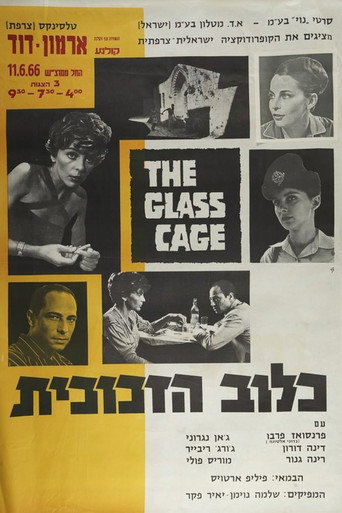 10.0
10.0A study of conscience set against the trial of Eichmann in Israel.
The Glass Cage
1965
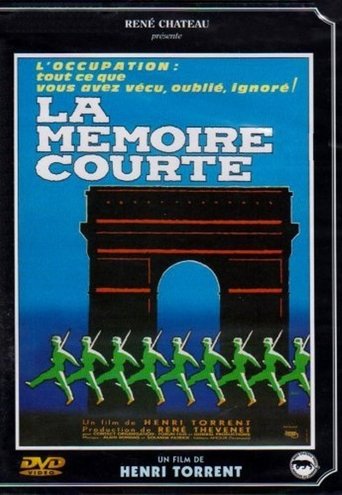 8.0
8.0This collection of rare footage examines WWII from an unusual perspective, that of everyday people. How did civilians cope with the ferocity of the "Blitz", occupation, and devastation?
Short Memory
1963
From November 1793 to April 1794, in order to reinforce the power of the Revolution, Robespierre strikes right and left. He successively sends the Hébertists to the guillotine, followed by Danton, the chief of the Indulgents, and Camille Desmoulins, who asked the new regime for clemency in his journal, Le Vieux Cordelier. Robespierre triumphs, but he is alone...
La terreur et la vertu - Première partie: Danton
1964
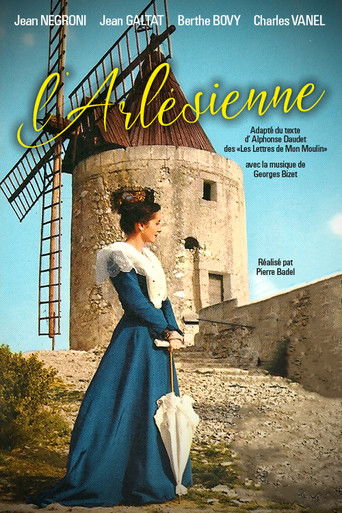 10.0
10.0No synopsis available yet.
L'Arlésienne
1967
 8.0
8.0A television adaptation of Jean Cocteau's surréalist take on the tragedy of Oedipus.
The Infernal Machine
1963
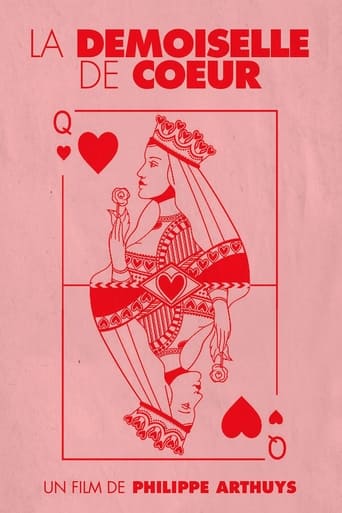 10.0
10.0The kings of the card game, tired of serving for the amusement of men, decide to participate in the lives of humans and behave like them.
La Demoiselle de Coeur
1963
 6.7
6.7In a Nazi concentration camp, Karl, a German political prisoner, and David, a Jewish watchmaker, are confined in a small enclosure from which only one of them will be able to go out alive.
Enclosure
1961
Evocation of the Oradour-sur-Glane Massacre on 10 June 1944, when 642 of its inhabitants were slaughtered by a Nazi Waffen SS company, based on a visit to Diors' Museum of the Three Wars" and archive photographs.
June 10, 1944
1961
 8.1
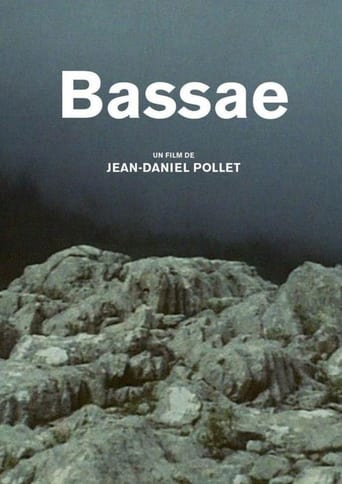
8.1"I was interested by the fact that some old guy, after the Parthenon’s glamour, devoted himself in a much smaller temple, where there was no white marble, no nothing. All Greek temples are dedicated to Apollo etc, and this particular one was not dedicated to anyone and is in a place where there never was a city nearby, in a kind of wasteland, in a ditch. But, just by going up a bit –you are in the centre of Peloponissos- on a clear day, you can see the sea on both your left and right. I went back there, at least six, seven or eight times, as if I wanted to think or find myself. So, at the temple in Bassae, I made a short 10 minute film and I was lucky enough to encounter two days of clouds and mist between the columns."
Bassae
1964
1950s · 3 titles
 6.9
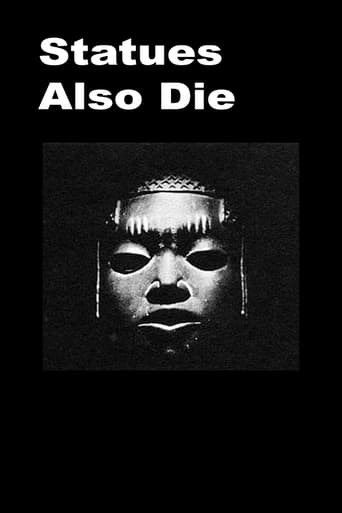
6.9Commissioned by the journal Présence Africaine, this short documentary examines how African art is devalued and alienated through colonial and museum contexts. Beginning with the question of why African works are confined to ethnographic displays while Greek or Egyptian art is celebrated, the film became a landmark of anti-colonial cinema and was banned in France for eight years.
Statues Also Die
1953
 4.2
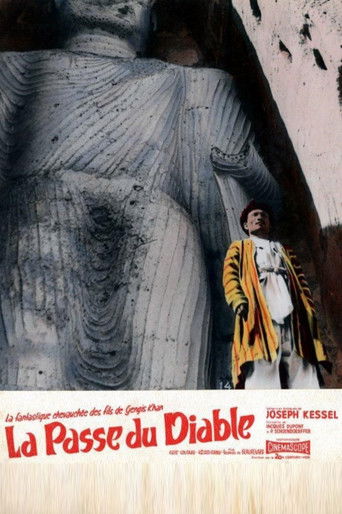
4.2Rahim's older brother Mokhi refuses to take him to Kabul's big bouzkachi game. Rahim decides to go there on his own. Guided by the angel of death, Azrael, Rahim follows a difficult path to Kabul.
The Devil's Pass
1959
 4.5
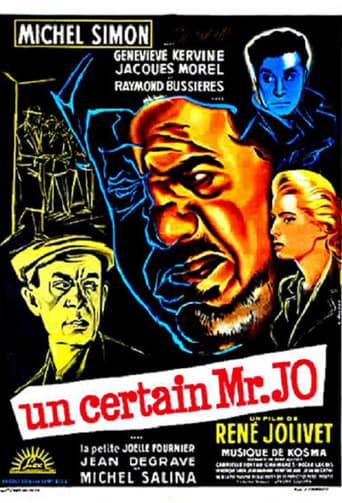
4.5Jo Guardini, now the peaceful owner of a charming inn by the banks of the River Marne, once was a dreaded gangster. The respectful citizen does not want to have anything to do with the underworld any more. Unfortunately, two of his former accomplices kidnap a little girl and decide to hide her in his hotel. What will Jo do : side with the law in the person of inspector Loriot or have a relapse in crime?
A Certain Mr. Jo
1958
1940s · 4 titles
 7.0
7.0Loursat, a lawyer, lives with his daughter Nicole in a sinister and vast bourgeois residence. Abandoned for nearly twenty years by his wife, the brilliant lawyer has sunk into alcoholism and his relationship with his daughter is virtually non-existent. However, one day the corpse of a stranger is discovered in the residence of Loursat. Nicole, who frequents a gang of young people who escape boredom by stealing cars and other objects, is immediately suspected.
Strangers in the House
1942
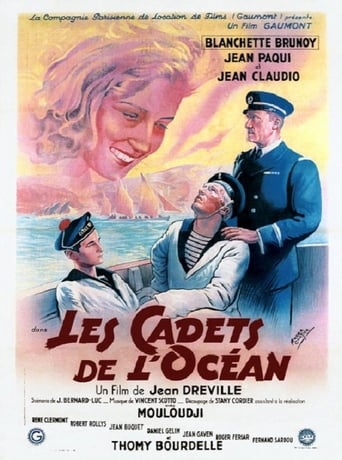 6.0
6.0In the harbor of Toulon, on the “Ocean” training ship, the apprenticeship of the cabin boys and experts of the Navy is punctuated by permissions in town, friendships, bullying, and loves.
Les Cadets de l'océan
1945
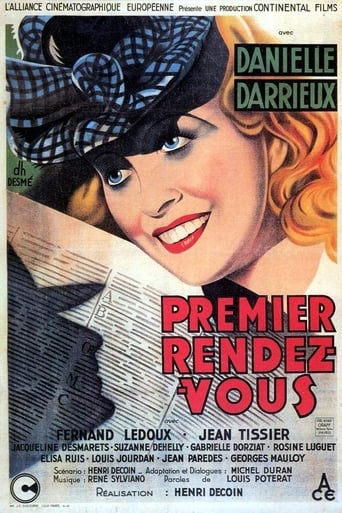 6.7
6.7Micheline Chevassu is a young, naive woman living in an orphanage. Through classified ads, she has a date with an unknown man. She escapes from the orphanage to go to it, dreaming of the Prince Charming. But comes Nicolas Rougemont, an unattractive middle-aged man... He pretends not to be the author of the letters, who could not come...
Her First Affair
1941
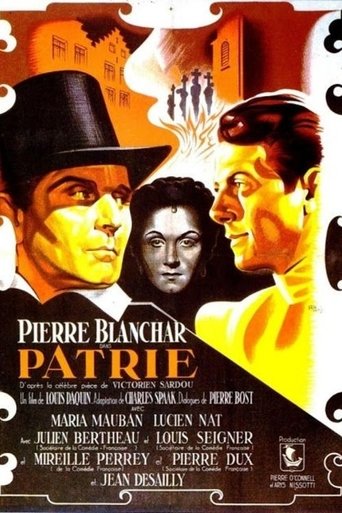 6.0
6.0Brussels in the year 1568, as the Flemish people are fighting against the tyranny of the Spanish occupiers. Led by Count de Rysoor, the revolt against the ruthless Duke of Alba, is meant to help Prince William of Orange to get into the city and come to power. Now, the count's lieutenant, has an affair with Elisabeth, Rysoor's wife. For the time being, the count, who thinks of his homeland first, turns a blind eye. But such a relationship might well undermine the whole rebellion movement.
Homeland
1946
Series credits
8.0The Arkadians are a civilization that survived a great cataclysm and moved to the center of the earth, thriving under the power of their artificial sun, The Tehra, until one day it began to fail. In desperation, the Arkadians broke the ancient law and entered the Forbidden Archives to search for an answer. They used their special powers and created a messenger to the people above, naming her Arkana. She meets up with Matt and Rebecca, two ordinary kids from the surface world, Bic and Bac, two strange anteaters from Arkadia, and Spartakus, a mysterious warrior. Together they search the worlds of the strata for a way to save a people and possibly the world.
Spartakus and the Sun Beneath the Sea
1985
6.8Blake and Mortimer is an animated television series, based on the Blake and Mortimer comic book by Edgar Pierre Jacobs. The series was directed by Stéphane Bernasconi, and produced by Ellipse, and shown in 1997. The first nine stories were used in this series, as well as four brand new stories, devised by the creators: The Viking's Bequest, The Secret of Easter Island, The Alchemist's Will, and The Druid. New writers, mostly connected to the production company as writers, dialogists or translators, were asked to come up with original plotlines which used the characters of Jacobs' stories, respected the magical/scientific Universe, but rang interesting changes.
Blake and Mortimer
1997
7.2No synopsis available yet.
Rahan, fils des ages farouches
1987