
Acting
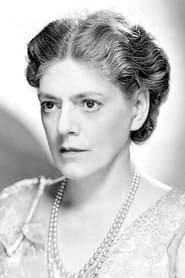
Ethel Barrymore
Born — Died
1879-08-12 — 1959-06-18
Place of birth
Philadelphia, Pennsylvania, USA
Known for
Acting
Credits
48 titles
Ethel Barrymore was the second of three children seemingly destined for the actor's life of their parents Maurice and Georgiana. Maurice Barrymore had emigrated from England in 1875, and after graduating from Cambridge in law had shocked his family by becoming an actor. Georgiana Drew of Philadelphia acted in her parents' stage company. The two met and married as members of Augustin Daly's company in New York. They both acted with some of the great stage personalities of the mid Victorian theater of America and England. The Barrymore children were born and grew up in Philadelphia. Though older brother Lionel Barrymore began acting early with his mother's relatives in the Drew theat…
Known for
 7.0
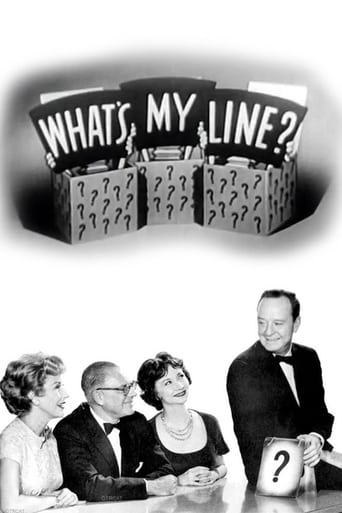
7.0Four panelists must determine guests' occupations - and, in the case of famous guests, while blindfolded, their identity - by asking only "yes" or "no" questions.
What's My Line?
1950
 3.8
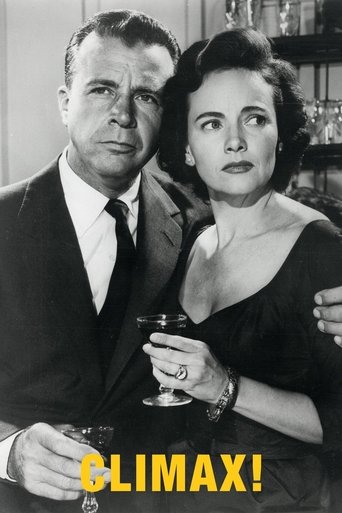
3.8Climax! is an American anthology series that aired on CBS from 1954 to 1958. The series was hosted by William Lundigan and later co-hosted by Mary Costa. It was one of the few CBS programs of that era to be broadcast in color. Many of the episodes were performed and broadcast live.
Climax!
1954
 7.0
7.0Omnibus is an American, commercially sponsored, educational television series.
Omnibus
1952
 7.5
7.5Playhouse 90 is an American television anthology series that was telecast on CBS from 1956 to 1960 for a total of 133 episodes. It originated from CBS Television City in Los Angeles, California. Since live anthology drama series of the mid-1950s were usually hour-long shows, the title highlighted the network's intention to present something unusual, a weekly series of hour-and-a-half dramas rather than 60-minute plays. Playhouse 90 began as a pitch by Frank Stanton—the formidable, forward-thinking right-hand man to CBS chairman William S. Paley—during a brainstorming session for program ideas. The project was ultimately developed by Hubbell Robinson, a CBS vice president who received no screen credit on Playhouse 90 but is often described as its creator.
Playhouse 90
1956
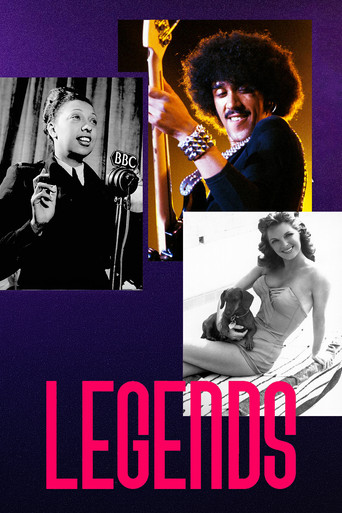 5.0
5.0The story of the big names that have shaped the musical genres, plus an occasional stopgap for the new rock 'n' roll - comedy.
Legends
2006
 6.9
6.9New York City newspaper The Day is in trouble. Even though editor Ed Hutcheson has worked hard running the paper, its circulation has been steadily declining. Now the publisher's widow wants to sell the paper, which will most likely mean its end. Hutcheson's only hope is to finish his exposé on a dangerous gangster before the sale is finalized.
Deadline - U.S.A.
1952
Film credits
1970s · 1 titles
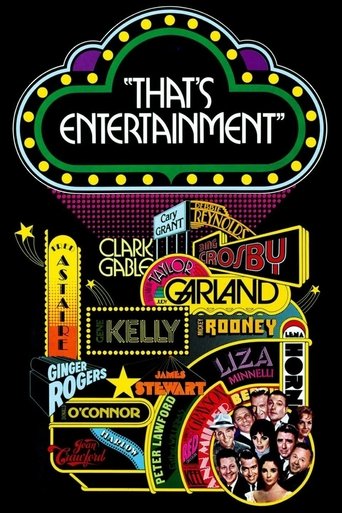
1950s · 11 titles
6.9New York City newspaper The Day is in trouble. Even though editor Ed Hutcheson has worked hard running the paper, its circulation has been steadily declining. Now the publisher's widow wants to sell the paper, which will most likely mean its end. Hutcheson's only hope is to finish his exposé on a dangerous gangster before the sale is finalized.
Deadline - U.S.A.
1952
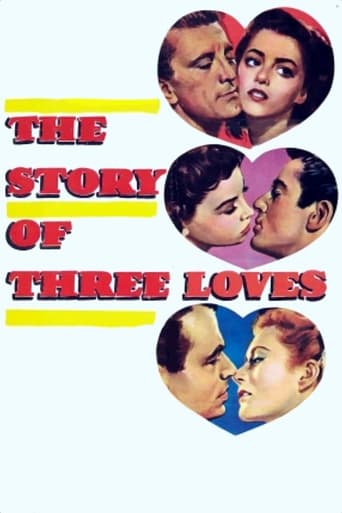 6.0
6.0Passengers on an ocean liner recall their greatest loves.
The Story of Three Loves
1953
 6.1
6.1The lives and romances of three sisters in a musical family; the youngest daughter's life is complicated by the subsequent arrival of a charming composer and a cynical music arranger.
Young at Heart
1954
 7.0
7.0Mary Herries has a passion for art and fine furniture. Even though she is getting on in years, she enjoys being around these priceless articles. One day she meets a strange young painter named Elcott, who uses his painting skill to enter into her life. Little does she expect that his only interest in Mary is to covet everything she has.
Kind Lady
1951
 5.9
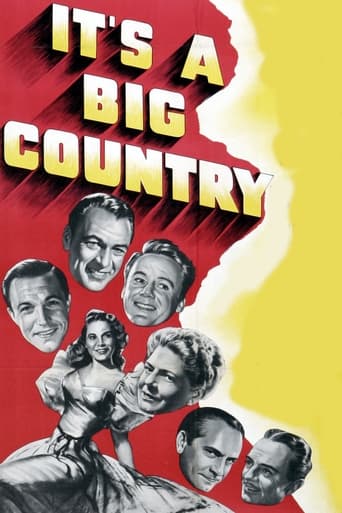
5.9Comprised of eight unrelated episodes of inconsistent quality, this anthology piece of American propaganda features some of MGM Studios' best directors, screenwriters and actors; it is narrated by Louis Calhern. Stories are framed by the lecture of a university professor. In one tale a Boston resident becomes angry when the census forgets to record her presence. Another sketch chronicles the achievements of African Americans while still another pays tongue-in-cheek tribute to Texas.
It's a Big Country
1951
 5.4
5.4Jordan Blake (a widower) is a successful Broadway Producer who has always been to busy for his children, Barbara and Jerry. Girlfriend, Carolina a musical comedy star, urges Jordan to take his kids on a vacation and get to know them before they are all grown up. Is Jordan already too late?
Just for You
1952
 7.3
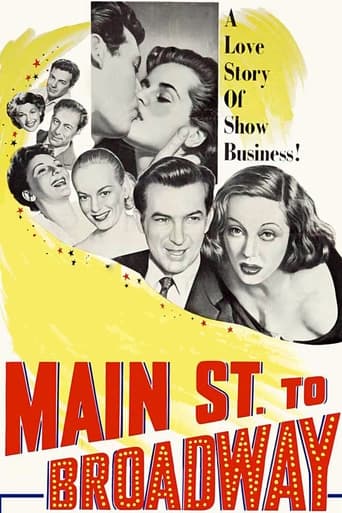
7.3In New York, a surly, down-on-his-heels playwright meets a country girl who's giving up trying to act and returning home. He goes with her for inspiration when his agent convinces a stage star to take his next effort. When he returns to Broadway, his girl stays behind and starts seeing a local businessman.
Main Street to Broadway
1953
 6.6
6.6After a group of convicts escapes from prison, they take refuge in the wilderness. While most of the crew are ruthless sociopaths, Jim Canfield is an innocent man who was jailed under false pretenses. When Canfield and his fellow fugitives reach an isolated farming settlement where the men are all away, it creates tension with the local women. Things get direr when rumors of hidden money arise, and Canfield discovers that the man who framed him is part of the community.
The Secret of Convict Lake
1951
 NR
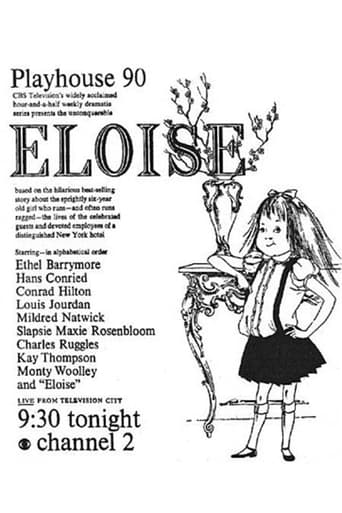
NRIt's not so much that Eloise is a mischievous child, but the darnedest things do happen when she's around.
Eloise
1956
 4.6
4.6An elderly woman becomes convinced that a trouble-making college student is her grandson she's never met.
Johnny Trouble
1957
 NR
NRArchitecture of an 11th-century church on the site of a Temple of Apollo near Athens.
Daphni: Virgin of the Golden Laurels
1951
1940s · 13 titles
 7.0
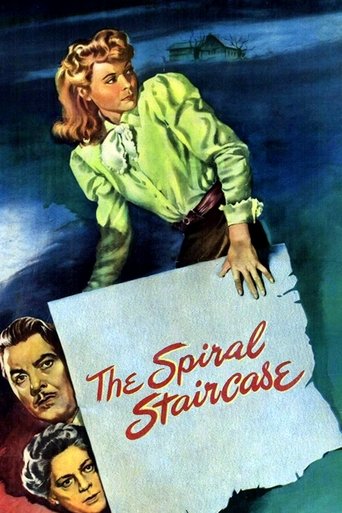
7.0On a stormy night, the mute servant to an ailing matriarch is stalked by a serial killer.
The Spiral Staircase
1946
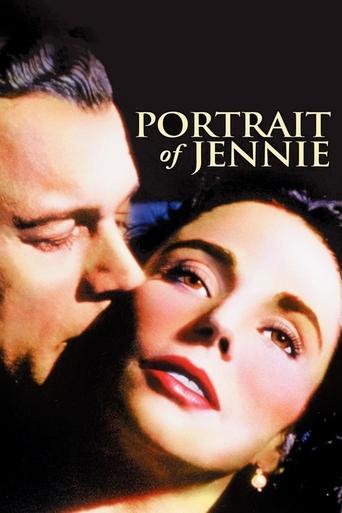 7.2
7.2In Depression-era New York, painter Eben Adams despairs at his lack of success. One cold winter evening in Central Park, he meets enigmatic, old-fashioned Jennie Appleton, who captures his fancy when she asks him to wait for her to grow up. Soon after, Eben sells a sketch of Jennie to kindly art dealer Miss Spinny and, as he meets the oddly mutable Jennie in fleeting moments, begins to realize they share a special destiny.
Portrait of Jennie
1948
 7.1
7.1Pinky, a light skinned black woman, returns to her grandmother's house in the South after graduating from a Northern nursing school. Pinky tells her grandmother that she has been "passing" for white while at school in the North. In addition, she has fallen in love with a young white doctor, who knows nothing about her black heritage.
Pinky
1949
 6.3
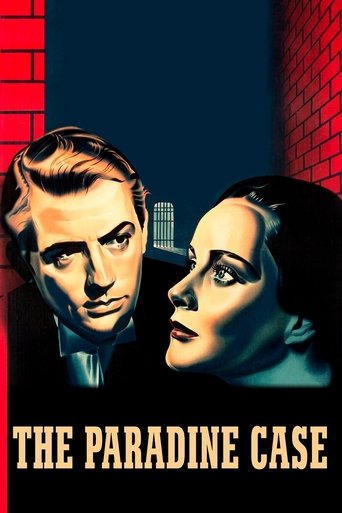
6.3In London, barrister Anthony Keane takes the case of Maddalena Paradine, a beautiful woman accused of poisoning her blind husband. Though happily married, Keane becomes infatuated with his enigmatic client and convinced of her innocence. His obsession clouds his judgment as he builds a defense implicating her servant, André Latour—an act that leads to devastating consequences both in court and at home.
The Paradine Case
1947
 6.7
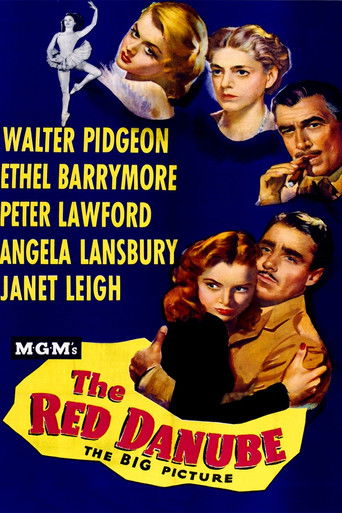
6.7A Russian ballerina in Vienna tries to flee KGB agents and defect.
The Red Danube
1949
 7.0
7.0A multi-studio effort to show the newsreel audience the progress of the Hollywood war effort.
Show-Business at War
1943
 6.3
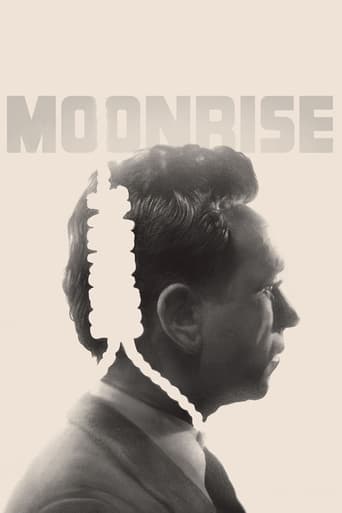
6.3Stigmatized from infancy by the fate of his criminal father, a man is bruised and bullied until one night, in a fit of rage, he kills his most persistent tormentor. As the police close in around him, he makes a desperate bid for the love of the dead man’s girlfriend, a schoolteacher who sees the wounded soul behind his aggression.
Moonrise
1948
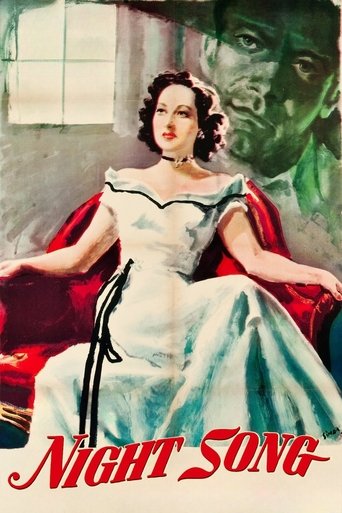 6.4
6.4A socialite pretends to be poor and blind in her plan to help a blinded pianist.
Night Song
1948
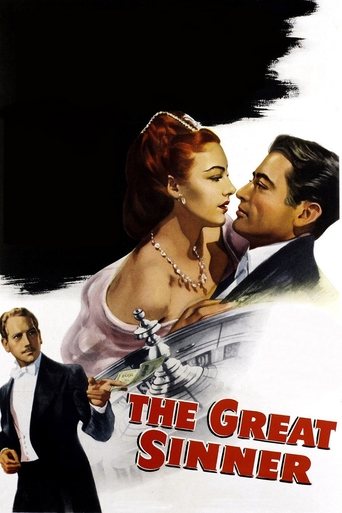 6.8
6.8A young man succumbs to gambling fever.
The Great Sinner
1949
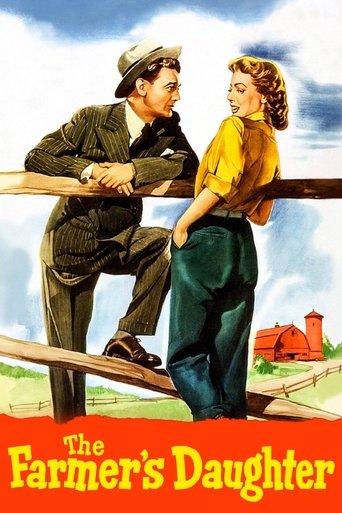 7.1
7.1After leaving her family's farm to study nursing in the city, a young woman finds herself on an unexpected path towards politics.
The Farmer's Daughter
1947
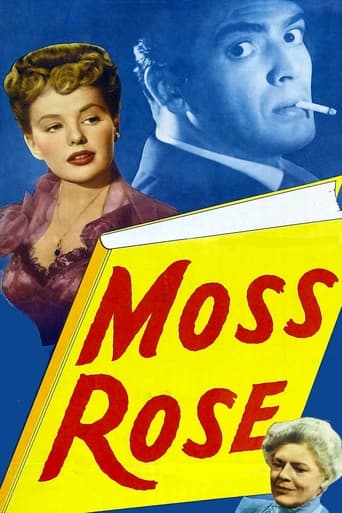 6.6
6.6When a music-hall dancer is murdered, a moss rose marks the page of a Bible next to her body. Luckily, another chorus girl saw a gentleman leaving the lodgings. She approaches him directly, saying she'll go to the police if he doesn't meet her demands, but he brushes her off contemptuously. When he learns she's dead serious, he tries to buy her off with a thick wad of pound notes. But it's not money she's after; all she wants is two weeks at his country estate, living the life of a lady.
Moss Rose
1947
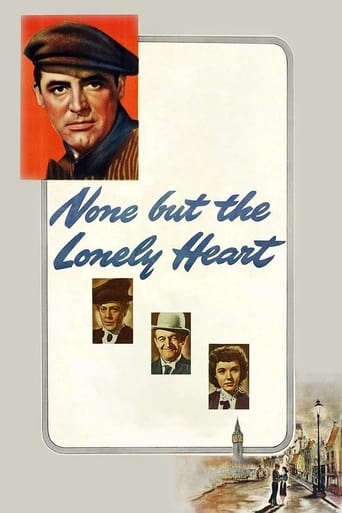 6.3
6.3When an itinerant reluctantly returns home to help his sickly mother run her shop, they're both tempted to turn to crime to help make ends meet.
None But the Lonely Heart
1944
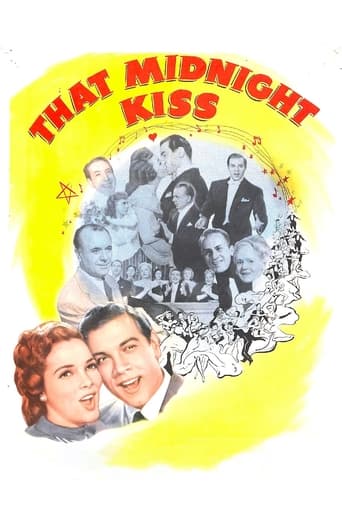 6.2
6.2Opera singer Prudence Budell, overhears truck driver Johnny Donnetti singing opera, and persuades her opera company to give him a chance in her new opera. They fall in love, but on meeting his colleague Mary while visiting Johnny's work, Prudence becomes convinced Johnny is in love with her.
That Midnight Kiss
1949

1910s · 14 titles
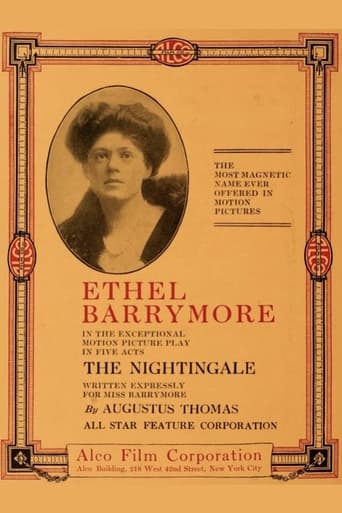 NR
NRFranti, an organ grinder of the poor districts of New York, has a daughter, Isola, who sings to his street piano's accompaniment.
The Nightingale
1914
 NR
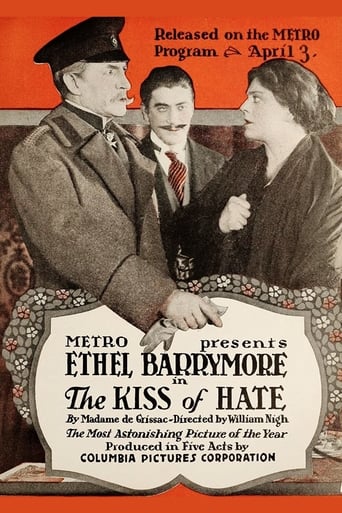
NRWhen Count Peter Turgeneff, his daughter, Nadia, and Paul, his generous-hearted son, came to live in the Governor's palace in the Russian province of Valogda, there was rejoicing among the oppressed race whose home was in the Ghetto.
The Kiss of Hate
1916
 NR
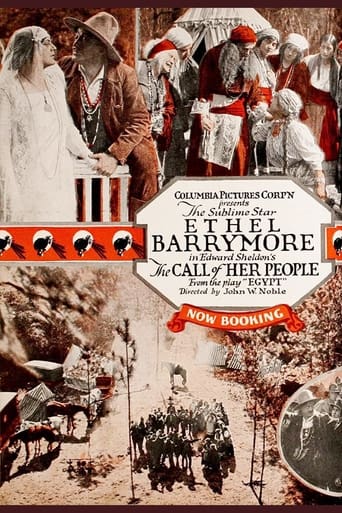
NRFaro Black, the chief of the Gypsies, finds out that his son Faro and his girlfriend Egypt have gotten married. Infuriated, he tells that their marriage isn't valid, since Egypt is actually the daughter of wealthy Gordon Lindsay, who is on his way to the gypsy camp to claim her. The two promise to remain faithful to each other, but as time passes and she never hears from Faro, her love turns to bitterness.
The Call of Her People
1917
 8.0
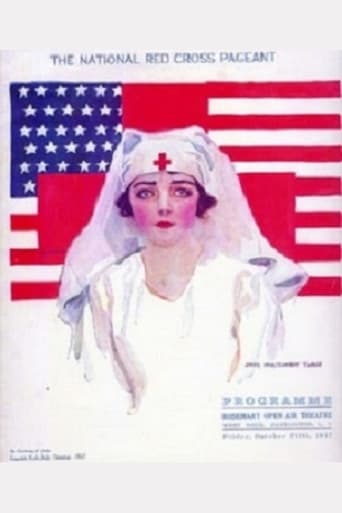
8.0The National Red Cross Pageant (1917) was an American war pageant that was performed in order to sell war bonds, support the National Red Cross, and promote a positive opinion about American involvement in World War I.
National Red Cross Pageant
1917
 NR
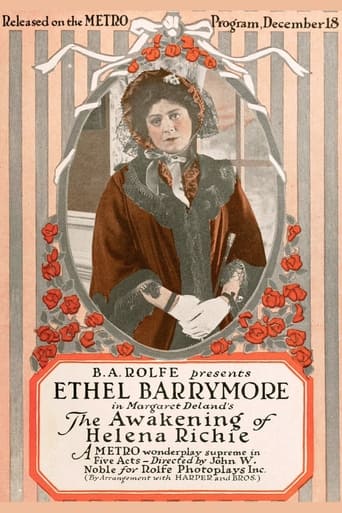
NRHelena Richie leaves her drunken husband, who had killed their child, and goes to Old Chester in Pennsylvania with her friend Lloyd Pryor. Helena adopts a homeless boy, David, who had been a ward of the town's minister, Dr. Lavendar. Helena's true husband dies, but Lloyd Pryor, now tired of Helena, refuses to marry her. Helena confesses to the minister about her actual relationship with Pryor, and Dr. Lavendar forces her to give up her son. Helena agrees, certain that she is an unfit mother. Helena pleads her case and fights for her maternal rights.
The Awakening of Helena Ritchie
1916
 NR
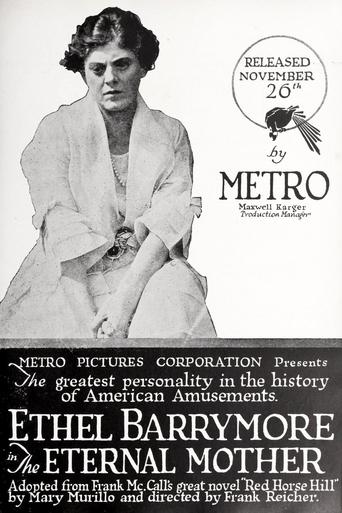
NRMaris, having married Lynch, a worthless man who deserts her, taking their daughter Felice with him, marries mill owner Dwight Alden after receiving notification that her husband and child are dead. Discovering that Alden employs child labor, Maris, assisted by the village minister, tries to persuade him that this is wrong, but he will tolerate no interference in his business.
The Eternal Mother
1917
 9.0
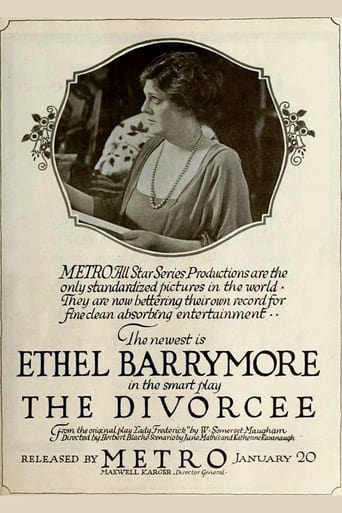
9.0Based on the 1907 play 'Lady Frederick' by W. Somerset Maugham, this tells the story of Betsy O'Hara in her pursuit of romance and love.
The Divorcee
1919
 NR
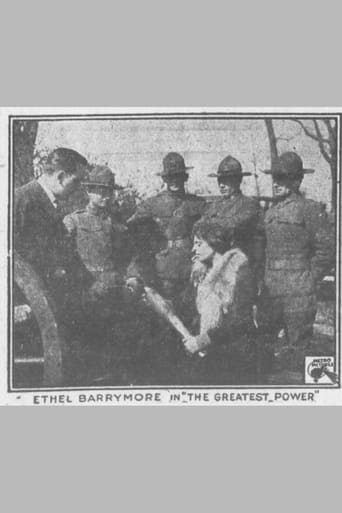
NRMiriam Monroe and John Conrad are two young scientific workers who, independently of each other, have discovered a chemical called exonite. Miriam discovered it while searching for a cure for cancer, while Conrad used it as a basis for a powerful explosive.
The Greatest Power
1917
 NR
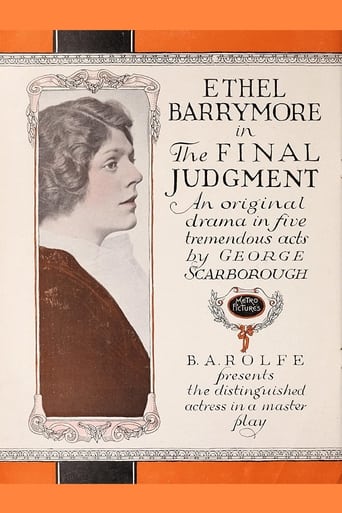
NRActress Jane Carleson has three admirers: Henry Strong (a millionaire), Hamilton Ross (a chemist), and Murray Campbell (a district attorney). When Jane weds Campbell, Ross writes an anonymous letter to Campbell, warning him that Strong is after his wife.
The Final Judgment
1915
 1.0
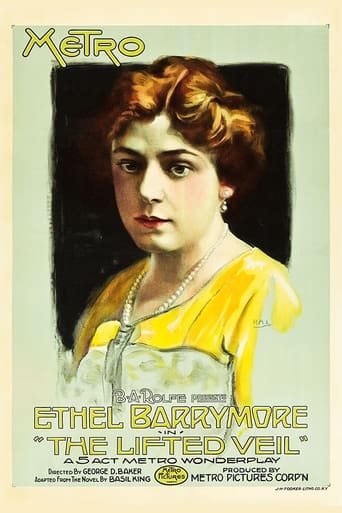
1.0Overcome with guilt after having an affair with her best friends husband, Clorinda hopes to escape her past by moving to Europe, where she meets Malcolm, a decent man who falls in love with her.
The Lifted Veil
1917
 NR
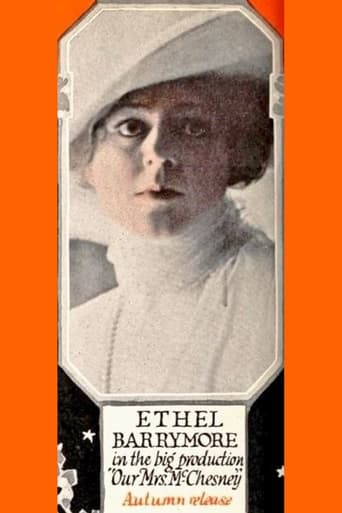
NRMrs. Emma McChesney is a determined and successful traveling saleswoman for T. A. Buck's Featherbloom Petticoat Company. When Buck dies and his son, T. A. Buck, Jr., takes charge, the company suffers and Emma nearly accepts a job offer from Buck's rival, Abel Fromkin.
Our Mrs. McChesney
1918
 NR
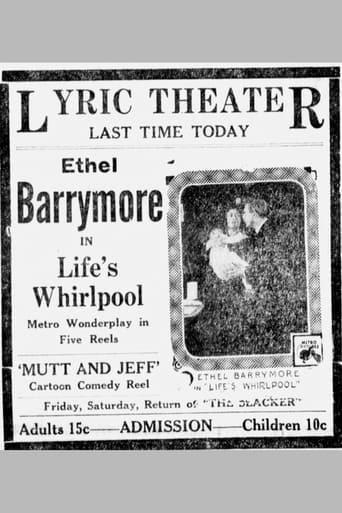
NREthel Barrymore plays the wife of an abusive country squire. So nasty is her husband that he all but forces her to seek solace in the arms of her former sweetheart (played by Alan Hale in his leading-man period). Their clandestine relationship finally comes out in the open when the nasty husband is killed by his irate tenants.
Life's Whirlpool
1917
 NR
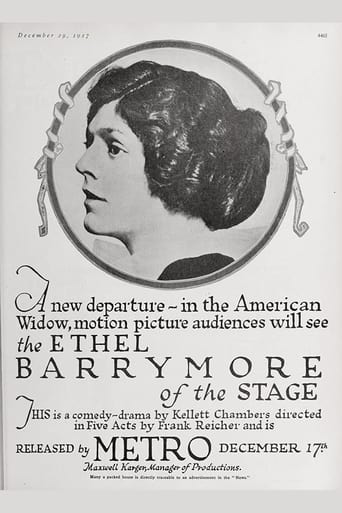
NRWealthy American widow Elizabeth Carter plans to marry the Earl of Dettminster when lawyer Augustus Tucker informs her of a codicil in her late husband's will. The Carter fortune will go to nephew Pitney Carter, who is in love with Elizabeth, if her second husband is not an American. Elizabeth therefore pays penniless playwright Jasper Mallory $50,000 to marry her and schemes with actress Mme. Albani to provide grounds for divorce so that she may then make the earl her third husband.
An American Widow
1917
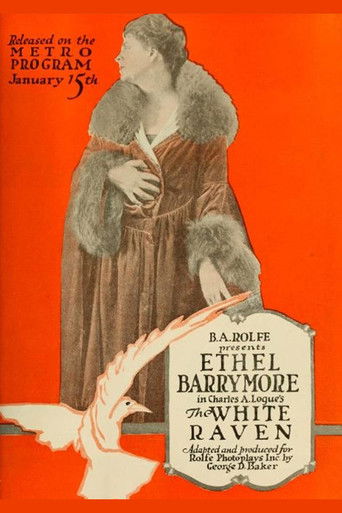 5.5
5.5William Baldwin, ruined in business by his partner, John Blaisdell, implores Blaisdell's aid, and receives in answer a five-dollar bill across the face of which is written, "Spend this for a gun and use it on yourself."
The White Raven
1917
Series credits
7.0Four panelists must determine guests' occupations - and, in the case of famous guests, while blindfolded, their identity - by asking only "yes" or "no" questions.
What's My Line?
1950
3.8Climax! is an American anthology series that aired on CBS from 1954 to 1958. The series was hosted by William Lundigan and later co-hosted by Mary Costa. It was one of the few CBS programs of that era to be broadcast in color. Many of the episodes were performed and broadcast live.
Climax!
1954
7.0Omnibus is an American, commercially sponsored, educational television series.
Omnibus
1952
7.5Playhouse 90 is an American television anthology series that was telecast on CBS from 1956 to 1960 for a total of 133 episodes. It originated from CBS Television City in Los Angeles, California. Since live anthology drama series of the mid-1950s were usually hour-long shows, the title highlighted the network's intention to present something unusual, a weekly series of hour-and-a-half dramas rather than 60-minute plays. Playhouse 90 began as a pitch by Frank Stanton—the formidable, forward-thinking right-hand man to CBS chairman William S. Paley—during a brainstorming session for program ideas. The project was ultimately developed by Hubbell Robinson, a CBS vice president who received no screen credit on Playhouse 90 but is often described as its creator.
Playhouse 90
1956
5.0The story of the big names that have shaped the musical genres, plus an occasional stopgap for the new rock 'n' roll - comedy.
Legends
2006
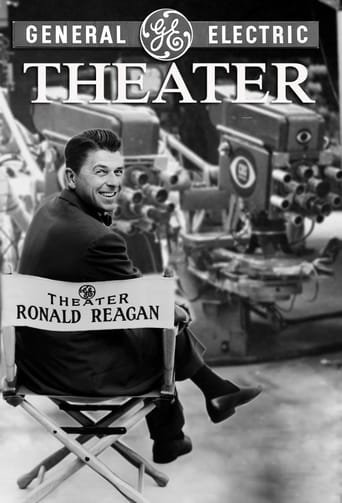 6.8
6.8General Electric Theater is an American anthology series hosted by Ronald Reagan that was broadcast on CBS radio and television. The series was sponsored by General Electric's Department of Public Relations.
General Electric Theater
1953