
Acting
Gunther von Hagens
Born — Died
1945-01-10 — 2026-07-24
Place of birth
Sulmierzyce k. Ostrowa Wielkopolskiego, Polska
Known for
Acting
Credits
12 titles
Gunther von Hagens was a German anatomist who developed the technique for preserving biological tissue specimens called plastination.
Known for
 4.5
Reinhold Beckmann hosts a weekly talk show.
Beckmann
1999
No synopsis available yet.
Aeschbacher
2001
 6.1
Jonathan Ross's take on current topics of conversation, guest interviews and live music from both a guest music group and the house band.
Friday Night with Jonathan Ross
2001
No synopsis available yet.
Menschen hautnah
1998
No synopsis available yet.
Fliege
1994
 1.0
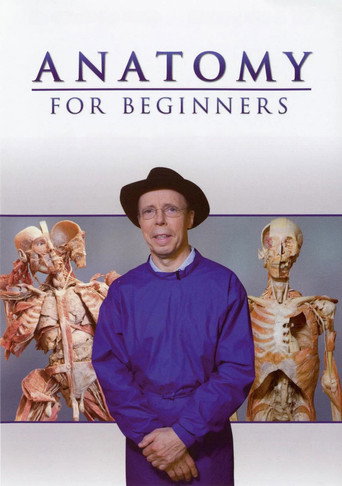
Anatomy for Beginners is a television show created by Gunther von Hagens. In this 4-part series, Dr Gunther von Hagens and Professor John Lee demonstrated the anatomical structure and workings of the body. The 4 episodes were screened in the United Kingdom on Channel 4 in 2005. The show features public anatomy demonstrations with the use of real human cadavers and live nude models, carried out at Gunther von Hagens' "Institute for Plastination" in Heidelberg, Germany. Dr von Hagens’ public demonstrations are not formal anatomy dissections performed by medical students in some countries as part of their medical training. Formal dissection are performed slowly and take dozens of hours of dissection. Anatomy for Beginners performs quicker autopsy and also combines with demonstration of plastinated body parts and specimens to gives just a glimpse of the human anatomy. The individuals on whom the demonstration was performed had, before their death, enrolled on von Hagens’ body donor programme and consented to the use of their bodies for public education in anatomy, including public demonstration.
Anatomy for Beginners
2005
Film credits


Series credits
4.5Reinhold Beckmann hosts a weekly talk show.
Beckmann
1999
No synopsis available yet.
Aeschbacher
2001
6.1Jonathan Ross's take on current topics of conversation, guest interviews and live music from both a guest music group and the house band.
Friday Night with Jonathan Ross
2001
No synopsis available yet.
Menschen hautnah
1998
No synopsis available yet.
Fliege
1994
1.0Anatomy for Beginners is a television show created by Gunther von Hagens. In this 4-part series, Dr Gunther von Hagens and Professor John Lee demonstrated the anatomical structure and workings of the body. The 4 episodes were screened in the United Kingdom on Channel 4 in 2005. The show features public anatomy demonstrations with the use of real human cadavers and live nude models, carried out at Gunther von Hagens' "Institute for Plastination" in Heidelberg, Germany. Dr von Hagens’ public demonstrations are not formal anatomy dissections performed by medical students in some countries as part of their medical training. Formal dissection are performed slowly and take dozens of hours of dissection. Anatomy for Beginners performs quicker autopsy and also combines with demonstration of plastinated body parts and specimens to gives just a glimpse of the human anatomy. The individuals on whom the demonstration was performed had, before their death, enrolled on von Hagens’ body donor programme and consented to the use of their bodies for public education in anatomy, including public demonstration.
Anatomy for Beginners
2005
 NR
In this new four-part series, anatomist Dr Gunther von Hagens and pathologist Professor John Lee get right under the skin to reveal the processes in life that tie us to our ultimate fate in death. The two scientists perform a series of autopsy demonstrations at the Institute of Plastination in Heidelberg, Germany, in which they demonstrate the process of finding a cause of death. With the aid of human dissection, live models and scientific models they are able to reveal what disease really looks like and how it works.
Autopsy: Life and Death
2006
Behind the camera
 4.2
Witness the exhibition that literally gets under your skin and where nobody can remain indifferent. Over 28 million visitors worldwide have already admired them: the authentic anatomical specimens from Dr. Günther von Hagens - uniquely beautiful and instructive. Experience a digital reunion with "The Runner", "The Chess Player", "The Skin Man" and other plastinates. Meet the mind behind BODY WORLDS, his pioneering invention, his work.
Body Worlds
1999
4.2Witness the exhibition that literally gets under your skin and where nobody can remain indifferent. Over 28 million visitors worldwide have already admired them: the authentic anatomical specimens from Dr. Günther von Hagens - uniquely beautiful and instructive. Experience a digital reunion with "The Runner", "The Chess Player", "The Skin Man" and other plastinates. Meet the mind behind BODY WORLDS, his pioneering invention, his work.
Body Worlds
1999