
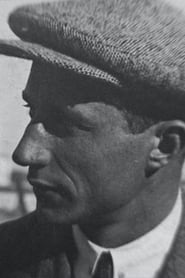
Camera
Eduard Tisse
Born — Died
1897-04-01 — 1961-11-18
Place of birth
Liepāja, Latvia
Known for
Camera
Credits
9 titles
Eduard Tisse (13 April 1897 – 18 November 1961) was a Soviet cinematographer. In 1921, Tisse became a professor at Gerasimov Institute of Cinematography. His career took off when he worked with director Sergei Eisenstein on the film Strike. Tisse would become Eisenstein's standard cinematographer for the next twenty years.
Known for
 6.9
6.9As the Russian monarchy crumbles, conflicts at Petrograd intensify, with Soviet hero V.I. Lenin leading the rebellion that overthrows the tsar's Winter Palace.
October (Ten Days that Shook the World)
1928
 NR
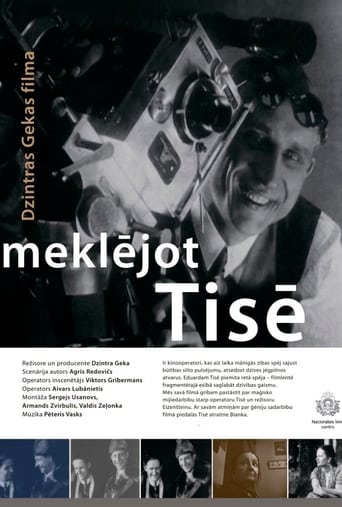
NRThe story of the world-renowned Liepāja-born cinematographer Eduard Tisse, whose wife was convinced it was he who created all the famous films of Sergei Eisenstein. The creators of the film develop the story and cross the lines drawn by biography, trying to understand the magic interaction between a cinematographer and a director, between the cinematographer and the object in front of his camera.
Seeking Tisse
2017
 6.5
6.5This film shows contrasting views of women with problematic pregnancies and the outcomes resulting when they seek out a back-alley abortionist, a trained and licensed abortion provider in a clinic, or an obstetrician capable of performing a Caesarian Section. The full film appears to be lost, but shortened versions, including one with dialogue scenes added in Germany in 1935, can be found on the internet. Additionally, Eisenstein's role in making the picture remains unclear: did he direct some or all of it, just edit it, or merely leave it to Alexandrov and Tisse to make? Released in the USA 1930 in a 65 minute (5800 ft.) version with English intertitles and a music track under the title BIRTH.
Misery and Fortune of Woman
1930
 NR
NRDocumentary made for the 60th anniversary of Soviet director Sergei Eisenstein.
Sergei Eisenstein
1958
 6.2
6.2Footage of the aftermath of the January 14 1931 earthquake in Oaxaca, Mexico.
The Disaster in Oaxaca
1931
 NR
NRNo synopsis available yet.
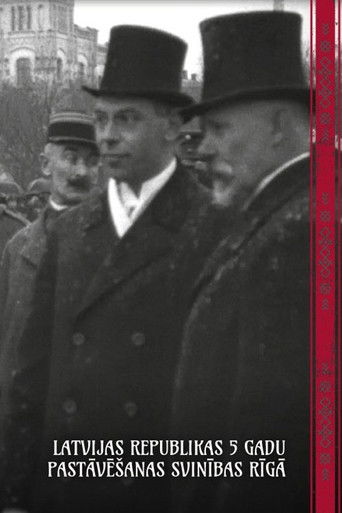
Latvijas Republikas 5 gadu pastāvēšanas svinības Rīgā
1923
Film credits


1950s · 1 titles
Behind the camera
6.5This film shows contrasting views of women with problematic pregnancies and the outcomes resulting when they seek out a back-alley abortionist, a trained and licensed abortion provider in a clinic, or an obstetrician capable of performing a Caesarian Section. The full film appears to be lost, but shortened versions, including one with dialogue scenes added in Germany in 1935, can be found on the internet. Additionally, Eisenstein's role in making the picture remains unclear: did he direct some or all of it, just edit it, or merely leave it to Alexandrov and Tisse to make? Released in the USA 1930 in a 65 minute (5800 ft.) version with English intertitles and a music track under the title BIRTH.
Misery and Fortune of Woman
1930
6.2Footage of the aftermath of the January 14 1931 earthquake in Oaxaca, Mexico.
The Disaster in Oaxaca
1931
NRNo synopsis available yet.
Latvijas Republikas 5 gadu pastāvēšanas svinības Rīgā
1923
No synopsis available yet.
Moskva–Karakum–Moskva
1933