
Acting
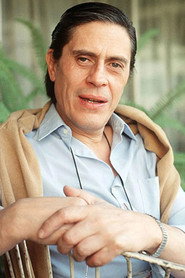
Marcelo Romo
Born — Died
1941-04-23 — 2018-01-23
Place of birth
Santiago, Chile
Known for
Acting
Credits
32 titles
Marcelo Romo (Santiago, April 23, 1941 – January 23, 2018) was a renowned Chilean actor of film, theater, and television. Trained at the University of Chile’s School of Theater, he became one of the leading figures of Chilean acting from the 1960s onward. He made his film debut in El Chacal de Nahueltoro (1969) by Miguel Littín, playing a journalist —a landmark in Chilean cinema that marked the beginning of a prolific film career spanning over thirty titles. During the Pinochet dictatorship, Romo went into exile in Venezuela, where he continued his career in film, participating in movies such as La máxima felicidad (1982) and Señora Bolero (1991), as well as in theater, and television, late…
Known for
 7.0
7.0ITV Playhouse is a British comedy-drama TV series that ran from 1967 to 1983, which featured contributions from playwrights such as Dennis Potter, Rhys Adrian and Alan Sharp. The series began in black and white, but was later shot in colour and was produced by various companies for the ITV network, a format that would inspire Dramarama. Actors appearing in the series included Leslie Anderson, Gwen Nelson, Ricky Alleyne, Pat Heywood, Michael Elphick, Ian Hendry, Edward Woodward, Margaret Lockwood, Jessie Matthews and Lloyd Peters.
ITV Playhouse
1967
 5.0
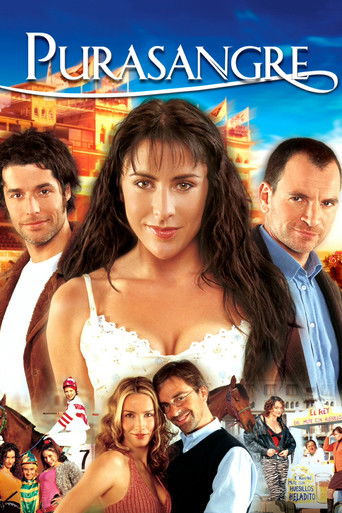
5.0As a result of a vile abuse cause in the past, Violeta Salazar has sworn to herself to take revenge on the Callassis family and all their descendants. She sends her daughter Amanda to make the life of the Callasis as miserable as possible, but love can be surprising, and not everything comes out as planned.
Purasangre
2002
 5.5
5.5A rich man decides to fake his death in order to save himself from a millionaire debt, before fleeing to Europe for a facial surgery. He leaves his fortune to one of his 3 lovers, while the other 2 and their families have to deal with the ecomic aftermath.
Rompecorazón
1994
 6.0
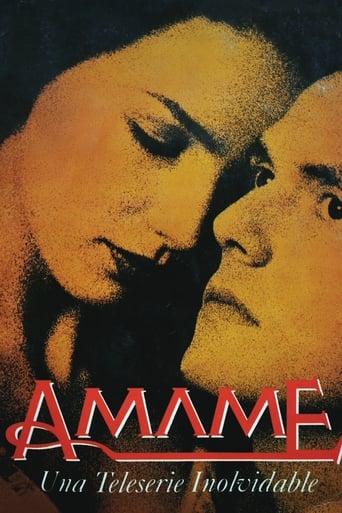
6.0Daniela, a young student, falls in love with Luciano the son of the owner of her high school. He corresponds her love. But both must face Francisca, an unbalanced and beautiful young woman who holds an insane obsession for Luciano.
Ámame
1993
 6.0
6.0'Pelluco' Solís, a young lower-middle class waiter, crosses paths with Rodolfo Ruttenmeyer -a man who looks just like him- in an unfortunate accident that will change their lives forever.
Amores de mercado
2001
 6.3
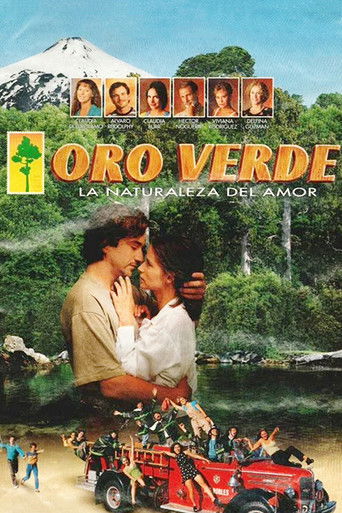
6.3An ambitious entrepreneur wants to cut down the forest of southern Chile, but a young ecologist girl will hinder their plans.
Oro verde
1997
Film credits
1990s · 2 titles
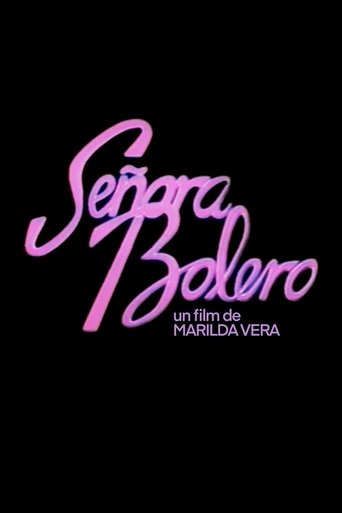 9.0
9.0After the suicide of her son, Amanda starts to question her life and the decisions she made when she was young. This movie take us back to Venezuela in the 1950s through the memories of Amanda Contreras, between of the dictatorship of Marcos Perez Jimenez.
Señora Bolero
1991
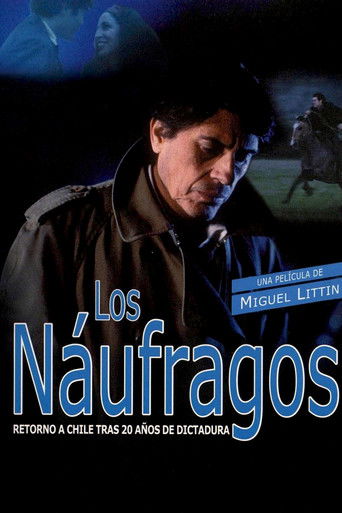 4.4
4.4After 20 years of exile, Aron returns to Chile to find out who he is. He asks questions, not only of those who stayed behind but also of himself, examining his relationship with his past and his own memory. The people who stayed lived through 20 years of dictatorship. They were either victims or executioners. Amidst this wreckage, Aron wonders what name his brother is using now, where his father is... Can he, in Isol's arms and through her love, find his way again ? What future awaits him? Like Mola the torturer, he has returned from an impossible journey, and Aron knows that each man is his own executioner. Shipwreck and resurrection are the two facets of a complex truth.
Los náufragos
1994
1980s · 6 titles
 8.0
8.0An eccentric millionaire gives a party for his birthday. With his friends, gamblers and collectors , they play games in their own way. One of them, a woman, suggests this: since they're all gamblers they should play a fortune on the life of one of them.
Morituri
1984
 8.0
8.0The murder of popular leader Jorge Eliécer Gaitán unleashes violence in the Colombian countryside. Guerrillas are formed that, behind the facade of partisan struggle, also fight for control of the land. Canaguaro commands one of these groups. Their story is the same as that of thousands of Colombians, survivors of attacks on their families. We learn about his life and that of his friends through the journey in search of weapons that the party has promised them and that will never be delivered to them. They are called to order and reconciliation and, finally, murdered.
Canaguaro
1981
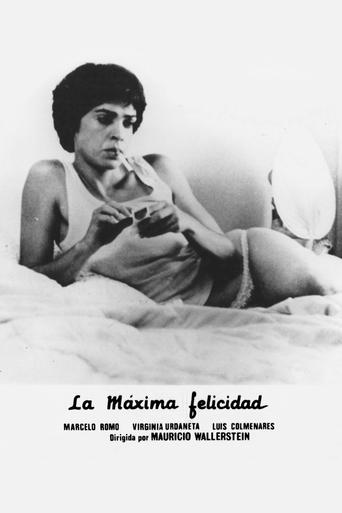 9.0
9.0Two men and a woman are about to experience living as a threesome, this process brings out of them their fears, some moral barriers must be dismantled before the complex process of understanding and accepting each other can succeed.
La máxima felicidad
1982
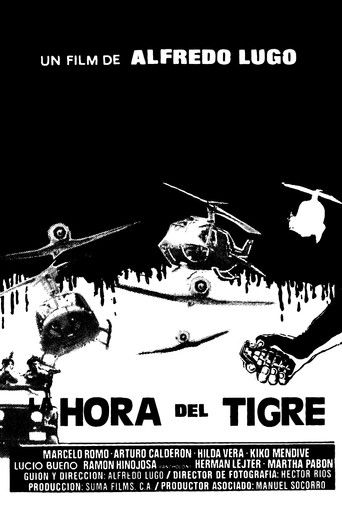 10.0
10.0Humberto and Atilio, two elderly men confined in a nursing home, decide to flee when they see the arrival of some ballot boxes through the window, which makes them assume that their lives are in danger. The escape causes the mobilization of an entire military strategic team while the two elderly men and Daniel, an employee of the nursing home, wander around the roads of the area. In the end, they are unexpectedly armed and confront the “enemy”.
La hora del tigre
1985
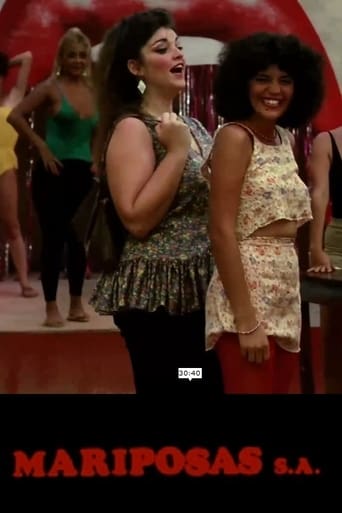 6.5
6.5The story of seven prostitutes traveling in a truck, town to town, selling their show in local festivities inside an old circus tent. The authorities demand bribes in order to keep the order in town.
Mariposas S.A.
1986
A woman's new house hides a sinister secret. Part of ITV Playhouse-S13E02
The Perfect House
1981
1970s · 9 titles
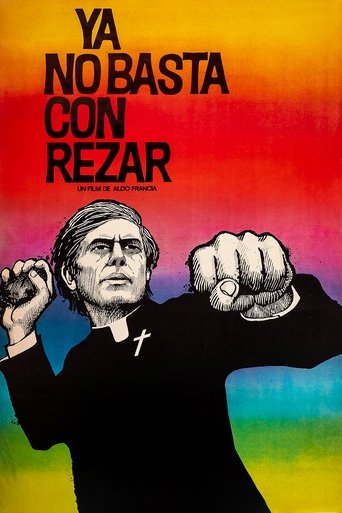 7.5
7.5Many socially-concerned priests in Catholic Latin America have at some time left their parish churches to go and work in the fields and factories of the poor. Such priests, usually adherents of "liberation theology," are called "worker-priests." This Chilean film tells the story of how one man became a "worker-priest" and won the trust of the poor.
Enough Praying
1972
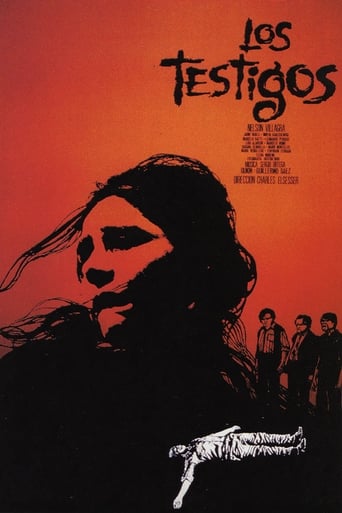 6.5
6.5This stark Chilean melodrama concerns itself with the plight of slum dwellers living outside Santiago. For many years they have, with great difficulty, been faithfully paying small sums to a real estate man. This man has said that by doing so they can obtain title to the miniscule plots of land their houses stand on. In fact, he has been swindling them and does not even own the land he has been "selling." One of the aggrieved slum dwellers confronts him about this while he is visiting the slum, and the real estate agent shoots him before everyone's eyes. The question confronting these witnesses is whether testifying against this monster will make their lives even more precarious.
The Witnesses
1971
A documentary about the consequences of consuming alcohol and how it works as a weapon of the bourgeoisie to appease the thirst of the people.
Entre ponerle y no ponerle...
1971
 9.0
9.0Directed by Pablo de la Barra, Queridos compañeros (1977) is a Chilean-Venezuelan political drama that delves into the fervent revolutionary movements of the late 1960s. The film follows a group of young radical leftists that struggle to change the Chilean political status quo. The production of Queridos compañeros faced significant challenges, since filming started in 1973 but was abruptly halted due to the military coup in Chile that year. Director Pablo de la Barra managed to save the film's footage but lost the original audio tracks. In exile in Venezuela, he reconstructed the sound with the help of the original actors, completing the film in 1977. The film offers a poignant reflection on the aspirations and struggles of a generation striving for systemic change, providing insight into the political dynamics of Chile during a tumultuous period.
Dear Comrades
1977
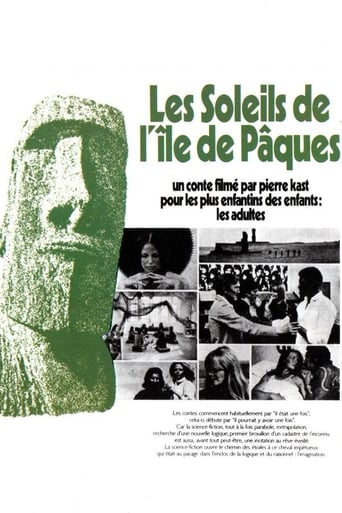 6.4
6.4Six people find a mysterious mark in the center of their left hand and all independently go to Easter Island in hopes to uncover the mystery.
The Suns of Easter Island
1972
 7.3
7.3The documentary narrates the events that took place during the first year of the Unidad Popular government, in chronological order.
The First Year
1972
 6.8
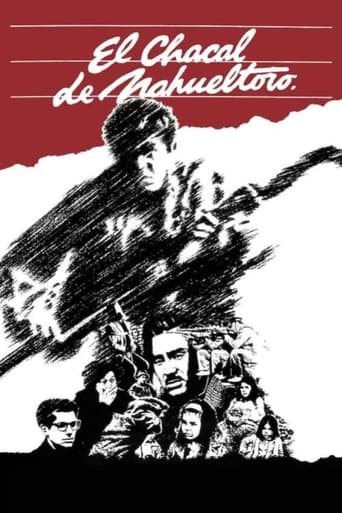
6.8Based on an actual murder case that ignited a furious debate over the death penalty in Chile in 1960, this experimental social drama portrays the life and death of an illiterate peasant who, while drunk, murdered the woman with whom he had a relationship and her five children.
Jackal of Nahueltoro
1970
In this film the director's recurring concerns return: the divisions in the Chilean left, and its contradictions between what the director calls the "traditional" and the "revolutionary" left. The problem is exposed through the doubts and obsessions of a strange police chief who cannot establish the limits between critical behavior and militant responsibility.
Metamorphosis of the Chief of the Political Police
1973
 6.4
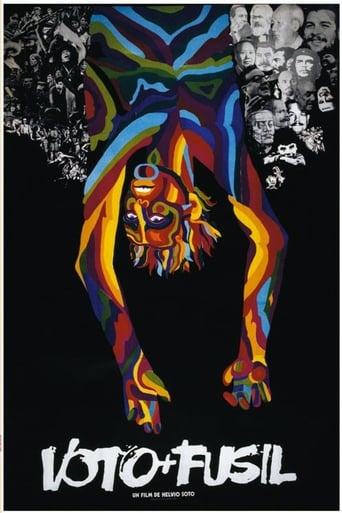
6.4The political evolution in Chile seeing from three different times: 1937, 1947 and 1970. A film that shows how a revolution cannot be accomplished by electoral means, and how the wealthy class will always attempt to destroy that revolution, with the help of the armed forces, as soon as their privileges are threatened.
Voto + Fusil
1971
Series credits
7.0ITV Playhouse is a British comedy-drama TV series that ran from 1967 to 1983, which featured contributions from playwrights such as Dennis Potter, Rhys Adrian and Alan Sharp. The series began in black and white, but was later shot in colour and was produced by various companies for the ITV network, a format that would inspire Dramarama. Actors appearing in the series included Leslie Anderson, Gwen Nelson, Ricky Alleyne, Pat Heywood, Michael Elphick, Ian Hendry, Edward Woodward, Margaret Lockwood, Jessie Matthews and Lloyd Peters.
ITV Playhouse
1967
5.0As a result of a vile abuse cause in the past, Violeta Salazar has sworn to herself to take revenge on the Callassis family and all their descendants. She sends her daughter Amanda to make the life of the Callasis as miserable as possible, but love can be surprising, and not everything comes out as planned.
Purasangre
2002
5.5A rich man decides to fake his death in order to save himself from a millionaire debt, before fleeing to Europe for a facial surgery. He leaves his fortune to one of his 3 lovers, while the other 2 and their families have to deal with the ecomic aftermath.
Rompecorazón
1994
6.0Daniela, a young student, falls in love with Luciano the son of the owner of her high school. He corresponds her love. But both must face Francisca, an unbalanced and beautiful young woman who holds an insane obsession for Luciano.
Ámame
1993
6.0'Pelluco' Solís, a young lower-middle class waiter, crosses paths with Rodolfo Ruttenmeyer -a man who looks just like him- in an unfortunate accident that will change their lives forever.
Amores de mercado
2001
6.3An ambitious entrepreneur wants to cut down the forest of southern Chile, but a young ecologist girl will hinder their plans.
Oro verde
1997
 4.5
4.5A billionaire who, as a result of his death, leaves an inheritance of 100 million dollars to his three daughters. But in order for them to receive the money, they must follow some exclusive conditions such as living in his mansion, marrying within a year and arriving there before midnight. Problems scalate when a fourth heir appears...
Borrón y cuenta nueva
1998
 5.5
5.5Lucas must choose between love and the power he acquires after becoming a renowned sculptor.
Juegos de fuego
1995
 5.5
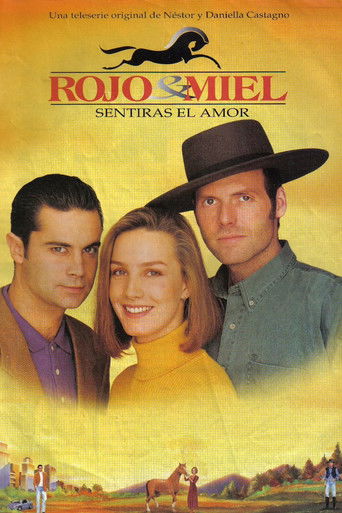
5.5The love story of Claudia Bernhardt and Rodrigo Carvajal, they come from different worlds: she was a young university student, used to urban lifestyle and he was in charge of his father's ranch. Their romance is at stake when another man offers Claudia the stability she needs. The honey of the city will clash with the red passion of the countryside.
Rojo y miel
1994
 NR
NRA spin-off sequel of the 1996 TV series "Sucupira". The story takes place when Sucupira Mayor Federico Valdivieso, who was thought gone and buried comes out of his grave, causing confussion and chaos among the town's citizens.
Sucupira, la comedia
1998
The exploits of an investigative police group that from anonymity, solve intricate criminal cases.
Brigada Escorpión
1997
Sussi, a beautiful young woman lives in Santiago with three other women. Each episode tells different situations and jobs that Sussi have, knowing in each of those different men with whom she has some kind of affair. Through these experiences, she learns about life and love. Based on Gonzalo Justiniano's movie Sussi.
Las historias de Sussi
1998
 5.3
5.3Rubi Rebelde is a Venezuelan telenovela that was produced by and seen on Venezuela's Radio Caracas Televisión. It was written by Perla Farias, Perla Farias, María Antonieta Gómez, Boris Izaguirre, and Carlos Romero and directed by Renato Gutiérrez. This telenovela lasted 172 episodes and was distributed internationally by RCTV International.
Rubí rebelde
1989
No synopsis available yet.
Mi amada Beatriz
1987