
Directing
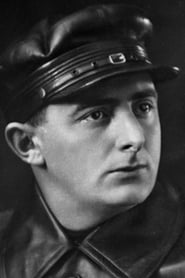
Dziga Vertov
Born — Died
1896-01-03 — 1954-02-11
Place of birth
Bialystok, Grodno Province, Russian Empire
Known for
Directing
Credits
45 titles
Dziga Vertov (born David Abelevich Kaufman) was a Soviet pioneer documentary film and newsreel director, as well as a cinema theorist. His filming practices and theories influenced the cinéma vérité style of documentary movie-making and the Dziga Vertov Group, a radical film-making cooperative which was active from 1968 to 1972. The independent, exploratory style of Vertov influenced and inspired many filmmakers and directors. The Dziga Vertov Group borrowed his name. In 1960, Jean Rouch used Vertov's filming theory when making Chronicle of a Summer. His partner Edgar Morin coined Cinéma vérité term when describing the style, using direct translation of Vertov’s KinoPravda. The Free Cinema m…
Known for
 7.9
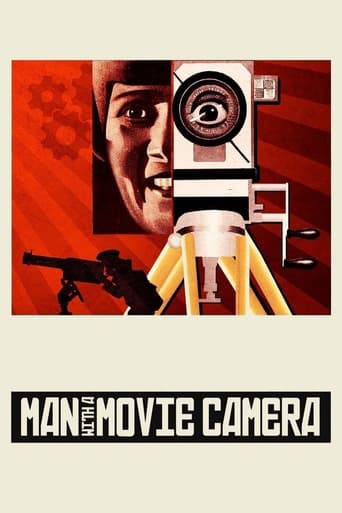
7.9A cameraman wanders around with a camera slung over his shoulder, documenting urban life with dazzling inventiveness.
Man with a Movie Camera
1929
 4.4
4.4The epic story of the Russian Civil War (1918-21): the White Terror, the counterrevolutionary uprisings, the guerrilla war, the Kolchak front, the Wrangel front and the Kronstadt rebellion. Chaos and violence, devastation and death.
The History of the Civil War
1921
 5.3
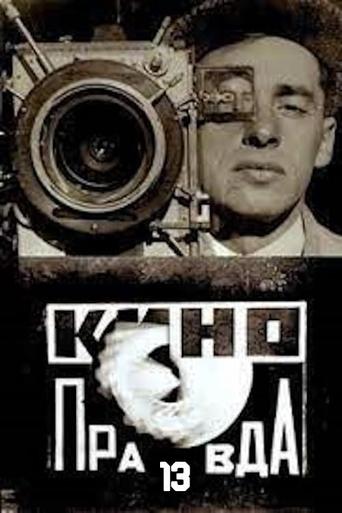
5.3Dziga Vertov-directed Soviet newsreel. The first themed issue of Kino-Pravda, devoted to the fifth anniversary of the October Revolution in 1922.
Kino-Pravda No. 13: Yesterday, Today, Tomorrow. A Film Poem Dedicated to the October Revolution
1922
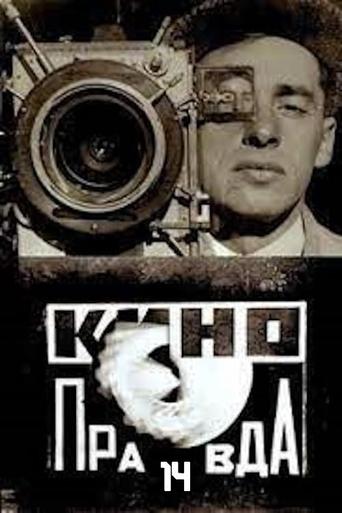 5.6
5.6Dziga Vertov-directed Soviet newsreel covering: IV. Congress of the Comintern / Congress of the Profintern.
Kino-Pravda No. 14
1923
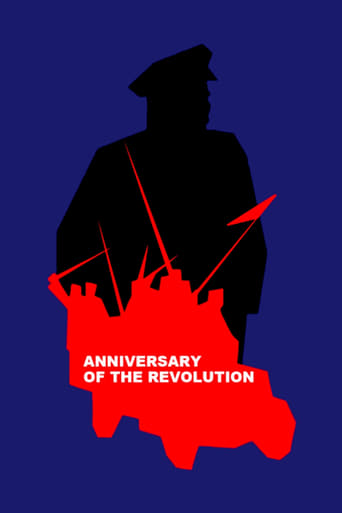 6.8
6.8A chronicle of the Russian Revolution of 1917, from the bourgeois democratic February Revolution to the great socialist October Revolution and the final triumph.
Anniversary of the Revolution
1918
 6.0
6.0A presentation of the hard labour of countrymen in industrial production to strengthen the USSR economy and turning their country into a world power.
The Eleventh Year
1928
Film credits
1960s · 2 titles
 NR
NR“The Magic Beam” is a film essay woven together from newsreels and documentary material from different decades, fragments of hundreds of non-fiction and fiction Soviet films of the 1910s-1960s.
The Magic Beam
1963
 NR
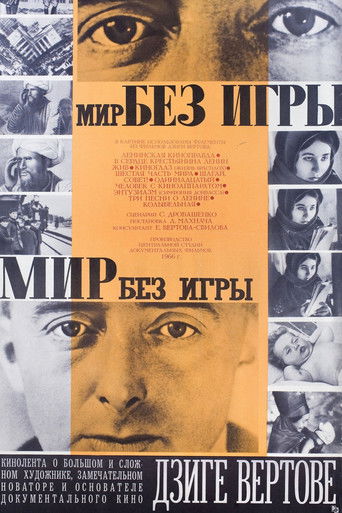
NRDocumentary portrait of Dziga Vertov, father of documentary cinema.
World Without a Game
1966
Behind the camera
7.9A cameraman wanders around with a camera slung over his shoulder, documenting urban life with dazzling inventiveness.
Man with a Movie Camera
1929
7.9A cameraman wanders around with a camera slung over his shoulder, documenting urban life with dazzling inventiveness.
Man with a Movie Camera
1929
4.4The epic story of the Russian Civil War (1918-21): the White Terror, the counterrevolutionary uprisings, the guerrilla war, the Kolchak front, the Wrangel front and the Kronstadt rebellion. Chaos and violence, devastation and death.
The History of the Civil War
1921
5.3Dziga Vertov-directed Soviet newsreel. The first themed issue of Kino-Pravda, devoted to the fifth anniversary of the October Revolution in 1922.
Kino-Pravda No. 13: Yesterday, Today, Tomorrow. A Film Poem Dedicated to the October Revolution
1922
5.6Dziga Vertov-directed Soviet newsreel covering: IV. Congress of the Comintern / Congress of the Profintern.
Kino-Pravda No. 14
1923
6.8A chronicle of the Russian Revolution of 1917, from the bourgeois democratic February Revolution to the great socialist October Revolution and the final triumph.
Anniversary of the Revolution
1918
6.0A presentation of the hard labour of countrymen in industrial production to strengthen the USSR economy and turning their country into a world power.
The Eleventh Year
1928
6.0A presentation of the hard labour of countrymen in industrial production to strengthen the USSR economy and turning their country into a world power.
The Eleventh Year
1928
 6.3
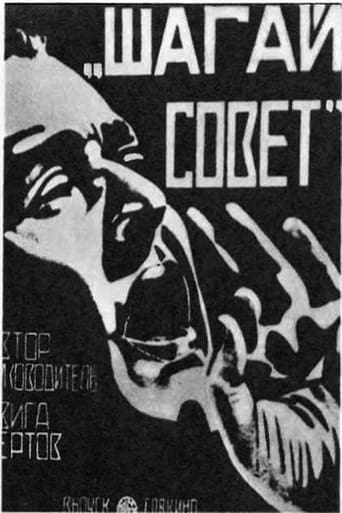
6.3Commissioned as both a documentary and an information film for the citizens of Moscow prior to municipal elections, a tableau of Soviet life and achievements in the period of reconstruction following the Civil War of 1917-1921.
Stride, Soviet!
1926
6.3Commissioned as both a documentary and an information film for the citizens of Moscow prior to municipal elections, a tableau of Soviet life and achievements in the period of reconstruction following the Civil War of 1917-1921.
Stride, Soviet!
1926
 5.4
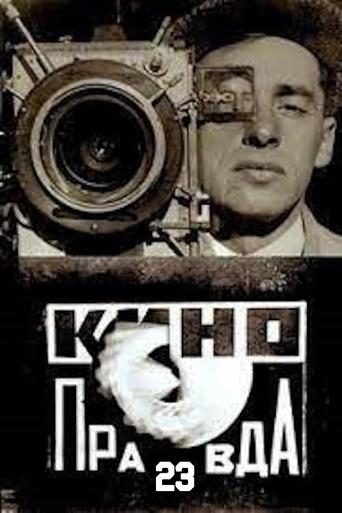
5.4Dziga Vertov-directed Soviet newsreel covering: A peasant buys a receiver at the radio shop / Instructions to attach an antenna / A broadcast-station is developed / A concert is broadcast. Though only a third of this final issue of Kino-Pravda seems to survive, there still exists Aleksandr Bushkin’s time-lapse animation and the sequence in which, as Yuri Tsivian describes, “a cross-section of a photographically correct izba (Russian peasant’s log hut) is penetrated by schematically charted radio waves”—a testament to the magical properties and propagandistic uses of radio in reaching out to Russia’s distant peasantry.
Kino-Pravda No. 23: Radio Pravda
1925
 5.5
5.5Dziga Vertov-directed Soviet newsreel covering: Starving children / Requisitioning of valuables possessed by the Russian Orthodox Church / Fundraising flights in support of the hungry / Trial of the Socialist Revolutionaries.
Kino-Pravda No. 1
1922
 5.9
5.9Dziga Vertov-directed Soviet newsreel covering: Up the Eiffel Tower in Paris / Moscow / Auto race Petrograd – Moscow / Aspects of everyday Soviet life / Peasant from Jaroslavl' visiting Moscow / Ceremonial introduction of a newborn into a workers' collective
Kino-Pravda No. 18: A Movie-Camera Race Over 299 Metres and 14 Minutes and 50 Seconds in the Direction of Soviet Reality
1924
An anthology of three parts focusing on early aviation, aircraft, airports, and the avant-garde theatrical work of Vsevolod Meyerhold.
Give Us Air!
1923
 NR
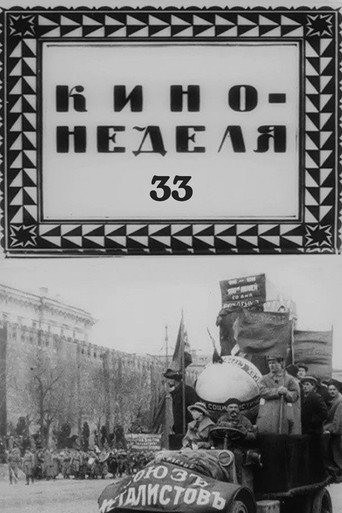
NRThe Kinonedelja (Kino-Week) newsreels represent Dziga Vertov's first contribution to cinema.
Kino-Week No. 33
1919
 NR
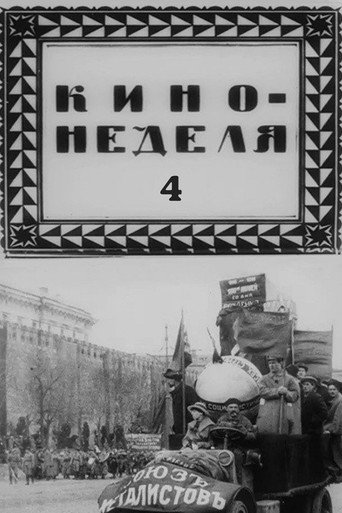
NRThe Kinonedelja (Kino-Week) newsreels represent Dziga Vertov's first contribution to cinema.
Kino-Week No. 4
1918
 5.3
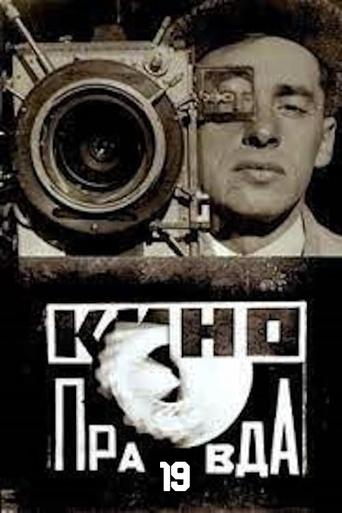
5.3Dziga Vertov-directed Soviet newsreel covering: Connecting city and country, south and north, summer and winter, peasant women and worker women / Emancipation of women in the USSR
Kino-Pravda No. 19: A Movie-Camera Race Moscow – Arctic Ocean
1924
 6.7
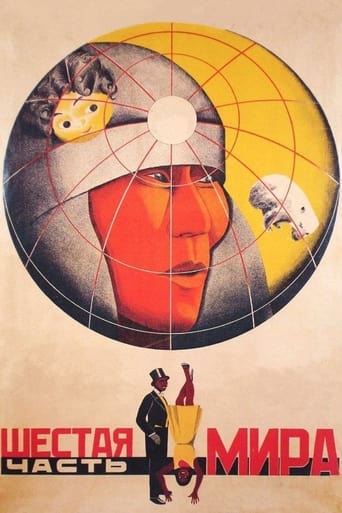
6.7Through the travelogue format, the multitude of Soviet peoples in remote areas of USSR and detailed the entirety of the wealth of the Soviet land. Focusing on cultural and economic diversity, it is in fact a call for unification in order to build a 'complete socialist society'.
A Sixth Part of the World
1926
6.7Through the travelogue format, the multitude of Soviet peoples in remote areas of USSR and detailed the entirety of the wealth of the Soviet land. Focusing on cultural and economic diversity, it is in fact a call for unification in order to build a 'complete socialist society'.
A Sixth Part of the World
1926
 NR
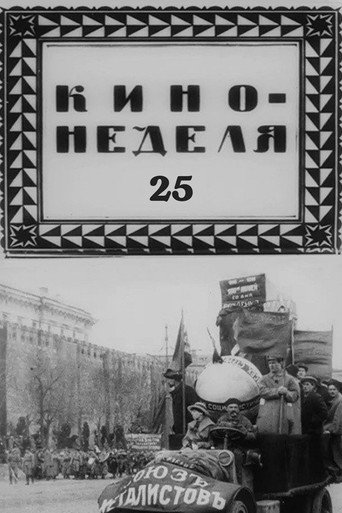
NRThe Kinonedelja (Kino-Week) newsreels represent Dziga Vertov's first contribution to cinema.
Kino-Week No. 25
1918
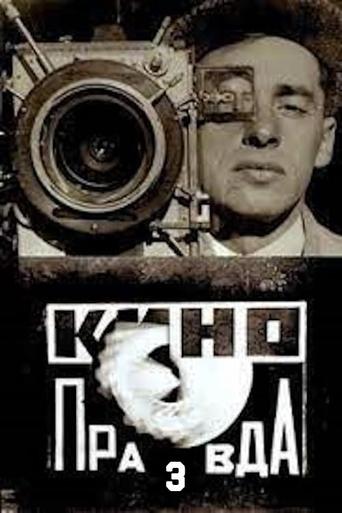 4.8
4.8Dziga Vertov-directed Soviet newsreel covering: Trial of the Socialist Revolutionaries / Demonstrators carrying banners.
Kino-Pravda No. 3
1922
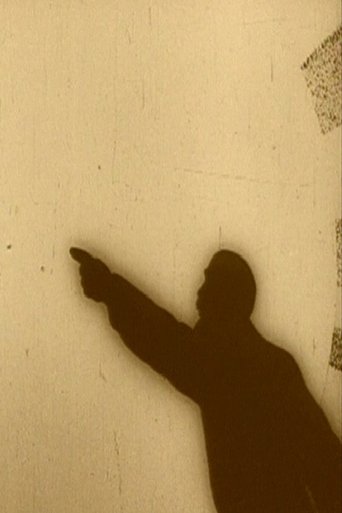 NR
NRSimple animation urges strength through solidarity: little farmers unite to compete with the big outfits. Also criticizes profiteering "company private shops."
Lenin's Kino Pravda: Truth in Cinema
1924
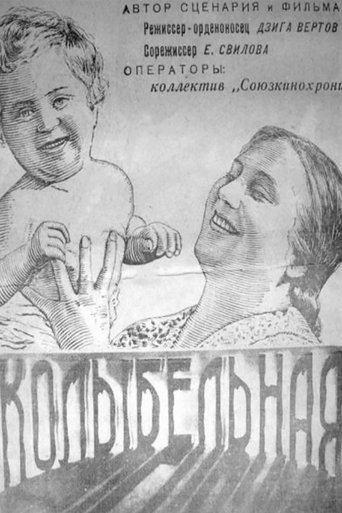 6.5
6.5Shot to commemorate the twentieth anniversary of the October Revolution, Dziga Vertov's eye focuses on the women and the role of motherhood, featuring images from across the Soviet Union, in particular the Far East.
Lullaby
1937
 5.8
5.8Dziga Vertov-directed Soviet newsreel covering: A bet is placed on the outcome of the Trial of the Socialist Revolutionaries / The verdict / People in streetcars and on the street / A crashed aircraft / Reconstruction of streetcar line 13 / Peacetime use of tanks – airport construction work.
Kino-Pravda No. 8
1922
The building of Sevzapkino. Columns of demonstrators are moving along Bolshaya Dmitrovka, Dzerzhinsky square, Pushkinskaya (Strastnaya) square, Kamenny Most (The Big Stone Bridge) and Red Square. Decorated cars and trucks. This is a Military parade on Red Square. L.D. Trotsky, N.I. Muralov, S.S. Kamenev are among the commanders. The demonstrators are carrying the models of a boat, plane and globe. The theatrical march. The members of the government and guests including K. Tsetkin are watching from the tribunes. There are lots of planes on the airdrome and square. M.M. Litvinov, N.I. Rikov and others stand near the plane. The plane builds jp speed, soars in the air, leads for landing and lands. Hordes of people gathered at the aerodrome. Camera operator is shooting. The church on the corner of Ulitsa Myasnitskaya (Kirovskaya), the building of GUM (State Department Store) and Khamovnichesky (Frunzensky) Council. Illuminated building.
First May in Moscow
1923
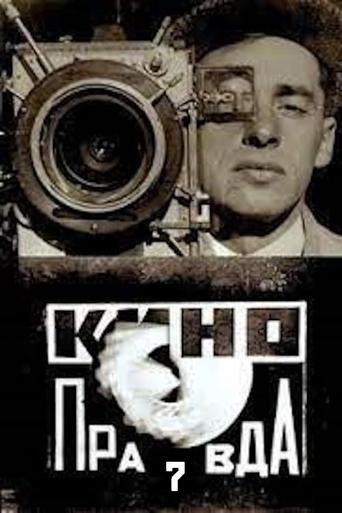 5.7
5.7Dziga Vertov-directed Soviet newsreel covering: Trial of the Socialist Revolutionaries / Rebuilding of the destroyed Siberian village of Taseevo / Railroad station Sljudjanka / Abandoned mica pits near Lake Baikal / Soči health resort / Chudjakovskij-Park / Beach near Tuapse / The loading of silk / Afghanistan, Kabul / Peacetime use of tanks / Mountain road / Chapel in the Caucasus.
Kino-Pravda No. 7
1922
 6.7
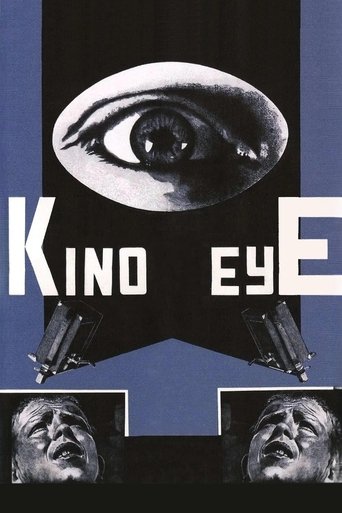
6.7Promoting the joys of life in a Soviet village centering on the activities of the Young Pioneers. These children are constantly busy, pasting propaganda posters on walls, distributing hand bills, exhorting all to 'buy from the cooperative' as opposed to the Public Sector, promoting temperance, and helping poor widows. Experimental portions, projected in reverse, feature the un-slaughtering of a bull and the un-baking of bread.
Kino-Eye
1924
6.7Promoting the joys of life in a Soviet village centering on the activities of the Young Pioneers. These children are constantly busy, pasting propaganda posters on walls, distributing hand bills, exhorting all to 'buy from the cooperative' as opposed to the Public Sector, promoting temperance, and helping poor widows. Experimental portions, projected in reverse, feature the un-slaughtering of a bull and the un-baking of bread.
Kino-Eye
1924
 NR
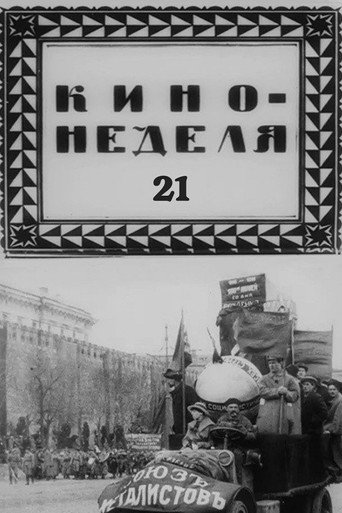
NRThe Kinonedelja (Kino-Week) newsreels represent Dziga Vertov's first contribution to cinema.
Kino-Week No. 21
1918
Archival footage of Ordzhonikidze, scenes from his funeral in Moscow, and speeches by his grieving colleagues, including Joseph Stalin and Nikita Khrushchev.
In Memory of Sergo Ordzhonikidze
1937
 9.0
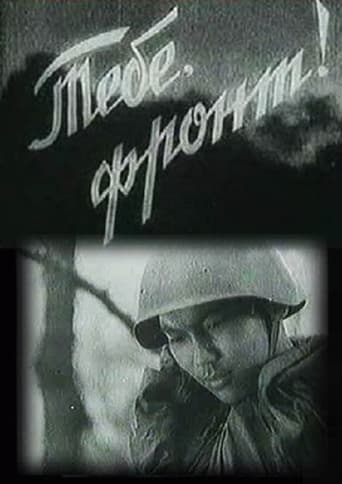
9.0From the start, Vertov made himself known as an irreconcilable enemy of 'acted films', which he regarded as a violation of truth. At the peak of WWII, however, such lofty artistic principles proved impractical.
For You at the Front!
1942
9.0From the start, Vertov made himself known as an irreconcilable enemy of 'acted films', which he regarded as a violation of truth. At the peak of WWII, however, such lofty artistic principles proved impractical.
For You at the Front!
1942
 5.0
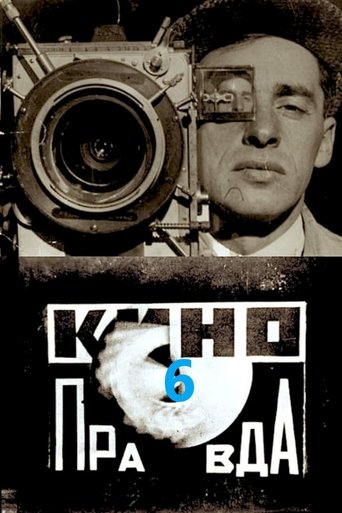
5.0Dziga Vertov-directed Soviet newsreel covering: Streetcar collision / Arms manufacturing plant resumes operation / Assembling an automobile / Bicycle and motorcycle races / A parade of Red Army armored units and an attack exercise.
Kino-Pravda No. 6
1922
 5.5
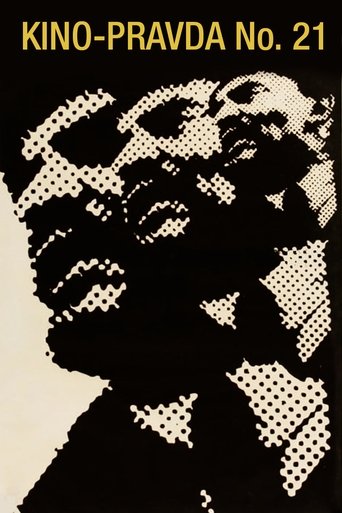
5.5Dziga Vertov-directed Soviet newsreel made to commemorate the first anniversary of the death of Vladimir Ilich Lenin (21st January 1924 - 1925) drawn from 'The Final Journey', a Pravda feuilleton written on the occasion of Lenin's funeral by the man who had introduced Vertov to cinema, Mikhail Koltsov. Contains: First anniversary of Lenin's death: 1. Assassination attempt on Lenin and Soviet Russia's progress under his leadership / 2. Lenin's illness, death and funeral / 3. The year after Lenin's death
Kino-Pravda No. 21: Lenin Kino-Pravda. A Film Poem About Lenin
1925
 9.5
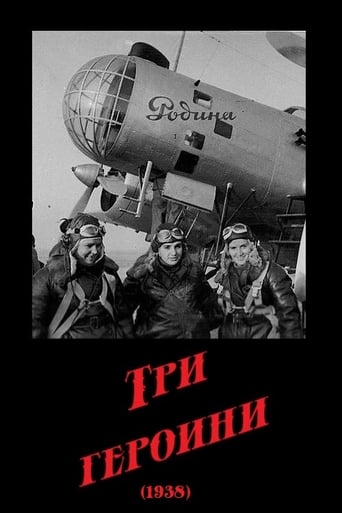
9.5Follows the legendary female pilots Raskova, Osipenko, and Grisodubova in their failed but magnificent attempt to make the first nonstop trans-Siberian flight. Using documentary reenactments, Vertov depicts the flight, the crash, the rescue, and the women’s heroic return to Moscow, where crowds shower them with flowers, and leaders with speeches.
Three Heroines
1938
 7.0
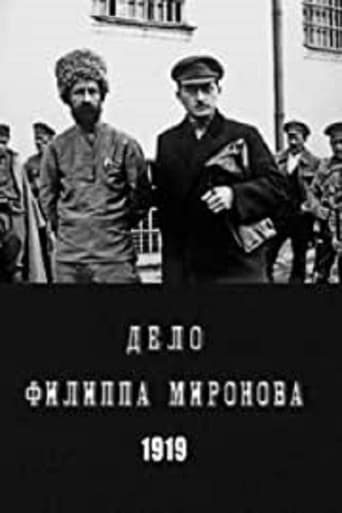
7.0Newsreel of the trial of the Cossack commander of the 2nd Cavalry Red Army Filipp Kuzmich Mironov. The part of The History of the Civil War—compilation film created by Vertov in 1921.
Protsess Mironova
1919
 5.4
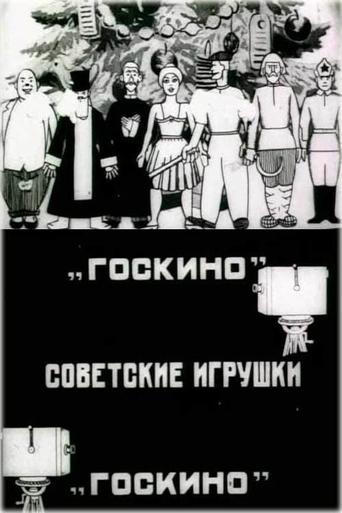
5.4The first animated film made in the Soviet Union portrays a bloated caricature of a Capitalist devouring a massive heap of food and drink.
Soviet Toys
1924
5.4The first animated film made in the Soviet Union portrays a bloated caricature of a Capitalist devouring a massive heap of food and drink.
Soviet Toys
1924
An experimental sound film.
Sound team program No 2
1930
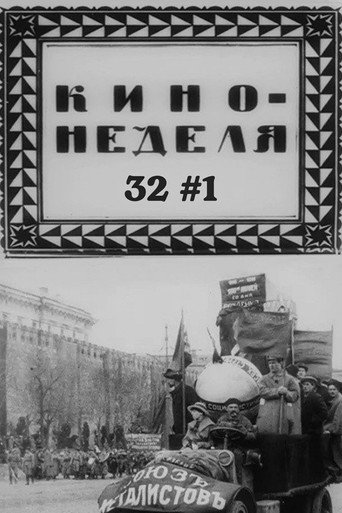 NR
NRThe Kinonedelja (Kino-Week) newsreels represent Dziga Vertov's first contribution to cinema.
Kino-Week No. 32 (Fragment #1)
1919