
Directing
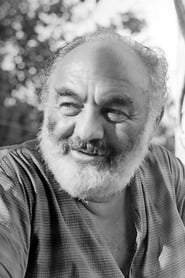
Sergei Parajanov
Born — Died
1924-01-09 — 1990-06-21
Place of birth
Tiflis, Georgian SSR, Transcaucasian SFSR, USSR [now Republic of Georgia]
Known for
Directing
Credits
60 titles
Sergei Parajanov (Armenian: Սերգեյ Փարաջանով; Russian: Серге́й Ио́сифович Параджа́нов; Georgian: სერგო ფარაჯანოვი; Ukrainian: Сергій Йо́сипович Параджа́нов; sometimes spelled Paradzhanov or Paradjanov; January 9, 1924 – July 20, 1990) was a Soviet film director and artist of Armenian descent who made significant contributions to Soviet cinematography through Ukrainian, Georgian, and Armenian cinema. One of the representatives of the Ukrainian poetic cinema movement. He pioneered the collage genre in Ukrainian visual arts, which he created on the basis of conceptualism, although during his lifetime these works remained underground and only appeared in exhibitions after the artist's death.
Known for
 7.4
7.4The life of the revered 18th-century Armenian poet and musician Sayat-Nova. Portraying events in the life of the artist from childhood up to his death, the movie addresses in particular his relationships with women, including his muse. The production tells Sayat-Nova's dramatic story by using both his poems and largely still camerawork, creating a work hailed as revolutionary by Mikhail Vartanov.
The Color of Pomegranates
1969
 7.5
7.5In the Carpathian Mountains of 19th-century Ukraine, love, hate, life and death among the Hutsul people are as they’ve been since time began. Ivan is drawn to Marichka, the beautiful young daughter of the man who killed his father. But fate tragically decrees that the two lovers will remain apart.
Shadows of Forgotten Ancestors
1965
 5.0
5.0This documentary is not a straightforward portrait of Armenian film director Sergei Paradjanov's life, but rather a fluid celebration of his talent and creativity. Focusing on the collages he produced during his years in prison, and featuring interviews with the director himself, Cazals' film demonstrates the scope of Paradjanov's artistic vision, lovingly commemorating this rebel of art cinema.
Sergei Parajanov: The Rebel
2003
 4.9
4.9Cinématon is a 156-hour long experimental film by French director Gérard Courant. It was the longest film ever released until 2011. Composed over 36 years from 1978 until 2006, it consists of a series of over 2,821 silent vignettes (cinématons), each 3 minutes and 25 seconds long, of various celebrities, artists, journalists and friends of the director, each doing whatever they want for the allotted time. Subjects of the film include directors Barbet Schroeder, Nagisa Oshima, Volker Schlöndorff, Ken Loach, Benjamin Cuq, Youssef Chahine, Wim Wenders, Joseph Losey, Jean-Luc Godard, Samuel Fuller and Terry Gilliam, chess grandmaster Joël Lautier, and actors Roberto Benigni, Stéphane Audran, Julie Delpy and Lesley Chatterley. Gilliam is featured eating a 100-franc note, while Fuller smokes a cigar. Courant's favourite subject was a 7-month-old baby. The film was screened in its then-entirety in Avignon in November 2009 and was screened in Redondo Beach, CA on April 9, 2010.
Cinématon
1978
 5.2
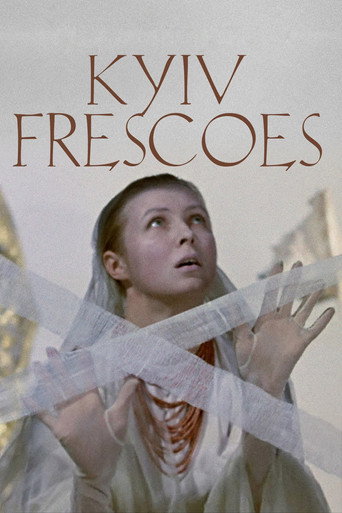
5.2Parajanov's collage of all the footage that remained from his film "Kyiv Frescoes," which was halted by the Soviet authorities who demanded that all the negatives be destroyed.
Kyiv Frescoes
1966
 7.0
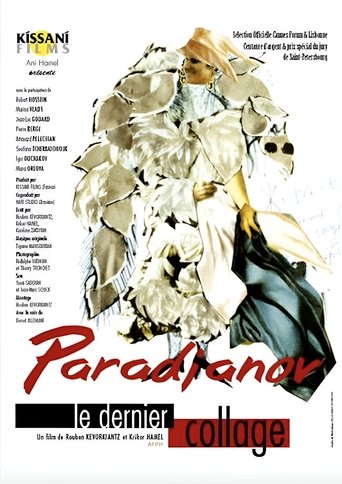
7.0Parajanov lifts the curtain on numerous unfinished scenes and fragments of unshot films. These are memories of his childhood, death, friends, Tiflis, Kyiv, Yerevan. Seven stories from the life of Parajanov and the close circle that shared his entire life path with him.
Paradjanov, le dernier collage
1995
Film credits

2010s · 2 titles
 8.0
8.0Documentary about the life of Sergei Parajanov, a prominent Soviet-era filmmaker who was active in Ukraine, Georgia and Armenia and was persecuted by the communist government for his views on the pretext of his homosexuality, which was a crime in the USSR. The centerpiece of this documentary is Shadows of Forgotten Ancestors, a 1965 movie directed by Parajanov, that awakened the Ukrainian national consciousness which had been suppressed by decades of Soviet rule.
Parajanov. A Ticket to Eternity
2018
 NR
NR"L'Artifice et le factice" is the episode that covers the period from January 1, 1988 to December 31, 1988 of my filmed Notebooks.
L'Artifice et le factice
2012
2000s · 6 titles
5.0This documentary is not a straightforward portrait of Armenian film director Sergei Paradjanov's life, but rather a fluid celebration of his talent and creativity. Focusing on the collages he produced during his years in prison, and featuring interviews with the director himself, Cazals' film demonstrates the scope of Paradjanov's artistic vision, lovingly commemorating this rebel of art cinema.
Sergei Parajanov: The Rebel
2003
Film devoted to director Sergei Parajanov. The film is designed as a confession of the director. There are pictures of various episodes of his life, while shooting, at his home, in prison... The commentary comes in the form of a monologue consisting of excerpts from letters, notes and scripts of his unfinished film The Confession.
I Died in Childhood...
2004
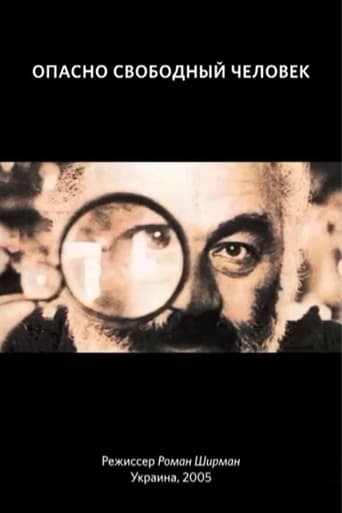 NR
NRRoman Shyrman's documentary details the life and work of Sergei Paradjanov, who was no less vibrant and extravagant in everyday life than in his films. His personal life was itself a piece of art. This film is a tragicomic story about this great improviser and fantasist.
A Dangerously Free Man
2004
Sergei Paradjanov, the great Soviet filmmaker of Armenian origin who was born and grew up in Tbilisi, Georgia, studied film in Moscow and worked for many years in Ukraine, talks on camera to Fotos Lamprinos about his life, his films, and events in the USSR under Gorbachev’s Perestroika, a few short months before he died and while the state of his health was already deteriorating. The film includes rare footage of the massacre of Georgian civilians by the Soviet Army in April 1989 and unpublished material from the Ukrainian prison in which Paradjanov served his sentence.
Sergei Parajanov, The Exile
2009
The art, destiny, and relationship of two geniuses of world cinema: Andrei Tarkovsky and Sergei Parajanov.
Andrey Tarkovsky & Sergey Paradzhanov: Islands
2003
A short documentary by Levon Grigoryan about the making of Parajanov's «Sayat-Nova», or «The Colour of Pomegranates».
Memories of «Sayat Nova»
2006
1990s · 11 titles
7.0Parajanov lifts the curtain on numerous unfinished scenes and fragments of unshot films. These are memories of his childhood, death, friends, Tiflis, Kyiv, Yerevan. Seven stories from the life of Parajanov and the close circle that shared his entire life path with him.
Paradjanov, le dernier collage
1995
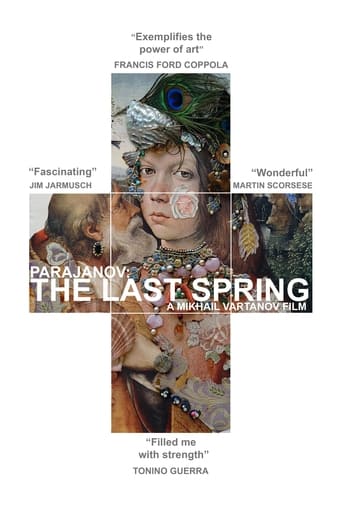 5.1
5.1Made in wartime and edited in candlelight, Vartanov's rarely-seen masterpiece tells about his friendship with the genius Parajanov who was imprisoned by KGB "at the height of his fame ". Vartanov resurrects the riveting scenes from his banned 1969 film The Color of Armenian Land, where Paradjanov concocts the chef-d'oeuvre The Color of Pomegranates - widely regarded as one of the greatest films of all time - then reveals the shocking request Parajanov sent him in unpublished 1974 letters from Ukrainian prisons. Vartanov's camera documents Parajanov's staggering last day at work in 1990 during the making of the unfinished Confession - which survives in The Last Spring - as Parajanov comments on this cherished autobiographical film. The foremost achievement of The Last Spring, emphasized by critics, is Vartanov's exquisite wordless montage that "evoked the very soul" of Parajanov and earned the praise of many of cinema's greatest masters, such as Martin Scorsese and Francis Ford Coppola.
Parajanov: The Last Spring
1992
Documentary made and dedicated to Sergei Parajanov shortly after his death, featuring archive photographs, his collages, and clips from several of his films.
I am Sergei Parajanov!
1990
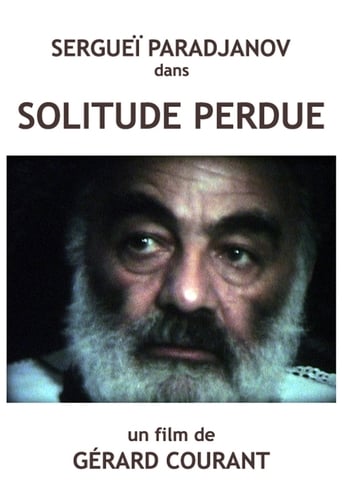 NR
NRNo synopsis available yet.
Solitude perdue
1991
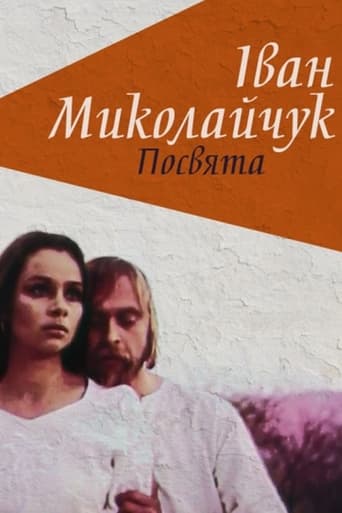 8.0
8.0The story of life and death of actor Ivan Mykolaychuk - the legend of Ukrainian poetic cinema. The film is stylized as Vertep Christmas mystery: the heroes are explaining themselves with the roles they play.
Ivan Mykolaichuk. Dedication
1998
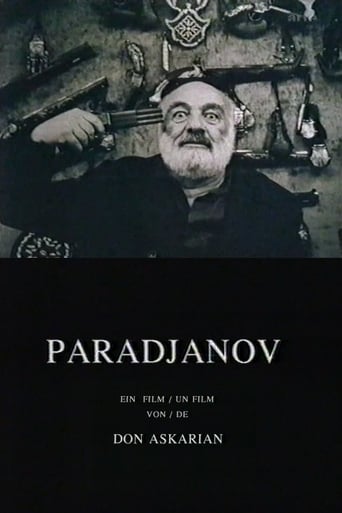 6.0
6.0“Drawing on archival footage, fragments of interviews, and scenes from his films, this newly constructed portrait of Sergey Paradjanov was composed by the highly accomplished Armenian director Don Askarian (Komitas, Avetik). According to the director's synopsis: "The year is 1989. The place is the film festival in Rotterdam. Farewell at the Hilton Hotel. And Paradjanov says, ‘Help me make Confession’. I answer, ‘As a child of two fathers, the film will be born a bastard’."
Paradjanov
1998
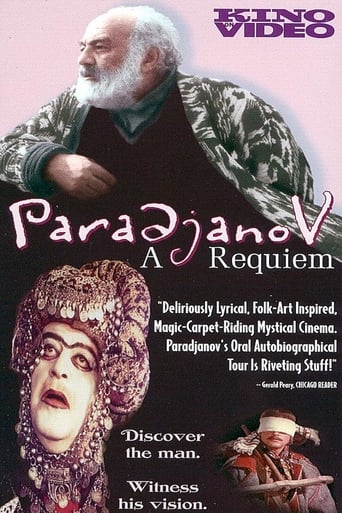 6.0
6.0An absorbing portrait of one of the most colorful and revered figures in world cinema, 'Paradjanov: A Requiem' offers an affectionate and insightful look at the tumultuous career of the late Sergei Paradjanov; artist, dissident, romantic and iconoclast.
Paradjanov: A Requiem
1994
 7.0
7.0In November 1988, director Anatoly Syrykh met with Sergei Parajanov in Tbilisi to make a documentary about him. However, Parajanov was clearly not in the mood to talk about his art. As a compromise, Syrykh offers to talk about the artist and time. The tired, offended director of "Shadows of Forgotten Ancestors" forbids Syrykh to film him. He agrees only to speak, recalling the most unpleasant moments of his life.
Sergei Parajanov. A Visit
1994
Showing Sergei Parajanov at the end of his life, the film depicts the suffering of a genius against the backdrop of general anxiety and carelessness.
MIGNOR
1990
 NR
NRIn 1989, Yurii Illienko came to Tbilisi to show Sergei Parajanov his film “Swan Lake. The Zone“, based on Parajanov's prison stories. The next day after the screening, Illienko shows the film to Soviet central party newspaper Pravda, which publishes the news of the resignation of Vladimir Shcherbytsky, who had ordered Parajanov's initial imprisonment. Illienko hands Parajanov the newspaper and turns on a household video camera. What follows is a friendly conversation between the two geniuses.
Paradzhanov: Christ score in C major
1994
A film written and directed by Andrei Ayrapetov in memory of Sergei Parajanov. It was produced at Hayk Studio in Yerevan (Armenia) in 1995.
The Isle Paradjanov
1995
1980s · 5 titles
 4.7
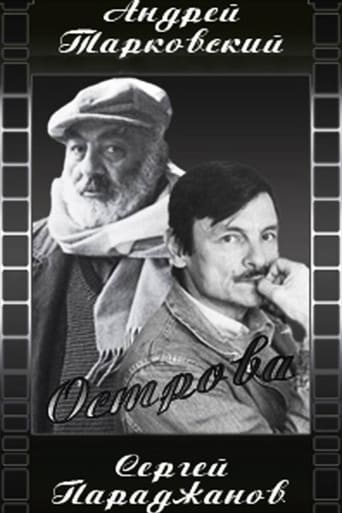
4.7A bunch of stories, portraits and images about people of amazing destinies, including Parajanov and Tarkovsky, merging into a non-traditional and polemic image of Armenia.
Islands
1987
No synopsis available yet.
Paradjanov Libéré
1982
 NR
NRThe first movie about the actor who became the creator and symbol of Ukrainian poetic cinema Ivan Mykolaichuk, released 2 years after his death.
Ivan Mykolaichuk. Trizna
1989
 5.0
5.0No synopsis available yet.
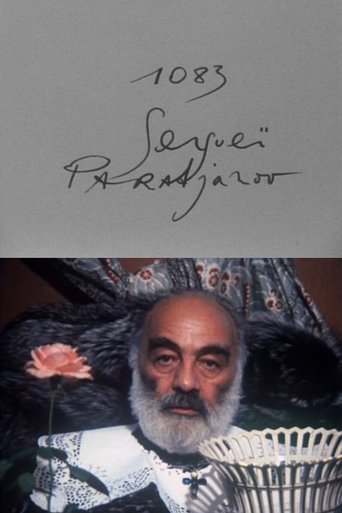
Cinématon n°1083: Sergueï Paradjanov
1988
No synopsis available yet.
Return to Life
1980
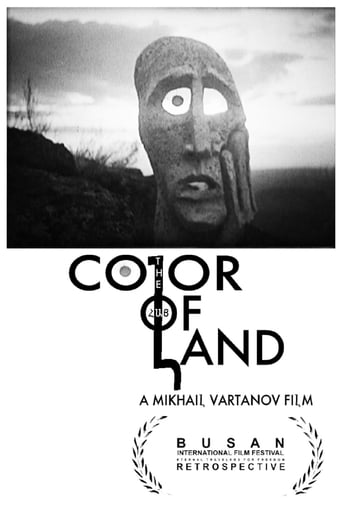

Behind the camera
7.4The life of the revered 18th-century Armenian poet and musician Sayat-Nova. Portraying events in the life of the artist from childhood up to his death, the movie addresses in particular his relationships with women, including his muse. The production tells Sayat-Nova's dramatic story by using both his poems and largely still camerawork, creating a work hailed as revolutionary by Mikhail Vartanov.
The Color of Pomegranates
1969
7.4The life of the revered 18th-century Armenian poet and musician Sayat-Nova. Portraying events in the life of the artist from childhood up to his death, the movie addresses in particular his relationships with women, including his muse. The production tells Sayat-Nova's dramatic story by using both his poems and largely still camerawork, creating a work hailed as revolutionary by Mikhail Vartanov.
The Color of Pomegranates
1969
7.5In the Carpathian Mountains of 19th-century Ukraine, love, hate, life and death among the Hutsul people are as they’ve been since time began. Ivan is drawn to Marichka, the beautiful young daughter of the man who killed his father. But fate tragically decrees that the two lovers will remain apart.
Shadows of Forgotten Ancestors
1965
7.5In the Carpathian Mountains of 19th-century Ukraine, love, hate, life and death among the Hutsul people are as they’ve been since time began. Ivan is drawn to Marichka, the beautiful young daughter of the man who killed his father. But fate tragically decrees that the two lovers will remain apart.
Shadows of Forgotten Ancestors
1965
5.2Parajanov's collage of all the footage that remained from his film "Kyiv Frescoes," which was halted by the Soviet authorities who demanded that all the negatives be destroyed.
Kyiv Frescoes
1966
5.2Parajanov's collage of all the footage that remained from his film "Kyiv Frescoes," which was halted by the Soviet authorities who demanded that all the negatives be destroyed.
Kyiv Frescoes
1966
 5.9
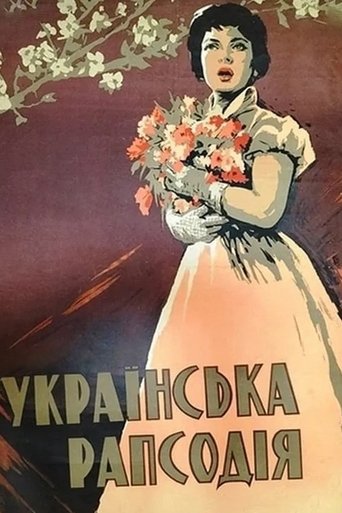
5.9World War II separates lovers Oksana and Anton. The young man is taken prisoner by the Germans, while his beloved abandons her studies at the conservatory to become a frontline nurse. Despite all the hardships, their paths cross again.
Ukrainian Rhapsody
1961
 6.2
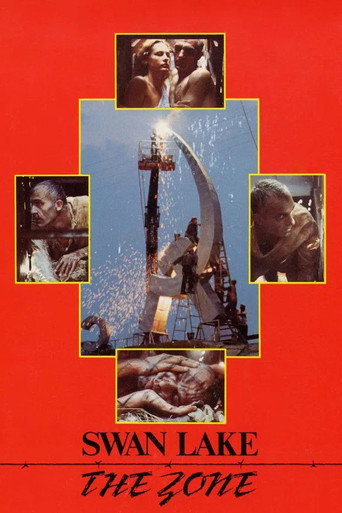
6.2A convict is forced to hide within a model of a hammer and sickle. Here a tragic romance ensues between the convict and woman worker; which is spoilt by the woman's jealous young son. The convict is then forced to undergo a tragic bid for freedom which ends with the beauty of swans contrasted with the imprisoned convicts and the hopeful but ultimately tragic wait by the woman for her lover.
Swan Lake: The Zone
1990
5.1Made in wartime and edited in candlelight, Vartanov's rarely-seen masterpiece tells about his friendship with the genius Parajanov who was imprisoned by KGB "at the height of his fame ". Vartanov resurrects the riveting scenes from his banned 1969 film The Color of Armenian Land, where Paradjanov concocts the chef-d'oeuvre The Color of Pomegranates - widely regarded as one of the greatest films of all time - then reveals the shocking request Parajanov sent him in unpublished 1974 letters from Ukrainian prisons. Vartanov's camera documents Parajanov's staggering last day at work in 1990 during the making of the unfinished Confession - which survives in The Last Spring - as Parajanov comments on this cherished autobiographical film. The foremost achievement of The Last Spring, emphasized by critics, is Vartanov's exquisite wordless montage that "evoked the very soul" of Parajanov and earned the praise of many of cinema's greatest masters, such as Martin Scorsese and Francis Ford Coppola.
Parajanov: The Last Spring
1992
5.1Made in wartime and edited in candlelight, Vartanov's rarely-seen masterpiece tells about his friendship with the genius Parajanov who was imprisoned by KGB "at the height of his fame ". Vartanov resurrects the riveting scenes from his banned 1969 film The Color of Armenian Land, where Paradjanov concocts the chef-d'oeuvre The Color of Pomegranates - widely regarded as one of the greatest films of all time - then reveals the shocking request Parajanov sent him in unpublished 1974 letters from Ukrainian prisons. Vartanov's camera documents Parajanov's staggering last day at work in 1990 during the making of the unfinished Confession - which survives in The Last Spring - as Parajanov comments on this cherished autobiographical film. The foremost achievement of The Last Spring, emphasized by critics, is Vartanov's exquisite wordless montage that "evoked the very soul" of Parajanov and earned the praise of many of cinema's greatest masters, such as Martin Scorsese and Francis Ford Coppola.
Parajanov: The Last Spring
1992
 6.8
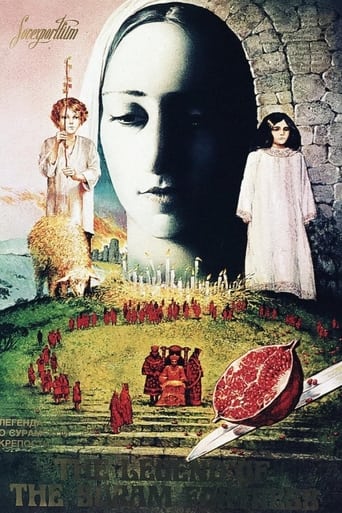
6.8A film version of a well-known Georgian folk-tale. A young boy has to be immured into the walls of a fortress in order to stop it from crumbling to pieces.
The Legend of the Suram Fortress
1985
 6.0
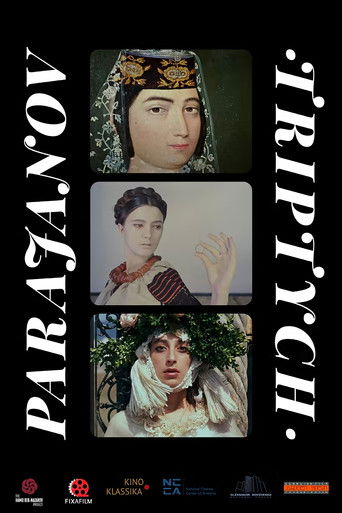
6.0Three short films by Sergei Parajanov, Hakob Hovnatanyan (1967), Kyiv Frescoes (1966) and Arabesques on the Theme of Pirosmani (1986). Scanned and restored from the original camera negatives in 4K by Fixafilm. Produced in association with National Cinema Centre of Armenia (NCCA), Dovzhenko Centre and Georgian Film. Scans for Hakob Hovnatanyan and Arabesques on the Theme of Pirosmani financed by Kino Klassika.
Parajanov Triptych
2020
6.0Three short films by Sergei Parajanov, Hakob Hovnatanyan (1967), Kyiv Frescoes (1966) and Arabesques on the Theme of Pirosmani (1986). Scanned and restored from the original camera negatives in 4K by Fixafilm. Produced in association with National Cinema Centre of Armenia (NCCA), Dovzhenko Centre and Georgian Film. Scans for Hakob Hovnatanyan and Arabesques on the Theme of Pirosmani financed by Kino Klassika.
Parajanov Triptych
2020
 5.2
5.2Documentary showcasing popular and folk songs performed by the Ukrainian State Choir.
Dumka
1957
 6.3
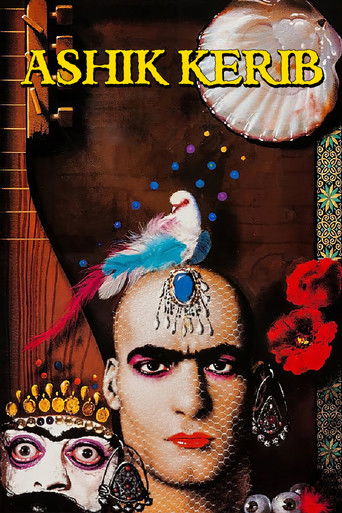
6.3Wandering minstrel Ashik Kerib falls in love with a rich merchant's daughter, but is spurned by her father and forced to roam the world for a thousand and one nights. Now presumed dead by those he loves, he performs for the poor and unfortunate on his journeys through the wilderness.
Ashik Kerib
1988
 5.0
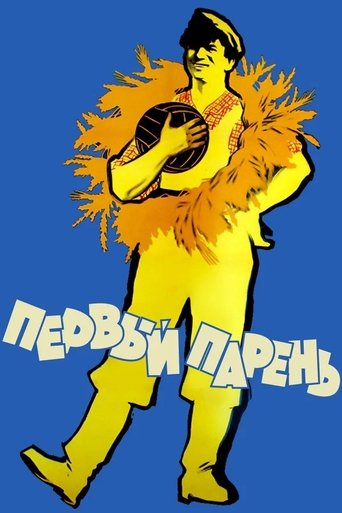
5.0A gem from Paradjanov's early oeuvre is a musical agitation film or a romantic comedy, made by the young director under the guidance of Alexander Dovzhenko and set in the immense fields of the collectivised Ukraine. The social realism is replaced by colourful, convivial and dancing shots of the “Pabieda” (Victory) kolkhoz, where peasant women sing in the fields, and boys march with banners glorifying revolution. Against this backdrop, intense romantic feelings have reached a climactic stage; tailor Sidor Sidorovich, farmer Jushka and soldier Danila Petrovich all dote on the fair-haired Odarka. It is Jushka and Danila who engage in overt hostility; the initial “gentlemen’s” contest turns into an outright confrontation, resulting in miserable Jushka being increasingly more desperate and scorned by the villagers.
The First Lad
1959
 4.3
4.3The Confession (1990) survives in Parajanov: The Last Spring (1992) in its original camera negative. It remained unfinished due to the death of Sergei Parajanov. The Confession (1990) was his favorite screenplay, which was written in the 1960s and was his film-memory of the childhood, student years, marriage, imprisonment and more as the fantasist Parajanov perceived it. Parajanov gifted the screenplay to Mikhail Vartanov, made a drawing on the cover and wrote: "The Confession will only be made by a director born in 1924 in Tiflis, Georgia." He predicted that he would not finish it.
The Confession
1990
4.3The Confession (1990) survives in Parajanov: The Last Spring (1992) in its original camera negative. It remained unfinished due to the death of Sergei Parajanov. The Confession (1990) was his favorite screenplay, which was written in the 1960s and was his film-memory of the childhood, student years, marriage, imprisonment and more as the fantasist Parajanov perceived it. Parajanov gifted the screenplay to Mikhail Vartanov, made a drawing on the cover and wrote: "The Confession will only be made by a director born in 1924 in Tiflis, Georgia." He predicted that he would not finish it.
The Confession
1990
 5.8
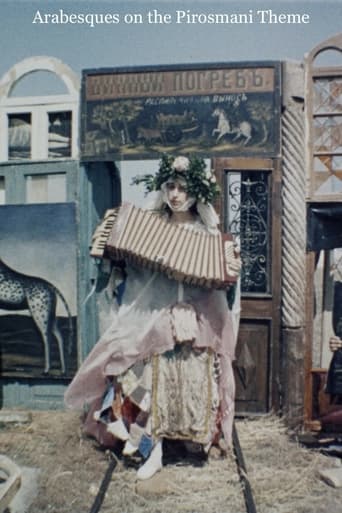
5.8Short film from Sergei Parajanov, a personal view of the director on the spectacular heritage of Niko Pirosmani (1862–1918), a Georgian primitivist painter.
Arabesques on the Pirosmani Theme
1985
5.8Short film from Sergei Parajanov, a personal view of the director on the spectacular heritage of Niko Pirosmani (1862–1918), a Georgian primitivist painter.
Arabesques on the Pirosmani Theme
1985
 8.0
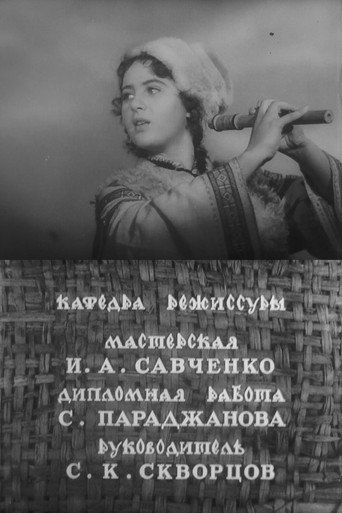
8.0A short diploma film based on a fairy tale by Yemelian Bukov and directed by Sergei Parajanov. The film was made in 1952, since that moment it was considered to be lost, but finally it was found in VGIK in 2025.
Andriesh
1952
8.0A short diploma film based on a fairy tale by Yemelian Bukov and directed by Sergei Parajanov. The film was made in 1952, since that moment it was considered to be lost, but finally it was found in VGIK in 2025.
Andriesh
1952
 5.7
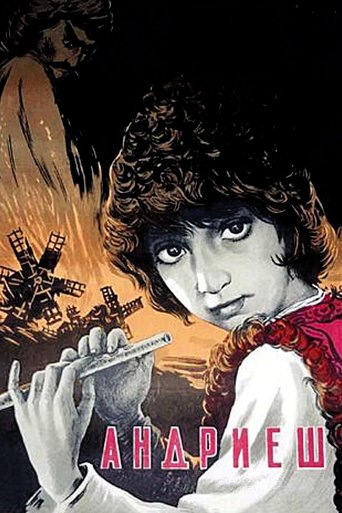
5.7The evil wizard Black Whirlwind steals the herd of a shepherd boy named Andriesh along with his faithful dog Lupar. Andriesh sets off to rescue them. On the way, he receives a magical flute as a gift, which helps him find his way to the wizard's castle — and comes to the aid of Black Whirlwind's numerous victims, who have long suffered from the tyrant's misdeeds. Based on a Moldovan fairy tale by Emilian Bukov.
Andriesh
1954
 6.5
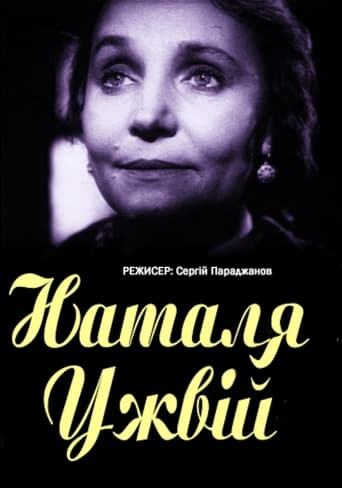
6.5A documentary portrait of prominent Ukrainian stage and screen actress Natalya Ushviy that contains numerous excerpts from her feature films.
Natalia Uzhviy
1959
 4.6
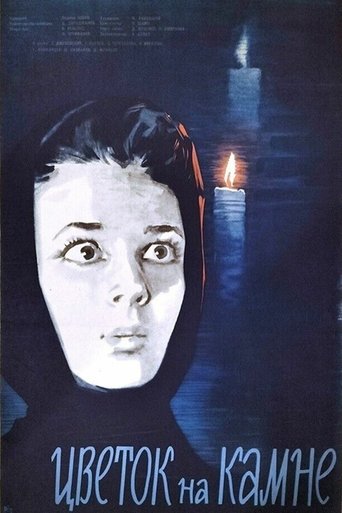
4.6Set in a new mining town in the Donets Coal Basin, it centres on a clash between the young miners, the political establishment, and a religious cult lead by a devious Pentecostal evangelist infiltrated into the community who tries to make the workers fall under his influence.
Flower on the Stone
1963
 6.3
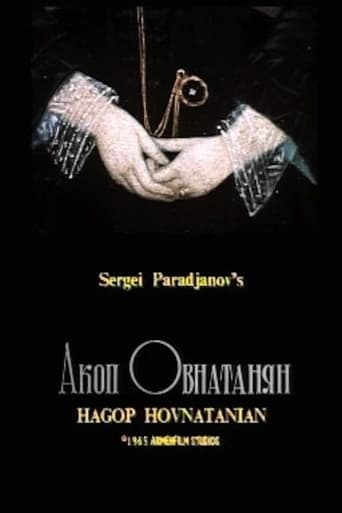
6.3Exploring the art of Armenian portraitist Hakob Hovnatanyan, Parajanov revives the culture of Tbilisi of the 19th century.
Hakob Hovnatanyan
1967
6.3Exploring the art of Armenian portraitist Hakob Hovnatanyan, Parajanov revives the culture of Tbilisi of the 19th century.
Hakob Hovnatanyan
1967
No synopsis available yet.
Return to Life
1980
No synopsis available yet.
Return to Life
1980
No synopsis available yet.
Return to Life
1980
 5.5
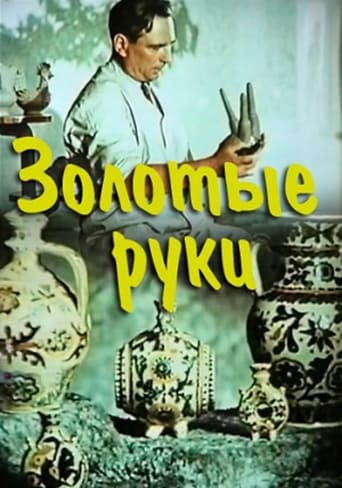
5.5A documentary about traditional Ukrainian arts and crafts and folk applied art, shot by Sergei Parajanov on commission from the Kyiv Television Studio. Ukrainian masters of pottery, carving, embroidery, painting, and other arts and crafts demonstrate their work in documentary and specially filmed scenes.
Golden Hands
1957
 NR
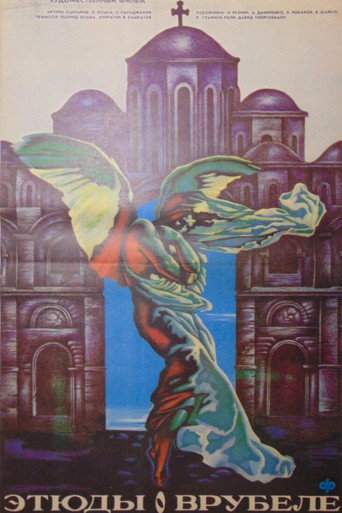
NRFilm about the painter Mikhail Vrubel's years in Kyiv, from a Sergei Parajanov script.
Etudes on Vrubel
1989