
Acting
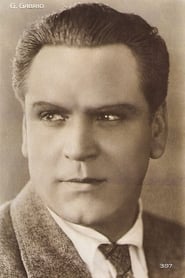
Gabriel Gabrio
Born — Died
1887-01-13 — 1946-10-31
Place of birth
Reims, Marne, France
Known for
Acting
Credits
34 titles
From Wikipedia, the free encyclopedia. Gabriel Gabrio (13 January 1887 – 31 October 1946) was a French stage and film actor whose career began in cinema in the silent film era of the 1920s and spanned more than two decades. Gabrio is possibly best recalled for his roles as Jean Valjean in the 1925 Henri Fescourt-directed adaptation of Victor Hugo's Les Misérables, Cesare Borgia in the 1935 Abel Gance-directed biopic Lucrèce Borgia and as Carlos in the 1937 Julien Duvivier-directed gangster film Pépé le Moko, opposite Jean Gabin. Description above from the Wikipedia article Gabriel Gabrio, licensed under CC-BY-SA, full list of contributors on Wikipedia.
Known for
 7.2
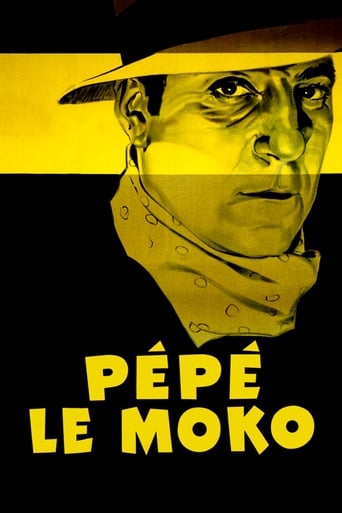
7.2Pépé le Moko, one of France's most wanted criminals, hides out in the Casbah section of Algiers. He knows police will be waiting for him if he tries to leave the city. When Pépé meets Gaby, a gorgeous woman from Paris who is lost in the Casbah, he falls for her.
Pépé le Moko
1937
 6.8
6.8At the end of the 15th century, a man and a woman, posing as traveling minstrels, are sent by the Devil to a castle to seduce its inhabitants.
The Devil's Envoys
1942
 6.4
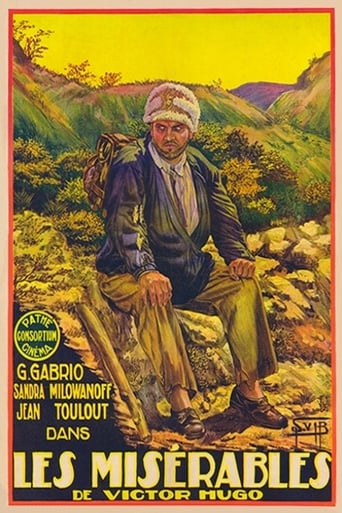
6.4In 19th century France, Jean Valjean, a man imprisoned for stealing bread, must flee a relentless policeman named Javert. The pursuit consumes both men's lives, and soon Valjean finds himself in the midst of the student revolutions in France.
Les Misérables
1925
 7.1
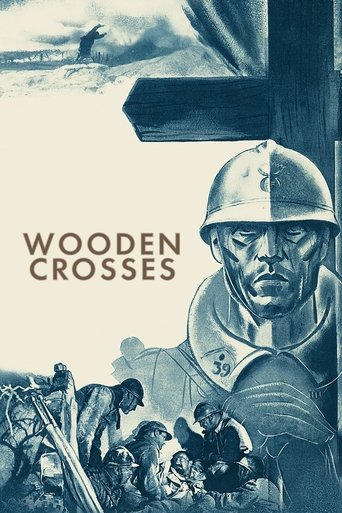
7.1The young and patriotic student Demachy joins the French army in 1914 to defend his country. But he and his comrades soon experience the terrifying, endless trench war in Champagne, where more and more wooden crosses have to be erected for this cannon fodder.
Wooden Crosses
1932
 10.0
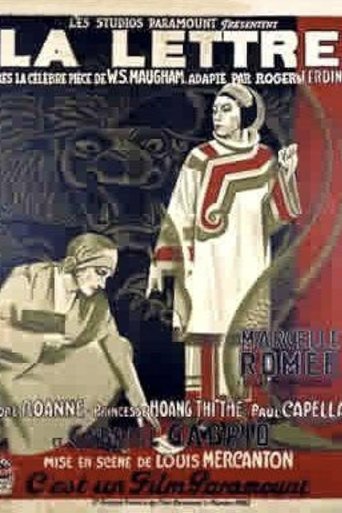
10.0No synopsis available yet.
The Letter
1930
 9.0
9.0The plot revolves around an oil swindle in a South American country.
The Oil Sharks
1933
Film credits
1940s · 3 titles
6.8At the end of the 15th century, a man and a woman, posing as traveling minstrels, are sent by the Devil to a castle to seduce its inhabitants.
The Devil's Envoys
1942
 7.2
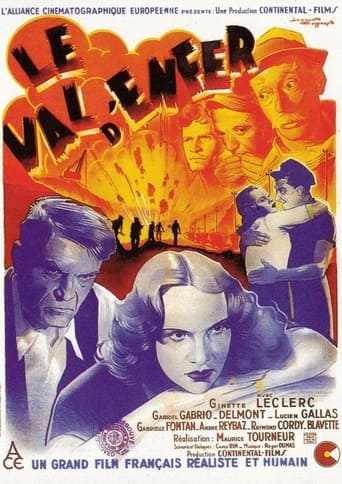
7.2Noël Bienvenu, owner of a career, is a widower and lives with his parents. His son Bastien, whom he despises, was sentenced to six months in prison for theft. Noël goes to see a dying friend, Romieux, who asks him to take care of his daughter Marthe, who has settled in Paris (Batignolles district). Noël goes there and discovers that Marthe is destitute (her lover Gaston being an incarcerated mobster): he then offers her to come and live with him and soon, marries her.
Valley of Hell
1943
 8.0
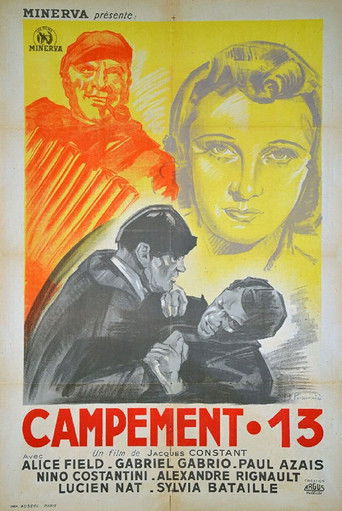
8.0In a camp of sailors, the suicidal and solitary life of Greta, which makes men lose their heads.
Camp Thirteen
1940
1930s · 22 titles
7.2Pépé le Moko, one of France's most wanted criminals, hides out in the Casbah section of Algiers. He knows police will be waiting for him if he tries to leave the city. When Pépé meets Gaby, a gorgeous woman from Paris who is lost in the Casbah, he falls for her.
Pépé le Moko
1937
7.1The young and patriotic student Demachy joins the French army in 1914 to defend his country. But he and his comrades soon experience the terrifying, endless trench war in Champagne, where more and more wooden crosses have to be erected for this cannon fodder.
Wooden Crosses
1932
10.0No synopsis available yet.
The Letter
1930
9.0The plot revolves around an oil swindle in a South American country.
The Oil Sharks
1933
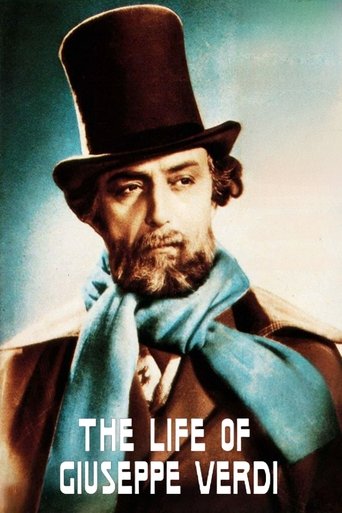 9.5
9.5The great Italian opera composer recalls his eventful life on his deathbed: his childhood in Busseto, his studies in Milan, his first opera "Oberto, conte di San Bonifacio", the death of his wife and his children killed by smallpox.
The Life of Giuseppe Verdi
1938
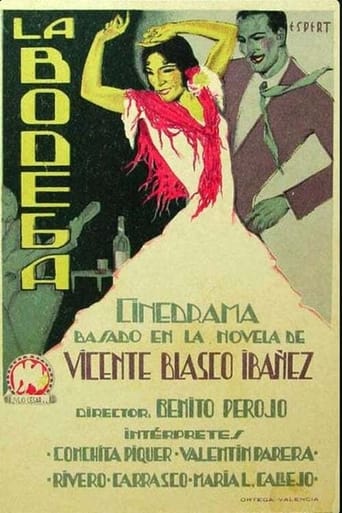 6.0
6.0Wine Cellars itself is a Spanish-French co-production. He shot the film in the Paris studios and also in Spain, Andalusia and Seville. According to the critics, his story of love, honour, revenge, bulls and vineyards masterfully captures the spirit of this region, the sun beating down on the parched earth, life on the farms and vineyards and the celebrations coloured by the famous flamenco dance. Wine Cellars was originally a silent film and its soundtrack was only added later.
Wine Cellars
1930
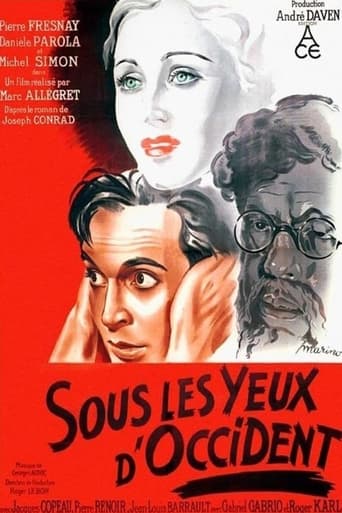 6.3
6.3Political turmoil convulses 19th-century Russia as Razumov, a young student preparing for a career in the czarist bureaucracy, unwittingly becomes embroiled in the assassination of a public official.
Under Western Eyes
1936
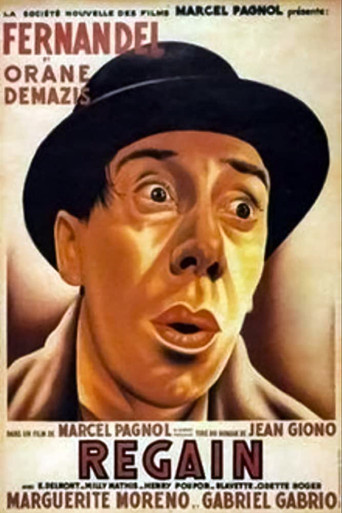 6.8
6.8In the 30s, a small village in the Provence is losing its inhabitants because young people prefer to go to the city to find easy jobs and escape from being farmers living in relative poverty. Only a few old people and the poacher Panturle remain. Panturle dreams of bringing the village back to life, finding a wife, founding a family and work as a farmer. One day, the village is visited by a traveling knife-grinder, Urbain Gedemus and a young woman, Arsule. Gedemus treats Arsule like a slave, but Arsule accept this because she has nowhere to go and -we guess- her 'work' with Gedemus is the last thing that saves her from being a prostitute. When she meets Panturle and knows about his dreams, she escapes from Gedemus and decides to stay with him. Together, they start a new life, made of hard farming work but mostly of happiness to have each other, fulfilling the earlier dreams of Panturle. Can anything break the happiness of their new life?
Harvest
1937
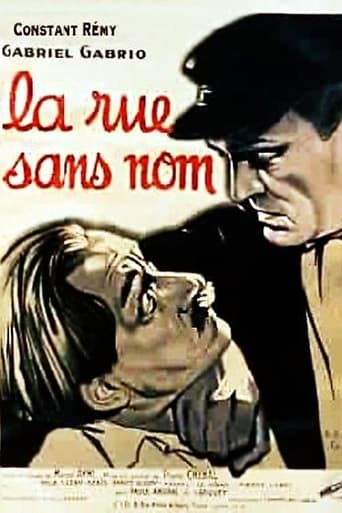 10.0
10.0The story focuses on a street in the Parisian banlieue where Italian and French workers live. Their neighborhood will soon be demolished and a mysterious character hides himself in this street.
Street Without a Name
1934
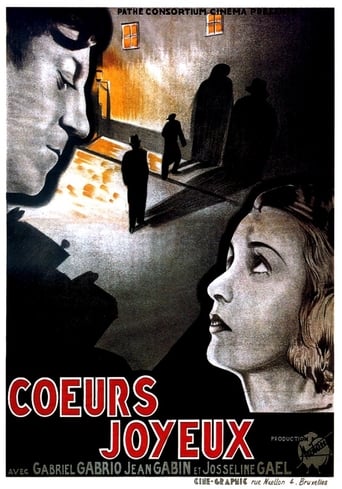 7.0
7.0A silent film theater projectionist is kidnapped by a gangster group, so he can show them footage of a Dutch jewel dealer they want to steal from. The head gangster's sister helps foil their plan.
Happy Hearts
1932
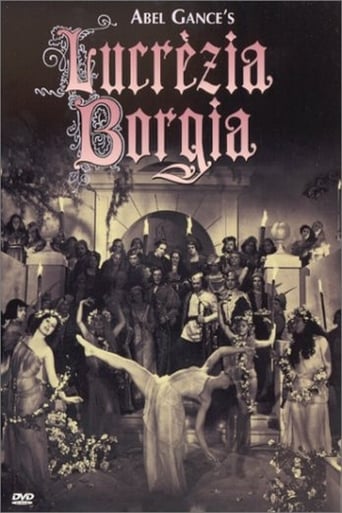 5.3
5.3French silent film pioneer Abel Gance directs this 1935 classic about Lucrezia Borgia, her brother, Cesare. and her father, Pope Alexander VI -- one of history's most ruthless and ambitious crime families.
Lucrezia Borgia
1935
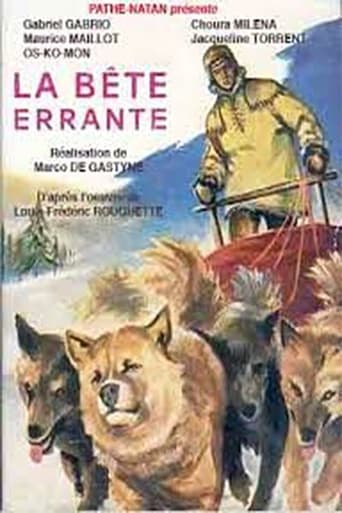 8.0
8.0In the Yukon, searching for gold, Hurricane picks up a paper and discovers that the girl back home is planning to marry another man. Abandoning all care, Hurricane is soon embroiled in a fight in which guns play a part. It is then that the true value of one of his companions, Flossie, a girl of the gold-fields, becomes apparent.
The Wandering Beast
1932
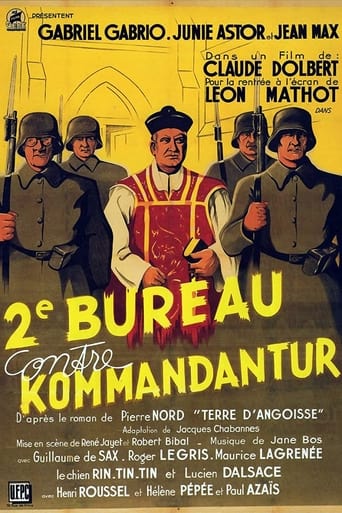 7.0
7.0In 1917, in a small village in the North, Abbe Gaillard is suspected by the Germans of facilitating the escape of French and Belgian soldiers. A false alibi makes him innocent and he can thus continue his mission, thanks to the devotion of an Alsatian who, in enemy uniform, obscurely serves his country.
Deuxième bureau contre kommandantur
1939
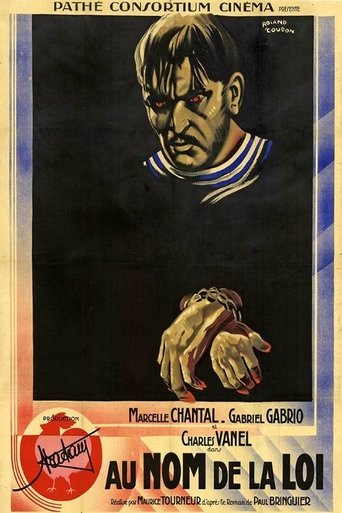 6.9
6.9The story is about a drug ring and the finally successful efforts of the Paris police to break it up. A young detective goes into a den in Paris' Chinatown, following a clue, and that is the last seen of him until his body is found floating in the Seine several days later. The only clue is a woman's glove. The dead man's friends on the force vow to avenge him, and receive information leading them to suspect one Sandra, a beautiful foreigner, played by the stunning Marcelle Chantal.
In the Name of the Law
1932
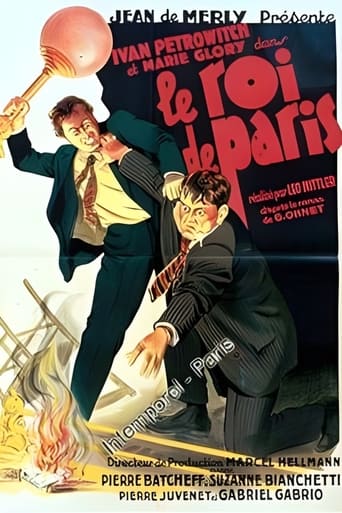 8.0
8.0No synopsis available yet.
The King of Paris
1930
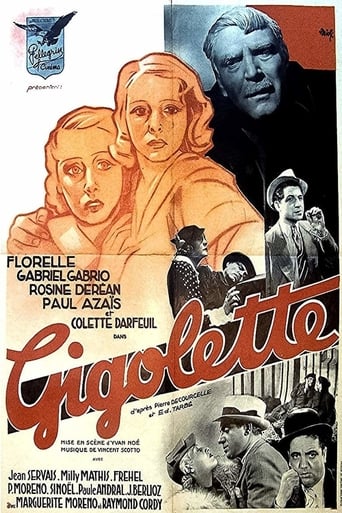 9.0
9.0No synopsis available yet.
Gigolette
1937
 9.0
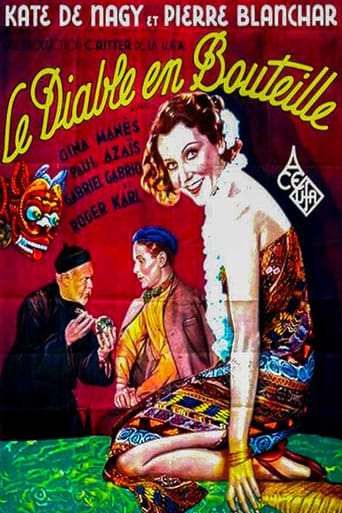
9.0If a sailor uses a magic bottle he found that grants whatever he desires, will his soul be lost to the Devil?
The Devil in the Bottle
1935
The new French military attaché at the Constantinople embassy helps a young woman being blackmailed by her own husband.
The Man Who Killed
1931
 7.0
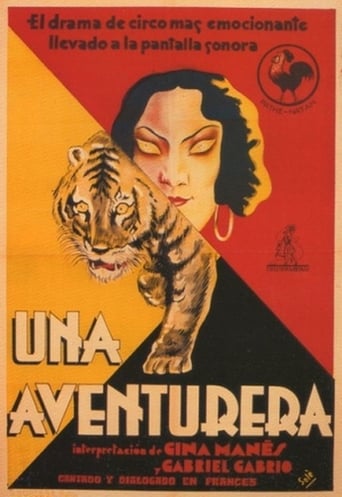
7.0Father-and-son lion tamers, Rabbas and Léo share a mistress - Rosita, the " lovely bitch " of the film's title. She is as wild as their lionesses and, in a single night the father is injured and the son attempts suicide. Only when Rosita leaves the circus can things get back to normal.
A Beautiful Woman
1930
 7.3
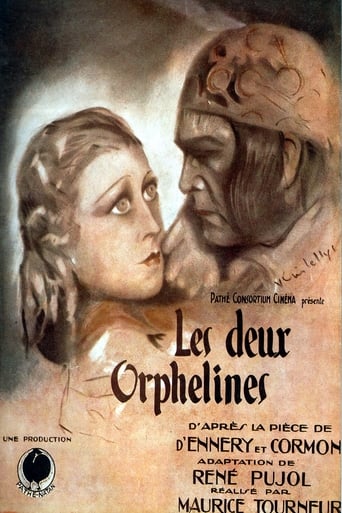
7.3In this adaptation of "Les Deux Orphelines," two sisters are separated during the French Revolution and face a series of hardships as they attempt to find each other again. Their story unfolds against the backdrop of political unrest and social upheaval in late 18th-century France.
The Two Orphans
1933
The owner of a fairground shooting gallery, haunted by the crime he committed ten years before with the complicity of his friend and associate, is ridden with guilt. One day, as he is under the influence of alcohol, he confesses his crime. In vain, for nobody, including the police, wants to believe him...
Case closed
1932
 10.0
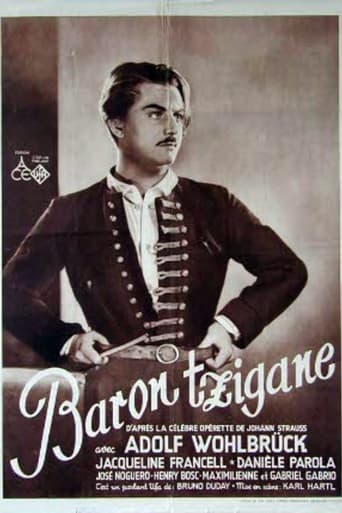
10.0An Hungarian young man hides his real identity as baron Barinkay until he returns to his birthplace and claims the family properties, now occupied by a clumsy pig dealer who has a beautiful daughter. The gypsy girl is not bad looking either, and the gypsies are willing to help him recover his home and fortune. French version of Der Zigeunerbaron based on the Strauss operetta, filmed at the same time with a different cast except for Wohlbrück.
Gypsy Baron
1935
1920s · 9 titles
6.4In 19th century France, Jean Valjean, a man imprisoned for stealing bread, must flee a relentless policeman named Javert. The pursuit consumes both men's lives, and soon Valjean finds himself in the midst of the student revolutions in France.
Les Misérables
1925
 10.0
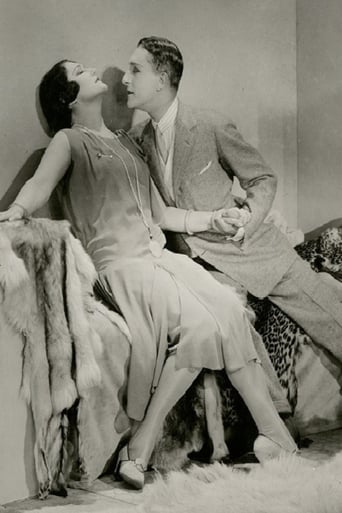
10.0Adapted from a play by Romain Coolus, whose work Dulac had covered as a theater critic at the turn of the century, this atmospheric and socially inquisitive film tells the tale of an independent, sexually liberated woman (Eve Francis) who is torn between her husband (Gabriel Gabrio) and her lover (Paul Guide). Controversial at the time of its release, Antoinette Sabrier finds Dulac using her bold sense of visual rhythm to achieve a complex portrait of a woman trapped in an unhappy marriage and a nuanced investigation into human intimacy, with her characters’ emotions expressed through then-innovative cinematic techniques such as slow motion and associative montage.
Antoinette Sabrier
1927
No synopsis available yet.
Fecundity
1929
 7.0
7.0No synopsis available yet.
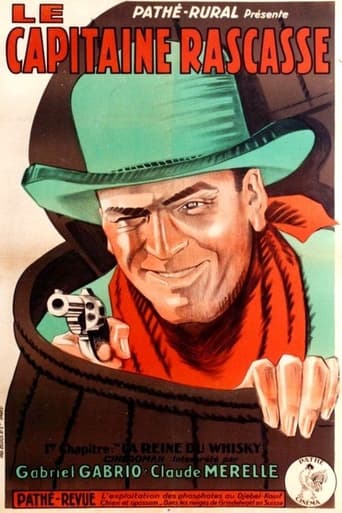
Le Capitaine Rascasse
1927
No synopsis available yet.
Fünf bange Tage
1928
 8.0
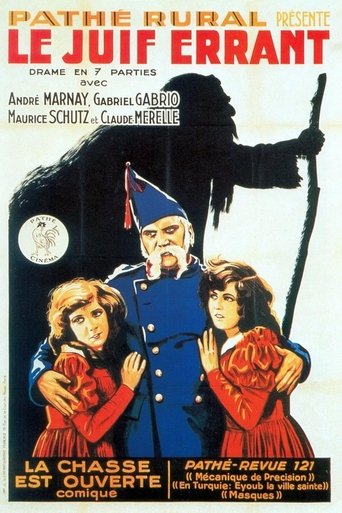
8.0Guilty of insulting Christ Ahasverus became forever eternity the wandering Jew. On 13 February 1682, during a night of pogrom in the Warsaw ghetto a Frenchman married to a Polish Jew is assassinated by members of a secret society.
Le Juif Errant
1926
 7.0
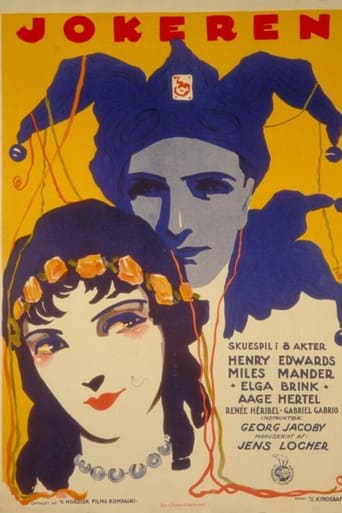
7.0Georg Jacoby’s Jokeren is a light-hearted entertainment picture set during the carnival in Nice, a romantic comedy with a touch of melodrama. A young artist, fatally injured in a car accident, foolishly entrusts a batch of compromising love letters to Borwick, a crooked and unscrupulous lawyer, instructing him to destroy them. Instead, Borwick proceeds to blackmail the woman who sent the letters, Lady Cecilie Powder, married to the straight-arrow Sir Herbert Powder. Lady Cecilie gets help from her spunky younger sister Gill. In turn, she draws in Peter Carstairs, a debonair adventurer known to all as “the Joker” – the card that trumps all others. When the Joker repeatedly foils Borwick’s schemes, the crooked lawyer ups the ante, trying to incriminate his adversary Carstairs and expanding his demands to include marriage to Gill. But as the characters converge at yet another lavish carnival celebration party, it becomes clear that one card does indeed trump all the others: the Joker!
The Joker
1928
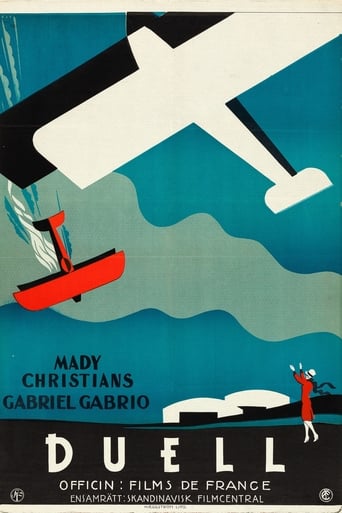 9.0
9.0The unfaithful wife of an airplane manufacturer is abandoned by her lover, a famous aviator, and kills herself. The widowed husband vows revenge on the aviator.
The Duel
1928
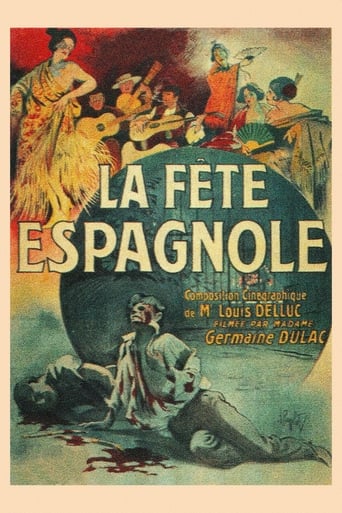 6.3
6.3Coveted by two different men, a woman turns to a third man instead.
Spanish Fiesta
1920