

Directing
John Paskievich
Known for
Directing
Credits
16 titles
John Paskievich (born 1947) is a Canadian documentary photographer and filmmaker. He is known for his evocative portrayals of marginalized communities.
Known for
 7.0
HEART LAND takes viewers from a raging white-water kayaking ride and the thundering heat of a chuckwagon race, to swooping over a field of magnificent sunflowers and the magic of a solar eclipse. There are landscapes of unparalleled beauty, the exquisite grace of Evelyn Hart and Andre Lewis dancing Norbert Vesak's award winning pas-de-deux, "Belong", a hilarious animated sequence by Richard Condie, and touching images, past and present, of the people who have dared to carve out a new life against a vast, and sometimes unforgiving landscape.
Heart Land
1987
 NR
Ken D’Cruz was born in India and lives in Winnipeg. His main career goal in Canada was to be an actor but, his some-time agent advised him that there would be few parts for an actor with his skin colour. To make ends meet Ken took a temporary job as a baby photographer. The “temporary” job has been going on for twelve years. The film chronicles Ken’s picaresque daily adventures as a baby photographer while he continues to dream about being an actor.
The Actor
1990
 NR
Ed Ackerman, a Winnipeg film animator, struggles with resurrecting a spell-help project, turning derelict houses into a studio, and running for Mayor to prevent the demolition of his properties.
Special Ed
2013
 NR
The film examines the nature, history and treatment of stuttering, a speech impediment that affects about 1% of the world’s population, regardless of language, class or ethnicity. John Paskievich, the film’s director, is a person who stutters. He also narrates and is an active participant in the film. His stories and the stories of others in the film are poignant, funny, angry and courageous, providing eloquent testimony to what it means to live in what the poet WH Auden called “the tower of stutter.” According to Paskievich, “the film is a call for liberation, not from stuttering, but from the ignorance and stigma that surround it.”
Unspeakable
2006
 NR
In a documentary that spans two continents and several generations, acclaimed director John Paskievich delves into the experience of exile and its impact on the human spirit. Almost fifty years after his family fled Ukraine for freedom in Canada, the filmmaker visits his parents' homeland. It's a place both familiar and foreign. Drawing on his years growing up in Winnipeg, Paskievich explores how children of refugees and immigrants are caught between two worlds. While they struggle to put down roots in a new country, they must also preserve traditions of a distant land they have never known. Paskievich's journey through Ukraine is interwoven with stories of displacement from other prominent Ukrainian Canadians--authors George Melnyk and Fran Ponomarenko, filmmaker Bohdana Bashuk, director Halya Kuchmij and dancer Lecia Polujan. A rich tapestry of memory and history, My Mother's Village brings to light the humour, anger, joy and complexity of living between borders.
My Mother's Village
2001
 NR
Spanning continents and generations, the film recounts the remarkable Ukrainian Canadian odyssey from Eastern Europe to Canada to the battlefields of World War II in Europe and Asia. Despite often being regarded as “non-preferred”, second-class citizens by mainstream Canadian society, the Ukrainian enlistment percentage was the highest of any ethnic group outside of the British. The Ukrainians’ sacrifice “finally gave them the prerogative of being recognized as real Canadians”.
A Canadian War Story
2020
Film credits
Behind the camera
7.0HEART LAND takes viewers from a raging white-water kayaking ride and the thundering heat of a chuckwagon race, to swooping over a field of magnificent sunflowers and the magic of a solar eclipse. There are landscapes of unparalleled beauty, the exquisite grace of Evelyn Hart and Andre Lewis dancing Norbert Vesak's award winning pas-de-deux, "Belong", a hilarious animated sequence by Richard Condie, and touching images, past and present, of the people who have dared to carve out a new life against a vast, and sometimes unforgiving landscape.
Heart Land
1987
NRKen D’Cruz was born in India and lives in Winnipeg. His main career goal in Canada was to be an actor but, his some-time agent advised him that there would be few parts for an actor with his skin colour. To make ends meet Ken took a temporary job as a baby photographer. The “temporary” job has been going on for twelve years. The film chronicles Ken’s picaresque daily adventures as a baby photographer while he continues to dream about being an actor.
The Actor
1990
NREd Ackerman, a Winnipeg film animator, struggles with resurrecting a spell-help project, turning derelict houses into a studio, and running for Mayor to prevent the demolition of his properties.
Special Ed
2013
NREd Ackerman, a Winnipeg film animator, struggles with resurrecting a spell-help project, turning derelict houses into a studio, and running for Mayor to prevent the demolition of his properties.
Special Ed
2013
NRThe film examines the nature, history and treatment of stuttering, a speech impediment that affects about 1% of the world’s population, regardless of language, class or ethnicity. John Paskievich, the film’s director, is a person who stutters. He also narrates and is an active participant in the film. His stories and the stories of others in the film are poignant, funny, angry and courageous, providing eloquent testimony to what it means to live in what the poet WH Auden called “the tower of stutter.” According to Paskievich, “the film is a call for liberation, not from stuttering, but from the ignorance and stigma that surround it.”
Unspeakable
2006
NRIn a documentary that spans two continents and several generations, acclaimed director John Paskievich delves into the experience of exile and its impact on the human spirit. Almost fifty years after his family fled Ukraine for freedom in Canada, the filmmaker visits his parents' homeland. It's a place both familiar and foreign. Drawing on his years growing up in Winnipeg, Paskievich explores how children of refugees and immigrants are caught between two worlds. While they struggle to put down roots in a new country, they must also preserve traditions of a distant land they have never known. Paskievich's journey through Ukraine is interwoven with stories of displacement from other prominent Ukrainian Canadians--authors George Melnyk and Fran Ponomarenko, filmmaker Bohdana Bashuk, director Halya Kuchmij and dancer Lecia Polujan. A rich tapestry of memory and history, My Mother's Village brings to light the humour, anger, joy and complexity of living between borders.
My Mother's Village
2001
NRSpanning continents and generations, the film recounts the remarkable Ukrainian Canadian odyssey from Eastern Europe to Canada to the battlefields of World War II in Europe and Asia. Despite often being regarded as “non-preferred”, second-class citizens by mainstream Canadian society, the Ukrainian enlistment percentage was the highest of any ethnic group outside of the British. The Ukrainians’ sacrifice “finally gave them the prerogative of being recognized as real Canadians”.
A Canadian War Story
2020
 8.0
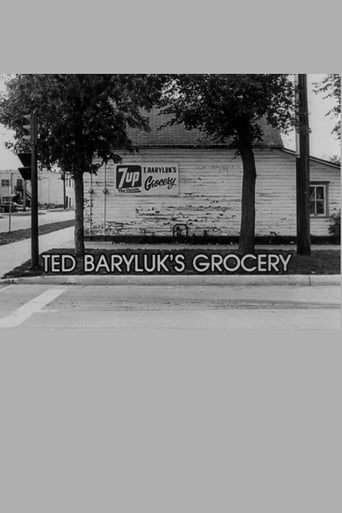
Ukrainian-Canadian Ted Baryluk's grocery store has been a fixture in Winnipeg's North End for over 20 years. In this photo study, Ted talks about his store, the customers who have come and gone and the social changes his multicultural neighbourhood has seen. But most of all he wonders what will become of his store after he retires. He hopes his daughter will take over, but she wants to move away. The film is a wistful rendering of a shopkeeper's relationship with his daughter and a fascinating portrait of a neighbourhood and its inhabitants.
Ted Baryluk's Grocery
1982
 NR
This film accompanies three Indigenous Elders from Manitoba on a voyage to the Czech Republic as they relive their past through traditional ceremonies and dress appropriated by their European admirers. Hesitation gives way to humour, fear gives way to friendship, and out of a common passion for the traditions of Indigenous Peoples in North America, a collective hope for the future is born.
If Only I were an Indian...
1995
 NR
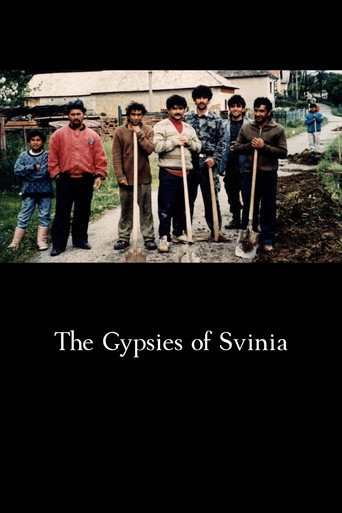
Moved by a sense of outrage, David Scheffel, a Canadian anthropologist, is determined to help the impoverished Roma (Gypsies) rebuild their community in the eastern Slovakian village of Svinia. So-called “white” Svinia is a picturesque, typical Slovak village with well-kept homes, gardens, a store and a school. Some 300 metres past the last home is “black” Svinia, where the Roma live in squalid tenement blocks and one-room huts of sticks and mud-with no clean water or sewage facilities and with little hope of employment. Many Svinians, whose homes and gardens are regularly burglarized by the desperate Roma, have lost all patience and sympathy. Throughout Eastern Europe, the painful transition from communism to democracy has relegated the Roma to the farthest, most grotesque margins of society. The Gypsies of Svinia is a testament to the firm resolve of Scheffel and the Roma to make things better.
The Gypsies of Svinia
1998
 8.0
This extraordinary film introduces us to the Reutov family, part of an isolated northern Alberta community called the Old Believers. Adhering to the original Orthodox Christian dogma and rituals introduced to ancient Rus (present-day Ukraine, Byelorussia and Russia) by the Greeks of Byzantium, the Old Believers see themselves as the last Christians left on the face of the Earth. Here in North America, for the first time in their history, they are threatened not by persecution, but by economic bounty and the western notion of personal freedom. Shot over the four seasons, the film is both a beautiful rendering of timeless rituals and a fascinating exploration of the Old Believers' turbulent history.
The Old Believers
1988
 NR
Located in Winnipeg’s downtown core, Gordon Bell High School is probably the most culturally varied school in the city. In an effort to build bridges of friendship and belonging across cultures and histories, teacher Marc Kuly initiated an after-school storytelling project. The catalyst for this cross-cultural interaction was the students’ reading of A Long Way Gone by Ishmael Beah, a memoir of Beah’s horrific time as a child soldier in Sierra Leone’s civil war. These voluntary after-school meetings take dramatic turns and reach their climax when Ishmael Beah and professional storyteller Laura Simms travel from New York to work with them. With their help the students learn to listen to each other and find the commonality that so long eluded them.
The Storytelling Class
2010
 NR
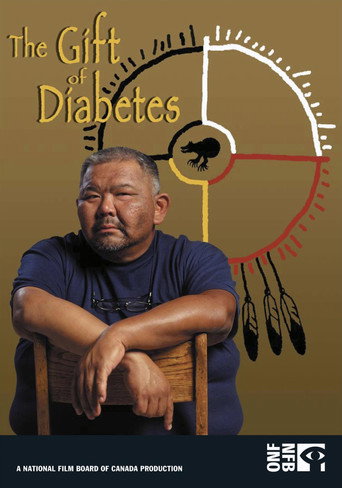
Brion Whitford is an Ojibway filmmaker who lives with the pain of advanced diabetes. As his health worsened, his interest in his own culture grew. The film follows Brion’s struggle to regain his health by learning about the medicine wheel, a holistic tool grounded in Indigenous understanding of the interconnectedness of all dimensions of life. As Brion seeks to get well he explores the historical trauma of colonization and how it continues to affect Indigenous peoples’ physical and psychological well-being.
The Gift of Diabetes
2005