
Directing
Jacqueline Veuve
Born — Died
1930-01-29 — 2013-04-18
Place of birth
Payerne, Vaud, Switzerland
Known for
Directing
Credits
43 titles
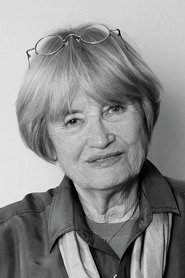
Jacqueline Veuve (29 January 1930 – 18 April 2013) was a Swiss filmmaker known for "ethnographical cinema". She has been referred to as the "great lady of the Swiss documentary film." She received a Lifetime Achievement Award from the 2013 Swiss Film Prize. Jacqueline Reber was born in Payerne, Switzerland, in 1930 to Maurice Reber and Yvonne Reymond. After studying in Lausanne, she attended the School of Library and Information Science in Geneva (1952–1953) Veuve then went to Paris to work on her diploma thesis and she met the French filmmaker and ethnologist Jean Rouch in 1955 at the Museum of Man. She made her first short film Le Panier à viande in 1966 with Swiss director Yves Yersin.…
Known for
 9.5
9.5Marcello Mastroianni, Isabelle Adjani, Alain Delon, Martin Scorsese, Woody Allen... the biggest stars in cinema were welcomed by Christian Defaye on his show Spécial cinéma. Between intimate confessions from actors and immersion in the world of the greatest filmmakers, Christian Defaye took viewers on a journey into the fascinating world of cinema for nearly thirty years.
Spécial cinéma
1974
 NR
NRNo synopsis available yet.
La nébuleuse du cœur
2005
 NR
NRNo synopsis available yet.
Vibrato
2012
 8.0
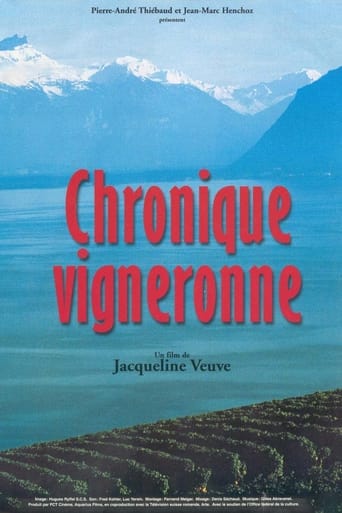
8.0This documentary show the work, the worries and the joys of a family dedicated to viticulture, the Potterat, living in Lavaux. Three generations live together, keeping the old traditions
Chronique vigneronne
1999
This film deals with the issue of mandatory military service in Switzerland. For four months, from February to May 1990, filmmaker Jacqueline Veuve and her team filmed a platoon engaged in basic training at Colombier, Switzerland.
L'homme des casernes
1994
 4.2
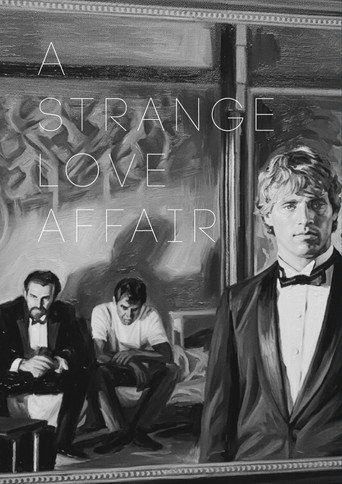
4.2Film professor Michael falls in love with one of his students and is confronted with his pupil's father, with whom he had an affair over 15 years ago. This unexpected meeting abruptly overturns the lives of all the characters. When the tutor decides to undertake a planned trip to London, not with the son but with the father, he is once again forced to choose; this time between his wife and his friend.
A Strange Love Affair
1985
Film credits
Series credits
Behind the camera
NRNo synopsis available yet.
La nébuleuse du cœur
2005
NRNo synopsis available yet.
La nébuleuse du cœur
2005
NRNo synopsis available yet.
Vibrato
2012
NRNo synopsis available yet.
Vibrato
2012
8.0This documentary show the work, the worries and the joys of a family dedicated to viticulture, the Potterat, living in Lavaux. Three generations live together, keeping the old traditions
Chronique vigneronne
1999
8.0This documentary show the work, the worries and the joys of a family dedicated to viticulture, the Potterat, living in Lavaux. Three generations live together, keeping the old traditions
Chronique vigneronne
1999
This film deals with the issue of mandatory military service in Switzerland. For four months, from February to May 1990, filmmaker Jacqueline Veuve and her team filmed a platoon engaged in basic training at Colombier, Switzerland.
L'homme des casernes
1994
This film deals with the issue of mandatory military service in Switzerland. For four months, from February to May 1990, filmmaker Jacqueline Veuve and her team filmed a platoon engaged in basic training at Colombier, Switzerland.
L'homme des casernes
1994
An animated cartoon about the Creation myth reviewed and corrected by two women. God the magician has decided to create a paradise: Switzerland. He covers it with trees and cows, until Adam is born. After exploring his paradise, Adam creates Eve from one of his ribs. Man is shown as an erect penis, woman by a limbless trunk.
Swiss Graffiti
1975
An animated cartoon about the Creation myth reviewed and corrected by two women. God the magician has decided to create a paradise: Switzerland. He covers it with trees and cows, until Adam is born. After exploring his paradise, Adam creates Eve from one of his ribs. Man is shown as an erect penis, woman by a limbless trunk.
Swiss Graffiti
1975
 8.0
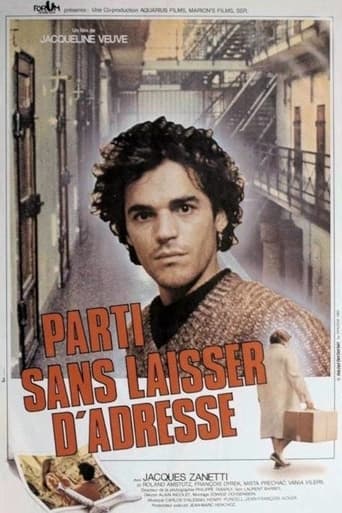
8.0A young Swiss drug addict has been imprisoned for robbery, and must wait and wait for his upcoming trial, all the while isolated and without hope of parole - the police are convinced he is a dealer and not just a user. He hears from his son that his girlfriend has a new man, and begins to despair of ever coming to trial, or of having another relationship like the one he lost. This fiction film is said to be based on a true story.
Parti sans laisser d'adresse
1982
8.0A young Swiss drug addict has been imprisoned for robbery, and must wait and wait for his upcoming trial, all the while isolated and without hope of parole - the police are convinced he is a dealer and not just a user. He hears from his son that his girlfriend has a new man, and begins to despair of ever coming to trial, or of having another relationship like the one he lost. This fiction film is said to be based on a true story.
Parti sans laisser d'adresse
1982
Armand Rouiller, 80, is a mountain peasant, woodcutter, and craftsman. He handcrafts large sledges, rakes and handles for scythes, a craft he learned from his father, who learned it from his own father, and so on. Rouiller gathers timber for his sledges and rakes from the ash, maple, and linden trees in a forest he inherited from his father. He is the last craftsman in French-speaking Switzerland to build sledges and rakes in the old-time way.
Armand Rouiller, Sledge-maker
1987
 NR
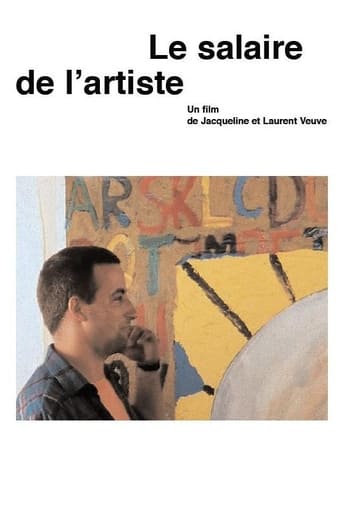
NRNo synopsis available yet.
Le salaire de l'artiste
2000
NRNo synopsis available yet.
Le salaire de l'artiste
2000
 NR
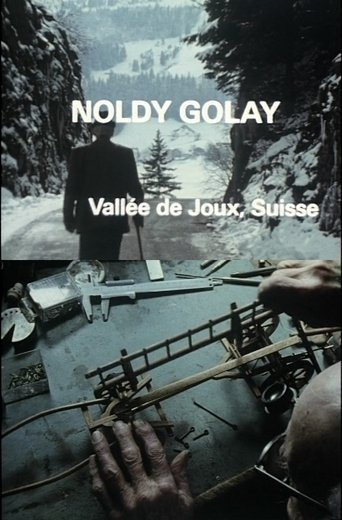
NRArnold Golay, 91, a former watchmaker who once had learned to make a timepiece entirely by hand. This know-how has always stood him in good stead. Upon retirement, Golay became a full-time toy maker. Even as a watchmaker, he used to make toys for his own children. The film follows his steps as he builds a toy hand-cart, from raw wood to finished product. We also see his collection of toys, which are reduced-scale models of all the carts, wheel barrows and other implements used on the farm before the invention of the tractor.
Arnold Golay, Toy-maker
1992
Claude Lebet, luthier, had originally wanted to be a parson, like his father before him. However, after one year in theological school, he left to study violin making in Cremona, Italy. Later, he returned to Switzerland, where he founded his workshop at La Chaux-de-Fonds in the Jura mountains. The "Musici di Roma" launched his career by buying the first violin he made, then helping him acquire his house. For Lebet, a violin takes a month and a half to make, and requires the smoothest maple and spruce, which he selects himself, along with the finest shellacs. In the film, we watch as he makes a violin for a musician who comes to try it out and to choose from various woods. It takes but six weeks for Lebet to fashion the violin, but the relationship of musician and luthier lasts a lifetime.
Claude Lebet, Luthier
1988
Like his grandfather and his father before him, François Pernet is a mountain peasant and works with wood. He trained as a carpenter and cabinet maker and owns the last water-powered sawmill still operating in French-speaking Switzerland. He and his wife have five children, two of their own, and three nephews adopted after the death of their parents in a car accident. So, to earn a living, he makes and carves cupboards and turns bannisters. In addition to his work, Pernet has become a sculptor as well. His bas-relief carvings, which have decorated local cafés, show various aspects of mountain life, including hunters, poachers, chamois and other animals.
François Pernet, Carpenter and Sculptor
1988
The Bapst Brothers: Romain, Maurice and Jacques – whom we will also meet in The Gruyere Chronicle (produced in 1990) – are peasants and carriers and work with their father. In autumn and winter, they bid for the community’s wood, cut down the pine trees and bring down the logs through the snowy woods by horse-drawn sleigh.
The Bapst Brothers, Carriers
1988
Thirteen Swiss filmmakers, each from their own point of view, chronicle and reconstruct the narrative of Swiss cinema, from its beginning to the present day, and in doing so, retrace the history of the country.
Le film du cinéma suisse
1991
Michel Marlétaz lives in Les Echenards, a seven-person hamlet without an access road. After a bad car accident left him injured, he had to find a new livelihood, and so he learned the cooper's trade in classes set up for mountain farmers. He now makes his living from the manufacture of small wooden ware, like pots, spoons, butter churns, buckets, and milking pails. Marlétaz is the only cooper left who knows how to make the large butter churns used in the high Summer pastures. In November, he cuts the wood he will need - elm, spruce, cherry wood - then, during the Winter season, he makes the pieces he will deliver in the Summer.
Michel Marlétaz, Cooper
1988
Lucienne Schnegg is an energetic little woman. At eighty, she is still at the helm of the "Capitole" cinema. Hired as a secretary in 1949, she became the heiress and soul of the cinema. Cashier, housekeeper and director all in one, she tells us all about her cinema, Lausanne's oldest, largest and most beautiful.
La petite dame du Capitole
2006
Lucienne Schnegg is an energetic little woman. At eighty, she is still at the helm of the "Capitole" cinema. Hired as a secretary in 1949, she became the heiress and soul of the cinema. Cashier, housekeeper and director all in one, she tells us all about her cinema, Lausanne's oldest, largest and most beautiful.
La petite dame du Capitole
2006
 8.0
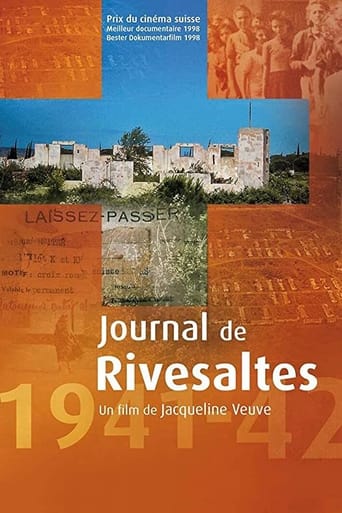
8.0From August to October 1942, over 2250 Jews were deported from the internment camp of Rivesaltes to Auschwitz by way of Drancy. Among them were 110 children. Friedel Bohny-Reiter, a nurse with the Swiss Aid to Children, worked in this camp in the South of France. Like many others in the formerly unoccupied zone, it was run by the French. Once a military camp, it had been converted in 1941 into a transit camp regrouping Jewish, Gypsy and Spanish people living in the area or who had fled to the free zone as refugees. Thanks to the young nurse from Basel, many children were probably saved from certain death. The film follows the nurse on a visit to that still intact site as well as through the pages of the journal she wrote in those dark days, published by Editions Zoë, Geneva in 1993.
Journal de Rivesaltes 1941-42
1997
8.0From August to October 1942, over 2250 Jews were deported from the internment camp of Rivesaltes to Auschwitz by way of Drancy. Among them were 110 children. Friedel Bohny-Reiter, a nurse with the Swiss Aid to Children, worked in this camp in the South of France. Like many others in the formerly unoccupied zone, it was run by the French. Once a military camp, it had been converted in 1941 into a transit camp regrouping Jewish, Gypsy and Spanish people living in the area or who had fled to the free zone as refugees. Thanks to the young nurse from Basel, many children were probably saved from certain death. The film follows the nurse on a visit to that still intact site as well as through the pages of the journal she wrote in those dark days, published by Editions Zoë, Geneva in 1993.
Journal de Rivesaltes 1941-42
1997
 7.5
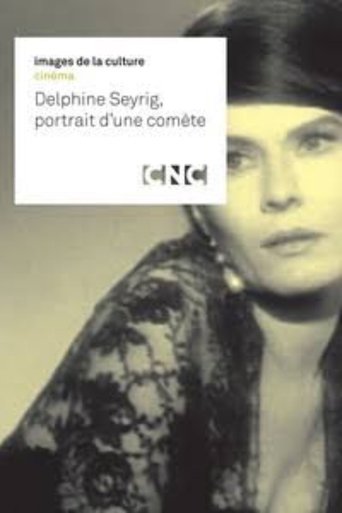
7.5Delphine Seyrig, an extraordinary woman and actress, died on October 15, 1990. From "Last Year at Marienbad" by Alain Resnais to "India Song" by Marguerite Duras, she played in 34 films for cinema, 13 films for television and 33 plays. Jacqueline Veuve, filmmaker and friend of Delphine Seyrig, wanted to break the silence that has fallen on her memory by making a documentary that traces with emotion and subjectivity the life of the mythical actress, the fierce feminist but also the simple friend.
Delphine Seyrig, portrait d'une comète
2000
7.5Delphine Seyrig, an extraordinary woman and actress, died on October 15, 1990. From "Last Year at Marienbad" by Alain Resnais to "India Song" by Marguerite Duras, she played in 34 films for cinema, 13 films for television and 33 plays. Jacqueline Veuve, filmmaker and friend of Delphine Seyrig, wanted to break the silence that has fallen on her memory by making a documentary that traces with emotion and subjectivity the life of the mythical actress, the fierce feminist but also the simple friend.
Delphine Seyrig, portrait d'une comète
2000
Marcellin Babey, from the Swiss Jura, is thirty-five years old. He works in an old workshop in the heart of Lausanne, concious that building speculators will oust him some day. As there are no longer any apprenticeships in wood turning in Switzerland, Babey learned his craft from the former owner of his Lausanne workshop, and by going, on foot, to visit old turners in France and Spain. When he learned from old documents that the inhabitants of the Swiss canton of Vaud used to play bagpipes on holidays before the Bernese Protestants forbade it in belief that it was an instrument of the devil, Babey decided to build the instrument as it used to be. In the film, we see him make and play the bagpipes.
Marcellin Babey, Turner
1989
 7.0
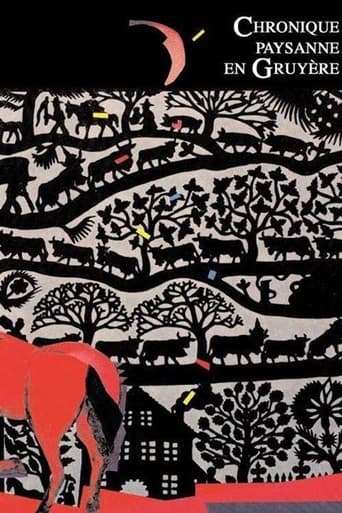
7.0The shooting of this peasant chronicle in the Gruyère region of Switzerland lasted a whole year, from July 1989 to July 1990.
Chronique paysanne en Gruyère
1990
 NR
NRThe shooting of this peasant chronicle in the Gruyère region of Switzerland lasted a whole year, from July 1989 to July 1990. A year of work and festivities in the family of Conrad and Louise Bapst, their children and grandchildren who live in La Roche (canton of Fribourg). In summer, part of the family goes with the herd to the upper pastures, and will move six times in the next three months, as the grass for the cows grows in higher and higher places. At the farm below, the rest of the family mows the hay and the after crop, and tends the vegetable garden. Fall and winter bring new chores, along with feast-days, and the sale of cheeses to pay for rented pastures. We see the family participate in a vote for or against the Swiss Army, and at a meeting where mountain farmers discuss whether or not to join the European Union. The film displays the patient and human approach of an almost silent minority of Switzerland.
A Peasant Chronicle in Gruyère
1990
The "tavillonneur" or shingle-maker cuts out and fits shingles or wood tiles into place. Shingles (called "tavillons" in Switzerland), are one of the oldest methods of roofing or covering an outside wall. There are no longer any official apprenticeships. The film follows two shingle-makers, Joseph Doutaz and Olivier Veuve, who have very different techniques of cutting and placing their shingles. Joseph Doutaz uses only the traditional "tavillons" while Olivier Veuve works with these, as well as with "anseilles," larger and thicker wood tiles. We see both men at work in Winter and in Summer, and see some of their finished buildings.
Joseph Doutaz & Olivier Veuve, Shingle-makers
1989
A collection of woodworkers' portraits, among them carvers and coopers, roof tilers and toymakers.
Les métiers du bois
1992
 NR
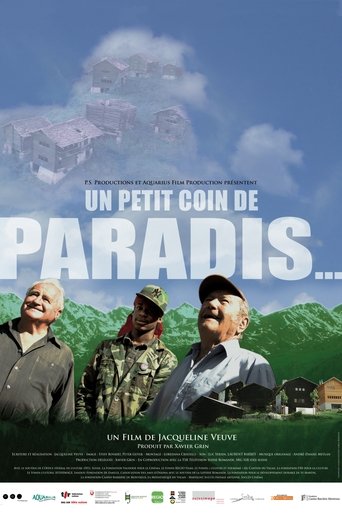
NRNo synopsis available yet.
Un petit coin de paradis
2008
NRNo synopsis available yet.
Un petit coin de paradis
2008
No synopsis available yet.
Jour de Marché
2002
No synopsis available yet.
Jour de Marché
2002
Long ago, there were no roads to the chalets in the high mountain pastures. All the material for a new chalet had to be carried up by man or mule, so the peasants who built and cared for these chalets used the nearest rocks available and found a way to extract the sand needed for cement right on the spot. They used to burn clods of earth for three days until all vegetable residue was burned away and only the minerals remained as pink sand. This custom slowly disappeared at the beginning of the 21st century. However, 83-year-old Henri Chillez remembers seeing his father doing this when he was ten. Thanks to him, we were able, in 1987, to reconstruct the operation and film each step needed to change earth into pink sand.
Le sable rose de montagne
1987
 7.0
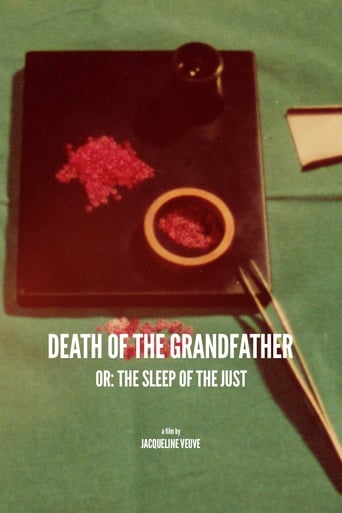
7.0A tale, told by his five daughters, of the life and death of a man very representative of a Protestant Switzerland in the early 20th century where life was conditioned by the work ethic. He was first a farmer, then a factory worker, then the head of a small family affair where his daughters became his workers. The business grew into an large factory that would be eventually taken over by the only son. The five stories show us the family and professional context of the first half of the 20th century. They are also five different versions of the serene death of a man who felt he had done his duty. The film illustrates the ideas of Max Weber, known for their importance in understanding the Western civilization that emerged from the Reformation.
Death of the Grandfather or: The Sleep of the Just
1978
7.0A tale, told by his five daughters, of the life and death of a man very representative of a Protestant Switzerland in the early 20th century where life was conditioned by the work ethic. He was first a farmer, then a factory worker, then the head of a small family affair where his daughters became his workers. The business grew into an large factory that would be eventually taken over by the only son. The five stories show us the family and professional context of the first half of the 20th century. They are also five different versions of the serene death of a man who felt he had done his duty. The film illustrates the ideas of Max Weber, known for their importance in understanding the Western civilization that emerged from the Reformation.
Death of the Grandfather or: The Sleep of the Just
1978
7.0A tale, told by his five daughters, of the life and death of a man very representative of a Protestant Switzerland in the early 20th century where life was conditioned by the work ethic. He was first a farmer, then a factory worker, then the head of a small family affair where his daughters became his workers. The business grew into an large factory that would be eventually taken over by the only son. The five stories show us the family and professional context of the first half of the 20th century. They are also five different versions of the serene death of a man who felt he had done his duty. The film illustrates the ideas of Max Weber, known for their importance in understanding the Western civilization that emerged from the Reformation.
Death of the Grandfather or: The Sleep of the Just
1978