
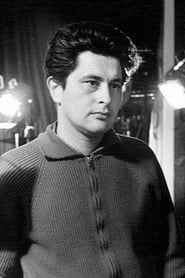
Directing
Břetislav Pojar
Born — Died
1923-10-07 — 2012-10-12
Place of birth
Susice, Czechoslovakia [now Czech Republic]
Known for
Directing
Credits
43 titles
Břetislav Pojar (7 October 1923 – 12 October 2012) was a Czech puppeteer, animator, and director of short and feature films. Born in Sušice, Czechoslovakia, Pojar started his career in the late 1940s with his work on The Story of the Bass Cello (1949) based on the story by Anton Chekhov and directed by master Czech puppet animator Jiří Trnka. Pojar served as a puppeteer under his mentor Trnka. Pojar compiled an extensive body of work as a director and animator in Czechoslovakia, where he made films in both puppet animation to the more common stop motion animation. In the mid-1960s, Pojar emigrated to Canada, where he began a long collaboration with the National Film Board. His Canadian wo…
Known for
No synopsis available yet.
GENUS
1995
 6.1
6.1An animated film based on one of the renku (collaborative linked poems) in the 1684 collection of the same name by the 17th-century Japanese poet Bashō. The creation of the film followed the traditional collaborative nature of the source material – the visuals for each of the 36 stanzas were independently created by 35 different animators. As well as many Japanese animators, Kawamoto assembled leading names in animation from across the world. Each animator was asked to contribute at least 30 seconds to illustrate their stanza, and most of the sequences are under a minute (Yuriy Norshteyn's, though, is nearly two minutes long).
Winter Days
2003
 8.0
8.0No synopsis available yet.
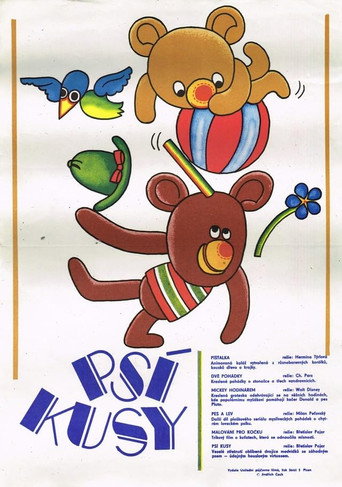
Psí kusy
1971
 8.0
8.0No synopsis available yet.
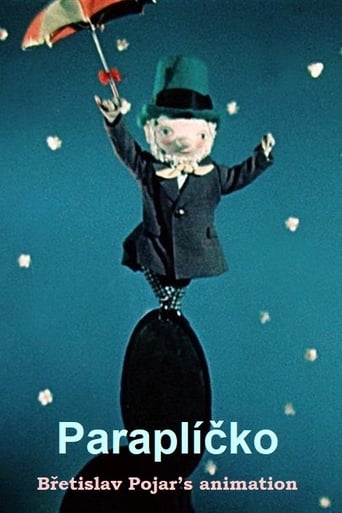
Paraplíčko
1957
No synopsis available yet.
On a Cat's Word
1961
Children play in a park.
Whale, Elahw
1977
Film credits
Series credits
Behind the camera
6.1An animated film based on one of the renku (collaborative linked poems) in the 1684 collection of the same name by the 17th-century Japanese poet Bashō. The creation of the film followed the traditional collaborative nature of the source material – the visuals for each of the 36 stanzas were independently created by 35 different animators. As well as many Japanese animators, Kawamoto assembled leading names in animation from across the world. Each animator was asked to contribute at least 30 seconds to illustrate their stanza, and most of the sequences are under a minute (Yuriy Norshteyn's, though, is nearly two minutes long).
Winter Days
2003
8.0No synopsis available yet.
Psí kusy
1971
8.0No synopsis available yet.
Psí kusy
1971
8.0No synopsis available yet.
Paraplíčko
1957
8.0No synopsis available yet.
Paraplíčko
1957
No synopsis available yet.
On a Cat's Word
1961
No synopsis available yet.
On a Cat's Word
1961
Children play in a park.
Whale, Elahw
1977
Children play in a park.
Whale, Elahw
1977
 8.0
8.0On summer vacation a young teenager finds himself hanging out alone on the streets of his neighbourhood, all his friends having gone to the country with their parents. Near his home he meets a disturbing character, a drug pusher looking for clients, who introduces him to an artificial paradise. The teenager discovers a seductive and terrifying world that frequently draws him back to his neighbour.
Narco Blues
2016
8.0On summer vacation a young teenager finds himself hanging out alone on the streets of his neighbourhood, all his friends having gone to the country with their parents. Near his home he meets a disturbing character, a drug pusher looking for clients, who introduces him to an artificial paradise. The teenager discovers a seductive and terrifying world that frequently draws him back to his neighbour.
Narco Blues
2016
The fifth and last episode of the "Who threw that, gentlemen?" series. The series is the continuation of the previous "bear" series "Hey, Mister, let's play?". This time the bears decide to grow carrots and turnips. While working they come across a billy-goat who wants to relieve them of their crop. The bears force him to return the carrots and turnips and to carry all the crops back to their home.
Nazdar kedlubny
1974
The fifth and last episode of the "Who threw that, gentlemen?" series. The series is the continuation of the previous "bear" series "Hey, Mister, let's play?". This time the bears decide to grow carrots and turnips. While working they come across a billy-goat who wants to relieve them of their crop. The bears force him to return the carrots and turnips and to carry all the crops back to their home.
Nazdar kedlubny
1974
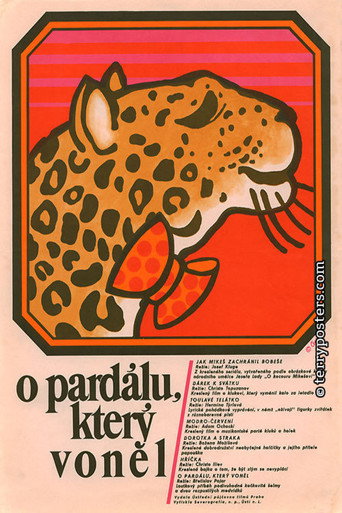 10.0
10.0No synopsis available yet.
O pardálu který voněl
1972
10.0No synopsis available yet.
O pardálu který voněl
1972
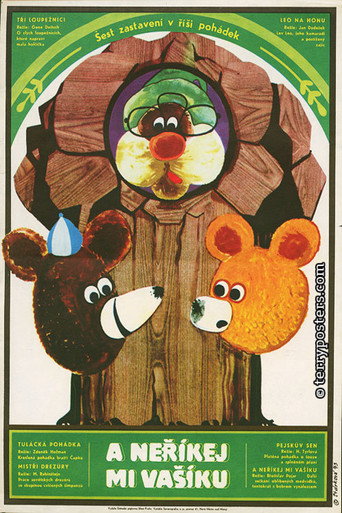 8.0
8.0No synopsis available yet.
A neříkej mi Vašíku
1972
8.0No synopsis available yet.
A neříkej mi Vašíku
1972
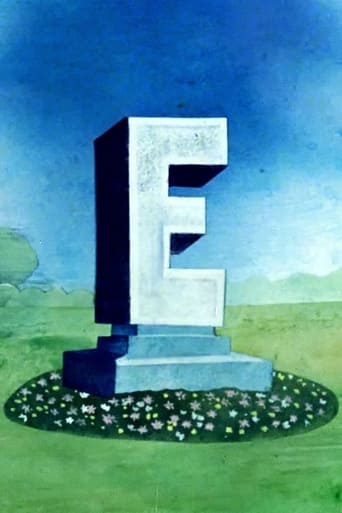 7.3
7.3A giant statue of the letter "E" arrives in the park. One man sees it as "B"; they are preparing to cart him off to the looney bin when a doctor arrives and determines the man needs glasses. Then the king arrives...
'E'
1981
No synopsis available yet.
Veselý kolotoč
1952
No synopsis available yet.
Veselý kolotoč
1952
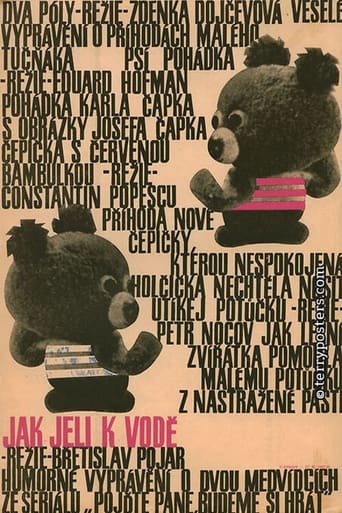 7.0
7.0The second part of the six-part series “Hey, Mister, Let’s Play”. The bears try go to the water, and the big bear is good and makes himself a car for the little bear.
Hey, Mister, Let’s Play! How the Bears Went Swimming
1966
7.0The second part of the six-part series “Hey, Mister, Let’s Play”. The bears try go to the water, and the big bear is good and makes himself a car for the little bear.
Hey, Mister, Let’s Play! How the Bears Went Swimming
1966
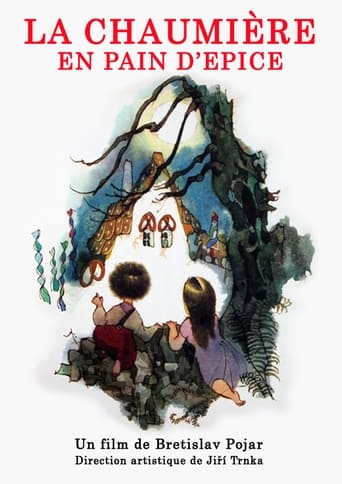 7.0
7.0No synopsis available yet.
The Gingerbread House
1951
7.0No synopsis available yet.
The Gingerbread House
1951
A collection of 7 animation short films inspired by the United Nations Convention on the Rights of the Child. Each NFB award-winning film, in their peculiar way, deals with children's rights and addresses various aspects of the Convention.
Children First!
1996
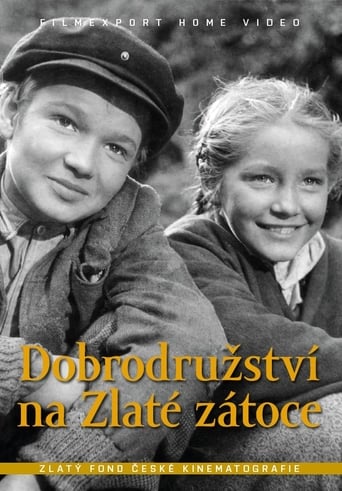 7.5
7.5Orphan Jirka lives alone with his grandfather by the river. He spends all his free time by the water and does not grow up with the other children. His biggest dream is to catch a big pike, which he knows that he can't do without friends. ► International Film Festival of Documentary and Experimental Films Montevideo - 1956 - 1st Main Prize (Distributor's Official Text)
Dobrodružství na Zlaté zátoce
1955
7.5Orphan Jirka lives alone with his grandfather by the river. He spends all his free time by the water and does not grow up with the other children. His biggest dream is to catch a big pike, which he knows that he can't do without friends. ► International Film Festival of Documentary and Experimental Films Montevideo - 1956 - 1st Main Prize (Distributor's Official Text)
Dobrodružství na Zlaté zátoce
1955
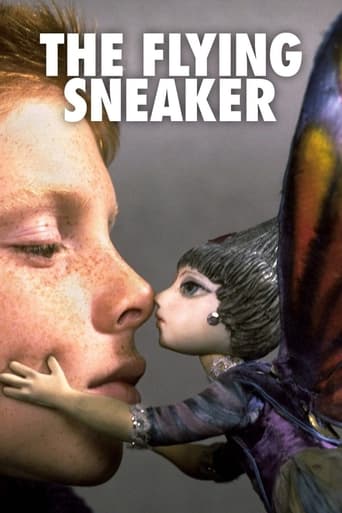 6.8
6.8Little Rehor isn't allowed to play with the other boys. His only friend is the girl next door, Luci. Rehor's father is doctor on a boat and he has sent Rehor a package with butterfly larvae. When they hatch he discover a fairy who can do magic tricks.
The Flying Sneaker
1991
6.8Little Rehor isn't allowed to play with the other boys. His only friend is the girl next door, Luci. Rehor's father is doctor on a boat and he has sent Rehor a package with butterfly larvae. When they hatch he discover a fairy who can do magic tricks.
The Flying Sneaker
1991
Short film by Břetislav Pojar
Of Mice in Tinfoil
1977
Short film by Břetislav Pojar
Of Mice in Tinfoil
1977
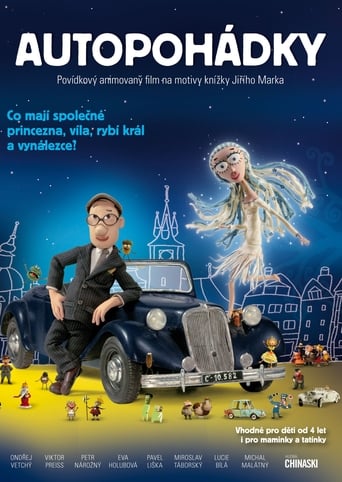 5.4
5.4The film consists of five parts - a live-action framing story and four distinct animated episodes - each by a different creative team and in a different animation style, from Pojar and Koutský’s semi-plastic “Princess Who Never Smiled,” through Žabka’s puppet fable “The Fairy and the Bookkeeper,” Dlouhá and Váša’s paper-cut “Fisherman, His Wife, and the Golden Fish,” to Pixa’s near-future parable “Mr. Vincent”.
Car Fairy Tales
2011
5.4The film consists of five parts - a live-action framing story and four distinct animated episodes - each by a different creative team and in a different animation style, from Pojar and Koutský’s semi-plastic “Princess Who Never Smiled,” through Žabka’s puppet fable “The Fairy and the Bookkeeper,” Dlouhá and Váša’s paper-cut “Fisherman, His Wife, and the Golden Fish,” to Pixa’s near-future parable “Mr. Vincent”.
Car Fairy Tales
2011
No synopsis available yet.
Josef Mánes
1951
No synopsis available yet.
Josef Mánes
1951
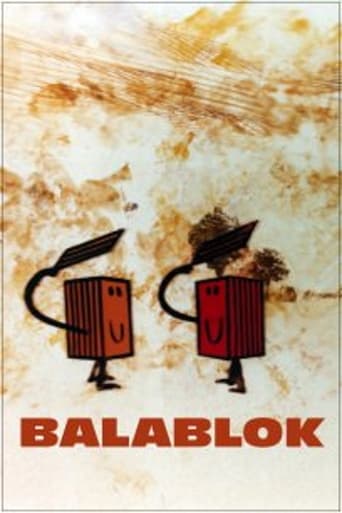 6.4
6.4Blocks and balls fight simply because they are different, until their battle reduces everyone to the same shape.
Balablok
1973
Bad moods, denial and constant resentment are spreading like an epidemic, gradually transferring from the individual to the entire society.
Billiard
1962
 8.0
8.0Using the comic device of trained laboratory mice, Bretislav Pojar examines the insidious nature of addiction to cigarette smoking, how it can begin in young people, and how difficult it is to quit.
Mouseology
1994
 NR
NRNo synopsis available yet.
Tom Thumb’s Journey
2015
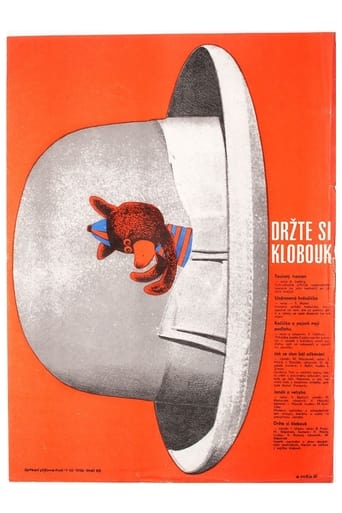 10.0
10.0No synopsis available yet.
Hey, Mister, Let’s Play! Hold On to Your Hat
1967