

Production
Claude Nedjar
Known for
Production
Credits
12 titles
Known for
 7.0
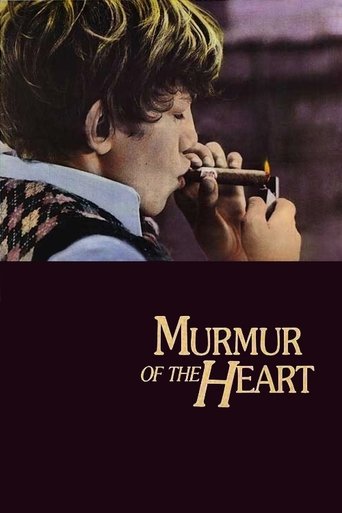
7.0This loosely plotted coming-of-age tale follows the life of 15-year-old Laurent Chevalier as he stumbles his way over the burgeoning swell of adolescence in 1950s France. After having his first sexual experience with a prostitute and dodging the lips of a priest, Chevalier contracts a case of scarlet fever. When the fever leaves him with a heart murmur, Chevalier is placed in a sanatorium, along with his over-attentive and adulterous mother.
Murmur of the Heart
1971
 5.6
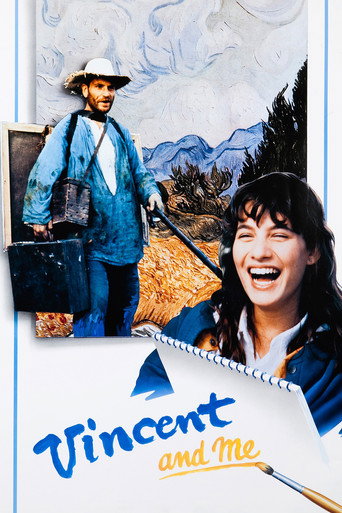
5.6Jo, a talented young art student from Quebec, attracts the attention of a mysterious European art dealer who buys her drawings. When she later learns that the works are being sold as newly discovered drawings by Vincent van Gogh, she sets out to uncover the truth—traveling first to Amsterdam and ultimately to 19th-century Arles to confront the painter himself.
Vincent and Me
1990
 5.8
5.8Filmed clandestinely in Czechoslovakia on 16mm. It's one of the films Godard made with the Groupe Dziga Vertov - a Marxist film about the political situation after the '68 revolution.
Pravda
1970
 3.9
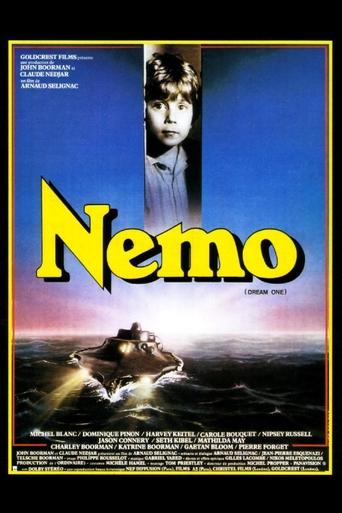
3.9Based on Winsor McCay's comic strip, a little boy embarks on a dream-like adventure. Also known as Dream One.
Dream One
1984
 7.0
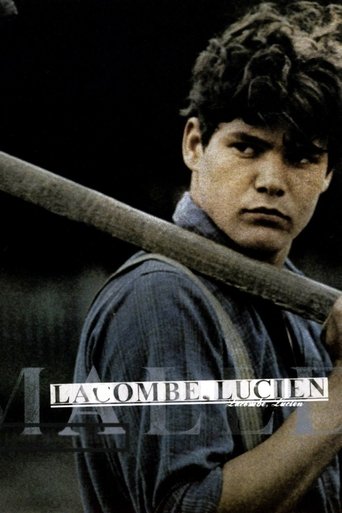
7.0In Louis Malle's lauded drama, Lucien Lacombe is a young man living in rural France during World War II who seeks to join the French Resistance. When he is rejected due to his youth, the resentful Lucien allies himself with the Nazis and joins the Gallic arm of their Gestapo. Lucien grows to enjoy the power that comes with his position, but his life is complicated when he falls for France Horn, a beautiful young Jewish woman.
Lacombe, Lucien
1974
 6.5
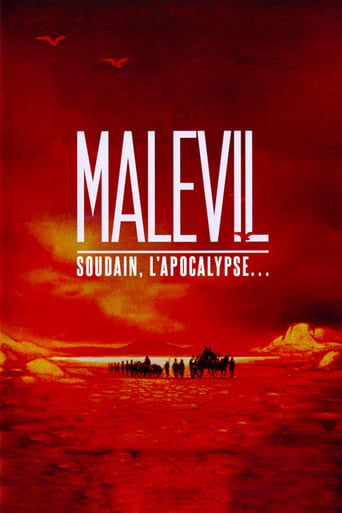
6.5In southern France, in a quiet little town, the mayor, who also owns a castle with some cattle, is in the wine cellar with some other people: the pharmacist, the veterinary, and some of his employees. As they are drinking wine, they hear a terrible noise and the heat's getting higher and higher. They don't realize what's happening: when they come out of the cellar, they realize that everything has burned, and all the buildings are destroyed...
Malevil
1981
Film credits

Behind the camera
7.0This loosely plotted coming-of-age tale follows the life of 15-year-old Laurent Chevalier as he stumbles his way over the burgeoning swell of adolescence in 1950s France. After having his first sexual experience with a prostitute and dodging the lips of a priest, Chevalier contracts a case of scarlet fever. When the fever leaves him with a heart murmur, Chevalier is placed in a sanatorium, along with his over-attentive and adulterous mother.
Murmur of the Heart
1971
5.8Filmed clandestinely in Czechoslovakia on 16mm. It's one of the films Godard made with the Groupe Dziga Vertov - a Marxist film about the political situation after the '68 revolution.
Pravda
1970
3.9Based on Winsor McCay's comic strip, a little boy embarks on a dream-like adventure. Also known as Dream One.
Dream One
1984
7.0In Louis Malle's lauded drama, Lucien Lacombe is a young man living in rural France during World War II who seeks to join the French Resistance. When he is rejected due to his youth, the resentful Lucien allies himself with the Nazis and joins the Gallic arm of their Gestapo. Lucien grows to enjoy the power that comes with his position, but his life is complicated when he falls for France Horn, a beautiful young Jewish woman.
Lacombe, Lucien
1974
6.5In southern France, in a quiet little town, the mayor, who also owns a castle with some cattle, is in the wine cellar with some other people: the pharmacist, the veterinary, and some of his employees. As they are drinking wine, they hear a terrible noise and the heat's getting higher and higher. They don't realize what's happening: when they come out of the cellar, they realize that everything has burned, and all the buildings are destroyed...
Malevil
1981
 7.1
7.1At the end of the nineteenth century, Italian anarchists, ten men, one woman, libertarian, collectivist emigrate to Brazil to start a leaderless community, without hierarchy, without a boss without police, but not without conflict nor passion.
La Cecilia
1976
 6.5
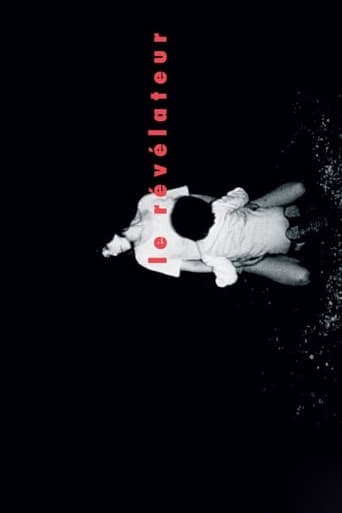
6.5A 4-year-old child is the element from and around which the action develops, and brings sentiments and emotions to light.
Le Révélateur
1968
A modern-day Socrates leaves behind his life as a philosopher to live off the land. When a police inspector is assigned to follow the man and question his motives, the cop gets caught up in the charming philosophy of the man who has left his material possessions behind. He encounters a pretty young woman and her nihilistic boyfriend, the latter who makes a living with his psychedelic side shows. The boyfriend gets the newspapers to print the philosopher's thoughts, prompting him to acquire a bevy of believers. There is some nudity in this comical thought-provoking story, but the main focus remains the words of the man who left behind creature comforts to find himself.
Le Socrate
1968
Ben (Françoise Lebrun) is a woman who never gets to do what she really wants to do and is the victim of everybody and everything. Benedict is her imaginary creation: the girl who would respond with strength and mastery to situations she can only submit to. She is married to a cad who says he only married her because she was pregnant, and now he wants his freedom. Her real love is a fellow medical student, who shows some interest in her. Nonetheless, she remains faithful to her unenthusiastic husband, until she becomes pregnant again. At this point, she begins to act more like the Benedict of her dreams and less like the "Ben" she has lived as until now.
Ben and Benedict
1977