
Directing
Humphrey Jennings
Born — Died
1907-08-19 — 1950-09-24
Place of birth
Walberswick, United Kingdom
Known for
Directing
Credits
44 titles
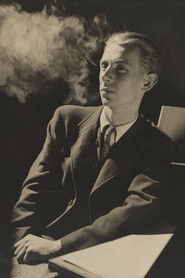
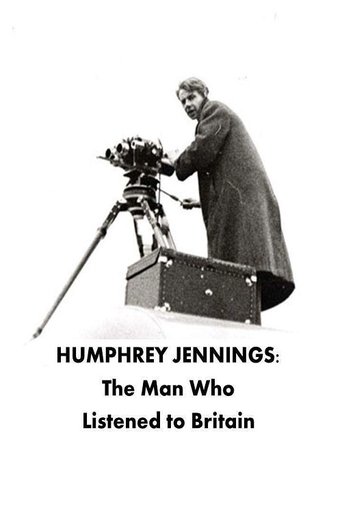
Frank Humphrey Sinkler Jennings (19 August 1907 – 24 September 1950) was an English documentary filmmaker, celebrated for his poetic and visually striking portrayals of British life during World War II. A co-founder of the Mass Observation social research organization, Jennings blended avant-garde techniques with a deep sense of national identity, creating films that captured the resilience and spirit of the British people. His most acclaimed works, including Listen to Britain (1942), Fires Were Started (1943), and A Diary for Timothy (1945), showcase his unique ability to fuse documentary realism with lyrical storytelling. Film critic and director Lindsay Anderson described him as "the only…
Known for
 7.2
7.2Omnibus was an arts-based BBC television documentary series, broadcast mainly on BBC1 in the United Kingdom. The programme was the successor to the long-running arts-based series 'Monitor'. It ran from 1967 until 2003, usually being transmitted on Sunday evenings. During its 35-year history, the programme won 12 Bafta awards. Among the series' best remembered documentaries are Cracked Actor, a profile of David Bowie, and Rene Magritte, a graduate film by David Wheatley, 'Madonna: Behind the American dream', a film produced by Nadia Hagger, and a profile of the British film director Ridley Scott. For a season in 1982, the series was in a magazine format presented by Barry Norman. The series was replaced by 'Imagine' hosted by Alan Yentob.
Omnibus
1967
 6.8
6.8A narrator recounts the state of Great Britain near the end of WWII via a visual diary for the titular baby boy born in September 1944.
A Diary for Timothy
1945
 6.3
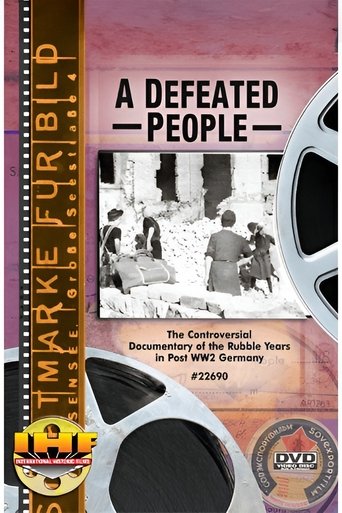
6.3A Defeated People is a 1946 British documentary short film made by the Crown Film Unit, directed by Humphrey Jennings and narrated by William Hartnell. The film depicts the shattered state of Germany, both physically and as a society, in the immediate aftermath of World War II. The narration explains what is being done – and what needs to be done – both by the occupying Allied forces and the German people themselves to build a better Germany from the ruins.
A Defeated People
1946
 6.8
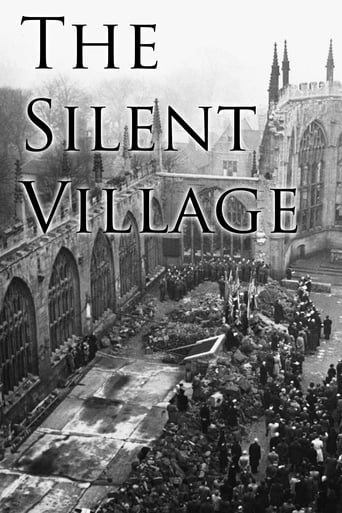
6.8The true story of the massacre of a small Czech village by the Nazis is retold as if it happened in Wales.
The Silent Village
1943
 7.5
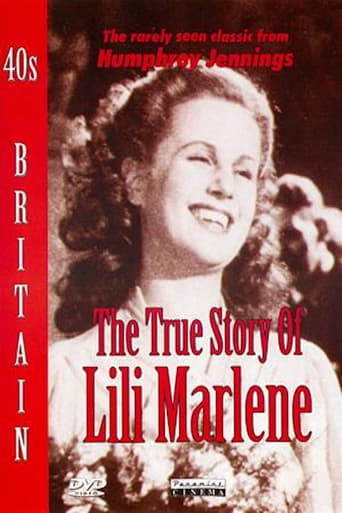
7.5The Eighth Army famously adopted a German song in the Western Desert. The Crown Film Unit traces the journey of Lili Marlene from its composition in post-WW1 Hamburg, via Radio Belgrade and the Afrika Korps, through victory in Tunisia and Sicily, to an imagined post-war East End, full of light, music and bananas for sale.
The True Story of Lili Marlene
1944
Industrial and social progress in post-war Europe.
The Changing Face of Europe
1951
Film credits
1930s · 3 titles
 NR
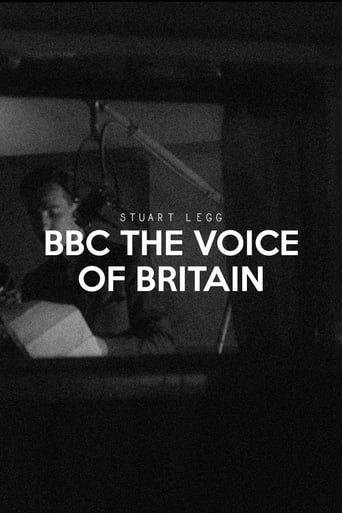
NRA behind-the-scenes GPO Film Unit documentary (directed by Stuart Legg) that races from studio rehearsals and newsrooms to control rooms and transmitters, weaving speeches, music, and outside broadcasts—featuring voices like H. G. Wells and Ramsay MacDonald—into a kinetic portrait of how the BBC’s national “voice” is made.
BBC: The Voice of Britain
1935
 5.8
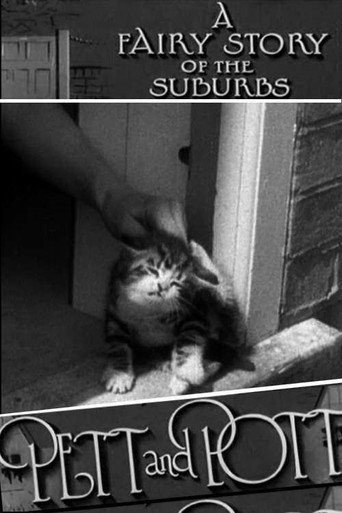
5.8The film, made to advertise domestic telephone sets, is based around two very different families. The Petts are conventional, happy and have children; the Potts are unconventional and unhappy, without children.
Pett and Pott: A Fairy Story of the Suburbs
1934
How news of a general reduction in GPO charges was finally brought to parliament and the people, despite attempts by the country's enemies to prevent the announcement...
The Glorious Sixth of June
1934
Series credits
Behind the camera
6.8A narrator recounts the state of Great Britain near the end of WWII via a visual diary for the titular baby boy born in September 1944.
A Diary for Timothy
1945
6.3A Defeated People is a 1946 British documentary short film made by the Crown Film Unit, directed by Humphrey Jennings and narrated by William Hartnell. The film depicts the shattered state of Germany, both physically and as a society, in the immediate aftermath of World War II. The narration explains what is being done – and what needs to be done – both by the occupying Allied forces and the German people themselves to build a better Germany from the ruins.
A Defeated People
1946
6.8The true story of the massacre of a small Czech village by the Nazis is retold as if it happened in Wales.
The Silent Village
1943
6.8The true story of the massacre of a small Czech village by the Nazis is retold as if it happened in Wales.
The Silent Village
1943
7.5The Eighth Army famously adopted a German song in the Western Desert. The Crown Film Unit traces the journey of Lili Marlene from its composition in post-WW1 Hamburg, via Radio Belgrade and the Afrika Korps, through victory in Tunisia and Sicily, to an imagined post-war East End, full of light, music and bananas for sale.
The True Story of Lili Marlene
1944
7.5The Eighth Army famously adopted a German song in the Western Desert. The Crown Film Unit traces the journey of Lili Marlene from its composition in post-WW1 Hamburg, via Radio Belgrade and the Afrika Korps, through victory in Tunisia and Sicily, to an imagined post-war East End, full of light, music and bananas for sale.
The True Story of Lili Marlene
1944
Industrial and social progress in post-war Europe.
The Changing Face of Europe
1951
 6.2
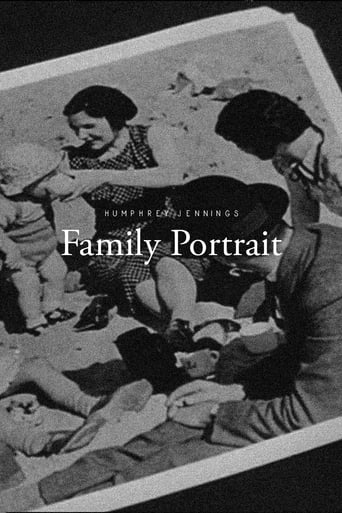
6.2In preparation for the celebration of the 1951 Festival of Britain, this short film was released to assure British citizens of their nation's place in the world and of their own places within that nation. Illustrative scenes of farming, science, political, and social life are juxtaposed to present a familiar and reassuring image of Britain.
Family Portrait
1950
6.2In preparation for the celebration of the 1951 Festival of Britain, this short film was released to assure British citizens of their nation's place in the world and of their own places within that nation. Illustrative scenes of farming, science, political, and social life are juxtaposed to present a familiar and reassuring image of Britain.
Family Portrait
1950
 6.7
6.7Humphrey Jennings’s wartime short rallies Britain’s countryside, showing fields ploughed up from fallow, seed sown, and crops raised on once-idle land as part of the national push to feed the home front—an urgent, lyrical call to turn soil into sustenance.
Spring Offensive
1940
 6.5
6.5Poetry by Rudyard Kipling, John Milton, and William Blake, and excerpts from speeches by Abraham Lincoln and Winston Churchill, all read by Laurence Olivier, illuminate documentary footage of England during its defense against the Nazi blitz in World War II. This short film serves as both propaganda and as a rallying cry to the British people.
Words for Battle
1941
 6.8
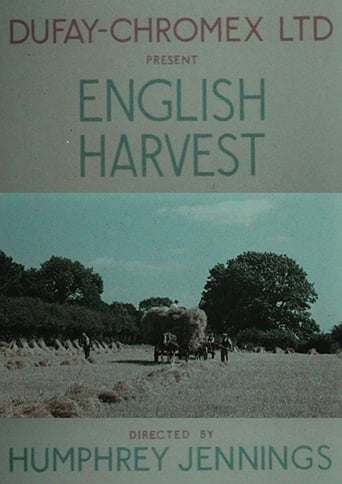
6.8The harvest of a pre-war British farm.
English Harvest
1938
 6.4
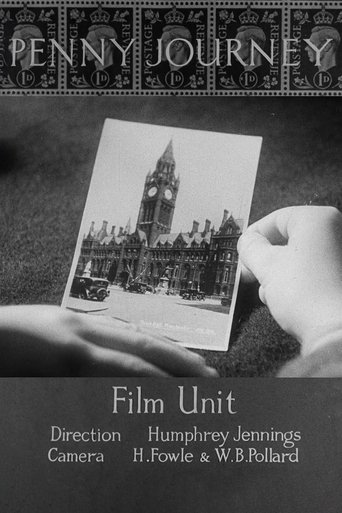
6.4As the subtitle of the film suggests - The Story of a Post Card from Manchester to Graffham - this journey is very much focused on the process of sorting, transporting and delivering the postcard in question.
Penny Journey
1938
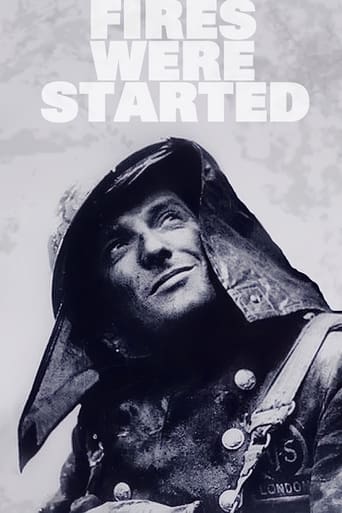 6.1
6.1British film written and directed by Humphrey Jennings, filmed in documentary style showing the lives of firefighters through the Blitz in World War II.
Fires Were Started
1943
6.1British film written and directed by Humphrey Jennings, filmed in documentary style showing the lives of firefighters through the Blitz in World War II.
Fires Were Started
1943
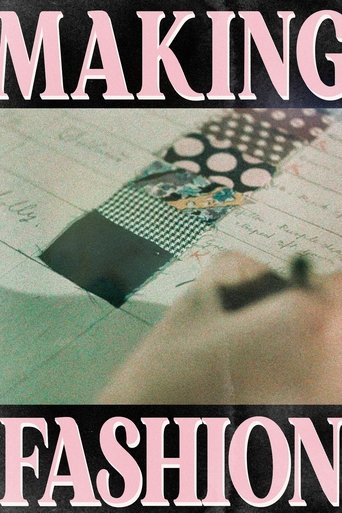 8.0
8.0Documentary short by Humphrey Jennings
Making Fashion
1938
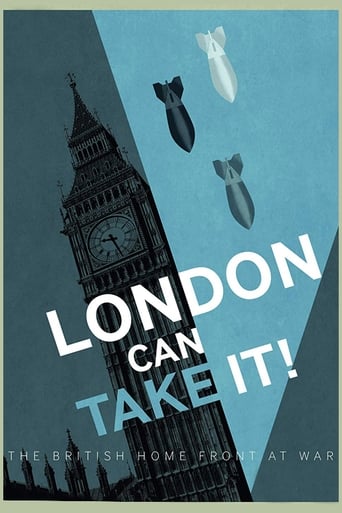 6.6
6.6A tribute to the courage and resiliency of Britons during the darkest days of the London Blitz.
London Can Take It!
1940
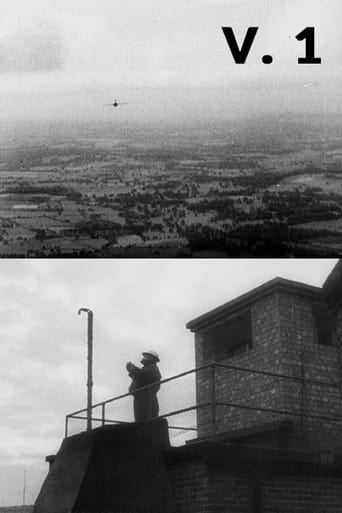 6.5
6.5Short documentary on the use of the V-1 Flying Bomb during the German bombings of London.
V.1.
1944
 6.5
6.5Humphrey Jennings’s Crown Film Unit short on the summer 1944 V-1 “doodlebug” campaign, tracking a salvo from the coast toward London as it runs Britain’s layered defenses—coastal AA guns, RAF fighters, and barrage balloons—capturing both interception and impact in a stark report of terror and resilience.
The Eighty Days
1944
 9.0
9.0Osbert Lancaster, James Fisher, John Ormston and Ralph Vaughn Williams meditate on the history and culture of England.
The Dim Little Island
1949
9.0Osbert Lancaster, James Fisher, John Ormston and Ralph Vaughn Williams meditate on the history and culture of England.
The Dim Little Island
1949
 6.5
6.5One of the last voyages of a commercial sailing ship on a trip from Cornwall.
Farewell Topsails
1937
 8.0
8.0Edward R. Murrow narrates Humphrey Jennings' short documentary about life in England during wartime.
This Is England
1941
 7.0
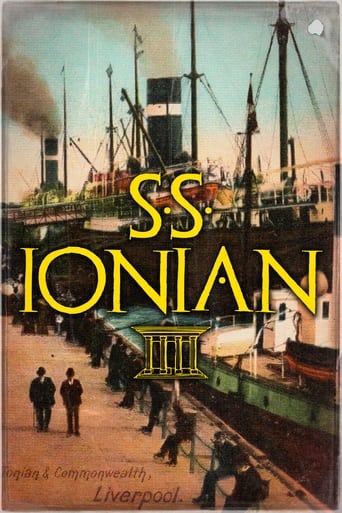
7.0Shot in mid-1939 as S.S. Ionian (also shown as Her Last Trip), Humphrey Jennings’s GPO short follows the Royal Mail steamer on a last peacetime run through the Mediterranean—Gibraltar, Malta, Alexandria, Haifa—under the gaze of the Mediterranean Fleet (HMS Barham, Malaya, Warspite). After the Ionian was sunk by a German mine on 29 November 1939 en route from Crete to Hull, the film was recut and released as Cargoes.
Cargoes
1939
 6.2
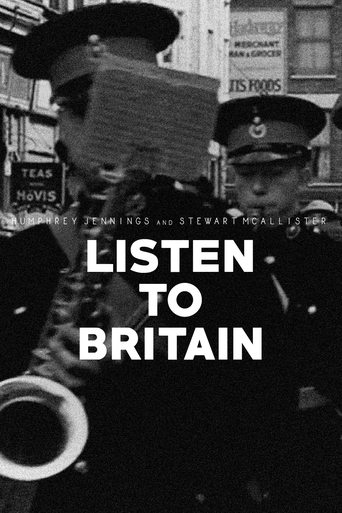
6.2A depiction of life in wartime Britain during the Second World War. Director Humphrey Jennings visits many aspects of civilian life and of the turmoil and privation caused by the war, all without narration.
Listen to Britain
1942
6.2A depiction of life in wartime Britain during the Second World War. Director Humphrey Jennings visits many aspects of civilian life and of the turmoil and privation caused by the war, all without narration.
Listen to Britain
1942
 6.4
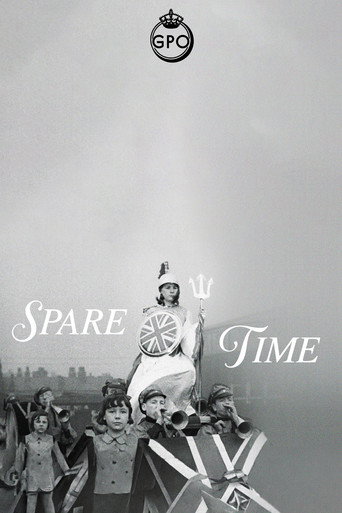
6.4Spare Time is a 1939 British film directed by Humphrey Jennings for the GPO Film Unit, and made for the 1939 New York World's Fair. It is 15 minutes long and documents the leisure activities of workers in the coal, steel, and cotton industries in Sheffield, Bolton, Manchester and Pontypridd. Commentary is provided by Laurie Lee.
Spare Time
1939
 6.0
6.0How long-distance telephone calls are made, from the UK to the USA. We see operators, miles of wires, and the amplification of voice transmitted across the waters. Engineers of the Post Office describe how they are improving the service.
Speaking from America
1938
 7.0
7.0A story of sacrifice, in which organised labour voluntarily relinquishes hard-won workplace rights after being asked "to give up by choice what Hitler takes by force."
Welfare of the Workers
1940
 7.0
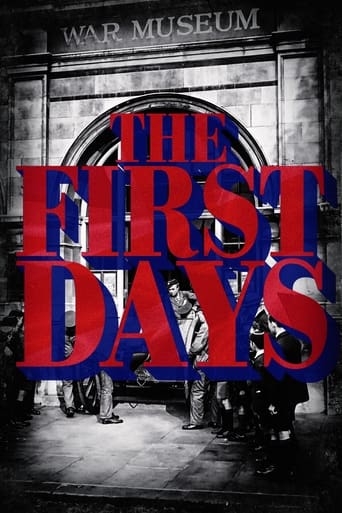
7.0Londoners prepare for war.
The First Days
1939
 5.3
5.3A concert short spotlighting Dame Myra Hess performing the first movement of Beethoven’s Piano Sonata No. 23 in F minor, “Appassionata.” Filmed in an intimate hall setting, it focuses on her touch and phrasing, presenting the movement as a self-contained showcase of her artistry.
Myra Hess
1945
 6.3
6.3The history of wheels, roads and vehicles from cavemen to the coming of steam.
The Story of the Wheel
1934
 6.7
6.7The Heart of Britain (1941) depicts wartime life in the North and Midlands, contrasting tranquil countryside with the grit of industry. From Sheffield steelworkers and Lancashire cotton mills to ARP squads, concerts, and choirs, the film highlights resilience in the face of bombing and concludes with the building of a Whitley bomber as a symbol of Britain’s strength.
The Heart of Britain
1941
 7.0
7.0A concise museum short that traces the evolution of the steam locomotive, using the Science Museum (London)’s model railway collection to chart design leaps from early pioneers to mainline express engines.
Locomotives
1934
 8.0
8.0A documentary by Humphrey Jennings about the modernization of coal mines in Cumberland.
The Cumberland Story
1948
 6.8
6.8Documentary short by Humphrey Jennings
S.S. Ionian
1939
Rubber rooftops and bomber-size fly paper suspended in the sky? Gad Sir, bring on the Blitz! David Low’s success as a cartoonist in the 1930s is perhaps best demonstrated by the fact that Goebbels complained that he was souring British-German relations. Though an admirer of animation, this was his only realised venture into the territory, but includes his most famous character Colonel Blimp. Humphrey Jennings would become best known for his contribution to the British Documentary Movement but in the mid-1930s he was working as a Production Manager for Gasparcolor. In January 1936 he corresponded with David Low on a potential series of political cartoon shorts in colour, and the cartoonist provided some drawings from which this short sequence was made. Sadly the project failed to advance beyond this test. (BFI)
David Low Animation
1936
 5.3
5.3Humphrey Jennings' first film as a director, a brief overview of the British postal service.
Post-Haste
1934
 6.5
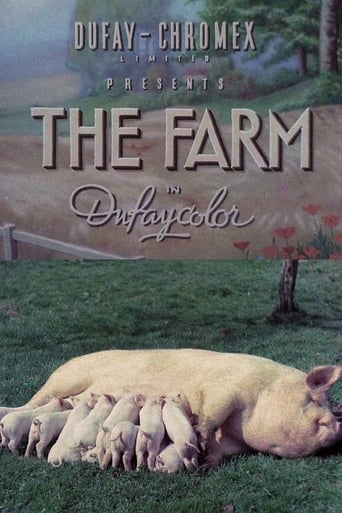
6.5Life during a season on a pre-war British farm.
The Farm
1938