
Directing
Michael Snow
Born — Died
1929-12-10 — 2023-01-05
Place of birth
Toronto, Canada
Known for
Directing
Credits
68 titles
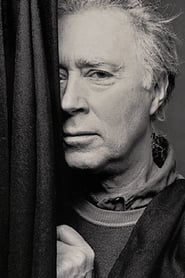
Michael Snow was considered one of Canada's most important artists, and one of the world's leading experimental filmmakers. His wide-ranging and multidisciplinary oeuvre explored the possibilities inherent in different mediums and genres, and encompassed film and video, painting, sculpture, photography, writing, and music. Snow's practice comprised a thorough investigation into the nature of perception. While Snow early established himself as a successful painter and musician in his native Toronto, it was his 1962 move to New York City that marked the beginning of his rise to international prominence. He entered into a long-lasting and fruitful dialogue with downtown Manhattan's artistic av…
Known for
 NR
NRCommissioned by the Toronto International Film Festival to mark the event's 25th anniversary in September 2000, the "Preludes" program consisted of ten short films by Canadian directors which were inspired in some way by the festival. Each film screened as a prelude to a feature film in the 2000 Toronto International Film Festival program. The full "Preludes" anthology was screened on the web in November 2000, and was given theatrical retrospectives at the TIFF Lightbox in the subsequent years.
Preludes
2000
 7.3
7.3Also known as Walden, Jonas Mekas’s first diary film is a six-reel chronicle of his life in 1960s New York, interweaving moments with family, friends, lovers, and artistic idols. Blending everyday encounters with portraits of the avant-garde art scene, it forms an epic, personal meditation on community, creativity, and the passage of time.
Diaries, Notes, and Sketches
1968
 NR
NRHome movies shot on Super 8mm by W+B Hein over 10 years.
Home Movies 1971-81
1985
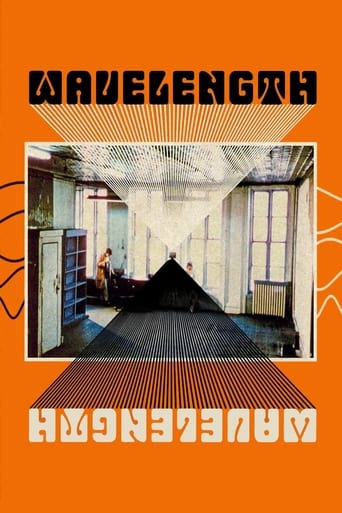 5.4
5.4In a Lower Manhattan industrial loft, a camera very slowly zooms into a photograph on a wall while various people occasionally enter and exit.
Wavelength
1967
 7.0
7.0Jonas Mekas assembles 160 portraits, appearances, and fleeting sketches of underground and independent filmmakers captured between 1955 and 1996. Fast-paced and archival in spirit, the film celebrates the avant-garde as its own “nation of cinema,” a vital community existing outside the dominance of commercial film.
Birth of a Nation
1997
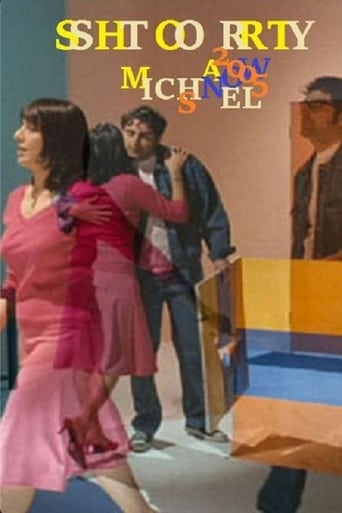 4.7
4.7A loop of two parts of a film, superimposed on top of one another, that concern a man who has arrived at the house of his lover and her husband to hang a painting on their wall.
Sshtoorrty
2005
Film credits
2010s · 7 titles
 NR
NRA young woman stands by a car while scenes from metropolitan life flash by.
Cyclopean 3D: Life with a Beautiful Woman
2011
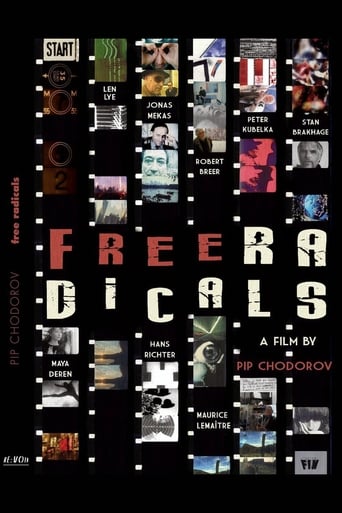 6.8
6.8Experimental filmmaker Pip Chodorov traces the course of experimental film in America, taking the very personal point of view of someone who grew up as part of the experimental film community.
Free Radicals: A History of Experimental Film
2011
 NR
NRKnokke, Belgium. A small mundane coastal town, home to the beau-monde. To compete with Venice and Cannes, the posh casino hosts the second ‘World Festival of Film and the Arts’ in 1949, organised in part by the Royal Cinematheque of Belgium. To celebrate cinema’s 50 year existence, they put together a side program showcasing the medium in all its shapes and forms: surrealist film, absolute film, dadaist films, abstract film,… The side program would soon become a festival in its own right: ‘EXPRMNTL’, dedicated to experimental cinema, and would become a mythical gathering of the avant-garde…
EXPRMNTL
2016
 NR
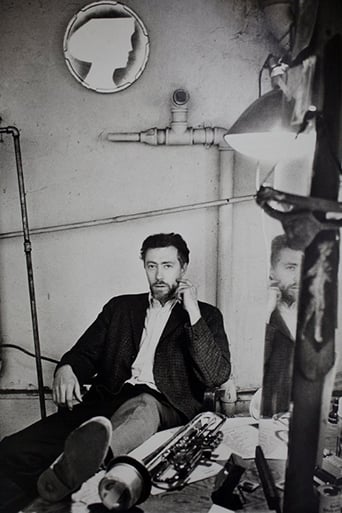
NRA serendipitous encounter with a younger artist gives legendary Canadian art icon Michael Snow the opportunity to reflect on his life and career.
Portrait of Snow
2016
 NR
NRThis is the sound recording of the interview that Michael Snow, filmmaker, sculptor, photographer and visual artist, gave to Gérard Courant for the magazine Art press, published in February 1979, in its number 25. A great connoisseur of the Canadian artist's work and one of the first to pay tribute to him in 1973 in the magazine Zoom, Noël Simsolo accompanied the two filmmakers at the beginning of the discussion.
L’œil omnidirectionnel de Michael Snow
2019
 NR
NRWorld renowned artist and filmmaker Michael Snow continues to push the boundaries of yet another field, music. The avant-garde greats mastery of free-improvisation shines through in this rare solo piano performance at Konzerthaus, Vienna.
Snow In Vienna
2013
 NR
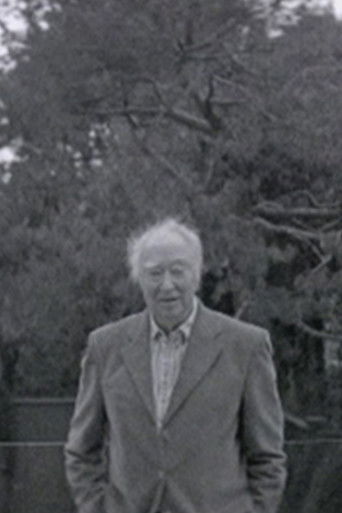
NRHand processed 35mm portrait of Michael Snow.
Michael Snow Portrait
2011
1990s · 2 titles
7.0Jonas Mekas assembles 160 portraits, appearances, and fleeting sketches of underground and independent filmmakers captured between 1955 and 1996. Fast-paced and archival in spirit, the film celebrates the avant-garde as its own “nation of cinema,” a vital community existing outside the dominance of commercial film.
Birth of a Nation
1997
 6.0
6.0MICHAEL SNOW UP CLOSE was produced on the occasion of The Michael Snow Project, a major, career-spanning, multi-venue retrospective of the artist. The documentary celebrates the multi-faceted shape of Snow's creative genius, including glimpses of his work in painting, sculpture, film, photo-works, performance, installations, and holography. Discussions with Snow, original documentation of his music and performance work, and excerpts from his avant-garde films, are complemented by interviews with filmmakers Jonas Mekas and Bruce Elder, Snow's dealer Av Isaacs, the architect Eb Zeidler, museum director Pierre Théberge, curator Louise Dompierre, and others. A deliberately conventional documentary about a deliberately unconventional artist.
Michael Snow Up Close
1996
1980s · 3 titles
NRHome movies shot on Super 8mm by W+B Hein over 10 years.
Home Movies 1971-81
1985
 NR
NRInterview and profile of experimental filmmaker Michael Snow from 1983. Includes extracts from 'Back and Forth', 'Wavelength', 'La Region Central', 'So Is This' and gallery piece 'Two Sides To Every Story'. Made for Channel 4 'Visions' and broadcast 19 January 1983.
Snow Business
1983
 5.5
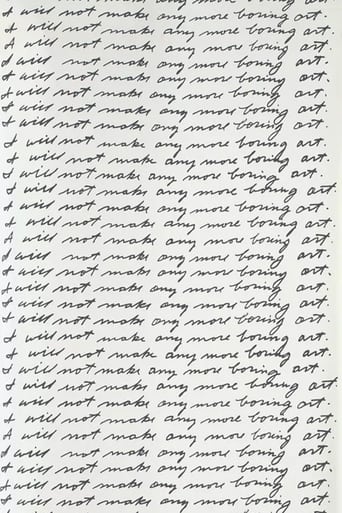
5.5This is an interesting little documentary about the Nova Scotia College of Art and Design, which was apparently one of the global hotbeds of experimental/avant garde art- particularly video art- back in the 70's & 80's. MacGillvary interviews a number of the artists that were formative to the program. Many of whom would go on to become teachers at the school.
I Will Not Make Any More Boring Art
1987
1970s · 8 titles
 4.9
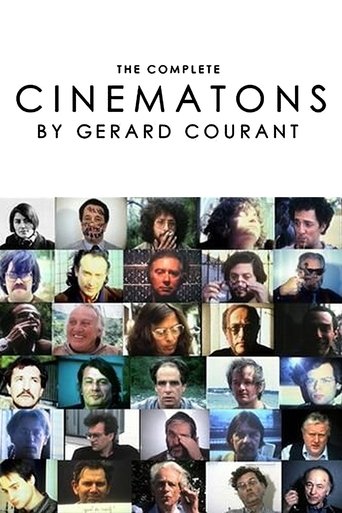
4.9Cinématon is a 156-hour long experimental film by French director Gérard Courant. It was the longest film ever released until 2011. Composed over 36 years from 1978 until 2006, it consists of a series of over 2,821 silent vignettes (cinématons), each 3 minutes and 25 seconds long, of various celebrities, artists, journalists and friends of the director, each doing whatever they want for the allotted time. Subjects of the film include directors Barbet Schroeder, Nagisa Oshima, Volker Schlöndorff, Ken Loach, Benjamin Cuq, Youssef Chahine, Wim Wenders, Joseph Losey, Jean-Luc Godard, Samuel Fuller and Terry Gilliam, chess grandmaster Joël Lautier, and actors Roberto Benigni, Stéphane Audran, Julie Delpy and Lesley Chatterley. Gilliam is featured eating a 100-franc note, while Fuller smokes a cigar. Courant's favourite subject was a 7-month-old baby. The film was screened in its then-entirety in Avignon in November 2009 and was screened in Redondo Beach, CA on April 9, 2010.
Cinématon
1978
 NR
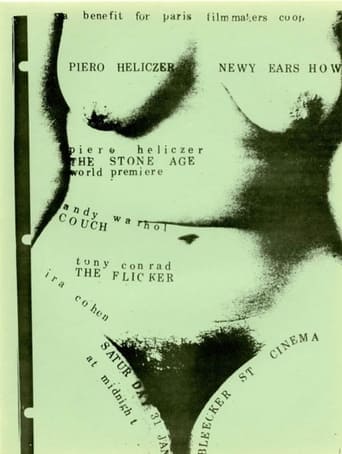
NR"The question is, it is either going to be a stoned age or a new Stone Age" - Louis Brigante
The Stone Age
1970
 4.6
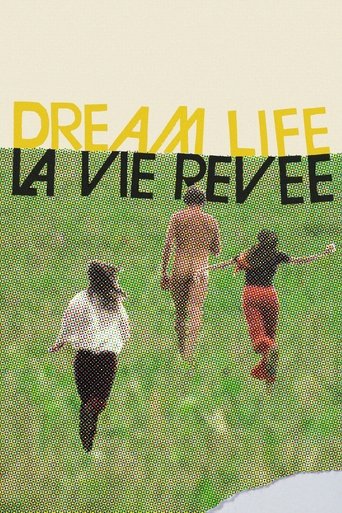
4.6Two twenty-something women dream of the ideal man and slowly realize that reality is very different from their fantasies.
Dream Life
1972
Reel 5 of Gérard Courant's on-going Cinematon series.
Cinématon V
1979
 7.8
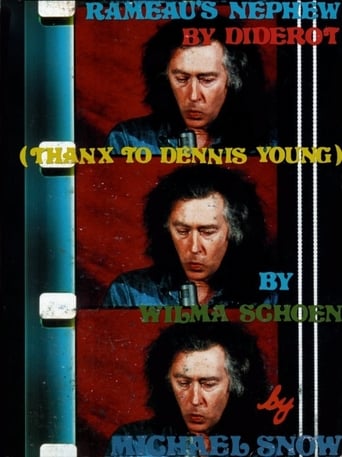
7.8Various unrelated vignettes, often juxtaposing sound and image.
‘Rameau’s Nephew’ by Diderot (Thanx to Dennis Young) by Wilma Schoen
1974
 7.5
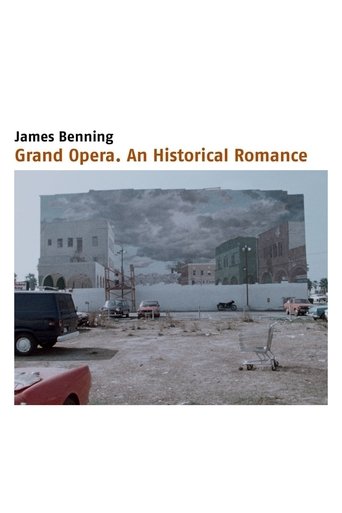
7.5Grand Opera marks a stock-taking of Benning's work and his life, presenting a personal and artistic autobiography woven together with a series of events dealing with the historical development of the number pi, Benning's travels, and homages to Michael Snow, Hollis Frampton, George Landow (Owen Land), and Yvonne Rainer.
Grand Opera: An Historical Romance
1979
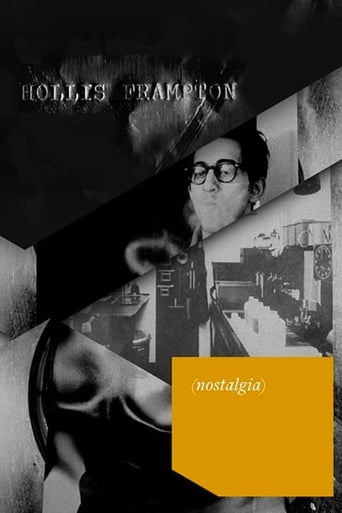 6.6
6.6Michael Snow narrates a series of Hollis Frampton's photographs (speaking as Frampton, in the first person)—as each picture catches fire on a hot plate.
Hapax Legomena I: (nostalgia)
1971
 NR
NRPortrait of Michael Snow
Cinématon n°44 : Michael Snow
1979
1960s · 8 titles
7.3Also known as Walden, Jonas Mekas’s first diary film is a six-reel chronicle of his life in 1960s New York, interweaving moments with family, friends, lovers, and artistic idols. Blending everyday encounters with portraits of the avant-garde art scene, it forms an epic, personal meditation on community, creativity, and the passage of time.
Diaries, Notes, and Sketches
1968
An unreleased diary film shot during the Fairleigh-Dickinson Artist Seminar simultaneous to the production of Back and Forth by Michael Snow.
Seminar
1969
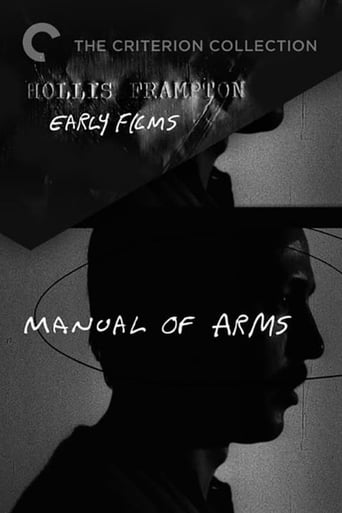 5.0
5.0In this "fourteen-part drill for the camera," Frampton created a portrait gallery of his art-world friends engaging in a variety of ordinary activities.
Manual of Arms
1966
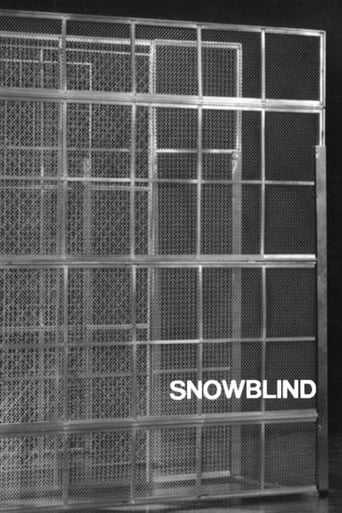 4.8
4.8"Homage to Michael Snow's environmental sculpture 'Blind.' The film proposes analogies, in imitation of three historic montage styles, for three perceptual modes mimed by that work." -HF
Snowblind
1968
 NR
NR"The whole film are non-art portraits of people in which they do what they want with this hat – and therefore, act or stand in front of my camera. It’s only love: therefore it can’t harm you". Joyce Wieland.
Bill's Hat
1967
 7.5
7.5Toronto is regarded as the third largest jazz centre in North America. This film features a cross-section of jazz bands of that city: the Lenny Breau Trio, the Don Thompson Quintet and the Alf Jones Quartet. Their styles show creative self-expression, hard work, and improvisation.
Toronto Jazz
1963
 7.0
7.0"Vanity. Had a beard. Appearance (looks). Looking. Disappearance act. Hand-made fades and zooms but camera made shave. Camerazor. Handsome. Tired. Walking Woman. My worst film."
Short Shave
1965
 NR
NRThis performance piece by filmmaker Hollis Frampton, recorded in 1968 in New York City, features the voice of artist Michael Snow. Frampton would place a tape deck at the front of a room, press play, and walk to the back to run a 16mm projector. Presented here is the audio portion of the piece, recreated with images designed to replicate Frampton’s visuals.
A Lecture
1968
Behind the camera
NRCommissioned by the Toronto International Film Festival to mark the event's 25th anniversary in September 2000, the "Preludes" program consisted of ten short films by Canadian directors which were inspired in some way by the festival. Each film screened as a prelude to a feature film in the 2000 Toronto International Film Festival program. The full "Preludes" anthology was screened on the web in November 2000, and was given theatrical retrospectives at the TIFF Lightbox in the subsequent years.
Preludes
2000
5.4In a Lower Manhattan industrial loft, a camera very slowly zooms into a photograph on a wall while various people occasionally enter and exit.
Wavelength
1967
5.4In a Lower Manhattan industrial loft, a camera very slowly zooms into a photograph on a wall while various people occasionally enter and exit.
Wavelength
1967
5.4In a Lower Manhattan industrial loft, a camera very slowly zooms into a photograph on a wall while various people occasionally enter and exit.
Wavelength
1967
4.7A loop of two parts of a film, superimposed on top of one another, that concern a man who has arrived at the house of his lover and her husband to hang a painting on their wall.
Sshtoorrty
2005
4.7A loop of two parts of a film, superimposed on top of one another, that concern a man who has arrived at the house of his lover and her husband to hang a painting on their wall.
Sshtoorrty
2005
 6.0
6.0First shown on January 30, 1967, FOR LIFE AGAINST THE WAR was an open-call, collective statement from American independent filmmakers disparate in style and sensibility but united by their opposition to the Vietnam War. Part of the protest festival Week of the Angry Arts, the epic compilation film incorporated minute-long segments which were sent from many corners of the country, spliced together and projected. The original presentation of the works was more of an open forum with no curation or selection, and in 2000 Anthology Film Archives preserved a print featuring around 40 films from over 60 submissions.
For Life, Against the War
1967
 NR
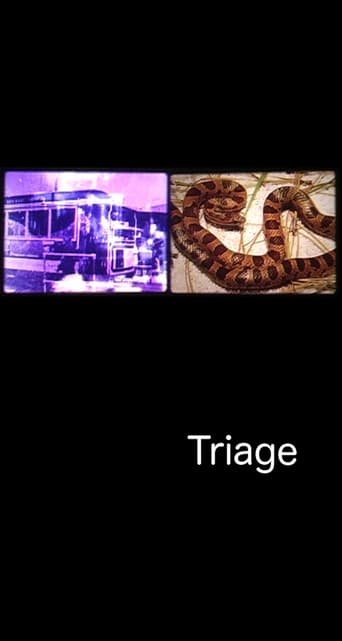
NRA dual-projection film where each director made 30 minutes of film without knowledge of what the other was making. Snow's side is a visual encyclopedia of natural and man-made objects. Brown's side transforms footage of a San Francisco cable car.
Triage
2004
 5.6
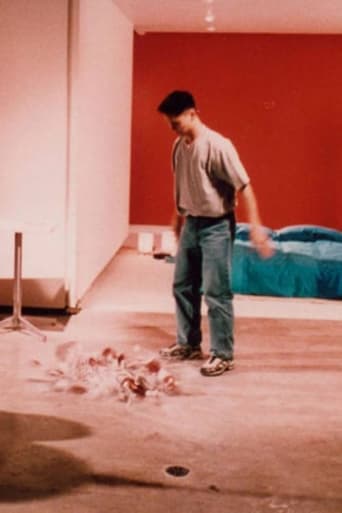
5.6Panning shot of a room while a group of people discusses film while eating at a table.
Prelude
2000
7.8Various unrelated vignettes, often juxtaposing sound and image.
‘Rameau’s Nephew’ by Diderot (Thanx to Dennis Young) by Wilma Schoen
1974
7.8Various unrelated vignettes, often juxtaposing sound and image.
‘Rameau’s Nephew’ by Diderot (Thanx to Dennis Young) by Wilma Schoen
1974
 7.1
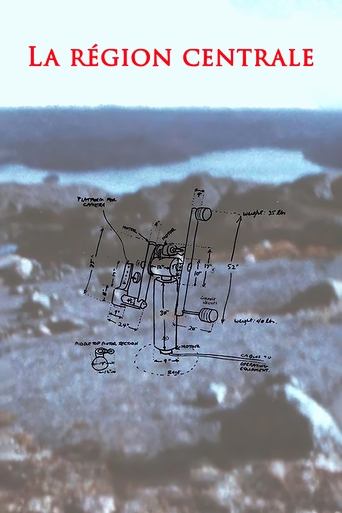
7.1A 1971 experimental Canadian film directed by Michael Snow. Shot in the Canadian mountains over a period of 24 hours using a robotic arm.
La Région Centrale
1971
7.1A 1971 experimental Canadian film directed by Michael Snow. Shot in the Canadian mountains over a period of 24 hours using a robotic arm.
La Région Centrale
1971
 6.5
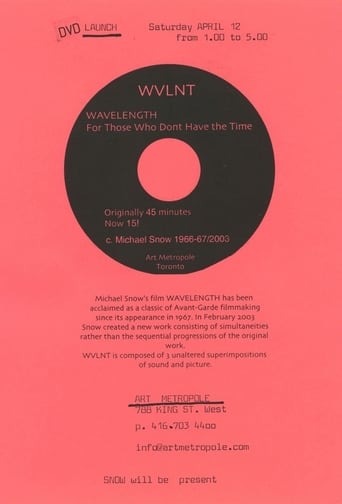
6.5A shorter, significantly altered version of Wavelength (1967), where the original film is overlayed upon itself.
WVLNT
2003
 6.7
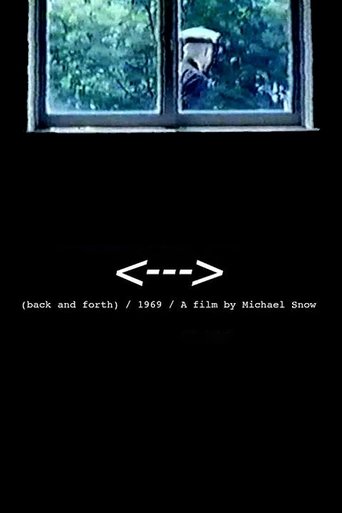
6.7A camera moves back and forth at an increasing pace. Back and forth, back and forth...
Back and Forth
1969
 6.8
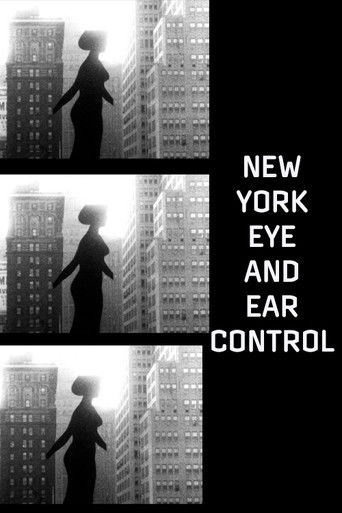
6.8A cutout of a woman's silhouette is displayed in many locations while a free jazz soundtrack is heard. The jazz musicians later pose for the camera in a studio.
New York Eye and Ear Control
1964
 6.6
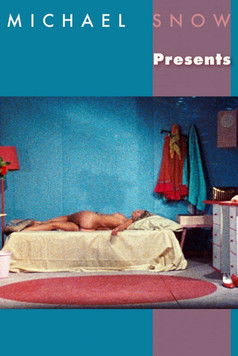
6.6The apparent vertical scratch in celluloid that opens Presents literally opens into a film within the film. When its figure awakens into a woman in a 'real' unreal set, the slapstick satire of structural film begins. It is not the camera that moves, but the whole set, in this first of three material 'investigations' of camera movement. In the second, the camera literally invades the set; a plexiglass sheet in front of the dolly crushes everything in its sight as it zooms through space. Finally, this monster of formalism pushes through the wall of the set and the film cuts to a series of rapidly edited shots as the camera zigzags over lines of force and moving fields of vision in an approximation of the eye in nature. Snow pushes us into acceptance of present moments of vision, but the single drum beat that coincides with each edit in this elegaic section announces each moment of life's irreversible disappearance.
Presents
1981
 NR
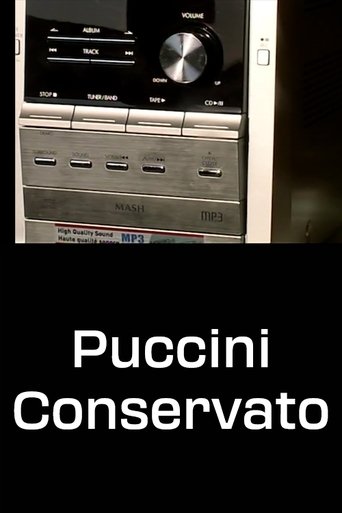
NRPuccini Conservato uses a CD, a sound recording of some Puccini music (from La Bohème). The source of the sound (the loudspeakers) in a continuous hand-held panning (guided by the music), is intercut with shots of flowers or wood-fire, exemplifying the lyricism in Puccini’s music. By being a recording of a recording, the work proclaims the artificiality of the sound. However the beauty and humanity of the music comes through too.
Puccini Conservato
2009
 5.4
5.4From La Région Centrale (1971), Snow orchestrates new patterns of movement that exchanges the focus on landscape with the cityscape of Toronto.
Cityscape
2019
 8.5
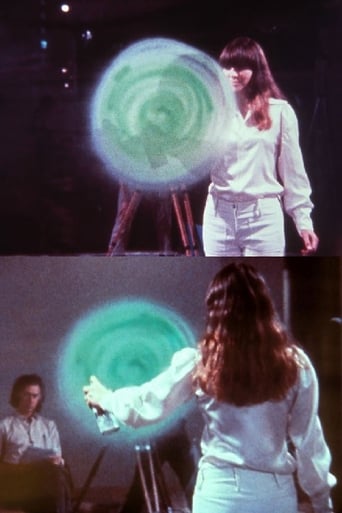
8.5Two 16mm films are projected in a loop on a thin painted aluminum screen hanging in the middle of a room. We can hear the projectors at each end of the room, which project images on the central screen. We can see the same scene on each side of the screen: a woman, seen from the front and front back depending on the side of the screen, painting it with spray paint. A man then tears up the screen and goes through it, followed by the woman. We can see Michael Snow sitting further away, giving instructions to the woman. We can also see the cameras filming the scene from each side. Visitors in the room can walk around the screen and thus watch the scene from one angle or another. Both films are projected in synchronicity on the two sides of the screen.
Two Sides to Every Story
1974
You see nothing but a white, crystal white plate, and water dripping into the plate, and you hear the sound of the water dripping. The film is ten minutes long.
Dripping Water
1969
 4.6
4.6A continuous zoom traverses the space of a breakfast table, serving as a grand metaphor for indigestion.
Breakfast (Table-Top Dolly)
1976
 7.8
7.8Experimental short in which a camera pans quickly in a small apartment space; Disembodied voices speak of audience engagement.
Standard Time
1967
Solar Breath (2002) is a 62-minute loop of fluttering curtains that reveal and conceal an idyllic landscape in rural Newfoundland.
Solar Breath
2002
 5.9
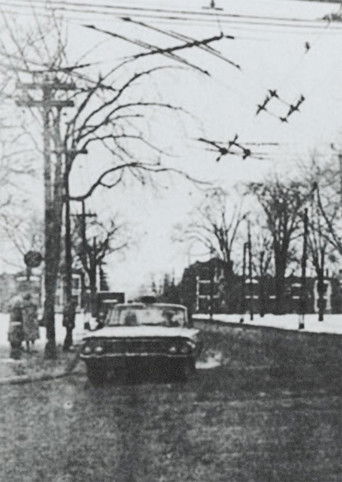
5.9A silent succession of black-and-white photographs of the city of Montreal.
One Second in Montreal
1969
 5.7
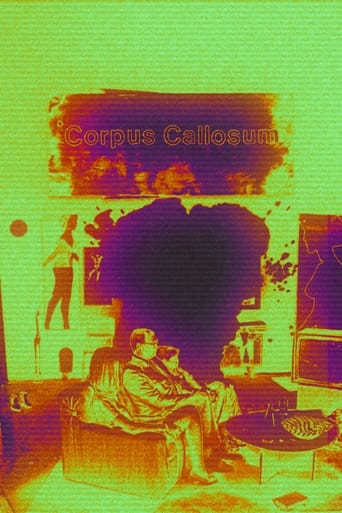
5.7A surreal and comic exploration of an office space and its inhabitants and the decorations of a living room.
*Corpus Callosum
2002
5.7A surreal and comic exploration of an office space and its inhabitants and the decorations of a living room.
*Corpus Callosum
2002
 NR
NRA new performance that reworks the 1967 film’s sine wave soundtrack into a new composition distributed across multiple channels of sound in real time.
Waivelength
2019
Watch slides of Michael Snow's paintings from the worst seat in the house.
Side Seat Paintings Slides Sound Film
1970
 NR
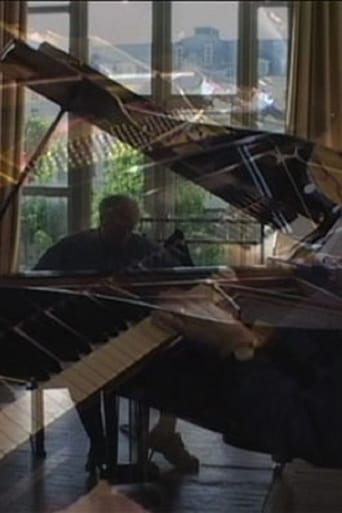
NRUsing concert footage of the free-improvisation ensemble he co-founded in 1974, Snow digitally weaves together images and sounds from performances that have taken place across the globe. 'I desired an equivalence of seeing and hearing so that one could actually listen, pay attention to the music, as well as follow the picture development,' writes Snow. Only the music remains unedited, unmodified.
Reverberlin
2006
 8.1
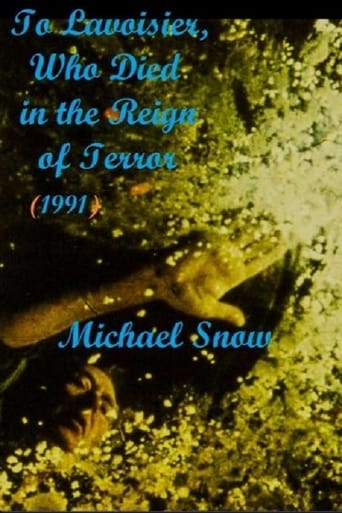
8.1To Lavoisier Who Died in the Reign of Terror (1991) is a collaboration with filmmaker Carl Brown, who specializes in homebrewed chemical film development. In a series of tableaux, people perform everyday tasks — sleeping, dining, reading, card-playing — as the camera arcs past and over them (the replete set of positions recalls La région centrale’s movements). Brown abraded the film stock, creating a continuous dynamic surface-effect tension with the comparatively static views and cueing the soundtrack, the crackle of fire. The physics and chemistry of combustion were the scientific focus of Lavoisier, the 18th-century savant.
To Lavoisier, Who Died in the Reign of Terror
1991
7.0"Vanity. Had a beard. Appearance (looks). Looking. Disappearance act. Hand-made fades and zooms but camera made shave. Camerazor. Handsome. Tired. Walking Woman. My worst film."
Short Shave
1965
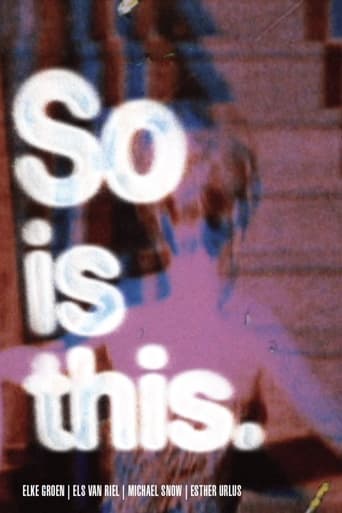 7.0
7.0English and French words flash individually over a black background.
So Is This
1982
7.0English and French words flash individually over a black background.
So Is This
1982
Michael Snow's 1970 film A Casing Shelved combines a projection of a 35mm slide showing a bookcase in Snow's studio with a tape-recorded narration by the artist that discusses various objects within the image. Not only addressing viewers directly, Snow's narration attempts to direct our eyes toward specific portions of the image, as if spectatorial vision could function in a manner analogous to camera vision.
A Casing Shelved
1970
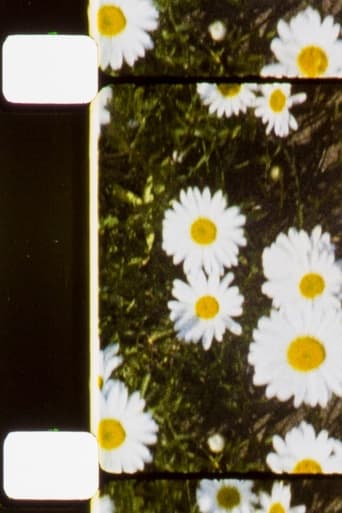 7.0
7.0Although Seated Figures is characteristically confined by a specific placement of the camera — in this case, fixed to the rear of a pickup truck and aimed at the ground — the result is one of Snow's most visually compelling films. As Snow drives the truck over all kinds of terrain — he has offhandedly described the film as a "history of roads" — we see a variety of textures flowing in front of the camera as this road movie unfolds: asphalt, gravel, dirt roads, sand, grass, flowers and shallow creeks. The imagery moves between abstraction and representation as different travelling speeds affect the legibility of the visuals, and as manmade surfaces give way to the beautifully variegated patterning of nature.
Seated Figures
1988
A man (Snow himself) rises from his desk, puts on his scarf and coat, says goodbye to a woman typing at a nearby desk, and leaves the room.
See You Later
1990
Zooming back from an image in close-up a brightly colored and kitschy room is revealed. Digitally manipulated objects and figures appear/disappear, details and colors change in scale, and intensity, sexes change. The Living Room digitally dramatizes and multiplies chosen manifestations and implications of On/Off and/or Absence/Presence. The Living Room is also part of the longer feature Corpus Collosum.
The Living Room
2001
 6.2
6.2A cross-hatched fantasy about nocturnal furniture love.
A to Z
1956
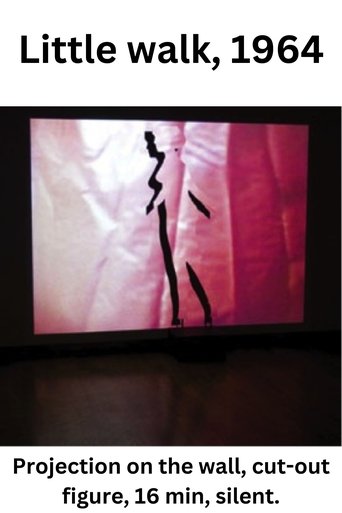 NR
NRLittle Walk (1964) is Michael Snow’s first gallery film installation. It arrives as a diplomatic envoy from New York’s art and film worlds of the sixties – an alternative cinema informed by Minimalism and Happenings, materializations of art as experience projected on Snow’s trademark Walking Woman. "Little Walk" is a dynamic, 12-min silent loop that embodies the experimental nature characterizing the artist's works during that decade. From 1961 to 1967, Snow centred his artistic endeavours across all mediums around the naturalistic outline of a youthful woman. Initially crafted from a cardboard cut-out, the walking woman's image evolved into both the instrument and focal point of Snow's creative expression. "Little Walk," was created for an exhibition curated by Jonas Mekas called "Expanded Cinema." Originally captured on 8mm film, the piece has since been transferred to DVD.
Little Walk
1964