
Directing
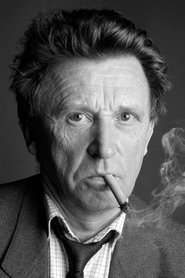
Jean-Marie Straub
Born — Died
1933-01-08 — 2022-11-20
Place of birth
Metz, Moselle, Lorraine, France
Known for
Directing
Credits
81 titles
Jean-Marie Straub (8 January 1933 – 20 November 2022) and Danièle Huillet (1 May 1936 – 9 October 2006) were a duo of filmmakers who made two dozen films between 1963 and 2006. Their films are noted for their rigorous, intellectually stimulating style and radical, communist politics. Though both were French, they worked mostly in Germany and Italy. From the Clouds to the Resistance (1979) and Sicilia! (1999) are among the duo’s best regarded works. Description above from the Wikipedia article Straub–Huillet, licensed under CC-BY-SA, full list of contributors on Wikipedia.
Known for
 9.0
9.0The Bambi, often called the Bambi Award and stylised as BAMBI, is a German award presented annually by Hubert Burda Media to recognize excellence in international media and television to personalities in the media, arts, culture, sports, and other fields "with vision and creativity who affected and inspired the German public that year", both domestic and foreign. First held in 1948, it is the oldest media award in Germany. The trophy is named after Felix Salten's book Bambi, A Life in the Woods and its statuettes are in the shape of the novel's titular fawn character. They were originally made of porcelain until 1958, when the organizers switched to using gold, with the casting done by the art casting workshop of Ernst Strassacker in Süßen.
Bambi
1948
 5.0
5.0Made for the Venice Film Festival's 70th anniversary, seventy filmmakers made a short film between 60 and 90 seconds long on their interpretation of the future of cinema.
Venice 70: Future Reloaded
2013
 6.3
6.3The life and music of Johann Sebastian Bach as presented by his wife, Anna.
Chronicle of Anna Magdalena Bach
1968
 NR
NRExcerpts from the novel Donna di Messina (1949 and 1964, 1967) by Elio Vittorini (1908-1966).
Humiliated
2003
 4.9
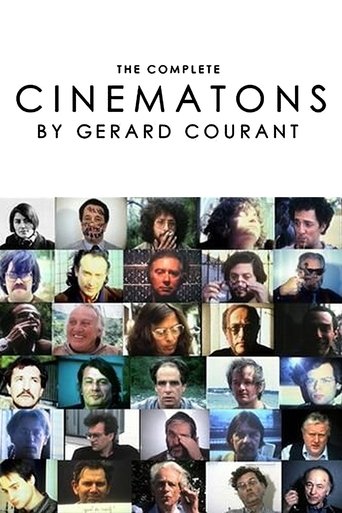
4.9Cinématon is a 156-hour long experimental film by French director Gérard Courant. It was the longest film ever released until 2011. Composed over 36 years from 1978 until 2006, it consists of a series of over 2,821 silent vignettes (cinématons), each 3 minutes and 25 seconds long, of various celebrities, artists, journalists and friends of the director, each doing whatever they want for the allotted time. Subjects of the film include directors Barbet Schroeder, Nagisa Oshima, Volker Schlöndorff, Ken Loach, Benjamin Cuq, Youssef Chahine, Wim Wenders, Joseph Losey, Jean-Luc Godard, Samuel Fuller and Terry Gilliam, chess grandmaster Joël Lautier, and actors Roberto Benigni, Stéphane Audran, Julie Delpy and Lesley Chatterley. Gilliam is featured eating a 100-franc note, while Fuller smokes a cigar. Courant's favourite subject was a 7-month-old baby. The film was screened in its then-entirety in Avignon in November 2009 and was screened in Redondo Beach, CA on April 9, 2010.
Cinématon
1978
 6.8
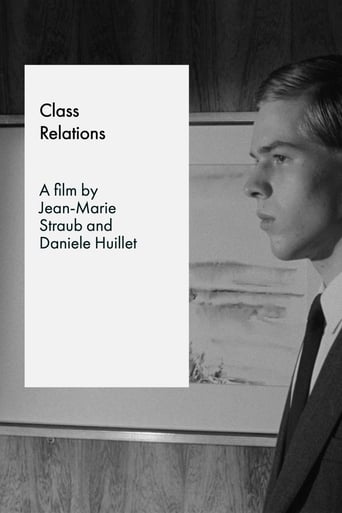
6.8A young man, recently arrived in New York from Europe, becomes swept up in a series of events that are beyond his knowledge or control.
Class Relations
1984
Film credits
2010s · 12 titles
 5.0
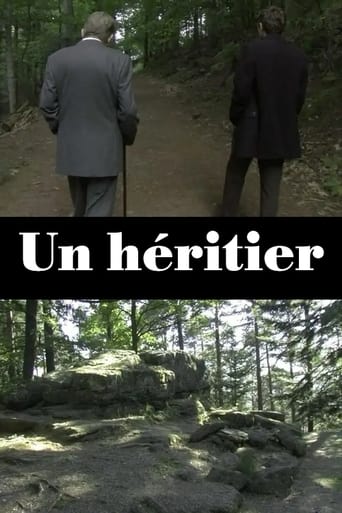
5.0In 1994, Jean-Marie Straub and Danièle Huillet adapted the novel Colette Baudoche – Story of a Young Girl of Metz by Maurice Barrès as a film they titled Lothringren!. In 2010, Jean-Marie Straub returned to the eastern provinces of France, this time to Alsace, to film the second half of a diptych based on Barrès’s work. The text is derived from In the Service of Germany, a book about the mountain of Saint-Odile, which Barrès wrote in 1903. With Joseph Rottner in the principal role, Straub traces the path of a young country doctor as he tours Mont Saint-Odile, following the routes that Barrès himself took to the chateau of Ratsamhausen and around the ruins of the ancient fortification known as the "Pagan Wall,” which are unique in the area. Straub, himself born in Metz, plays the role of a resident of Lorraine whom the young Alsatian engages in conversation.
Un héritier
2012
Short film commissioned by the Cinemathèque Suisse to celebrate Jean-Marie Straub's 85th birthday.
Hommage à Jean-Marie Straub
2018
 4.6
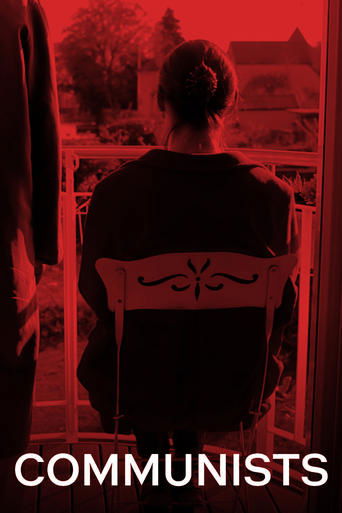
4.6Jean-Marie Straub pushes this musicality of blocks to a paroxysmal extreme, mixing blocks of time (40 years separate the various extracts that are going to be used, and what is to be filmed), blocks of text (Malraux, Fortini, Vittorini, Hölderlin) and blocks of language (French, Italian, German), and from this ruckus emerges the history of the world, yes, History with a capital H, and from the same movement, the political hope of its being overtaken. So this is an adventure film, about the Human adventure, still one that is always, in the end, overtaken by Nature.
Communists
2014
 6.5
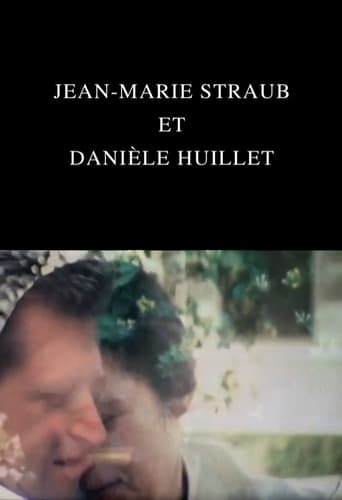
6.5"Jean-Marie Straub and Danièle Huillet" is the overlay of two Cinematons by Gérard Courant with Jean-Marie Straub and Danièle Huillet: "Jean-Marie Straub, Cinématon number 342" and "Danièle Huillet, Cinematon number 343," filmed on May 27, 1984.
Jean-Marie Straub and Danièle Huillet
2015
In the summer of 1986, Danièle Huillet and Jean-Marie Straub were working in the park of an old Sicilian mansion and in a clearing at the foot of Mount Etna shooting Der Tod des Empedokles. Assistant cameraman Jean-Paul Toraille toyed around, so to speak, with his first video camera, filming the daily work on the set. Now, 24 years later, he was joined by Jean-Marie Straub in editing the material into a film. Anyone who expected the shooting of Les Avatars de la mort d’Empédocle to be an austere affair, an exercise entirely devoid of humour or a Straubian tour de force is proven wrong: so much lightness, joy, concentration, spells of waiting for the sun to come out – and even proper slapstick in between – is hard to find.
Les avatars de la mort d’Empédocle
2010
 NR
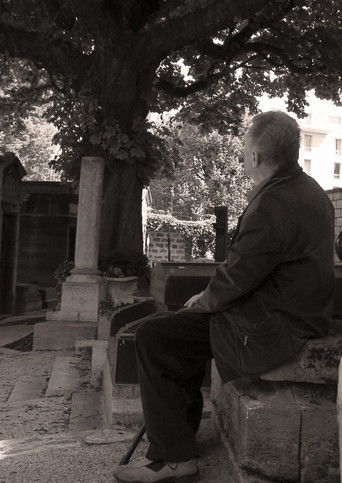
NROn a sunny afternoon, an old man sits in the shade of the trees in Montmartre Cemetery in Paris, at the edge of the grave of the great actress Falconetti (1892-1946). She achieved unforgettable recognition as Joan of Arc in Carl Theodor Dreyer's 1928 silent film The Passion of Joan of Arc. She later took her own life in Buenos Aires. Now the old man, Jean-Marie Straub, plays with his cane and keeps her company. Until he is disturbed.
L'après-Midi Près Du Tombeau De Falconetti
2012
 NR
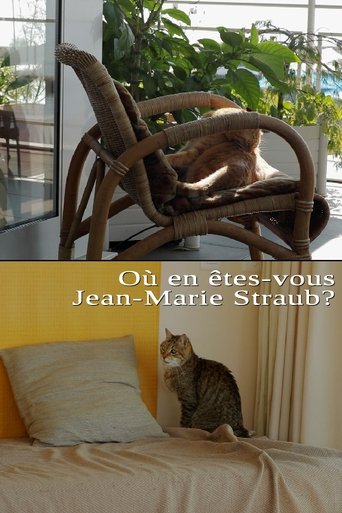
NRAn initiative from Pompidou Center, filmed by Jean Marie Straub.
Où en êtes-vous, Jean-Marie Straub ?
2016
 NR
NRJean-Marie Straub reacts to an audience during a Straub-Huillet retrospective.
Nos yeux se sont ouverts
2010
 NR
NRIn parallel with Now Tell Me Something, his second book about the cinema of Straub-Huillet, Philippe Lafosse follows the meetings in 2007 and 2008 between Jean-Marie Straub, from this point onwards without Danièle Huillet, and the public. This film thus allows us to hear with pleasure words that break with cultural gossip, that question and throw light – a verb, a man that resist here and now. We learn a great deal from it, whether or not we are familiar with Straub-Huillet’s work. Tell Me Something tells us a story, or stories. Stories about cinema, stories about faithfulness and honesty. The story, also, of the setting up of a people rising against ruling state of things. The story, moreover, of an irreparable absence – that of Danièle Huillet. In short, the story of a filmmaker in winter, and of an international community that is enlightened in the darkness.
Dites-moi quelque chose
2010
 5.1
5.1A Kafka dialogue is read by actors in Straub's own apartment in Paris.
Jackals and Arabs
2011
 NR
NRShort film commissioned by the Cinemathèque Suisse to celebrate Jean-Marie Straub’s 85th birthday. Directed by Jean-Charles Fitoussi.
Hommage à Jean-Marie Straub - 08.01.2018 - réalisation: Jean-Charles Fitoussi
2018
 NR
NRShort film commissioned by the Cinemathèque Suisse to celebrate Jean-Marie Straub’s 85th birthday.
Une Vie Risquée
2018
2000s · 10 titles
 7.5
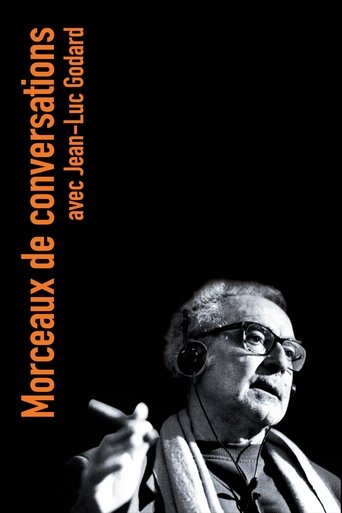
7.5In his meetings with various different people, Jean-Luc Godard develops his thinking about history, politics, the cinema, images and time, and this will lead to his exhibition as an artist at the Pompidou Centre. Jean-Luc Godard’s conversations with Dominique Païni, Jean Narboni, André S. Labarthe, Jean-Marie Straub, Danielle Huillet and Christophe Kantcheff were filmed at his home in Rolle, in his study, at the Fresnoy National Studio for the Contemporary Arts (in front of students) and in the exhibition rooms of the Pompidou Centre.
Fragments of Conversations with Jean-Luc Godard
2009
 7.4
7.4Undaunted by a commission to make a film about his mentors and aesthetic exemplars, the filmmaking team of Jean-Marie Straub and Danièle Huillet, Costa records with great sensitivity and insight the exacting process by which the two re-edit their film Sicilia!, discussing and arguing over each cut and its effect. Incorporating comments about the influence of figures as diverse as Chaplin and Eisenstein, about the ethical and aesthetic implications of film technique and such matters as rhythm, sound mixing, and acting. The film becomes a tour de force, immersing us in the mysteries of cinema as practiced by some of its greatest creators. Costa calls the film both his first comedy and his first love story.
Where Does Your Hidden Smile Lie?
2003
 6.3
6.3A visit to the Louvre in Paris commentated by an actor reading Cézanne.
A Visit to the Louvre
2004
 NR
NRAlix is a woman of 27 looking for the only thing she is incapable of: love.
I Did Not Die
2008
Joachim Gatti, is the grand-son of the director and filmmaker Armand Gatti. During a demonstration in Montreuil, he lost an eye, hit by a “flashball” fired from a policegun.
Joachim Gatti, variation de lumière
2009
 7.0
7.0Former Straub/Huillet assistant Jean-Charles Fitoussi films them at work during the shooting of 1999's Sicilia!.
Sicilia! Si gira
2001
The original television version of 'Where Does Your Hidden Smile Lie?'
Cinéma, de notre temps: Danièle Huillet, Jean-Marie Straub - cinéastes
2001
A film by Laura Vitali about the last work of the couple Jean-Marie Straub and Danièle Huillet in Buti (Italy) in May 2005, namely the staging of the last five "Dialogues with Leucò" by Cesare Pavese. In this sense, it is a moving testimony. Vitali alternates rehearsal sessions and interviews - by Jean-Marie Straub, Danièle Huillet and actors such as Giovanna Daddi, Angela Nugara and Andrea Bacci - who illuminate from the inside the methods of the two filmmakers and their relation to the work of Cesare Pavese, while situating the very special place that makes this work possible - the small town of Buti which warmly welcomed Straub and Huillet for a decade - and by bringing out the political dimension of their thought.
Straub-Huillet e Pavese: Quei Loro Incontri
2005
 NR
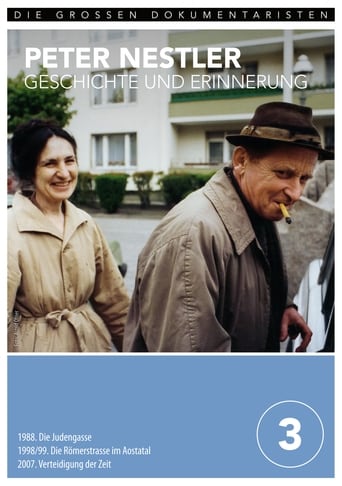
NRA hommage to Jean-Marie Straub's and Danièle Huillet's film Quei loro incontri (2005), and to their access to cinema itself. In various encounters and conversations Nestler offers an insight into their life and work, including passages from Italian poet Cesare Pavese.
Defense of the Time
2007
 6.8
6.8Six unused scenes from Where Does Your Hidden Smile Lie? One of the more priceless of the “bagatelles” in this collection features a lounging Jean-Marie Straub who gives a non-stop disquisition on liberty and filmmaking while Danièle Huillet busies herself with laundry, and their dog Melchior frisks in and out of frame. —Cinematheque Ontario
6 Bagatelas
2001
1990s · 6 titles
 6.5
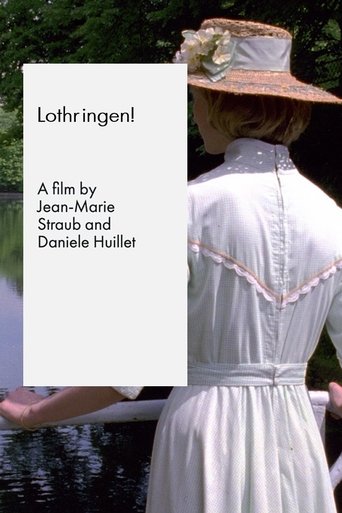
6.5About the history of the French region of Lorraine, called Lothringen in German.
Lothringen!
1994
Documentary about the shooting of Straub's Antigone.
Play Antigone
1992
 6.5
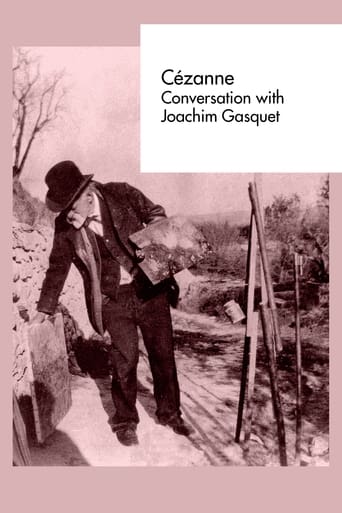
6.5A landmark work of symbolistic imagery. The words that the filmmakers speak offscreen are imaginary conversation with Cézanne quoted from a critique by Joachim Gasquet. An exchange of memories spanning over 250 years interweaves everything from the philosophy of Empedocles to excerpts from the film Madame Bovary, to extant paintings by Cézanne, to the buildings of the artists’ village at Mont Sainte-Victoire. —ntticc.or.jp
Cézanne: Conversation with Joachim Gasquet
1990
 10.0
10.0An experimental documentary film about Friedrich Hölderlin. In the middle of the film, there is a short excerpt from a Nazi propaganda film: O. E. Hasse reads "Der Tod fürs Vaterland" (Death for the Fatherland), the poem that was given to German soldiers on the front lines during World War II. This is contrasted with texts from Hölderlin's late work, which have only recently been edited. This creates a completely different picture of Hölderlin's poetry.
Lyrische Suite. Das untergehende Vaterland
1992
Blank's TV documentary on Straub-Huillet.
The Persistence of Vision
1993
Documentary about Huillet/Straub's Empedocles.
Schaut euch diesen Berg an – einstmals war er Feuer
1991
1980s · 5 titles
 6.4
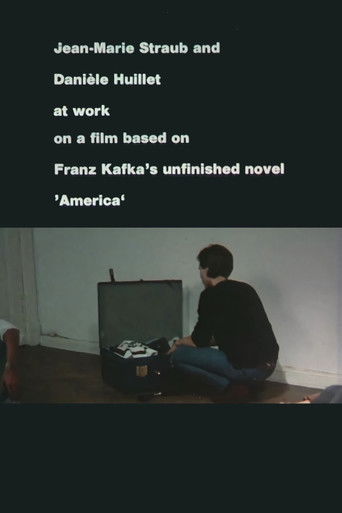
6.4This film is at once a self-portrait and an homage to Jean-Marie Straub, Farocki's role model and former teacher at the Film Academy.
Jean-Marie Straub and Danièle Huillet at Work on a Film Based on Franz Kafka’s Amerika
1983
 NR
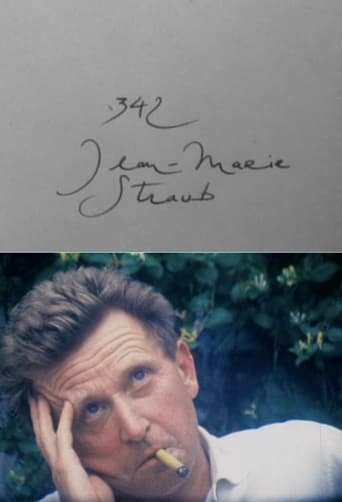
NRFrom Gérard Courant’s Cinématon series.
Cinematon n°342: Jean-Marie Straub
1984
 NR
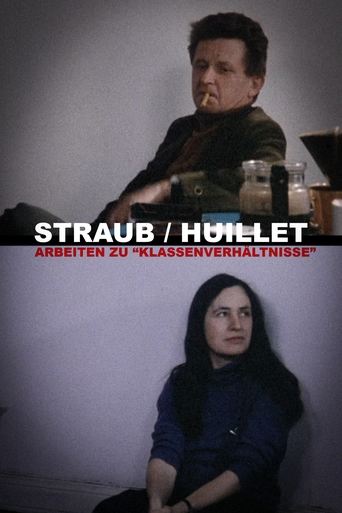
NRA behind the scenes film of Class Relations.
Straub/Huillet: Work on "Class Relations"
1983
 6.5
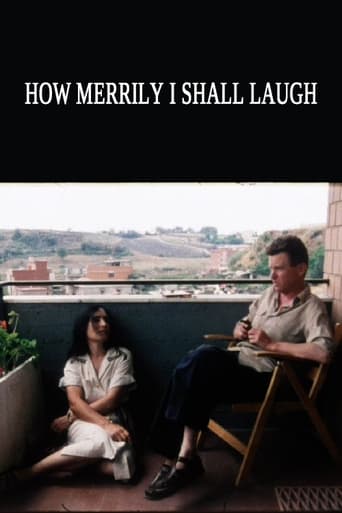
6.5Filmmaker Manfred Blank (director of the excellent Pharos of Chaos) interviews Danièle Huillet and Jean-Marie Straub at some length about their then-current production, Klassenverhältnisse (Class Relations), in which he, himself, performed as an actor.
How Merrily I Shall Laugh: Danièle Huillet and Jean-Marie Straub on Their Film Class Relations
1984
Reel 35 of Gérard Courant’s on-going Cinematon series.
Cinématon XXXV
1984
1970s · 5 titles
4.9Cinématon is a 156-hour long experimental film by French director Gérard Courant. It was the longest film ever released until 2011. Composed over 36 years from 1978 until 2006, it consists of a series of over 2,821 silent vignettes (cinématons), each 3 minutes and 25 seconds long, of various celebrities, artists, journalists and friends of the director, each doing whatever they want for the allotted time. Subjects of the film include directors Barbet Schroeder, Nagisa Oshima, Volker Schlöndorff, Ken Loach, Benjamin Cuq, Youssef Chahine, Wim Wenders, Joseph Losey, Jean-Luc Godard, Samuel Fuller and Terry Gilliam, chess grandmaster Joël Lautier, and actors Roberto Benigni, Stéphane Audran, Julie Delpy and Lesley Chatterley. Gilliam is featured eating a 100-franc note, while Fuller smokes a cigar. Courant's favourite subject was a 7-month-old baby. The film was screened in its then-entirety in Avignon in November 2009 and was screened in Redondo Beach, CA on April 9, 2010.
Cinématon
1978
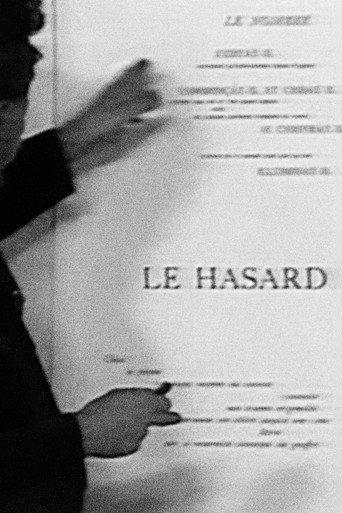 NR
NRThis is a recording of a movie discussion. This discussion, shown live in German television on November 16th 1978, is framed by two screenings of Huillet/Straub's movie »Toute révolution est un coup de dés«. It's first shown shortly after the discussion's participants have been introduced, a second time after the end of the discussion. After the movie ends the program cuts back to the studio for a short time, showing the guests as well as some technicians talking whilst the credits of the TV-program enroll.
Kino 78 Live – Gesprächsrunde über »Toute révolution est un coup de dés«
1978
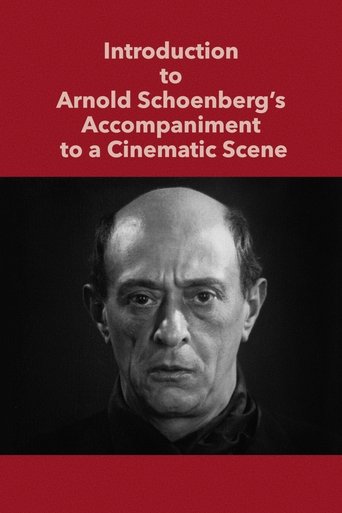 5.7
5.7This is a small, intense film based on Schoenberg’s opus of the same name with the subtitle “danger, fear, catastrophe”. It deals with emerging fascism and the persecution of Jews, as well as with their historical continuities.
Introduction to Arnold Schoenberg’s Accompaniment to a Cinematic Scene
1973
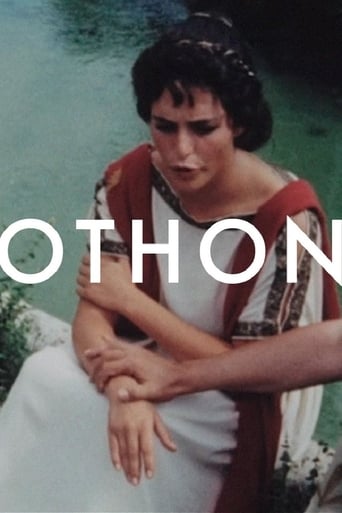 5.7
5.7Straub-Huillet’s first color film, adapts a lesser-known Corneille tragedy from 1664, which in turn was based on an episode of imperial court intrigue chronicled in Tacitus’s Histories. The costuming is classical, and the toga-clad, nonprofessional cast performs the drama’s original French text amid the ruins of Rome’s Palatine Hill while the noise of contemporary urban life hums in the background. Their lines are executed with a terrific flatness and frequently through heavy accents; the language in Othon becomes not merely an expression but a thing itself, an element whose plainness here alerts us to qualities of the work that might otherwise be subordinated.
Othon
1971
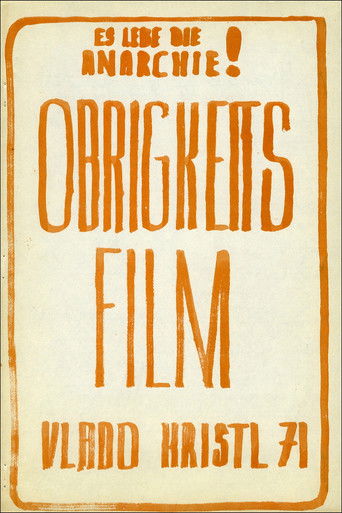 8.0
8.0A group of men, women and Kristl with his camera debate how to resist authority in all its forms. All cinematic professionalism is avoided as Kristl explores how to live and make films politically.
The Film of the Authority
1971
Series credits
Behind the camera
5.0Made for the Venice Film Festival's 70th anniversary, seventy filmmakers made a short film between 60 and 90 seconds long on their interpretation of the future of cinema.
Venice 70: Future Reloaded
2013
6.3The life and music of Johann Sebastian Bach as presented by his wife, Anna.
Chronicle of Anna Magdalena Bach
1968
6.3The life and music of Johann Sebastian Bach as presented by his wife, Anna.
Chronicle of Anna Magdalena Bach
1968
6.3The life and music of Johann Sebastian Bach as presented by his wife, Anna.
Chronicle of Anna Magdalena Bach
1968
NRExcerpts from the novel Donna di Messina (1949 and 1964, 1967) by Elio Vittorini (1908-1966).
Humiliated
2003
NRExcerpts from the novel Donna di Messina (1949 and 1964, 1967) by Elio Vittorini (1908-1966).
Humiliated
2003
NRExcerpts from the novel Donna di Messina (1949 and 1964, 1967) by Elio Vittorini (1908-1966).
Humiliated
2003
6.8A young man, recently arrived in New York from Europe, becomes swept up in a series of events that are beyond his knowledge or control.
Class Relations
1984
6.8A young man, recently arrived in New York from Europe, becomes swept up in a series of events that are beyond his knowledge or control.
Class Relations
1984
 5.7
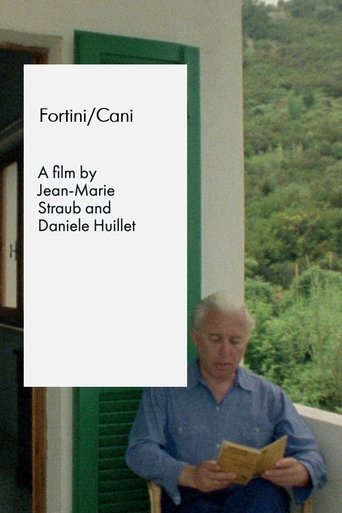
5.7The film is a sort of presentation of Franco Fortini's book 'I Cani del Sinai'. Fortini, an Italian Jew, reads excerpts from the book about his alienation from Judaism and from the social relations around him, the rise of Fascism in Italy, the anti-Arab attitude of European culture. The images, mostly a series of Italian landscape shots, provide a backdrop that highlights the meaning of the text. - Fabrizio Sabidussi
Fortini/Cani
1977
5.7The film is a sort of presentation of Franco Fortini's book 'I Cani del Sinai'. Fortini, an Italian Jew, reads excerpts from the book about his alienation from Judaism and from the social relations around him, the rise of Fascism in Italy, the anti-Arab attitude of European culture. The images, mostly a series of Italian landscape shots, provide a backdrop that highlights the meaning of the text. - Fabrizio Sabidussi
Fortini/Cani
1977
5.7The film is a sort of presentation of Franco Fortini's book 'I Cani del Sinai'. Fortini, an Italian Jew, reads excerpts from the book about his alienation from Judaism and from the social relations around him, the rise of Fascism in Italy, the anti-Arab attitude of European culture. The images, mostly a series of Italian landscape shots, provide a backdrop that highlights the meaning of the text. - Fabrizio Sabidussi
Fortini/Cani
1977
 3.9
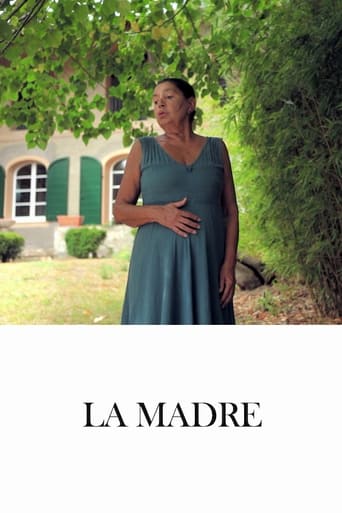
3.9Inspired by a Cesar Pavese’s short story, this film has as its main question the relationship with the mother. After killing someone, Meleagros is killed by his own mother, from whom he had never disconnected.
La Madre
2012
3.9Inspired by a Cesar Pavese’s short story, this film has as its main question the relationship with the mother. After killing someone, Meleagros is killed by his own mother, from whom he had never disconnected.
La Madre
2012
 NR
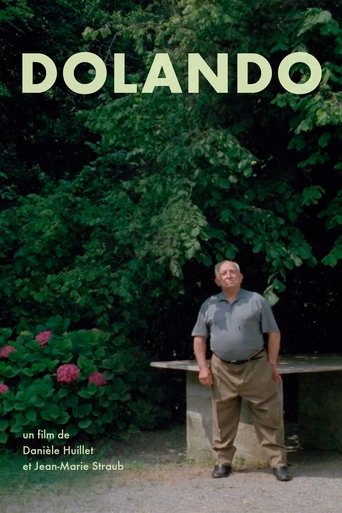
NR"At the end of filming Umiliati, Straub and Huillet gave thanks to the cast and crew in a graceful way: by inviting Dolando Bernardini to sing several stanzas from Torquato Tasso’s 16th-century epic poem Jerusalem Delivered." - MoMA
Dolando
2002
NR"At the end of filming Umiliati, Straub and Huillet gave thanks to the cast and crew in a graceful way: by inviting Dolando Bernardini to sing several stanzas from Torquato Tasso’s 16th-century epic poem Jerusalem Delivered." - MoMA
Dolando
2002
 4.5
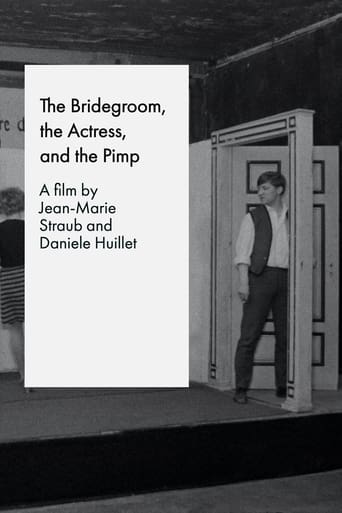
4.5Three sequences are linked together in this short film by Straub; the first sequence is a long tracking shot from a car of prostitutes plying their trade on the night-time streets of Germany; the second is a staged play, cut down to 10 minutes by Straub and photographed in a single take; the final sequence covers the marriage of James and Lilith, and Lilith’s subsequent execution of her pimp, played by Rainer Werner Fassbinder. "The film is a look entirely at Western decadence" - Jean-Marie Straub.
The Bridegroom, the Actress, and the Pimp
1968
4.5Three sequences are linked together in this short film by Straub; the first sequence is a long tracking shot from a car of prostitutes plying their trade on the night-time streets of Germany; the second is a staged play, cut down to 10 minutes by Straub and photographed in a single take; the final sequence covers the marriage of James and Lilith, and Lilith’s subsequent execution of her pimp, played by Rainer Werner Fassbinder. "The film is a look entirely at Western decadence" - Jean-Marie Straub.
The Bridegroom, the Actress, and the Pimp
1968
 4.4
4.4A group of men and women have been brought together after World War II, when Italy regained its national and territorial unity. They make up a primitive community which seeks to erase not only the distress created by the war but also the hardships of life, and look to protect themselves from violence, misery and fear. Amid the ruins of this post-war period, these men and women build a new rapport between themselves, between sexes, between generations, between social and geographical origins, between political camps.
Workers, Peasants
2001
4.4A group of men and women have been brought together after World War II, when Italy regained its national and territorial unity. They make up a primitive community which seeks to erase not only the distress created by the war but also the hardships of life, and look to protect themselves from violence, misery and fear. Amid the ruins of this post-war period, these men and women build a new rapport between themselves, between sexes, between generations, between social and geographical origins, between political camps.
Workers, Peasants
2001
4.4A group of men and women have been brought together after World War II, when Italy regained its national and territorial unity. They make up a primitive community which seeks to erase not only the distress created by the war but also the hardships of life, and look to protect themselves from violence, misery and fear. Amid the ruins of this post-war period, these men and women build a new rapport between themselves, between sexes, between generations, between social and geographical origins, between political camps.
Workers, Peasants
2001
5.0In 1994, Jean-Marie Straub and Danièle Huillet adapted the novel Colette Baudoche – Story of a Young Girl of Metz by Maurice Barrès as a film they titled Lothringren!. In 2010, Jean-Marie Straub returned to the eastern provinces of France, this time to Alsace, to film the second half of a diptych based on Barrès’s work. The text is derived from In the Service of Germany, a book about the mountain of Saint-Odile, which Barrès wrote in 1903. With Joseph Rottner in the principal role, Straub traces the path of a young country doctor as he tours Mont Saint-Odile, following the routes that Barrès himself took to the chateau of Ratsamhausen and around the ruins of the ancient fortification known as the "Pagan Wall,” which are unique in the area. Straub, himself born in Metz, plays the role of a resident of Lorraine whom the young Alsatian engages in conversation.
Un héritier
2012
5.0In 1994, Jean-Marie Straub and Danièle Huillet adapted the novel Colette Baudoche – Story of a Young Girl of Metz by Maurice Barrès as a film they titled Lothringren!. In 2010, Jean-Marie Straub returned to the eastern provinces of France, this time to Alsace, to film the second half of a diptych based on Barrès’s work. The text is derived from In the Service of Germany, a book about the mountain of Saint-Odile, which Barrès wrote in 1903. With Joseph Rottner in the principal role, Straub traces the path of a young country doctor as he tours Mont Saint-Odile, following the routes that Barrès himself took to the chateau of Ratsamhausen and around the ruins of the ancient fortification known as the "Pagan Wall,” which are unique in the area. Straub, himself born in Metz, plays the role of a resident of Lorraine whom the young Alsatian engages in conversation.
Un héritier
2012
 6.0
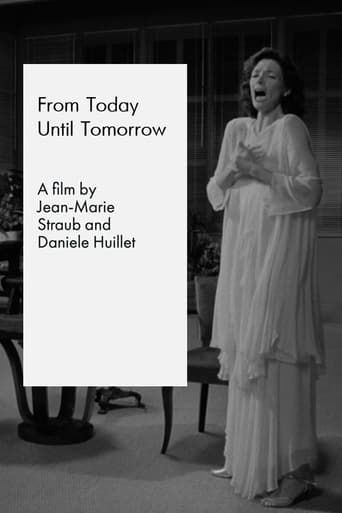
6.0Based on a rarely performed Schoenberg opera from 1929, From Today Until Tomorrow explores one night in a marriage. A husband and wife return from a party where she has flirted with another man while he has cast an appraising eye toward one of her acquaintances. Each dreams, briefly, of leaving the marriage for the excitement and mystery of a new lover.
From Today Until Tomorrow
1997
6.0Based on a rarely performed Schoenberg opera from 1929, From Today Until Tomorrow explores one night in a marriage. A husband and wife return from a party where she has flirted with another man while he has cast an appraising eye toward one of her acquaintances. Each dreams, briefly, of leaving the marriage for the excitement and mystery of a new lover.
From Today Until Tomorrow
1997
6.3A visit to the Louvre in Paris commentated by an actor reading Cézanne.
A Visit to the Louvre
2004
6.3A visit to the Louvre in Paris commentated by an actor reading Cézanne.
A Visit to the Louvre
2004
 5.8
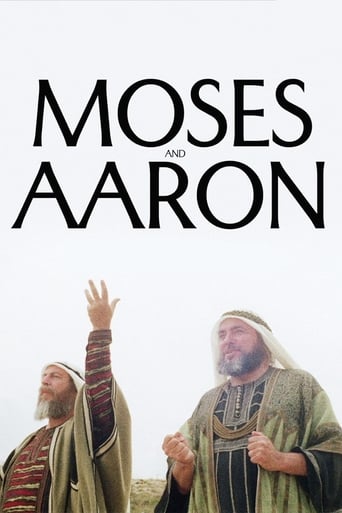
5.8A familiar Biblical tale transformed into a cinematic opera of seemingly endless possibility. In expressive, melodic tones, the fraternal pair debate God’s true message and intent for His creations, a conflict that leads their followers towards chaos and sin. Set almost entirely within a Roman amphitheater whose history lends every precise line-reading and gesture, every startling camera move and cut, a totalizing force.
Moses and Aaron
1975
5.8A familiar Biblical tale transformed into a cinematic opera of seemingly endless possibility. In expressive, melodic tones, the fraternal pair debate God’s true message and intent for His creations, a conflict that leads their followers towards chaos and sin. Set almost entirely within a Roman amphitheater whose history lends every precise line-reading and gesture, every startling camera move and cut, a totalizing force.
Moses and Aaron
1975
5.8A familiar Biblical tale transformed into a cinematic opera of seemingly endless possibility. In expressive, melodic tones, the fraternal pair debate God’s true message and intent for His creations, a conflict that leads their followers towards chaos and sin. Set almost entirely within a Roman amphitheater whose history lends every precise line-reading and gesture, every startling camera move and cut, a totalizing force.
Moses and Aaron
1975
6.5About the history of the French region of Lorraine, called Lothringen in German.
Lothringen!
1994
6.5About the history of the French region of Lorraine, called Lothringen in German.
Lothringen!
1994
6.5About the history of the French region of Lorraine, called Lothringen in German.
Lothringen!
1994
 5.3
5.3Two segments. The first one arranges six stories from Cesare Pavese’s «Dialoghi con Leucò», taken from classical mythology. The second segment is taken from Pavese’s novel «La luna e i falò»: after World War II the emigrant «The Bastard» comes back to his village in the Langhe (northern Italy) to find out that everyone he knew has died, and that the war has deeply changed relationships between people.
From the Clouds to the Resistance
1979
5.3Two segments. The first one arranges six stories from Cesare Pavese’s «Dialoghi con Leucò», taken from classical mythology. The second segment is taken from Pavese’s novel «La luna e i falò»: after World War II the emigrant «The Bastard» comes back to his village in the Langhe (northern Italy) to find out that everyone he knew has died, and that the war has deeply changed relationships between people.
From the Clouds to the Resistance
1979
 6.6
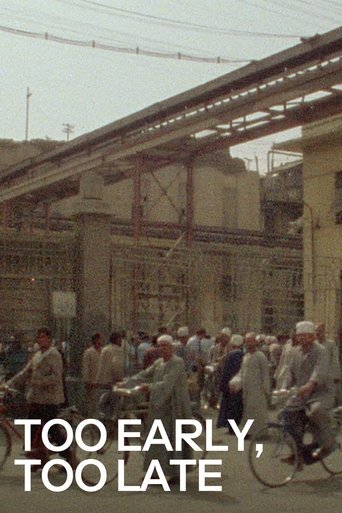
6.6Inspired by a letter by Friedrich Engels and a 1974 account of two militant Marxist writers who had been imprisoned by the Nasser regime, Straub-Huillet filmed this film in France and Egypt during 1980. They reflect on Egypt’s history of peasant struggle and liberation from Western colonization, and link it to class tensions in France shortly before the Revolution of 1789, quoting texts by Engels as well as the pioneering nonfiction film Workers Leaving the Lumière Factory (1895).
Too Early / Too Late
1982
6.6Inspired by a letter by Friedrich Engels and a 1974 account of two militant Marxist writers who had been imprisoned by the Nasser regime, Straub-Huillet filmed this film in France and Egypt during 1980. They reflect on Egypt’s history of peasant struggle and liberation from Western colonization, and link it to class tensions in France shortly before the Revolution of 1789, quoting texts by Engels as well as the pioneering nonfiction film Workers Leaving the Lumière Factory (1895).
Too Early / Too Late
1982
6.6Inspired by a letter by Friedrich Engels and a 1974 account of two militant Marxist writers who had been imprisoned by the Nasser regime, Straub-Huillet filmed this film in France and Egypt during 1980. They reflect on Egypt’s history of peasant struggle and liberation from Western colonization, and link it to class tensions in France shortly before the Revolution of 1789, quoting texts by Engels as well as the pioneering nonfiction film Workers Leaving the Lumière Factory (1895).
Too Early / Too Late
1982
 6.0
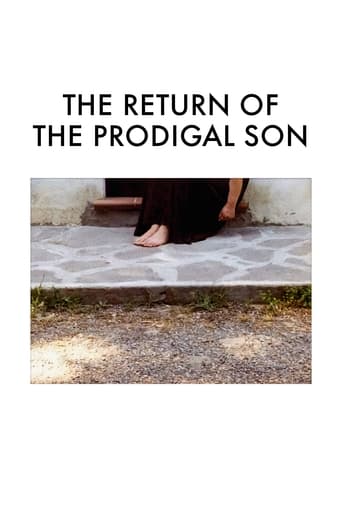
6.0In Italy, immediately subsequent to the war, a group of people who lost all they possessed during the conflict, settle in a village in ruins. They intend to restore the city from the rubble and re-start life, in imitation of the women of Messina who rebuilt their city, destroyed as it was by an earthquake. Oscillating between respect and suspicion, co-existence between group members is tense. Things become complicated when an envoy from the government arrives to say that nothing there belongs to them. The film is a free adaptation of fragments of the novella ‘The Women of Messina’, by Sicilian writer Elio Vittorini.
The Return of the Prodigal Son
2003
6.0In Italy, immediately subsequent to the war, a group of people who lost all they possessed during the conflict, settle in a village in ruins. They intend to restore the city from the rubble and re-start life, in imitation of the women of Messina who rebuilt their city, destroyed as it was by an earthquake. Oscillating between respect and suspicion, co-existence between group members is tense. Things become complicated when an envoy from the government arrives to say that nothing there belongs to them. The film is a free adaptation of fragments of the novella ‘The Women of Messina’, by Sicilian writer Elio Vittorini.
The Return of the Prodigal Son
2003