

Known for
 7.6
On May 24, 2000, the historic Ryman Auditorium was booked to offer Nashvillians an evening of sublime beauty. Label executives and soundtrack producers so loved the music of O Brother, Where Art Thou? that they brought it to life as a benefit concert for the Country Music Hall of Fame. Filmmakers Joel and Ethan Coen loved it so much that they hired famed documentary filmmaker D.A. Pennebaker to record the show for posterity. The concert that unfolded that night was one of the greatest musical moments in the annals of Music City. Performers: John Hartford, Alison Krauss, Emmylou Harris, Gillian Welch, Chris Thomas King, The Cox Family, Fairfield Four, Union Station, Colin Linden, The Nashville Bluegrass Band, The Peasall Sisters, Ralph Stanley, David Rawlings, The Whites.
Down from the Mountain
2001
 9.2
Dr. James Graham, a physician in a struggling Oklahoma town, fights to save its bankrupt hospital.
Country Doctor
2025
 6.9
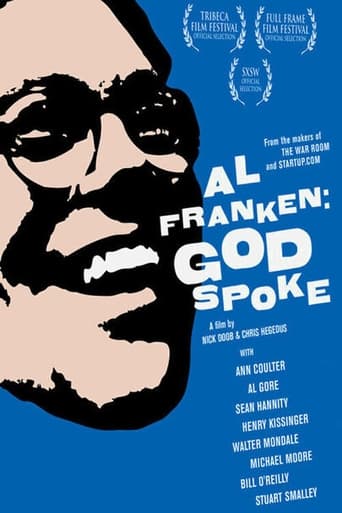
Join filmmaking duo Chris Hegedus and Nick Doob as their cameras follow Franken to book signings, campaign rallies and the launch of Air America Radio, documenting his transformation from irreverent funnyman to political pundit.
Al Franken: God Spoke
2006
A leading acting teacher who trained some of the most famous performers of the stage and screen, Sanford Meisner was a founding member of the Group Theatre. The Group Theatre, a cooperative theater ensemble, became a leading force in the theater world of the 30s. Meisner performed in many of the group’s most memorable productions.
Sanford Meisner: The American Theatre's Best Kept Secret
1990
 6.6
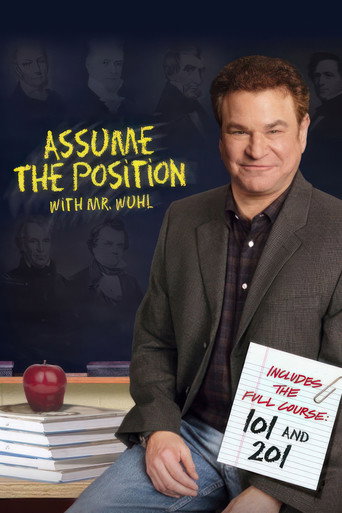
Emmy-winning actor-comedian Robert Wuhl assumes the role of college professor in this hilarious history lesson conducted in front of an audience of actual New York City college students. Four segments explore the lesser-known aspects of America's storied past that everybody thought they already knew -- including the truth about Paul Revere, the hypocrisy of several founding fathers and the origin of many "modern" ideas.
Assume the Position with Mr. Wuhl
2006
 7.5
Follows a Mississippi family's attempts to deal with an increasingly violent and erratic child.
A Boy's Life
2003
Behind the camera
7.6On May 24, 2000, the historic Ryman Auditorium was booked to offer Nashvillians an evening of sublime beauty. Label executives and soundtrack producers so loved the music of O Brother, Where Art Thou? that they brought it to life as a benefit concert for the Country Music Hall of Fame. Filmmakers Joel and Ethan Coen loved it so much that they hired famed documentary filmmaker D.A. Pennebaker to record the show for posterity. The concert that unfolded that night was one of the greatest musical moments in the annals of Music City. Performers: John Hartford, Alison Krauss, Emmylou Harris, Gillian Welch, Chris Thomas King, The Cox Family, Fairfield Four, Union Station, Colin Linden, The Nashville Bluegrass Band, The Peasall Sisters, Ralph Stanley, David Rawlings, The Whites.
Down from the Mountain
2001
9.2Dr. James Graham, a physician in a struggling Oklahoma town, fights to save its bankrupt hospital.
Country Doctor
2025
9.2Dr. James Graham, a physician in a struggling Oklahoma town, fights to save its bankrupt hospital.
Country Doctor
2025
6.9Join filmmaking duo Chris Hegedus and Nick Doob as their cameras follow Franken to book signings, campaign rallies and the launch of Air America Radio, documenting his transformation from irreverent funnyman to political pundit.
Al Franken: God Spoke
2006
A leading acting teacher who trained some of the most famous performers of the stage and screen, Sanford Meisner was a founding member of the Group Theatre. The Group Theatre, a cooperative theater ensemble, became a leading force in the theater world of the 30s. Meisner performed in many of the group’s most memorable productions.
Sanford Meisner: The American Theatre's Best Kept Secret
1990
6.6Emmy-winning actor-comedian Robert Wuhl assumes the role of college professor in this hilarious history lesson conducted in front of an audience of actual New York City college students. Four segments explore the lesser-known aspects of America's storied past that everybody thought they already knew -- including the truth about Paul Revere, the hypocrisy of several founding fathers and the origin of many "modern" ideas.
Assume the Position with Mr. Wuhl
2006
7.5Follows a Mississippi family's attempts to deal with an increasingly violent and erratic child.
A Boy's Life
2003
 5.2
This is the story of a year in the life of one mother whose daily struggles illuminate the challenges faced by more than 42 million American women and the 28 million children who depend on them.
Paycheck to Paycheck: The Life & Times of Katrina Gilbert
2014
5.2This is the story of a year in the life of one mother whose daily struggles illuminate the challenges faced by more than 42 million American women and the 28 million children who depend on them.
Paycheck to Paycheck: The Life & Times of Katrina Gilbert
2014
A behind-the-scenes look at the production of the 1972 film "The Effect of Gamma Rays on Man-in-the-Moon Marigolds," directed by Paul Newman and starring his wife, Joanne Woodward, and their daughter, Nell Potts.
What She's Doing Up There is Not Accidental
1972
 7.4
From directors Nick Doob and Shari Cookson, "Requiem for the Dead" is made entirely from found footage, including social media posts, 9-1-1 calls, news stories and police files. The film tells the stories of those who have been killed by gunfire, whether from accidental violence, random shootings, family disputes or suicide. Hear those stories of those who have died, which is only a fraction of the 32,000 people killed in America each year, 88 per day, from gun violence.
Requiem for the Dead: American Spring 2014
2015
 NR
A collection of performances by street musicians across the country, from New York to San Francisco, New Orleans to Chicago, the film presents 19 musicians in seven cities, and was one of Doob's first feature-length films. Among the singers, guitarists, drummers, dancers, and other artists, Doob includes street performance legends such as Brother Blue, Gene Palma, Bongo Joe, the Automatic Human Jukebox, and bluesman Jimmy Davis. The film captures a cross-section of Americans filled with raw talent, showmanship, and hustle, and presents a time capsule of the fashion, architecture, and culture of the 1970s. (Yale Film Archive)
Street Music
1979
 NR
While there is hope for the future as science gains momentum, millions of Americans are currently affected by the painful and deadly consequences of Alzheimer's. This documentary profiles seven people living with the disease, each in an advancing state of dementia, from its earliest detectable changes through death.
The Alzheimer's Project: The Memory Loss Tapes
2009
 NR
This film explores the great themes of the People’s Poetry Gathering: the relationship of oral, written, and musical forms of poetry. Both feature traditional forms such as the Puerto Rican concorso de trovadores (a poetry contest) and literary poets such as Galway Kinnell and Sekou Sandiata, as well as new forms and formats, such as a Heavyweight Poetry Bout between Sherman Alexie and Patricia Smith and a teen slam.
The People’s Poetry Gathering
1999
Tulsa, Oklahoma. A rigged Homecoming Queen election and a rich older man comspire to turn 18 year old Jewel Offor from a little girl into a woman.
Schooling Jewel
2002
This intimate documentary follows careers of two remarkable personalities: Carmen de Lavallade, a dynamic dancer and choreographer from California who moved to New York with Alvin Ailey and began a legacy of modern dance in America, and her husband Geoffrey Holder, a Trinidad-born choreographer, set and costume designer, painter and man about town with productions such as The Wiz. Features interviews and performance footage of friends and colleagues: dancers Judith Jamison, Gus Solomons, Jr., Dudley Williams, Ulysses Dove and Alvin Ailey.
Carmen & Geoffrey
2005
 NR
"While still a student at Yale University, Nick Doob made a series of short works that launched his career in film. One was Plastic Saints, in which Doob took black-and-white footage of a demonstration in Washington DC that he and four fellow students attended, and intercut it with color paint-on-film loops, all set to a recording of “When the Saints Go Marching In.”" - Moving Image Archiving News
Plastic Saints
1968
 NR
As a senior at Yale College in 1968, Doob was invited to participate in the Scholars of the House Program, a senior honors program that required students to create, in lieu of regular classes, “a finished essay or project which must justify by its scope and quality the freedom which has been granted.” Rather than pursue a more traditional written work, Doob initially chose to make a film, an unorthodox approach that had not been previously attempted. In the end, Doob chose to make two films to fulfill the requirement, beginning with COSTUMED DANCER. The film is a progression of images of a dancer, shot and printed on high contrast stock, and stacked in the printer in a number of layers so as to create multiple images of the dancer, moving from single image to multiple image in a kind of phasing. It is cut to music composed by Doob’s friend David Sewall, who was the subject of one of Doob’s later films, LONDON SONGS (1972). (Yale Film Archive)
Costumed Dancer
1969
 NR
Doob’s first longer film begins with a shot of the sun setting over the Hudson River in New York City, and goes on to examine the nighttime street life found in the block of 42nd Street between Seventh and Eighth Avenues. As Doob describes it, “That block was fairly notorious at that time, with pornographic bookstores and theaters, peep-shows, and prostitution. It was also a kind of magnet for exotic personalities, and a visually interesting location.” The film showed at many film festivals, won a prize at the West German Short Film Festival in Oberhausen, and was well reviewed in the New York Times. After making this film, and after the experience of taking Murray Lerner’s filmmaking class at Yale, Doob worked as Lerner’s cinematographer on a number of films, including his 1979 Academy Award-winning documentary FROM MAO TO MOZART. (Yale Film Archive)
42nd St Movie
1969
 NR
Prior to STREET MUSIC, Doob made this 27-minute documentary, which follows his Yale classmate David Sewall, a violinist and singer, as he performs traditional and original songs on the streets and in the pubs, parks, and markets of London. In color and in black and white, Sewall's unique style and good humor transfix audiences of curious school children, West End theater-goers, and passersby on the sidewalk. His energetic performance of then-current hit "Young Girl" for a group of Covent Garden flower sellers is a particular highlight, and the film closes with a moving rendition of “Danny Boy” that prompts pub-goers to join Sewall in song.
London Songs
1973
A film about the life of African American Donald Horner from New Haven, Connecticut, detailing his views on society, his experience, of his time in jail, and his growing relationship with the filmmaker. - Revitalizing History: Recognizing the Struggles, Lives, and Achievements of African American and Women Art Educators
Set-Up
1971