

Directing
Kidlat Tahimik
Born
1942-10-03 (84)
Place of birth
Baguio City, Benguet, Philippines
Known for
Directing
Credits
58 titles
Eric de Guia (born October 3, 1942 in Baguio City, Philippines), better known as Kidlat Tahimik (a Tagalog translation of "silent lightning"), is a film director, writer and actor whose films are commonly associated with the Third Cinemamovement through their critiques of neocolonialism. One of the most prominent names in the Filipino film industry, he has garnered various accolades locally and internationally, including a Plaridel honorarium for Independent Cinema. He is dubbed by fellow filmmakers and critics as the "Father of Philippine Independent Cinema".
Known for
 7.3
7.3The film follows Kaspar Hauser, who lived the first seventeen years of his life chained in a tiny cellar with only a toy horse to occupy his time, devoid of all human contact except for a man who wears a black overcoat and top hat who feeds him.
The Enigma of Kaspar Hauser
1974
 6.2
6.2Kadu, a boy from Pakil, Laguna, experiences the dissolution of tradition as it gives way to capitalism in the form of Madame, a foreigner who initially came to their village as a customer during the Festival of Turumba.
Turumba
1981
 8.8
8.8Accused of treason, Dr. Jose P. Rizal awaits trial and meets with his colonial government-appointed counsel, Luis Taviel de Andrade. The two build the case and arguments for the defense as significant events in the central figure's life prior to his incarceration unfold. Upon hearing Rizal's life story, Taviel begins to realize that the accused not just is innocent but exhibits in fact all the qualities of an extraordinary man. When the mock trial unreels, Taviel is all set to act as the prime advocate for his client as Rizal himself is about to give an earth-moving speech to defend his honor and address his countrymen. Meanwhile, the Spanish authorities have worked out the vast political machinery to ensure a guilty verdict. A revolution waits in the wings.
José Rizal
1998
 8.0
8.0Kidlat Tahimik, a director and performer, sought to recreate relations between the body and filmed image seen through "Asian eyes." This groundbreaking project took the form of a documentary which Mr. Tahimik directed and in which he performed himself in order to show his own thinking about the different views of the body held by the "East" and the "West."
Japanese Summers of a Filipino Fundoshi
1996
 7.2
7.2Kidlat, a Filipino jeepney driver, is fascinated by the idea of the American space programme and by Western society as a whole. When he moves to Paris, disillusionment sets in as his dreams are gradually shattered.
Perfumed Nightmare
1979
 NR
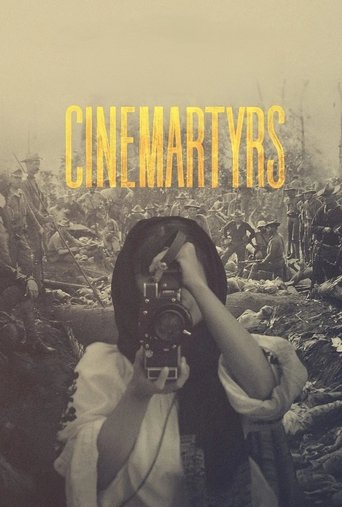
NRA young filmmaker is bent on recreating forgotten massacres from Philippine history, but when she begins shooting at a site where 1,000 men, women, and children were slaughtered, angry spirits are awakened and the lives of her team and the local villagers are put in peril.
Cinemartyrs
2025
Film credits
2020s · 6 titles
NRA young filmmaker is bent on recreating forgotten massacres from Philippine history, but when she begins shooting at a site where 1,000 men, women, and children were slaughtered, angry spirits are awakened and the lives of her team and the local villagers are put in peril.
Cinemartyrs
2025
 NR
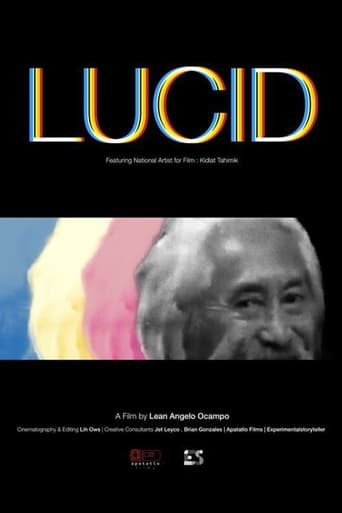
NRA national artist delivers a powerful message urging us to embrace and celebrate our cultural heritage, highlighting its richness and greatness, and encouraging us to avoid being mere imitators of modern society.
Lucid
2023
 NR
NRAn observation of post-colonial economic relations through the intersecting trajectories of two Filipino women: one preparing to leave her native island to work as a domestic in Europe, the other to return for good.
Bulakna
2025
 8.0
8.0An elderly nun witnesses a young construction worker's fatal accident, compelling her to question the ethical principles of the institution she has devoted her life to.
First Light
2026
 NR
NRNo synopsis available yet.
Tata Cuts Down the Timescape
2023
No synopsis available yet.
Tata Picks Up the Landscape
2023
2010s · 6 titles
 NR
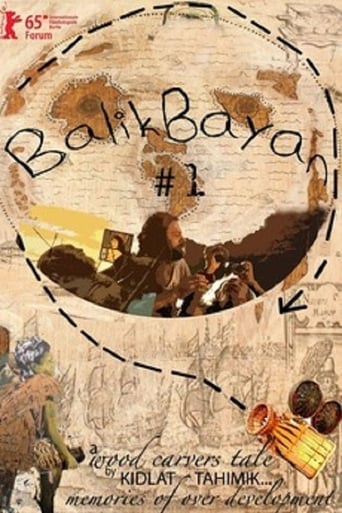
NRMagellan, the famous navigator, met his untimely death in the Philippines before he could circumnavigate the globe. Ironically, it was his slave and translator Enrique who most likely was the first to achieve the historic feat.
Balikbayan #1: Memories of Overdevelopment Redux III
2015
 NR
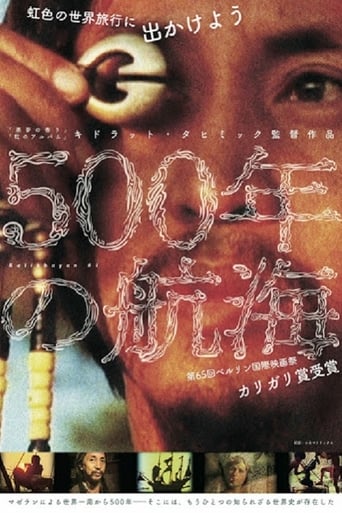
NRAs the ultimate enfant terrible of Philippine cinema, avant-gardist Kidlat Tahimik refuses to settle on anything, whether it’s the telling of a colonial past, or any version of this film, which he’s been making and revising for nearly four decades. BalikBayan, which means “returnee” in Filipino, is partly about the homecoming of the historical figure Enrique of Malacca, a Malay who Tahimik first played and brought to the screen in 1979. As the slave of the 16th-century Portuguese explorer Ferdinand Magellan he circumnavigated the Earth, before returning home as a free man. Old footage of Enrique, played by the young Tahimik, is mixed with the fictional story of a mysterious old man, played by the present-day Tahimik, and documentary footage of a contemporary artist community in Baguio, in northern Philippines. In this version, Redux VI, Tahimik continues his quest to reconsider the Philippines’ colonial legacy. Shot on 16mm (1979–1980s) and video (1990s–2017).
BalikBayan #1: Memories of Overdevelopment Redux VI
2017
 4.8
4.8Documentary profiling the directors involved in the loose Philippine New Wave filmmaking movement.
Philippine New Wave: This Is Not a Film Movement
2010
 NR
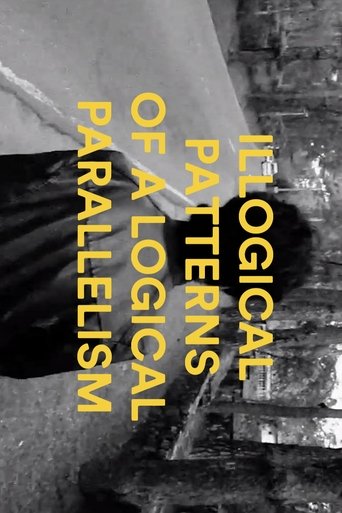
NRA silent film by Jet Leyco.
Illogical Patterns of a Logical Parallelism
2011
 NR
NRA machine capable of recording ideas directly from the mind is invented, and an out-of-work comedian suffering from depression uses it to learn if he still has the gift to make people laugh.
Ode to Dreamers
2015
 NR
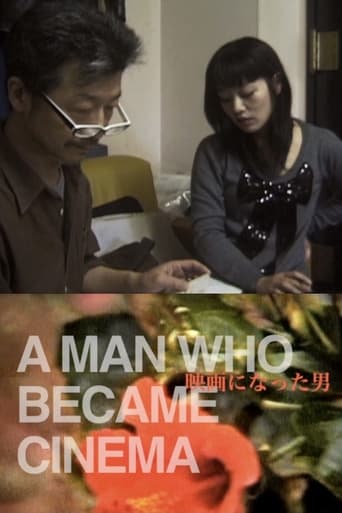
NRMasato Hara made his directorial debut in high school in 1968 and achieved a reputation as a young prodigy. Many years later, he continues to make films and show his old experimental 'live-screening' films, but is saddled with massive debts. This film follows eight years in his life.
A Man Who Became Cinema
2018
1990s · 3 titles
8.8Accused of treason, Dr. Jose P. Rizal awaits trial and meets with his colonial government-appointed counsel, Luis Taviel de Andrade. The two build the case and arguments for the defense as significant events in the central figure's life prior to his incarceration unfold. Upon hearing Rizal's life story, Taviel begins to realize that the accused not just is innocent but exhibits in fact all the qualities of an extraordinary man. When the mock trial unreels, Taviel is all set to act as the prime advocate for his client as Rizal himself is about to give an earth-moving speech to defend his honor and address his countrymen. Meanwhile, the Spanish authorities have worked out the vast political machinery to ensure a guilty verdict. A revolution waits in the wings.
José Rizal
1998
8.0Kidlat Tahimik, a director and performer, sought to recreate relations between the body and filmed image seen through "Asian eyes." This groundbreaking project took the form of a documentary which Mr. Tahimik directed and in which he performed himself in order to show his own thinking about the different views of the body held by the "East" and the "West."
Japanese Summers of a Filipino Fundoshi
1996
 6.0
6.0This film is a record of the first Yamagata International Documentary Film Festival. It reflects the various ways the festival was given shape by nascent global changes embodied by Perestroika, the Tiananmen Square massacre, and many other contemporaneous events.
A Movie Capital
1991
1980s · 2 titles
 NR
NRThree powerful shamans fight it out in a series of bizarre encounters over an a-go-go dancer. Their final encounter ends disastrously for all three, while the a-go-go-girl ends up acquiring all their powers.
Shaman Wars
1982
 9.0
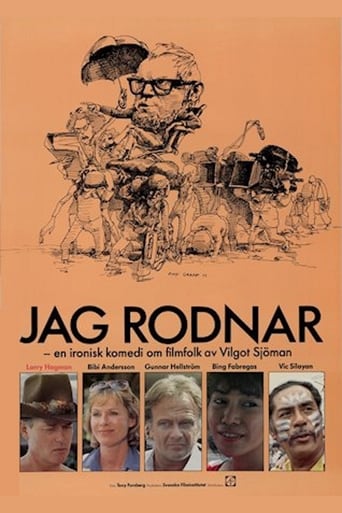
9.0"I am blushing" - Swedish comedy about a film crew traveling to the Philippines to find environments for a movie.
I am Blushing
1981
1970s · 3 titles
7.3The film follows Kaspar Hauser, who lived the first seventeen years of his life chained in a tiny cellar with only a toy horse to occupy his time, devoid of all human contact except for a man who wears a black overcoat and top hat who feeds him.
The Enigma of Kaspar Hauser
1974
7.2Kidlat, a Filipino jeepney driver, is fascinated by the idea of the American space programme and by Western society as a whole. When he moves to Paris, disillusionment sets in as his dreams are gradually shattered.
Perfumed Nightmare
1979
 7.5
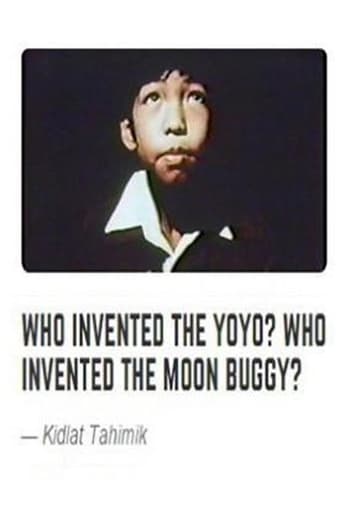
7.5Stuck in the German lands of “Yodelburg,” our hero Kidlat dreams of space and muses on humanity’s endless capacity for creativity, whether on the moon or at home in the Philippines. A delightful, self-proclaimed “third-world space spectacle.”
Who Invented The Yoyo? Who Invented The Moon Buggy?
1979

Behind the camera
6.2Kadu, a boy from Pakil, Laguna, experiences the dissolution of tradition as it gives way to capitalism in the form of Madame, a foreigner who initially came to their village as a customer during the Festival of Turumba.
Turumba
1981
6.2Kadu, a boy from Pakil, Laguna, experiences the dissolution of tradition as it gives way to capitalism in the form of Madame, a foreigner who initially came to their village as a customer during the Festival of Turumba.
Turumba
1981
8.0Kidlat Tahimik, a director and performer, sought to recreate relations between the body and filmed image seen through "Asian eyes." This groundbreaking project took the form of a documentary which Mr. Tahimik directed and in which he performed himself in order to show his own thinking about the different views of the body held by the "East" and the "West."
Japanese Summers of a Filipino Fundoshi
1996
8.0Kidlat Tahimik, a director and performer, sought to recreate relations between the body and filmed image seen through "Asian eyes." This groundbreaking project took the form of a documentary which Mr. Tahimik directed and in which he performed himself in order to show his own thinking about the different views of the body held by the "East" and the "West."
Japanese Summers of a Filipino Fundoshi
1996
7.2Kidlat, a Filipino jeepney driver, is fascinated by the idea of the American space programme and by Western society as a whole. When he moves to Paris, disillusionment sets in as his dreams are gradually shattered.
Perfumed Nightmare
1979
7.2Kidlat, a Filipino jeepney driver, is fascinated by the idea of the American space programme and by Western society as a whole. When he moves to Paris, disillusionment sets in as his dreams are gradually shattered.
Perfumed Nightmare
1979
7.2Kidlat, a Filipino jeepney driver, is fascinated by the idea of the American space programme and by Western society as a whole. When he moves to Paris, disillusionment sets in as his dreams are gradually shattered.
Perfumed Nightmare
1979
7.2Kidlat, a Filipino jeepney driver, is fascinated by the idea of the American space programme and by Western society as a whole. When he moves to Paris, disillusionment sets in as his dreams are gradually shattered.
Perfumed Nightmare
1979
7.5Stuck in the German lands of “Yodelburg,” our hero Kidlat dreams of space and muses on humanity’s endless capacity for creativity, whether on the moon or at home in the Philippines. A delightful, self-proclaimed “third-world space spectacle.”
Who Invented The Yoyo? Who Invented The Moon Buggy?
1979
7.5Stuck in the German lands of “Yodelburg,” our hero Kidlat dreams of space and muses on humanity’s endless capacity for creativity, whether on the moon or at home in the Philippines. A delightful, self-proclaimed “third-world space spectacle.”
Who Invented The Yoyo? Who Invented The Moon Buggy?
1979
NRMagellan, the famous navigator, met his untimely death in the Philippines before he could circumnavigate the globe. Ironically, it was his slave and translator Enrique who most likely was the first to achieve the historic feat.
Balikbayan #1: Memories of Overdevelopment Redux III
2015
NRAs the ultimate enfant terrible of Philippine cinema, avant-gardist Kidlat Tahimik refuses to settle on anything, whether it’s the telling of a colonial past, or any version of this film, which he’s been making and revising for nearly four decades. BalikBayan, which means “returnee” in Filipino, is partly about the homecoming of the historical figure Enrique of Malacca, a Malay who Tahimik first played and brought to the screen in 1979. As the slave of the 16th-century Portuguese explorer Ferdinand Magellan he circumnavigated the Earth, before returning home as a free man. Old footage of Enrique, played by the young Tahimik, is mixed with the fictional story of a mysterious old man, played by the present-day Tahimik, and documentary footage of a contemporary artist community in Baguio, in northern Philippines. In this version, Redux VI, Tahimik continues his quest to reconsider the Philippines’ colonial legacy. Shot on 16mm (1979–1980s) and video (1990s–2017).
BalikBayan #1: Memories of Overdevelopment Redux VI
2017
 6.0
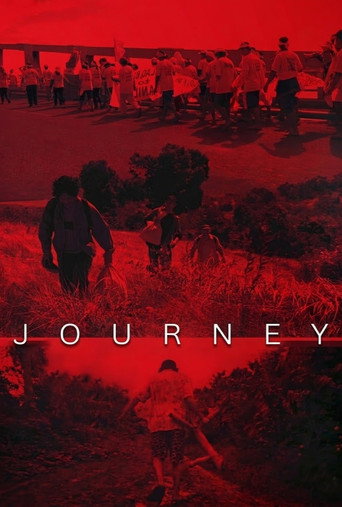
6.0This is a Filipino omnibus film about three different journeys.
Journey
2019
6.0This is a Filipino omnibus film about three different journeys.
Journey
2019
 6.2
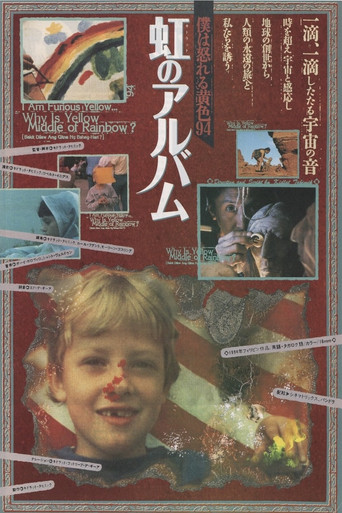
6.2Inspired by a trip to Monument Valley and the Navajo Nation while en route to the Telluride Film Festival, Tahimik and his eldest son Kidlat Gottlieb Kalayaan use the "spaghetti machine" (Tahimik's nickname for his Bolex camera) to make their own "spaghetti western." The decade-long path of the film encompasses the assassination of Benigno Aquino and the subsequent Yellow Revolution that brought Corazon Aquino to power, the decommissioning of the US air base Camp John Hay, and the younger Kidlat's trajectory through school, all shown through a Third World Projector salvaged from a junk pile on Navajo land.
Why Is Yellow the Middle of the Rainbow?
1994
6.2Inspired by a trip to Monument Valley and the Navajo Nation while en route to the Telluride Film Festival, Tahimik and his eldest son Kidlat Gottlieb Kalayaan use the "spaghetti machine" (Tahimik's nickname for his Bolex camera) to make their own "spaghetti western." The decade-long path of the film encompasses the assassination of Benigno Aquino and the subsequent Yellow Revolution that brought Corazon Aquino to power, the decommissioning of the US air base Camp John Hay, and the younger Kidlat's trajectory through school, all shown through a Third World Projector salvaged from a junk pile on Navajo land.
Why Is Yellow the Middle of the Rainbow?
1994
 NR
NRExperimental documentary about roof-making.
Roofs of the World! Unite!
2006
NRExperimental documentary about roof-making.
Roofs of the World! Unite!
2006
 NR
NRDocumentary about the working poor in Hongkong.
Yan Ki Made in Hongkong
1980
NRDocumentary about the working poor in Hongkong.
Yan Ki Made in Hongkong
1980
 NR
NRDocumentary about an oil spill near the Philippines
Our Film-Grimage to Guimaras
2005
NRDocumentary about an oil spill near the Philippines
Our Film-Grimage to Guimaras
2005
 NR
NRA man plants trees around the world.
Celebrating the Year 2021, Today
1995
NRA man plants trees around the world.
Celebrating the Year 2021, Today
1995
 NR
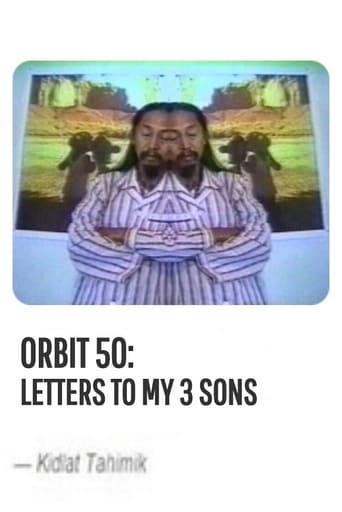
NRShort film about the sons of the director.
Orbit 50: Letters to My 3 Sons
1992
NRShort film about the sons of the director.
Orbit 50: Letters to My 3 Sons
1992
 NR
NRDocumentary about the meaning of bamboo.
Takedera mon amour: Diary of a Bamboo Connection
1991
NRDocumentary about the meaning of bamboo.
Takedera mon amour: Diary of a Bamboo Connection
1991
 NR
NRAn unexploded bomb that the Americans dropped in the Philippines in their war against the Japanese was found in a river. It was transformed into a bell by the Ifugaos and sent back to Japan. This time as a gesture of peace.
Our Bomb Mission in Hiroshima
1995
 NR
NRThe film illustrates the philosophy of “giving back” to nature, and documents the pinugo, the unique system of sustainable land cultivation developed by the Ifugao to take equal account of forest management and rice growing.This diary film also turns into a travelogue when a group of woodcarvers embark on a trip to Japan to the Takedera temple where they transform a 250-year-old tree, which had been struck by a lightning bolt, into a totem pole.
Holy Wood
2003
NRThe film illustrates the philosophy of “giving back” to nature, and documents the pinugo, the unique system of sustainable land cultivation developed by the Ifugao to take equal account of forest management and rice growing.This diary film also turns into a travelogue when a group of woodcarvers embark on a trip to Japan to the Takedera temple where they transform a 250-year-old tree, which had been struck by a lightning bolt, into a totem pole.
Holy Wood
2003
 NR
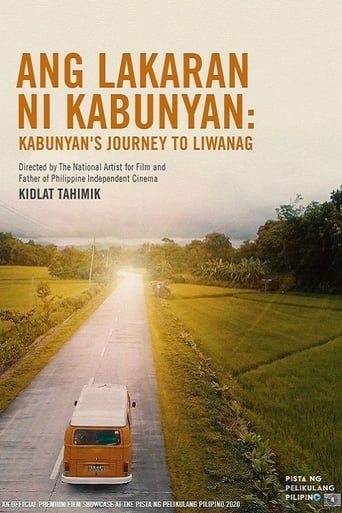
NRKidlat Tahimik’s son, Kabunyan de Guia, embarks on a journey from his hometown of Baguio to the southern urban city of Davao using an orange minivan and explores other places in the Philippines along the way.
Kabunyan's Journey to Liwanag
2020
 NR
NRProduced over 15 years for the JVC-sponsored Tokyo Video Festival, Tahimik’s Video Diaries offers a lovely set of accents to his longer 16mm films. Tropes and themes that recur throughout the director’s career are set in gemlike relief in these brief yet eloquent videos, which include a loving reminiscence of fatherhood on the occasion of Tahimik’s 50th birthday; a tree-planting ritual to celebrate the impending 500th anniversary of Magellan’s voyage; a short documentary on the dying practice of rice terraces, filtered through a homage to Kurosawa; a tribute to the importance of roofs and the strength of bamboo as a building material; and a healing ritual for an oil spill off the island of Guimaras.
Video-Palaro: The Video Diaries of Kidlat Tahimik
2006
 6.0
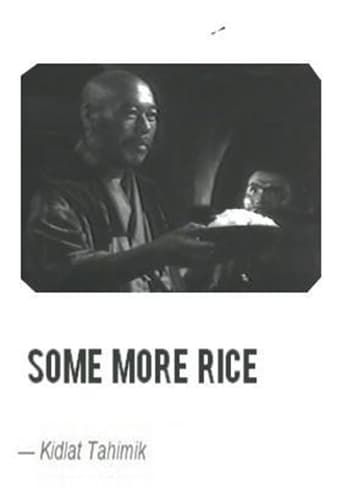
6.0Essay film about rice farming and Kurosawa's Seven Samurai.
Some More Rice
2005
6.0Essay film about rice farming and Kurosawa's Seven Samurai.
Some More Rice
2005
 NR
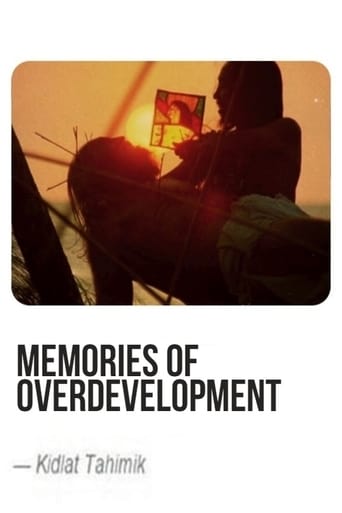
NRA Filipino slave travels around the world. An early version of the story Tahimik used for Balikbayan.
Memories of Overdevelopment
1984
NRA Filipino slave travels around the world. An early version of the story Tahimik used for Balikbayan.
Memories of Overdevelopment
1984