

Directing
Neville D'Almeida
Born
1941-05-15 (85)
Place of birth
Belo Horizonte, Minas Gerais, Brazil
Known for
Directing
Credits
82 titles
A Brazilian filmmaker, screenwriter, actor, photographer and multimedia artist, involved with contemporary art, installations, art objects and performances, Neville Duarte Almeida was born in 1941 in the Brazilian city of Belo Horizonte. Raised by a Methodist Christian family, he studied theater at the Scholastic Theatre of Minas Gerais and participated at the local Center of Film Studies, where he started to work as an filmmaker. Some of his transgressive, avant-garde films were censored or banned by the Brazilian military dictatorship, after which he went on to directing films aimed to a more commercial approach. His 1978 film "Lady on the Bus", starring Sônia Braga, was a box-office cham…
Known for
 NR
NRNo synopsis available yet.
O País do Cinema
2016
 5.9
5.9Underappreciated actor Jack Noah is on location in Parador at the time the dictator dies. The dictator's right-hand man makes Jack an offer he cannot refuse... to play the dictator. Jack's acting skills fool the masses but not close friends and employees of the dictator.
Moon Over Parador
1988
 7.6
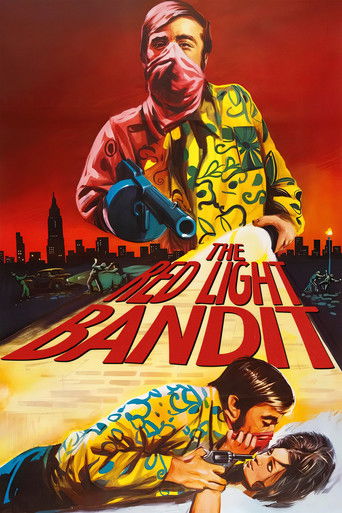
7.6Born and raised in the misery of Brazilian slums, Jorge becomes a luxury house burglar in São Paulo and gets nicknamed "The Red Light Bandit" by the sensationalist press. In addition to wearing a red flashlight, he talks to his hostages in an irreverent tone and makes bold breakthroughs to later spend the money extravagantly. His world is the decadent neighbourhood of Boca do Lixo.
The Red Light Bandit
1968
 5.6
5.6Solange is a recently married young woman whose wedding night did not end well. After constant fights with her husband, she decides to live through her sexual frustration by sleeping with strangers she picks up on crowded buses in Rio de Janeiro.
Lady on the Bus
1978
 5.0
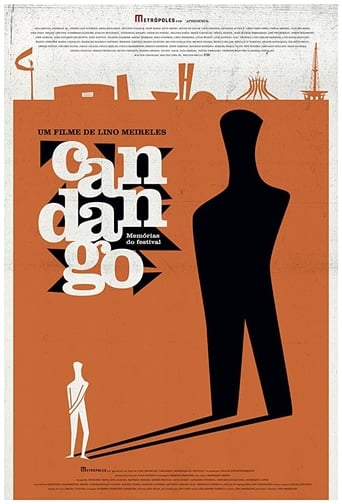
5.0In 1965, a year after the military coup in Brazil, an oasis of freedom opened in the country's capital. The Brasília Film Festival: a landmark of cultural and political resistance. Its story is that of Brazilian cinema itself.
Candango: Memoirs from a Festival
2020
 5.5
5.5In Rio de Janeiro, after an altercation with his father and mother, a young man named Bebeto kills his family and goes to a movie theater, where he watches four weird vignettes.
Killed the Family and Went to the Movies
1991
Film credits
2020s · 10 titles
5.0In 1965, a year after the military coup in Brazil, an oasis of freedom opened in the country's capital. The Brasília Film Festival: a landmark of cultural and political resistance. Its story is that of Brazilian cinema itself.
Candango: Memoirs from a Festival
2020
 NR
NRNo synopsis available yet.
Drops de Anis
2026
 NR
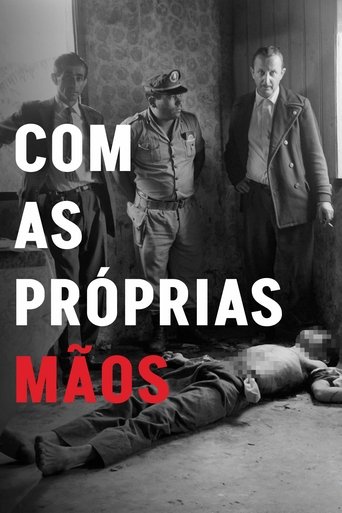
NRPolice reporter Luarlindo Ernesto is the only eyewitness to the creation of the death squad, the first Brazilian extermination group. 60 years later, young journalist Yasmin Santos researches the origins of the militia in Rio de Janeiro and, upon discovering that Luarlindo is alive, decides to track him down to try and convince him to tell her everything he saw.
Com as Próprias Mãos
2023
 8.0
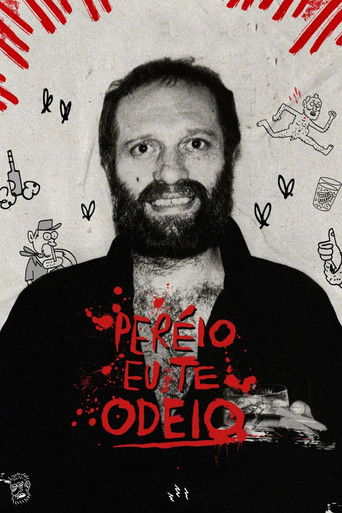
8.023 years in the making, “Pereio, Eu Te Odeio!” is a documentary on legendary Brazilian actor Paulo Cesar Pereio, an irreverent and controversial artist and public figure, as told by the testimonies of friends, family, and society members who hate him.
Peréio, Eu Te Odeio!
2023
 NR
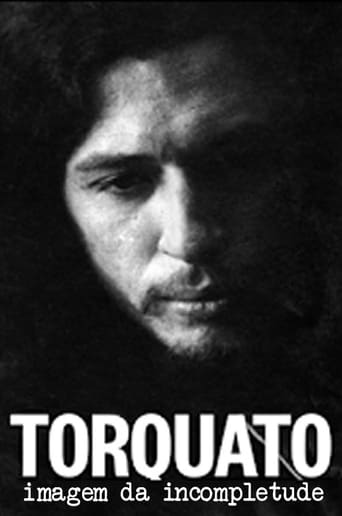
NRA reflection on the works and thinking of the last years of production by Torquato. Such as the magazine "Navilouca", the film "Terror da Vermelha", the column "Geleia Geral" and the controversial Cinema Novo X Marginal, among other passages important aspects of Brazilian culture in the 60s and 70s.
Torquato, Imagem da Incompletude
2020
 6.8
6.8An egotistical stand-up comedian fights with a spectator and gets fired. To be able to pay his son's pension, he decides to participate in a comedy group contest. Now he will need to work harmoniously with the rest of the team.
Os Espetaculares
2020
 10.0
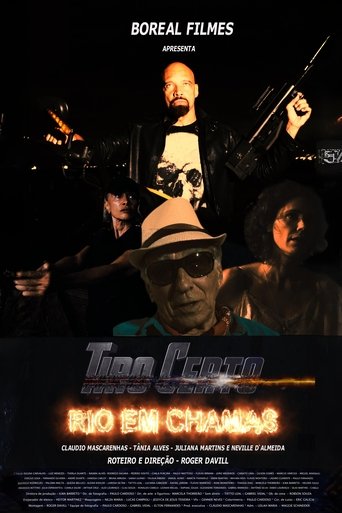
10.0The film brings the story of Benito Terranova, a sniper on the edge of the psychological abyss who faces organized crime to do justice.
Tiro Certo - Rio em Chamas
2025
 1.0
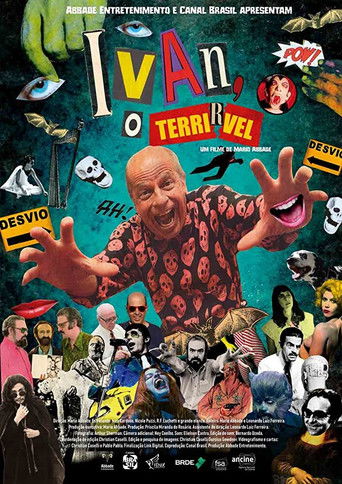
1.0Ivan Cardoso is the inventor of the terrir, a subgenre that mixes comedy, Brazilian chanchadas and classic American horror. This film promotes a rescue of his work by mixing archival material, animations and fictional reconstructions.
Ivan, the TerrirBle
2020
 NR
NRDirector Neville D'Almeida talks about some of his favorite films in the Cavideo store
Corredor Cinéfilo - Neville D'Almeida
2026
 NR
NRNo synopsis available yet.
Cineastas de Invenção
2026
2010s · 5 titles
 10.0
10.0This film seeks to rescue the role of filmmaker Neville D'Almeida by using many rare images, numerous interviews, vast archival and audiovisual material.
Neville D'Almeida: Chronicler of Beauty and Chaos
2019
 5.5
5.5A rescue of the history of Ipanema beach in the 1970s, when the construction of a pier changed the landscape and created fertile soil for a generation of artists and sportsmen.
Dunas do Barato
2017
 5.6
5.6This documentary investigates the aesthetic, political and existential trajectory of emblematic Black Brazilian actor Antônio Pitanga. His career spans over five decades, and he has worked with iconic Brazilian filmmakers Glauber Rocha, Cacá Diegues and Walter Lima Jr. He was a prominent figurehead and outspoken activist during the Brazilian dictatorship, a period of unrest in Brazilian cinema. "Pitanga" deep dives into the world of Antônio and the history of Brazil. The documentary was directed by his daughter Camila Pitanga, one of widely recognised faces in Brazilian television and cinema right now. The film is also a poem, and a tender ode to fatherhood.
Pitanga
2016
The theatrologist, actor, director and overall polemist Plínio Marcos gets his life traced through images of the many spectacles he has put on interviews from various moments in his life, from the most rebellious and marginal, when he lacked resources for his art, to when he was invited to go to Paris and talk about his work
Plínio Marcos — Nas Quebradas do Mundaréu
2013
 5.0
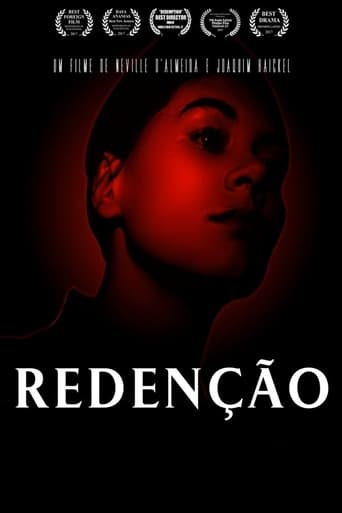
5.0A young woman travels to solve a matter of life or death. As she seeks to do what she needs, the city exposes itself with its curious characters.
Redemption
2017
2000s · 7 titles
 6.3
6.3Documentary about Brazilian filmmaker Glauber Rocha, one of the most important names in the Cinema Novo, with interviews with some of his friends and colleagues.
Glauber Rocha - The Movie, Brazil's Labyrinth
2003
 NR
NRDocumentary on "Antonio das Mortes", Glauber Rocha's 1969 film.
Milagrez
2008
 5.0
5.0A short documentary on Belair, an independent Brazilian film company that lasted for only five months in 1970.
A Miss e o Dinossauro
2005
 4.3
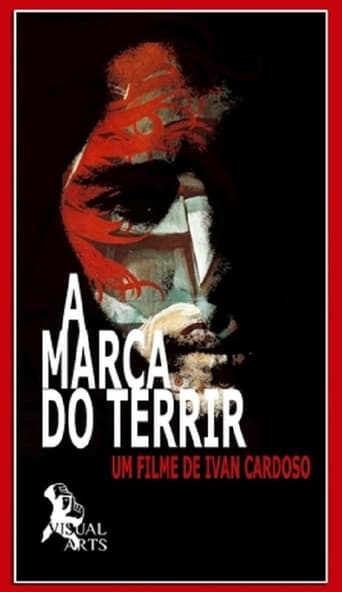
4.3Compilation of early Ivan Cardoso's films in Super 8, including "Nosferato no Brasil (Nosferato in Brazil)"
A Marca do Terrir
2005
 NR
NRNo synopsis available yet.
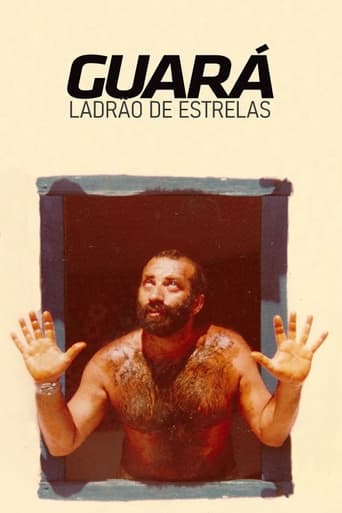
Guará, Ladrão de Estrelas
2006
 NR
NRA documentary short on Glauber Rocha's mother Lúcia.
Luz-Lux-Lúcia
2005
 NR
NRNo synopsis available yet.
Ecos de Cannes
2008
1990s · 4 titles
5.5In Rio de Janeiro, after an altercation with his father and mother, a young man named Bebeto kills his family and goes to a movie theater, where he watches four weird vignettes.
Killed the Family and Went to the Movies
1991
 4.6
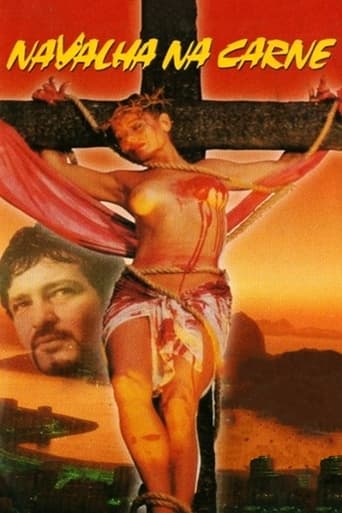
4.6The story of three characters in a brothel room: the prostitute Neusa Sueli, the gigolo Vado and the homosexual Veludo speak of their lives and expose their marginality.
Razor in the Flesh
1997
 NR
NRNo synopsis available yet.
Que Filme 'Tu Vai' Fazer?
1991
 8.0
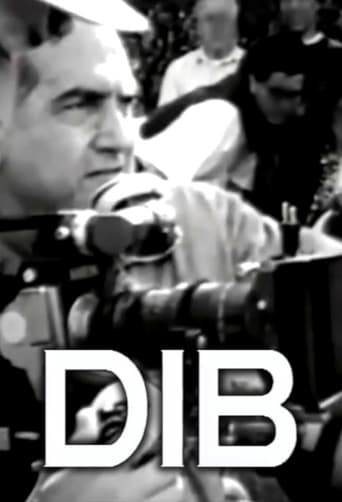
8.0Documentary that addresses, through the testimony of directors and actors, the work of Dib Lutfi, considered one of the greatest photographers of Brazilian cinema.
Dib
1997
1980s · 5 titles
5.9Underappreciated actor Jack Noah is on location in Parador at the time the dictator dies. The dictator's right-hand man makes Jack an offer he cannot refuse... to play the dictator. Jack's acting skills fool the masses but not close friends and employees of the dictator.
Moon Over Parador
1988
 5.0
5.0Fantasy comedy about Brazilian writer Oswald de Andrade, one of the most important icons of Modernism in Brazil. In the film, Oswald is played by two actors: Ítala Nandi, as his feminine anima, and Flávio Galvão, as the masculine half.
The Brazilwood Man
1982
 6.3
6.3Based upon the life story of Father Antonio Vieira, born in Lisbon in 1608 and deceased in Salvador, Bahia, in 1697. He's considered the first Brazilian writer and one of the most important aesthete of linguistic and of the Portuguese language of all times, a master in the art of metaphor, of verbal relations and analogy. He was persecuted and condemned by the Portuguese Court of Inquisition due to his position against native slavery, against the intolerance to the Jewish people and to the colonial politics of exploration.
Sermões
1989
 4.0
4.0Somwhere in the city of Porto Alegre, a man who has lost his memory is questioned by a group of police officers about the barbaric murder of a socialite. Without recognizing himself in the documents he carries in his pocket, he wanders through the underworlds of the city in search of an answer.
Noite
1985
 6.0
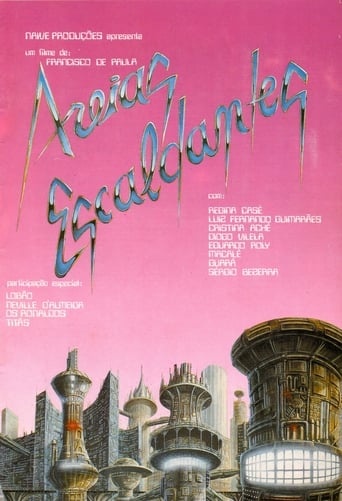
6.0In the near future, in the country of Kali, a group of young terrorists carry out robberies, kidnappings and murders under the orders of a mysterious big boss known as "Entity" and are pursued by the pompous and inefficient Special Police.
Areias Escaldantes
1985
1970s · 5 titles
 5.2
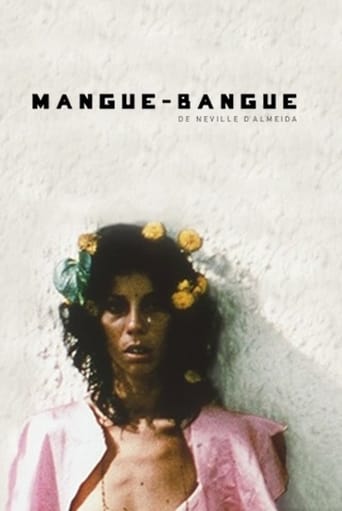
5.2The quasi-fictional story of transgender sex workers living in Rio de Janeiro's swampy red light district, who are joined by a group of hippies and a runaway stockbroker, "Mangue-Bangue" is the paradigmatic expression of the post-1968 spirit of desbunde, the Brazilian slang catchword for "sex, drugs, and rock 'n' roll".
Mangúe-Bangúe
1971
 6.3
6.3Spider, a banker, lives with three women. A tycoon that is a caricature of Brazil's bourgeoisie, his trajectory is the starting point for an essay on the mental underdevelopment of Brazilian elites, in which black humor sets the tone for sharp criticism.
No Way, Spider
1970
 NR
NRExperimental short film, shot in Super 8.
New York, 70s
1973
 6.0
6.0An unusual look at 1978 Brasilia Film Festival and the politics that make certain films fashionable or not.
Horror Palace Hotel
1978
 NR
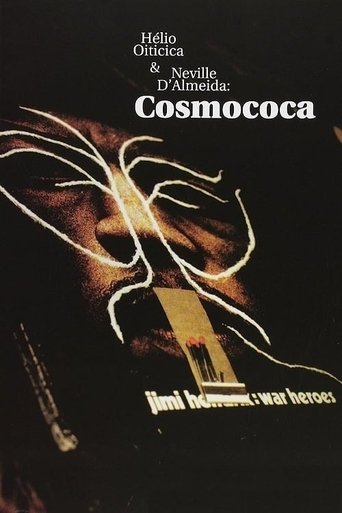
NRIn 1973, exiles from Brazil during the military dictatorship, artist Hélio Oiticica and filmmaker Neville D’Almeida lock themselves in an apartment in Manhattan and fantasize a series of iconic sensory installations called quasi-cinema - experience blocks in Cosmococas. The work features slide projections on the walls of the rooms, showing drawing sessions carried out by the artists, using cocaine for doodling and a pocket knife as a brush.
Cosmococa
1973
1960s · 5 titles
7.6Born and raised in the misery of Brazilian slums, Jorge becomes a luxury house burglar in São Paulo and gets nicknamed "The Red Light Bandit" by the sensationalist press. In addition to wearing a red flashlight, he talks to his hostages in an irreverent tone and makes bold breakthroughs to later spend the money extravagantly. His world is the decadent neighbourhood of Boca do Lixo.
The Red Light Bandit
1968
 6.8
6.8The tensions experienced by three different people during the military dictatorship in Brazil: a politician, a revolutionary and a common citizen.
BLABLABLÁ
1968
 6.8
6.8Santamaria and Urtigo are two bandits on the run, one is white, the other black. Santamaria is a mystical visionary and believes in the imminent coming of a purifying angel. Urtiga, his inseparable companion, is a simple-minded and ingenious man who follows Santamaria around and participates in the crimes he commits. The two bandits take over a house after kidnapping its owner and his girlfriend.
The Angel Was Born
1969
 7.1
7.1Edson is having an affair with actress Maria do Rosário, who dreams of being a movie director. So he tries to get some easy money for her film, but is arrested and meets a police torturer instead.
Garden of War
1969
 5.1
5.1An extended research tour of US university film programs introduced dos Santos to the American avant-garde filmmakers, among them Jonas Mekas and Stan Brakhage, who would directly inspire his formally radical adaptation of an allegorical short story about adultery and colonialism by Guilherme de Figueiredo. Filmed in both Manhattan and Brazil and set against the background of the Vietnam War and its protests, Hunger for Love uses a rigorously abstract soundtrack and narrative structure to evoke the acute paranoia of the period building up to the December 1968 military coup that tipped Brazil perilously close to a conservative dictatorship. With its harsh critique of the decadent tendencies of the Sixties counterculture, Hunger for Love offers a key expression of the self-consciously “ideological” phase of Cinema Novo. -Harvard Film Archive
Hunger for Love
1968
Series credits
Behind the camera
5.6Solange is a recently married young woman whose wedding night did not end well. After constant fights with her husband, she decides to live through her sexual frustration by sleeping with strangers she picks up on crowded buses in Rio de Janeiro.
Lady on the Bus
1978
5.6Solange is a recently married young woman whose wedding night did not end well. After constant fights with her husband, she decides to live through her sexual frustration by sleeping with strangers she picks up on crowded buses in Rio de Janeiro.
Lady on the Bus
1978
5.5In Rio de Janeiro, after an altercation with his father and mother, a young man named Bebeto kills his family and goes to a movie theater, where he watches four weird vignettes.
Killed the Family and Went to the Movies
1991
5.5In Rio de Janeiro, after an altercation with his father and mother, a young man named Bebeto kills his family and goes to a movie theater, where he watches four weird vignettes.
Killed the Family and Went to the Movies
1991
5.5In Rio de Janeiro, after an altercation with his father and mother, a young man named Bebeto kills his family and goes to a movie theater, where he watches four weird vignettes.
Killed the Family and Went to the Movies
1991
 6.1
6.1Noronha is a low middle-class civil servant who lives with his frustrated wife Gorda and their four eldest daughters. The youngest one, virginal Silene, is unexpectedly sent back from boarding school after killing a female cat and her seven newborns in a hysterical fit. Many dark family secrets will emerge from that episode leading to tragic events.
The Seven Kittens
1980
6.1Noronha is a low middle-class civil servant who lives with his frustrated wife Gorda and their four eldest daughters. The youngest one, virginal Silene, is unexpectedly sent back from boarding school after killing a female cat and her seven newborns in a hysterical fit. Many dark family secrets will emerge from that episode leading to tragic events.
The Seven Kittens
1980
6.1Noronha is a low middle-class civil servant who lives with his frustrated wife Gorda and their four eldest daughters. The youngest one, virginal Silene, is unexpectedly sent back from boarding school after killing a female cat and her seven newborns in a hysterical fit. Many dark family secrets will emerge from that episode leading to tragic events.
The Seven Kittens
1980
 5.5
5.5A public relations man is invited to guide an American millionaire during his stay in Rio de Janeiro. He gets involved in the most bizarre situations, from orgiastic mega-parties to confrontations with the police, meetings with drug dealers and movie stars, facing corruption and even murder.
Rio Babilonia
1982
5.5A public relations man is invited to guide an American millionaire during his stay in Rio de Janeiro. He gets involved in the most bizarre situations, from orgiastic mega-parties to confrontations with the police, meetings with drug dealers and movie stars, facing corruption and even murder.
Rio Babilonia
1982
4.6The story of three characters in a brothel room: the prostitute Neusa Sueli, the gigolo Vado and the homosexual Veludo speak of their lives and expose their marginality.
Razor in the Flesh
1997
4.6The story of three characters in a brothel room: the prostitute Neusa Sueli, the gigolo Vado and the homosexual Veludo speak of their lives and expose their marginality.
Razor in the Flesh
1997
 5.7
5.7A group of playboys organizes the last party of the year in a slum before the change in weather. And for this night, beyond the usual drugs, alcohol and sex, they will receive special guests: an addict that uses and is used by the group, a country singer who was raised around the slum, a strange security guard and the owner of the place.
The Cold Front Brought by the Rain
2016
5.7A group of playboys organizes the last party of the year in a slum before the change in weather. And for this night, beyond the usual drugs, alcohol and sex, they will receive special guests: an addict that uses and is used by the group, a country singer who was raised around the slum, a strange security guard and the owner of the place.
The Cold Front Brought by the Rain
2016
The picture brings interviews with the participants of the 1st São Paulo Jazz Festival that occurred in Anhembi Conventions Palace in September 1978 and reunited musicians, composers and singers from all around the world.
Música para Sempre
1980
5.2The quasi-fictional story of transgender sex workers living in Rio de Janeiro's swampy red light district, who are joined by a group of hippies and a runaway stockbroker, "Mangue-Bangue" is the paradigmatic expression of the post-1968 spirit of desbunde, the Brazilian slang catchword for "sex, drugs, and rock 'n' roll".
Mangúe-Bangúe
1971
5.2The quasi-fictional story of transgender sex workers living in Rio de Janeiro's swampy red light district, who are joined by a group of hippies and a runaway stockbroker, "Mangue-Bangue" is the paradigmatic expression of the post-1968 spirit of desbunde, the Brazilian slang catchword for "sex, drugs, and rock 'n' roll".
Mangúe-Bangúe
1971
 NR
NRAn adaptation of Marcos Vinicius Faustini's rendition of José Vicente's eponymous 1971 play, a story that deals with the five children of Pedro Fogueteiro, who all live in a small town in the state of Minas Gerais and decide to go on a journey to find about their own individual identities in a moment of change lived by their generation, heavily influenced by rock music.
Hoje É Dia de Rock!
1999
 NR
NRIn a monologue, a man expresses his views over the international selling of the Amazon rainforest.
A Voz do Provocador: Internacionalização da Amazônia
2006
 NR
NRAn encounter between a young woman and an older man ends up in an unexpected way.
Boa Noite Cinderela
2010
 NR
NRIn a monologue, a man expresses his distaste for the artistic community.
A Voz do Provocador — Parte 1: Os Artísticos
2006
 NR
NRA documentary short on Tempo Glauber, a foundation created by filmmaker Orlando Senna and Glauber Rocha's mother Lucia in order to celebrate and preservate her son's legacy.
Tempo Glauber
2005
7.1Edson is having an affair with actress Maria do Rosário, who dreams of being a movie director. So he tries to get some easy money for her film, but is arrested and meets a police torturer instead.
Garden of War
1969
7.1Edson is having an affair with actress Maria do Rosário, who dreams of being a movie director. So he tries to get some easy money for her film, but is arrested and meets a police torturer instead.
Garden of War
1969
7.1Edson is having an affair with actress Maria do Rosário, who dreams of being a movie director. So he tries to get some easy money for her film, but is arrested and meets a police torturer instead.
Garden of War
1969
 NR
NRExperimental short, focusing on both a woman and a watering can sharing the same swimming pool.
A Água, a Mulher e o Regador
2005
NRExperimental short film, shot in Super 8.
New York, 70s
1973
 NR
NRA woman teaches her techniques on how to seduct over men.
O Diário Secreto de Jane Joy: Receita de Sedução
2007
 NR
NRThe tragic story of the misery and abandonment Brazilian indigenous populations have been suffering for over the last 500 years. Maksuara chronicles the wisdom of indigenous people, who live in perfect harmony with nature without destroying or damaging it.
Maksuara – Crepúsculo dos Deuses
2007
NRA documentary short on Glauber Rocha's mother Lúcia.
Luz-Lux-Lúcia
2005
 NR
NRIn a monologue, a man explains his thoughts on the exploitation of Brazil's native people's resources.
A Voz do Provocador - O Ouro Roubado
2006
 NR
NRAn experiment of poetic fiction involving the personality of an important actor in an abstract vision, that goes through past, present and future.
Era Uma Vez Babu
2021
 NR
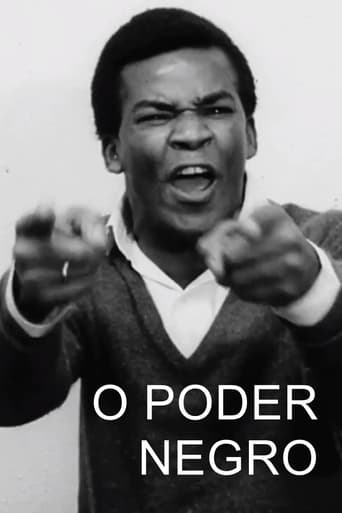
NRAn excerpt from Neville D'Almeida's debut feature "Jardim de Guerra" (1968), focusing on the Black Power speech made by a character played by Antonio Pitanga.
O Poder Negro
2018
NRAn excerpt from Neville D'Almeida's debut feature "Jardim de Guerra" (1968), focusing on the Black Power speech made by a character played by Antonio Pitanga.
O Poder Negro
2018
 NR
NRA woman explains her distaste for the use of underwear.
O Diário Secreto de Jane Joy: Calcinha
2007
 NR
NRA loose adaptation of a scene from a theatre play written and directed by Thiago Justino, "Humanos Causa" shows the people of a city reclaiming their rights.
Humanos Causa
2019
 NR
NRAn experimental short film directed by Neville D'Almeida, based on the ambience of Cosmococa CC4, one of the installations planned by the filmmaker in partnership with visual artist Helio Oiticica.
Acquawater
2005
5.0A young woman travels to solve a matter of life or death. As she seeks to do what she needs, the city exposes itself with its curious characters.
Redemption
2017
5.0A young woman travels to solve a matter of life or death. As she seeks to do what she needs, the city exposes itself with its curious characters.
Redemption
2017
 NR
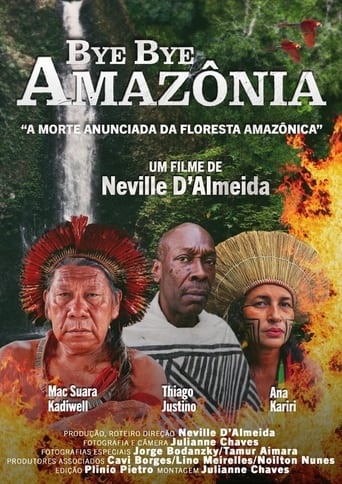
NRNeville D'Almeida’s “Bye Bye Amazônia” tackles on the problems that plague the world’s biggest rainforest and its native people.
Bye Bye Amazonia
2023