

Acting
Mohamed Zinet
Born — Died
1932-01-16 — 1995-04-10
Place of birth
Alger, Algérie
Known for
Acting
Credits
19 titles
Mohamed Zinet (Arabic: محمد زينت) is an Algerian actor and director, born January 16, 1932 in the Casbah of Algiers in Algeria, and died April 10, 1995 in Bondy in France. Born in 1932 in Algiers, Mohamed Zinet developed a passion for theater at a very young age. He led an amateur troupe called El-Manar El-Djazairi (The Algerian Flambeau) and in 1947, in Paris, he presented an adaptation of Bourgeois Gentilhomme by Molière in the Wagram room. Officer of the National Liberation Army (ALN) during the war of independence, he was seriously injured during a mission, then transported to Tunis where the artistic troupe of the National Liberation Front (FLN) was created which constituted the core …
Known for
 6.2
6.2Tatort is a long-running German/Austrian/Swiss crime television series set in various parts of these countries. The show is broadcast on the channels of ARD in Germany, ORF in Austria and SF1 in Switzerland.
Scene of the Crime
1970
 NR
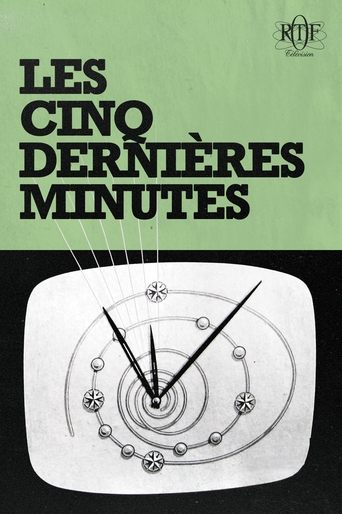
NRLes Cinq Dernieres Minutes is a crime based French television series
Les Cinq Dernières Minutes
1958
 6.5
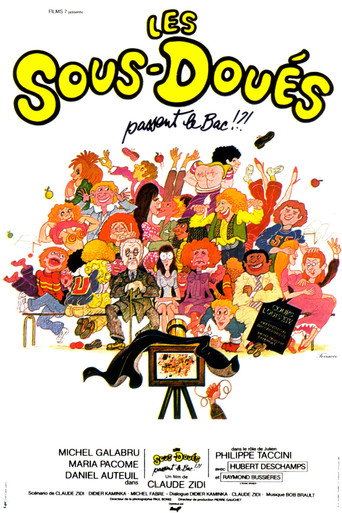
6.5The story centers around a graduating class of "less-gifted" students in a private Versailles high school. Only a miracle has brought the students this far along, and after a practical joke misfires and the whole school is dynamited, the students are in deep trouble. They have to present themselves in court for their punishment and it could not be worse: If they don't pass their high-school graduation exams, they go to prison!
The Under-Gifted
1980
 6.8
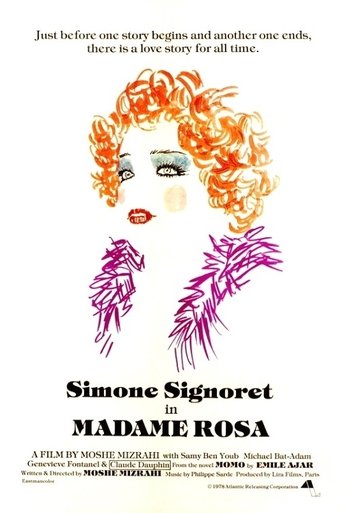
6.8Madame Rosa lives in a sixth-floor walkup in the Pigalle; she's a retired prostitute, Jewish and an Auschwitz survivor, a foster mom to children of other prostitutes. Momo is the oldest and her favorite, an Algerian lad whom she raises as a Muslim. He asks about his parents; she answers evasively. As she ages and takes fewer children, Momo must do more for her; as money is tight, he tries to earn pennies on the street with a puppet. He's a beautiful man-child, and Madame Rosa makes him promise never to sell himself or become a pimp. A film editor, Nadine, befriends him, and his father appears as well. Madame Rosa reaches her last days in fear of hospitals, and Momo must act.
Madame Rosa
1977
 8.5
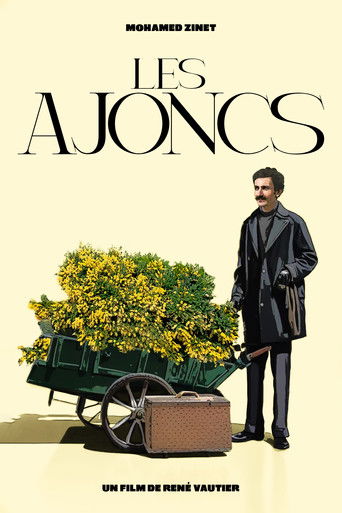
8.5An unemployed Algerian worker leaves Paris by hitchhiking. He soon found himself in Brittany and, seduced by the beauty of wild gorse, eventually established himself as a gorse merchant. But for problems with parking his little cart, he had a rough explanation with a law enforcement officer. The happy intervention of factory workers, the eager kindness they showed him, saved him from despair. This film is part of a trilogy "Them And Us" with the films "Les 3 Cousins" and "Techniquement Si Simple".
Les Ajoncs
1970
 10.0
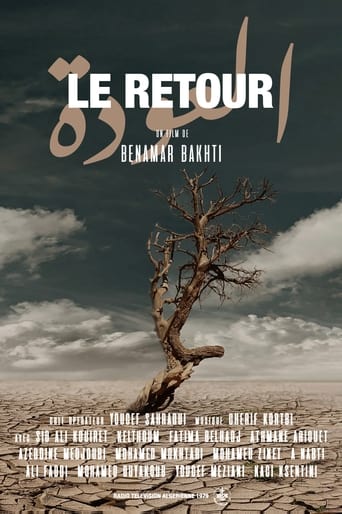
10.0In the early 1970s, Lakhdar, an Algerian peasant, is forced to leave his desert land and his family for France, but immigration weighs on him and he dreams of returning. This day arrives, he walks in Paris, events decide otherwise.
Le Retour
1979
Film credits
1980s · 3 titles
6.5The story centers around a graduating class of "less-gifted" students in a private Versailles high school. Only a miracle has brought the students this far along, and after a practical joke misfires and the whole school is dynamited, the students are in deep trouble. They have to present themselves in court for their punishment and it could not be worse: If they don't pass their high-school graduation exams, they go to prison!
The Under-Gifted
1980
 8.5
8.5In 1958 in Paris, during the Algerian War, a young trainee lawyer, Maître Chabrier, was assigned to defend an Algerian garbage collector against paratroopers who had beaten him. Stay out of Algerian affairs, his peers advise him because the trial is taking a political turn. Chabrier acquired the reputation of the Fellaghas' lawyer.
Les Avocats du Diable
1981
 9.0
9.0Around 1980, in Tunisia, Si Béchir, an old craftsman, sold his house and left the medina of Tunis with his family to settle in a new city on the outskirts of the capital. With his son Ali and his niece Aziza, the old man discovers a new way of life in a Tunisia in full change. Aziza becomes friends with Aïcha, a young actress, while Ali continues to fail in his little businesses. The arrival of a sheikh from the Persian Gulf will fuel all the desires in the city, including those of Ali. But the dream is short-lived.
Aziza
1980
1970s · 9 titles
6.8Madame Rosa lives in a sixth-floor walkup in the Pigalle; she's a retired prostitute, Jewish and an Auschwitz survivor, a foster mom to children of other prostitutes. Momo is the oldest and her favorite, an Algerian lad whom she raises as a Muslim. He asks about his parents; she answers evasively. As she ages and takes fewer children, Momo must do more for her; as money is tight, he tries to earn pennies on the street with a puppet. He's a beautiful man-child, and Madame Rosa makes him promise never to sell himself or become a pimp. A film editor, Nadine, befriends him, and his father appears as well. Madame Rosa reaches her last days in fear of hospitals, and Momo must act.
Madame Rosa
1977
8.5An unemployed Algerian worker leaves Paris by hitchhiking. He soon found himself in Brittany and, seduced by the beauty of wild gorse, eventually established himself as a gorse merchant. But for problems with parking his little cart, he had a rough explanation with a law enforcement officer. The happy intervention of factory workers, the eager kindness they showed him, saved him from despair. This film is part of a trilogy "Them And Us" with the films "Les 3 Cousins" and "Techniquement Si Simple".
Les Ajoncs
1970
10.0In the early 1970s, Lakhdar, an Algerian peasant, is forced to leave his desert land and his family for France, but immigration weighs on him and he dreams of returning. This day arrives, he walks in Paris, events decide otherwise.
Le Retour
1979
 7.0
7.0Georges Lajoie is a Parisian café owner. As every summer, Georges, his wife Ginette and grown-up son Léon go on holiday to Loulou's campsite, where they meet up with the Schumacher family (whose father is a bailiff) and the Colin family (who sells bras in the markets). This year, their peace is slightly disturbed by the proximity of a construction site where foreign workers are employed. Xenophobic comments are made. One evening at the ball, a fight breaks out between Lajoie, Albert Schumacher and two algerian immigrant workers...
The Common Man
1975
 6.0
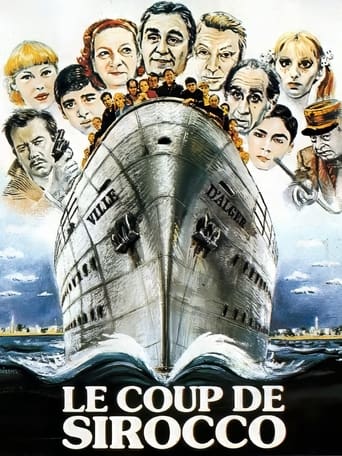
6.0A shady Parisian tries to take advantage of a family of French-descended Algerians forced to move to France.
The Kick of Sirocco
1979
 8.5
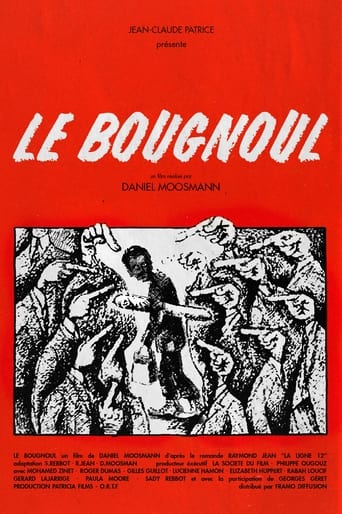
8.5A construction worker on a construction site in the Paris suburbs, Mehdi takes the bus to return home after work. Wishing to get off while the vehicle is stationary in a traffic jam, the driver refuses: while restarting, the bus hits the car in front of it. The bus driver attacks Mehdi whom he holds responsible for the incident, claiming that it is forbidden to “talk to the stagehand”. Mehdi is implicated in court and his lawyer tries to draw attention to the living conditions of immigrant workers.
Le Bougnoul
1975
 8.0
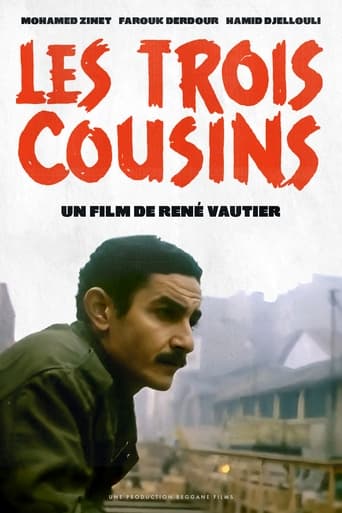
8.0The Three Cousins is a comedy-drama by René Vautier released in 1970 about the living conditions of three Algerian immigrant cousins looking for work in Paris. Housed in a narrow construction shed, the coal stove will cause them to suffocate. The Three Cousins won the Best Human Rights Film Award in Strasbourg in 1970.
Les Trois Cousins
1970
 6.3
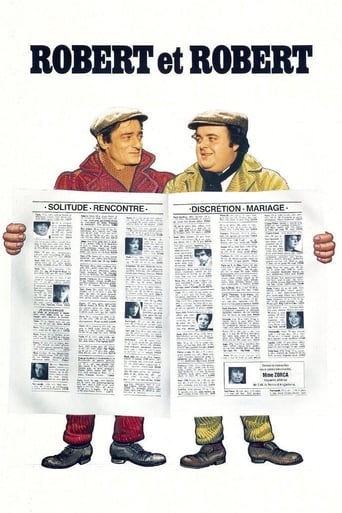
6.3Robert #1 is played by Charles Denner, while Robert #2 is played by Jacques Villeret. Beyond their common name, the two Roberts are as different as night and day. Oh, there is one more resemblance: both Roberts are lonely, and both hope to meet suitable mates through a computer dating service. As they await the arrival of their new dates, Robert et Robert become fast friends. Of the three favorite film subjects of writer/director Claude Lelouch--romance, crime, and politics--Robert et Robert falls firmly into the first category.
Robert et Robert
1978
 8.0
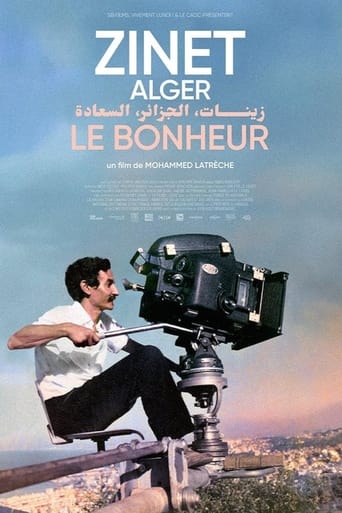
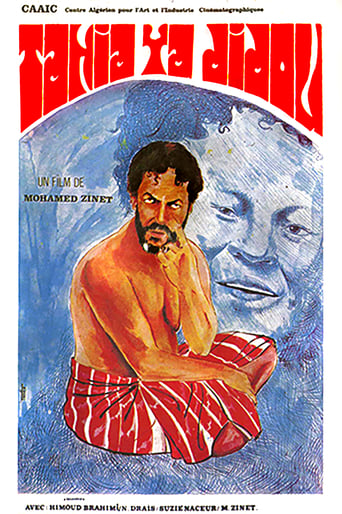
8.0Originally commissioned by the city of Algiers to promote tourism, Mohamed Zinet’s Tahia ya Didou blends documentary with fiction to create a poetic, acerbic and rapturous portrait of the director’s native city. The camera travels freely, through the port, market, streets and cafés, capturing everyday people, some of whom recur frequently enough to seem like protagonists. The nominal plotline follows a French tourist couple’s leisurely visit to the city, the man having previously served in the army during the Algerian war. As they walk around, his comments betray his mindset’s racist colonial prejudices, while his wife reiterates asinine clichés. Their unhurried wandering is interrupted when he comes across a blind man and realises that he tortured him during his army service. The film is punctuated with punchy sequences that show a poet named Momo delivering verse as an elegy for Algiers.
Tahia Ya Didou !
1971
Series credits
6.2Tatort is a long-running German/Austrian/Swiss crime television series set in various parts of these countries. The show is broadcast on the channels of ARD in Germany, ORF in Austria and SF1 in Switzerland.
Scene of the Crime
1970
NRLes Cinq Dernieres Minutes is a crime based French television series
Les Cinq Dernières Minutes
1958
 7.0
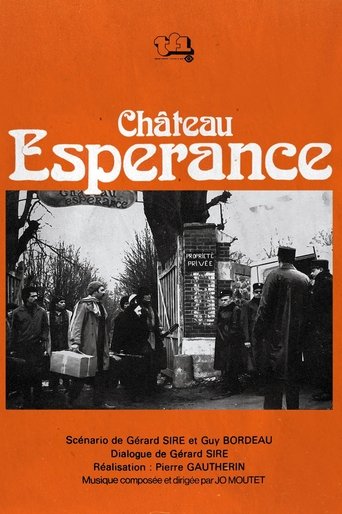
7.0Rachid, a North African immigrant worker in the Fayard company for several years, saved to bring his wife Leïla and their son Larbi. They arrive in France for the first time. Leïla full of hope came to join her husband in exile. But very quickly, it is the shock: the difficult working conditions, the hard daily life of her husband and the surrounding grayness marked by anti-Arab racism does not bode well.
Château Espérance
1976
Behind the camera
8.0Originally commissioned by the city of Algiers to promote tourism, Mohamed Zinet’s Tahia ya Didou blends documentary with fiction to create a poetic, acerbic and rapturous portrait of the director’s native city. The camera travels freely, through the port, market, streets and cafés, capturing everyday people, some of whom recur frequently enough to seem like protagonists. The nominal plotline follows a French tourist couple’s leisurely visit to the city, the man having previously served in the army during the Algerian war. As they walk around, his comments betray his mindset’s racist colonial prejudices, while his wife reiterates asinine clichés. Their unhurried wandering is interrupted when he comes across a blind man and realises that he tortured him during his army service. The film is punctuated with punchy sequences that show a poet named Momo delivering verse as an elegy for Algiers.
Tahia Ya Didou !
1971
8.0Originally commissioned by the city of Algiers to promote tourism, Mohamed Zinet’s Tahia ya Didou blends documentary with fiction to create a poetic, acerbic and rapturous portrait of the director’s native city. The camera travels freely, through the port, market, streets and cafés, capturing everyday people, some of whom recur frequently enough to seem like protagonists. The nominal plotline follows a French tourist couple’s leisurely visit to the city, the man having previously served in the army during the Algerian war. As they walk around, his comments betray his mindset’s racist colonial prejudices, while his wife reiterates asinine clichés. Their unhurried wandering is interrupted when he comes across a blind man and realises that he tortured him during his army service. The film is punctuated with punchy sequences that show a poet named Momo delivering verse as an elegy for Algiers.
Tahia Ya Didou !
1971