
Writing
Paul Spillenger
Known for
Writing
Credits
7 titles
Known for
 8.0
8.0The majestic Alaskan brown bear is the largest predator in southeastern Alaska, but everywhere, its ancient haunts are under siege. As the modern world closes in, the great bear’s world is shrinking and encounters between humans and bears are on the rise. Join researcher LaVern Beier as he uses cutting edge technology to protect this extraordinary species. To observe them on their turf, without risking life and limb, LaVern attempts to deploy National Geographic’s CRITTERCAM. Until now, CRITTERCAM has been used almost exclusively on marine animals. Vern and his colleagues are on the cusp of a revolution in terrestrial field science…the opportunity to vicariously walk with bears into the deepest corners of their habitats, where even great hunters barely dare venture.
Bear Island
2007
 NR
NRA team of scientist travels to the Northwestern Islands of Hawaii to uncover what threats the Hawaiian Monk Seals have undergone and what causes them to struggle with surviving paradise.
Hawaiian Monk Seals: Surviving Paradise
—
 8.0
8.0Surrounded by war-torn nations, the wilds of Gabon may be the last best hope for many of Africa's species.
Gabon The Last Eden
2007
 7.0
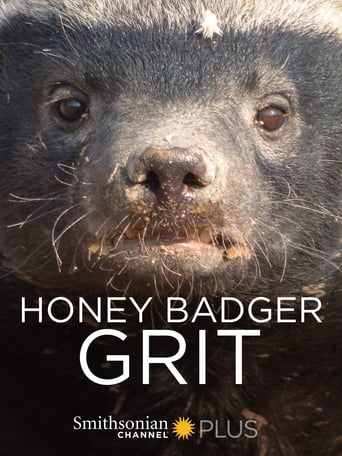
7.0On the harsh and unforgiving plains of central Namibia, Africa, a young honey badger named Grit has just left home to venture out in the great, wide world, but it won't be easy. Fewer than half of all young honey badgers survive their first few weeks on their own, as they deal with intense heat, starvation, and round-the-clock threats from the many predators of the savannah.
Honey Badger: Grit
2018
In the frozen wilderness of Antarctica, where oceans ice over and just staying alive is an achievement, one creature has perfected the art of survival - the emperor penguin. Emperor penguins are sublimely built to conquer the cold - but in a world threatened by climate change, can they take the heat? Using Crittercam, scientists take a virtual ride under the ice with the emperor penguin to study the impact of climate change on the penguin's world.
National Geographic: Emperors of the Ice
2007
 5.2
5.2A small but highly efficient killing machine - a hornet two inches long and with a wingspan up to three inches - lurks in the mountains of Japan. The voracious predator has a quarter-inch stinger that pumps out a dose of venom with an enzyme so strong it can dissolve human tissue. Just one of these hornets can kill 40 European honeybees a minute; a handful of the creatures can slaughter 30,000 European honeybees within hours, leaving a trail of severed insect heads and limbs. Someone who is stung by the hornet and doesn't receive proper treatment soon thereafter can die from the venom, which is powerful enough to disintegrate human flesh. About 40 people die each year after being stung by giant hornets, mainly as a result of an allergic reaction to the venom.
Hornets from Hell
2004
Behind the camera
8.0The majestic Alaskan brown bear is the largest predator in southeastern Alaska, but everywhere, its ancient haunts are under siege. As the modern world closes in, the great bear’s world is shrinking and encounters between humans and bears are on the rise. Join researcher LaVern Beier as he uses cutting edge technology to protect this extraordinary species. To observe them on their turf, without risking life and limb, LaVern attempts to deploy National Geographic’s CRITTERCAM. Until now, CRITTERCAM has been used almost exclusively on marine animals. Vern and his colleagues are on the cusp of a revolution in terrestrial field science…the opportunity to vicariously walk with bears into the deepest corners of their habitats, where even great hunters barely dare venture.
Bear Island
2007
NRA team of scientist travels to the Northwestern Islands of Hawaii to uncover what threats the Hawaiian Monk Seals have undergone and what causes them to struggle with surviving paradise.
Hawaiian Monk Seals: Surviving Paradise
—
8.0Surrounded by war-torn nations, the wilds of Gabon may be the last best hope for many of Africa's species.
Gabon The Last Eden
2007
7.0On the harsh and unforgiving plains of central Namibia, Africa, a young honey badger named Grit has just left home to venture out in the great, wide world, but it won't be easy. Fewer than half of all young honey badgers survive their first few weeks on their own, as they deal with intense heat, starvation, and round-the-clock threats from the many predators of the savannah.
Honey Badger: Grit
2018
In the frozen wilderness of Antarctica, where oceans ice over and just staying alive is an achievement, one creature has perfected the art of survival - the emperor penguin. Emperor penguins are sublimely built to conquer the cold - but in a world threatened by climate change, can they take the heat? Using Crittercam, scientists take a virtual ride under the ice with the emperor penguin to study the impact of climate change on the penguin's world.
National Geographic: Emperors of the Ice
2007
In the frozen wilderness of Antarctica, where oceans ice over and just staying alive is an achievement, one creature has perfected the art of survival - the emperor penguin. Emperor penguins are sublimely built to conquer the cold - but in a world threatened by climate change, can they take the heat? Using Crittercam, scientists take a virtual ride under the ice with the emperor penguin to study the impact of climate change on the penguin's world.
National Geographic: Emperors of the Ice
2007
5.2A small but highly efficient killing machine - a hornet two inches long and with a wingspan up to three inches - lurks in the mountains of Japan. The voracious predator has a quarter-inch stinger that pumps out a dose of venom with an enzyme so strong it can dissolve human tissue. Just one of these hornets can kill 40 European honeybees a minute; a handful of the creatures can slaughter 30,000 European honeybees within hours, leaving a trail of severed insect heads and limbs. Someone who is stung by the hornet and doesn't receive proper treatment soon thereafter can die from the venom, which is powerful enough to disintegrate human flesh. About 40 people die each year after being stung by giant hornets, mainly as a result of an allergic reaction to the venom.
Hornets from Hell
2004