
Acting
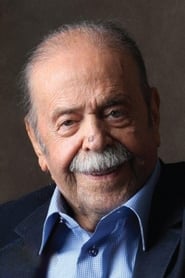
Mohammadali Keshavarz
Born — Died
1930-04-15 — 2020-06-14
Place of birth
Isfahan, Iran
Known for
Acting
Credits
43 titles
Mohammadali Keshavarz (April 15, 1930 - June 14, 2020) was an actor of cinema, theater, and television who was born in Isfahan, Iran. After graduating from the dramatic arts academy, his first movie was "Shabe Quzi" by Farokh Ghaffari. Among the most enduring works of Mohammad Ali Keshavarz, Ali Hatami's "Mother", Ali Hatami's "Kamal-ol-Molk", Mohsen Makhmalbaf's "Once Upon a Time, Cinema", Dariush Mehrjui's "Mr. Hallo", and " "Through the Olive Trees" directed by Abbas Kiarostami can be named. He was also featured in television series such as "Pedar Salar", "John Uncle Napoleon", "Sarbedaran" and "Khane be Khane".
Known for
The story of this television series is about the opening of a department store and the humorous adventures that occur there.
Forooshgah
—
 7.4
When the actor in a scene for his film Life And Nothing More… has to quit, a film director casts another man for the part. However, complications arise since the man and the woman who was cast for the scene know each other.
Through the Olive Trees
1994
 5.8
This epic adventure-drama based on James Michener's best-selling novel concerns a young American embassy official who is sent into the Middle-Eastern desert to find the missing daughter of a US Senator. The young woman has left her husband, a Colonel in the Shadom - she was his number two wife - and has opted for the lifestyle of a nomadic tribe. When the diplomat locates the girl he joins the caravan and attempts to persuade the girl to return.
Caravans
1978
 NR
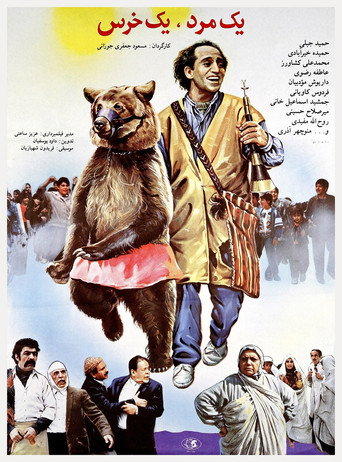
A deaf mute, and his trained bear wind up on an old, narrow street in Tehran. The street's many children are instantly delighted by new arrivals.
A Man, A Bear
1993
 6.0
Adapted from a story in 1001 Nights, the story concerns the death of an actor and the comical incidents that occur as different people come into possession of, and attempt to dispose of, his body.
Night of the Hunchback
1965
Although this film includes conversations with people, it is not in the form of an interview and consists of three parts. The first part introduces the personality and activities of Dariush Asadzadeh in cinema, theater and television. In this part, the camera is constantly moving and creates an atmosphere. The second part is dedicated to the conversations of people such as Ali Nasirian, Mohammad Ali Keshavarz, Akbar Abdi, Aminollah Rashidi, Behrouz Vosoughi, Nosratollah Vahdat and many artists who have worked with this artist over the years. The third part of the film is dedicated to reviewing his memories, which gives this part of the film a nostalgic feel. The effort to be attractive is the main thing in making this film.
Zendegi Va Digar Hich
2017
Film credits
2010s · 3 titles
Although this film includes conversations with people, it is not in the form of an interview and consists of three parts. The first part introduces the personality and activities of Dariush Asadzadeh in cinema, theater and television. In this part, the camera is constantly moving and creates an atmosphere. The second part is dedicated to the conversations of people such as Ali Nasirian, Mohammad Ali Keshavarz, Akbar Abdi, Aminollah Rashidi, Behrouz Vosoughi, Nosratollah Vahdat and many artists who have worked with this artist over the years. The third part of the film is dedicated to reviewing his memories, which gives this part of the film a nostalgic feel. The effort to be attractive is the main thing in making this film.
Zendegi Va Digar Hich
2017
 NR
In a country where readership is low, Nahid Rezaei is surprised to see constant new titles in bookshops, most of them being translations of foreign texts. She begins to narrate the tale of translation in Iran: starting in the ancient era and ending with translators of today. Along the way she interviews key figures in Iran's modern translation history.
Old Man and the Sea
2018
 NR
The Teacher without Master
The Teacher without Master
2016
2000s · 2 titles


1990s · 12 titles
7.4When the actor in a scene for his film Life And Nothing More… has to quit, a film director casts another man for the part. However, complications arise since the man and the woman who was cast for the scene know each other.
Through the Olive Trees
1994
NRA deaf mute, and his trained bear wind up on an old, narrow street in Tehran. The street's many children are instantly delighted by new arrivals.
A Man, A Bear
1993
 7.4
As Abdollah prepares to get married to his long-time love, he hears calls for help during his wedding and leaves the ceremony for an adventure to find the truth.
The Fateful Day
1995
 7.5
The film progresses along two distinct but interwoven series of events. The first series involves young members of a family who have gathered round their old mother and revive their common childhood memories. the second line focuses on the old woman's preparations for her last journey and her joyous cooperation in arranging for the ceremonies that are to be observed after her death.
Mother
1990
 6.6
The film follows a character known as The Cinematographer, who is looking for someone called Atieh (Future). As he calls out to her, he is magically transported back in time from the early twentieth century to the reign of Naser al-Din Shah in 19th century Iran. Captured by the Shah's guards, he shows films from the history of Iranian cinema to the Shah. The Shah is entranced and eagerly shows his family the apparently magical medium.
Once Upon a Time, Cinema
1992
 6.3
A group of Iranian classical musicians in the Ghajar era try to release their first record, which takes them on a journey to France.
Love-Stricken
1992
 9.0
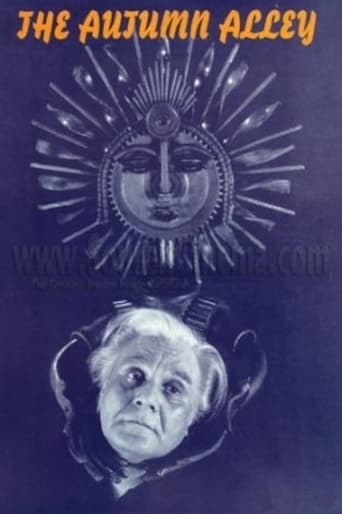
A docudrama about art and creativity; based on modern art gallery in Tehran and its founder Jazeh Tabatabai.
The Autumn Alley
1997
 9.0
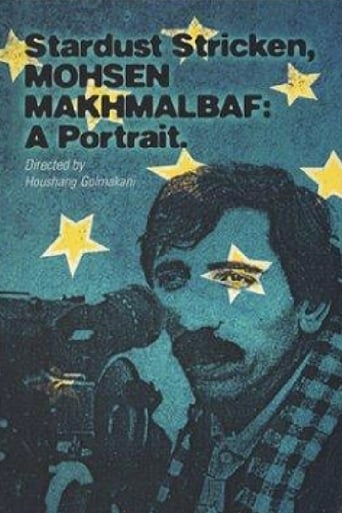
Director Mohsen Makhmalbaf claims to have never seen a movie before making his first film. Doubtful as it sounds, this boast matches perfectly with the controversial artist's personae. Stardust Stricken -- Mohsen Makhmalbaf: A Portrait documents the work of this Iranian filmmaker. After spending time in prison for political dissidence, Makhmalbaf discovered the social potential of the cinema. Some of his projects include Marriage of the Blessed and The Actor. While creating around 20 films, the outspoken director established new ideas about the nature of his work. In this release, Makhmalbaf speaks about art, human behavior, and his evolving fundamentalist beliefs.
Stardust Stricken: Mohsen Makhmalbaf, A Portrait
1996
 NR
khosrow meets a woman who is running from her uncle, cousin and brother...
The Eclipse
1992
 6.5
In Tehran 1916 during first world war a group of patriots make a punishment committee to punish the traitors. With the lead of Abolfatooh Mirza, Reza Tofangchi begins the assassinations.
Punishment Committe
1997
 NR
Ahmadi is tasked with returning the hawks that have been confiscated from smugglers.
A Search In The Island
1991
 NR
The second feature film to be edited using footage from Hatami's miniseries Hezar Dastan.
Once Upon a Time in Tehran
1999
1980s · 6 titles
 8.0
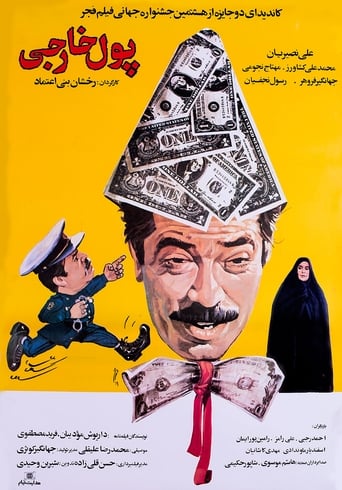
Morteza Olfat is an ordinary employee who has lots of problems in his life. One day, he happens to find fifty thousand dollars. He says nothing to anyone and tries to exchange the cash.
Foreign Currency
1989
 8.0
During Iranian revolution some prisoners manage to escape the prison. In a border village they meet a man Yaqub who wants to convince them not to escape. They first mocking at him not ...
The Imperilled
1983
 NR
A spy has entered Iran under the guise of a photographer and is trying to gather information about the location where the hostages are being held.
The Devil's Hand
1981
 3.3
Mirza Norooz can't get rid of his worn-out shoes which bring him bad luck, no matter what he does.
Mirza Norooz's Shoes
1985
 7.2
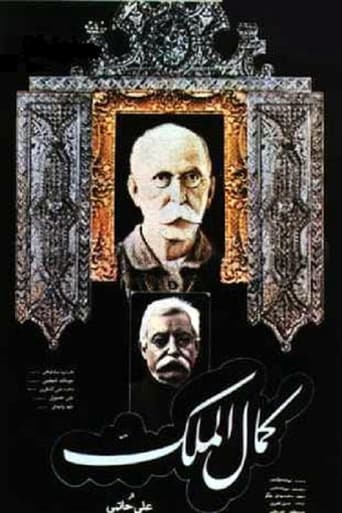
The movie chronicles the life of the famous painter Kamololmolk, and his relationship with various kings.
Kamalolmolk
1984
 5.5
Jafar Khan, son of a rich traditional family in Tehran, comes back to Iran after spending 8 years for studying in Europe, but he has changed completely to the extent that he cannot even speaks Farsi properly.
Jafar Khan is back from the West
1985
1970s · 11 titles
5.8This epic adventure-drama based on James Michener's best-selling novel concerns a young American embassy official who is sent into the Middle-Eastern desert to find the missing daughter of a US Senator. The young woman has left her husband, a Colonel in the Shadom - she was his number two wife - and has opted for the lifestyle of a nomadic tribe. When the diplomat locates the girl he joins the caravan and attempts to persuade the girl to return.
Caravans
1978
 7.1
The first lady of a noble house has died and now there is conflict between the remainders for taking over her heritage.
Chess of the Wind
1976
 7.0
No synopsis available yet.
The Last Supper
1976
 NR
A television theater written and directed by Mohammad Ali Keshavarz
Azizam Tavalodet Mobarak
1978
 5.7
The story of a simple fellow from a small town who travels to Tehran to find a suitable girl for marriage.
Mr. Gullible
1970
 NR
Asgar and Qader have been friends since childhood. Hussein General, a man of bad character who leads the local teenagers in a fight with the teenagers of Qala Sangi neighborhood, has dedicated his life to their happiness. Asgar and Qader both loved Zainab; but Zainab is married to Asgar. Asgar, who is suspicious of his wife's affairs, constantly annoys Hussein General and Qader. One day, while picking date clusters from a palm tree, while thinking about his wife's relationship with Qader, he falls from the top of the palm tree and loses his sight. Zainab and Qader take care of him; but Asgar's sense of pessimism and suspicion towards his wife and Qader increases. Asgar drags Qader to the palm grove and while he is praying, he cuts him to pieces with a turban and throws his body into the sea. General Hussein, who witnesses the incident, informs Zeinab; but he, unable to allay his wife's insane suspicion, kindly invites the local waterman to his house for lunch.
The Condemned
1977
 6.8
Well-educated and humble teacher Mr Hekmati arrives in a new city and at a new job in the pre-revolutionary Iran. He falls in love with a hardworking underprivileged young woman who nurses her elderly mother and raises her young brother.
Downpour
1972
 NR
Short film by Khosrow Sinai
Escape
1974
 7.0
Sadegh and his wife manage a tea house in the way between Ahvaz and Andimeshk south of Iran. One night in his absence a friend of him who is a truck driver comes to his place and the wife is getting killed. The police are after the murderer but Sadegh who seeks revenge begins to kill the truck drivers on the way. This put him in fronting the law.
Sadegh the Kurd
1972
 NR
A man is in love with a girl and tries everything to get her, not even sparing himself, and finally, on the wedding night, he stabs himself with a razor blade...
When the Sky Splits
1976
 NR
Rad (Saeed Rad), who is suspicious of his sister's relationship with a man, burns them in a fire, and escapes on horseback into a deserted forest. Rad takes refuge in a forest hut, where a man named Schalko (Mohammad Ali Keshavarz) lives with his wife Seman (Fakhri Khorvash and his daughter (Noor)). Saman informs the villagers around the forest about Rad's presence in their hut. Frees Rad in an attack to knock him out.
The sun in the swamp
1974
1960s · 2 titles
6.0Adapted from a story in 1001 Nights, the story concerns the death of an actor and the comical incidents that occur as different people come into possession of, and attempt to dispose of, his body.
Night of the Hunchback
1965
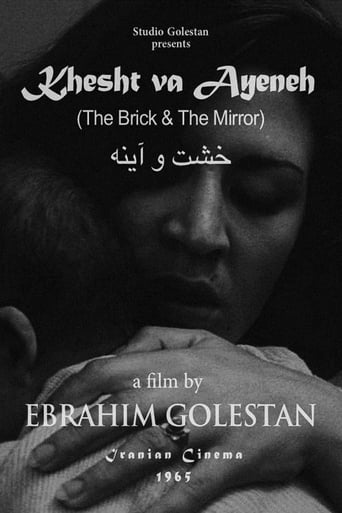 8.1
Hashem is a cab driver who finds an infant child in the back seat of his cab one night after he gives a ride to a young woman. Hashem and his girlfriend, Taji, try to cope with this unwanted child. Hashem insists on getting rid of the child, Taji on keeping him.
The Brick and the Mirror
1966

Series credits
The story of this television series is about the opening of a department store and the humorous adventures that occur there.
Forooshgah
—
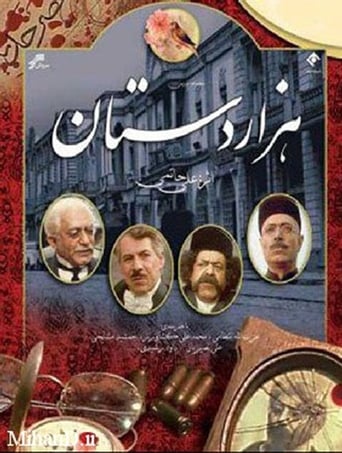 7.2
Hezar-Dastan was an Iranian epic historical drama television series from 1987, developed and directed by Ali Hatami. Hezar Dastan is considered one of the most important and most influential works of art in the history of Islamic Republic of Iran Broadcasting. The production of the show took almost 8 years, starting in 1979 and ending in 1987, during which Hatami established a large set to represent Tehran in both Qajar dynasty and World War II, retroactively creating Iran's first movie studio and backlot (named Ghazali Cinema Town). The show tells the story of Reza Khoshnevis (also known as Reza Tofangchi), and his life and entanglement with corruption in government, and trying to correct it using not conventional means. The story is split into two section and it features Iran during the turbulent times of the latter days of Qajar Dynasty and during the events of World War II and Anglo-Soviet invasion of Iran.
Hezar Dastan
1988
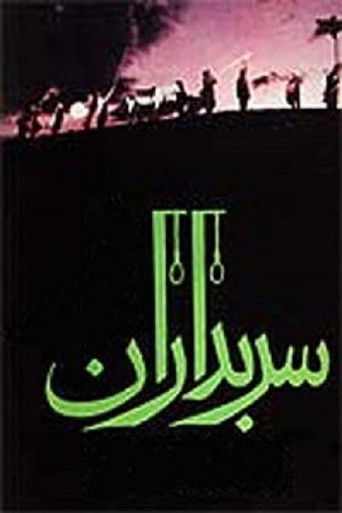 6.5
Sarbedaran is a historic series based on the revolt of the 'Sarbedar's of Khorasan, led by Sheykh Hasan Jowri against the Mongol Conquest of Iran. The director of this series is Mohammad Ali Najafi and it is written co-directed by Keyhan Rahgozar. Parts of this series also refer to the previous leader and the pioneer of the movement, Sheykh Khalifa of Mazandaran.
Sarbadars
1984
 8.2
An uproarious adoption of a popular novel by Iraj Pezeshkzad set in and around the family compound in early 1940s Tehran, marvelously rich in personality and incident. The title character, so-called because of his constant invocation of the general, rules over a wonderfully complex extended family. A hilarious series which makes fun of just about everything.
My Uncle Napoleon
1976
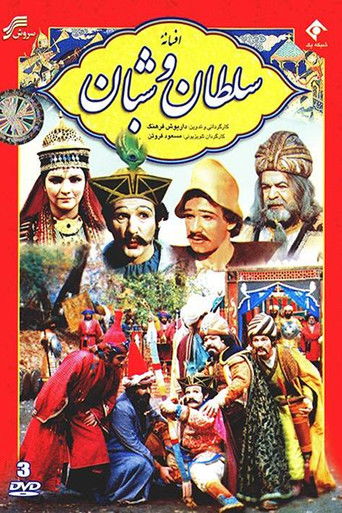 5.0
One evening in a grand royal palace, a frivolous and grotesque sultan has a nightmare. The great diviner concludes that on a full moon evening arrows of doom will fall on his head. Frightened, the sultan feels discomfort and falls ill in bed...
Sultan and Berger
1983