
Production
Nikolaus Geyrhalter
Born
1972-01-01 (54)
Place of birth
Vienna, Austria
Known for
Production
Credits
43 titles
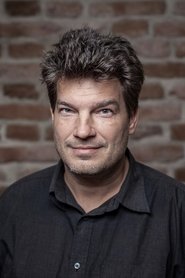
Nikolaus Geyrhalter is a director, producer and cameraman, born in Vienna in 1972. In 1994, when he was 22 years old, he founded his own production company Nikolaus Geyrhalter Filmproduktion which focuses on documentaries and amateur fiction.
Known for
Annual awarding of the Grimme Awards.
Grimme Award
1964
 6.9
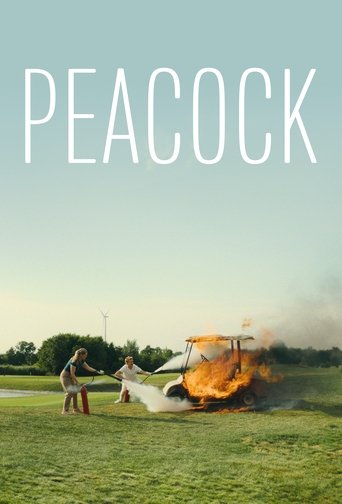
6.9Matthias is a master of pretense, from cultured boyfriend to perfect son or marital coach. He makes a career of being someone else. The real challenge begins when he has to be himself.
Peacock
2025
 NR
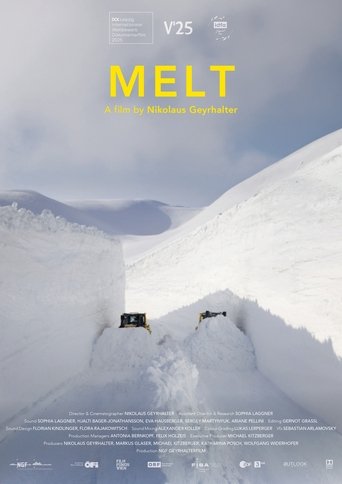
NRHow do people live in snowbound areas? What are the mechanisms for simply moving snow around? How have ski resorts mechanised what ought to be a natural process? A comprehensive study of global warming as it is directly experienced by arctic and alpine communities.
Melt
2025
 6.1
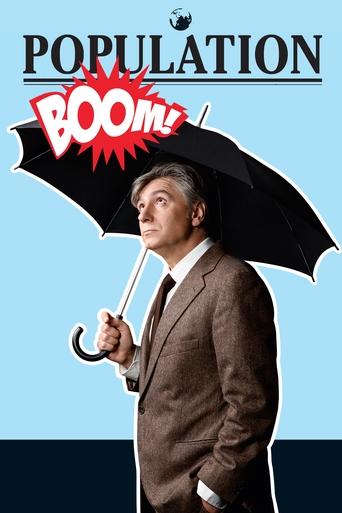
6.1A well-known nightmarish vision of the future: The Earth's population reaches seven billion. Dwindling resources, mountains of toxic waste, hunger and climate change-the results of overpopulation? Who says that the world's overpopulated? And who's one too many? After the box-office success of "Plastic Planet," in POPULATION BOOM curious documentary filmmaker Werner Boote travels the globe and examines a stubborn view of the world that has existed for decades. But he sees a completely different question: Who or what is driving this catastrophic vision?
Population Boom
2013
 NR
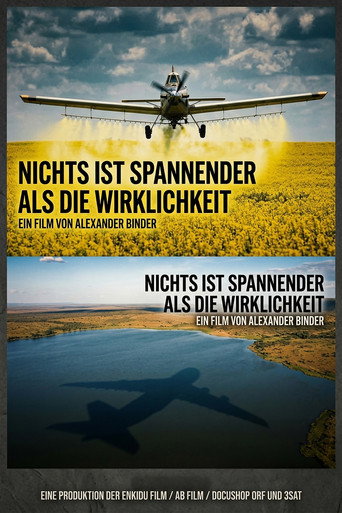
NRNo synopsis available yet.
Nichts ist spannender als die Wirklichkeit
2006
 5.2
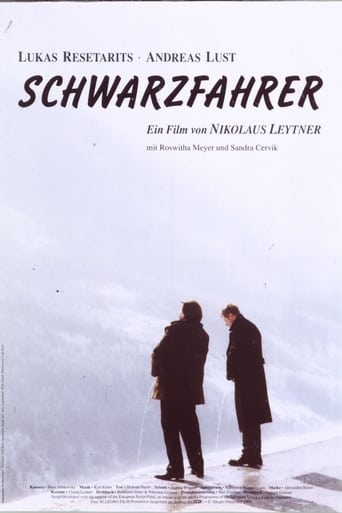
5.2Thomas, a student drop-out, keeps his head above water with a life of petty crime. Passing himself off once again as a ticket inspector on a tram to extract money from fare-dodgers, he is confronted by Erich, a genuine inspector, or so it seems... However, Erich won his inspector's identity badge at cards. The two begin to meet regularly. Thomas doesn't realise until too late that he is to play a major role in Erich's long-planned coup. The well thought out plan succeeds. Unfortunately, however, Erich has failed to consider how he can convert his booty - a lorry load of valuable carpets - into hard cash. Their problems are just beginning...
Schwarzfahrer
1996
Film credits

Series credits
Behind the camera
6.9Matthias is a master of pretense, from cultured boyfriend to perfect son or marital coach. He makes a career of being someone else. The real challenge begins when he has to be himself.
Peacock
2025
NRHow do people live in snowbound areas? What are the mechanisms for simply moving snow around? How have ski resorts mechanised what ought to be a natural process? A comprehensive study of global warming as it is directly experienced by arctic and alpine communities.
Melt
2025
NRHow do people live in snowbound areas? What are the mechanisms for simply moving snow around? How have ski resorts mechanised what ought to be a natural process? A comprehensive study of global warming as it is directly experienced by arctic and alpine communities.
Melt
2025
6.1A well-known nightmarish vision of the future: The Earth's population reaches seven billion. Dwindling resources, mountains of toxic waste, hunger and climate change-the results of overpopulation? Who says that the world's overpopulated? And who's one too many? After the box-office success of "Plastic Planet," in POPULATION BOOM curious documentary filmmaker Werner Boote travels the globe and examines a stubborn view of the world that has existed for decades. But he sees a completely different question: Who or what is driving this catastrophic vision?
Population Boom
2013
5.2Thomas, a student drop-out, keeps his head above water with a life of petty crime. Passing himself off once again as a ticket inspector on a tram to extract money from fare-dodgers, he is confronted by Erich, a genuine inspector, or so it seems... However, Erich won his inspector's identity badge at cards. The two begin to meet regularly. Thomas doesn't realise until too late that he is to play a major role in Erich's long-planned coup. The well thought out plan succeeds. Unfortunately, however, Erich has failed to consider how he can convert his booty - a lorry load of valuable carpets - into hard cash. Their problems are just beginning...
Schwarzfahrer
1996
 6.8
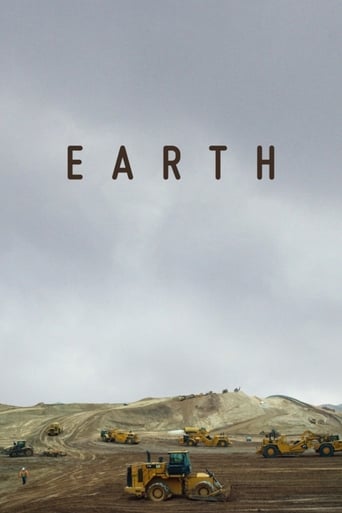
6.8Several billion tons of earth are moved annually by humans - with shovels, excavators or dynamite. Nikolaus Geyrhalter observes people in mines, quarries, large construction sites in a constant struggle to appropriate the planet.
Earth
2019
6.8Several billion tons of earth are moved annually by humans - with shovels, excavators or dynamite. Nikolaus Geyrhalter observes people in mines, quarries, large construction sites in a constant struggle to appropriate the planet.
Earth
2019
6.8Several billion tons of earth are moved annually by humans - with shovels, excavators or dynamite. Nikolaus Geyrhalter observes people in mines, quarries, large construction sites in a constant struggle to appropriate the planet.
Earth
2019
 6.0
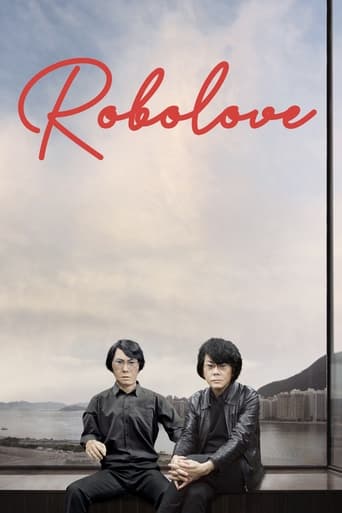
6.0Robolove is a documentary that explores the interaction between humans and humanoid robots. The filmmaker visits various technology research centers in Japan, Korea, China, USA and Europe as researchers share the challenges of injecting human emotions into these robots.
Robolove
2020
 NR
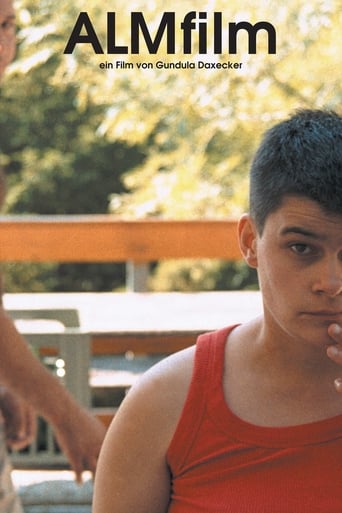
NRDeep disappointment and reciprocated love often come in close succession. Mountain Meadow Movie spends a year observing the emotional highs and lows of four people who work at an agricultural workshop for the multiply handicapped.
Mountain Meadow Movie
2006
 7.4
7.4With a sense of humour, this documentary questions the condition of women from the angle of the image and perception of their body, and covers the new taboos and aesthetic diktats concerning their genitals in the era of the sexual revolution and contemporary feminism.
Viva la Vulva
2019
 NR
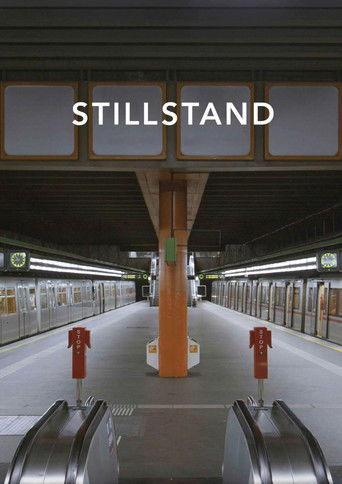
NRIn an observation over four seasons THE STANDSTILL shows Vienna and its surroundings along with encounters with people during and after the Corona crisis. The film tells of the immediate and also the long-term effects, which can only be evaluated and classified in the future.
The Standstill
2024
NRIn an observation over four seasons THE STANDSTILL shows Vienna and its surroundings along with encounters with people during and after the Corona crisis. The film tells of the immediate and also the long-term effects, which can only be evaluated and classified in the future.
The Standstill
2024
 4.1
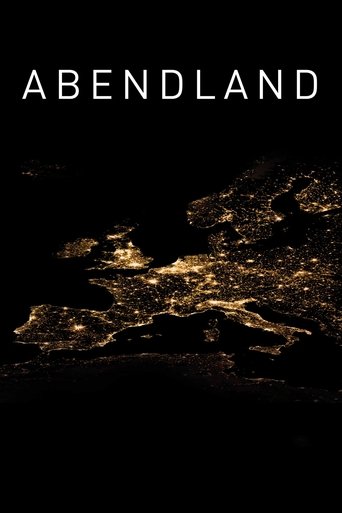
4.1Some things can be seen more clearly at night.. . A film poem about a continent at night, a culture on which the sun’s going down, though it’s hyper alert at the same time, an “Abendland” that, often somewhat self-obsessively, sees itself as the crown of human civilization, while its service economy is undergoing rapid growth in a thoroughly pragmatic way. Nikolaus Geyrhalter takes a look at a paradise with a quite diverse understanding of protection. Night work juxtaposed with oblivious evening digression, birth and death, questions that await answers in the semi-darkness, a Babel of languages, the routine of the daily news, and political negotiation: All this has been captured in images with a wealth of details that make us look at things in a new way. The longer you consider a word, the more distant is its return gaze: ABENDLAND.
Abendland
2011
4.1Some things can be seen more clearly at night.. . A film poem about a continent at night, a culture on which the sun’s going down, though it’s hyper alert at the same time, an “Abendland” that, often somewhat self-obsessively, sees itself as the crown of human civilization, while its service economy is undergoing rapid growth in a thoroughly pragmatic way. Nikolaus Geyrhalter takes a look at a paradise with a quite diverse understanding of protection. Night work juxtaposed with oblivious evening digression, birth and death, questions that await answers in the semi-darkness, a Babel of languages, the routine of the daily news, and political negotiation: All this has been captured in images with a wealth of details that make us look at things in a new way. The longer you consider a word, the more distant is its return gaze: ABENDLAND.
Abendland
2011
4.1Some things can be seen more clearly at night.. . A film poem about a continent at night, a culture on which the sun’s going down, though it’s hyper alert at the same time, an “Abendland” that, often somewhat self-obsessively, sees itself as the crown of human civilization, while its service economy is undergoing rapid growth in a thoroughly pragmatic way. Nikolaus Geyrhalter takes a look at a paradise with a quite diverse understanding of protection. Night work juxtaposed with oblivious evening digression, birth and death, questions that await answers in the semi-darkness, a Babel of languages, the routine of the daily news, and political negotiation: All this has been captured in images with a wealth of details that make us look at things in a new way. The longer you consider a word, the more distant is its return gaze: ABENDLAND.
Abendland
2011
An unlikely tourist group on a seaside vacation. A holiday spot in the low season as a backdrop for the stories, the protagonists’ inner journeys: once a year the Graz Advisory Centre for Mental and Social Concerns travels for one week to Kanegra, a resort in the north of Croatia. An unusual view on a holiday setting, on strangeness and on being a stranger.
Kanegra
2004
 8.0
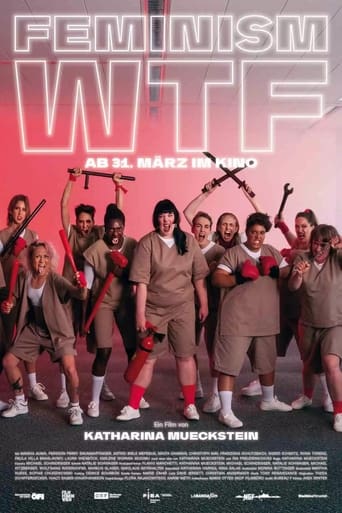
8.0An international topic documentary on feminism and gender equality. The film reflects on current debates and analyses the potential of intersectional feminism to profoundly change our future societies.
Feminism WTF
2023
 7.5
7.5The Alps, unique and meanwhile also endangered, are stretching across eight European countries. Rural exodus on the one hand and overtourism on the other often exist close together. And above all hovers the inevitable threat of climate change.
Alpenland
2022
 8.3
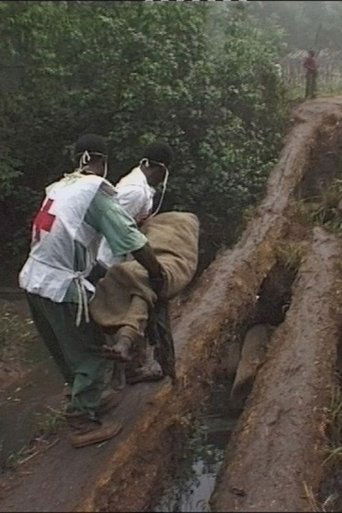
8.3Along an overgrown rail track south of the Zairean town Kisangani, a UN expedition together with a handful of journalists discover “lost” refugees. They are eighty thousand Hutus from far away Rwanda, the last survivors of three years of hunger and armed persecution that transpired throughout the vast Congo basin. The Hutu-refugees leave the forest, gathering in two gigantic camps. Hundreds of refugees die every day from diseases and malnutrition The Rwandans are promised repatriation with airplanes out of Kisangani. The film traces those refugees into the heart of the rainforest, and the hopeless attempts to help them.. But only four weeks later, the unprotected UN-camps are again attacked by machine-gun fire, deliberately massacred by factions of the rebel army (AFDL) of today’s Democratic Republic Congo. Eighty thousand men, women and children disappear once again back into the jungle. (jedensvet.cz)
Kisangani Diary
1998
 6.5
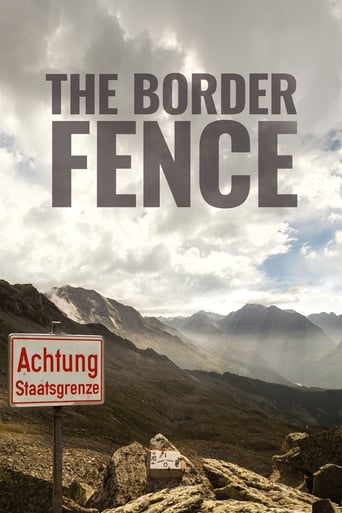
6.5Brenner Pass, Alpine border, spring 2016: the Austrian government announces the construction of a border fence, expecting a shift of the refugee routes to Italy after the Balkan route is closed. The residents fear the fence just as much as the supposedly threatening influx of foreigners to their homeland. Two years later, the fence is still rolled up in a container, as the inrush of refugees never occurred.
The Border Fence
2018
6.5Brenner Pass, Alpine border, spring 2016: the Austrian government announces the construction of a border fence, expecting a shift of the refugee routes to Italy after the Balkan route is closed. The residents fear the fence just as much as the supposedly threatening influx of foreigners to their homeland. Two years later, the fence is still rolled up in a container, as the inrush of refugees never occurred.
The Border Fence
2018
In Loud and clear five women and one man talk about the effects of sexual abuse on their lives. Years and in some cases decades afterwards, they have managed to find words for what these incidents have done to them. All of them have managed to survive the most painful aspects of dealing with their experiences, often after years of therapy.
Loud and Clear
2002
 5.6
5.618th century Vienna. Maria Theresia von Paradis, a gifted piano player and close friend of Mozart's, lost her eye-sight as a child. Desperate to cure their talented daughter, the Paradis entrust Maria to Dr. Mesmer, a forward-thinking-physician who gives her the care and attention that she requires. With the doctor's innovative techniques of magnetism, Maria slowly recovers her sight. But this miracle comes at a price as the woman progressively starts to lose her gift for music.
Mademoiselle Paradis
2017
 6.4
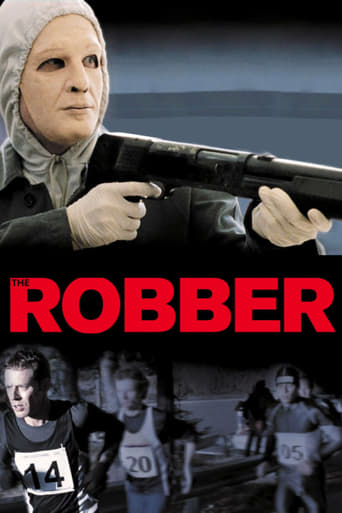
6.4A champion marathoner leads a double life as a serial bank robber, sprinting between fixes (and away from police cavalcades) as many as three times a day.
The Robber
2010
 8.0
8.0In the spring of 1902, Viennese working-class daughter Marie König runs away from her beating father and is lured into a high-class brothel by an agent. Instead of the promised self-determined life "with horse-drawn carriage rides and silk dresses", she experiences closed doors, violence and exploitation. Only after years of agony does Marie confide in the journalist Emil Bader, who makes the conditions in the brothel public and takes the owner, Regine Riehl, to court.
Aufstand im Bordell - Frauenhandel um 1900
2024
 7.8
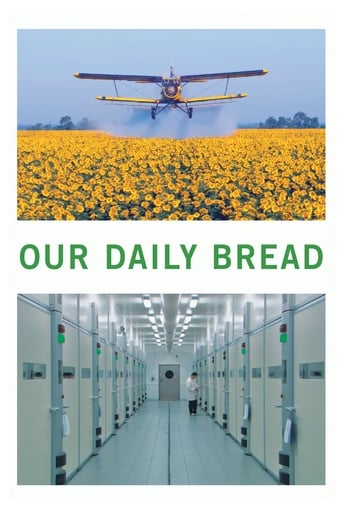
7.8Welcome to the world of industrial food production and high-tech farming! To the rhythm of conveyor belts and immense machines, the film looks without commenting into the places where food is produced in Europe: monumental spaces, surreal landscapes and bizarre sounds - a cool, industrial environment which leaves little space for individualism.
Our Daily Bread
2006
7.8Welcome to the world of industrial food production and high-tech farming! To the rhythm of conveyor belts and immense machines, the film looks without commenting into the places where food is produced in Europe: monumental spaces, surreal landscapes and bizarre sounds - a cool, industrial environment which leaves little space for individualism.
Our Daily Bread
2006
7.8Welcome to the world of industrial food production and high-tech farming! To the rhythm of conveyor belts and immense machines, the film looks without commenting into the places where food is produced in Europe: monumental spaces, surreal landscapes and bizarre sounds - a cool, industrial environment which leaves little space for individualism.
Our Daily Bread
2006
"Restless Solitude" is the story of young people who begin to perceive themselves in the context of their surroundings, though they cannot find an acceptable world within our civilized society. Instead of being accepted by a community, they see themselves as trapped in their adolescent dreams, because a world oriented exclusively towards material values cannot offer them an ideal place to live. Either one's spirit is broken when the individual is integrated into society, or the individual breaks with society. In both cases, the young adult is susceptible to seduction in a number of possible ways, eventually becoming a victim rather than a member of society.
Restless Solitude
1997
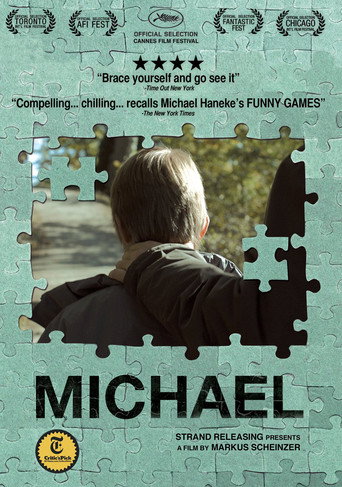 6.8
6.8Although to the outside world he seems like a perfectly normal insurance broker, Michael secretly keeps a 10-year-old boy locked in a room in his soundproof basement.
Michael
2011
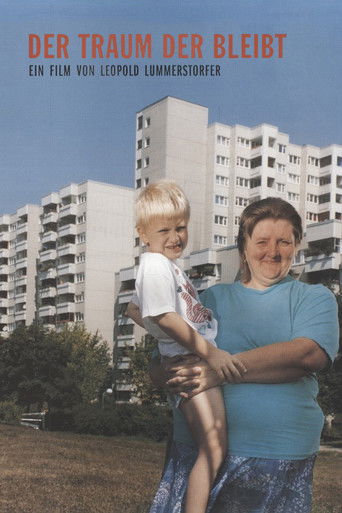 5.5
5.5Austria's largest housing complex erected in one building stage is situated in the Northeast of Vienna. It lies on the former premises of a horse racetrack and comprises 2.400 flats. 59 blocks and long hall-like corridors lead more than 8.000 people to their living rooms: The film offers glimpses into the lives of more than 20 people - the life of an individual behind one of the countless doors.
The Dream That Remains
1997
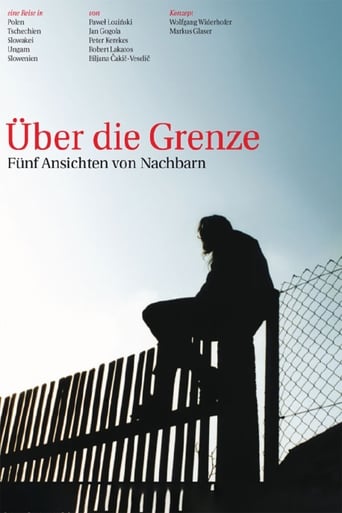 10.0
10.0Across the Border is a polyglot portrait of ideas about borders at the beginning of the 21st century. In an episodic journey five directors from Poland, the Czech Republic, Slovakia, Hungary and Slovenia, present their view and vision of nation, identity and Europe: By placing their personal cinematographic imprint on multifaceted portraits of their home countries, they open up a broad space for encounters with the strangers next door.
Across the Border: Five Views from Neighbours
2004
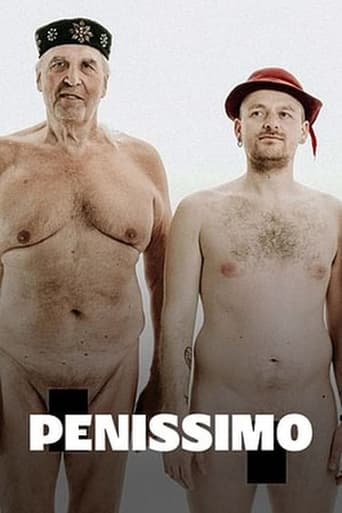 6.5
6.5The penis as a source of identity and restlessness, legitimation for claims to dominance and fantasies of superiority, the object of fears of failure and loss: this small part of the body occupies a similarly highly dimensioned status in the physical and social self-image of men as does the brain. "Penissimo" traces this circumstance and its consequences for human culture with the help of six men with different linguistic and cultural backgrounds who try to investigate what role the penis plays as a key to the essence of masculinity.
Penissimo
2020
 6.8
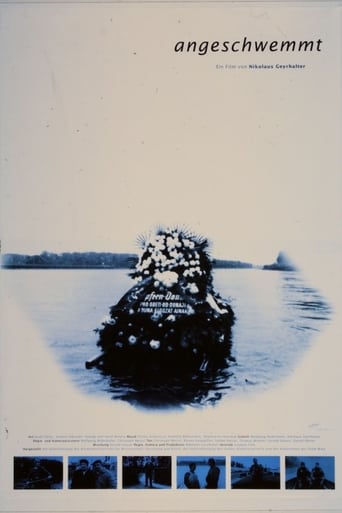
6.8Life on the Danube is essentially determined by two factors: the river itself and the often strange idiosyncrasies of the people who live along its banks. And they are multifarious: fishermen and graveyard wardens, Buddhist monks, allotment holders on Danube Island, stranded shippers, tramps and soldiers. All linked by the great current against which they swim.
Washed Ashore
1994
6.8Life on the Danube is essentially determined by two factors: the river itself and the often strange idiosyncrasies of the people who live along its banks. And they are multifarious: fishermen and graveyard wardens, Buddhist monks, allotment holders on Danube Island, stranded shippers, tramps and soldiers. All linked by the great current against which they swim.
Washed Ashore
1994
 6.1
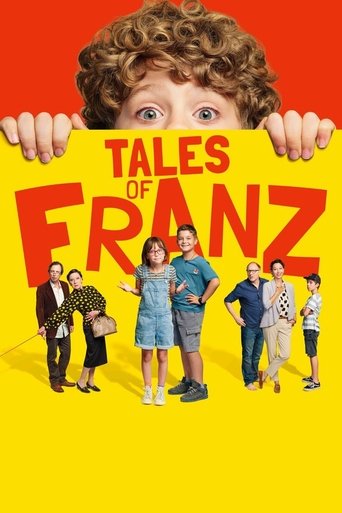
6.1Franz is by far the smallest in the class, has blond ringlets and gets a high-pitched squeaky voice when he gets upset. Luckily, two best friends help: Gabi and Eberhard. When Franz discovers Hank Haberer's "10 rules for a real man" for himself one day, turbulence is inevitable and the friendship of the three gets into trouble.
Tales of Franz
2022
 6.3
6.3A film about our garbage that is found in the most remote areas and about the people who try to dispose of it. Not only in the sea and on coasts, also in the Arctic, the jungle, high up on the mountains and deep inside the desert, garbage is found almost everywhere in various forms and dimensions, sometimes as whole car wrecks, old TV sets or simply construction rubble, but mostly in the form of disintegrated plastic particles a few millimetres in size. Humanity has handed out its visiting cards thoroughly.
Matter Out of Place
2022
6.3A film about our garbage that is found in the most remote areas and about the people who try to dispose of it. Not only in the sea and on coasts, also in the Arctic, the jungle, high up on the mountains and deep inside the desert, garbage is found almost everywhere in various forms and dimensions, sometimes as whole car wrecks, old TV sets or simply construction rubble, but mostly in the form of disintegrated plastic particles a few millimetres in size. Humanity has handed out its visiting cards thoroughly.
Matter Out of Place
2022
In January 2002 the Temelín nuclear power plant, which is located in the Czech Republic less than 50 kilometers from the Austrian border, went into trial operation. This film attempts to calmly and objectively present a different Temelín: the village of the same name which lies in the romantic hills of southern Bohemia with its 300 residents. Not all of them view the power plant with enthusiasm, but here the pros and cons are not based on the arguments of the media - people have developed their own strategies for life with “their“ power plant.
Temelin
2002