

Visual Effects
Eben Ostby
Born
1955-02-24 (71)
Place of birth
Hampton, Connecticut, USA
Known for
Visual Effects
Credits
5 titles
Eben Fiske Ostby (born February 24, 1955) is a pioneer computer graphics software developer, animator, and technical director for motion pictures. Ostby was born in Hampton, Connecticut, United States. He graduated from Pomfret School and Vassar College, where he was its "first computer science major". He joined Pixar when the company was a garage start-up, as one of the first four employees of its animation department along with John Lasseter. There, he worked on early breakthrough animation shorts such as Luxo Jr., Red's Dream, Tin Toy, Knick Knack, and For the Birds. He became Vice President for Software. In 1998, he shared the Academy Award, Scientific and Engineering with three other p…
Known for
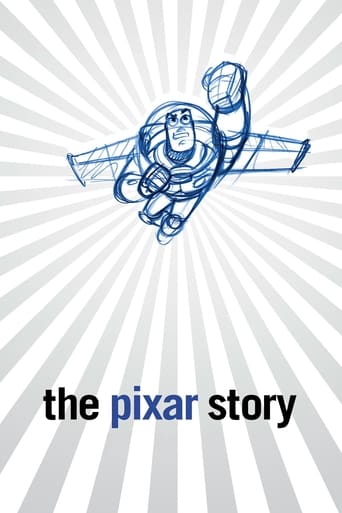 7.6
7.6A look at the first years of Pixar Animation Studios - from the success of "Toy Story" and Pixar's promotion of talented people, to the building of its East Bay campus, the company's relationship with Disney, and its remarkable initial string of eight hits. The contributions of John Lasseter, Ed Catmull and Steve Jobs are profiled. The decline of two-dimensional animation is chronicled as three-dimensional animation rises. Hard work and creativity seem to share the screen in equal proportions.
The Pixar Story
2007
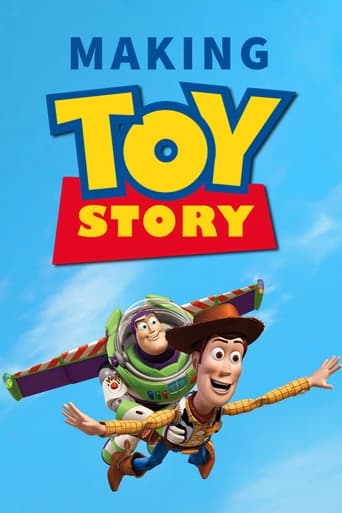 6.3
6.3Documentary of the making of the groundbreaking Disney/Pixar animated hit movie.
The Making of Toy Story
1995
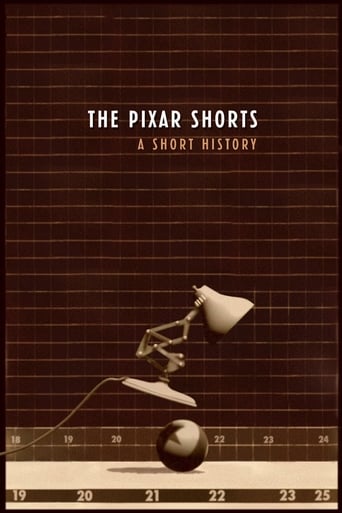 7.7
7.7The story of Pixar's early short films illuminates not only the evolution of the company but also the early days of computer animation, when a small group of artists and scientists shared a single computer in a hallway, and struggled to create emotionally compelling short films.
The Pixar Shorts: A Short History
2007
 7.2
7.2Retrospective looking at the revolutionary computer-animated feature film Toy Story.
Toy Story at 20: To Infinity and Beyond
2015
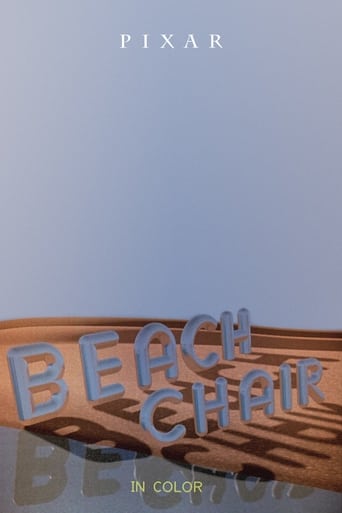 5.3
5.3A film representing the early efforts of Pixar to explore all elements of CG processes such as animation, shading, lighting, rendering and effects.
Beach Chair
1986
Film credits
2010s · 1 titles
2000s · 2 titles
7.6A look at the first years of Pixar Animation Studios - from the success of "Toy Story" and Pixar's promotion of talented people, to the building of its East Bay campus, the company's relationship with Disney, and its remarkable initial string of eight hits. The contributions of John Lasseter, Ed Catmull and Steve Jobs are profiled. The decline of two-dimensional animation is chronicled as three-dimensional animation rises. Hard work and creativity seem to share the screen in equal proportions.
The Pixar Story
2007
7.7The story of Pixar's early short films illuminates not only the evolution of the company but also the early days of computer animation, when a small group of artists and scientists shared a single computer in a hallway, and struggled to create emotionally compelling short films.
The Pixar Shorts: A Short History
2007