

Directing
Masayuki
Born
1961-01-03 (65)
Place of birth
Nagano, Japan
Known for
Directing
Credits
9 titles
Known for
 7.6
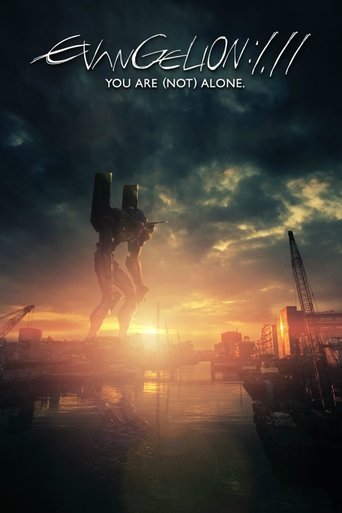
7.6After the Second Impact, Tokyo-3 is being attacked by giant monsters called Angels that seek to eradicate humankind. The child Shinji’s objective is to fight the Angels by piloting one of the mysterious Evangelion mecha units. A remake of the first six episodes of GAINAX’s famous 1996 anime series. The film was retitled “Evangelion: 1.01” for its DVD release and “Evangelion: 1.11” for a release with additional scenes.
Evangelion: 1.0 You Are (Not) Alone
2007
 7.4
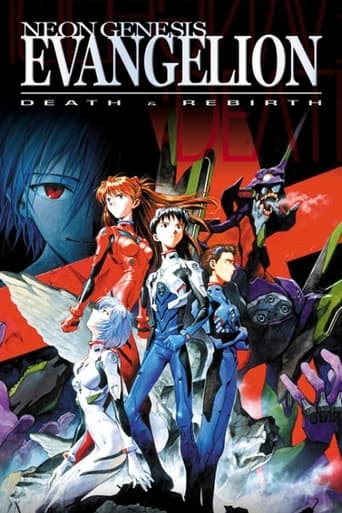
7.4Originally a collection of clips from the Neon Genesis Evangelion TV series, Death was created as a precursor to the re-worked ending of the series. Rebirth was intended as that re-worked ending, but after production overruns Rebirth became only the first half of the first part of The End of Evangelion, with some minor differences.
Neon Genesis Evangelion: Death and Rebirth
1997
 7.2
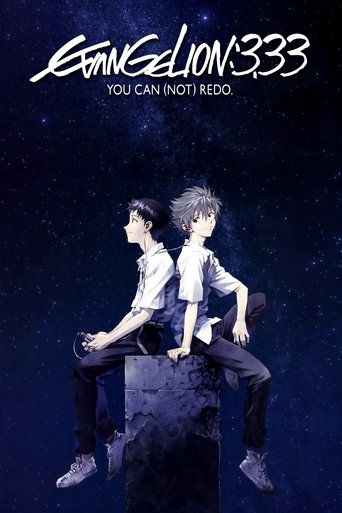
7.2Fourteen years after Third Impact, Shinji Ikari awakens to a world he does not remember. He hasn't aged. Much of Earth is laid in ruins, NERV has been dismantled, and people who he once protected have turned against him. Befriending the enigmatic Kaworu Nagisa, Shinji continues the fight against the angels and realizes the fighting is far from over, even when it could be against his former allies. The characters' struggles continue amidst the battles against the angels and each other, spiraling down to what could inevitably be the end of the world.
Evangelion: 3.0 You Can (Not) Redo
2012
 7.8
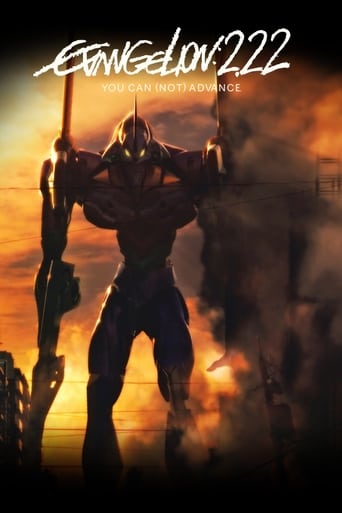
7.8Under constant attack by monstrous creatures called Angels that seek to eradicate humankind, U.N. Special Agency NERV introduces two new EVA pilots to help defend the city of Tokyo-3: the mysterious Makinami Mari Illustrous and the intense Asuka Langley Shikinami. Meanwhile, Gendo Ikari and SEELE proceed with a secret project that involves both Rei and Shinji.
Evangelion: 2.0 You Can (Not) Advance
2009
 7.7
7.7Revival of Evangelion is a re-edit of the Neon Genesis Evangelion films , released in 1998. It consists of Evangelion: Death (which was essentially a clip show that summarized the entire regular series) and The End of Evangelion , re-edited together to make a version that tells the entire story of Evangelion. It is considered to be the final form of the Evangelion films.
Revival of Evangelion
1998
 6.8
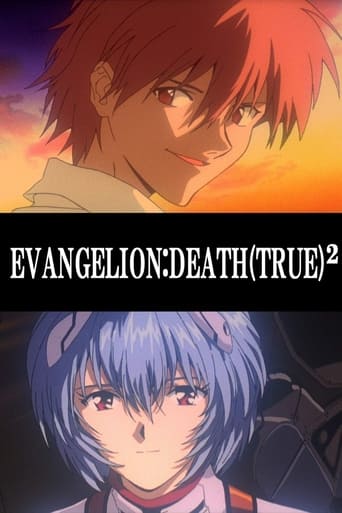
6.8A highly experimental film presenting a story out of chronological order taking place 15 years after a near-apocalyptic catastrophe, about four traumatized 14 year olds who are tasked with piloting massive humanoid decisive weapons called Evangelion, the psychologically maladjusted adults who handle and command them, and the events and forces that affect them or which they take part in as they engage massive hostile invaders known as "Angels."
EVANGELION: DEATH (TRUE)²
1998
Behind the camera
7.6After the Second Impact, Tokyo-3 is being attacked by giant monsters called Angels that seek to eradicate humankind. The child Shinji’s objective is to fight the Angels by piloting one of the mysterious Evangelion mecha units. A remake of the first six episodes of GAINAX’s famous 1996 anime series. The film was retitled “Evangelion: 1.01” for its DVD release and “Evangelion: 1.11” for a release with additional scenes.
Evangelion: 1.0 You Are (Not) Alone
2007
7.4Originally a collection of clips from the Neon Genesis Evangelion TV series, Death was created as a precursor to the re-worked ending of the series. Rebirth was intended as that re-worked ending, but after production overruns Rebirth became only the first half of the first part of The End of Evangelion, with some minor differences.
Neon Genesis Evangelion: Death and Rebirth
1997
7.2Fourteen years after Third Impact, Shinji Ikari awakens to a world he does not remember. He hasn't aged. Much of Earth is laid in ruins, NERV has been dismantled, and people who he once protected have turned against him. Befriending the enigmatic Kaworu Nagisa, Shinji continues the fight against the angels and realizes the fighting is far from over, even when it could be against his former allies. The characters' struggles continue amidst the battles against the angels and each other, spiraling down to what could inevitably be the end of the world.
Evangelion: 3.0 You Can (Not) Redo
2012
7.8Under constant attack by monstrous creatures called Angels that seek to eradicate humankind, U.N. Special Agency NERV introduces two new EVA pilots to help defend the city of Tokyo-3: the mysterious Makinami Mari Illustrous and the intense Asuka Langley Shikinami. Meanwhile, Gendo Ikari and SEELE proceed with a secret project that involves both Rei and Shinji.
Evangelion: 2.0 You Can (Not) Advance
2009
7.7Revival of Evangelion is a re-edit of the Neon Genesis Evangelion films , released in 1998. It consists of Evangelion: Death (which was essentially a clip show that summarized the entire regular series) and The End of Evangelion , re-edited together to make a version that tells the entire story of Evangelion. It is considered to be the final form of the Evangelion films.
Revival of Evangelion
1998
6.8A highly experimental film presenting a story out of chronological order taking place 15 years after a near-apocalyptic catastrophe, about four traumatized 14 year olds who are tasked with piloting massive humanoid decisive weapons called Evangelion, the psychologically maladjusted adults who handle and command them, and the events and forces that affect them or which they take part in as they engage massive hostile invaders known as "Angels."
EVANGELION: DEATH (TRUE)²
1998
 6.0
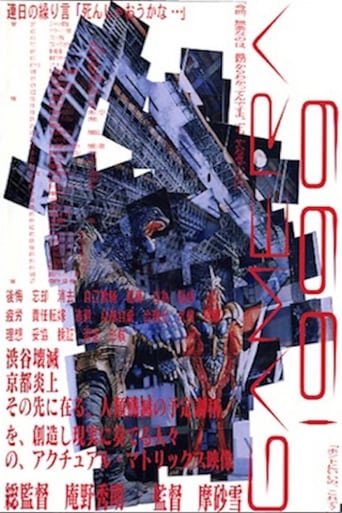
6.0Hideaki Anno's documentary about the making of Shusuke Kaneko's Gamera 3: Revenge of Iris. From concept to film, the documentary is a video diary of the film's production.
GAMERA 1999
1999
 NR
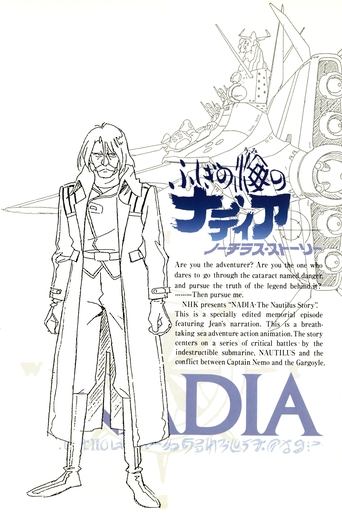
NRThe third and final specially edited memorial episode featuring Jean’s narration. This is a breath-taking sea adventure action animation. The story centers on a series of critical battles by the indestructible submarine, Nautilus and the conflict between Captain Nemo and the Gargoyle. It’s a shorter, more streamlined version of Nadia called "The Nautilus Story", which all but eliminates the filler arc and concentrates on the struggle between Nemo and Gargoyle. Some scenes in the more pivotal episodes are cut as well. The compilation series was made by Hideaki Anno, who was said to have been dissatisfied with the final result of the TV show. The Nautilus Story was only released in Japan on VHS and laserdisc.
Nadia: The Secret of Blue Water - Nautilus Story III
1991
 NR
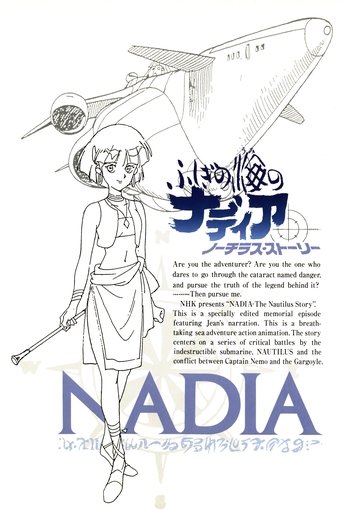
NRThe first specially edited memorial episode featuring Jean’s narration. This is a breath-taking sea adventure action animation. The story centers on a series of critical battles by the indestructible submarine, Nautilus and the conflict between Captain Nemo and the Gargoyle. It’s a shorter, more streamlined version of Nadia called "The Nautilus Story", which all but eliminates the filler arc and concentrates on the struggle between Nemo and Gargoyle. Some scenes in the more pivotal episodes are cut as well. The compilation series was made by Hideaki Anno, who was said to have been dissatisfied with the final result of the TV show. The Nautilus Story was only released in Japan on VHS and laserdisc.
Nadia: The Secret of Blue Water - Nautilus Story I
1991