
Acting
Jaroslav Drbohlav
Born — Died
1947-01-13 — 1985-04-28
Known for
Acting
Credits
53 titles
Known for
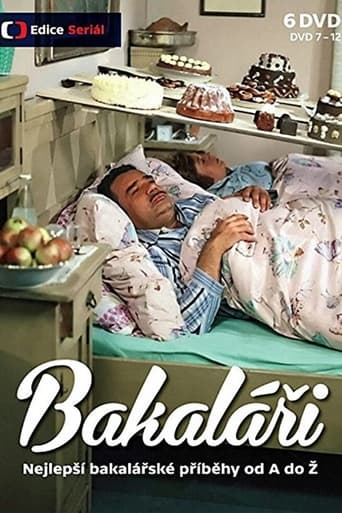 7.0
7.0No synopsis available yet.
Bakaláři
1972
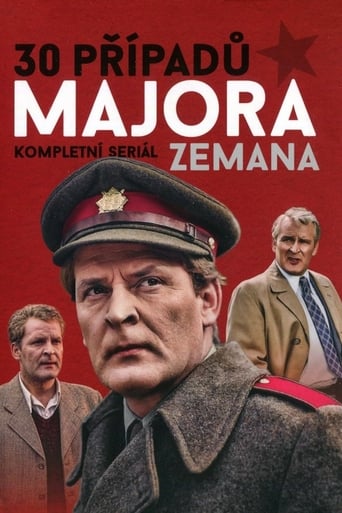 7.3
7.3Thirty Cases of Major Zeman is a Czechoslovak action-drama television show intended as a political propaganda to support the official attitude of the communist party. The series were filmed in the 1970s. Each episode encompasses one year, and investigations are stylized to that year. Most are inspired by real cases. The series follows the life of police investigator Jan Zeman during his career from 1945 to 1975.
Thirty Cases of Major Zema
1976
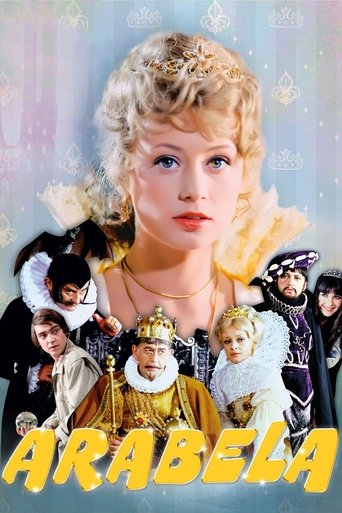 8.2
8.2Arabela was a children's television series produced in Czechoslovakia which aired from 1979 to 1981. The series has 13 episodes and is in the Czech language.
Arabela
1980
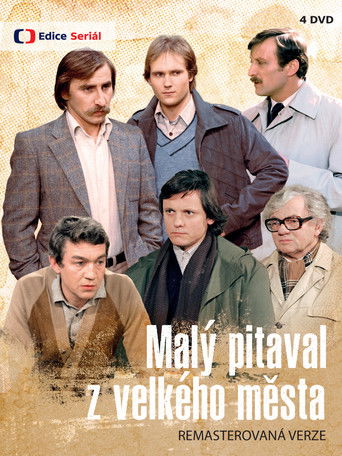 7.3
7.3No synopsis available yet.
Malý pitaval z velkého města
1983
 7.5
7.5Popelka, a resourceful and independent young girl, is a servant in her stepmother's house and confides in her closest friend the owl. When she comes across three magical acorns, she's granted a single wish for each one of them.
Three Wishes for Cinderella
1973
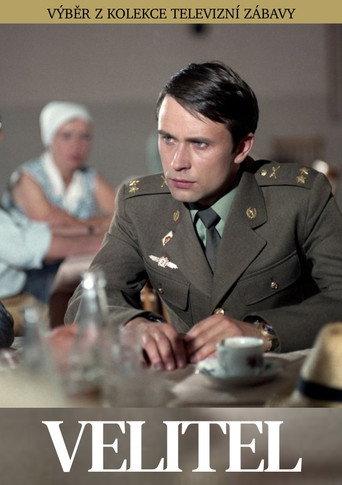 NR
NRNo synopsis available yet.
Velitel
1981
Film credits
1980s · 13 titles
No synopsis available yet.
Oddělení zvláštní péče
1980
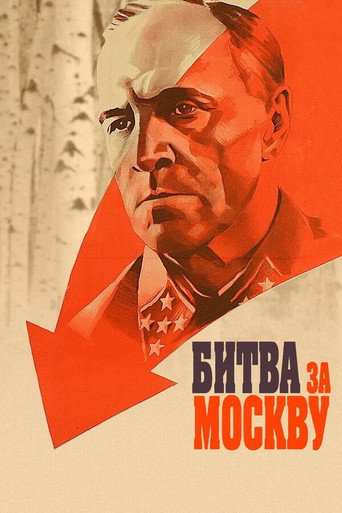 NR
NRThe Battle of Moscow is a 1985 Soviet multi-part war narrative, presenting a dramatized account of the 1941 Battle of Moscow and the events preceding it. The battle was the first major defeat of German Wehrmacht in the Second World War.
Battle of Moscow
1985
Anyone who would have guessed from the title that they would see a fairy tale about spinners would not have guessed. In this fairy tale, three godmothers spin the golden thread of fate for a noble prince and a gamekeeper's daughter from the cradle. These cute godmothers, played by Jaroslava Adamová, Stella Zázvorková and Blažena Holišová, can grant three wishes, fly with the help of a magic hat and appear at the sound of a magic bell, but unfortunately they get something mixed up here and there and deliberately mess something up. In the end, however, fate prevails and the prince and Joanna find their happiness together.
Předeme, předeme zlatou nitku
1982
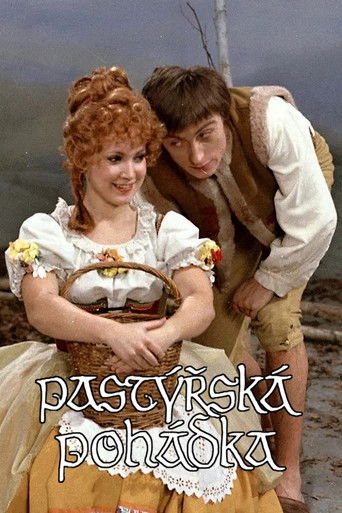 NR
NRNo synopsis available yet.
Pastýřská pohádka
1981
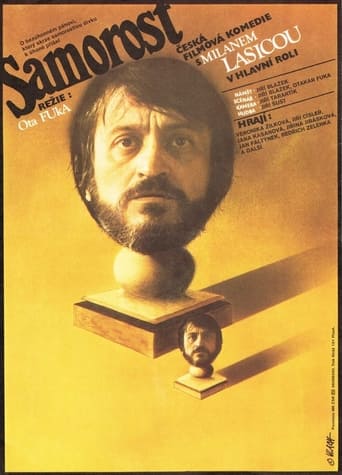 3.7
3.7Even the best of resolutions can crumble, especially when late paternal feelings are echoed. Although the protagonist is a lecturer in ethics at the university, explaining the principles of good behaviour to the students, he himself experiences many confusions and troubles when he tries to get his teenage daughter from his first marriage admitted to medical school. The eloquent, self-confident man slowly turns into a bully, who also defies his own principles.
Samorost
1984
The miller's servant Martin dared to free the princess, who had been cursed into a fish by the Moon Prince. He took revenge on her for refusing to become his wife. However, the princess wanted Martin as her husband, and he also wanted to marry her. However, the Moon Prince could not bear such an insult. Before the princess and Martin can be married, they will face many trials.
O zakleté princezně
1980
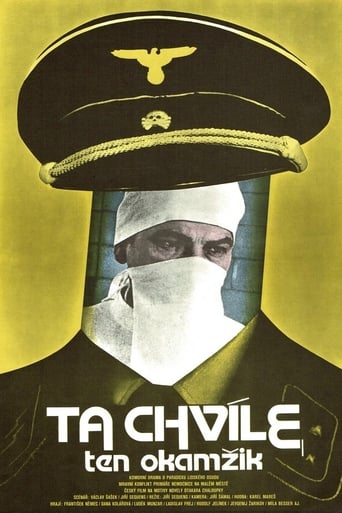 5.0
5.0In the winter of 1944, chief of surgery at a small-town Czech hospital is suspected of Nazi collaboration by his community.
That Instant, That While
1981
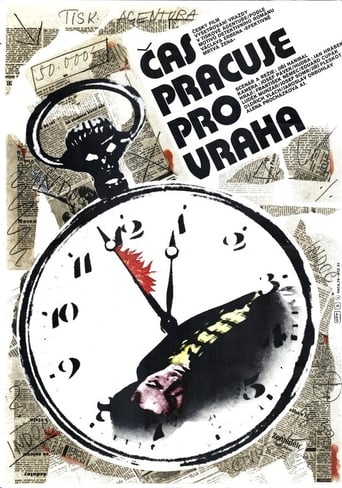 5.2
5.2Vera, wife of the plumber Simandl (Josef Somr), is found murdered in the cinema next to the IDOC (Information and Documentation) agency where she worked. Police captain Marha (Frantisek Nemec), who is leading the investigation, is informed by Simandl that on the day of the murder Vera promised to bring home fifty thousand crowns to buy a car. Marha's primary suspects are the three men working at the agency: deputy editor-in-chief Brandl (Jirí Pleskot) and editors Pernata (Eduard Cupák) and Remes (Ludek Munzar, and of course also Simandl.
Čas pracuje pro vraha
1980
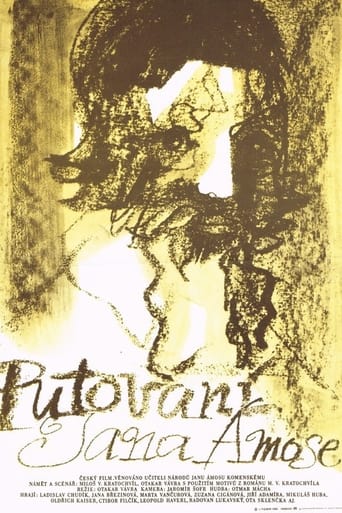 5.5
5.5The distressing fate of the Czech great Jan Amos Komenský, forced to leave his homeland after the White Mountain disaster. It depicts his encounters with various European personalities of the 17th century - the Queen of Sweden, artists and scientists. It emphasises the hero's nobility, but also his inner resilience, which allowed him to overcome many personal and professional tragedies. The parable of The Labyrinth of the World and the Paradise of the Heart becomes part of the story. However, Comenius's concept is sculpturally lifeless and, in particular, the religious dimension is "erased" from it. The simplistic biography therefore does not avoid schoolboyish dryness.
Putování Jana Amose
1983
No synopsis available yet.
Giuditta
1982
No synopsis available yet.
Ples v opeře
1983
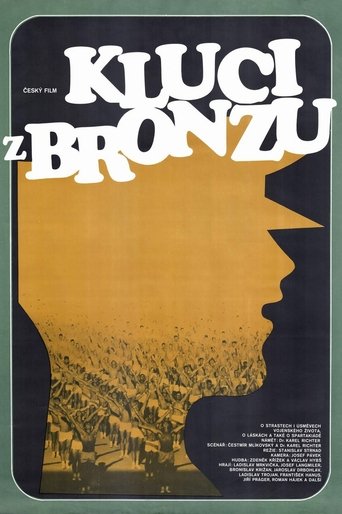 4.2
4.2From time to time, we have produced an admirable film about the virtues of the domestic army, which raised the right men in ideal conditions - in this case, we meet the enthusiastic drill sergeants in green, who selflessly rehearse a demanding Spartakiad composition... So, two aspects important to the regime have merged into one. But even this did not change the incredulous, spasmodically optimistic yawn that perhaps even those who had set all this up could not believe. The film uses documentary footage of the soldiers' Spartakiada performance in 1980.
Kluci z bronzu
1981
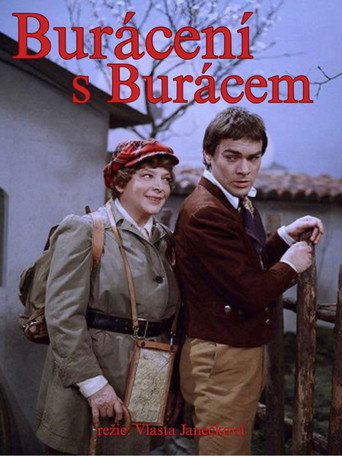 NR
NRNo synopsis available yet.
Burácení s Burácem
1981
1970s · 25 titles
7.5Popelka, a resourceful and independent young girl, is a servant in her stepmother's house and confides in her closest friend the owl. When she comes across three magical acorns, she's granted a single wish for each one of them.
Three Wishes for Cinderella
1973
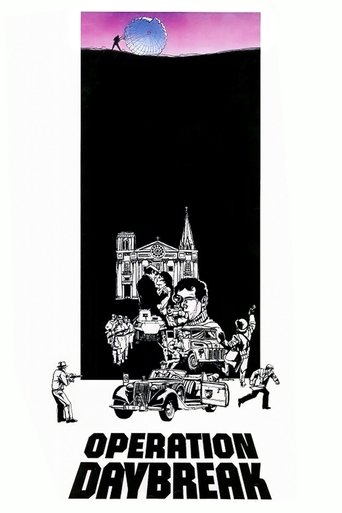 6.9
6.9Czechoslovakia, 1942. Three brave Czech patriots risk everything to rid their country of its brutal Nazi leader, SS-General Reinhard Heydrich.
Operation: Daybreak
1975
 6.4
6.4The heroes of this absurd comedy, full of confusion and humor are Dzharda Zemanek and Frantisek Liska.
A Nice Plate of Spinach
1977
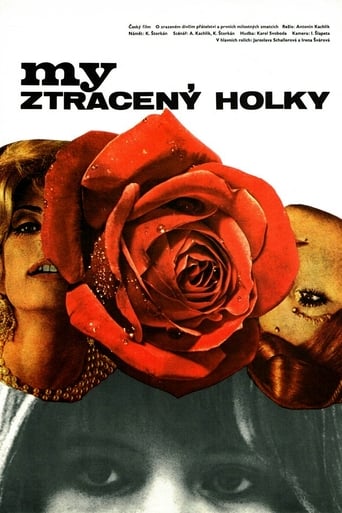 9.0
9.0Zofie and Dominika, two girls of very different temperaments, become friends during hop-picking volunteer work in the summer. Zofie (Jaroslava Schallerová) is serious to the point of reticence and she is delighted with her friendship with Dominika. For the self-assured and superficial Dominika (Irena Svárová) the whole thing is just a momentary whim. When she leaves the work camp before everybody else, she doesn't even say goodbye to Zofie. The two girls meet again after the holidays as first-year students at medical school, and become close again during the nursing techniques class.
We, the Lost Girls
1972
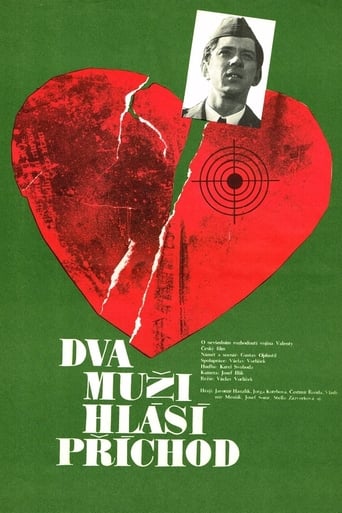 8.0
8.0An only son, Jirí Valenta (Jaromír Hanzlík), has been drafted to the army. At the barracks he acquires the nickname Seamstress because he sews rugs in his spare time. One day, his friend introduces him to Julka Vávrová (Jorga Kotrbová), a girl he is desperate to get rid of. The naive Jirí falls in love with the girl and accepts her invitation to spend Easter together in the country. There he learns that the girl is the single mother of the young boy Martínek, whose father is the married tractor driver.
Dva muži hlásí příchod
1975
The story of how it turned out when a young lawyer tried to intellectually elevate a cute dancer from Prague's bohemian milieu. Journalist Šmíd introduces his long-time lover, a cheerful but simple girl Fanynka, to his friend, a young lawyer. He decides to take good care of the girl, buying her gifts and even furnishing her with a nice apartment. When he is called up to the army, he asks his friend Šmíd to look after Fanynka for him. After all, he himself intends to employ her and educate her intellectually. He gives her the task of reading serious literature once a week, about which the girl is to give him extensive testimony in a letter. But Fanynka soon starts to get fed up with the intellectual diet...
Co je platno kárat, co je platno kázat
1978
The Lakota king is so stingy that he wants to marry his only daughter, Princess Forgetful, to Prince Bohatu, even though the girl doesn't like the groom because he is conceited and "empty-headed." But at the right moment, the blacksmith's son Ondřej, a singer, appears on the scene and protects her from unwanted marriages...
Uloupený smích
1977
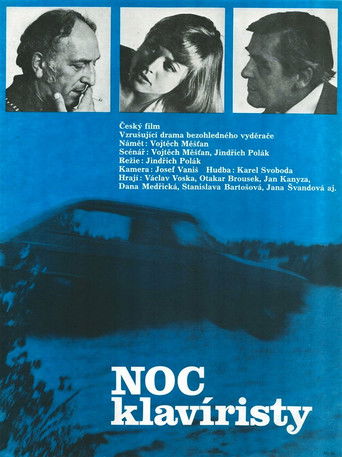 4.0
4.0The problematic protagonist is the head designer of a housing association who wants to make a profit at any cost. His unwitting opponent is a bar pianist who accidentally witnesses the murder of a young man and sets out to investigate on his own. An old-world and somewhat comical figure, he poignantly interferes with the cops' work, only to find that he is the one who is credited with catching the perpetrator...
Noc klavíristy
1977
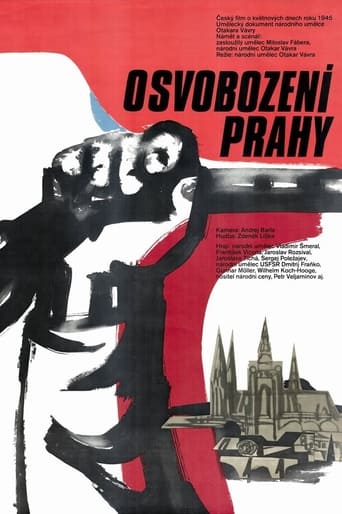 5.3
5.3On 20th of April 1945 the Soviet army launches its attack on Berlin. The end has come for Nazi Germany and Hitler decides to commit suicide. In Prague K.H. Frank (Nazi Secretary of State and Chief of police in the Protectorate of Bohemia a Moravia) discusses with his commanders how to transform the city into an impregnable fortress, but the Praguers do not intend to wait any longer. From the early hours of 4th of May people start assembling in the streets and tearing down German signs. On the next day, the 5th of May, the uprising begins.
The Liberation of Prague
1977
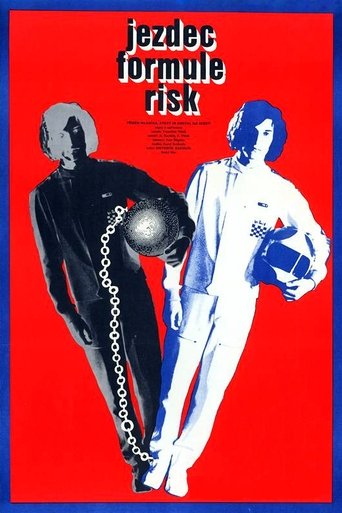 10.0
10.0The story of a juvenile delinquent who, despite society's efforts to reform him, irrevocably ruined his life.
Jezdec formule risk
1973
No synopsis available yet.
Zlaté pometlo
1977
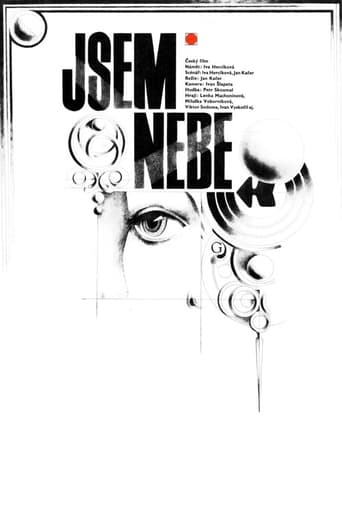 6.0
6.0The story of a first love disappointment. Sensitive Lenka finds it very difficult to overcome the unsuccessful course of her meeting with a boy for whom she felt more than sympathy...
Jsem nebe
1971
No synopsis available yet.
Hadrián z Římsů
1976
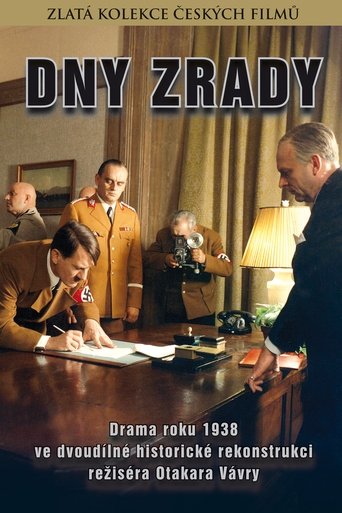 5.6
5.6This feature film based on the events of 1938 is a chronicle of the futile efforts of the Czechoslovak president Edvard Benes (Jirí Pleskot), politicians and ordinary citizens, to save the independence and the territorial integrity of the state from the advance of Hitler's Germany. On the 29th of March 1938 the leader of the Sudeten Germans Henlein (Werner Ehrlicher) has a meeting with Hitler (Gunnar Möller). Hitler orders him to intensify pressure on the Czechoslovak government. On the 24th of April in Carlsbad, the Sudetendeutsche Partei (Sudeten German Party) decides upon eight demands that are unacceptable to the Czechoslovak President, since they would ultimately lead to the break-up of the Republic. Benes still shows a certain willingness to negotiate, and Henlein resents this. The Germans are determined to make further negotiations impossible through incidents and violence.
Days of Betrayal
1973
Elishka loves animals. She rides a horse that got injured in the riding arena and has to be taken to the slaughterhouse. So the girl buys a horse and keeps it at home in the garden. Eliška's mother suffers her daughter's dog and cats at home, but she does not want to reconcile with the horse. With the help of the children, Eliška manages to place the horse in a nearby state farm. The children take care of the horse enthusiastically and intervene very actively when the sick horse threatens to die...
Ten kůň musí pryč
1975
The historical television play was written based on Vančura's Pictures from the History of the Czech Nation and takes place against the backdrop of the European situation at the beginning of the thirteenth century. Přemysl Otakar I., father of Agnes of Přemyslid, sought recognition of the Czech lands as a hereditary kingdom. And what about his love and fickleness? The story will answer this, in which poetry and truth diverge only in the degree of emotional movements, in the tremors of souls, which lead to love as well as to hatred.
Vrtkavý král
1975
Three short stories ("Zelenáči 1945", "Silvestr 1948" and "Zimní vítr 1951") about members of the SNB units guarding the Šumava border in the post-war years. Ivo Toman had artistic supervision over the debutants. The theme of the third short story was made in 1959 for the film "Entry Forbidden" by František Vláčil, who was also starting at the time.
Boty plné vody
1976
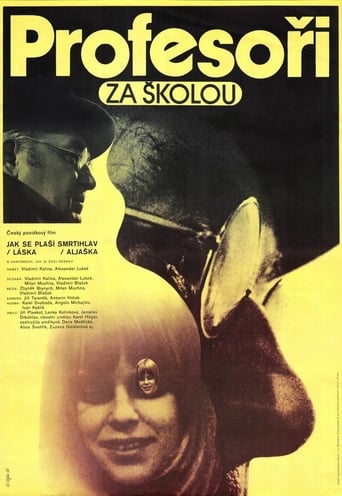 9.0
9.0Three stories from the school environment, mostly from the perspective of teachers. In the first story we see an unnecessarily strict teacher, in the middle one a sports career is glossed over, which causes a young teacher to leave his job. In the final story, on the other hand, an experienced high school teacher goes to teach in a rural school to gain inner peace.
Profesoři za školou
1976
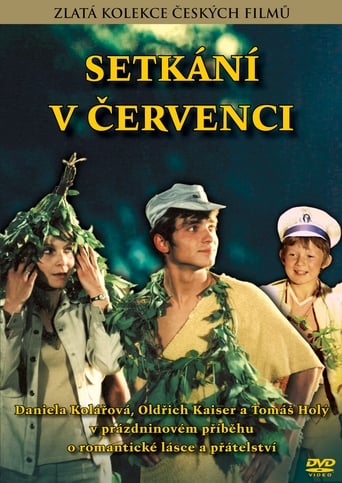 5.7
5.7A romantic story about Jakub, a student in the summer camp, and his teacher Klara.
Meeting in July
1978
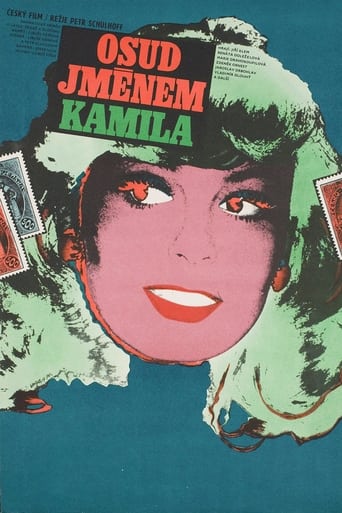 4.2
4.2Tomáš, an unscrupulous Prague taxi driver who is involved in stealing antiques and smuggling them abroad, lives with his devoted mistress, but he is always thinking of his destined love, Kamila, who has emigrated to Switzerland. It is for her that he plans a robbery of a rare stamp, which he convinces his naive brothers to commit. The seemingly simple theft goes wrong and almost ends in the death of an innocent man. The planned escape across the border, in which a slick Swiss businessman plays a key role, also fails...
Osud jménem Kamila
1974
No synopsis available yet.
Zbojník Ondráš
1974
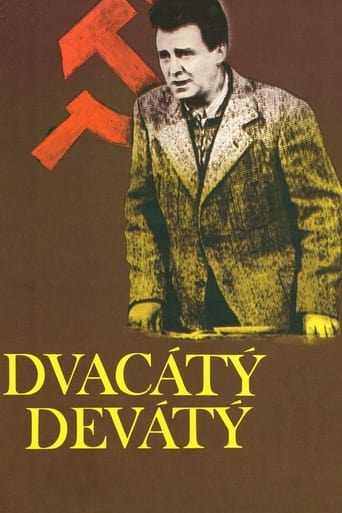 6.0
6.0In the era of normalisation, a number of (pseudo)historical films were made, even described as reconstructions, which glorified the world-building mission of the Communist Party and attributed to it exclusively humanitarian intentions ("Days of Betrayal", "Sokolovo", "Liberation of Prague", "The Victorious People"). In 1929, when its fifth congress met, Klement Gottwald, who had taken the line of the Russian Bolsheviks, took over the leadership of the Communists...
Dvacátý devátý
1975
Kristina gets into a car accident while she drives and a pedestrian becomes handicapped because of her. So she does everything in her power for him to forgive her.
Otevři oči
1977
No synopsis available yet.
O stříbrném kamínku
1976
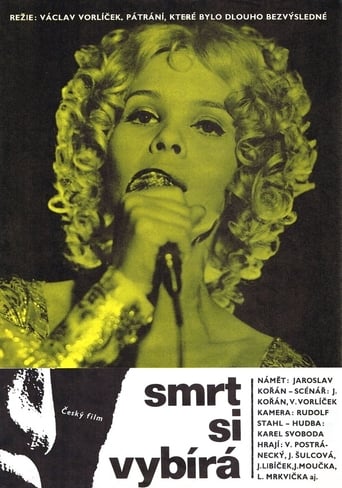 7.5
7.5Radek Simek, the driver of a postal car, is shot dead on his regular route. The Investigators give up initial suspicions of robbery, because he carried no greater amount of money. Even questioning Honza Marek, another mail car driver, brings no result. When the circumstances are becoming more and more suspicious. Marek decides to track down the killer on his own.
Death Chooses
1973
1960s · 7 titles
Ten-year-old Martin attends religion at school and is always an altar boy at church. That's the wish of his mother Anci, a bigoted believer. However, Martin encounters hypocrisy at every turn and begins to doubt that God exists. His older brother Eda steals money from his father with impunity, his father steals materials from the cooperative building, and even Martin's best friend Kovajs "sins" without scruples. Pastor Hornof tries in various ways to maintain his influence over his sheep, but is hindered by people with a "progressive" socialist mindset. When Martin's beloved Angora rabbits, who have done nothing wrong to anyone, die, the boy's faith is clear. He decides to join a pioneer organisation. All that's left is to keep it a secret from his mother...
Králíci ve vysoké trávě
1962
Little Honzík tries everything he can in order to join the team for Spartakiada Games.
Magical Day
1961
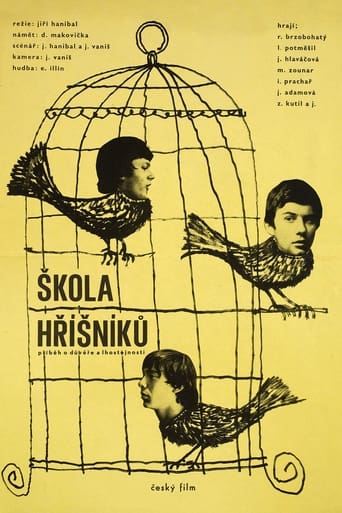 4.5
4.5Pavlata, the director of an educational institution for juvenile offenders, will push for the early release of Pepík Adamec, whom he respects for his sincere efforts and good work record. However, the boy bears the dishonest and dishonourable behaviour of adults in his new job and in his family.
Škola hříšníků
1966
Popular English author Jerome Klapka Jerome and his humorous novel Three Men in a Boat have been a success with readers of all generations since their creation. The classic story about hanging a picture inspired director Martin Frič to make a small comedy called The Picture in 1964. The viewer can still judge what it looks like when the head of a typical bourgeois family of the early twentieth century takes on the all-important task of hanging a picture.
Obraz
1964
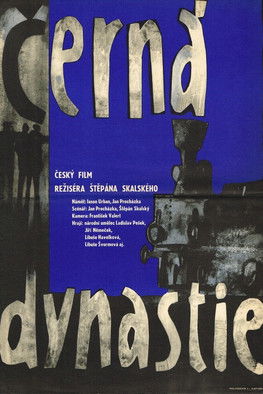 9.0
9.0The family is connected with Prague's "Kolbenka", the ČKD locomotive factory. Grandfather Antonín, already retired, son Rudolf, a master in the locomotive assembly section and grandson Antonín, a promising football player. The film also tells the story of Rudolf's daughter Vera - each generation has its own ideas about life and cannot identify with the others. The film is linked by retrospective sequences from the lives of Antonín the Elder and Rudolf, especially from the war years. It is a realistic take on working-class life, unencumbered by ideology (despite the opening dedication), featuring well-known and time-tested actors in mainly male roles.
The Black Dynasty
1962
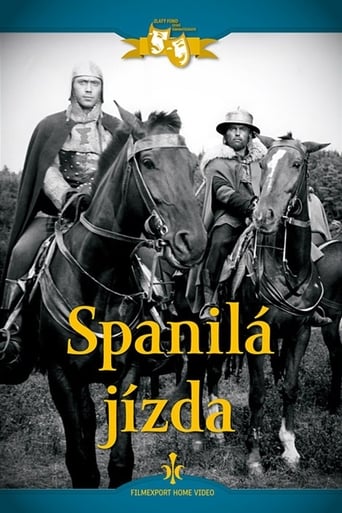 7.0
7.0In the Hussite times, religious truth was sifted even on the tips of weapons. When in 1430 the Hussites set out on a raid to Nuremberg, the so-called Spanila Cavalry, to defend their doctrine, the young commander of the cavalry, the landowner Keřský, whose bride had once been kidnapped by a vicious crusader, saw it as an opportunity for personal revenge. Although Oldřich Daněk has tried to establish a distinctive interpretation of historical events, he reflects on where the blinded desire to punish a bad deed with further cruelty leads, but his version seems too thesis-like and lifeless, it does not rise above the descriptively illustrated scenes from old Czech chronicles...
Spanilá jízda
1963
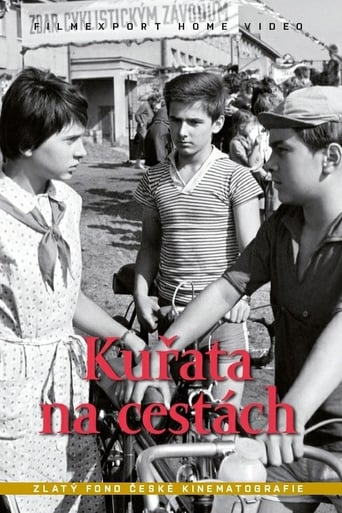 7.0
7.0The story of a childhood dream come true. Schoolchildren discover an abandoned poultry farm with an artificial hatchery and agree to raise their own chicks. They devote all their energies to it and wait anxiously for the little chicks to come into the world. Before that happens, they face many obstacles...
Chicken on Travels
1962
1950s · 2 titles
No synopsis available yet.
We will be ready
1955
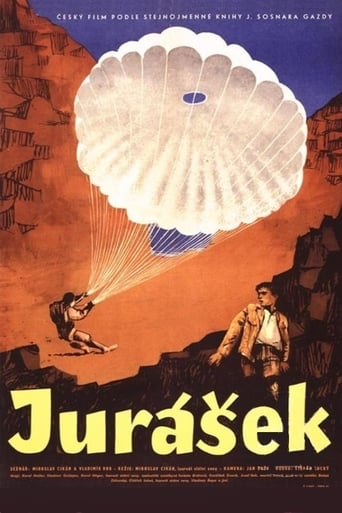 7.3
7.3The Czech feature film, based on the book of the same name by J. Sosnar-Gazda, focuses on teenagers. The hero of the film is a boy named Jurášek from the Moravian Slovácko region, who helped the partisans during the war. He confirmed that his father was with the partisans and went to the forest at night to follow him when the partisans were expecting the Soviet paratroopers to jump. Jurášek finds a paratrooper who had been blown aside by the wind and finds a suitable shelter for him where he could heal his injured leg. Jurášek continues to help the partisans a lot. He informs them about the upcoming raid in the village and thus saves the Soviet paratrooper from being captured. When he then accompanies the paratrooper into the forest to a place from where he could safely broadcast, and when he says goodbye to him, he gets into a firefight with the Germans together with him and his bravery stands up well in it.
Jurášek
1957
Series credits
7.0No synopsis available yet.
Bakaláři
1972
7.3Thirty Cases of Major Zeman is a Czechoslovak action-drama television show intended as a political propaganda to support the official attitude of the communist party. The series were filmed in the 1970s. Each episode encompasses one year, and investigations are stylized to that year. Most are inspired by real cases. The series follows the life of police investigator Jan Zeman during his career from 1945 to 1975.
Thirty Cases of Major Zema
1976
8.2Arabela was a children's television series produced in Czechoslovakia which aired from 1979 to 1981. The series has 13 episodes and is in the Czech language.
Arabela
1980
7.3No synopsis available yet.
Malý pitaval z velkého města
1983
NRNo synopsis available yet.
Velitel
1981
No synopsis available yet.
Pouť králů
1982