
Directing
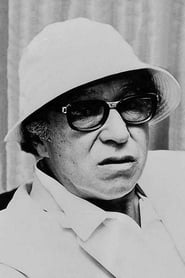
Masaki Kobayashi
Born — Died
1916-02-14 — 1996-10-04
Place of birth
Otaru, Hokkaido, Japan
Known for
Directing
Credits
36 titles
Masaki Kobayashi (小林 正樹, Kobayashi Masaki; February 14, 1916 – October 4, 1996) was a Japanese filmmaker. He is best remembered for directing the epic war trilogy The Human Condition (1959–1961), the samurai films Harakiri (1962) and Samurai Rebellion (1967), and the horror anthology epic Kwaidan (1964). Senses of Cinema described him as "one of the finest depicters of Japanese society in the 1950s and 1960s." Although overshadowed by other Japanese filmmakers like Akira Kurosawa and Yasujirō Ozu in his lifetime, his work has gained wider traction in the 21st century with several of his films being ranked as some of the greatest films ever made. Description above from the Wikipedia article …
Known for
 8.5
8.5Down-on-his-luck veteran Tsugumo Hanshirō enters the courtyard of the prosperous House of Iyi. Unemployed, and with no family, he hopes to find a place to commit seppuku—and a worthy second to deliver the coup de grâce in his suicide ritual. The senior counselor for the Iyi clan questions the ronin’s resolve and integrity, suspecting Hanshirō of seeking charity rather than an honorable end. What follows is a pair of interlocking stories which lay bare the difference between honor and respect, and promises to examine the legendary foundations of the Samurai code.
Harakiri
1962
 8.2
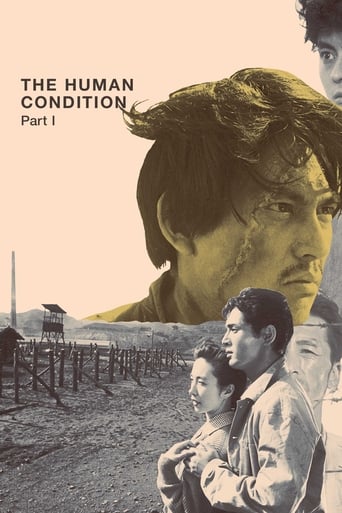
8.2After handing in a report on the treatment of Chinese colonial labor, Kaji is offered the post of labour chief at a large mining operation in Manchuria, which also grants him exemption from military service. He accepts and moves with his newlywed wife Michiko, but when he tries to put his ideas of more humane treatment into practice, he finds himself at odds with scheming officials, cruel foremen, and the military police.
The Human Condition I: No Greater Love
1959
 8.2
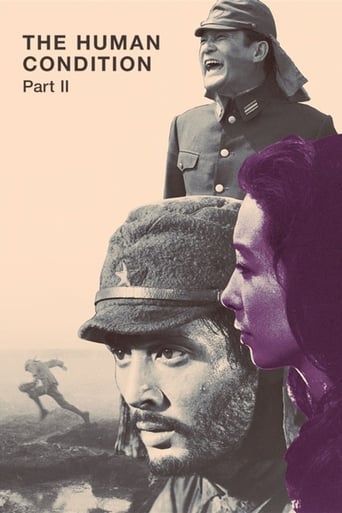
8.2Kaji, sent to the Japanese army labeled Red, witnesses cruelties in the army and revolts against the abusive treatment against a fellow recruit. He also sees his friend Shinjô defecting to the Russian border, and he ends in the front to fight a lost battle against the Russian tanks division.
The Human Condition II: Road to Eternity
1959
 8.2
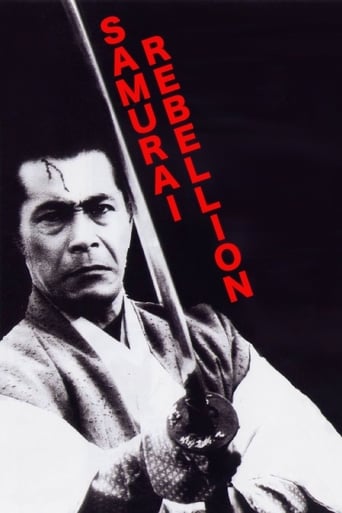
8.2The mother of a feudal lord's only heir is kidnapped by the lord. Her husband and his samurai father must decide whether to accept the unjust decision, or risk death to rescue her.
Samurai Rebellion
1967
 8.4
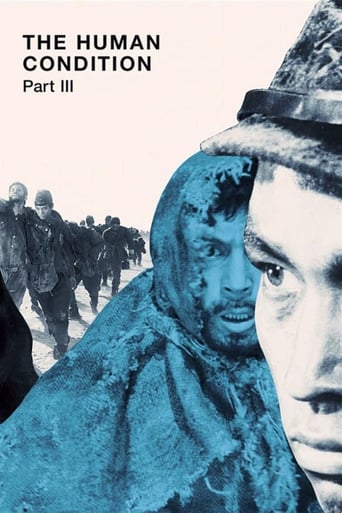
8.4After the Japanese defeat to the Russians, Kaji leads the last remaining men through Manchuria. Intent on returning to his old life, he faces great odds in a variety of different harrowing circumstances as he and his men sneak behind enemy lines.
The Human Condition III: A Soldier's Prayer
1961
 7.7
7.7Taking its title from an archaic Japanese word meaning "ghost story," this anthology adapts four folk tales. A penniless samurai marries for money with tragic results. A man stranded in a blizzard is saved by Yuki the Snow Maiden, but his rescue comes at a cost. Blind musician Hoichi is forced to perform for an audience of ghosts. An author relates the story of a samurai who sees another warrior's reflection in his teacup.
Kwaidan
1965
Film credits
Behind the camera
8.5Down-on-his-luck veteran Tsugumo Hanshirō enters the courtyard of the prosperous House of Iyi. Unemployed, and with no family, he hopes to find a place to commit seppuku—and a worthy second to deliver the coup de grâce in his suicide ritual. The senior counselor for the Iyi clan questions the ronin’s resolve and integrity, suspecting Hanshirō of seeking charity rather than an honorable end. What follows is a pair of interlocking stories which lay bare the difference between honor and respect, and promises to examine the legendary foundations of the Samurai code.
Harakiri
1962
8.2After handing in a report on the treatment of Chinese colonial labor, Kaji is offered the post of labour chief at a large mining operation in Manchuria, which also grants him exemption from military service. He accepts and moves with his newlywed wife Michiko, but when he tries to put his ideas of more humane treatment into practice, he finds himself at odds with scheming officials, cruel foremen, and the military police.
The Human Condition I: No Greater Love
1959
8.2After handing in a report on the treatment of Chinese colonial labor, Kaji is offered the post of labour chief at a large mining operation in Manchuria, which also grants him exemption from military service. He accepts and moves with his newlywed wife Michiko, but when he tries to put his ideas of more humane treatment into practice, he finds himself at odds with scheming officials, cruel foremen, and the military police.
The Human Condition I: No Greater Love
1959
8.2Kaji, sent to the Japanese army labeled Red, witnesses cruelties in the army and revolts against the abusive treatment against a fellow recruit. He also sees his friend Shinjô defecting to the Russian border, and he ends in the front to fight a lost battle against the Russian tanks division.
The Human Condition II: Road to Eternity
1959
8.2Kaji, sent to the Japanese army labeled Red, witnesses cruelties in the army and revolts against the abusive treatment against a fellow recruit. He also sees his friend Shinjô defecting to the Russian border, and he ends in the front to fight a lost battle against the Russian tanks division.
The Human Condition II: Road to Eternity
1959
8.2Kaji, sent to the Japanese army labeled Red, witnesses cruelties in the army and revolts against the abusive treatment against a fellow recruit. He also sees his friend Shinjô defecting to the Russian border, and he ends in the front to fight a lost battle against the Russian tanks division.
The Human Condition II: Road to Eternity
1959
8.2The mother of a feudal lord's only heir is kidnapped by the lord. Her husband and his samurai father must decide whether to accept the unjust decision, or risk death to rescue her.
Samurai Rebellion
1967
8.4After the Japanese defeat to the Russians, Kaji leads the last remaining men through Manchuria. Intent on returning to his old life, he faces great odds in a variety of different harrowing circumstances as he and his men sneak behind enemy lines.
The Human Condition III: A Soldier's Prayer
1961
8.4After the Japanese defeat to the Russians, Kaji leads the last remaining men through Manchuria. Intent on returning to his old life, he faces great odds in a variety of different harrowing circumstances as he and his men sneak behind enemy lines.
The Human Condition III: A Soldier's Prayer
1961
8.4After the Japanese defeat to the Russians, Kaji leads the last remaining men through Manchuria. Intent on returning to his old life, he faces great odds in a variety of different harrowing circumstances as he and his men sneak behind enemy lines.
The Human Condition III: A Soldier's Prayer
1961
7.7Taking its title from an archaic Japanese word meaning "ghost story," this anthology adapts four folk tales. A penniless samurai marries for money with tragic results. A man stranded in a blizzard is saved by Yuki the Snow Maiden, but his rescue comes at a cost. Blind musician Hoichi is forced to perform for an audience of ghosts. An author relates the story of a samurai who sees another warrior's reflection in his teacup.
Kwaidan
1965
 8.0
8.0A very beautiful Japanese woman is in love with Persian carpets. She is being chased by lecherous Saburi Shin and a handsome young photographer. Lecherous Saburi Shin knows what she wants, and is able to produce it for her.
Glowing Autumn
1978
 6.9
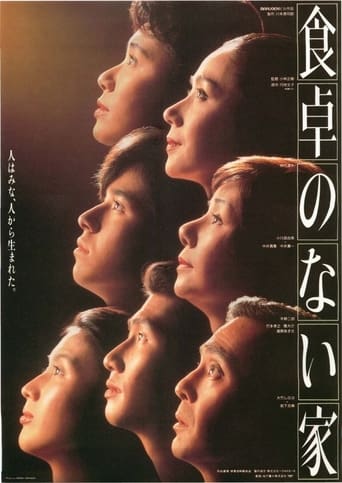
6.9One year after the Kidojis' eldest son Otohiko was arrested for his part in a terrorist kidnapping, which resulted in multiple deaths, all the other perpetrators' parents have either resigned from their professional positions or taken their own lives, Nobuyuki Kidoji remains adamant that he is not responsible for his son's actions.
The Empty Table
1985
6.9One year after the Kidojis' eldest son Otohiko was arrested for his part in a terrorist kidnapping, which resulted in multiple deaths, all the other perpetrators' parents have either resigned from their professional positions or taken their own lives, Nobuyuki Kidoji remains adamant that he is not responsible for his son's actions.
The Empty Table
1985
 6.3
6.3In feudal Japan, when any commerce with the rest of the world is strictly prohibited, an idealist appears at an isolated inn, headquarters of smugglers with stolen money intended to ransom his loved one forced to work in a brothel.
Inn of Evil
1971
 7.0
7.0Lost film, directed by Tomu Uchida. This film is a very funny comedy that makes fun of the moral code of the samurai Bushido, which has become obsolete and turned into an empty form during the period of feudalism.
The Revenge Champion
1931
 7.2
7.2An industrialist is diagnosed with terminal cancer. He is abroad in Europe at the time, and a glimpse of a Japanese woman in that setting causes him to imagine her as the personification of his impending fate. As his dialogue with his imagined mortality continues, he meets the living woman, the template for his fantasy, and together, they tour rural churches. Gradually, he comes to some kind of peace about the diagnosis. When he returns to Japan, he is met with a series of challenges that profoundly test the lessons he has learned.
The Fossil
1975
 8.2
8.2During WWII, Zensaku, middle-aged and deaf in one ear, learns that his son has fallen for the daughter of a war officer responsible for the maiming.
Hymn to a Tired Man
1968
 6.7
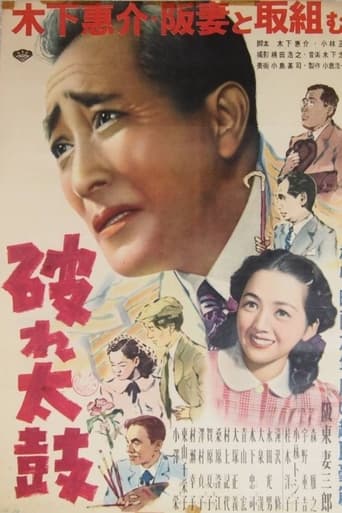
6.7When the future of his construction company falls into danger, a controlling father pushes his children into unsatisfying marriages and careers in order to regain financial stability.
Broken Drum
1949
 7.0
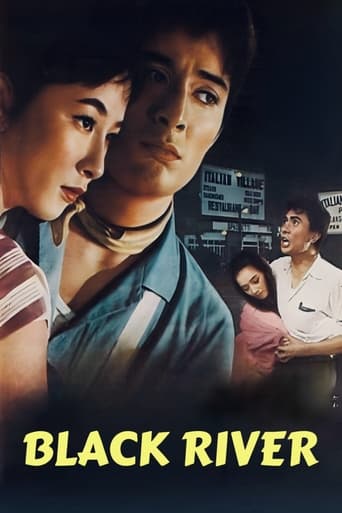
7.0A love triangle develops between a benevolent student, his innocent girlfriend, and a cruel petty criminal, all as a point of diagnosis of a social disease that had Japan slowly succumbing to lawlessness during the post-War era.
Black River
1957
 7.3
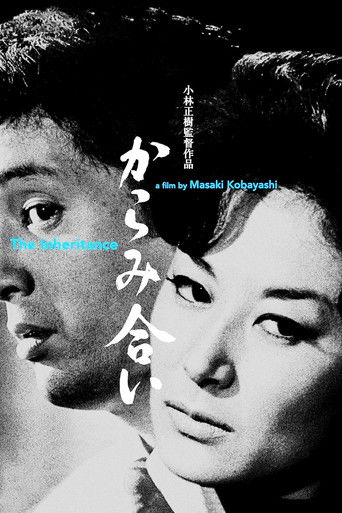
7.3A dying businessman intends to will ¥200 million to his three illegitimate children, but his associates scheme to take advantage of the situation.
The Inheritance
1962
7.3A dying businessman intends to will ¥200 million to his three illegitimate children, but his associates scheme to take advantage of the situation.
The Inheritance
1962
 5.4
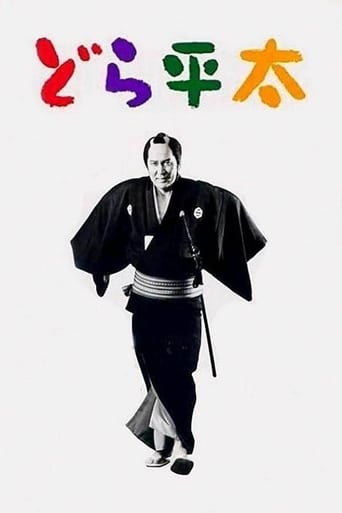
5.4A new magistrate in the town of Horisoto—widely reputed to be the most lawless township in Japan, uses guile and his opponents' own misperceptions and prejudices to defeat his enemies and uproot corruption.
Dora-heita
2000
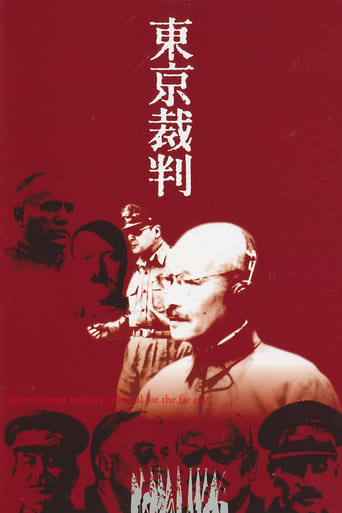 7.0
7.0A look at the trial of Japanese militarists accused of war crimes; from the proceedings of the International Military Tribunal (May 1946–November 1948). It took two days to read the charges against the 100 alleged war criminals in the docket (only 28 top officials are actually in the small courtroom), and the final judgment took one week to read.
Tokyo Trial
1983
7.0A look at the trial of Japanese militarists accused of war crimes; from the proceedings of the International Military Tribunal (May 1946–November 1948). It took two days to read the charges against the 100 alleged war criminals in the docket (only 28 top officials are actually in the small courtroom), and the final judgment took one week to read.
Tokyo Trial
1983
 7.1
7.1A talent scout moves sharply, dead-set on signing a promising baseball player to The Toyko Flowers.
I Will Buy You
1956
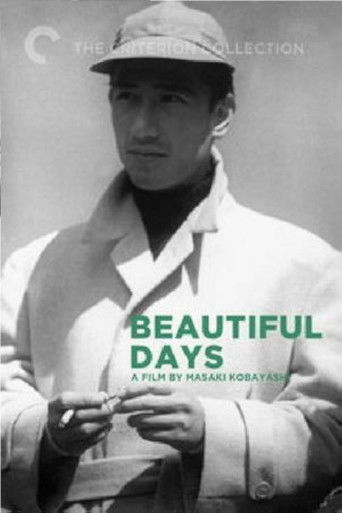 6.9
6.9A romantic drama depicting the lives of two generations of a family who run a Tokyo florist shop.
Beautiful Days
1955
 7.2
7.2A group of rank-and-file soldiers are jailed for crimes against humanity, themselves victims of a nation refusing to bear its burdens as a whole.
The Thick-Walled Room
1956
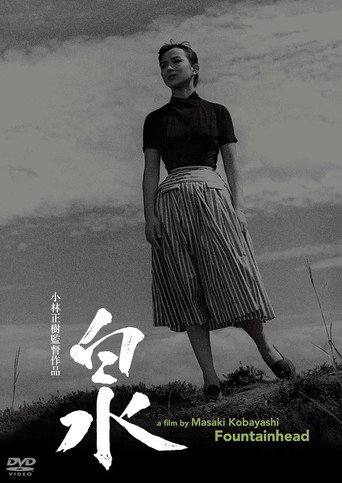 6.1
6.1A botanist woos the secretary of an industrialist whose company threatens the local water supply.
Fountainhead
1956
 6.8
6.8A Tokyo family running a liquor store overcome impotence and dysfunction as they induce an understanding through each other of how to deal with their individual problems.
Somewhere Beneath the Wide Sky
1954
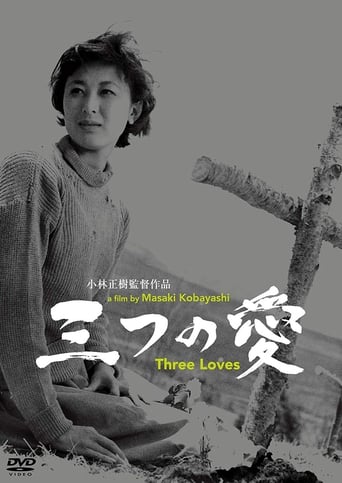 7.3
7.3In a mountain village, Heita, a translator's son, is a gifted boy but is shunned by the villagers. He can imitate birds' cry and befriends another boy who works in a brewery. Heita also finds solace in the village pastor Yasugi and his teacher Michiko, but they too have problems of their own.
Three Loves
1954
7.3In a mountain village, Heita, a translator's son, is a gifted boy but is shunned by the villagers. He can imitate birds' cry and befriends another boy who works in a brewery. Heita also finds solace in the village pastor Yasugi and his teacher Michiko, but they too have problems of their own.
Three Loves
1954
 6.5
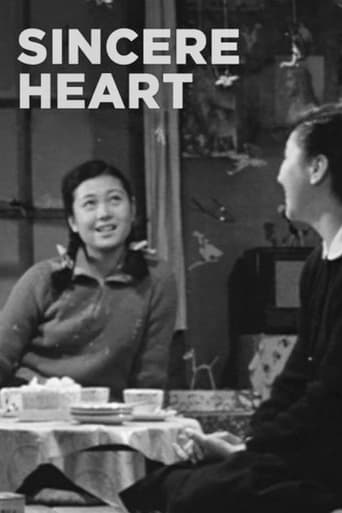
6.5A young student falls for an invalid girl, whom he can only see from afar.
Sincere Heart
1953
 6.8
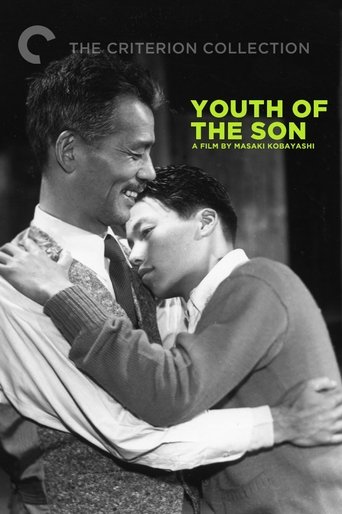
6.8A rivalry sparks between two teenage brothers when they discover the attraction of girls.
Youth of the Son
1952