
Directing
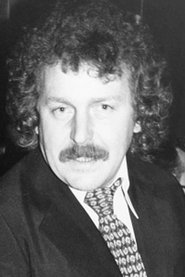
Alf Brustellin
Born — Died
1940-07-27 — 1981-11-11
Place of birth
Wien, Austria
Known for
Directing
Credits
18 titles
Known for
 6.4
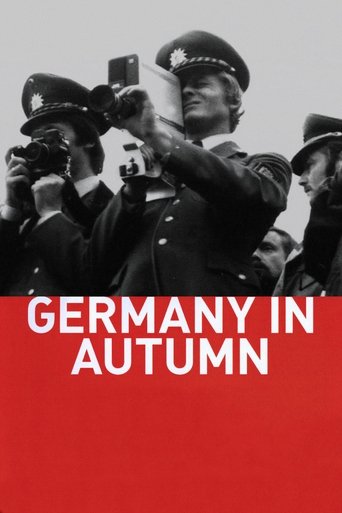
6.4Nine fictitious documentaries and films reflect the mood of late 1970s Germany, particularly the two-month period in 1977 when a businessman was kidnapped by the RAF (Red Army Faction). The kidnap had been made to orchestrate the release of the original leaders of the RAF, aka the Baader-Meinhof.
Germany in Autumn
1978
 4.2
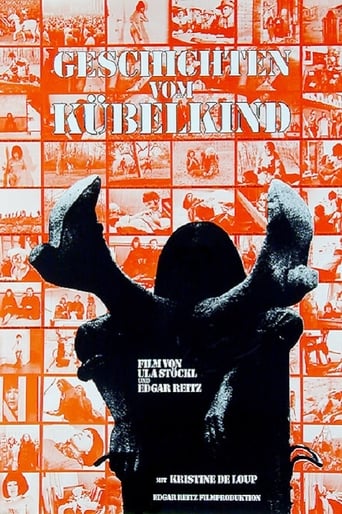
4.2The Dumpster Kid is an artistic creation: in every story society forces her to learn something. But she, fully grown from the moment of her birth, unquestionably learns more than is called for. This extra knowledge, which is not wanted by society, regularly brings her into danger. Dumpster Kid dies in each story, and across each genre. Her stories are set in a whole range of different time periods. What is a Dumpster Kid?
Tales of the Dumpster Kid
1974
 6.8
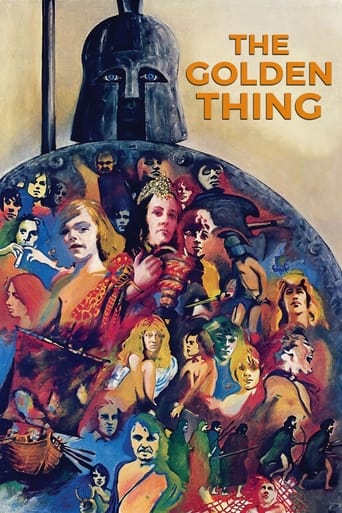
6.8Eleven-year old Jason and his companions, including Hercules and Orpheus, go with the ship "Argo" in the search for the Golden Fleece. With wit and cunning to overcome various obstacles until they reach the destination of their fantastic journey. The experiment is not only due to the popularization or naive glorification of a myth, but the search space occupied by fact that the heroes of antiquity were actually very young.
The Golden Thing
1972
 4.7
4.7A young man seeks freedom and eventually gets conformed. To escape society, he wanders south. After some adventures he returns to his lover, where he expects a civil career.
Good-for-Nothing
1978
 7.2
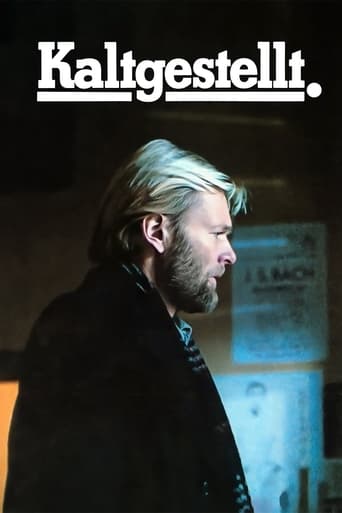
7.2In the late 1970s the German secret service fights against RAF terrorism and searches for constitutional enemies in the public service. Teacher Brasch implicates secret service agent Körner and the government in the suicide of a young teen. As a result Brasch and the exposed Körner are fired.
Put on Ice
1980
 7.0
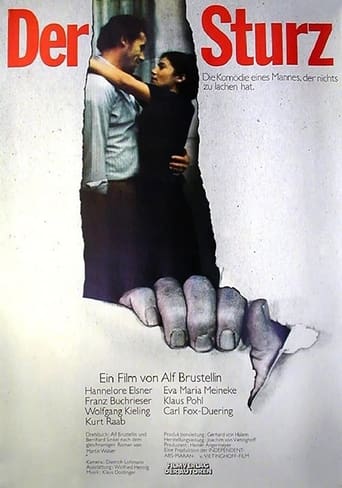
7.0Film adaptation of the last part of Martin Walser's "Kristlein Trilogy": After the perpetually failing intellectual Anselm Kristlein had to make a living as a sales representative and advertising copywriter in "Halbzeit" and became a writer in "Das Einhorn" (filmed in 1977 by Peter Patzak), he now tries his hand as the owner of a pinball arcade in Munich, loses his wife's fortune, and returns to Lake Constance in a chaotic state of mind.
The Fall
1979
Film credits
1980s · 1 titles
1970s · 3 titles
4.2The Dumpster Kid is an artistic creation: in every story society forces her to learn something. But she, fully grown from the moment of her birth, unquestionably learns more than is called for. This extra knowledge, which is not wanted by society, regularly brings her into danger. Dumpster Kid dies in each story, and across each genre. Her stories are set in a whole range of different time periods. What is a Dumpster Kid?
Tales of the Dumpster Kid
1974
6.8Eleven-year old Jason and his companions, including Hercules and Orpheus, go with the ship "Argo" in the search for the Golden Fleece. With wit and cunning to overcome various obstacles until they reach the destination of their fantastic journey. The experiment is not only due to the popularization or naive glorification of a myth, but the search space occupied by fact that the heroes of antiquity were actually very young.
The Golden Thing
1972
 7.0
7.0Eva is a single freelance painter. She is in love with a married man. She pretends that she never waits for him, and if he suddenly turns up she acts as if she is surprised. In reality the unresolved relationship is making her so depressed that her work is the only thing that is saving her. In an attempt to break her addiction she enters into a relationship with another man. But the balance she is looking for eludes her, as now she has to choose between the two. But Eva can't: she wants to have an entire life, not part of one. In the form of a sort of filmic diary, Eva now attempts to sort out the puzzle, which is her life.
Sunday Painting
1971
Behind the camera
6.4Nine fictitious documentaries and films reflect the mood of late 1970s Germany, particularly the two-month period in 1977 when a businessman was kidnapped by the RAF (Red Army Faction). The kidnap had been made to orchestrate the release of the original leaders of the RAF, aka the Baader-Meinhof.
Germany in Autumn
1978
6.4Nine fictitious documentaries and films reflect the mood of late 1970s Germany, particularly the two-month period in 1977 when a businessman was kidnapped by the RAF (Red Army Faction). The kidnap had been made to orchestrate the release of the original leaders of the RAF, aka the Baader-Meinhof.
Germany in Autumn
1978
6.8Eleven-year old Jason and his companions, including Hercules and Orpheus, go with the ship "Argo" in the search for the Golden Fleece. With wit and cunning to overcome various obstacles until they reach the destination of their fantastic journey. The experiment is not only due to the popularization or naive glorification of a myth, but the search space occupied by fact that the heroes of antiquity were actually very young.
The Golden Thing
1972
6.8Eleven-year old Jason and his companions, including Hercules and Orpheus, go with the ship "Argo" in the search for the Golden Fleece. With wit and cunning to overcome various obstacles until they reach the destination of their fantastic journey. The experiment is not only due to the popularization or naive glorification of a myth, but the search space occupied by fact that the heroes of antiquity were actually very young.
The Golden Thing
1972
4.7A young man seeks freedom and eventually gets conformed. To escape society, he wanders south. After some adventures he returns to his lover, where he expects a civil career.
Good-for-Nothing
1978
7.2In the late 1970s the German secret service fights against RAF terrorism and searches for constitutional enemies in the public service. Teacher Brasch implicates secret service agent Körner and the government in the suicide of a young teen. As a result Brasch and the exposed Körner are fired.
Put on Ice
1980
7.0Film adaptation of the last part of Martin Walser's "Kristlein Trilogy": After the perpetually failing intellectual Anselm Kristlein had to make a living as a sales representative and advertising copywriter in "Halbzeit" and became a writer in "Das Einhorn" (filmed in 1977 by Peter Patzak), he now tries his hand as the owner of a pinball arcade in Munich, loses his wife's fortune, and returns to Lake Constance in a chaotic state of mind.
The Fall
1979
7.0Film adaptation of the last part of Martin Walser's "Kristlein Trilogy": After the perpetually failing intellectual Anselm Kristlein had to make a living as a sales representative and advertising copywriter in "Halbzeit" and became a writer in "Das Einhorn" (filmed in 1977 by Peter Patzak), he now tries his hand as the owner of a pinball arcade in Munich, loses his wife's fortune, and returns to Lake Constance in a chaotic state of mind.
The Fall
1979
 9.0
9.0The three daughters of the Dessau merchant Sellmann move with their father to Prague in 1936, where he accepted a position as director of the Böhmische Landesbank. For the three different women begins a new life, which accompanies the film over a period of ten years.
Maiden's War
1977
9.0The three daughters of the Dessau merchant Sellmann move with their father to Prague in 1936, where he accepted a position as director of the Böhmische Landesbank. For the three different women begins a new life, which accompanies the film over a period of ten years.
Maiden's War
1977
 3.7
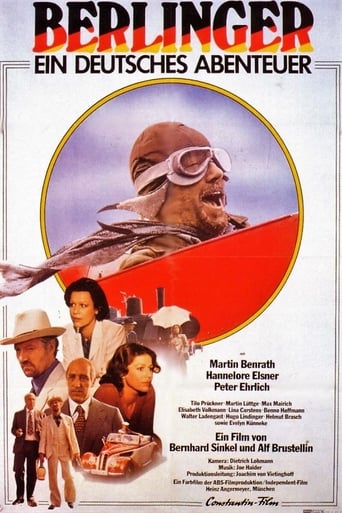
3.7A fictional, non-chronological account of the life of the scientist, adventurer and industrialist Lukas Berlinger. The key dates and central events include Berlinger's birth in 1914, his friendship with Johannes Roeder, who was the same age, his marriage to Marlit in the early 1930s and Roeder's joining the NSDAP in 1936. As a chemist and "scientist important to the war effort", Berlinger was not required to go to the front during the Second World War, but it was slowly discovered that he was helping persecuted people to escape to Switzerland. Pressure from the Gestapo cost Marlit her life, and Berlinger fled to South America. It was not until 1968 that he returned to the western part of Germany. He meets Roeder again, who is now a senator and has become rich as a "building tycoon", and meets Maria, a teacher almost 30 years his junior, who looks strikingly similar to Marlit.
Berlinger
1975
3.7A fictional, non-chronological account of the life of the scientist, adventurer and industrialist Lukas Berlinger. The key dates and central events include Berlinger's birth in 1914, his friendship with Johannes Roeder, who was the same age, his marriage to Marlit in the early 1930s and Roeder's joining the NSDAP in 1936. As a chemist and "scientist important to the war effort", Berlinger was not required to go to the front during the Second World War, but it was slowly discovered that he was helping persecuted people to escape to Switzerland. Pressure from the Gestapo cost Marlit her life, and Berlinger fled to South America. It was not until 1968 that he returned to the western part of Germany. He meets Roeder again, who is now a senator and has become rich as a "building tycoon", and meets Maria, a teacher almost 30 years his junior, who looks strikingly similar to Marlit.
Berlinger
1975
3.7A fictional, non-chronological account of the life of the scientist, adventurer and industrialist Lukas Berlinger. The key dates and central events include Berlinger's birth in 1914, his friendship with Johannes Roeder, who was the same age, his marriage to Marlit in the early 1930s and Roeder's joining the NSDAP in 1936. As a chemist and "scientist important to the war effort", Berlinger was not required to go to the front during the Second World War, but it was slowly discovered that he was helping persecuted people to escape to Switzerland. Pressure from the Gestapo cost Marlit her life, and Berlinger fled to South America. It was not until 1968 that he returned to the western part of Germany. He meets Roeder again, who is now a senator and has become rich as a "building tycoon", and meets Maria, a teacher almost 30 years his junior, who looks strikingly similar to Marlit.
Berlinger
1975