
Known for
 6.4
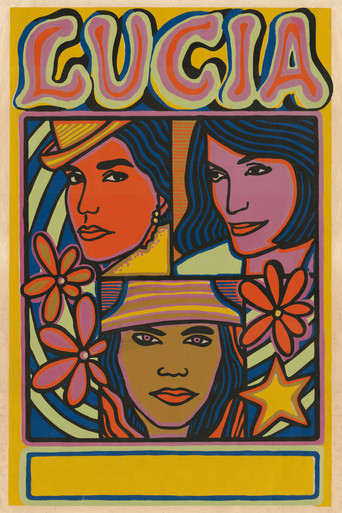
Traces episodes in the lives of three Cuban women, each named Lucía, from three different historical periods: the 1890s, the 1930s, and the 1960s.
Lucía
1968
 4.1
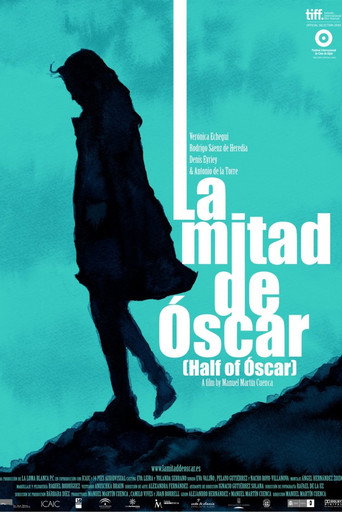
A reunion with his family provides a clue into the cause of one man's lonely life in this drama from filmmaker Manuel Martin Cuenca. Oscar lives in a barren section of Almeria, Spain, where he works as a guard at a salt mine. Oscar's days are governed by a monotonous routine: he goes to work, has lunch with fellow guard Miguel, finishes work, visits his dying grandfather at a hospice, and then goes home. While he sometimes spends his evenings with a woman, it's clear their relationship is not a close one. One day, Oscar gets word that grandfather has been transferred to a hospital, and his sister Maria, who now lives in Paris, comes to Almeria to pay the old man a visit. Maria, who is expecting a baby, is accompanied by her boyfriend Jean , who tries to keep a distance between the two siblings. It becomes clear that Oscar and Maria share an ugly secret that she wants to keep hidden at all costs, leading to an grim tension that grows between her and her brother.
Half of Oscar
2010
 5.9
In the manner of a well run Greek tragedy, leaving aside one of its components, dragging in its passing narrative certainty by the viewer that violent death is the hallmark of so much misfortune purifier, Los Dioses Rotos crowns the very successful arrival of Ernesto Daranas to the feature domains and with it, the team that accompanied him, including the actors.
Fallen Gods
2008
 6.6
At a rundown bus station in rural Cuba, the line of passengers waiting just keeps getting longer. The problem is that every bus that passes by is already full. Their only hope is to wait for the station's bus to be fixed. As the disparate group settles in, relationships start forming between the passengers: Emilio, a young engineer, becomes smitten with a beautiful young woman who is en route to meet her Spanish fiancé, a blind man gets support from the others to go to the head of the line. Frustration and disorder reign when the one bus brakes down and no one can leave. Resigned to working together, the group magically transforms the station into a beautiful place where no one wants to leave.
The Waiting List
2000
 6.6
Carla, a young postal worker in Havana, spends her days postmarking thousands of letters and dreaming of the day when she can be reunited with her parents, who moved to Miami when she was fifteen. To fulfill her longing for intimacy, she opens random letters and rewrites them into lyrical prose, believing she is helping her fellow Cubans understand one another better. Beautifully filmed in black and white accented by brilliant colours, Nada+ has a stunning visual composition. With its delightful mix of visual humour, theatrical characters, satire and a lighthearted love story, it has a distinctly Cuban flair.
Nada más
2001
 NR
From the side of the heart, is a documentary that tries to discover the reasons, motivations and individual situations that led numerous people to participate in the Peruvian left in the 1970s, years of the military governments of Juan Velasco Alvarado and Francisco Morales Bermúdez. It is a documentary of testimony and reflection that navigates memory to try to recognize concerns and rediscover experiences ideologically decanted in the light of the years. It does not intend to collect political theses or justify past or current positions, but to testify enthusiasms, frustrations, ideals and loyalties, if the use of this last word is possible.
Desde el lado del corazón
2013
Behind the camera
6.4Traces episodes in the lives of three Cuban women, each named Lucía, from three different historical periods: the 1890s, the 1930s, and the 1960s.
Lucía
1968
4.1A reunion with his family provides a clue into the cause of one man's lonely life in this drama from filmmaker Manuel Martin Cuenca. Oscar lives in a barren section of Almeria, Spain, where he works as a guard at a salt mine. Oscar's days are governed by a monotonous routine: he goes to work, has lunch with fellow guard Miguel, finishes work, visits his dying grandfather at a hospice, and then goes home. While he sometimes spends his evenings with a woman, it's clear their relationship is not a close one. One day, Oscar gets word that grandfather has been transferred to a hospital, and his sister Maria, who now lives in Paris, comes to Almeria to pay the old man a visit. Maria, who is expecting a baby, is accompanied by her boyfriend Jean , who tries to keep a distance between the two siblings. It becomes clear that Oscar and Maria share an ugly secret that she wants to keep hidden at all costs, leading to an grim tension that grows between her and her brother.
Half of Oscar
2010
5.9In the manner of a well run Greek tragedy, leaving aside one of its components, dragging in its passing narrative certainty by the viewer that violent death is the hallmark of so much misfortune purifier, Los Dioses Rotos crowns the very successful arrival of Ernesto Daranas to the feature domains and with it, the team that accompanied him, including the actors.
Fallen Gods
2008
6.6At a rundown bus station in rural Cuba, the line of passengers waiting just keeps getting longer. The problem is that every bus that passes by is already full. Their only hope is to wait for the station's bus to be fixed. As the disparate group settles in, relationships start forming between the passengers: Emilio, a young engineer, becomes smitten with a beautiful young woman who is en route to meet her Spanish fiancé, a blind man gets support from the others to go to the head of the line. Frustration and disorder reign when the one bus brakes down and no one can leave. Resigned to working together, the group magically transforms the station into a beautiful place where no one wants to leave.
The Waiting List
2000
6.6Carla, a young postal worker in Havana, spends her days postmarking thousands of letters and dreaming of the day when she can be reunited with her parents, who moved to Miami when she was fifteen. To fulfill her longing for intimacy, she opens random letters and rewrites them into lyrical prose, believing she is helping her fellow Cubans understand one another better. Beautifully filmed in black and white accented by brilliant colours, Nada+ has a stunning visual composition. With its delightful mix of visual humour, theatrical characters, satire and a lighthearted love story, it has a distinctly Cuban flair.
Nada más
2001
NRFrom the side of the heart, is a documentary that tries to discover the reasons, motivations and individual situations that led numerous people to participate in the Peruvian left in the 1970s, years of the military governments of Juan Velasco Alvarado and Francisco Morales Bermúdez. It is a documentary of testimony and reflection that navigates memory to try to recognize concerns and rediscover experiences ideologically decanted in the light of the years. It does not intend to collect political theses or justify past or current positions, but to testify enthusiasms, frustrations, ideals and loyalties, if the use of this last word is possible.
Desde el lado del corazón
2013
 10.0
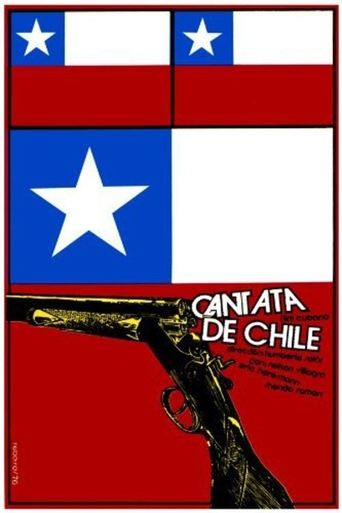
The story of the Santa María School massacre of miners in 1907.
Cantata de Chile
1976
 4.4
The Second Republic has fallen miserably. Simon Bolivar arrives to Jamaica without money or friends, seeking help from other nations to free Venezuela.
Bolívar: el hombre de las dificultades
2013
 5.4
Montevideo, Uruguay. In this comedic drama, Elisa, 27, dreams of opening her own hairdressing salon in one of the rich districts of the Uruguayan capital. A bit of a rebel, one day Elisa moves out of her mother's house with her two children and breaks up with Garcia, her boss and lover who has infuriated her by not wanting to get married. So, in the space of twenty-four hours, Elisa finds herself without a roof over her head, without a man, without a job and without money. Her best friend Loulou finds her a job - in the brothel run by Dona Jacqueline. And without really being aware of it, Elisa slides into prostitution, which leads her to Barcelona. She falls in love, she is exploited, she gets involved in transvestite gang wars, and meanwhile just dreams of earning enough money for her little beauty salon back home.
In This Tricky Life
2001
 6.9
The action is situated in Colombia on April 9, 1948, date in which took place the famous "Bogotazo". It is a story of love frustrated by political circumstances. Laura, a spinster schoolteacher, lives to Josefina and Santiago, public employee. The three characters will be besieged by 24 hours, targeted by snipers, will be forced to show such which are or they would have liked to be.
Confessing to Laura
1991
 5.1
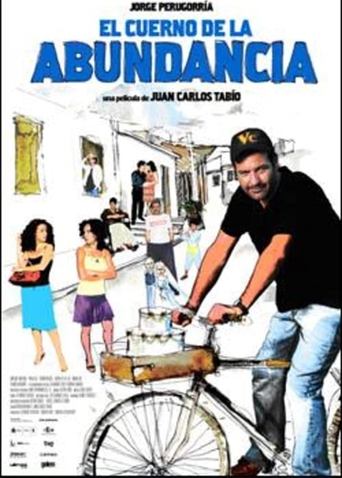
An unclaimed fortune, grown for centuries in a British bank account, becomes a potential windfall for Bernadito Castiñeiras and the residents of the tiny village of Yaragüey, Cuba. To receive his massive inheritance check, Bernadito must prove his lineage to the Castiñeiras nuns who first populated the region. In an isolated and impoverished town where many residents share the same surname, a feud breaks out between the "Castiñeiras" and "Castiñeyras" families.
Horn of Plenty
2008
 7.9
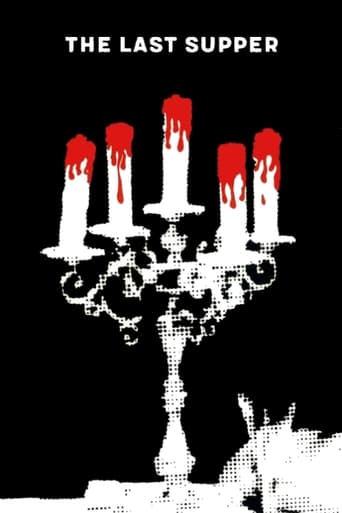
A pious plantation owner attempts to teach Christianity to 12 of his slaves by inviting them to participate in a reenactment of the Last Supper.
The Last Supper
1976
 6.4
In Miraflores, Cuba, the growing romance between Mario, a factory worker, and Yolanda, a schoolteacher, throws into relief the differences in their perspectives and values in Revolutionary Cuba.
One Way or Another
1977
 5.8
Three characters in present-day Havana must choose between clinging to their self-restricting beliefs, or getting rid of them to live more freely. Ballerina Mariana has promised God celibacy if she gets the role of "Giselle"; Social-worker Julia always faints after hearing a certain word; and pot-smoking percussionist Elpidio was abandoned by his mother, coincidentally named Cuba, some time ago and has not yet gotten over the loss.
Life Is to Whistle
1998
 3.6
The first gay-themed film produced in Cuba by the Institute of Cinema since Strawberry & Chocolate in 1993. The theme, however, is the same as in Guttiérerez and Tabìo's film: homophobia, machismo and fear. The fatal attraction between Alfredo, a doctor in the merchant navy, and handsome Carlos starts in a rundown Havana bar and ends at the sailor's house. But Alfredo's flirting and seducing of Carlos immediately turns into something complicated, ambiguous, dangerous. In a claustrophobic, tense atmosphere, their bodies are powerfully attracted, and the words, though violent, intensify the level of sensuality. Does each man kill the thing he loves? Evoking dreamlike atmospheres and characters, 80-year-old veteran director Enrique Pineda Barnet openly references Fassbinder's Querelle and Jean Genet. Quite controversial in its approach, the films demonstrates the milder attitude of Raul Castro's regime towards Cuba's LGBT Community.
Green Green
2012
 9.0
Two Basque brothers and businessmen try to save their family heritage from imminent ruin. They believe they have found the solution in a quick deal: they will exchange the stock of elvers from their small local business for Cuban cigars bought in Cuba. But the charm of Cuban women and the greed of the self-styled businessmen threaten to disrupt everything.
Maité
1994
 5.6
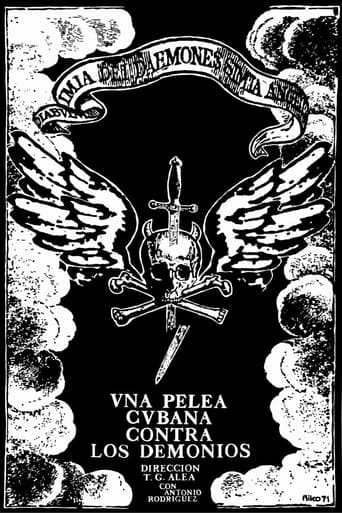
In 1672 Cuban revolutionaries launch an uprising against the Spanish who are occupying the country. Preserved by the Academy Film Archive in 2017.
A Cuban Fight Against Demons
1972
 9.0
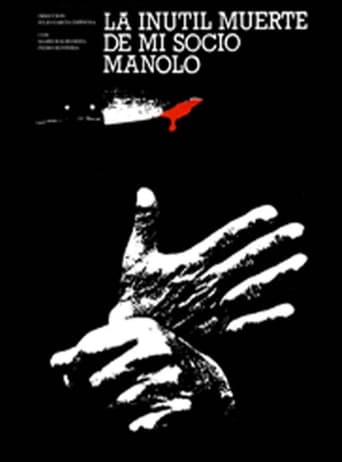
Cheo visits his friend, Manolo, who he hasn't seen for many years. They drink to celebrate their reunion and fondly recall the times they spent together in years past. As they reminisce, the two friends confront the revolution, evaluate their lives, and bare their souls.
The Useless Death of My Pal, Manolo
1989
 6.7
In a Havana, shaken by Fidel's retirement, a young seamstress, trapped in a sweatshop job, dreams of designing beautiful dresses. Frustrated by her lazy, though adorable Cuban boyfriend, she meets a sophisticated ex-patriot Cuban-Venezuelan who dazzles her with a glamorous future. After many deceptions and surprises, Eva has to choose between the two men she loves. Hers is an unexpected decision... a humorous metaphor of Cuba's options for the future
Habana Eva
2010
 8.5
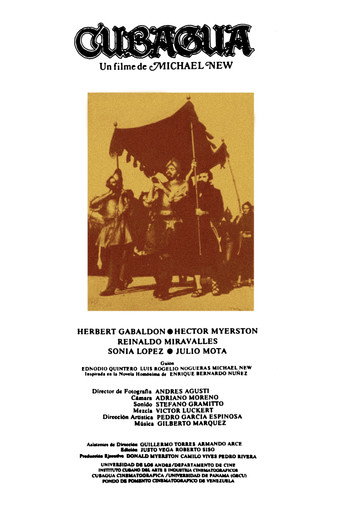
Based on the novel by Venezuelan writer Enrique Bernardo Núñez, the film tells the story of engineer Leiziaga discovering his historical doubles in the context of the colonization of the island of Cubagua in Venezuela. In this way, two stories are intertwined: one that takes place in the 16th century and another in the 20th century. The first story focuses on the life of the Spanish settlers who arrived in Cubagua and the exploitation of the indigenous peoples for pearl extraction; the second story, set in the 1920s, tells of Leiziaga's archaeological expedition, financed by a multinational oil company, in which he visits the island to study the ruins of the Spanish settlement, which leads him to reflect on the passage of time and the destruction caused by human exploitation, and through a game of mirrors, to realize the relationships between the past, present and future.
Cubagua
1987