
Known for
 7.2
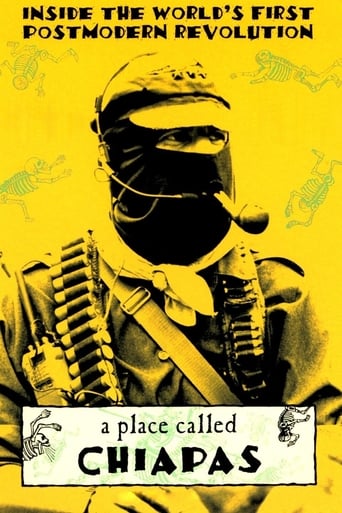
In 1994, the Zapatista National Liberation Army, made up of impoverished Mayan Indians from the state of Chiapas, took over five towns and 500 ranches in southern Mexico. The government deployed its troops and at least 145 people died in the ensuing battle. Filmmaker Nettie Wild travelled to the country's jungle canyons to film the elusive and fragile life of this uprising.
A Place Called Chiapas
1998
 9.0
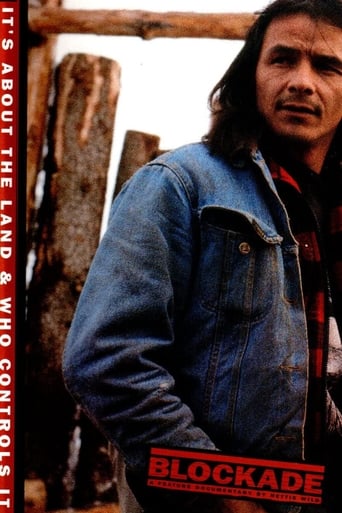
"Blockade" takes place in the mountains and valleys of northern British Columbia, at the heart of the boldest aboriginal land claims case to challenge the white history of Canada. The Gitksan and Wet'suwet'en hereditary chiefs claim that everything within 22,000 square miles, including the trees, is rightfully theirs.
Blockade
1993
 NR
"I saw the light..." Sun, light, darkness, shadow -- from time immemorial all weighted with significance and wonder. What mastery over nature, over others, to grasp the sun, control light itself! Know its speed, its heat, its colour, its radiation, its nature - is this not the power of the gods? Cinema is messaging with light and shadow. Figure and ground. Light, onto which we project significance, now transports our information. Perception shaped by our experiences, our interpretations, our projections, our illusions. Frames of drama and comedy, journalism and documentary, propaganda and advertising, all combined daily and edited, reproduced for mass consumption. What is the message?
The Framing of Perception
1973
 10.0
A chronicle of the three points of a political triangle — the legal left, the illegal (armed) revolution, and the enemy which threatens them both: the armed reactionary right. It is 1987. The dictatorship of Ferdinand Marcos has just been overthrown. Newly elected President Corazon Aquino struggles to wrench control of the country from her own military. A Rustling of Leaves poses the key question facing the revolutionaries and the Filipino Left: Should the People’s Movement continue the guerilla war, or do they dare enter legal politics and reveal the hidden face of the revolution?
A Rustling of Leaves: Inside the Philippine Revolution
1988
 NR
Letters from Vancouver comprise two films, made at the same time, that share a common interest in "the medium is the message" (McLuhan), and form a reflexive, self-referential enquiry into the film medium itself. Together, "The Politics of Perception" and "The Framing of Perception" form a meditation on our audio/visual creation, bearer of information and culture, meaning and representation. It is a medium with extraordinary powers, able to evoke the deepest feelings of love and loss, anger and fear, laughter and thoughtfulness, yet of great fragility, fading with time, precarious on a perforated strip of celluloid.
Letters from Vancouver
1973
 NR
Following an introduction which establishes the social context of the film, ‘The Politics of Perception’ presents a one-minute promotional film advertising a popular Hollywood thriller. This section then repeats itself: a print is generated from the one-minute segment, then a print from the print, and so on as the image and sound slowly disintegrate with each new cycle, until the visual and sound information have completely evolved to white light and white noise. The most original film from the Northwest area. ‘The Politics of Perception’ explores conceptually the paradoxes of communication and the very nature of film itself, progressing from movie reality to its utter abstraction. A maddeningly stimulating work!
The Politics of Perception
1973
Behind the camera
7.2In 1994, the Zapatista National Liberation Army, made up of impoverished Mayan Indians from the state of Chiapas, took over five towns and 500 ranches in southern Mexico. The government deployed its troops and at least 145 people died in the ensuing battle. Filmmaker Nettie Wild travelled to the country's jungle canyons to film the elusive and fragile life of this uprising.
A Place Called Chiapas
1998
9.0"Blockade" takes place in the mountains and valleys of northern British Columbia, at the heart of the boldest aboriginal land claims case to challenge the white history of Canada. The Gitksan and Wet'suwet'en hereditary chiefs claim that everything within 22,000 square miles, including the trees, is rightfully theirs.
Blockade
1993
NR"I saw the light..." Sun, light, darkness, shadow -- from time immemorial all weighted with significance and wonder. What mastery over nature, over others, to grasp the sun, control light itself! Know its speed, its heat, its colour, its radiation, its nature - is this not the power of the gods? Cinema is messaging with light and shadow. Figure and ground. Light, onto which we project significance, now transports our information. Perception shaped by our experiences, our interpretations, our projections, our illusions. Frames of drama and comedy, journalism and documentary, propaganda and advertising, all combined daily and edited, reproduced for mass consumption. What is the message?
The Framing of Perception
1973
10.0A chronicle of the three points of a political triangle — the legal left, the illegal (armed) revolution, and the enemy which threatens them both: the armed reactionary right. It is 1987. The dictatorship of Ferdinand Marcos has just been overthrown. Newly elected President Corazon Aquino struggles to wrench control of the country from her own military. A Rustling of Leaves poses the key question facing the revolutionaries and the Filipino Left: Should the People’s Movement continue the guerilla war, or do they dare enter legal politics and reveal the hidden face of the revolution?
A Rustling of Leaves: Inside the Philippine Revolution
1988
NRLetters from Vancouver comprise two films, made at the same time, that share a common interest in "the medium is the message" (McLuhan), and form a reflexive, self-referential enquiry into the film medium itself. Together, "The Politics of Perception" and "The Framing of Perception" form a meditation on our audio/visual creation, bearer of information and culture, meaning and representation. It is a medium with extraordinary powers, able to evoke the deepest feelings of love and loss, anger and fear, laughter and thoughtfulness, yet of great fragility, fading with time, precarious on a perforated strip of celluloid.
Letters from Vancouver
1973
NRFollowing an introduction which establishes the social context of the film, ‘The Politics of Perception’ presents a one-minute promotional film advertising a popular Hollywood thriller. This section then repeats itself: a print is generated from the one-minute segment, then a print from the print, and so on as the image and sound slowly disintegrate with each new cycle, until the visual and sound information have completely evolved to white light and white noise. The most original film from the Northwest area. ‘The Politics of Perception’ explores conceptually the paradoxes of communication and the very nature of film itself, progressing from movie reality to its utter abstraction. A maddeningly stimulating work!
The Politics of Perception
1973
 NR
Consider a world where all human communications are represented by numbers, a digital world. Imagine a future archaeologist finding a DV cassette from hundreds of years ago (a real found object, Circa 2006, full length and uncut). Imagine trying to decode this ancient digital object, codecs unknown, obsolete, hardware long lost. Crack the code? Available algorithms scan, databases compare, construct, deconstruct, reconstruct the artifact. 2006, the dawn of self-by-numbers, digitized identity. What human fragments, fugitive narratives, remain? Do we have a future history? What will the algorithms decide?
ARTIFACT (Circa 2006)
2018
 NR
A solo show whose subject - the controversial Scottish psychiatrist Ronald David Laing - has largely faded from public view, starring an actor who doesn't impersonate him. Scottish actor explores Laing's life and work from the perspective of an unnamed genial ad mirer who says he has just come from Laing's funeral in 1989.
Did You Used to Be R.D. Laing?
1989