

Directing
Filip Gołdanowski
Born
2008-10-11 (18)
Place of birth
Warszawa, Polska
Known for
Directing
Credits
17 titles
Filip Gołdanowski (born October 11, 2008, in Warsaw) is a Polish composer, filmmaker and pianist. As a composer, he boasts an output of several hundred compositions and significant artistic achievements, recognized also on the international stage. He embarked on his musical journey in 2015. For four years, he received formal education in piano performance, compositional techniques, music theory, and music history. Since 2020, he has been a self-taught composer, acquiring knowledge and skills through a self-education project. He is a scholar of the Polish Children's Fund and recipient of Polish Ministry of Culture and National Heritage scholarship "Młoda Polska". In April 2025, he was admit…
Known for
 NR
Part seven of cycle "The Requiem Films". “I imagine that almost everyone who has come across this piece is familiar with the phrase ‘in illo tempore’. In illo tempore—in that time. […] Let’s pause for a moment on ‘tempore’. Let’s consider, as laypeople might, what part of the original phrase this is. Of course, it is technically ‘time.’ [..] When an extra letter ‘a’ appeared in my mind—which has a tendency to complicate all sorts of concepts to the limit—it completely changed the perspective of everything. ‘aTempore’ was born. What did that mean to me? If ‘tempore’ is, theoretically, ‘(at) that time,’ then ‘aTempore’ would mean ‘non-time.’ Now we have ‘That Non-Time.’ Does this mean we should think of time that has stopped? Or perhaps of different spaces, sensations? […]” - as the introductionary note to the movie says.
In illo αTempore
2026
 NR
Ninth, longest and final part of the cycle “Thou Art BENEDICTUS”. Chaotic abstraction, an escape from the unknown. An allusion to the light that moves from place to place at infinite speed, in an unknown, random direction. Is it in fact… escaping too?
The Light
2026
 NR
A journey through the night and the day, the natural and the unnatural, accompanied by a brief poem and solitary sounds of an electric piano. First part of the cycle "The Requiem Films".
Introit
2026
 NR
A story of (will of) emotional evolution, as seen by an invisible character.
Preface
2026
 NR
Fifth part of the cycle “Thou Art BENEDICTUS”. Reflections on the sand - taken literally and metaphorically.
The Sand
2026
 NR
Sixth part of the cycle “Thou Art BENEDICTUS”. Triple visual canon with rushing colorful clouds as their subjects.
The Clouds (canon)
2026
Film credits
Behind the camera
NRPart seven of cycle "The Requiem Films". “I imagine that almost everyone who has come across this piece is familiar with the phrase ‘in illo tempore’. In illo tempore—in that time. […] Let’s pause for a moment on ‘tempore’. Let’s consider, as laypeople might, what part of the original phrase this is. Of course, it is technically ‘time.’ [..] When an extra letter ‘a’ appeared in my mind—which has a tendency to complicate all sorts of concepts to the limit—it completely changed the perspective of everything. ‘aTempore’ was born. What did that mean to me? If ‘tempore’ is, theoretically, ‘(at) that time,’ then ‘aTempore’ would mean ‘non-time.’ Now we have ‘That Non-Time.’ Does this mean we should think of time that has stopped? Or perhaps of different spaces, sensations? […]” - as the introductionary note to the movie says.
In illo αTempore
2026
NRNinth, longest and final part of the cycle “Thou Art BENEDICTUS”. Chaotic abstraction, an escape from the unknown. An allusion to the light that moves from place to place at infinite speed, in an unknown, random direction. Is it in fact… escaping too?
The Light
2026
NRA journey through the night and the day, the natural and the unnatural, accompanied by a brief poem and solitary sounds of an electric piano. First part of the cycle "The Requiem Films".
Introit
2026
NRA journey through the night and the day, the natural and the unnatural, accompanied by a brief poem and solitary sounds of an electric piano. First part of the cycle "The Requiem Films".
Introit
2026
NRA story of (will of) emotional evolution, as seen by an invisible character.
Preface
2026
NRA story of (will of) emotional evolution, as seen by an invisible character.
Preface
2026
NRFifth part of the cycle “Thou Art BENEDICTUS”. Reflections on the sand - taken literally and metaphorically.
The Sand
2026
NRSixth part of the cycle “Thou Art BENEDICTUS”. Triple visual canon with rushing colorful clouds as their subjects.
The Clouds (canon)
2026
 NR
“Thou Art BENEDICTUS” is the first part of a cycle of the same title. The entire cycle focuses on concepts related to nature, concepts that are “saintly”—hence, “BENEDICTUS”. In “Thou Art BENEDICTUS,” shots related to nature (a lake from different points of view) and travel (a train) are used. Its form almost resembles a theme and variations. It is divided into five sections where its basic material is repeated 5 times; each time, new layers of shots are incorporated to what has been used before.
Thou Art BENEDICTUS
2026
 NR
Eighth part of the cycle “Thou Art BENEDICTUS”. Trees, Shrubs, Bushes, Leaves, Flowers - everything that is Green, and not only.
The Green
2026
 NR
Seventh part of the cycle “Thou Art BENEDICTUS”. The wind gently rustles through the aluminum... through itself.
The Wind
2026
 NR
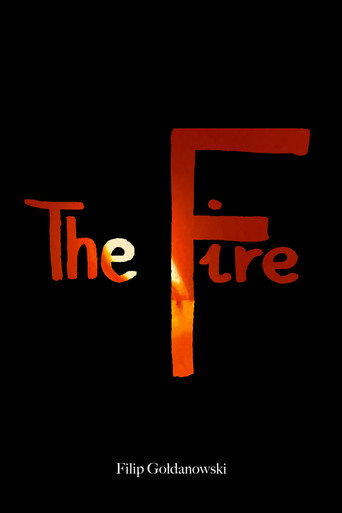
Third part of the cycle “Thou Art BENEDICTUS”. A group of candles and the fire are put into constant visual transformations.
The Fire
2026
 NR
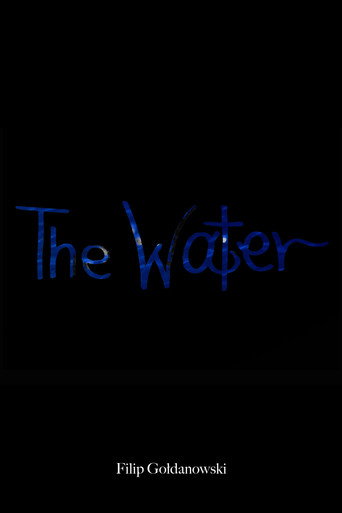
Second part of “Thou Art BENEDICTUS”. A calm meditation on endless visual and philosophical possibilities of the water.
The Water
2026
 NR
Fourth part of the cycle “Thou Art BENEDICTUS”. A caleidoscopic depiction of world spinning in a circle.
The Circle
2026
 NR
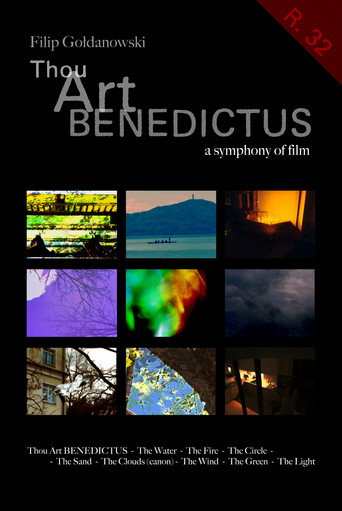
Integral version of "Thou Art BENEDICTUS" - a "symphony" of nine silent short films: "Thou Art BENEDICTUS", "The Water", "The Fire", "The Circle", "The Sand", "The Clouds (canon)", "The Wind", "The Green" and "The Light". Part twelve of the cycle "The Requiem Films".
Thou Art BENEDICTUS - a symphony of film
2026