

Directing
Helke Sander
Born
1937-01-31 (89)
Place of birth
Berlin, Germany
Known for
Directing
Credits
68 titles
Helke Sander is a German feminist filmmaker and author.
Known for
No synopsis available yet.
Alpha Forum
1998
No synopsis available yet.
3 nach 9
1974
 NR
NRPart of the episodic film, Seven women, seven sins, this is a different take on the Adam and Eve story. Eve does eat the apple and her curiosity makes her human. Her generous gesture of offering people things turns into a compulsion to feed others.
Gluttony? Feed It!
1986
 7.0
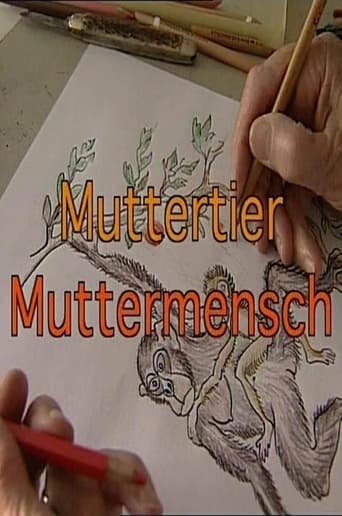
7.0Lucy, who is already human-like, claims that the first humans were mothers: The mother built a nest to secure the child when it became too heavy to carry. This is how she invented the house. She penetrated the dense branches with her voice to maintain contact with the child. That's how she invented language. Today, Lucy shakes her head and asks: "How did you let yourself be dragged down like that?".
Muttertier - Muttermensch
1999
 5.8
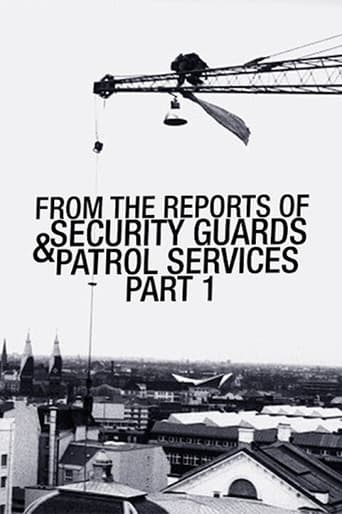
5.8A woman threatens to jump off a crane with her two young children in order to secure affordable housing.
From the Reports of Security Guards & Patrol Services No.1
1985
A woman from a big city moves to a small village near the former border zone between East and West Germany. What is she looking for? What will she encounter? Rural life in the era of globalisation turns into an adventure. History lives in objects, stories and customs here since it was first recorded 800 years ago. Wars and famines have left their traces, just as churches, political parties and various forms of government. The change of the times, structured by television, has almost obscurely changed the old rhythms of life; supermarket offers changed eating habits and food stock economy. Is it folklore nostalgia or a matter of preserving one’s way and quality of life to keep the old customs and habits, such as preserving old types of plants and boiling down cucumbers? The village - a mutual exchange of experiences and garden products. The village is like an onion: it shows ever new surprising layers and leads us deep into unwritten pasts.
Village
2001
Film credits
2020s · 2 titles
 NR
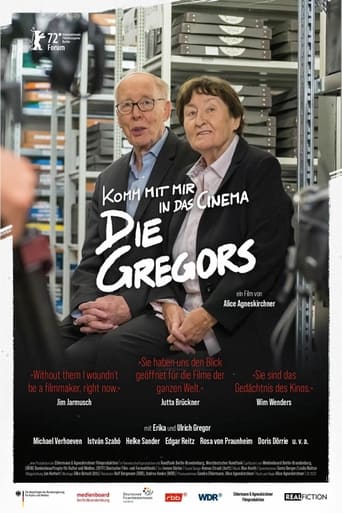
NRFrom the 1950s onwards, Erika and Ulrich Gregor brought countless film historical milestones to Berlin and shaped cinema discourse in post-war Germany. A look at the life and work of the couple without whom Arsenal and the Forum wouldn’t exist.
Come with Me to the Cinema – The Gregors
2022
 10.0
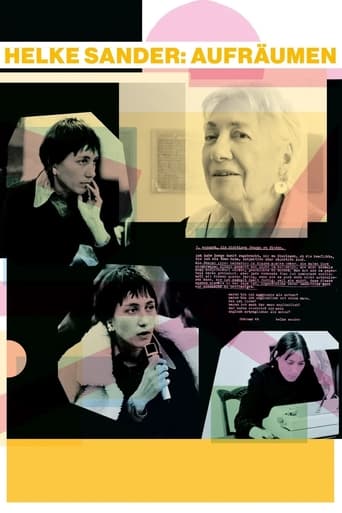
10.0Filmmaker and author Helke Sander is an icon not only of the women's movement, but also of new German cinema. Historical upheavals sometimes only need a small impulse to suddenly set petrified conditions in motion. Helke Sander triggered such a landslide-like change in Germany many years ago.
Helke Sander: Cleaning House
2023
2000s · 5 titles
A woman from a big city moves to a small village near the former border zone between East and West Germany. What is she looking for? What will she encounter? Rural life in the era of globalisation turns into an adventure. History lives in objects, stories and customs here since it was first recorded 800 years ago. Wars and famines have left their traces, just as churches, political parties and various forms of government. The change of the times, structured by television, has almost obscurely changed the old rhythms of life; supermarket offers changed eating habits and food stock economy. Is it folklore nostalgia or a matter of preserving one’s way and quality of life to keep the old customs and habits, such as preserving old types of plants and boiling down cucumbers? The village - a mutual exchange of experiences and garden products. The village is like an onion: it shows ever new surprising layers and leads us deep into unwritten pasts.
Village
2001
No synopsis available yet.
Hannelore Mabry – Ein Porträt
2005
 5.5
5.5A young German soldier named Paul goes AWOL and returns to his childhood home in the countryside. Over a few summer days, Paul evades the responsibilities of everyday life and falls in love with his brother’s girlfriend, disrupting the lives of everyone in his circle.
Bungalow
2002
Only the chosen few know this woman who started working as a secretary for the German Film and Television Academy (DFFB) on 13 February, 1966. The path of Helen’s career is paved with famous names – including that of Wolfgang Petersen, Holger Meins (who later became a member of the Red Army Faction) as well as directors Wolfgang Becker, Detlev Buck and Christian Petzold. All have fond memories of forgetting their troubles after having poured their hearts out over a cup of coffee in Helene’s office – for Helene was both friend and advisor to countless film students.
Who is Helene Schwarz?
2005
A documentary essay on the 1960s women's liberation movement in Germany and it's developments and conflicts through the following decades.
Mitten im Malestream
2005
1990s · 4 titles
7.0Lucy, who is already human-like, claims that the first humans were mothers: The mother built a nest to secure the child when it became too heavy to carry. This is how she invented the house. She penetrated the dense branches with her voice to maintain contact with the child. That's how she invented language. Today, Lucy shakes her head and asks: "How did you let yourself be dragged down like that?".
Muttertier - Muttermensch
1999
 4.4
4.4Based on years of research into the mass rapes committed by the Red Army at the end of the Second World War. In the first part of the documentary Helke Sander interviews multiple German women who were raped in Berlin by Soviet soldiers in May 1945. Most women never spoke of their experience to anyone, after 46 years of silence they talk for the first time publicly about their violent experiences that have left such a mark.
Liberators Take Liberties, part 1
1992
 9.0
9.0A documentary with fictious elements. Ms. Elisabeth (Lieschen) Müller from Austria comes to Bonn, Germany to find herself a man. During the search she investigates the connections between neckties, political power and prostitution, and tries to look for the influence the german feminist movement had on the men in Germany's capital.
The Germans and Their Men
1990
 NR
NRBased on years of research into the mass rapes committed by the Red Army at the end of the Second World War. In the second part of the documentary Helke Sander interviews former Soviet soldiers, and children born from rape, splicing their statements with material from archives. While avoiding an emotional presentation of the subject matter to rule out revanchist interpretations.
Liberators Take Liberties, part 2
1992
1980s · 4 titles
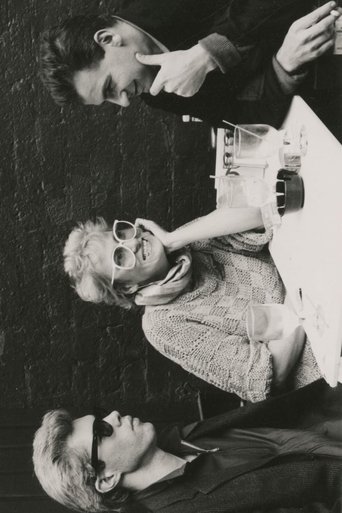 8.0
8.0Berlin Underground-star Ulrike S. went to the Toronto-Filmfestival and then to New York - to find out something about the film business and also about her own desires, daydreams and nightmares.
Fräulein Berlin
1984
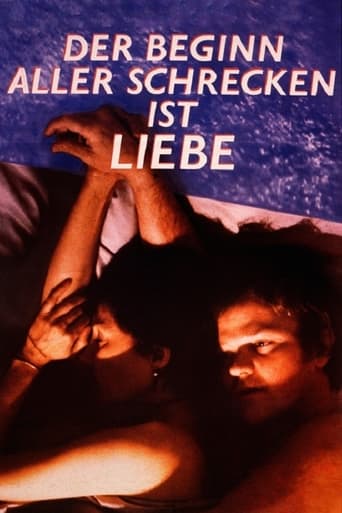 5.8
5.8Story concerns two friends, Freya and Irmtraut and their relationships with the same man, Traugott, who finds it impossible to choose between the two women.
Love Is the Beginning of All Terror
1984
No synopsis available yet.
Das schwache Geschlecht muss stärker werden. Teil 2
1988
 4.0
4.0At the end of the 1960s, a young woman laid the foundation of the women's movement. As well as political initiatives against male dominance, a detailed picture was drawn of society, which established the women’s motivation.
Der subjektive Faktor
1981
1970s · 4 titles
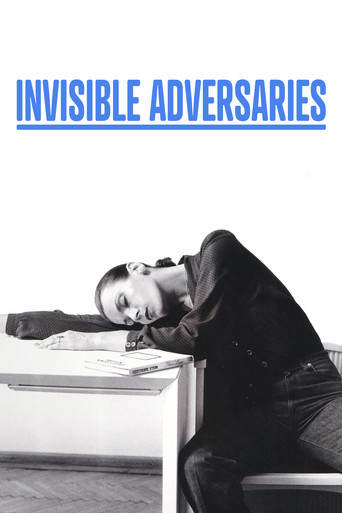 6.7
6.7Set in contemporary Vienna, the film involves a photographer, Anna, who discovers that extraterrestrial beings are colonizing the minds of her fellow citizens by raising the human aggression quotient. The outer world immediately becomes disjointed, yet the inner world does too, as Anna and her lover, Peter, try to hang onto their deteriorating relationship.
Invisible Adversaries
1977
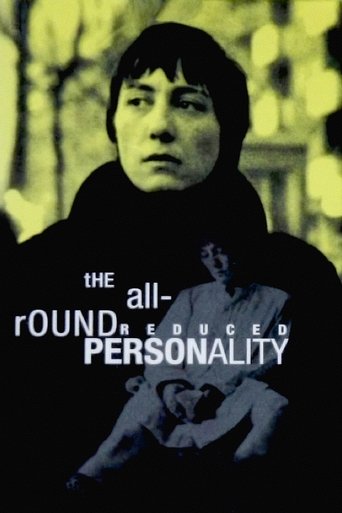 5.5
5.5Edda Chiemnyjewski, a freelance press photographer and single mother living in 1970s West Berlin, is confronted with the fact that "a cook has no time for affairs of state". She also fails to find a market for the project she has been working on with her women′s photography group that seeks to document the city. While from today′s perspective the city, which becomes one of the film′s protagonists, looks like post-war Berlin, little has actually changed as regards the precarious existence of free-lancers. With a heavy dose of self-irony Helke Sander, who also plays the leading role, tells of a divided life in a divided city.
The All-Around Reduced Personality: Redupers
1978
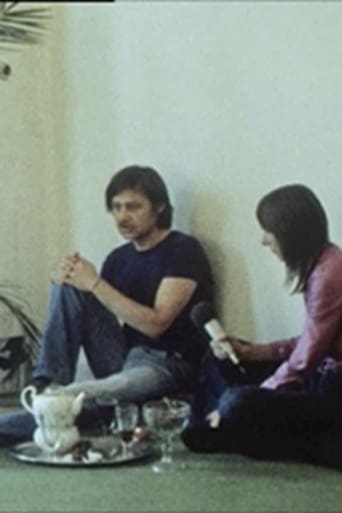 7.1
7.1A look into the life of Holger Meins, the German cinematography student who became a revolutionary and a prominent voice in the Vietnam War protest movement. This film is comprised of interviews with his associates.
Es stirbt allerdings ein jeder, fragt sich nur wie und wie Du gelebt hast (Holger Meins)
1976
Documentary about the situation of film students after graduation.
Filmstudenten - in die Praxis entlassen
1971
1960s · 6 titles
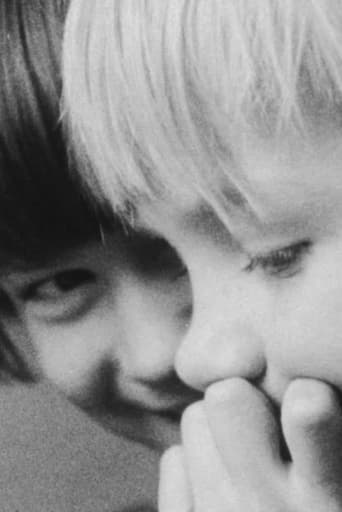 NR
NRDocumentary showing the daily routine of Sander’s seven year old son, Silvo.
Silvo
1967
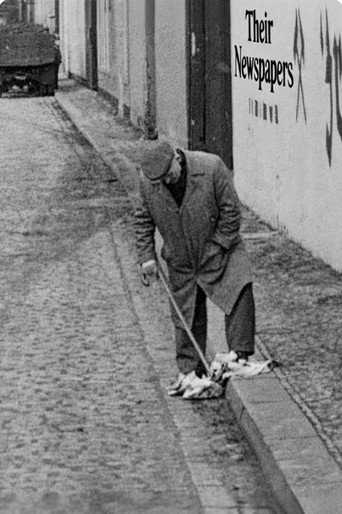 7.0
7.0Ihre Zeitungen is a political film rooted in the 1968 student campaign against the Springer press group, which controlled popular dailies such as the Berliner Zeitung and the Bild Zeitung. Claiming the latter were manipulating public opinion, the students laid siege to the publisher's offices. These events made a strong impression on the German collective conscience, and it's in this context that Farocki made this "agit-prop" film.
Their Newspapers
1968
 9.0
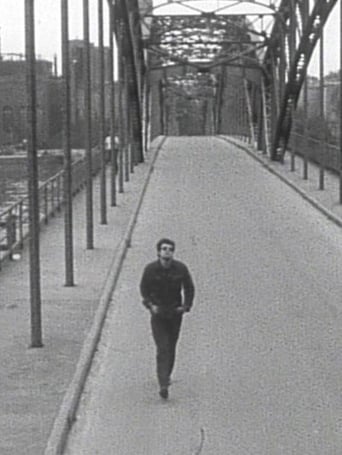
9.0“Six young people move through a city in order to establish the starting point of their joint action. But they can’t agree on the topic. In the end everybody goes their own way and leaves the city.” - Hartmut Bitomsky
3000 Houses
1967
Analysis of an incident in Nazi Germany involving a man and a jewish woman.
Anmass - Mass
1966
The weaker sex must become stronger - but how can this be achieved? The central keyword of the six filmmakers Claudia von Alemann, Susanne Beyeler, Erika Runge, Helke Sander, Ula Stöckl and Hanna Laura Klar is: emancipation. Together, they will discuss the importance of films for feminist consciousness-raising and the role of female filmmakers in this process. A statement will be followed by an exemplary feature film scene. Claudia von Alemann talks about the unequal division of housework and advocates the remuneration of this work. How can the relationship between work and family be improved for working women? What about bringing up children? What steps are necessary to overcome the unequal gender order? One thing is clear: Film work is political practice.
Das schwache Geschlecht muss stärker werden
1969
A documentary about the events at the German Film and Television Academy Berlin (dffb) in November 1968, which led to the termination of the training contracts of 18 students. While Director Heinz Rathsack dictates to his secretary Helene Schwarz the letter lifting the ban from the premises against 18 students, the students plan a general assembly inside the dffb despite the ban.
Wochenschau I: Requiem für eine Firma
1969
Series credits
Behind the camera
NRPart of the episodic film, Seven women, seven sins, this is a different take on the Adam and Eve story. Eve does eat the apple and her curiosity makes her human. Her generous gesture of offering people things turns into a compulsion to feed others.
Gluttony? Feed It!
1986
NRPart of the episodic film, Seven women, seven sins, this is a different take on the Adam and Eve story. Eve does eat the apple and her curiosity makes her human. Her generous gesture of offering people things turns into a compulsion to feed others.
Gluttony? Feed It!
1986
7.0Lucy, who is already human-like, claims that the first humans were mothers: The mother built a nest to secure the child when it became too heavy to carry. This is how she invented the house. She penetrated the dense branches with her voice to maintain contact with the child. That's how she invented language. Today, Lucy shakes her head and asks: "How did you let yourself be dragged down like that?".
Muttertier - Muttermensch
1999
7.0Lucy, who is already human-like, claims that the first humans were mothers: The mother built a nest to secure the child when it became too heavy to carry. This is how she invented the house. She penetrated the dense branches with her voice to maintain contact with the child. That's how she invented language. Today, Lucy shakes her head and asks: "How did you let yourself be dragged down like that?".
Muttertier - Muttermensch
1999
7.0Lucy, who is already human-like, claims that the first humans were mothers: The mother built a nest to secure the child when it became too heavy to carry. This is how she invented the house. She penetrated the dense branches with her voice to maintain contact with the child. That's how she invented language. Today, Lucy shakes her head and asks: "How did you let yourself be dragged down like that?".
Muttertier - Muttermensch
1999
5.8A woman threatens to jump off a crane with her two young children in order to secure affordable housing.
From the Reports of Security Guards & Patrol Services No.1
1985
5.8A woman threatens to jump off a crane with her two young children in order to secure affordable housing.
From the Reports of Security Guards & Patrol Services No.1
1985
5.8A woman threatens to jump off a crane with her two young children in order to secure affordable housing.
From the Reports of Security Guards & Patrol Services No.1
1985
A woman from a big city moves to a small village near the former border zone between East and West Germany. What is she looking for? What will she encounter? Rural life in the era of globalisation turns into an adventure. History lives in objects, stories and customs here since it was first recorded 800 years ago. Wars and famines have left their traces, just as churches, political parties and various forms of government. The change of the times, structured by television, has almost obscurely changed the old rhythms of life; supermarket offers changed eating habits and food stock economy. Is it folklore nostalgia or a matter of preserving one’s way and quality of life to keep the old customs and habits, such as preserving old types of plants and boiling down cucumbers? The village - a mutual exchange of experiences and garden products. The village is like an onion: it shows ever new surprising layers and leads us deep into unwritten pasts.
Village
2001
A woman from a big city moves to a small village near the former border zone between East and West Germany. What is she looking for? What will she encounter? Rural life in the era of globalisation turns into an adventure. History lives in objects, stories and customs here since it was first recorded 800 years ago. Wars and famines have left their traces, just as churches, political parties and various forms of government. The change of the times, structured by television, has almost obscurely changed the old rhythms of life; supermarket offers changed eating habits and food stock economy. Is it folklore nostalgia or a matter of preserving one’s way and quality of life to keep the old customs and habits, such as preserving old types of plants and boiling down cucumbers? The village - a mutual exchange of experiences and garden products. The village is like an onion: it shows ever new surprising layers and leads us deep into unwritten pasts.
Village
2001
A woman from a big city moves to a small village near the former border zone between East and West Germany. What is she looking for? What will she encounter? Rural life in the era of globalisation turns into an adventure. History lives in objects, stories and customs here since it was first recorded 800 years ago. Wars and famines have left their traces, just as churches, political parties and various forms of government. The change of the times, structured by television, has almost obscurely changed the old rhythms of life; supermarket offers changed eating habits and food stock economy. Is it folklore nostalgia or a matter of preserving one’s way and quality of life to keep the old customs and habits, such as preserving old types of plants and boiling down cucumbers? The village - a mutual exchange of experiences and garden products. The village is like an onion: it shows ever new surprising layers and leads us deep into unwritten pasts.
Village
2001
 NR
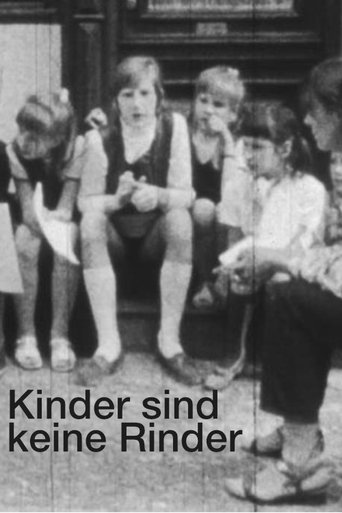
NRThe film documents the work of an anti-authoritarian and self-organized school store in Witzlebenstraße in Berlin-Charlottenburg, which emerged as a critique of the development of children's stores. The film shows how the teachers discuss the conversion of open spaces into playgrounds with the children and how the children jointly prepare the publication of their newspaper "Radau". The concept of the children's stores was developed by the Action Council for the Liberation of Women, which emerged from the Socialist German Student Union (SDS), at the Free University of Berlin (FU) and was organized as self-help from January 1968. Helke Sander was one of the co-founders of the Action Council.
Kinder sind keine Rinder
1970
NRThe film documents the work of an anti-authoritarian and self-organized school store in Witzlebenstraße in Berlin-Charlottenburg, which emerged as a critique of the development of children's stores. The film shows how the teachers discuss the conversion of open spaces into playgrounds with the children and how the children jointly prepare the publication of their newspaper "Radau". The concept of the children's stores was developed by the Action Council for the Liberation of Women, which emerged from the Socialist German Student Union (SDS), at the Free University of Berlin (FU) and was organized as self-help from January 1968. Helke Sander was one of the co-founders of the Action Council.
Kinder sind keine Rinder
1970
No synopsis available yet.
Hannelore Mabry – Ein Porträt
2005
No synopsis available yet.
Hannelore Mabry – Ein Porträt
2005
No synopsis available yet.
Hannelore Mabry – Ein Porträt
2005
NRDocumentary showing the daily routine of Sander’s seven year old son, Silvo.
Silvo
1967
NRDocumentary showing the daily routine of Sander’s seven year old son, Silvo.
Silvo
1967
Seven young women from Berlin discuss their experiences with the pill in a studio setting and react to the ideas that young men of the same age have about this contraceptive. The film is based on the work of the women's group "Brot und Rosen" and their book "Frauenhandbuch Nr.1 Abtreibung und Verhütung".
Does the Pill Liberate?
1973
Seven young women from Berlin discuss their experiences with the pill in a studio setting and react to the ideas that young men of the same age have about this contraceptive. The film is based on the work of the women's group "Brot und Rosen" and their book "Frauenhandbuch Nr.1 Abtreibung und Verhütung".
Does the Pill Liberate?
1973
 5.5
5.5Seven Women, Seven Sins (1986) represents a quintessential moment in film history. The women filmmakers invited to direct for the seven sins were amongst the world's most renown: Helke Sander (Gluttony), Bette Gordon (Greed), Maxi Cohen (Anger), Chantal Akerman (Sloth), Valie Export (Lust), Laurence Gavron (Envy), and Ulrike Ottinger (Pride). Each filmmaker had the liberty of choosing a sin to interpret as they wished. The final film reflected this diversity, including traditional narrative fiction, experimental video, a musical, a radical documentary, and was delivered in multiple formats from 16, super 16, video and 35mm.
Seven Women, Seven Sins
1986
5.5Seven Women, Seven Sins (1986) represents a quintessential moment in film history. The women filmmakers invited to direct for the seven sins were amongst the world's most renown: Helke Sander (Gluttony), Bette Gordon (Greed), Maxi Cohen (Anger), Chantal Akerman (Sloth), Valie Export (Lust), Laurence Gavron (Envy), and Ulrike Ottinger (Pride). Each filmmaker had the liberty of choosing a sin to interpret as they wished. The final film reflected this diversity, including traditional narrative fiction, experimental video, a musical, a radical documentary, and was delivered in multiple formats from 16, super 16, video and 35mm.
Seven Women, Seven Sins
1986
4.4Based on years of research into the mass rapes committed by the Red Army at the end of the Second World War. In the first part of the documentary Helke Sander interviews multiple German women who were raped in Berlin by Soviet soldiers in May 1945. Most women never spoke of their experience to anyone, after 46 years of silence they talk for the first time publicly about their violent experiences that have left such a mark.
Liberators Take Liberties, part 1
1992
4.4Based on years of research into the mass rapes committed by the Red Army at the end of the Second World War. In the first part of the documentary Helke Sander interviews multiple German women who were raped in Berlin by Soviet soldiers in May 1945. Most women never spoke of their experience to anyone, after 46 years of silence they talk for the first time publicly about their violent experiences that have left such a mark.
Liberators Take Liberties, part 1
1992
4.4Based on years of research into the mass rapes committed by the Red Army at the end of the Second World War. In the first part of the documentary Helke Sander interviews multiple German women who were raped in Berlin by Soviet soldiers in May 1945. Most women never spoke of their experience to anyone, after 46 years of silence they talk for the first time publicly about their violent experiences that have left such a mark.
Liberators Take Liberties, part 1
1992
9.0A documentary with fictious elements. Ms. Elisabeth (Lieschen) Müller from Austria comes to Bonn, Germany to find herself a man. During the search she investigates the connections between neckties, political power and prostitution, and tries to look for the influence the german feminist movement had on the men in Germany's capital.
The Germans and Their Men
1990
9.0A documentary with fictious elements. Ms. Elisabeth (Lieschen) Müller from Austria comes to Bonn, Germany to find herself a man. During the search she investigates the connections between neckties, political power and prostitution, and tries to look for the influence the german feminist movement had on the men in Germany's capital.
The Germans and Their Men
1990
9.0A documentary with fictious elements. Ms. Elisabeth (Lieschen) Müller from Austria comes to Bonn, Germany to find herself a man. During the search she investigates the connections between neckties, political power and prostitution, and tries to look for the influence the german feminist movement had on the men in Germany's capital.
The Germans and Their Men
1990
5.5Edda Chiemnyjewski, a freelance press photographer and single mother living in 1970s West Berlin, is confronted with the fact that "a cook has no time for affairs of state". She also fails to find a market for the project she has been working on with her women′s photography group that seeks to document the city. While from today′s perspective the city, which becomes one of the film′s protagonists, looks like post-war Berlin, little has actually changed as regards the precarious existence of free-lancers. With a heavy dose of self-irony Helke Sander, who also plays the leading role, tells of a divided life in a divided city.
The All-Around Reduced Personality: Redupers
1978
5.5Edda Chiemnyjewski, a freelance press photographer and single mother living in 1970s West Berlin, is confronted with the fact that "a cook has no time for affairs of state". She also fails to find a market for the project she has been working on with her women′s photography group that seeks to document the city. While from today′s perspective the city, which becomes one of the film′s protagonists, looks like post-war Berlin, little has actually changed as regards the precarious existence of free-lancers. With a heavy dose of self-irony Helke Sander, who also plays the leading role, tells of a divided life in a divided city.
The All-Around Reduced Personality: Redupers
1978
NRBased on years of research into the mass rapes committed by the Red Army at the end of the Second World War. In the second part of the documentary Helke Sander interviews former Soviet soldiers, and children born from rape, splicing their statements with material from archives. While avoiding an emotional presentation of the subject matter to rule out revanchist interpretations.
Liberators Take Liberties, part 2
1992
NRBased on years of research into the mass rapes committed by the Red Army at the end of the Second World War. In the second part of the documentary Helke Sander interviews former Soviet soldiers, and children born from rape, splicing their statements with material from archives. While avoiding an emotional presentation of the subject matter to rule out revanchist interpretations.
Liberators Take Liberties, part 2
1992
NRBased on years of research into the mass rapes committed by the Red Army at the end of the Second World War. In the second part of the documentary Helke Sander interviews former Soviet soldiers, and children born from rape, splicing their statements with material from archives. While avoiding an emotional presentation of the subject matter to rule out revanchist interpretations.
Liberators Take Liberties, part 2
1992
 5.5
5.5A concise blast of feminist film making, Sander's first film is a tense yet playful four minute short that dissects a typical urban scene at a bus stop on a busy street in Berlin.
Subjectivity
1967
5.5A concise blast of feminist film making, Sander's first film is a tense yet playful four minute short that dissects a typical urban scene at a bus stop on a busy street in Berlin.
Subjectivity
1967
 NR
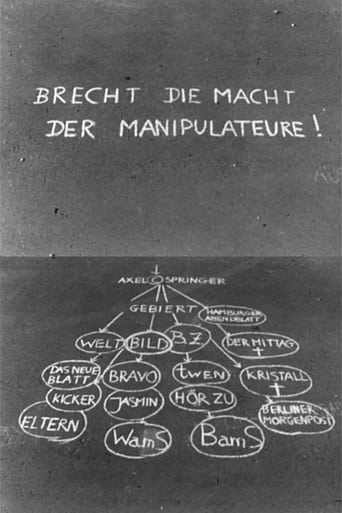
NRDocumentary by Helke Sander, in collaboration with Harun Farocki (among others), about the campaign of the West German New Left against the publishing house Springer, particularly its control and manipulation of the news.
Break the Power of the Manipulators
1968
NRDocumentary by Helke Sander, in collaboration with Harun Farocki (among others), about the campaign of the West German New Left against the publishing house Springer, particularly its control and manipulation of the news.
Break the Power of the Manipulators
1968
 4.4
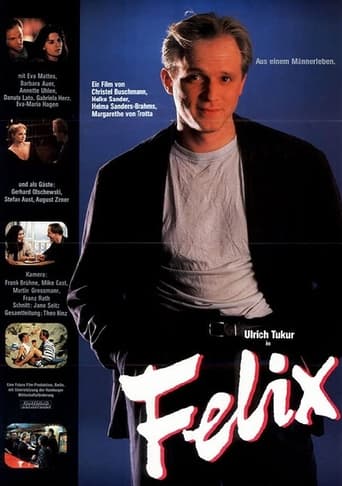
4.4Within four episodes ("Er am Ende", "Muss ich aufpassen", "Eva" and "Are You Lonesome Tonight?" ) are being told adventures of love sick Felix. On Sylt he meets two nymphomaniac women, in Hamburg he meets Eva, a girl who is even more love sick and later he meets Luci who gives him an indecent proposal. Thus he flees again...
Felix
1988
4.4Within four episodes ("Er am Ende", "Muss ich aufpassen", "Eva" and "Are You Lonesome Tonight?" ) are being told adventures of love sick Felix. On Sylt he meets two nymphomaniac women, in Hamburg he meets Eva, a girl who is even more love sick and later he meets Luci who gives him an indecent proposal. Thus he flees again...
Felix
1988
 9.0
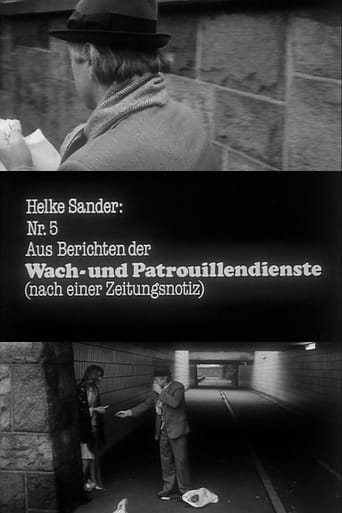
9.0A sexual assault and its consequences. The 2nd of three self-contained shorts from Helke Sander's series of shorts entitled From the Reports of Security Guards & Patrol Services.
From the Reports of Security Guards & Patrol Services - Part Five
1987