
Directing
Víctor López Mínguez
Born 2001-01-31 · Madrid, Spain
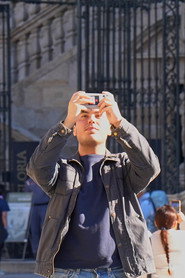
Víctor López Mínguez (Madrid, 2001) is a journalist and audiovisual enthuasist who studied at Universidad Carlos III de Madrid. Since he was a child, Víctor showed interest in culture, filmmaking and the social weight of our cultural relations, as well as the way people connect and work together. He has worked with some of the most important Spanish media outlets such as El País or Onda Cero, besides directing his first documentary at 23 years old, 'La soledad del jugador de banda'. He produced and directed his first feature film in 2026, 'Los falantes', a documentary on Asturian culture and language.
Acting credits
 NR
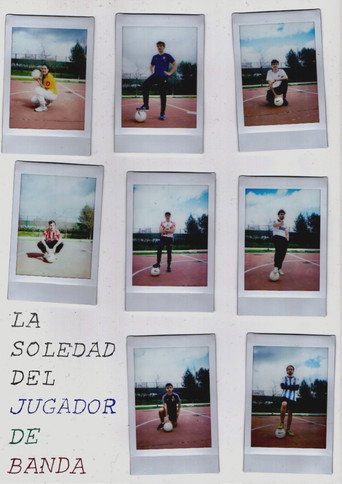
NR"Football is synonymous with childhood and the neighborhood," asserts an interviewee in ‘La soledad del jugador de banda’ (‘The Loneliness of the Left Wing-Back’). Through the analogy between football and cinema, this documentary addresses the social, community, and identity-shaping power of the sport. Set against the backdrop of the working-class neighborhoods in southern Madrid, it reveals the desire to make films and the opportunities available to the working class to do so. Thus emerges a metacinematic narrative to reflect on form and the implications of creators and their desires. Furthermore, it explores how the communities built around football interact with the "other"—with the marginalized—through homophobia and machismo in sports. The filmmaker lays himself bare to tell his story as a fan, a player, a queer individual, and an aspiring filmmaker.
The Loneliness of the Left Wing-Back
2024
 NR
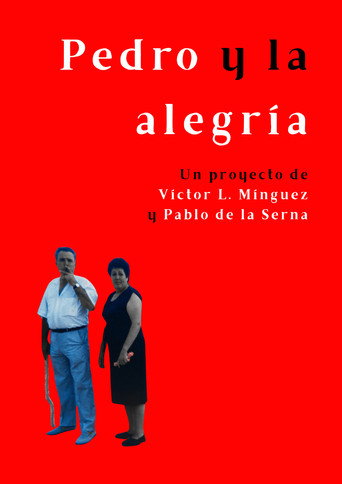
NRThe infinite stories of millions of families and individuals lie hidden in the photo albums and undeveloped film rolls tucked away in drawers, chests, and storage rooms. 'Pedro y la alegría' pours out all these images to reconstruct Pedro and Ana, a hard-working Andalusian couple full of life, history, and photographs to share.
Pedro y la alegría
2026
Behind the camera
NR"Football is synonymous with childhood and the neighborhood," asserts an interviewee in ‘La soledad del jugador de banda’ (‘The Loneliness of the Left Wing-Back’). Through the analogy between football and cinema, this documentary addresses the social, community, and identity-shaping power of the sport. Set against the backdrop of the working-class neighborhoods in southern Madrid, it reveals the desire to make films and the opportunities available to the working class to do so. Thus emerges a metacinematic narrative to reflect on form and the implications of creators and their desires. Furthermore, it explores how the communities built around football interact with the "other"—with the marginalized—through homophobia and machismo in sports. The filmmaker lays himself bare to tell his story as a fan, a player, a queer individual, and an aspiring filmmaker.
The Loneliness of the Left Wing-Back
2024
NR"Football is synonymous with childhood and the neighborhood," asserts an interviewee in ‘La soledad del jugador de banda’ (‘The Loneliness of the Left Wing-Back’). Through the analogy between football and cinema, this documentary addresses the social, community, and identity-shaping power of the sport. Set against the backdrop of the working-class neighborhoods in southern Madrid, it reveals the desire to make films and the opportunities available to the working class to do so. Thus emerges a metacinematic narrative to reflect on form and the implications of creators and their desires. Furthermore, it explores how the communities built around football interact with the "other"—with the marginalized—through homophobia and machismo in sports. The filmmaker lays himself bare to tell his story as a fan, a player, a queer individual, and an aspiring filmmaker.
The Loneliness of the Left Wing-Back
2024
NR"Football is synonymous with childhood and the neighborhood," asserts an interviewee in ‘La soledad del jugador de banda’ (‘The Loneliness of the Left Wing-Back’). Through the analogy between football and cinema, this documentary addresses the social, community, and identity-shaping power of the sport. Set against the backdrop of the working-class neighborhoods in southern Madrid, it reveals the desire to make films and the opportunities available to the working class to do so. Thus emerges a metacinematic narrative to reflect on form and the implications of creators and their desires. Furthermore, it explores how the communities built around football interact with the "other"—with the marginalized—through homophobia and machismo in sports. The filmmaker lays himself bare to tell his story as a fan, a player, a queer individual, and an aspiring filmmaker.
The Loneliness of the Left Wing-Back
2024
 NR
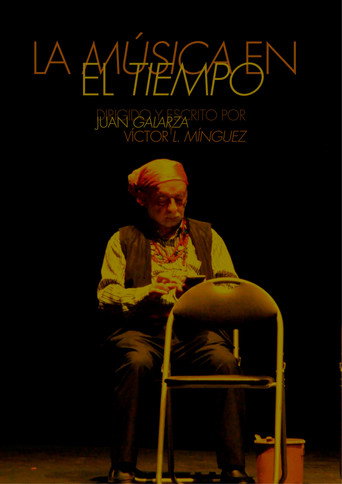
NRThroughout history, music has served as the primary method of expression for the nations and cultures that embrace it, as well as an unyielding bridge between past and future generations. Given its unstoppable technological, artistic, and accessibility evolution, what relationship does today's music hold with traditional chants? How do folklore and new urban genres intersect? What does their future look like? Guided by Gese Da O—music producer for artists such as Cruz Cafuné, Quevedo, and Delaossa—alongside Los Sabandeños and the Club de la Zarzuela de Madrid, *La música en el tiempo* seeks answers to these questions.
La música en el tiempo
2025
NRThroughout history, music has served as the primary method of expression for the nations and cultures that embrace it, as well as an unyielding bridge between past and future generations. Given its unstoppable technological, artistic, and accessibility evolution, what relationship does today's music hold with traditional chants? How do folklore and new urban genres intersect? What does their future look like? Guided by Gese Da O—music producer for artists such as Cruz Cafuné, Quevedo, and Delaossa—alongside Los Sabandeños and the Club de la Zarzuela de Madrid, *La música en el tiempo* seeks answers to these questions.
La música en el tiempo
2025
NRThroughout history, music has served as the primary method of expression for the nations and cultures that embrace it, as well as an unyielding bridge between past and future generations. Given its unstoppable technological, artistic, and accessibility evolution, what relationship does today's music hold with traditional chants? How do folklore and new urban genres intersect? What does their future look like? Guided by Gese Da O—music producer for artists such as Cruz Cafuné, Quevedo, and Delaossa—alongside Los Sabandeños and the Club de la Zarzuela de Madrid, *La música en el tiempo* seeks answers to these questions.
La música en el tiempo
2025
NRThe infinite stories of millions of families and individuals lie hidden in the photo albums and undeveloped film rolls tucked away in drawers, chests, and storage rooms. 'Pedro y la alegría' pours out all these images to reconstruct Pedro and Ana, a hard-working Andalusian couple full of life, history, and photographs to share.
Pedro y la alegría
2026
NRThe infinite stories of millions of families and individuals lie hidden in the photo albums and undeveloped film rolls tucked away in drawers, chests, and storage rooms. 'Pedro y la alegría' pours out all these images to reconstruct Pedro and Ana, a hard-working Andalusian couple full of life, history, and photographs to share.
Pedro y la alegría
2026