
Directing
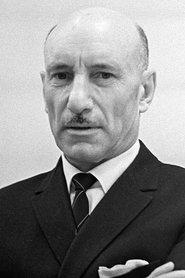
Sergei Gerasimov
Born — Died
1906-05-21 — 1985-11-26
Place of birth
Kundravy, Urals, Russian Empire
Known for
Directing
Credits
63 titles
Sergei Appolinarievich Gerasimov (21 May 1906 – 26 November 1985) was one of the most reputable Soviet film directors and screenwriters. The oldest film school in the world, the VGIK, bears his name. Gerasimov started his film industry career as an actor in 1924. At first he appeared in Kozintsev and Trauberg films, such as The Overcoat and The New Babylon. Later, he was commissioned to produce screen versions of the literary classics of Socialist realism. His epic screenings of Alexander Fadeyev's The Young Guard (1948) and Mikhail Sholokhov's And Quiet Flows the Don (1957–58) were extolled by the authorities as exemplary. During several decades of their teaching in the VGIK Gerasimov and…
Known for
 NR
NRNo synopsis available yet.
Legends of Cinema
2016
 6.3
6.3Based on the novel of the same name by Mikhail Sholokhov, about the fate of people broken by the First World War, the October Revolution of 1917 and the Civil War in Russia (1917-1922), about the collapse of the foundations and ideals of the Don Cossacks of Russia at the beginning of the XX century, about the personal tragedy of the protagonist — Grigoriy Melekhov.
Quiet Flows the Don
1957
 6.0
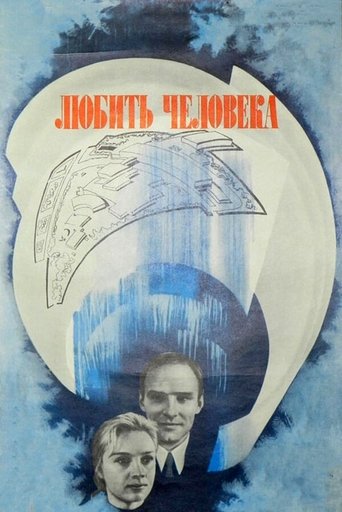
6.0A film about young architects who are building a new city in Siberia (Norilsk), their anxieties, concerns, and victories. Story of subtle psychology of love and personal happiness experienced men and women, behind the shoulders of which the pain of the past
The Love of Mankind
1973
 6.1
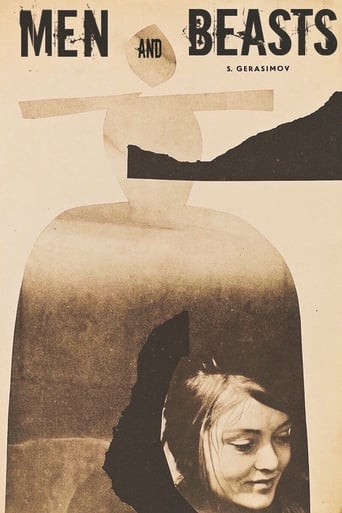
6.1The plot is based on the dramatic fate of the Red Army commander Aleksei Ivanovich Pavlov. Having been captured in January 1942 and being among the displaced persons, he didn't immediately decide to return to the USSR. Having rolled around the foreign country for 17 years, Aleksei nevertheless returned to his homeland. He goes to his brother in the south of the country to Sevastopol. Aleksei accidentally meets the doctor Anna Andreyevna, who was saved from death in besieged Leningrad. She travels by car from Moscow and also to the south, with her daughter Tanya; she suggests he join them. Aleksei tells about his life on the road.
Men and Beasts
1962
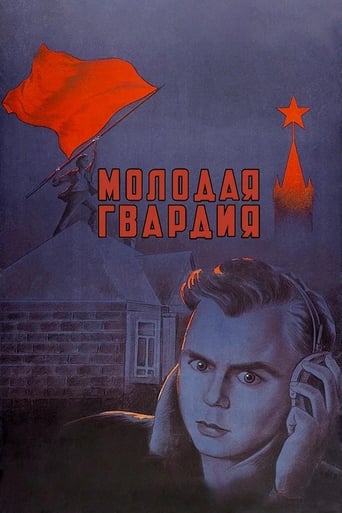 5.5
5.5In 1942, local teenagers are organizing the underground resistance in the city of Krasnodon during the Nazi occupation of Russia. The teens manage to outsmart the Nazis in their fight, and their activity lifts the spirits of the surviving citizens.
The Young Guard
1948
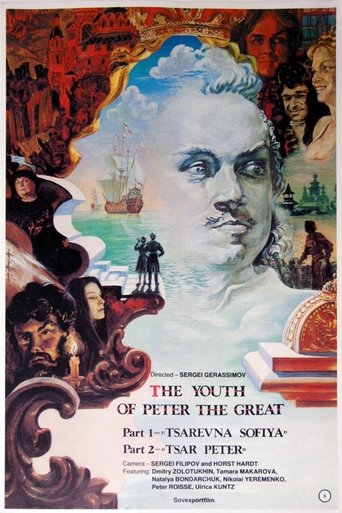 6.8
6.8The years of the tsar’s adolescence and youth were permeated with deadly danger coming from some of the Boyars, the rebellious Streltsy and Tsarevna Sophia who aspired for power. But already at that early time Peter demonstrates a profound, bright intellect, a strong will and the sense of purpose, which help him disarm both his open and secret enemies.
The Youth of Peter
1981
Film credits
1980s · 3 titles
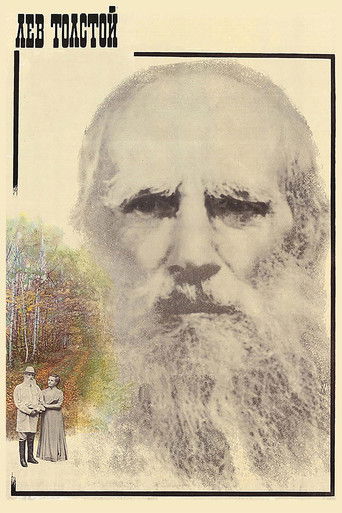 4.6
4.6This is the story of last years of Leo Tolstoy's life at his mansion in Yasnaya Polyana. He is surrounded by his family, friends, acquaintances and absolute strangers who are coming to the great man and artist from all over the world. But in his sleepless nights he dreams about his happy youthful years and the crucial, hard ones. And everything ends with his tragic departure from Yasnaya Polyana and his death at an obscure little station of Astapovo.
Lev Tolstoy
1984
About the work of the Soviet film director S. F. Bondarchuk.
Sergey Bondarchuk
1982
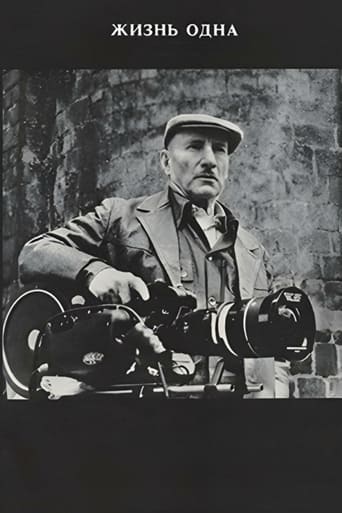 7.0
7.0About the creative path and pedagogical activity of the Soviet film director and actor S.A. Gerasimov.
Just Life...
1987
1970s · 6 titles
 NR
NRThe story of VGIK teachers and students about the acting profession.
VGIK: Teachers and Students Talk About the Profession
1979
 NR
NRA report from the set of the movie "To Love a Man" directed by S. A. Gerasimov.
Oh, Cinema, Cinema!
1973
 8.0
8.0No synopsis available yet.
Karlovy Vary Promenades
1974
 4.3
4.3The young girl Olga Vasilyeva grew up in an orphanage. She never knew her mother and wants to find her. The only trace she has is a preserved letter from her mother from her personal file, which she managed to get from the administration of the orphanage. For a short vacation at her factory school, she travels from Sverdlovsk to Moscow following the unreliable traces of this letter. Yelena Alekseyevna — the woman she finds when she arrives at the address turns out to be a teacher in a ballet school, the wife of an ordinary senior teacher at the Moscow Technical Institute (who didn't defend his dissertation and is complacent about this) and an old-Moscow intellectual. She kindly meets her, but she is not the person Olga is looking for, she only has the same last name and first name and consonant middle name. She is kind and hospitable, ready to help the girl find her real mother and offers Olga to visit her house during a short stay in Moscow.
Daughters-Mothers
1975
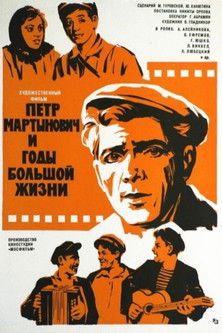 8.0
8.0A semi-documentary biography film about the life and work of Soviet film actor Pyotr Aleynikov. Includes newsreels from the 1930s, footage from films featuring Aleynikov and interviews with his closest friends and colleagues.
Pyotr Martynovich And The Years Of Great Life
1976
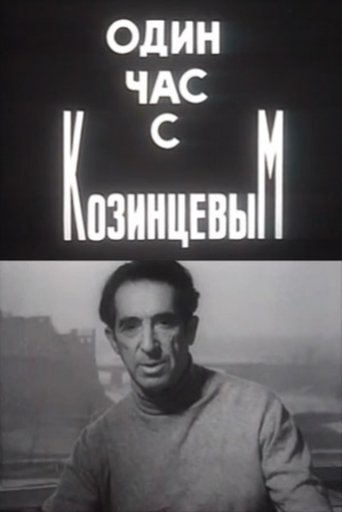 NR
NRNo synopsis available yet.
One Hour With Kozintsev
1970
1960s · 2 titles
6.1The plot is based on the dramatic fate of the Red Army commander Aleksei Ivanovich Pavlov. Having been captured in January 1942 and being among the displaced persons, he didn't immediately decide to return to the USSR. Having rolled around the foreign country for 17 years, Aleksei nevertheless returned to his homeland. He goes to his brother in the south of the country to Sevastopol. Aleksei accidentally meets the doctor Anna Andreyevna, who was saved from death in besieged Leningrad. She travels by car from Moscow and also to the south, with her daughter Tanya; she suggests he join them. Aleksei tells about his life on the road.
Men and Beasts
1962
 5.7
5.7A successful young journalist goes to a small industrial city in order to understand the written complaints of a certain girl. When he met the author of the letters and the girl whom she had slandered, he didn't immediately understand the complexity of the situation and the measure of responsibility to those whom he was obliged to protect...
The Journalist
1967

1930s · 2 titles
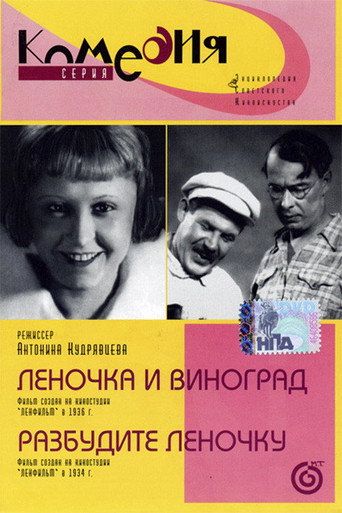 6.5
6.5Lenochka dreams about cowboys and indians while her brother plays tricks on her while she sleeps. The story of a little schoolgirl who was always late for lessons, and her friends who came up with an original way to re-educate a truant.
Wake Lena Up
1934
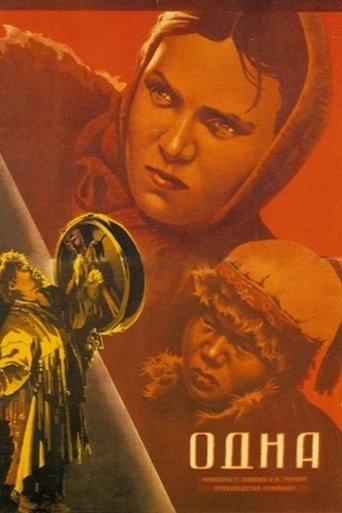 5.5
5.5A young teacher is sent to a remote province, separating her from her lover, and sets about the difficult task of building a school there.
Alone
1931
1920s · 7 titles
 5.7
5.7Director Frederick Ermler’s last silent feature and the last of four collaborations with actor Fiodor Nikitin. Nikitin plays an officer who spends a decade after the Great War as a shell-shocked amnesiac, until a glimpse of a woman through a train window sparks the return of his memory. He makes his way back to St. Petersburg, now Leningrad, a man out of time who struggles to make sense of the new society brought about by the revolution.
Fragment of an Empire
1929
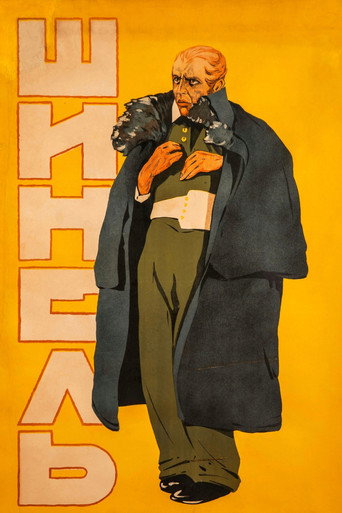 5.1
5.1Bashmachkin, a lowly, impoverished government clerk in St. Petersburg, endures workplace mockery and dedicates his meager savings to buying a new winter coat.
The Overcoat
1926
Lost film.
Мишки против Юденича
1925
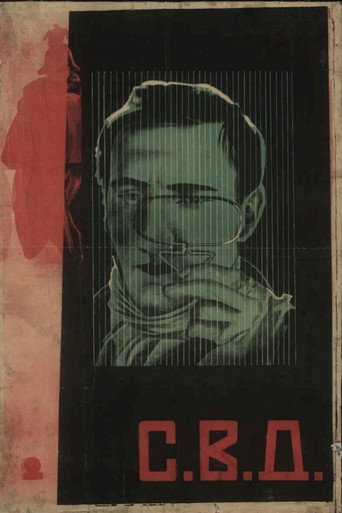 5.4
5.4Right before the Decembrist Revolt of 1825, a chevalier of fortune decides that it's time for a game. But on whom make a bet? He asks the cards. But he's not the only one who makes the choice.
The Club of the Big Deed
1927
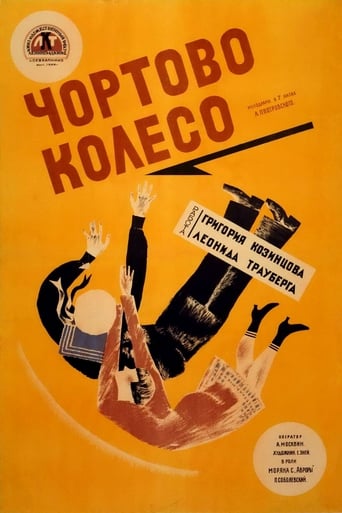 5.7
5.7Young Soviet navy sailor Vanya Shorin misses his ship after meeting a girl at a funfair. They ride a carnival attraction called The Devil's Wheel, which triggers a series of events pulling the sailor into a dangerous criminal underworld before he finds the courage to return to his comrades.
The Devil's Wheel
1926
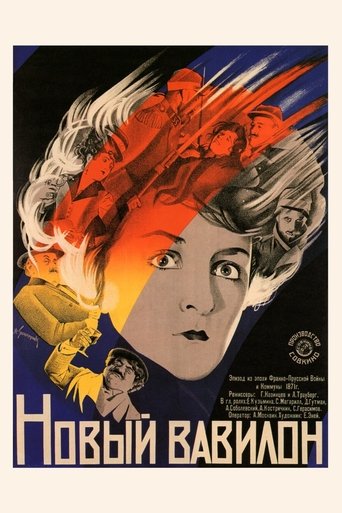 6.1
6.1In the short-lived Commune of Paris, a conscripted soldier falls in love with a Communard saleswoman. As the army cracks down on the revolutionaries, the soldier is forced to fight against the Commune, and the pair's love is put to the test.
The New Babylon
1929
No synopsis available yet.
Chuzhoy pidzhak
1927
Series credits
Behind the camera
6.3Based on the novel of the same name by Mikhail Sholokhov, about the fate of people broken by the First World War, the October Revolution of 1917 and the Civil War in Russia (1917-1922), about the collapse of the foundations and ideals of the Don Cossacks of Russia at the beginning of the XX century, about the personal tragedy of the protagonist — Grigoriy Melekhov.
Quiet Flows the Don
1957
6.3Based on the novel of the same name by Mikhail Sholokhov, about the fate of people broken by the First World War, the October Revolution of 1917 and the Civil War in Russia (1917-1922), about the collapse of the foundations and ideals of the Don Cossacks of Russia at the beginning of the XX century, about the personal tragedy of the protagonist — Grigoriy Melekhov.
Quiet Flows the Don
1957
6.0A film about young architects who are building a new city in Siberia (Norilsk), their anxieties, concerns, and victories. Story of subtle psychology of love and personal happiness experienced men and women, behind the shoulders of which the pain of the past
The Love of Mankind
1973
6.0A film about young architects who are building a new city in Siberia (Norilsk), their anxieties, concerns, and victories. Story of subtle psychology of love and personal happiness experienced men and women, behind the shoulders of which the pain of the past
The Love of Mankind
1973
6.1The plot is based on the dramatic fate of the Red Army commander Aleksei Ivanovich Pavlov. Having been captured in January 1942 and being among the displaced persons, he didn't immediately decide to return to the USSR. Having rolled around the foreign country for 17 years, Aleksei nevertheless returned to his homeland. He goes to his brother in the south of the country to Sevastopol. Aleksei accidentally meets the doctor Anna Andreyevna, who was saved from death in besieged Leningrad. She travels by car from Moscow and also to the south, with her daughter Tanya; she suggests he join them. Aleksei tells about his life on the road.
Men and Beasts
1962
6.1The plot is based on the dramatic fate of the Red Army commander Aleksei Ivanovich Pavlov. Having been captured in January 1942 and being among the displaced persons, he didn't immediately decide to return to the USSR. Having rolled around the foreign country for 17 years, Aleksei nevertheless returned to his homeland. He goes to his brother in the south of the country to Sevastopol. Aleksei accidentally meets the doctor Anna Andreyevna, who was saved from death in besieged Leningrad. She travels by car from Moscow and also to the south, with her daughter Tanya; she suggests he join them. Aleksei tells about his life on the road.
Men and Beasts
1962
5.5In 1942, local teenagers are organizing the underground resistance in the city of Krasnodon during the Nazi occupation of Russia. The teens manage to outsmart the Nazis in their fight, and their activity lifts the spirits of the surviving citizens.
The Young Guard
1948
5.5In 1942, local teenagers are organizing the underground resistance in the city of Krasnodon during the Nazi occupation of Russia. The teens manage to outsmart the Nazis in their fight, and their activity lifts the spirits of the surviving citizens.
The Young Guard
1948
6.8The years of the tsar’s adolescence and youth were permeated with deadly danger coming from some of the Boyars, the rebellious Streltsy and Tsarevna Sophia who aspired for power. But already at that early time Peter demonstrates a profound, bright intellect, a strong will and the sense of purpose, which help him disarm both his open and secret enemies.
The Youth of Peter
1981
6.8The years of the tsar’s adolescence and youth were permeated with deadly danger coming from some of the Boyars, the rebellious Streltsy and Tsarevna Sophia who aspired for power. But already at that early time Peter demonstrates a profound, bright intellect, a strong will and the sense of purpose, which help him disarm both his open and secret enemies.
The Youth of Peter
1981
 3.3
3.3Short propaganda film released to raise army morale during first months of war. Civil War hero and Red Army commander Vasily Chapayev (killed in 1919 by White Army officers then drowned in the Ural river) swims ashore but it's the summer of 1941. Chapayev asks who are Soviets fighting off this time, hears that it's Germans once again and then gives an inspiring speech. He is played by Boris Babochkin who famously portrayed Chapayev in 1934 biopic.
Chapayev is with Us
1941
 5.4
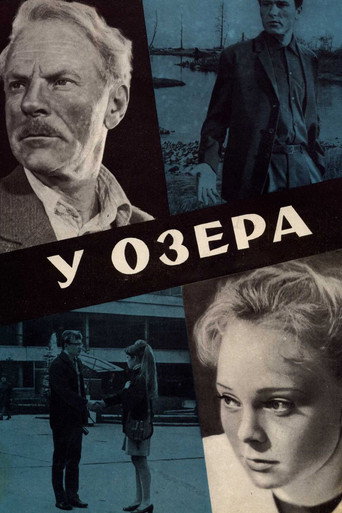
5.4The film is a reflection on the responsibility of man to other people, native nature and the world around us, the problem of preserving Lake Baikal, on the banks of which a large construction project has unfolded. The first half of the 60s of the XX century, the story of the love of young Lena Barmina to an adult respectable person, bearing on his shoulders a heavy burden of responsibility for the activities of a huge enterprise. Construction engineer Chernykh and Lena, the daughter of a scientist, are doing everything to save the lake from harmful and unjustified plums. A difficult relationship develops between them and soon Lena realizes that she is in love. But after learning that Chernykh is married, the girl leaves...
By the Lake
1970
5.4The film is a reflection on the responsibility of man to other people, native nature and the world around us, the problem of preserving Lake Baikal, on the banks of which a large construction project has unfolded. The first half of the 60s of the XX century, the story of the love of young Lena Barmina to an adult respectable person, bearing on his shoulders a heavy burden of responsibility for the activities of a huge enterprise. Construction engineer Chernykh and Lena, the daughter of a scientist, are doing everything to save the lake from harmful and unjustified plums. A difficult relationship develops between them and soon Lena realizes that she is in love. But after learning that Chernykh is married, the girl leaves...
By the Lake
1970
 10.0
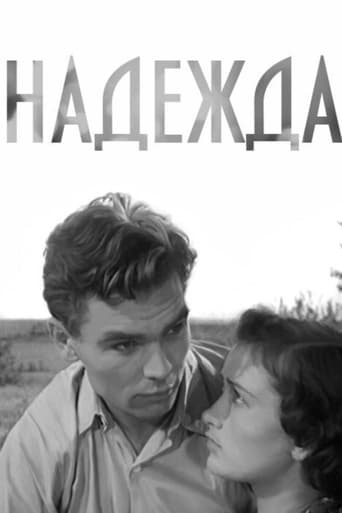
10.0Nadya Vakhmistrova, the daughter of a collective farmer from the Volgo-Don agricultural artel, works honestly and conscientiously on her collective farm. But then, like all the young people in the country, she hears the news: the party is calling on young men and women to develop virgin and fallow lands. Nadya, a member of the Komsomol, believes that her place is where the party calls her. But her beloved, Grigory, the collective farm foreman, does not share this decision. He is overcome with doubts: is it worth leaving his native village if he is needed here on the collective farm; wouldn't it be better to get married and build a personal happiness here? But Nadezhda is adamant. She leaves, leaving Grigory behind...
Nadezhda
1955
10.0Nadya Vakhmistrova, the daughter of a collective farmer from the Volgo-Don agricultural artel, works honestly and conscientiously on her collective farm. But then, like all the young people in the country, she hears the news: the party is calling on young men and women to develop virgin and fallow lands. Nadya, a member of the Komsomol, believes that her place is where the party calls her. But her beloved, Grigory, the collective farm foreman, does not share this decision. He is overcome with doubts: is it worth leaving his native village if he is needed here on the collective farm; wouldn't it be better to get married and build a personal happiness here? But Nadezhda is adamant. She leaves, leaving Grigory behind...
Nadezhda
1955
No synopsis available yet.
Verochka
1946
 6.0
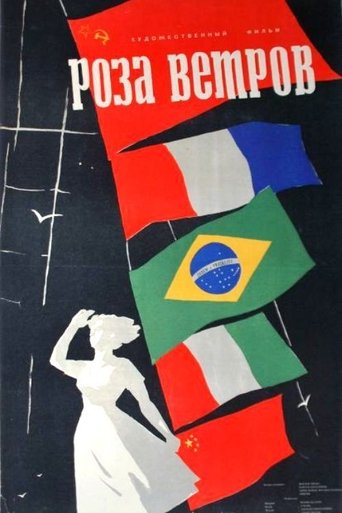
6.0An international anthology about the struggles of female workers around the world.
The Wind Rose
1957
5.7A successful young journalist goes to a small industrial city in order to understand the written complaints of a certain girl. When he met the author of the letters and the girl whom she had slandered, he didn't immediately understand the complexity of the situation and the measure of responsibility to those whom he was obliged to protect...
The Journalist
1967
5.7A successful young journalist goes to a small industrial city in order to understand the written complaints of a certain girl. When he met the author of the letters and the girl whom she had slandered, he didn't immediately understand the complexity of the situation and the measure of responsibility to those whom he was obliged to protect...
The Journalist
1967
 10.0
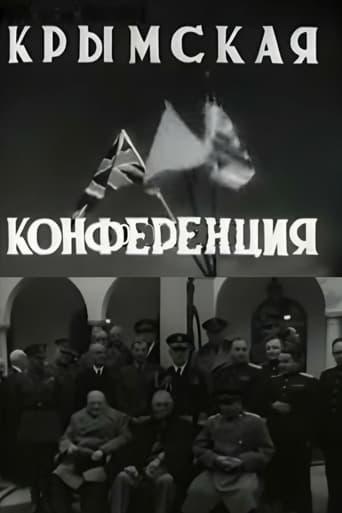
10.0The Crimean (Yalta) conference of the leaders of the three powers - allies in the Anti-Hitler coalition was held from February 4 to February 11, 1945 in the Livadia Palace near Yalta.
Crimean Conference
1945
 8.0
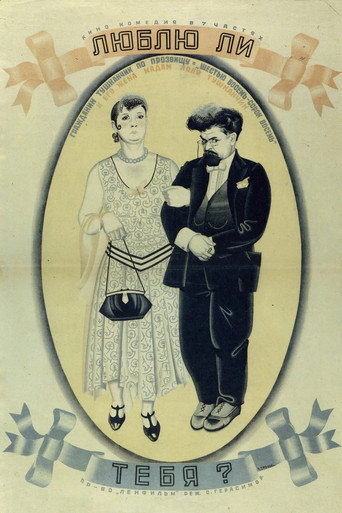
8.0A comedy about the life of a young married couple—Soviet students. Film has not survived.
Do I Love You?
1934
8.0A comedy about the life of a young married couple—Soviet students. Film has not survived.
Do I Love You?
1934
 6.1
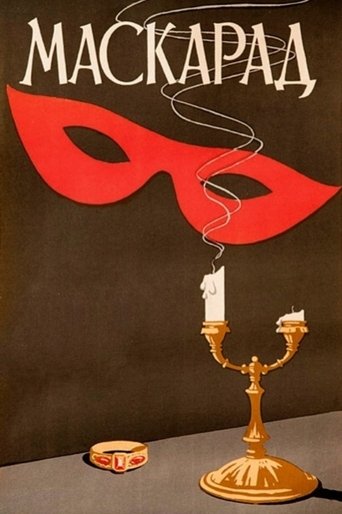
6.1Taken from a Lermontov play, the story begins when beautiful Nina loses a bracelet during a masked ball. Another woman finds it and without revealing whose bracelet it belongs to, she gives it to an ardent Calvary officer admirer at the ball. This leads to deeper and deeper incisions upon the urbane social body of Tsarist Russia. A drama of pride, marital distrust, gambling, infidelity and humiliation twirls around the decaying corpse of a perverted social class.
Masquerade
1941
6.1Taken from a Lermontov play, the story begins when beautiful Nina loses a bracelet during a masked ball. Another woman finds it and without revealing whose bracelet it belongs to, she gives it to an ardent Calvary officer admirer at the ball. This leads to deeper and deeper incisions upon the urbane social body of Tsarist Russia. A drama of pride, marital distrust, gambling, infidelity and humiliation twirls around the decaying corpse of a perverted social class.
Masquerade
1941
4.6This is the story of last years of Leo Tolstoy's life at his mansion in Yasnaya Polyana. He is surrounded by his family, friends, acquaintances and absolute strangers who are coming to the great man and artist from all over the world. But in his sleepless nights he dreams about his happy youthful years and the crucial, hard ones. And everything ends with his tragic departure from Yasnaya Polyana and his death at an obscure little station of Astapovo.
Lev Tolstoy
1984
4.6This is the story of last years of Leo Tolstoy's life at his mansion in Yasnaya Polyana. He is surrounded by his family, friends, acquaintances and absolute strangers who are coming to the great man and artist from all over the world. But in his sleepless nights he dreams about his happy youthful years and the crucial, hard ones. And everything ends with his tragic departure from Yasnaya Polyana and his death at an obscure little station of Astapovo.
Lev Tolstoy
1984
 7.0
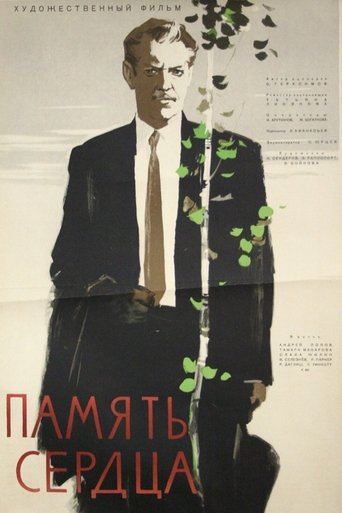
7.0The story of an English pilot who crashed in the Soviet Union during the Second World War, and whose life is saved by a woman and a boy - two partisans near the enemy lines, Long afterwards in England he remembers the Russians with affection, tells his friends about his experiences, and resolves to go back to find the two partisans his heart remembers.
The Memory of the Heart
1958
 NR
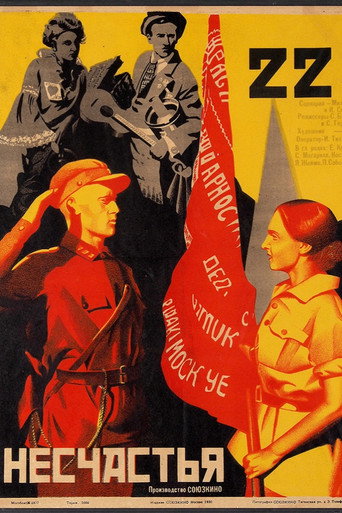
NRLost movie.
Twenty Two Misfortunes
1930
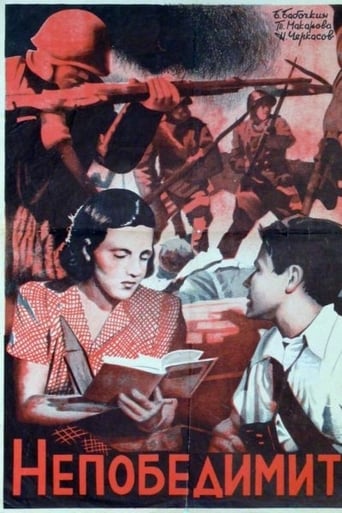 4.9
4.9The autumn of 1941. Leningrad is besieged by the Nazis. A new model of tank is being developed at a large defense plant. Built in the shortest possible time combat vehicles are tested directly on battlefields, fighting with fascists in the outskirts of the city. The first feature film about the heroic everyday life of city defenders was shot directly in assembly shops of plants and in the streets of Leningrad when the city was fighting against the enemy
The Invincible
1943
4.9The autumn of 1941. Leningrad is besieged by the Nazis. A new model of tank is being developed at a large defense plant. Built in the shortest possible time combat vehicles are tested directly on battlefields, fighting with fascists in the outskirts of the city. The first feature film about the heroic everyday life of city defenders was shot directly in assembly shops of plants and in the streets of Leningrad when the city was fighting against the enemy
The Invincible
1943
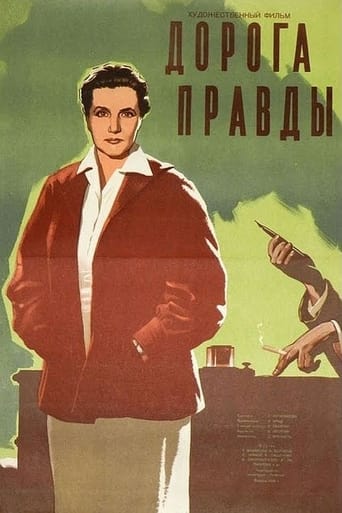 7.0
7.0An optimistic drama about an ordinary Moscow worker who, thanks to her integrity, intelligence and justice, won everyone’s trust and was elected as a people’s judge.
Road of Truth
1957
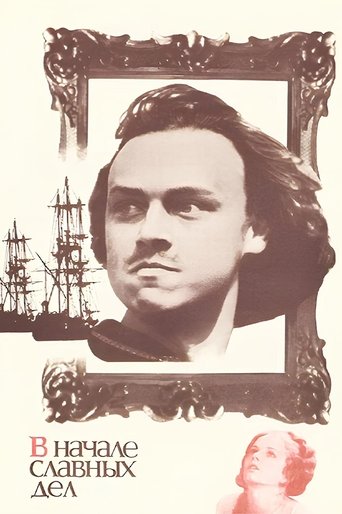 8.0
8.0No synopsis available yet.
At the Beginning of Glorious Days
1981
8.0No synopsis available yet.
At the Beginning of Glorious Days
1981
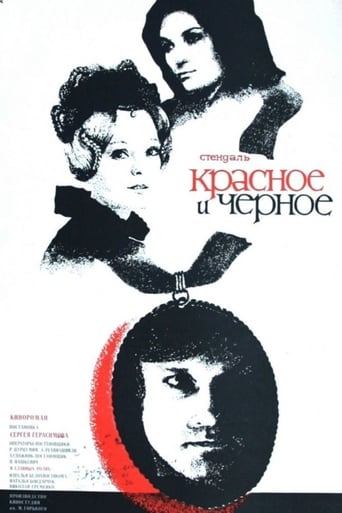 6.2
6.2Historical psychological drama which chronicles the attempts of a provincial young man to rise socially beyond his modest upbringing through a combination of talent, hard work, deception, and hypocrisy - who ultimately allows his passions to betray him.
The Red and the Black
1976
6.2Historical psychological drama which chronicles the attempts of a provincial young man to rise socially beyond his modest upbringing through a combination of talent, hard work, deception, and hypocrisy - who ultimately allows his passions to betray him.
The Red and the Black
1976
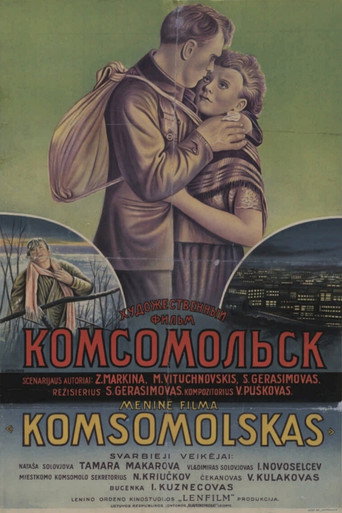 8.5
8.5In 1932, thousands of Komsomol members set off for the Far East to build the "city of youth" — Komsomolsk-on-Amur. Among the builders is a saboteur. Soon, fuel depots explode at the new factories in Komsomolsk.
Komsomolsk
1938
8.5In 1932, thousands of Komsomol members set off for the Far East to build the "city of youth" — Komsomolsk-on-Amur. Among the builders is a saboteur. Soon, fuel depots explode at the new factories in Komsomolsk.
Komsomolsk
1938
 9.0
9.0The film tells about China, the liberation struggle of the Chinese people, the proclamation of the People's Republic of China on October 1, 1949, the transformation of the country after the victory of the Communists led by Mao Zedong, the elimination of illiteracy, the restoration of the economy destroyed during the civil war, the signing in Moscow of the Treaty of Friendship, Union and Mutual Assistance between the USSR and the PRC.
The New China
1951
A variety of Russian stars are presented in a revue that includes many traditional songs and dances
Moscow Music Hall
1946
A variety of Russian stars are presented in a revue that includes many traditional songs and dances
Moscow Music Hall
1946