

Art
Jean Giraud
Born — Died
1938-05-08 — 2012-03-10
Place of birth
Nogent, Haute-Marne, France
Known for
Art
Credits
17 titles
Jean Henri Gaston Giraud (French: [ʒiʁo]; 8 May 1938 – 10 March 2012) was a French artist, cartoonist, and writer who worked in the Franco-Belgian bandes dessinées (BD) tradition. Giraud garnered worldwide acclaim predominantly under the pseudonym Mœbius (/ˈmoʊbiəs/; French: [møbjys]) for his fantasy/science-fiction work, and to a slightly lesser extent as Gir (French: [ʒiʁ]), which he used for the Blueberry series and his other Western-themed work. Esteemed by Federico Fellini, Stan Lee, and Hayao Miyazaki, among others, he has been described as the most influential bande dessinée artist after Hergé. His most famous body of work as Gir concerns the Blueberry series, created with writer Jea…
Known for
 9.5
9.5Marcello Mastroianni, Isabelle Adjani, Alain Delon, Martin Scorsese, Woody Allen... the biggest stars in cinema were welcomed by Christian Defaye on his show Spécial cinéma. Between intimate confessions from actors and immersion in the world of the greatest filmmakers, Christian Defaye took viewers on a journey into the fascinating world of cinema for nearly thirty years.
Spécial cinéma
1974
 8.5
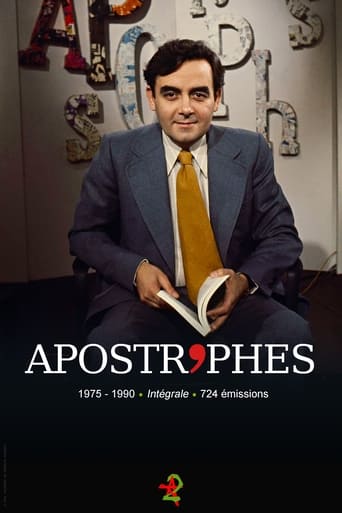
8.5Apostrophes was a live, weekly, literary, prime-time, talk show on French television created and hosted by Bernard Pivot. It ran for fifteen years (724 episodes) from January 10, 1975, to June 22, 1990, and was one of the most watched shows on French television (around 6 million regular viewers). It was broadcast on Friday nights on the channel France 2 (which was called "Antenne 2" from 1975 to 1992). The hourlong show was devoted to books, authors and literature. The format varied between one-on-one interviews with a single author and open discussions between four or five authors.
Apostrophes
1975
 5.9
5.9Prisoners of Gravity was a Canadian public broadcasting television news magazine program that explored speculative fiction — science fiction, fantasy, horror, comic books — and its relation to various thematic and social issues. Produced by TVOntario, the show was the brainchild of former comic retail manager Mark Askwith and writer Daniel Richler, and was hosted by Rick Green. The series aired 139 episodes over 5 seasons from 1989 to 1994.
Prisoners of Gravity
1989
 NR
NRNo synopsis available yet.
Lo + plus
1995
 7.3
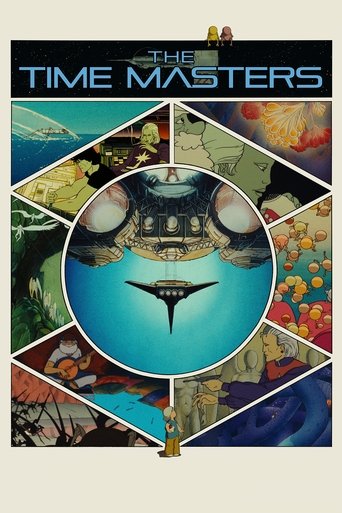
7.3On planet Perdide, an attack of giant hornets leaves young Piel alone in a wrecked car with his dying father. A mayday message reaches their friend Jaffar, an adventurer travelling through space. Onboard Jaffar’s shuttle are the renegade Prince Matton, his fiancée, and Silbad, who knows Perdide well. Thus begins an incredible race across space to save Piel.
Time Masters
1982
 6.8
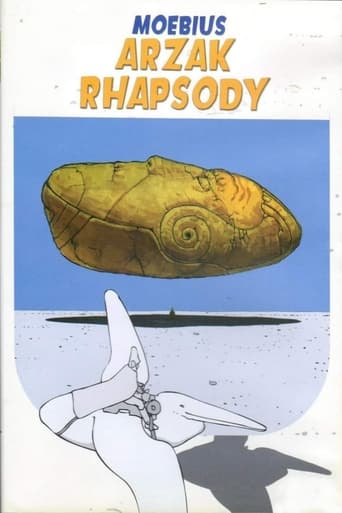
6.8Perched on his trusty anti-gravity Pteroid (where nothing serious can reach him), Arzak explores Desert "B" - a parallel world, populated by strange creatures, situated on the borders of dreams and a reality beyond reality. But isn't Arzak dreaming of a universe within himself... or within each and every one of us?
Arzak Rhapsody
2003
Film credits
2010s · 2 titles
2000s · 2 titles
 6.9
6.9Studio Ghibli is Japan's most successful animation studio, with helmers Hayao Miyazaki ("Spirited Away," "My Neighbor Totoro") and Isao Takahata ("Grave of The Fireflies," "The Tale of Princess Kaguya") creating a bonanza for producer/prexy Toshio Suzuki. Generously adorned with clips from their films and their influences, the docu follows Ghibli's arc from a mid-'60s rebellion against working conditions at Toei Co. to its present powerhouse position, complete with public fun park. All interviews are illuminating, but Miyazaki is teasingly confined to pic's tete-a-tete finale with esteemed French comic artist Jean "Moebius" Giraud. Meeting of the wizened European, whose imprint is on films from "Blade Runner" to "The Fifth Element," and the apparently relaxed Nipponese helmer makes an interesting contrast, and will be of special interest to Francophiles. All credits are impeccable
Ghibli and The Miyazaki Mystery
2005
 6.7
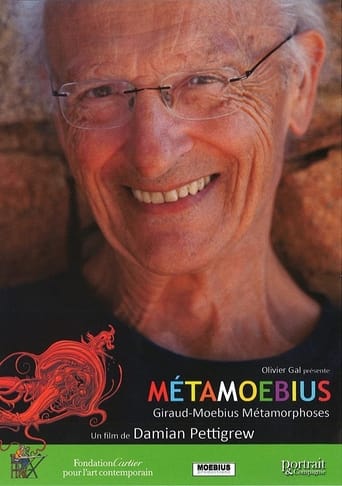
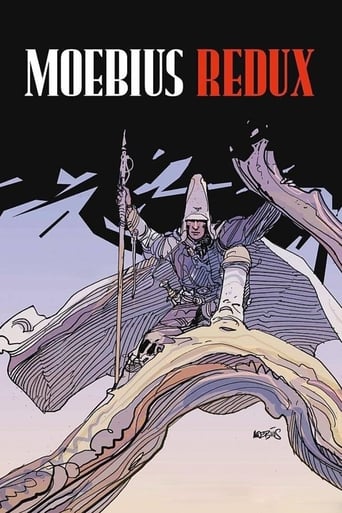
6.7French artist and author Jean Giraud is one of the most famous and influential comic strip illustrators and authors of all time. He achieved his greatest fame as Moebius - not so much a pseudonym as an alter ego. With his triple-split personality - Jean Giraud, Moebius, Gir - he succeeded in making his work accessible in popular comic strip series like Blueberry, in metaphysical fantasies like John Difool and, not least, to a broad public, with set designs for films such as The Fifth Element. In Moebius Redux - A Life in Pictures an exceptional artist tells his life's and work's story. Extraordinary views on Paris, Los Angeles and the Mexican desert build a visual link between his life and his artistic universe, accompanied by the electronic soundtrack composed by "Kraftwerk" legend Karl Bartos.
Moebius Redux: A Life in Pictures
2007
1980s · 2 titles
 8.0
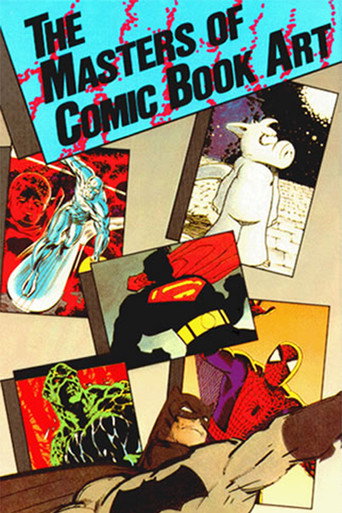
8.0Meet the heroes behind the superheroes as award-winning author Harlan Ellison introduces ten of the world's greatest comic book artists. Exclusive interviews and samples of their sensational art reveal the philosophy and creative process behind their finest characters, stories, and series.
The Masters of Comic Book Art
1987
 NR
NR"Why is the strange Mr. Zolock so interested in comics?" is a Canadian docufiction film, released in 1983. A documentary about comic books and graphic novels, the film features interviews with comics illustrators wrapped by a fictional frame story in which Monsieur Zolock (Jean-Louis Millette), an evil supervillain, hires private investigator Dieudonné (Michel Rivard) to investigate the cultural influence of comics as part of his plot to take over the world. The film won the Genie Award for Best Feature Length Documentary at the 5th Genie Awards in 1984.
Pourquoi l'étrange monsieur Zolock s'intéressait-il tant à la bande dessinée?
1983
Series credits
9.5Marcello Mastroianni, Isabelle Adjani, Alain Delon, Martin Scorsese, Woody Allen... the biggest stars in cinema were welcomed by Christian Defaye on his show Spécial cinéma. Between intimate confessions from actors and immersion in the world of the greatest filmmakers, Christian Defaye took viewers on a journey into the fascinating world of cinema for nearly thirty years.
Spécial cinéma
1974
8.5Apostrophes was a live, weekly, literary, prime-time, talk show on French television created and hosted by Bernard Pivot. It ran for fifteen years (724 episodes) from January 10, 1975, to June 22, 1990, and was one of the most watched shows on French television (around 6 million regular viewers). It was broadcast on Friday nights on the channel France 2 (which was called "Antenne 2" from 1975 to 1992). The hourlong show was devoted to books, authors and literature. The format varied between one-on-one interviews with a single author and open discussions between four or five authors.
Apostrophes
1975
5.9Prisoners of Gravity was a Canadian public broadcasting television news magazine program that explored speculative fiction — science fiction, fantasy, horror, comic books — and its relation to various thematic and social issues. Produced by TVOntario, the show was the brainchild of former comic retail manager Mark Askwith and writer Daniel Richler, and was hosted by Rick Green. The series aired 139 episodes over 5 seasons from 1989 to 1994.
Prisoners of Gravity
1989
NRNo synopsis available yet.
Lo + plus
1995
6.8Perched on his trusty anti-gravity Pteroid (where nothing serious can reach him), Arzak explores Desert "B" - a parallel world, populated by strange creatures, situated on the borders of dreams and a reality beyond reality. But isn't Arzak dreaming of a universe within himself... or within each and every one of us?
Arzak Rhapsody
2003
Behind the camera
7.3On planet Perdide, an attack of giant hornets leaves young Piel alone in a wrecked car with his dying father. A mayday message reaches their friend Jaffar, an adventurer travelling through space. Onboard Jaffar’s shuttle are the renegade Prince Matton, his fiancée, and Silbad, who knows Perdide well. Thus begins an incredible race across space to save Piel.
Time Masters
1982
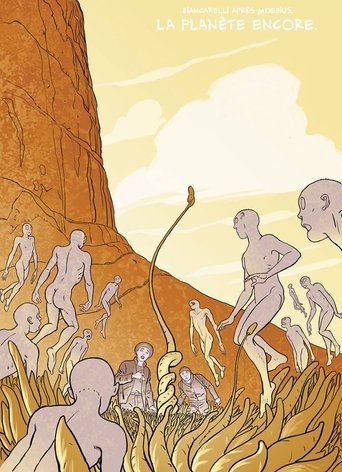 NR
NRAn animated short based on the work of Jean Giraud (pseudonym "Mœbius").
La Planète encore
2013
NRAn animated short based on the work of Jean Giraud (pseudonym "Mœbius").
La Planète encore
2013
 6.0
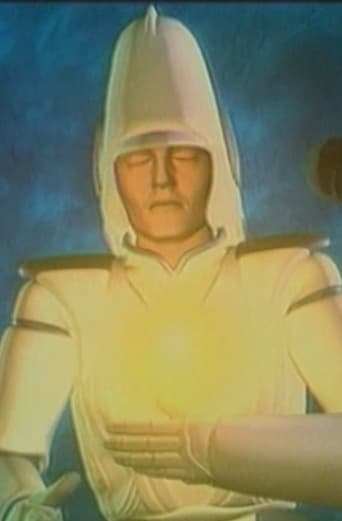
6.0A short pilot for what would be the first feature-length animated film by Jean Giraud and Medialab, cancelled in 1992 with the death of Alain Guiot.
Starwatcher
1991