
Directing
Pierre Perrault
Born — Died
1927-06-29 — 1999-06-23
Place of birth
Montreal, Quebec, Canada
Known for
Directing
Credits
41 titles
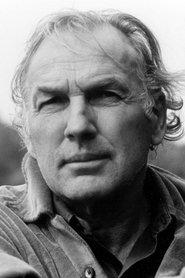
Pierre Perrault OQ (29 June 1927 – 23 June 1999) was a Canadian documentary film director with the National Film Board of Canada. Over his 40-year career, he directed 32 films and was one of Canada's most important filmmakers, although he was largely unknown outside of Québec.
Known for
An incident from the early days of Québec's quiet revolution, tailor-made for the cartoonist. It is the story of a Montréal commuter train, a unilingual ticket collector and a bilingual passenger. The passenger appears on screen himself to describe his bid to have tickets requested in French as well as in English. What ensued, and how even the railway president became involved, is illustrated with wit and humor.
Tickets s.v.p
1973
 7.0
7.0A documentary film about a group of hunters who gather annually to hunt moose near Maniwaki, Quebec.
The Shimmering Beast
1982
 7.2
7.2In the late 1960s, with the triumph of bilingualism and biculturalism, New Brunswick's Université de Moncton became the setting for the awakening of Acadian nationalism after centuries of defeatism and resignation. Although 40% of the province's population spoke French, they had been unable to make their voices heard. The movement started with students-sit-ins, demonstrations against Parliament, run-ins with the police - and soon spread to a majority of Acadians. The film captures the behind-the-scenes action and the students' determination to bring about change. An invaluable document of the rebirth of a people.
Acadia Acadia?!?
1971
 7.0
7.0Did Cartier dream of making a country from this land of a million birds? In his records of his exploration he certainly marvelled at seeing the great auks that have since disappeared from Isle aux Ouaiseaulx, the razor-bills and gannets that are gone from Blanc-Sablon, and the kittiwakes from Anticosti, all the winged creatures of all the islands which he described as being "as full of birds as a meadow is of grass". And that's not even counting the countless snow geese.
The Land of Jacques Cartier
1963
 6.8
6.8The people of Ile-aux-Coudres talk of their fading tradition of constructing boats to ride the seas.
The River Schooners
1968
 7.6
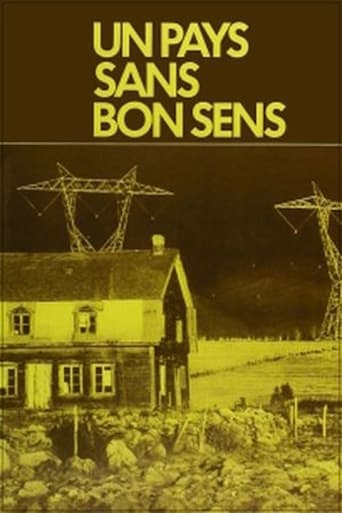
7.6Structured as a cinematic essay, "Un pays sans bon sens!" explores the emotional and political foundations of belonging to a nation. Moving between Quebec, France, and Western Canada, Pierre Perrault interrogates questions of cultural maturity, autonomy, and territory at a moment when French Canadians were reexamining their collective identity.
Un pays sans bon sens!
1970
Film credits
2010s · 1 titles
1980s · 3 titles
 7.0
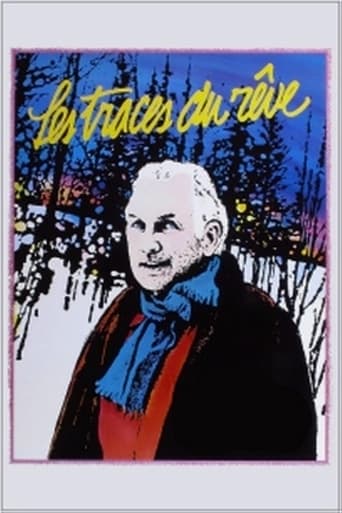
7.0From the gardens of Versailles to the Île-aux-Coudres, this documentary feature tells the story of Pierre Perrault's exceptional cinematic adventure. While simultaneously painting a portrait of the poet-filmmaker, the film contains a critical analysis of his work. To allow us to reflect on cinema and on man even further, an image hunter is himself hunted down to reveal his certainties and questions.
Dream Tracks
1986
 7.0
7.0An anthology of sequences from the best films that the National Film Board of Canada produced since its beginnings. Divided by themes and presented by a trio of actors-signers (including Carle's wife Chloé Sainte-Marie) who sings the same song in between the movie excerpts. This movie celebrated the anniversary of the National Film Board in 1985.
Cinéma, cinéma
1985
No synopsis available yet.
La Nuit de la poésie 28 mars 1980
1980
Behind the camera
An incident from the early days of Québec's quiet revolution, tailor-made for the cartoonist. It is the story of a Montréal commuter train, a unilingual ticket collector and a bilingual passenger. The passenger appears on screen himself to describe his bid to have tickets requested in French as well as in English. What ensued, and how even the railway president became involved, is illustrated with wit and humor.
Tickets s.v.p
1973
7.0A documentary film about a group of hunters who gather annually to hunt moose near Maniwaki, Quebec.
The Shimmering Beast
1982
7.2In the late 1960s, with the triumph of bilingualism and biculturalism, New Brunswick's Université de Moncton became the setting for the awakening of Acadian nationalism after centuries of defeatism and resignation. Although 40% of the province's population spoke French, they had been unable to make their voices heard. The movement started with students-sit-ins, demonstrations against Parliament, run-ins with the police - and soon spread to a majority of Acadians. The film captures the behind-the-scenes action and the students' determination to bring about change. An invaluable document of the rebirth of a people.
Acadia Acadia?!?
1971
7.0Did Cartier dream of making a country from this land of a million birds? In his records of his exploration he certainly marvelled at seeing the great auks that have since disappeared from Isle aux Ouaiseaulx, the razor-bills and gannets that are gone from Blanc-Sablon, and the kittiwakes from Anticosti, all the winged creatures of all the islands which he described as being "as full of birds as a meadow is of grass". And that's not even counting the countless snow geese.
The Land of Jacques Cartier
1963
7.0Did Cartier dream of making a country from this land of a million birds? In his records of his exploration he certainly marvelled at seeing the great auks that have since disappeared from Isle aux Ouaiseaulx, the razor-bills and gannets that are gone from Blanc-Sablon, and the kittiwakes from Anticosti, all the winged creatures of all the islands which he described as being "as full of birds as a meadow is of grass". And that's not even counting the countless snow geese.
The Land of Jacques Cartier
1963
6.8The people of Ile-aux-Coudres talk of their fading tradition of constructing boats to ride the seas.
The River Schooners
1968
7.6Structured as a cinematic essay, "Un pays sans bon sens!" explores the emotional and political foundations of belonging to a nation. Moving between Quebec, France, and Western Canada, Pierre Perrault interrogates questions of cultural maturity, autonomy, and territory at a moment when French Canadians were reexamining their collective identity.
Un pays sans bon sens!
1970
 9.0
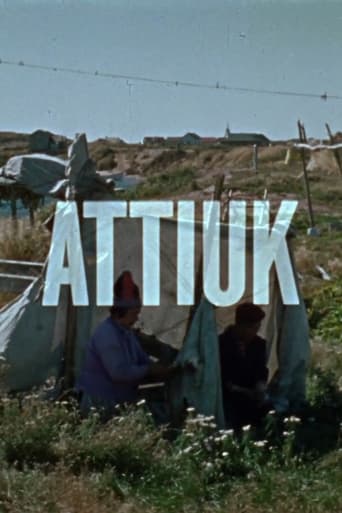
9.0The people of Unamenshipu (La Romaine), an Innu community in the Côte-Nord region of Quebec, are seen but not heard in this richly detailed documentary about the rituals surrounding an Innu caribou hunt. Released in 1960, it’s one of 13 titles in Au Pays de Neufve-France, a series of poetic documentary shorts about life along the St. Lawrence River. Off-camera narration, written by Pierre Perrault, frames the Innu participants through an ethnographic lens. Co-directed by René Bonnière and Perrault, a founding figure of Quebec’s direct cinema movement.
Attiuk
1963
9.0The people of Unamenshipu (La Romaine), an Innu community in the Côte-Nord region of Quebec, are seen but not heard in this richly detailed documentary about the rituals surrounding an Innu caribou hunt. Released in 1960, it’s one of 13 titles in Au Pays de Neufve-France, a series of poetic documentary shorts about life along the St. Lawrence River. Off-camera narration, written by Pierre Perrault, frames the Innu participants through an ethnographic lens. Co-directed by René Bonnière and Perrault, a founding figure of Quebec’s direct cinema movement.
Attiuk
1963
 7.0
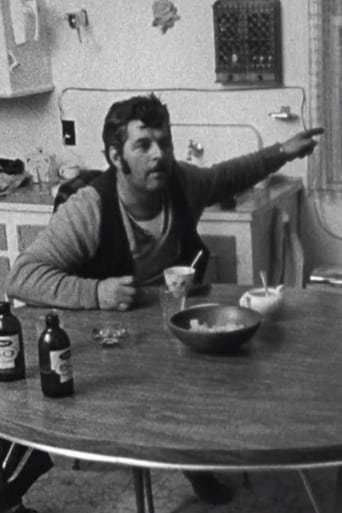
7.0Feature-length documentary as part of Pierre Perrault's Abitibian Cycle. The filmmaker questions the past and present of Abitibi and draws up, face to face, the promises of colonization in the 1930s and the great disappointment caused by the closing of the land in the 1970s. There are witnesses to the heroic era, including the cultivator Hauris Lalancette, as well as extracts from films by Father Maurice Proulx (1934-1940).
Back to the Land
1976
 NR
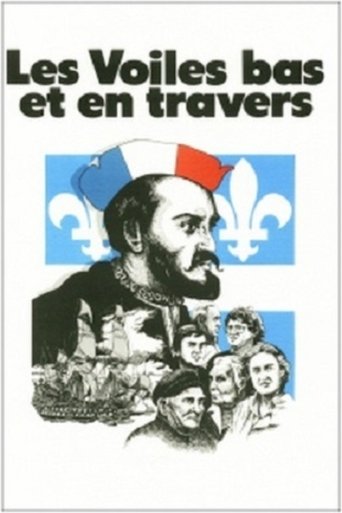
NRPierre Perrault takes Stéphane-Albert Boulais (from 'The Bright Beast', one of his films) to discover Saint-Malo and Jacques Cartier, in preparation for the 450th anniversary of the discovery of Canada (1534-1984). City tour with guide. Examination of Cartier's "Relations" and testimonies from the life of Falklands sailors, in an attempt to reconstruct his journey, his life, his time. Dialogue across the Atlantic between Saint-Malo and Île-aux-Coudres, the discoverer's mooring place. Who was Cartier? Who does it belong to? The discussion is open.
Sails Lowered and Safe Harbour
1983
 8.0
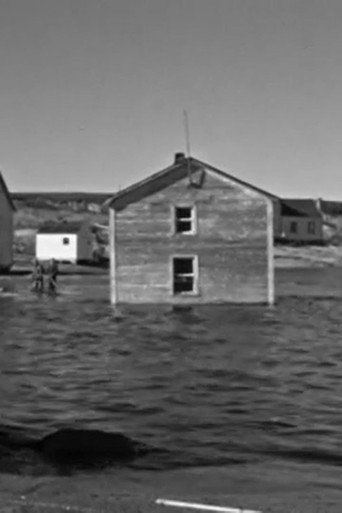
8.0Shows Tête-à-la-Baleine, Québec, a village with a double life--one on the North Shore mainland during winter months, the other on mossy islands of the Gulf to which the entire population moves for summer fishing.
Whalehead
1963
 6.5
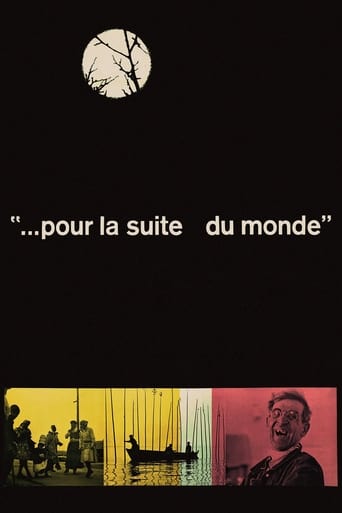
6.5Four years after Pour la suite du monde (1963), director Pierre Perrault asks Alexis Tremblay if he'll agree to travel with his wife Marie to the country of their ancestors, France. In a montage parallel, we follow them in France and listen to them talking to their friends about it.
The Times That Are
1967
 7.5
7.5Feature documentary on the agricultural Abitibi. This film is a real plea for the earth and for a more human kind of life in the face of a society that has become cold and insensitive.
A Kingdom Awaits You
1975
 7.5
7.5At the instigation of the filmmakers, the young men of the Ile-aux-Coudres in the middle of the St-Lawrence River try as a memorial to their ancestors to revive the fishing of the belugas interrupted in 1924.
Of Whales, the Moon, and Men
1963
7.5At the instigation of the filmmakers, the young men of the Ile-aux-Coudres in the middle of the St-Lawrence River try as a memorial to their ancestors to revive the fishing of the belugas interrupted in 1924.
Of Whales, the Moon, and Men
1963
Three communities at the foot of the Charlevoix cliffs, Petite-Rivière, île-aux-Coudres and Les Éboulements, practise the myriad trades of the sea. Its men are sailors, stevedores, longshoremen for the coasting trade. In winter, they becomes caulkers, carpenters and timer-cutters who will build a new vessel if required, or repair, caulk and paint the over 150 wooden schooners that ply the St. Lawrence River.
On the Sea
1960
This early work from Pierre Perrault, made in collaboration with René Bonnière, chronicles summer activities in the Innu communities of Unamenshipu (La Romaine) and Pakuashipi. Shot by noted cinematographer Michel Thomas-d’Hoste, it documents the construction of a traditional canoe, fishing along the Coucouchou River, a procession marking the Christian feast of the Assumption, and the departure of children for residential schools—an event presented here in an uncritical light. Perrault’s narration, delivered by an anonymous male voice, underscores the film’s outsider gaze on its Indigenous subjects. The film is from Au Pays de Neufve-France (1960), a series produced by Crawley Films, an important early Canadian producer of documentary films.
Ka Ke Ki Ku
1960
 7.0
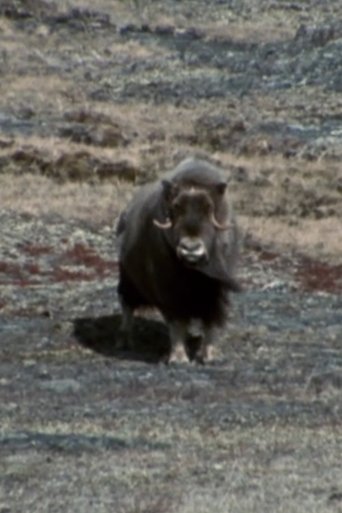
7.0Not far from the North Pole on Ellesmere Island, for one hundred and twenty days, a watchful camera stalks a beast of fleece and hoof, the ancient musk-ox, in anticipation of the great bull's duel for dominance. By the light of late summer, in the hush of expectation of mating behaviour, battle is joined between the furry combatants.
Icewarrior
1994
In a valley on the North Shore of the St. Lawrence, the seasons unfold with their chores and pleasures: children gathering roses for honey, an old uncle's wine, pressing apple cider, three brothers shelling broads beans, their flails beating time, grandmother's spinning wheel, the old stone mill, the rushing rivulets of spring, a silvery catch of capelin washed up on shore by the May Moon.
Turlutte
1960
 8.0
8.0From the bottom of the Baie aux Feuilles, itself in the hollow of Ungava bay, at the summer solstice, a filmmaker is on the lookout. His camera scans the tundra, looking for a herd of muskox stubbornly refusing to be targeted - even by a documentary. A film which illustrates the thoughts of a humanist who is insatiably curious.
Ougmigmag or The Fickle Art of Documentary Filmmaking
1993
Man's need to create beauty, to interpret the world around him in image and color, has found expression in many forms, from the days of primitive culture to the present. This film surveys the work of Canadian craftsmen in many fields, showing how the changing Canadian scene has been their constant inspiration and how business enterprise today is increasingly using the skills of the artisan to enhance the decor of building interiors.
Craftsmen of Canada
1957
The building of a goélette, the wooden coastal freighter of the St. Lawrence River. Although ships of steel may replace these sturdy wooden vessels, the Jean Richard, shown in construction in this film, is still one ship built with all the old pride in craftsmanship.
The Jean Richard
1963
 7.4
7.4It is a documentary joining 3 periods of filming in the Mouchouanipi, which is a faraway land in the North of eastern Canada.
The Land without Trees or The Mouchouânipi
1980
 9.0
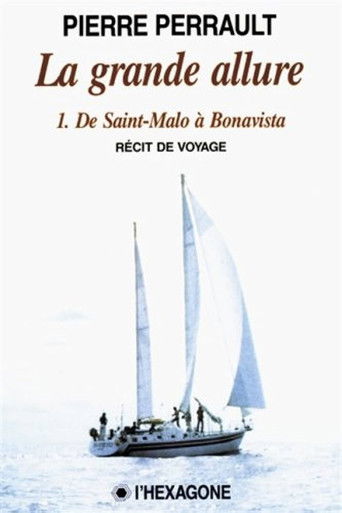
9.0This documentary produced for TV follows a project consisting in remaking the journey of discoveries in the footsteps of Cartier's book. Sailors, some from Saint-Malo, others from the river, were entrusted with the care of navigation.
The Great Obsession
1985
 7.5
7.5Feature-length documentary on Hauris Lalancette, a Quebecer from Abitibi, who travels and draws surprising parallels between two corners of the country that are considered destitute and left behind. It is also about the search for ancestors and the nostalgia for old jobs that were better, both on the human level and on the technical level.
C'était un Québécois en Bretagne, Madame!
1977
When Cartier wintered at Cap Rouge near Québec City in 1641, he claimed to have detected diamonds in the surrounding hills. Was he so very wrong? Three centuries later, 15,000 men have come to excavate the iron mountains of the Canadian tundra where the rust of those diamonds still sparkles.
Canadian Diamonds
1960
On the North Shore of the St. Lawrence, the Otis family hunts for white whales and seals with rusty old rifles in hand-crafted boats. This is the traditional method of the Basque whalers who frequented the coast in the 16th century.
White-Whale Hunters of Anse-Aux-Basques
1960
This documentary is about the Montagnais from Saint-Augustin et de La Romaine Indian reserve, in the region of the Côte-Nord in Quebec. Perrault approach those First Nations Citizens in order to discover that even if in our traditional occidental thinking and culture we consider ourselves superior to them, we still have a lot to learn from their traditions and ancestral way of living. Through a warm, human and respectful gaze, Perrault looks at the repercussions of European civilization's influence on Aboriginal culture, exploring the imagination and the codes of Native from Canada. The result, contradictory yet profound, was especially striking thanks to the sublime images captured by Gosselin within close relations with the Cinéma-Direct tradition in witch Perraut is one if not the greatest ambassador in the world.
The Taste for Flour
1977
 8.0
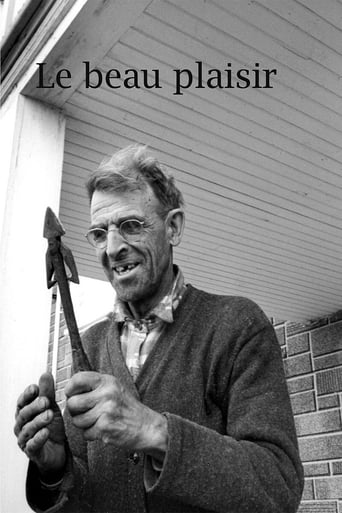
8.0From the lower St. Lawrence, a picture of whale hunting that looks more like a round-up, with a corral, whale-boys and all. In 1534, when he stopped at the island he named l'Île-aux-Coudres, Jacques Cartier saw how the Indians captured the little white beluga whales by setting a fence of saplings into off-shore mud. In the film, the islanders show that the old method still works, thanks to the trusting 'sea-pigs,' the same old tide, and a little magic.
Beluga Days
1968
 8.0
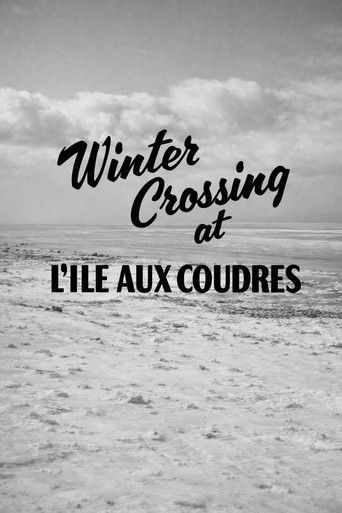
8.0On an island the road ends where it begins, at the wharf. The wharf is the link to the rest of the world, until winter cuts it off. But the islanders know the winter sea and its movements. They judge the ice by its colours, avoiding the open channels, fighting through the slushy fragil ice, catching their footing on the chunk ice, and running all-out across the solid ice to the North Shore.
Winter Crossing at L'Isle-Aux-Coudres
1960
No synopsis available yet.
Cornouailles
1994
A virtual prisoner of the winter snows that block its roads, the village of St.Hilarion, to justify its name, revels in the joys of the jig and the "turlutte", the lilting songs that tell the humorous tale, ever new and yet essentially always the same, about the sorry fate of the one who gives into temptation.
Soirée at St. Hilarion
1960
After 'A kingdom awaits you' and 'The return to the earth', the filmmaker Pierre Perrault concludes, with this documentary feature, his plea for the Abitibi region. The film gives the floor to Hauris Lalancette, farmer, colorful character, who has been fighting for almost half a century to save his kingdom in the Abitibi.
People of Abitibi
1980
No synopsis available yet.
La Pitoune
1960
Life in a north-shore village where everybody's name is Robertson and where everyone hunts for seal. In December the seals come in great herds from Greenland, and for two weeks in this peaceful village it's all hands to the lines.
Winter Sealing at La Tabatière
1963