

Acting
Yvette Vaucher
Born 1929-11-01 · Vallorbe, Switzerland
Yvette Vaucher, née Pilliard on November 11, 1929, in Vallorbe, Switzerland, was a pioneer of women's mountaineering and an iconic figure in the Swiss mountains. Tall and athletic, she distinguished herself in a world then dominated by men, achieving ascents that marked the history of mountaineering. Born in the Vallorbe region, Yvette grew up in a post-war context where women rarely ventured into extreme mountaineering. Passionate about the mountains from a young age, she took up climbing and quickly ascended demanding routes such as the Bonatti Pillar of the Dru, the east face of the Petit Capucin, and the north faces of the Cima Grande and the West Summit of Lavaredo. In the 1950s, while living in Neuchâtel, she found there were no cliffs near her home and became the first Swiss woman to earn a parachutist's license, skydiving to satisfy her thirst for adventure. Married to Michel Vaucher, a seasoned mountaineer and climbing partner of Walter Bonatti, she formed a formidable duo with him. In 1962, she made a successful first attempt on the Eiger's north face with Loulou Boulaz, but had to turn back due to bad weather after reaching the Ramp; they would have been the first women to conquer this legendary wall. The following year, in 1965, during the centenary of Whymper's first ascent of the Matterhorn, Yvette, with her husband and guide Michel Darbellay, climbed the Matterhorn's north face on July 13th and 14th, becoming the first woman to complete this vertiginous 1100-meter route, icy and exposed to rockfall. Her list of achievements quickly grew: in 1966, with Michel, she established the first direct ascent of the north face of the Dent Blanche. She climbed a string of classic routes of the 1960s and 70s: the north face of the Badile, the Grande Zinne, the Aiguille du Dru, the Grandes Jorasses, and the Eiger-Nordwand in 1974 after several attempts, the south face of the Aiguille Noire de Peuterey, the Gugliermina, the Sentinelle Rouge, the Grand Pilier d'Angle, and the Freney and Bonatti pillars. In 1971, she participated in the 1971 International Himalayan Expedition, which was cut short by the death of a climber and internal disagreements within the group. Beyond her achievements, Yvette joined the Swiss Alpine Club (SAC) in 1980 as its first female member, presided over its Geneva section from 1995 to 1998, and became an honorary member. Despite her age, knee replacement, and artificial hips, she was still hiking in the Alps well into the 2010s. Charismatic and devoted, she inspired young people, accompanying them on outings and races, her eyes shining brightly for the young climbers even in 2016. Yvette Vaucher passed away on September 30, 2023, at the age of 94. The Swiss Alpine Club (CAS), which was her "second family," organized her funeral.
Acting credits
 10.0
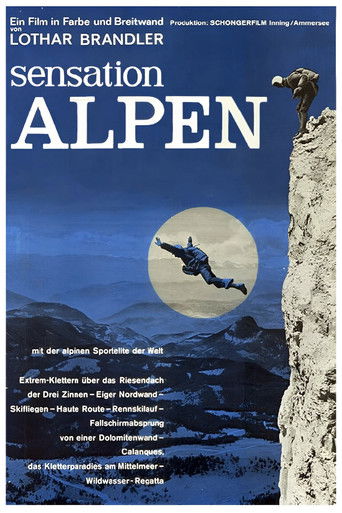
10.0From Trento to Chamonix, via Zermatt; from the Morgiou cove to the Eiger's north face; from Planica to the Lavaredo peaks, the Alps are depicted, illustrated, and magnified in all their unique and sublime beauty, through the sports practiced there and the most typical customs and traditions of their inhabitants. A helicopter rescue and a parachute jump from the Red Wall by Wolfgang Weizenbocks are experiences not to be missed.
Sensation Alpen
1966
 NR
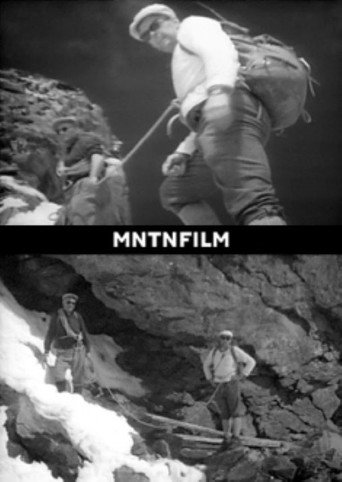
NRA climb to mark the 100th anniversary of the first ascent of the Matterhorn, live on TV. The program, a co-production of the Swiss, French, Italian and British televisions, was shown throughout Europe, in the United States and in Japan in a series of 5 broadcasts between 8 and 16h. This film is the re-edited version by the BBC of all the broadcasts in a single program. Ian McNaught-Davis roped with the guide Heinrich Taugwalder and Jean Juge with Robert Bichler narrate the ascent while they climb by the original Whymper route. They follow the progression of Michel Darbellay and Hilti von Allmen who climb the north face by the Schmidt route. All them meet at the summit.
Men Against the Matterhorn
1965
 NR
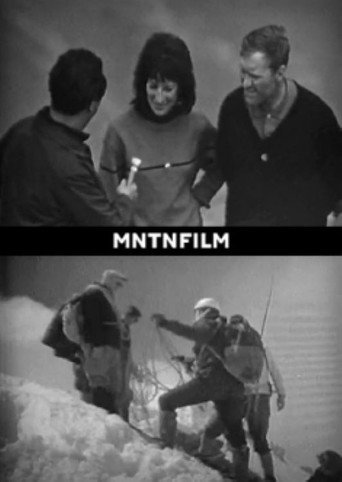
NRA climb to mark the 100th anniversary of the first ascent of the Matterhorn, live on TV. The programme, a coproduction of the Swiss, French, Italian and British televisions, was shown throughout Europe, in the United States and in Japan in a series of 5 broadcasts between 8 and 16h. This film is the reedited version by the french televison of all the broadcasts in a single program. Ian McNaught-Davis roped with the guide Heinrich Taugwalder and Jean Juge with Robert Bichler narrate the ascent while they climb by the original Whymper route. They follow the progression of Michel Darbellay and Hilti von Allmen who climb the north face by the Schmidt route. All them meet at the summit. Michel Vaucher, Yvette Vaucher and Othmar Kronig who were also ascending the north face are interviewed, and the program ends with the television teams descending the mountain. Ettore Bich and Paul Etter ascended by the Italian side.
En direct du Cervin
—
 10.0
10.0In 1971, American Norman Dyhrenfurth led an expedition of 30 climbers from 13 different countries, including Don Whillans, Dougal Haston, Naomi Uemura, Pierre Mazeaud, Michel Vaucher, and others. This expedition aimed to simultaneously climb the southwest face and the direct west ridge. During the ascent, Indian climber Harsh Vardhan Bahuguna perished at Camp 3 in a storm. The expedition, already suffering from organizational problems, was severely tested after his death. The Americans decided, unilaterally, to abandon the west ridge. The Europeans, who had spent days equipping the route, were left out and felt relegated to the roles of route setters and porters. Frenchman Pierre Mazeaud, Swiss climbers Michel and Yvette Vaucher, and Italian Carlo Mauri then left the expedition. The Americans continued their ascent of the southwest face up to 8,350 meters before giving up.
Surrender To Everest
1971
 NR
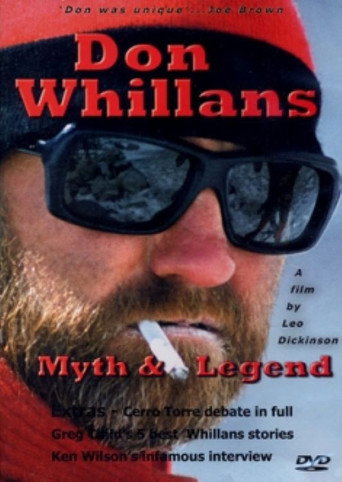
NRDon Whillans was one of the leading rock climbers of his generation. This film examines Don’s gritstone horrors, his hard routes in Wales, then follows him to the Alps and beyond on several of his epic expeditions. But it also focuses on Don’s unique humor, his devastating oneliners that pricked pomposity wherever he found it and poked fun at those who deserved it. Don may have died 20 years ago but the myth surrounding Whillans can still be heard whenever climbers reminisce about a time when hard men were hard and legends were being made. Perhaps his partner Joe Brown best sums him up, 'Don was unique'.
Don Whillans - Myth and Legend
2006