
Directing
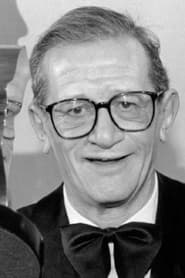
Donald Brittain
Born — Died
1928-06-10 — 1989-07-21
Place of birth
Ottawa, Ontario, Canada
Known for
Directing
Credits
62 titles
Donald Code Brittain, OC (June 10, 1928 – July 21, 1989), was a renown award winning Canadian film maker, especially with the National Film Board. He directed, wrote, narrated and produced over 100 films and documentaries. His breakthrough came with "Fields of Sacrifice" in 1963. Brittain's legacy isn't just his films; his camaraderie and perfectionism left a lasting impact and set the standard for professionalism at the National Film Board.
Known for
 7.3
Part documentary/part dramatization, this film details several of the highest-profile unsolved cases of disappearances, mysterious changes in personality and other strange occurrences related to the Bermuda Triangle.
Secrets of the Bermuda Triangle
1978
On Guard For Thee was a Canadian documentary television miniseries which aired on CBC Television in 1981.
On Guard For Thee
1981
 10.0
A study of the automobile and its pervasive effect on the history of North America. Focusing on the Ford dynasty, from the original Henry car through to Henry II, the film demonstrates how society has adapted to fit the needs of the automobile.
Henry Ford's America
1977
 4.2
In Montréal, Jean-Pierre is fired on the set of a TV commercial where he's an apprentice technician. He's penniless, behind on his rent, with a thin resume and no college units. He has a fiancée, Michelle, but his head is turned by a free-spirited model, from the U.S., who saw him being fired and comes to his flat to apologize. She's Elizabeth, a combination of feckless innocence and sexual freedom. Jean-Pierre borrows money from his outlaw friend, Dock, and buys clothes to impress Elizabeth. Soon he's sleeping with her, and he pulls a theft with Dock to get money to take her to Acapulco. Michelle tries to bring him back to her orbit. Is there a way out for Jean-Pierre?
The Apprentice
1971
 8.0
In Part 1 of this 3-part documentary series, director Donald Brittain chronicles the early years of Pierre Elliott Trudeau and René Lévesque. From their university days in the 1950s to 1967 when Lévesque left the Liberal Party and Trudeau became the federal Minister of Justice, Brittain attempts to get at the heart of what makes these men so fascinating.
The Champions, Part 1: Unlikely Warriors
1978
 NR
Bureaucracy shapes our lives and guides us from the cradle to the grave. This documentary lays bare the idiosyncrasies of bureaucracy, whether in Canada, Austria, Hungary, the Vatican or the Virgin Islands. It also attempts to make the functioning of the public service more comprehensible. The absurdities of bureaucratic behaviour are exposed with humour and irreverence.
Paperland: The Bureaucrat Observed
1979
Film credits

1980s · 8 titles
 7.0
A biographical drama that profiles the life of Hal C. Banks, a controversial American labour union leader, who came to Canada in 1949 to lead a violent fight against the rival communist shipping union. He once ruled the Canadian shipping industry, but his brutal tactics would bring his downfall.
Canada's Sweetheart: The Saga of Hal C. Banks
1985
 7.0
The final instalment of this 3-part documentary series about Pierre Elliott Trudeau and René Lévesque spans the decade between 1976 and 1986. The film reveals the turbulent, behind-the-scenes drama during the Quebec referendum and the repatriation of the Canadian Constitution. In doing so, it also traces both Trudeau's and Lévesque's fall from power.
The Champions, Part 3: The Final Battle
1986
 9.5
This feature documentary traces the political career of T.C. (Tommy) Douglas, former premier of Saskatchewan and leader of the New Democratic Party, who was voted the Greatest Canadian in 2004 for his devotion to social causes, his charm and his powers of persuasion. Known as the "Father of Medicare," this one-time champion boxer and fiery preacher entered politics in the 1930s and never looked back.
Tommy Douglas: Keeper of the Flame
1986
 8.0
Features clips from 21 documentary and animation film classics, interviews with NFB filmmakers past and present, and incisive commentary from film critics and historians on the role and influence of the NFB during its first half century of existence.
The Magical Eye
1989
 9.0
This short documentary profiles a group of men from the Toronto Lakeshore Oldtimers Hockey Club. Although middle-aged, they still play the game with as much energy and passion as they did 25 years ago. They claim that playing hockey is more fun now than it was when they were kids, despite the toll of aches and pains, injuries, gruelling schedules and late-night partying. Cares and responsibilities are cast aside once they are on the ice, and the locker room becomes a haven of uncomplicated camaraderie and fun. In refusing to grow old gracefully, they feel they won't grow old at all!
Overtime
1984
First Stop, China is a record of the choreographed performances and the unrehearsed moments of Les Grands Ballets Canadiens ballet company on the road, against a backdrop of unfamiliar sights and sounds. Their itinerary included China, Hong Kong, Thailand, Singapore, Japan and Korea.
First Stop, China
1985
This short documentary examines the complex range of issues affecting urban transport in developing countries. After examining cost and available technology, as well as the different needs of the industrialized middle class and the urban poor, the film proposes some surprising solutions.
Mobility
1986
 10.0
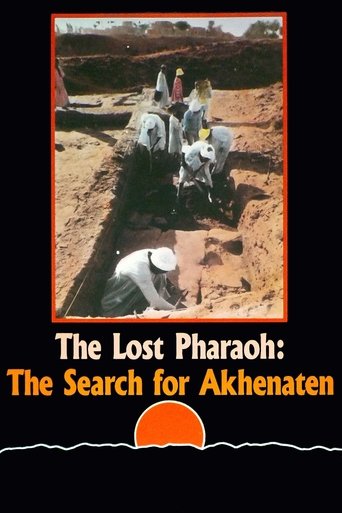
Ancient pharaoh Akhenaten was almost lost to history. Canadian archaeologist Donald Redford, who uncovered the foundation of one of the pharaoh’s many temples, attempts to finally piece together this great Egyptian ruler’s enigmatic story.
The Lost Pharaoh: The Search for Akhenaten
1980
1970s · 8 titles
10.0A study of the automobile and its pervasive effect on the history of North America. Focusing on the Ford dynasty, from the original Henry car through to Henry II, the film demonstrates how society has adapted to fit the needs of the automobile.
Henry Ford's America
1977
8.0In Part 1 of this 3-part documentary series, director Donald Brittain chronicles the early years of Pierre Elliott Trudeau and René Lévesque. From their university days in the 1950s to 1967 when Lévesque left the Liberal Party and Trudeau became the federal Minister of Justice, Brittain attempts to get at the heart of what makes these men so fascinating.
The Champions, Part 1: Unlikely Warriors
1978
NRBureaucracy shapes our lives and guides us from the cradle to the grave. This documentary lays bare the idiosyncrasies of bureaucracy, whether in Canada, Austria, Hungary, the Vatican or the Virgin Islands. It also attempts to make the functioning of the public service more comprehensible. The absurdities of bureaucratic behaviour are exposed with humour and irreverence.
Paperland: The Bureaucrat Observed
1979
 7.5
Part 2 of this 3-part documentary series about Pierre Elliott Trudeau and René Lévesque covers the years between 1967 and 1977, a colourful decade that saw Trudeau win three federal elections, the 1970 October Crisis and the sweeping rise to power of the Parti Québécois.
The Champions, Part 2: Trappings of Power
1978
 5.7
This feature-length Oscar®-nominated documentary focuses on Malcolm Lowry, author of one of the major novels of the 20th century, Under the Volcano. But while Lowry fought a winning battle with words, he lost his battle with alcohol. Shot on location in four countries, the film combines photographs, readings by Richard Burton from the novel and interviews with the people who loved and hated Lowry, to create a vivid portrait of the man.
Volcano: An Inquiry into the Life and Death of Malcolm Lowry
1976
 8.0
This feature documentary follows one of the greatest Canadian baseball players of all time, Ferguson Jenkins, through the 1972-1973 season. From the hope and innocence of spring training to the dog days of an August slump, the camera gets up close and personal at the home plate and records the intimate chatter on the mound, in the dugout and in the locker room. It provides a glimpse into the rewards and pressures of sports stardom and the easy camaraderie of the quintessential summer sport.
King of the Hill
1974
 6.7
This film is a revealing portrait of a tough cop with a big heart. Sergeant Bernie "Whistling" Smith walks the beat on Vancouver's Eastside, the hangout of petty criminals, down-and-outs and a variety of characters. His policing is unorthodox. To many drug users, petty thieves and prostitutes in this economically depressed area he is more than the iron hand of the law, he is also a counsellor and a friend.
Whistling Smith
1975
This short animated film is about Wop May, one of Canada's leading bush pilots in the 1920s.
Canada Vignettes: Wop May
1979
1960s · 4 titles
 7.2
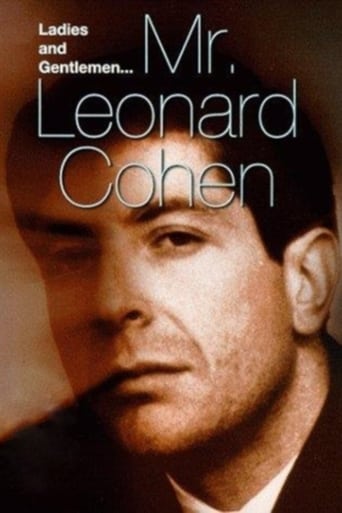
A 1964 documentary portrait of Cohen in his pre-musician days as a poet and stand-up comedian.
Ladies and Gentlemen, Mr. Leonard Cohen
1966
 6.5
In this Academy Award–nominated animated satire, Martian observers analyze life on Earth and reach a startling conclusion: automobiles appear to be the planet’s dominant species, while humans function merely as their parasites. Directed by Les Drew and Kaj Pindal, the film humorously critiques modern society’s dependence on the car.
What on Earth!
1967
 7.8
This documentary is an informal portrait of the great modern composer Igor Stravinsky. Proudly American, though still very much an Old World figure with a long and alert memory for people and events in music, literature and art, Stravinsky is depicted here conducting the CBC Symphony Orchestra in a recording of his Symphony of Psalms.
Stravinsky
1966
In 1968, a convoy set off to transport a Calandria, the 70-ton core of a Canadian nuclear reactor, to Rajasthan in India. Even the largest semi-trailers could not keep up with this transport, which drove over specially reinforced roads and through city walls that had been demolished to make room.
Juggernaut
1968
Series credits
Behind the camera
7.3Part documentary/part dramatization, this film details several of the highest-profile unsolved cases of disappearances, mysterious changes in personality and other strange occurrences related to the Bermuda Triangle.
Secrets of the Bermuda Triangle
1978
7.3Part documentary/part dramatization, this film details several of the highest-profile unsolved cases of disappearances, mysterious changes in personality and other strange occurrences related to the Bermuda Triangle.
Secrets of the Bermuda Triangle
1978
7.3Part documentary/part dramatization, this film details several of the highest-profile unsolved cases of disappearances, mysterious changes in personality and other strange occurrences related to the Bermuda Triangle.
Secrets of the Bermuda Triangle
1978
10.0A study of the automobile and its pervasive effect on the history of North America. Focusing on the Ford dynasty, from the original Henry car through to Henry II, the film demonstrates how society has adapted to fit the needs of the automobile.
Henry Ford's America
1977
10.0A study of the automobile and its pervasive effect on the history of North America. Focusing on the Ford dynasty, from the original Henry car through to Henry II, the film demonstrates how society has adapted to fit the needs of the automobile.
Henry Ford's America
1977
10.0A study of the automobile and its pervasive effect on the history of North America. Focusing on the Ford dynasty, from the original Henry car through to Henry II, the film demonstrates how society has adapted to fit the needs of the automobile.
Henry Ford's America
1977
4.2In Montréal, Jean-Pierre is fired on the set of a TV commercial where he's an apprentice technician. He's penniless, behind on his rent, with a thin resume and no college units. He has a fiancée, Michelle, but his head is turned by a free-spirited model, from the U.S., who saw him being fired and comes to his flat to apologize. She's Elizabeth, a combination of feckless innocence and sexual freedom. Jean-Pierre borrows money from his outlaw friend, Dock, and buys clothes to impress Elizabeth. Soon he's sleeping with her, and he pulls a theft with Dock to get money to take her to Acapulco. Michelle tries to bring him back to her orbit. Is there a way out for Jean-Pierre?
The Apprentice
1971
8.0In Part 1 of this 3-part documentary series, director Donald Brittain chronicles the early years of Pierre Elliott Trudeau and René Lévesque. From their university days in the 1950s to 1967 when Lévesque left the Liberal Party and Trudeau became the federal Minister of Justice, Brittain attempts to get at the heart of what makes these men so fascinating.
The Champions, Part 1: Unlikely Warriors
1978
NRBureaucracy shapes our lives and guides us from the cradle to the grave. This documentary lays bare the idiosyncrasies of bureaucracy, whether in Canada, Austria, Hungary, the Vatican or the Virgin Islands. It also attempts to make the functioning of the public service more comprehensible. The absurdities of bureaucratic behaviour are exposed with humour and irreverence.
Paperland: The Bureaucrat Observed
1979
 7.2
In the fall of 1964, just over a year before his death, Buster Keaton traveled to Canada to make The Railrodder, a short subject that now enjoys a small cult following. Documenting this mobile production in fascinating and unexpected detail, Buster Keaton Rides Again offers a rare glimpse of the comedy legend’s temperament, philosophies, hobbies, marriage (his third), and the occasionally combative creative process behind the scenes. An intimate look at one of cinema’s most enduring legends.
Buster Keaton Rides Again
1965
 7.3
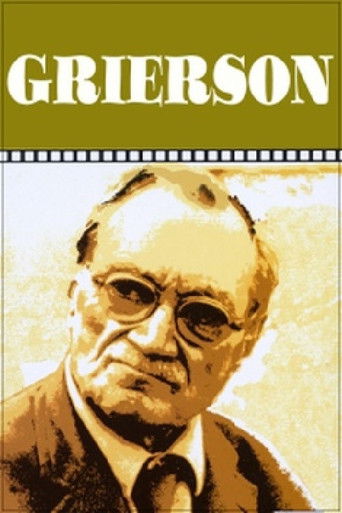
A portrait of John Grierson, the first Canadian Government Film Commissioner and founder of the National Film Board in 1939. Interweaving archival footage, interviews with people who knew him and footage of Grierson himself, this film is a sensitive and informative portrait of a dynamic man of vision. Grierson believed that the filmmaker had a social responsibility, and that film could help a society realize democratic ideals. His absolute faith in the value of capturing the drama of everyday life was to influence generations of filmmakers all over the world. In fact, he coined the term 'documentary film'.
Grierson
1973
7.0A biographical drama that profiles the life of Hal C. Banks, a controversial American labour union leader, who came to Canada in 1949 to lead a violent fight against the rival communist shipping union. He once ruled the Canadian shipping industry, but his brutal tactics would bring his downfall.
Canada's Sweetheart: The Saga of Hal C. Banks
1985
 9.0
April - November 1940. With devastating speed Germany takes Holland, Belgium and Luxembourg. Italy declares war.
Blitzkrieg
1962
7.5Part 2 of this 3-part documentary series about Pierre Elliott Trudeau and René Lévesque covers the years between 1967 and 1977, a colourful decade that saw Trudeau win three federal elections, the 1970 October Crisis and the sweeping rise to power of the Parti Québécois.
The Champions, Part 2: Trappings of Power
1978
5.7This feature-length Oscar®-nominated documentary focuses on Malcolm Lowry, author of one of the major novels of the 20th century, Under the Volcano. But while Lowry fought a winning battle with words, he lost his battle with alcohol. Shot on location in four countries, the film combines photographs, readings by Richard Burton from the novel and interviews with the people who loved and hated Lowry, to create a vivid portrait of the man.
Volcano: An Inquiry into the Life and Death of Malcolm Lowry
1976
 NR
Canadian poet Leonard Cohen, who now resides on the island of Hydra in Greece, is shown in his native city of Montreal. The program explores Cohen's childhood and his subsequent development as one of Canada's leading new writers. The film takes viewers to the house Cohen was brought up in as well as to the places of Montreal he enjoys frequenting—his favorite bistro, a three dollar-a-day hotel, the public park, the exclusive section called Westmount, and a Greek grocery store. Cohen himself is shown at a recording session, at public readings of his poetry, displaying home movies of his childhood, and commenting on university life. He also reflects on his visit to Cuba, his girlfriend in Greece, his obsession with danger and his friends and their personalities.
Creative Person: Leonard Cohen
1967
 9.0
This feature documentary is a profile of Canadian press tycoon Roy Thomson, whose single-minded attention to business brought him riches, power, and even a baronetcy in England. A native of Timmins, Ontario, Thomson had a tremendous career as publisher, television magnate, financier, and owner of many newspapers, including leading London dailies. The film is a frank study of an equally frank man.
Never a Backward Step
1966
7.0The final instalment of this 3-part documentary series about Pierre Elliott Trudeau and René Lévesque spans the decade between 1976 and 1986. The film reveals the turbulent, behind-the-scenes drama during the Quebec referendum and the repatriation of the Canadian Constitution. In doing so, it also traces both Trudeau's and Lévesque's fall from power.
The Champions, Part 3: The Final Battle
1986
 9.0
This feature documentary is a fascinating and spirited portrait of the life and times of the legendary Quebec politician and four-time mayor of Montreal Camillien Houde. Using rare archival footage and interviews with ex-colleagues, aides and friends, the film presents a comprehensive profile of this incredible, and, to some, infamous, man.
His Worship, Mr. Montréal
1976
A middle-aged family man and high school teacher struggles in silence as he accepts the fact that he is gay.
The Running Man
1981
9.5This feature documentary traces the political career of T.C. (Tommy) Douglas, former premier of Saskatchewan and leader of the New Democratic Party, who was voted the Greatest Canadian in 2004 for his devotion to social causes, his charm and his powers of persuasion. Known as the "Father of Medicare," this one-time champion boxer and fiery preacher entered politics in the 1930s and never looked back.
Tommy Douglas: Keeper of the Flame
1986
8.0This feature documentary follows one of the greatest Canadian baseball players of all time, Ferguson Jenkins, through the 1972-1973 season. From the hope and innocence of spring training to the dog days of an August slump, the camera gets up close and personal at the home plate and records the intimate chatter on the mound, in the dugout and in the locker room. It provides a glimpse into the rewards and pressures of sports stardom and the easy camaraderie of the quintessential summer sport.
King of the Hill
1974
 7.3
A Jewish Holocaust survivor travels through Germany recalling scenes from his memory. This documentary follows a Holocaust survivor in 1965 on an emotional pilgrimage to Bergen Belsen, the last of 11 concentration camps where he was held by the Nazis. He and 30 other former Jewish inmates travel through the new Germany. Scenes still vivid in his mind are recalled in flashback. The memorandum of the title refers to Hitler's memo offering a "final solution" to the "Jewish problem."
Memorandum
1967
 6.2
In this experimental collage film, Arthur Lipsett reworks over fifty years of newsreel footage into a surreal audiovisual montage of twentieth-century life. Juxtaposing images of scientific progress, political figures, spectacle, warfare, and everyday leisure, the film becomes a fragmented “time capsule” exploring the rituals and contradictions of modern technological culture.
A Trip Down Memory Lane
1966
Through rare film footage and interviews with some of the pioneers who made film history, this documentary traces the history of filmmaking in Canada from 1939-1953. It covers the establishment of the National Film Board in 1939; the war years; Canada's first Oscar; and John Grierson's sudden demise as Canada's driving force in the industry. We witness the struggles of the private film producers, the development of the film industry in Québec, and the emergence of the documentary. Above all, the film asks whether the alternating fortunes of the Canadian film industry, in the face of an overwhelming American presence, reflect the attitudes of the Canadian people towards themselves and their culture.
Has Anybody Here Seen Canada?
1979
 6.5
Everything seems normal at a hockey arena until the roof, straining under the weight of the ice and snow that has built up, finally gives way, collapsing on top of the fans and players below. Many are killed in the tragic accident, but a few survive, trapped under tons of snow and steel. Can they hold out long enough for the rescue teams to reach them?
The Accident
1983
7.2A 1964 documentary portrait of Cohen in his pre-musician days as a poet and stand-up comedian.
Ladies and Gentlemen, Mr. Leonard Cohen
1966
7.2A 1964 documentary portrait of Cohen in his pre-musician days as a poet and stand-up comedian.
Ladies and Gentlemen, Mr. Leonard Cohen
1966
 7.5
A film biography of Dr. Norman Bethune, the Canadian doctor who served with the loyalists during the Spanish Civil War and with the North Chinese Army during the Sino-Japanese War. In Spain he pioneered the world's first mobile blood-transfusion service; in China his work behind battle lines to save the wounded has made him a legendary figure. This hour-long documentary film pieces together his remarkable career.
Bethune
1964
7.5A film biography of Dr. Norman Bethune, the Canadian doctor who served with the loyalists during the Spanish Civil War and with the North Chinese Army during the Sino-Japanese War. In Spain he pioneered the world's first mobile blood-transfusion service; in China his work behind battle lines to save the wounded has made him a legendary figure. This hour-long documentary film pieces together his remarkable career.
Bethune
1964
6.7This film is a revealing portrait of a tough cop with a big heart. Sergeant Bernie "Whistling" Smith walks the beat on Vancouver's Eastside, the hangout of petty criminals, down-and-outs and a variety of characters. His policing is unorthodox. To many drug users, petty thieves and prostitutes in this economically depressed area he is more than the iron hand of the law, he is also a counsellor and a friend.
Whistling Smith
1975
A biography of Enrico Fermi, the scientist who discovered the chain reaction in nuclear physics. Follows his career in Italy and later in America, and his meetings with other scientists, including Mme Curie, Einstein, Oppenheimer and Pauli. Produced by Harvard Project Physics with a grant from the Ford Foundation.
The World Of Enrico Fermi
1970