
Acting
Ferdinand Mayerhofer
Born — Died
1881-04-09 — 1960-06-06
Place of birth
Graz, Austria
Known for
Acting
Credits
38 titles
Known for
A drama about marriage in a small town, which takes place at the turn of the 19th into the 20th Century.
Späte Liebe
1943
 8.0
No synopsis available yet.
Der Verschwender
1953
No synopsis available yet.
Ihre Vergangenheit
1922
 8.3
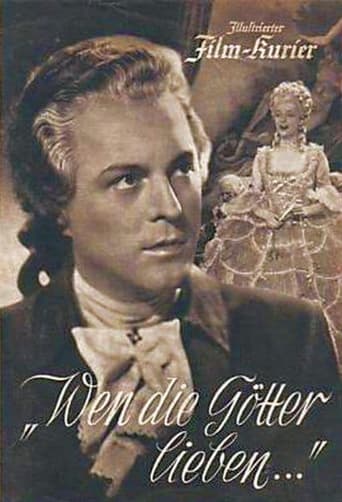
In the first of Hartl's two Mozart biographies, Hans Holt plays the robust and dashing composer who, in keeping with the spirit of the film's time of origin, sets out into the world like a soldier of art after his falling out with the Salzburg authorities. Instead of conquering lands, he conquers the hearts of young ladies, like one of his most famous creations.
Whom the Gods Love
1942
No synopsis available yet.
Die Totenhand
1921
 6.5
Silo is a bum; but he's a bum whose beloved by all and one day, he is found wounded on the banks of the Theiss. Fishermen take him back to the village and Maria, Alexander Renka's young wife, cares for him until he gets better. Silo's wound heals, but he decides to stick with the fishermen to find out who the intended target for the stabbing knife really was (for who would stab a beloved bum?). Maria's husband is acting really strange. He is away from home often and can be found very often near the hut of the gypsy Panna, who can allegedly bewitch any man she pleases. Maria is convinced from her womanly intuition -- never mind asking -- that her husband is doing the dirty with the gypsy and decides to abandon him and the town she lives in. With her brother, she returns to her homeland, the steppe. That same morning, Alexander Renka is found dead on the riverbank and he's been stabbed, too.
Gypsy Ways
1939
Film credits
1950s · 6 titles
8.0No synopsis available yet.
Der Verschwender
1953
No synopsis available yet.
Mein Freund, der nicht nein sagen konnte
1951
 7.0
No synopsis available yet.
Hab’ ich nur Deine Liebe
1953
 8.0
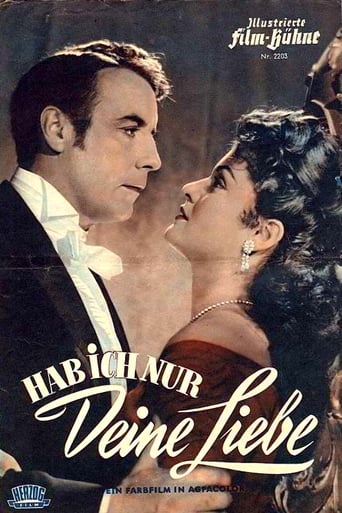
A comedy directed by Géza von Radványi.
Castle in Tyrol
1957
 6.5
Vienna, 1957: Head waiters Gustav (Paul Hörbiger) and Franz (Hans Moser) are working for the stinted Cafétier Panigl and are close friiends despite of their different characters. Franz is happily married and a good family father, Gustav, a relaxed charmer, is living a calm single life. Overnight both of them become jobless, because Panigl decided to sell his Café which was not successful anymore. Right in this moment, Franz' brother is sending 20.000 Dollar from USA. Money, he once peculated and now wants to pay back.. Gustav and Franz are buying half of the Café for each from the unexpected money. One half they develop as the modern Musicbox-Espresso «Pinguin», the other half as a traditional old style Vienna Café . Misunderstandings between guests and generations are inevitable and stretch the long term friendship of the two waiters.
Ober zahlen
1957
 10.0
No synopsis available yet.
Einen Jux will er sich machen
1956
1940s · 7 titles
A drama about marriage in a small town, which takes place at the turn of the 19th into the 20th Century.
Späte Liebe
1943
8.3In the first of Hartl's two Mozart biographies, Hans Holt plays the robust and dashing composer who, in keeping with the spirit of the film's time of origin, sets out into the world like a soldier of art after his falling out with the Salzburg authorities. Instead of conquering lands, he conquers the hearts of young ladies, like one of his most famous creations.
Whom the Gods Love
1942
A young Viennese actor is having much success on the stage; but intrigue and confusion in his love life are making his life a living Hell.
Brüderlein fein
1942
 7.3
Begun in 1944/45, finished and released in 1949, this is a biography of the composer Carl Michael Ziehrer, who overcomes hypersensitivity in competitive situations which leads initially to failures in both career and romance.
Viennese Girls
1949
 7.0
A comedy of confusion in aristocratic Vienna at the turn of the 19th into the 20th Century: The young Bohemian Countess Antschi Dorival trades places with her friend Martina, because she wants to become an actress and applies as such at the city theatre under a false name. And so, Martina attends the Vienna Opera Ball, posing as the countess. Because of their striking similarity to one another, Martina is confused with the impostor Sonja Lubomirska, who shortly before stole a necklace belonging to the wife of Archduke Johann Sylvester.
Die heimliche Gräfin
1942
 7.2
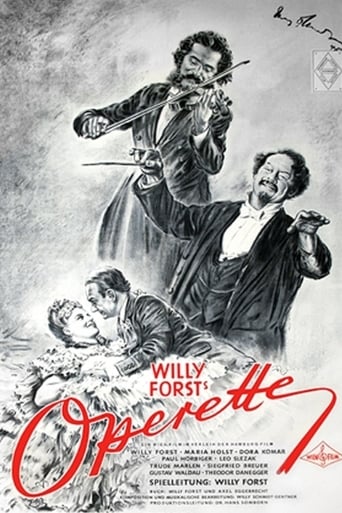
A musician is offered a job in Vienna as stage director, but his disagreements with the aristocratic opera manager end in abrupt firing in spite of a mutual attraction. He's quickly engaged by another theatre and becomes famous for his lavish stage productions and fine acting, which begins their golden age with Suppé and Strauss.
Operette
1940
The greengrocer Ferdinand Strubel wants his daughter Marianne to marry the son of the brewery owner Baron von Schnackenberg. Since Strubel is an impossibly cheap bastard, the marriage is to take place on 20 May, which, coincidentally, is the same day the city is having a grand festival for him to celebrate his company's being in business for 100 years. Marianne, however, has fallen in love with Leopold, a gym teacher; and when he reads an article in the newspaper about the upcoming arrival of Haley's Comet on 19 May, he comes up with an idea how he can prevent the wedding from taking place: He tells Strubel that the world is going to come to an end when the comet shows up, so that Strubel will see the errors of his way, cancel the arranged wedding and will become a better person for it. (Sucker!).
Judgement Day
1940
1930s · 22 titles
6.5Silo is a bum; but he's a bum whose beloved by all and one day, he is found wounded on the banks of the Theiss. Fishermen take him back to the village and Maria, Alexander Renka's young wife, cares for him until he gets better. Silo's wound heals, but he decides to stick with the fishermen to find out who the intended target for the stabbing knife really was (for who would stab a beloved bum?). Maria's husband is acting really strange. He is away from home often and can be found very often near the hut of the gypsy Panna, who can allegedly bewitch any man she pleases. Maria is convinced from her womanly intuition -- never mind asking -- that her husband is doing the dirty with the gypsy and decides to abandon him and the town she lives in. With her brother, she returns to her homeland, the steppe. That same morning, Alexander Renka is found dead on the riverbank and he's been stabbed, too.
Gypsy Ways
1939
 6.6
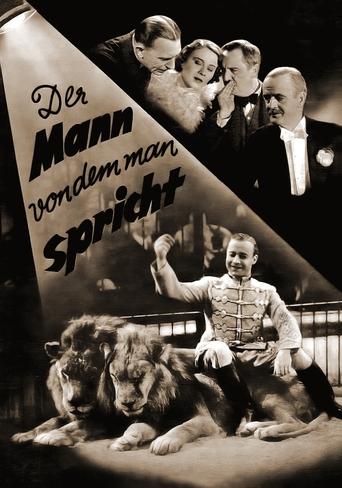
The Man Who is Talked About is the overly agreeable Toni Mathis (Heinz Ruhmann), a gent constitutionally incapable of saying the word "no" (or "nein," this being a German picture). Though he'd rather breeze through life without responsibilities or obligations, Toni agrees to study zoology in college because his uncle (Hans Moser) wants him to. Alas, despite the Herculean efforts by Toni's servant Hassler (Theo Lingen) to prepare his master for his final exams, Toni forgets to show up for the finals and is expelled post-haste. In desperation, his uncle arranges for Toni to get married, and once again our hero just can't say no. Trouble is, he falls in love with trapeze artist Bianca (Gusti Huber), whose father won't let her marry anyone except another entertainer. Undaunted, Toni studies a book on show business and tries out for the vaudeville stage, and the picture isn't even halfway over yet!
The Man Who is Talked About
1937
 8.0
Johann Strauss firmly established himself as the leader of a dance orchestra in Vienna in the 1840s. His sons Johann junior and Josef have clearly inherited their father's talent. Nevertheless, father Johann is strictly opposed to both of them training as composers.
Immortal Waltz
1939
 9.0
In 1936, Hungary’s championship team, escorted by their captain, Count Szirmay, retreats to a lakeside villa after a triumphant win in London, only to discover that a runaway English bride, Gingi Cheswick, has stowed away among them. Tasked with returning her home, serious young Gyurka Károlyi finds himself reluctantly drawn to her, while the team’s prankster Blazsek engineers a series of comic mishaps. Reunited under the strict watch of a girls’ institute and pursued by Gingi’s determined father, Gyurka and Gingi must navigate misunderstandings and rival suitors. Their story culminates on the playing field, where Gyurka’s unexpected heroics secure both a sports victory and the approval needed for their romance.
Roxy und ihr Wunderteam
1938
 7.0
A wardrobe mistress at a Vienna theatre wins a competition, receiving as her prize a luxury tour round Italy. On the train she meets an impoverished young Italian who pretends to be a prince.
Castles in the Air
1939
 8.0
Confusion comedy with musical interludes around a carnival ball, to dare the pretty shop assistant for a fashion store with one of the best gowns of her salon and posing in her embarrassment as the wife of a guest. - Harmlessly entertaining comedy, a little bit too poorly to bring to bear the first-time meeting of three most popular Austrian comic specialists Moser-Slezak-Romanowsky at that time appropriately.
Confetti
1936
 5.7
An easy-going hussar officer successfully vies for the love of a millionaire's daughter.
Ihr Leibhusar
1938
 6.5
A famous racing driver must give up his sport and take over the management of the porcelain factory on incentive of the vigorous grandmother as the last shoot of an old businessman's family. Unrecognized he is regulated as a worker what a love story with a 20-year-old worker arises from, who leads after incidents in the happy end. - After Franz Lehar's operetta produced comedy
Eva, the Factory Girl
1935
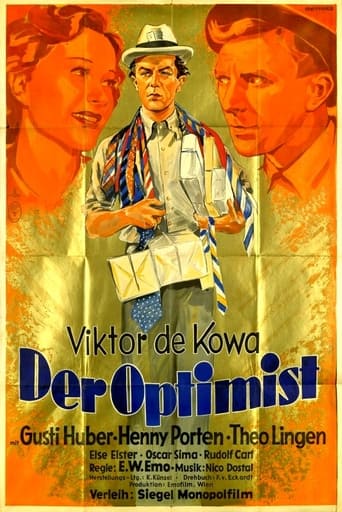 8.0
A moron buys a worthless piece of land, which a swindler passed off as an oil field.
The Optimist
1938
 7.0
Four orphaned friends move after the Abitur, supported by the janitor of her school, together in a flat and look for work to be able to finance her study. Two make the acquaintance of a frivolous young baron. One shoots in her outrage at him, nevertheless, is acquitted in court. - Stereotyped Jung's girl's cheap sensationalism, broken up by popular comic. Hans Moser stands out by his delightful character comic. The last in Austria produced film before the invasion of the armed forces ('Wehrmacht').
The Restless Girls
1938
 5.0
Princess Dagmar's life is boring, so depressed - so depressed that the doctor has to come. And the doctor advises: The girl must get out of the regulated aristocratic everyday life. Princess Dagmar is sent to a girls' boarding school, located on a farm, where everyone studies hard and gets stuck in and eats simple, healthy food. In keeping with the surroundings, Princess Dagmar also falls in love with a tough country boy. He is determined to found a school where individual boys are welded together in camaraderie - so that they can find the values that will enable them to fulfill their leadership roles in the world of tomorrow. Of course, Princess Dagmar will entrust her son to him one day.
Girl's Dormitory
1936
After a shady art collector is murdered, adept Dr. Sebastian Ott uncovers a massive organised fraud with fake paintings. His twin brother Ludwig is responsible, kidnaps him and locks him away in his house. He uses Otto's ID and 'replaces' him...
I Am Sebastian Ott
1939
 7.0
A film for scatterbrains. Everyone's constantly forgetting something – the daughter the little dog, the father the files, the chauffeur forgetting to close the roof of his taxi when it's pouring rain and his passenger gets soaked. Everyone rushes through life and doesn't even have time for themselves. Then a "young" student (Hans Söhnker) returns to his hometown. He receives a lavish welcome and, at 34, is probably one of the oldest students in German film history. He has three fathers who support him financially and studies on their money. Interminably. Now he has to accept that his fathers have run out of money for his studies. So he rolls up his sleeves, forgets about the expensive degree, and switches to a trade. He does hair, he drives, he assembles film, he shaves, and he pins seams. There he meets a young lady, has time to serenade her, and then learns that his biological father is a millionaire, who now lends him a hand and distributes cash to the other cash-strapped fathers.
Musik für dich
1937
 7.2
In the eve of the war between Vienna and Berlin playing dear comedy with then popular occupation: The mother wants to marry her daughter to the lord of the manor, but the daughter prefers the elegant hoteliers.
Liebe streng verboten
1939
 9.0
A girl from a noble family falls in love with a boy in financial difficulties.
The Fairy Dolly
1936
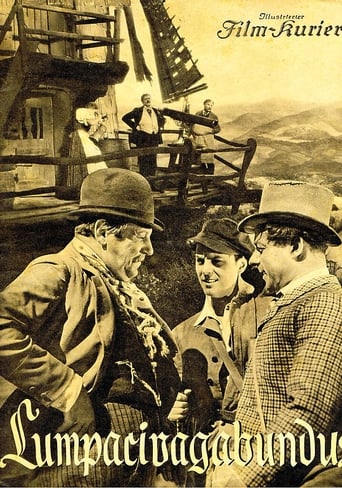 7.1
The fairies Fortuna and Amorosa make a bet with the devil, in the form of the evil spirit Lumpacivagabundus. They don't believe he will succeed in winning humanity over. To prove his skills, they choose three journeymen: the shoemaker Knierim, the tailor Zwirn, and the carpenter Leim. If Lumpacivagabundus succeeds in leading even one of the three journeymen astray, he will have won his bet. The devil manipulates a lottery in which the three journeymen win a fortune...
Lumpaci the Vagabond
1936
 5.7
1936 Austrian film.
Die Julika
1936
 6.5
A farmer opposes his daughter marrying a young music teacher (who a visitor from town also has eyes on) and prefers she marry a rich shopkeeper.The drama culminates with a fire in a barn where the touring Vienna Boys Choir are rehearsing.
Concert in Tirol
1938
 6.3
Ten years after the end of World War I, Austrian soldier Franz leaves Russia and returns to his village, where he is reunited with Frieda, a woman who believes he is her long-lost son. She seeks him out and greets him with such loving joy, that Franz doesn't have the heart to tell her the truth. He stays with her and when he gets to know his new girlfriend Annie, he begs her to hide his true identity from Annie. Annie, for her part, has seen through this charade already, but chooses to say nothing and to continue to care for Franz.
Die grosse Liebe
1931
 7.5
A new member of the Vienna Boys Choir shoulders the blame for a theft.
Singende Jugend
1936
Follow-up film to „Seine Tochter ist der Peter“: It’s a story about a lawyer, who is in love with his colleague, and a couple hot to divorce, who are represented by both lawyers, who, as a result, have a fall out with each other. But everything will be set right by little Elisabeth, known as “Peter”.
Peter in the Snow
1937
 6.8
The confrontation between two women - a choreographer of a successful troupe and a prima ballerina. Stung by the news of her upcoming dismissal, the prima begins to scheme..
Silhouettes
1936
1920s · 3 titles
No synopsis available yet.
Ihre Vergangenheit
1922
No synopsis available yet.
Die Totenhand
1921
 6.6
In the Republic of Utopia, because of the bad economic crisis ailing the nation, the Jews are made the scapegoats for the economic and social ills affecting the population; therefore, the government decides to expel them. Leo Strakosch is among the exiled. He is engaged to Counsellor's Linder's daughter. He gets into the Republic, in a clandestine way, to show to the society the wrongness of their anti-semitic prejudice. Bettauer's novel differs essentially from the film version. "Vienna" was named "Utopia." Even a happy ending was provided.
The City without Jews
1924