

Acting
Zózimo Bulbul
Born — Died
1937-09-21 — 2013-01-24
Place of birth
Rio de Janeiro, Rio de Janeiro, Brazil
Known for
Acting
Credits
70 titles
A Brazilian filmmaker, actor, producer and screenwriter, Jorge da Silva, better known by his stage name Zózimo Bulbul, is regarded as a household name of black Brazilian cinema. He was also the founder of Rio de Janeiro's Black Cinema Center ("Centro Afro Carioca de Cinema"). As an actor, he worked in over 30 features, and was directed by filmmakers such as Glauber Rocha (in "Terra em Transe"), Carlos Diegues ("Quilombo") and Antunes Filho ("Compasso de Espera"), becoming the first black man to play a main character in a Brazilian TV soap opera, in 1969's "Vidas em Conflito". His debut as a filmmaker was 1974's black and white short "Alma no Olho". With his work focusing in raising awarene…
Known for
 9.0
9.0No synopsis available yet.
Chico Anysio Show
1982
No synopsis available yet.
Vidas em Conflito
1969
 7.2
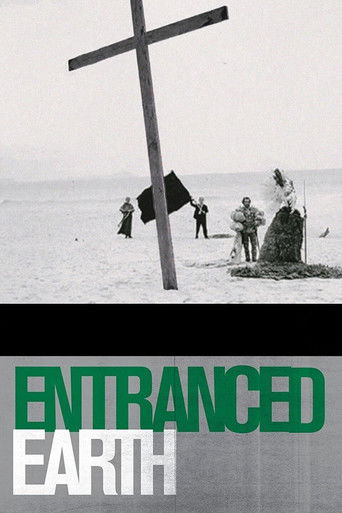
7.2Eldorado, a fictitious country in America, is sparkling with the internal struggle for political power. In the eye of this social convulsion, the jaded journalist Paulo Martins opposes two equally corrupt political candidates: a pseudopopulist and a conservative. In this context, Paulo is torn between the madness of the elite and the blind submission of the masses. But, in this complex tropical reality, nothing really is what it seems to be.
Entranced Earth
1967
 NR
NRNo synopsis available yet.
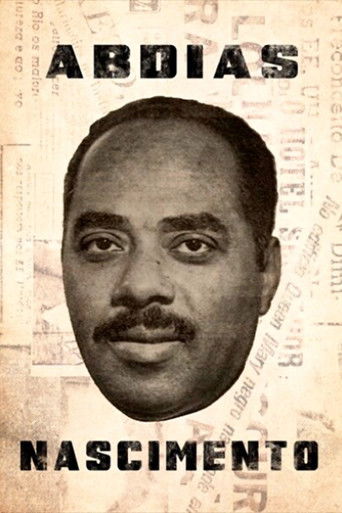
Abdias Nascimento
2011
 5.6
5.6In São Paulo, Vanessa who is normally spoiled rotten, is neglected and rejected by her mother, practically raised alone by her butler and driver Pedro and the maid, Dalva. Vanessa has disturbing daydreams and sexual fantasies, but doesn't let Arlindo, a teenager that flirts with her get close to her. Her best friend is Denise, a promiscuous girl that has intercourse with different men. When Vanessa discloses to Denise her problem, Denise gives the address of her psychotherapist Dr. Artur, to her friend. The unethical shrink pushes Vanessa to the edge, bringing memories of a severe trauma of her childhood. Then the disturbed Dr. Artur induces the girls to commit suicide.
The Girl and the Rapist
1982
 4.5
4.5Sexy girl seduces all the members of her family. She indirectly causes the failure of his father's marriage, for her stepmother falls in love with her. Then, she has affairs with her father's stepson, and with the farm housekeeper. She and some friends are also raped by some bad guys. But they all celebrate the ruin of traditional family values.
Giselle
1980
Film credits
2010s · 5 titles
NRNo synopsis available yet.
Abdias Nascimento
2011
 NR
NRThe film, shot in Dakar, Senegal, has testimonials from intellectuals, politicians and religious, who present an overview of the 50 years of independence of the countries of West Africa and the interpretation of the sculpture created recently in Senegal, which it represents, precisely, the African renaissance.
Renascimento Africano
2012
 7.8
7.8The African deity that brought in Brazil Together with the blacks, Exu is known as the orixá of communication, the guard of the streets and the human behavior. The short film of black culture and its assimilation by Brazilian art. In its subtext, the film honors one of the greatest activists of the black cause - the actor, the poet, the playwright and the politician - Abdias do Nascimento. The positioning of the documentary seeks to incorporate the fighting spirit, expressive and restless of Abdias: present link between characters, images and children of the film.
Exu Rei - Abdias do Nascimento
2017
 5.2
5.2The project '5 x slum, now by ourselves' gathered over 80 young people from Rio's favelas (slums), selected through workshops, script and filmmaking techniques to create a feature film consisting of five stories that reflect different facets of the daily lives of residents of these communities - with the promise of escape stereotypical representations.
5x Favela, Now by Ourselves
2010
 7.5
7.5The film narrates the imaginary encounter between João Cândido, leader of Revolta da Chibata and a paper picker and writer Carolina Maria de Jesus, author of the book "Quarto de despejo", in Rio de Janeiro.
Paper and Sea
2012
2000s · 10 titles
 6.4
6.4In a small town in the State of Minas Gerais, Brazil, two sisters meet again after years apart.
Daughters of the Wind
2005
 NR
NRIn 1850 the Italian dancer Maria Baderna arrives at Brazil, her fame and the scandals she provokes turns her name in a common expression. The film uses passages supposed to be about her to criticize modern Brazil, the dictatorship period and also a homage to filmmakers like Rogério Sganzerla.
Veja & Ouça - Maria Baderna no Brasil
2004
 NR
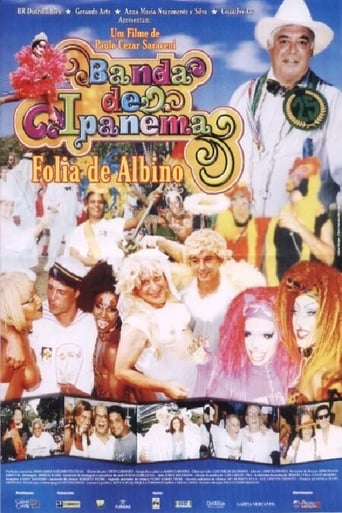
NRA movie about Banda de Ipanema, one of Rio de Janeiro’s most traditional Carnaval blocks, and its founder Albino Pinheiro.
Banda de Ipanema — Folia de Albino
2002
No synopsis available yet.
Oswaldo Cruz, o Médico do Brasil
2003
 NR
NRNo synopsis available yet.
O Homem que Sabia Javanês
2004
 6.1
6.1Young man, of Portuguese nobility ascendancy, starts working in a rubber plantation in the Amazon, in 1912, and falls in love with pretty Yayá, a married woman.
The Forest
2002
 5.7
5.7The old servant and chronicler Dom Sabas tells how his desolate South American town is the scene of a ruthless power struggle. The landowning Assis family, reduced to a widow and son, tries to hold out against the young, despotic mayor. No less effective then actions are anonymous rumors and accusations, which often stir the inhabitants' moves.
In Evil Hour
2006
 NR
NRA documentary about the celebration of the National Samba Day with the aim of preserving the memory of part of the history of samba, which was being forgotten by the press and the Brazilian people.
Samba no Trem
2005
 NR
NRDuring a showing of rare Afro-Brazilian Cinema films at the Cinematheque of the Museum of Modern Art of Rio de Janeiro, actor/filmmaker Zózimo Bulbul gathered some of the most notorious Brazilian black directors to talk about their works, their lives and their perspectives on the future.
Referências
2006
 NR
NRFilmed in a mini DV, the film "República Tiradentes" is an affective poetry, based on the stories of gafieira dancers, actors, rascals, girls and all the bohemians who lived and live moments of joy and glory in downtown Rio de Janeiro. It is a tribute mainly to the origin of the gafieira.
República Tiradentes
2005
1980s · 6 titles
5.6In São Paulo, Vanessa who is normally spoiled rotten, is neglected and rejected by her mother, practically raised alone by her butler and driver Pedro and the maid, Dalva. Vanessa has disturbing daydreams and sexual fantasies, but doesn't let Arlindo, a teenager that flirts with her get close to her. Her best friend is Denise, a promiscuous girl that has intercourse with different men. When Vanessa discloses to Denise her problem, Denise gives the address of her psychotherapist Dr. Artur, to her friend. The unethical shrink pushes Vanessa to the edge, bringing memories of a severe trauma of her childhood. Then the disturbed Dr. Artur induces the girls to commit suicide.
The Girl and the Rapist
1982
4.5Sexy girl seduces all the members of her family. She indirectly causes the failure of his father's marriage, for her stepmother falls in love with her. Then, she has affairs with her father's stepson, and with the farm housekeeper. She and some friends are also raped by some bad guys. But they all celebrate the ruin of traditional family values.
Giselle
1980
 NR
NRNo synopsis available yet.
O Olho amarelo do tigre
1988
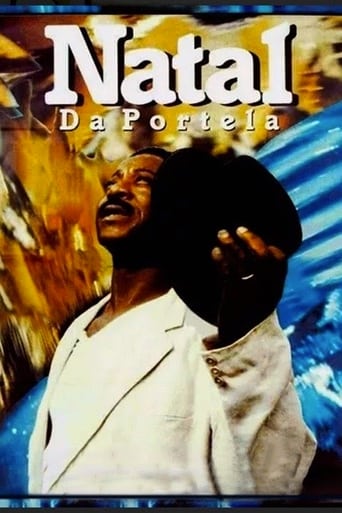 7.1
7.1Biography of one of the legendary names in the Samba genre of Brazilian music. Although he could hardly dance or play an instrument, he became one of the main composers of Portela, an important Samba "school" in Rio de Janeiro.
Natal da Portela
1988
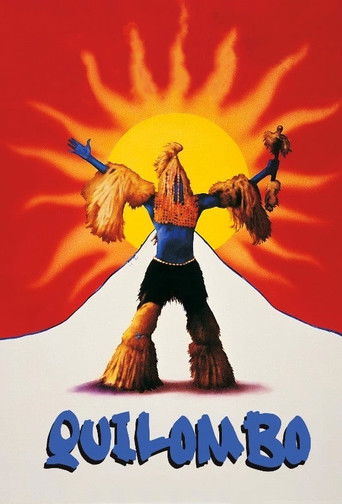 6.9
6.9Quilombo dos Palmares was a real-life democratic society, created in Brazil in the 17th century. This incredibly elaborate (and surprisingly little-known) film traces the origins of Quilombo, which began as a community of freed slaves. The colony becomes a safe harbor for other outcasts of the world, including Indians and Jews. Ganga Zumba (Toni Tornado) becomes president of Quilombo, the first freely elected leader in the Western Hemisphere. Naturally, the ruling Portuguese want to subjugate Zumba and his followers, but the Quilombians are ready for their would-be oppressors. The end of this Brave New World is not pleasant, but the followers of Zumba and his ideals take to the hills, where they honor his memory to this day. Writer/director Carlos Diegues takes every available opportunity to compare the rise and fall of Quilombo with the state of affairs in modern-day Brazil.
Quilombo
1984
A documentary about the artist Aloísio Magalhães.
Memória Viva
1987
1970s · 14 titles
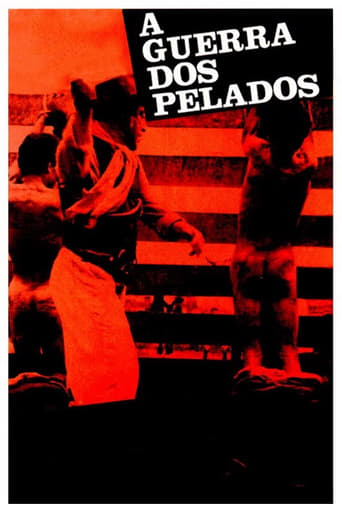 5.8
5.8In 1913, in the state of Santa Catarina, Brazil, the Government gives some lands to a foreign railway company, giving rise to revolt by the former owners of the land. The episode became known as Guerra dos Pelados.
The War of Pelados
1970
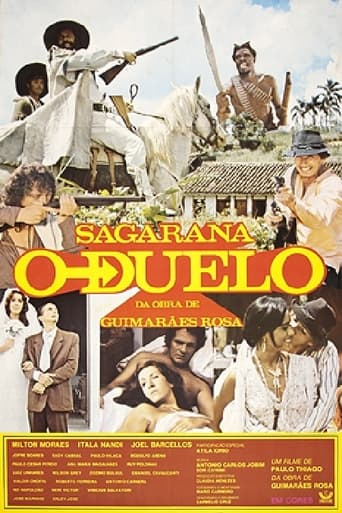 7.0
7.0Unable to endure the idea that he would go without punishment, a criminal's victim chases him the length and breadth of Brazil for a showdown.
Sagarana: O Duelo
1974
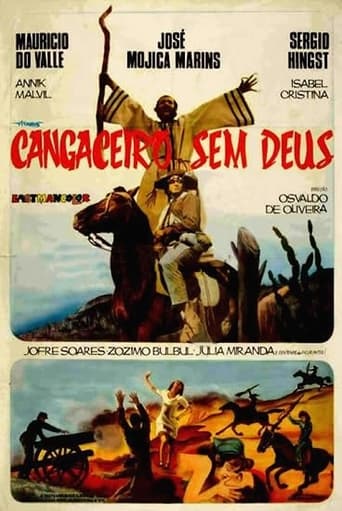 9.0
9.0After the proclamation of the Republic, a group of fanatics in the sertão dreamed of and fought for the restoration of the Monarchy. At that bloody time, Fabiano, a quiet boy, becomes a cangaceiro and is attacked by the police. Although wounded, he manages to take refuge on a farm where he is hidden in by Lúcia, the farmer's daughter, with whom he falls in love.
The Godless Bandit
1970
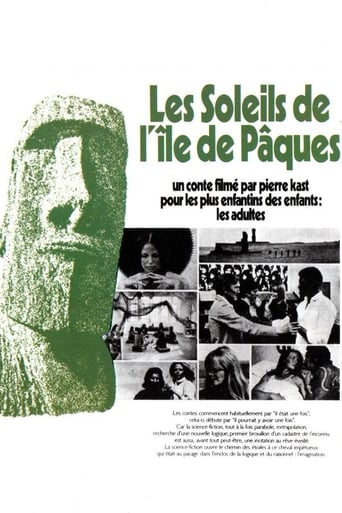 6.4
6.4Six people find a mysterious mark in the center of their left hand and all independently go to Easter Island in hopes to uncover the mystery.
The Suns of Easter Island
1972
 9.0
9.0Baby is found by nuns, who raise her inside the convent. When she grows up, she moves to a fishing village and gives up religious life when she falls in love with a black fisherman, who practices a Afro-Brazilian religion called Umbanda.
Pureza Proibida
1975
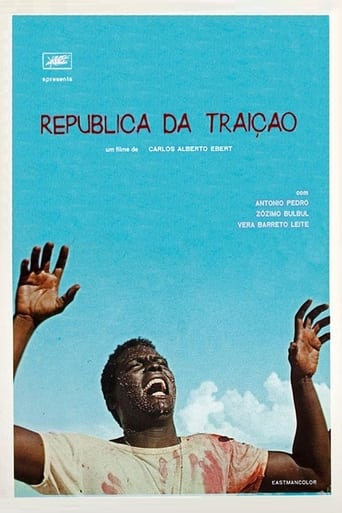 6.3
6.3European couple arrive at the Republic of Maraguaya with a strange mission. But the involvement with a local man, whom they hire as an employee, will change their plans.
República da Traição
1970
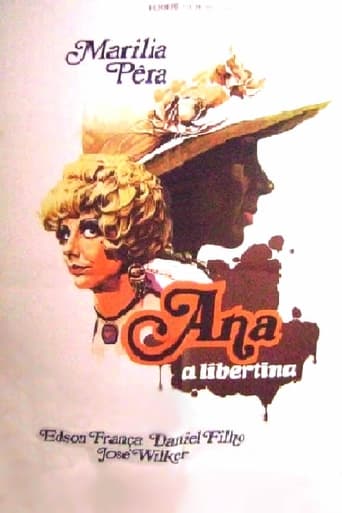 10.0
10.0No synopsis available yet.
Ana, a Libertina
1975
 5.8
5.8Bárbara, a French girl living in São Paulo, and two friends transform a small apartment into a luxury bordello, "The Palace of Angels", at first securing money and success, but...
The Palace of Angels
1970
 10.0
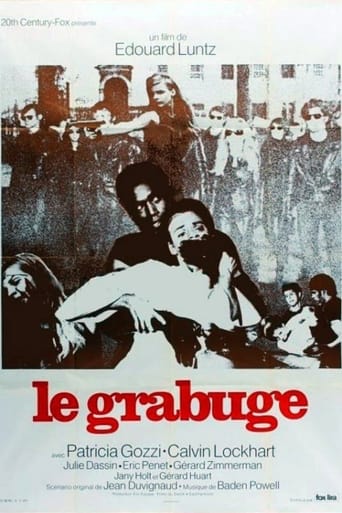
10.0A woman from a bourgeois family marries a loveless man. She remembers (or dreams?) a life of adventure and smuggling, hijacking ships at night. She is kidnapped by the leader of the enemy gang, with whom she falls in love.
Hung Up
1973
 10.0
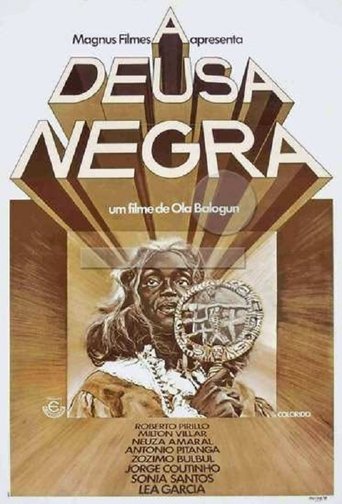
10.0A Deusa Negra is a love story that spans two centuries. In 18th century Yorubaland, Prince Oluyole is taken prisoner in the course of internecine warfare fanned by overseas slave traders. He is sold into slavery in Brazil. In present day Nigeria, at his father's deathbed, the young Babatunde promises to go to Brazil and search for traces of their once-enslaved ancestors. Beginning with a Candomblé ritual, his journey takes him ever deeper into this culture and, in a dream-like sequence, affords him a deeper understanding of his ancestors' suffering and powers of resistance. Balogun effortlessly links present with past, real with magical worlds and discourse with trance. The hypnotic atmosphere is also heightened by the music of the Nigerian drummer Remi Kabaka, which plays with repetitive patterns and distortions.
Black Goddess
1978
 8.9
8.9Inspired by Black Panther Eldridge Cleaver’s book Soul on Ice and dedicated to John Coltrane, Soul in the Eye marks the beginning of Black Brazilian films. The film is a metaphor for the legacy of culture and survival bestowed by enslaved Africans brought to the American continent and the search for freedom through inner transformation, in a game inspired by concretism.
Soul in the Eye
1973
 9.0
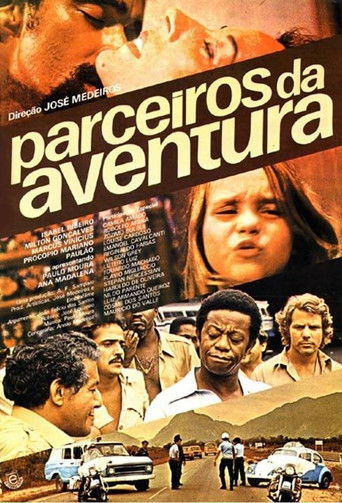
9.0Rio de Janeiro crooks rove about, performing petty tricks to survive, and get involved with a woman who steals cars.
Parceiros da Aventura
1979
 NR
NRThe making of the samba school parades, with the construction of the great cars, the decorations being spread all over the city and the hand-crafted tailoring of the costumes by apt hands that stitch together colourful and glowing materials.
Artesanato do Samba
1974
 10.0
10.0A drama in the amazonian country.
Brutos Inocentes
1974
1960s · 15 titles
7.2Eldorado, a fictitious country in America, is sparkling with the internal struggle for political power. In the eye of this social convulsion, the jaded journalist Paulo Martins opposes two equally corrupt political candidates: a pseudopopulist and a conservative. In this context, Paulo is torn between the madness of the elite and the blind submission of the masses. But, in this complex tropical reality, nothing really is what it seems to be.
Entranced Earth
1967
 7.0
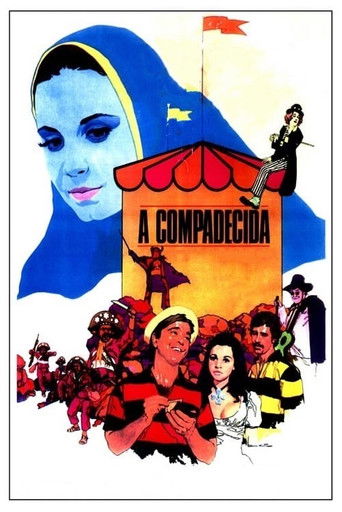
7.0João Grilo is a backwoodsman who tries to get along at the expense of the powerful in the city, who pretend to be respectful of morals and good customs and hide their sins. But when a band of cangaceiros attacks the small town, everyone has to settle accounts with God and the Devil.
Our Lady of Compassion
1969
 6.7
6.7In the village of Leva-e-Traz, the discovery of a oil field is responsible for a mass evasion of the townspeople. Left are the old and incapable for the extraction job. When the local priest announces he, too, is leaving the town, Satan emerge thrilled with the chance of overtaking the place.
Satan's Feats in the Village of Take-and-Bring
1967
 5.7
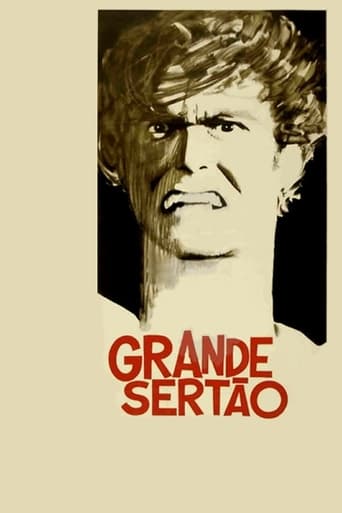
5.7Cowboy Riobaldo is attracted to same sex Diadorim, not knowing that "he" is a girl dressed in man's clothes. After Diadorim's father is killed, she swears revenge, being joined by Riobaldo in this mission.
Grande Sertão
1965
 5.9
5.9A man gets locked naked outside of his apartment.
The Naked Man
1968
 7.5
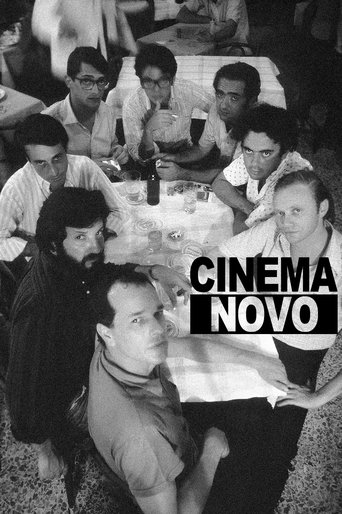
7.5Originally produced for German TV, Improvised and Purposeful is a firsthand look at the "Cinema Novo" movement (otherwise known as the 'Brazilian New Wave'). Director Joaquim Pedro de Andrade focuses on six Cinema Novo filmmakers working in Rio in 1967.
Improvised and Purposeful: Cinema Novo
1967
 8.3
8.3Jorge de Oliveira is an Afro-Brazilian poet who works in a publicity agency in São Paulo. Torn between his rich white lovers and his black family and friends, Jorge's situation serves as a springboard to a discussion about racial issues in Brazil.
Compasso de Espera
1969
 7.9
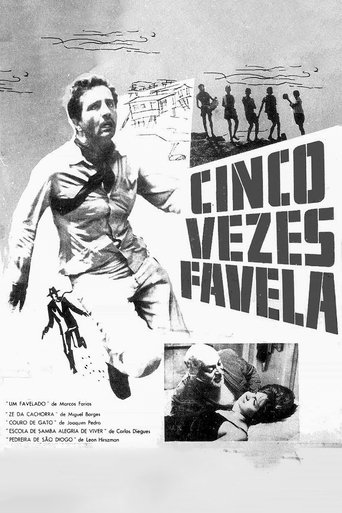
7.9Five segments about the hardships faced by people living in slums on hills in Rio de Janeiro.
Five Times Favela
1962
 6.3
6.3Chronicles the life of a 17 year-old girl living in the upper-class Rio de Janeiro neighbourhood of Ipanema. Márcia lives a life of parties and spend her days among bohemians, musicians and intellectuals. While seeming happy in the outside, she's extremely anguished inside. Based on the famous song by Antonio Carlos Jobim and Vinicius de Moraes.
The Girl from Ipanema
1967
 9.0
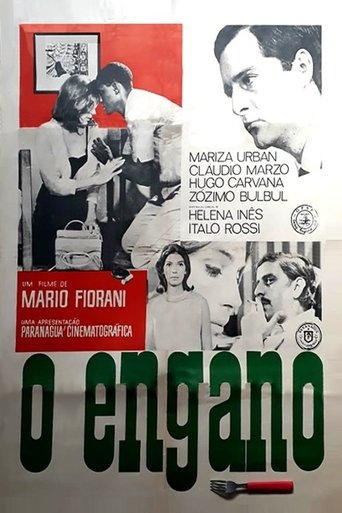
9.0The relationship of a woman with three men - her husband, her lover and a man who fell in love with her -, told in a single night, through flashbacks
O Engano
1967
 9.0
9.0In the late 1960s, Thomas Farkas imported equipment suitable for direct sound, and released a collection of documentaries called "Brasil Verdade" ("True Brazil"), after the Military Coup d'État took place in Brazil, which happened without any popular resistance or revolution or reaction of the society. The five short films are directly related to this fact and its consequences to the country.
True Brazil
1968
 7.1
7.1Edson is having an affair with actress Maria do Rosário, who dreams of being a movie director. So he tries to get some easy money for her film, but is arrested and meets a police torturer instead.
Garden of War
1969
 6.6
6.6The life of a runaway slave who founded the Quilombo dos Palmares, an outlaw community of Brazilian slaves.
Ganga Zumba
1963
 5.9
5.9A shockingly irreverent follow-up to the rural austerity of Barren Lives, dos Santos’ Godardian social satire owes more than a nod to the self-conscious antics of the French New Wave. The pampered son of a general, El Justicero is a hipster playboy who fancies himself a James Bond/Jean Paul Sartre urban hero. “Archetypical” yet “full of contradictions,” he sees that justice is achieved for the disadvantaged while taking advantage of certain bourgeois perks. His exploits are closely followed and eventually directed by his biographer who decides a film is not only more lucrative than a book, but it gives him the luxury of reviewing previous scenes. Unlike Bond, El Jus eventually experiences an awakening which threatens to compromise the entertainment value and glamour of his life story. - Harvard Film Archive
El Justicero
1967
No synopsis available yet.
Queima de Arquivo
1967
Series credits
Behind the camera
 NR
NRZózimo Bulbul’s film is dedicated to Zumbi dos Palmares and to all Maroons dead and alive. It portrays the life of Aniceto, who was 72 years old at the time: a union leader, a stevedore at the Rio de Janeiro port and founder of Escola de Samba Império Serrano
Aniceto do Império: Dia de Alforria
1981
NRZózimo Bulbul’s film is dedicated to Zumbi dos Palmares and to all Maroons dead and alive. It portrays the life of Aniceto, who was 72 years old at the time: a union leader, a stevedore at the Rio de Janeiro port and founder of Escola de Samba Império Serrano
Aniceto do Império: Dia de Alforria
1981
NRThe film, shot in Dakar, Senegal, has testimonials from intellectuals, politicians and religious, who present an overview of the 50 years of independence of the countries of West Africa and the interpretation of the sculpture created recently in Senegal, which it represents, precisely, the African renaissance.
Renascimento Africano
2012
 7.0
7.0A documentary short on Rio de Janeiro's district known as "Little Africa", shot on location, in which children and elders talk about the place's history.
Pequena África
2001
NRA documentary about the celebration of the National Samba Day with the aim of preserving the memory of part of the history of samba, which was being forgotten by the press and the Brazilian people.
Samba no Trem
2005
NRA documentary about the celebration of the National Samba Day with the aim of preserving the memory of part of the history of samba, which was being forgotten by the press and the Brazilian people.
Samba no Trem
2005
8.9Inspired by Black Panther Eldridge Cleaver’s book Soul on Ice and dedicated to John Coltrane, Soul in the Eye marks the beginning of Black Brazilian films. The film is a metaphor for the legacy of culture and survival bestowed by enslaved Africans brought to the American continent and the search for freedom through inner transformation, in a game inspired by concretism.
Soul in the Eye
1973
8.9Inspired by Black Panther Eldridge Cleaver’s book Soul on Ice and dedicated to John Coltrane, Soul in the Eye marks the beginning of Black Brazilian films. The film is a metaphor for the legacy of culture and survival bestowed by enslaved Africans brought to the American continent and the search for freedom through inner transformation, in a game inspired by concretism.
Soul in the Eye
1973
8.9Inspired by Black Panther Eldridge Cleaver’s book Soul on Ice and dedicated to John Coltrane, Soul in the Eye marks the beginning of Black Brazilian films. The film is a metaphor for the legacy of culture and survival bestowed by enslaved Africans brought to the American continent and the search for freedom through inner transformation, in a game inspired by concretism.
Soul in the Eye
1973
NRDuring a showing of rare Afro-Brazilian Cinema films at the Cinematheque of the Museum of Modern Art of Rio de Janeiro, actor/filmmaker Zózimo Bulbul gathered some of the most notorious Brazilian black directors to talk about their works, their lives and their perspectives on the future.
Referências
2006
NRFilmed in a mini DV, the film "República Tiradentes" is an affective poetry, based on the stories of gafieira dancers, actors, rascals, girls and all the bohemians who lived and live moments of joy and glory in downtown Rio de Janeiro. It is a tribute mainly to the origin of the gafieira.
República Tiradentes
2005
NRThe making of the samba school parades, with the construction of the great cars, the decorations being spread all over the city and the hand-crafted tailoring of the costumes by apt hands that stitch together colourful and glowing materials.
Artesanato do Samba
1974
NRThe making of the samba school parades, with the construction of the great cars, the decorations being spread all over the city and the hand-crafted tailoring of the costumes by apt hands that stitch together colourful and glowing materials.
Artesanato do Samba
1974
NRThe making of the samba school parades, with the construction of the great cars, the decorations being spread all over the city and the hand-crafted tailoring of the costumes by apt hands that stitch together colourful and glowing materials.
Artesanato do Samba
1974
 6.9
6.9In 1988, the centenary of abolition of slavery in Brazil, Zózimo Bulbul made this powerful historical analysis of racial issues in his country. This documentary provides an in-depth look through extensive archival researching and interviews of key figures who were involved in preserving black culture. Aside from historical testimony, this epic documentary also points to the current relevance of facing the racism that still confronts the black population in Brazil.
Abolition
1988
6.9In 1988, the centenary of abolition of slavery in Brazil, Zózimo Bulbul made this powerful historical analysis of racial issues in his country. This documentary provides an in-depth look through extensive archival researching and interviews of key figures who were involved in preserving black culture. Aside from historical testimony, this epic documentary also points to the current relevance of facing the racism that still confronts the black population in Brazil.
Abolition
1988
 NR
NRNo synopsis available yet.
Zona Carioca do Porto
2006
 NR
NRNo synopsis available yet.
Frente Negra Brasileira
1985