
Acting
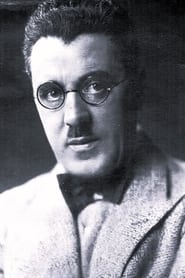
George Carney
Born — Died
1887-11-20 — 1947-12-09
Place of birth
Bristol, Gloucestershire, England, UK
Known for
Acting
Credits
48 titles
Known for
 6.7
6.7The story of the HMS Torrin, from its construction to its sinking in the Mediterranean during action in World War II. The ship’s first and only commanding officer is Captain E.V. Kinross, who trains his men not only to be loyal to him and the country, but—most importantly—to themselves.
In Which We Serve
1942
 7.1
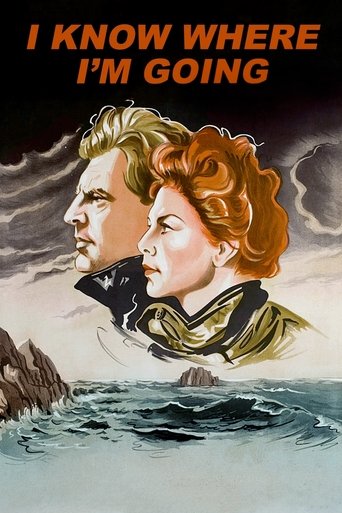
7.1Plucky Englishwoman Joan Webster travels to the remote islands of the Scottish Hebrides in order to marry a wealthy industrialist. Trapped by inclement weather on the Isle of Mull and unable to continue to her destination, Joan finds herself charmed by the straightforward, no-nonsense islanders around her, and becomes increasingly attracted to naval officer Torquil MacNeil, who holds a secret that may change her life forever.
I Know Where I'm Going!
1945
 6.8
6.8Centring on the activities of a gang of assorted criminals and, in particular, their leader – a vicious young hoodlum known as "Pinkie" – the film's main thematic concern is the criminal underbelly evident in inter-war Brighton.
Brighton Rock
1948
 6.5
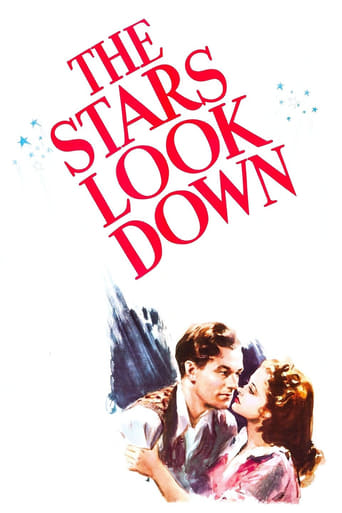
6.5Davey Fenwick leaves his mining village on a university scholarship intent on returning to better support the miners against the owners. But he falls in love with Jenny who gets him to marry her and return home as local schoolteacher before finishing his degree.
The Stars Look Down
1940
 9.0
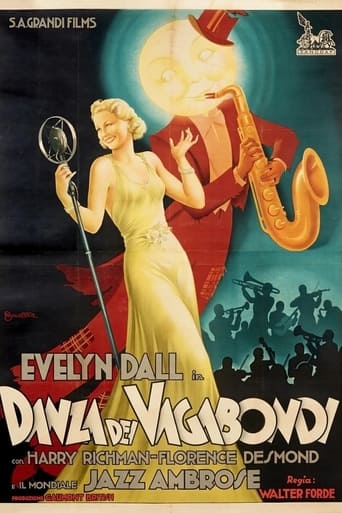
9.0Kicking the Moon Around is a 1938 British musical comedy film directed by Walter Forde and starring Bert Ambrose, Evelyn Dall and Harry Richman. In an effort to discover whether his fiancee is a golddigger a millionaire's son pretends to have lost all his money. The film marked Maureen O'Hara's screen debut as she made a cameo appearance speaking one line.
Kicking the Moon Around
1938
 5.6
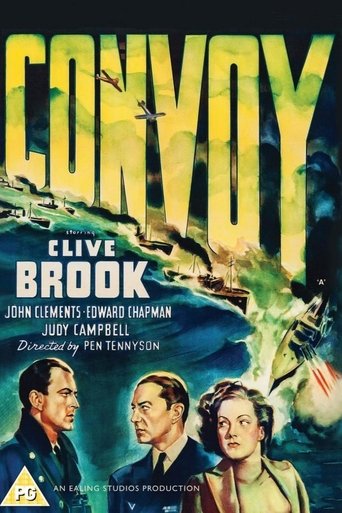
5.6A tale of life on board a Royal Navy cruiser assigned to protect the vital convoys between America and England during WWII.
Convoy
1940
Film credits
1940s · 26 titles
6.7The story of the HMS Torrin, from its construction to its sinking in the Mediterranean during action in World War II. The ship’s first and only commanding officer is Captain E.V. Kinross, who trains his men not only to be loyal to him and the country, but—most importantly—to themselves.
In Which We Serve
1942
7.1Plucky Englishwoman Joan Webster travels to the remote islands of the Scottish Hebrides in order to marry a wealthy industrialist. Trapped by inclement weather on the Isle of Mull and unable to continue to her destination, Joan finds herself charmed by the straightforward, no-nonsense islanders around her, and becomes increasingly attracted to naval officer Torquil MacNeil, who holds a secret that may change her life forever.
I Know Where I'm Going!
1945
6.8Centring on the activities of a gang of assorted criminals and, in particular, their leader – a vicious young hoodlum known as "Pinkie" – the film's main thematic concern is the criminal underbelly evident in inter-war Brighton.
Brighton Rock
1948
6.5Davey Fenwick leaves his mining village on a university scholarship intent on returning to better support the miners against the owners. But he falls in love with Jenny who gets him to marry her and return home as local schoolteacher before finishing his degree.
The Stars Look Down
1940
5.6A tale of life on board a Royal Navy cruiser assigned to protect the vital convoys between America and England during WWII.
Convoy
1940
 5.9
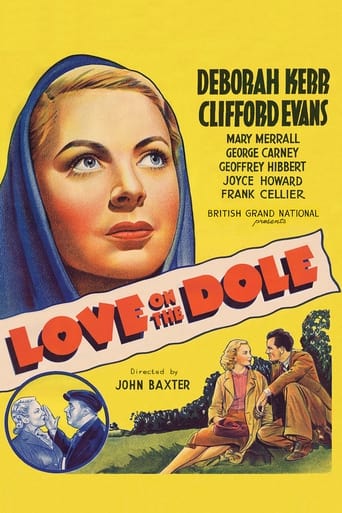
5.9Depressing and realistic family drama about the struggles of unemployment and poverty in 1930s Lancashire. The 20-year-old Kerr gives an emotionally charged performance as Hardcastle, one of the cotton workers trying to make life better. Interlaced with humour that brings a ray of sunshine to the pervasive bleakness, this remains a powerful social study of life between the wars, and was a rare problem picture to come out of Britain at the time.
Love on the Dole
1941
 6.1
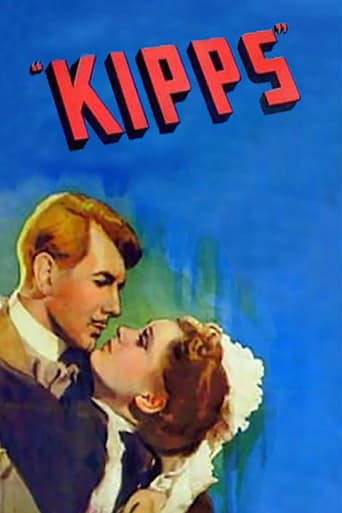
6.1A young tradesman learns that money doesn't necessarily bring happiness. Drama.
Kipps
1941
 6.0
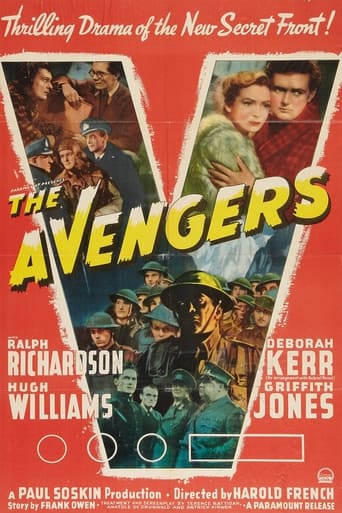
6.0When Hitler invades Poland, sports journalist Colin Metcalfe (Hugh Williams) is unexpectedly reassigned as a foreign correspondent in Norway. En route, his ship is attacked by a German U-boat, but his warning to the Royal Navy is dismissed and he loses his post. With the German invasion of Norway soon after, Metcalfe returns, determined to uncover enemy operations and strike back against the occupiers.
The Day Will Dawn
1942
 7.4
7.4Jeckie Farnish is a level-headed young woman, unlike her spoiled younger sister, Rushie. When the sisters become involved with charming businessman Charles Mortimer, the resulting tragedy leads to a lust for revenge on Rushie's part. However, Jeckie knows that she can always turn to reliable Joe Bartle in times of need.
The Root of All Evil
1947
 6.5
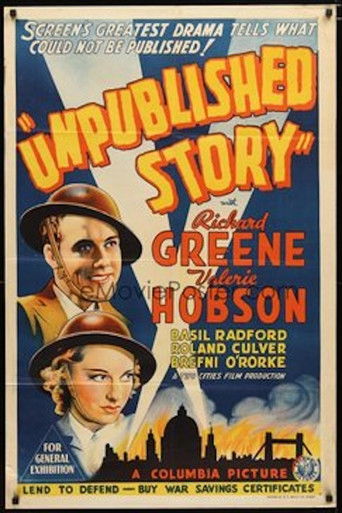
6.5Morale-boosting story released in the middle of World War II. A journalist uncovers a peace organisation at the centre of disreputable dealings.
Unpublished Story
1942
 7.0
7.0Life aboard merchant ships with the Maritime Regiment of the Royal Artillery.
Soldier, Sailor
1944
 6.4
6.4Sent to a home for "problem" girls, incipient juvenile delinquent Gwen receives a crash course in petty crime. Back on the outside, she falls in with the usual bad crowd, and suffers spectacularly as a result.
Good-Time Girl
1948
 6.8
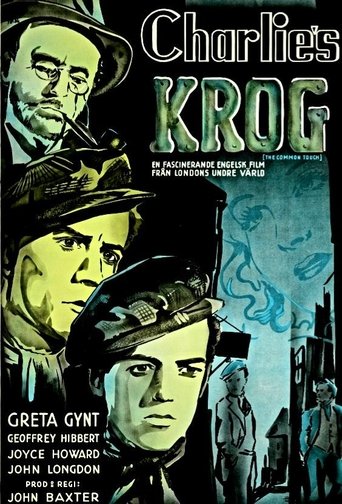
6.8On the death of his father, an eighteen-year old leaves school to take over the family firm in the City of London. Realising the other directors want to keep him in the dark he starts asking questions, and is soon undercover as a down-and-out in a hostel which will disappear if a company building project goes ahead.
The Common Touch
1941
 8.5
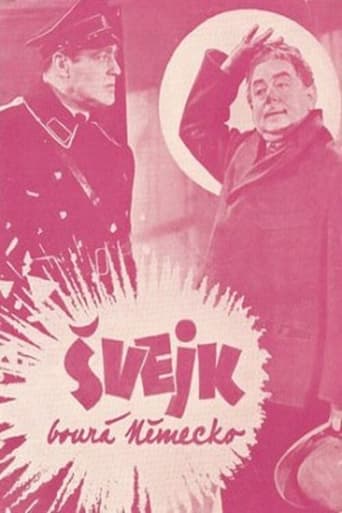
8.5KAREL LAMAČ (1987-1952), who worked in Germany for a long time, was forced to leave for France and then Great Britain before Hitler's fascism, where he continued to direct films. His film Švejk is Destroying Germany from 1943 was created under the influence of wartime circumstances and was intended mainly for a British audience. Perhaps this is also why the tone of the original Czech hero of Hašek's humorous original deviates from his traditional way of portraying him. He transfers him to the wartime reality of the time and, through a series of coincidences, makes him a military servant of the Gestapo commander, which gives Švejk the opportunity to save many people from deportation to concentration camps. Lamač is therefore not driven by the motive of an authorial interpretation but rather by the need for propaganda. This is also emphasized by Foreign Minister Jan Masaryk, whose opening words were added to this comedy in 1947, when it was released into Czechoslovak film distribution.
Svejk Wrecks Germany
1943
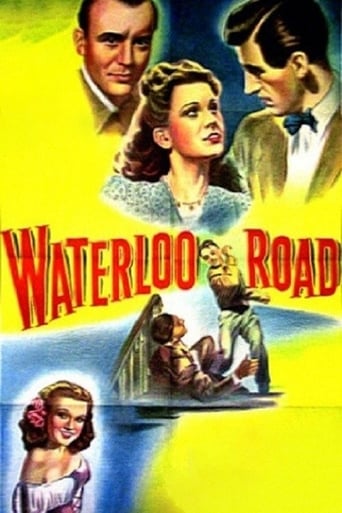 6.0
6.0During WW2 a former railway employee who had been drafted, goes AWOL to hunt down the spiv and draft dodger who is having an affair with his wife.
Waterloo Road
1945
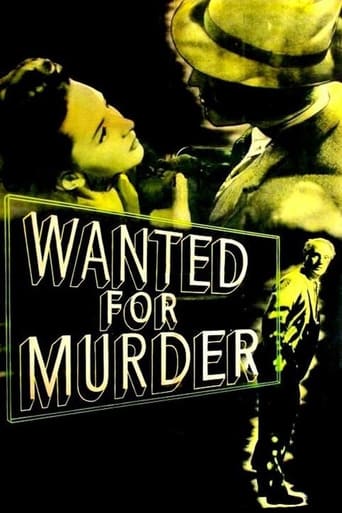 6.4
6.4The son of a notorious hangman is gradually becoming insane and he finds himself unable to resist the urge to strangle women to death.
Wanted for Murder
1946
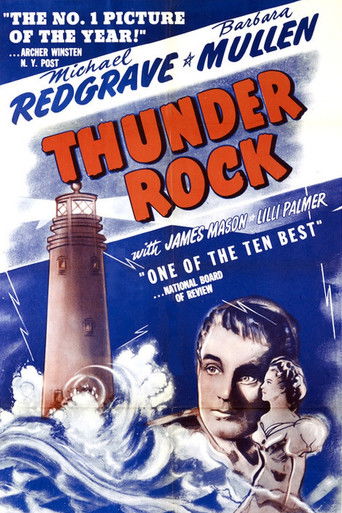 6.2
6.2David Charleston, once a world renowned journalist, now lives alone maintaining the Thunder Rock lighthouse in Lake Michigan. He doesn't cash his paychecks and has no contact other than the monthly inspector's visit. When alone, he imagines conversations with those who died when a 19th century packet ship with some 60 passengers sank. He imagines their lives, their problems, their fears and their hopes. In one of these conversations, he recalls his own efforts in the 1930s when he desperately tried to convince first his editors, and later the public, of the dangers of fascism and the inevitability of war. Few would listen. One of the passengers, a spinster, tells her story of seeking independence from a world dominated by men. There's also the case of a doctor who is banished for using unacceptable methods. David has given up on life, but the imaginary passengers give him hope for the future.
Thunder Rock
1942
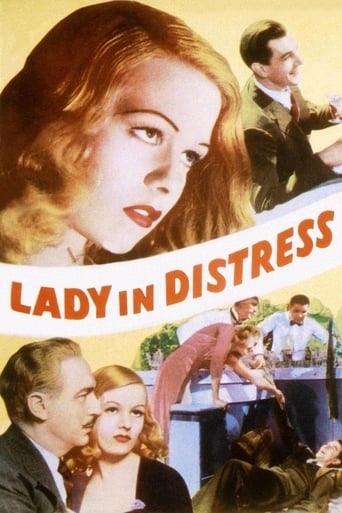 6.2
6.2A man witnesses a murder that isn't a murder, only to get involved with the magician and his wife who created the illusion. The insanely jealous magician husband eventually kills his wife, making for complications in life of unhappily married man who is now involved more than he ever thought he would be.
A Window in London
1940
 6.5
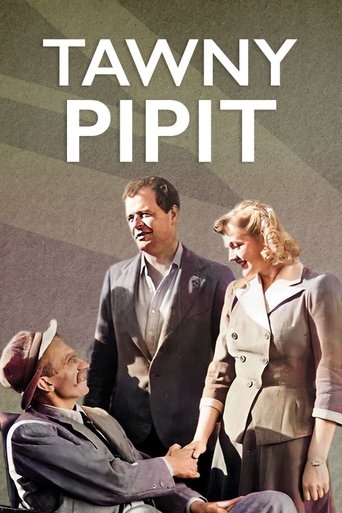
6.5Jimmy Bancroft, a fighter pilot, who is recovering from injuries sustained during the Battle of Britain, and Hazel Court, a nurse, come across a pair of rare birds nestling in a field. After a run in with the army, and a couple of thieves, they, with the cooperation of the village people and the Ornithology Society, help the eggs to hatch. A wonderful look at life in a small village, during World War II.
Tawny Pipit
1944
 7.0
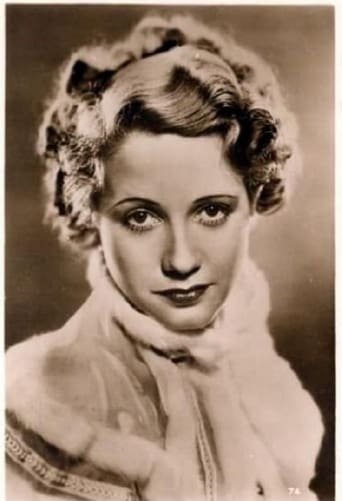
7.0During the Second World War, a special constable and former solicitor is called upon to defend his son who is accused of the theft of a car
The Briggs Family
1940
 7.0
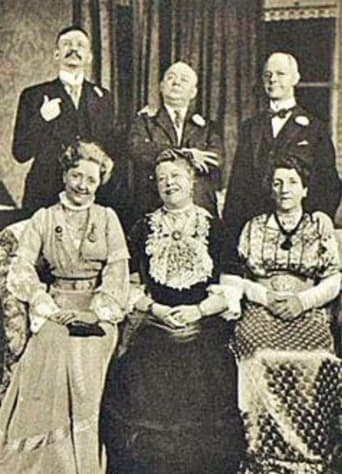
7.0The Helliwells, the Soppitts, and the Parkers, old friends gathered to celebrate their common silver anniversaries. To their dismay they learn that their marriages may not be valid. On hand are an outrageous housekeeper and a photographer.
When We Are Married
1943
A steelworker rises through the ranks to become manager of three steel mills, but ruthless ambition overwhelms him.
Hard Steel
1942
 6.5
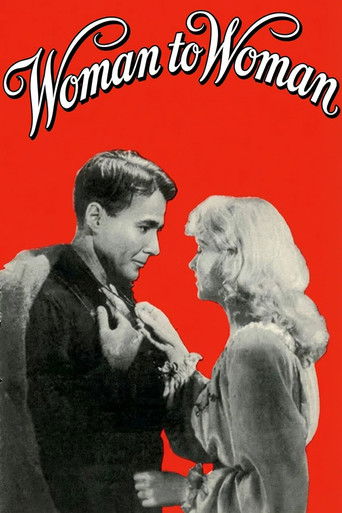
6.5A Canadian officer, David Anson, who falls for French dancer Nicolette Bonnett during wartime, has a child with her, and returns heartbroken after her death from a weak heart, only for his wife to adopt the son, linking their lives across continents and tragedy, exploring themes of love, duty, and lost time.
Woman to Woman
1947
 6.3
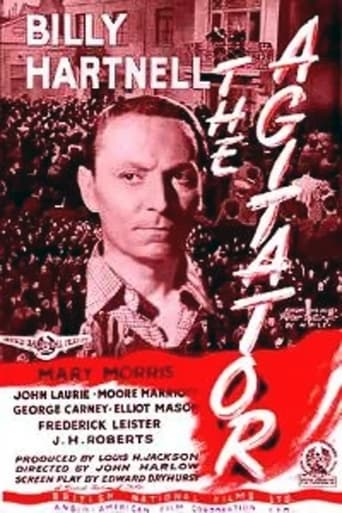
6.3The Agitator is a 1945 British drama film directed by John Harlow and starring William Hartnell, Mary Morris and John Laurie. Its plot follows a young mechanic who unexpectedly inherits the large firm where he works and tries to run it according to his socialist political beliefs. It was based on the 1925 novel Peter Pettinger by William Riley.
The Agitator
1945
 6.5
6.5Based on a story by author Noel Streatfeild, the film tells the story of two sisters who are left penniless by their father's sudden death and lease their estate as an airbase to US forces in Britain to help the war effort. Both eventually fall for American servicemen.
Welcome, Mr Washington
1944
Paddy, an Irish singer heads to America to seek fame and fortune. Once successful he returns home to search for his family. He joins The Royal Air Force.
Rose of Tralee
1942
1930s · 22 titles
9.0Kicking the Moon Around is a 1938 British musical comedy film directed by Walter Forde and starring Bert Ambrose, Evelyn Dall and Harry Richman. In an effort to discover whether his fiancee is a golddigger a millionaire's son pretends to have lost all his money. The film marked Maureen O'Hara's screen debut as she made a cameo appearance speaking one line.
Kicking the Moon Around
1938
 6.7
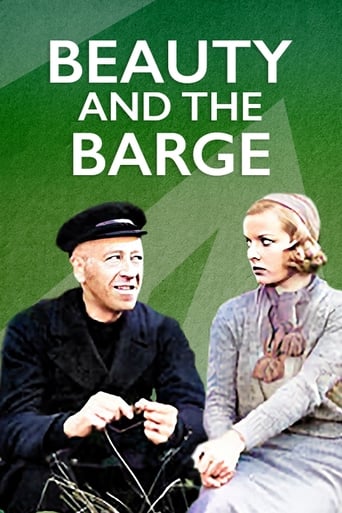
6.7A young girl is engaged to a man she doesn't love, and rather than marry him she decides to flee the situation altogether. She is helped by a crusty old barge captain.
Beauty and the Barge
1937
 6.4
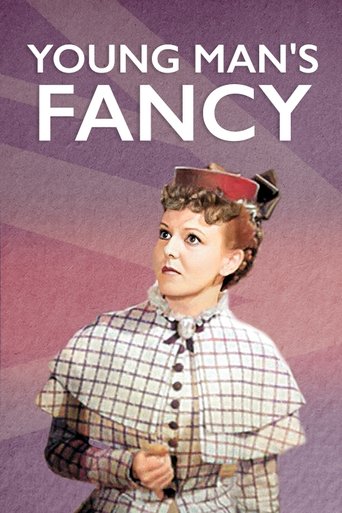
6.4An aristocrat falls in love with a human cannonball
Young Man's Fancy
1939
 7.3
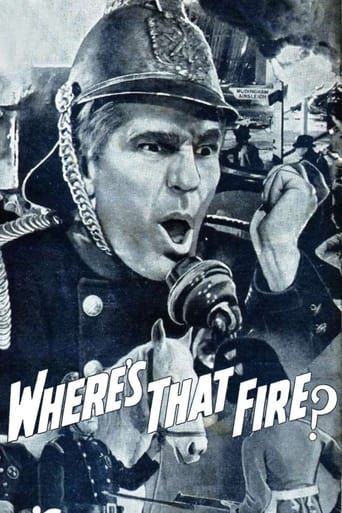
7.3Capt Viking and his incompetent fire crew accidentally foil a plot to steal the crown jewels.
Where's That Fire
1939
A young woman who is in love with a penniless composer, but believes she must marry a wealthy man to please her father. But only realises after various tribulations she should follow her heart rather than her head.
City of Beautiful Nonsense
1935
A Commissionaire is suspected of a robbery committed by his son.
Commissionaire
1933
 7.0
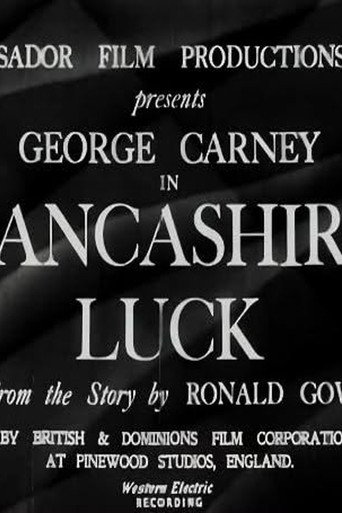
7.0Working class family win £5oo and move to the country. They quickly run into the snooty upper class establishment who resent the newcomers.
Lancashire Luck
1937
 6.0
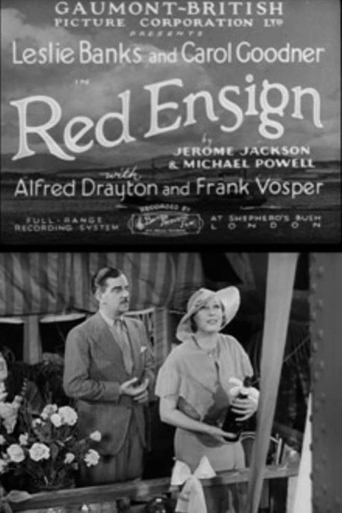
6.0David Barr is the manager and chief designer of a British shipyard in decline. The shipyard is in financial trouble but Barr has a design for a new ship that will save them all. Can he get the ship built in spite of the opposition from his own bankers as well as the rival shipbuilders and their infiltrated militants.
Red Ensign
1934
The Helliwells, the Soppitts, and the Parkers, old friends gathered to celebrate their common silver anniversaries. To their dismay they learn that their marriages may not be valid. On hand are an outrageous housekeeper and a photographer. The first play in history to ever be televised complete and unedited direct from the theatre. It is now believed to be lost. The BBC would make another television film version of this play in 1949 with several of the same actors from this film including Raymond Huntley, Ernest Butcher, Patricia Hayes, George Carney and Lloyd Pearson.
When We Are Married
1938
 7.5
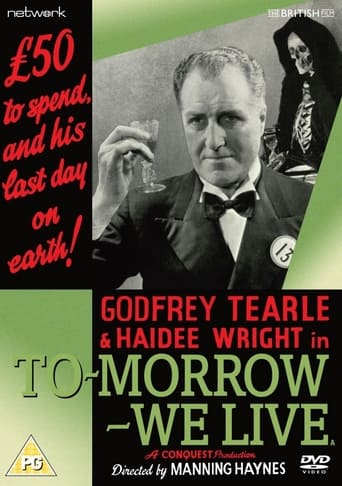
7.5Financier Sir Charles Hendra, on the brink of ruin, contemplates ending his own life. After pondering the difficult decision, Charles decides to invite twelve similarly desperate individuals to dinner so they can all discuss their problems. Will his generosity change the course of their lives?
Tomorrow We Live
1936
A rare film put out by Twickenham Film Studios which includes many original music hall acts.
Music Hall
1934
 6.0
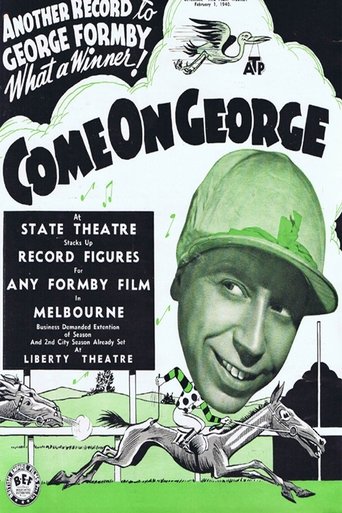
6.0George Formby, who plays George, a stable boy. He also has the unique ability to soothe an anxious racing horse. Expectedly, George races the horse and wins
Come on George!
1939
“Ex-convict saves his estranged daughter from a blackmailer.” - BFI.
A Glimpse of Paradise
1935
Warm-hearted Cockneys stage a show to help a sick flower-seller.
Say It with Flowers
1934
A quota quickie directed by Maclean Rogers in 1938, "Easy Riches" featured character players George Carney & Gus McNaughton as a couple of rival builders competing for the award of a big contract.
Easy Riches
1938
A Lancashire family watch a series of variety acts on their dodgy new television set. Inspired, they put on a few numbers of their own at home.
The Television Follies
1933
The film features 17 year old Dinah Sheridan as the daughter of the owner of a cheese factory (veteran actor Goerge Carney), who helps save her father from the action of a couple of swindlers.
Father Steps Out
1937
 7.7
7.7Set on the Thames estuary, romance blossoms for a young couple.
Flood Tide
1934
Romantic comedy of misunderstandings.
Weddings Are Wonderful
1938
Follows the development of the variety theatre from 1892 to the present day, centred on a family in show business.
Variety
1935
 6.4
6.4Lest We Forget was Canada’s official Great War film. It sparked controversy when it was shown across the country in 1935, during the midst of the worst depression in Canadian history, and with a growing anxiety over the increased aggression of international dictators. The film provided a contested venue for what the Great War had meant to a generation of Canadians. But this was no ordinary war film. Officially sanctioned and constructed from archival footage, the story of Canada’s war was told in 100 minutes, from the opening phases through to the grim fighting on the Western Front, and including those who supported the soldiers from home. Many journalists, politicians, and veterans called Lest We Forget the most authentic film to have appeared since the end of the war, especially in contrast to Hollywood fictional productions.
Lest We Forget
1935
A short featurette about a murderer summoned by chance to sit on the jury and try the man accused of his crime.
Consider Your Verdict
1938