

Directing
Marco Brambilla
Born
1960-01-01 (66)
Place of birth
Milano, Italy
Known for
Directing
Credits
25 titles
Marco Brambilla (born 1960, Milan, Italy) is an Italian-born Canadian artist and filmmaker who works in the United States. Educated at Ryerson University, Toronto, Canada, where he studied film, he first worked in commercials and feature films, directing the successful 1993 science fiction film Demolition Man. In 1998 he shifted focus to video and photography projects, and has since exhibited works in private and public collections, including at the Guggenheim Museum in New York, "Cyclorama" at the San Francisco Museum of Modern Art, and "HalfLife" at the New Museum of Contemporary Art, His commissions include "Superstar" for the "59th Minute" series in Times Square in 1999, and "Arcadia" fo…
Known for
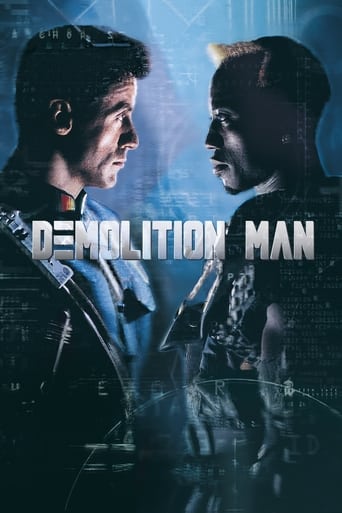 6.8
6.8In 1996, brash L.A. detective John Spartan and maniac killer Simon Phoenix are both sentenced to decades in a cryogenic prison as punishment for a rescue mission gone wrong. When Phoenix escapes 36 years later to wreak havoc on the future, Spartan is awakened to capture his nemesis the old-fashioned way.
Demolition Man
1993
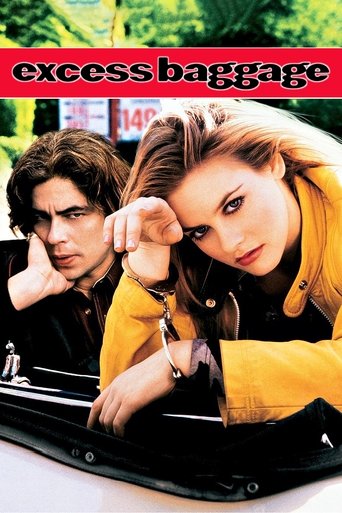 6.1
6.1A rich brat fakes her own kidnapping, but in the process ends up locked in the trunk of a car that gets stolen.
Excess Baggage
1997
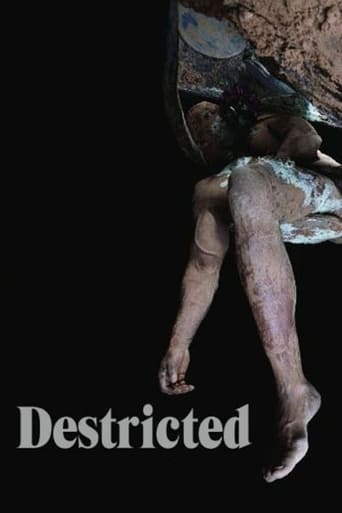 4.3
4.3A compilation of erotic films intended to illuminate the points where art meets sexuality.
Destricted
2006
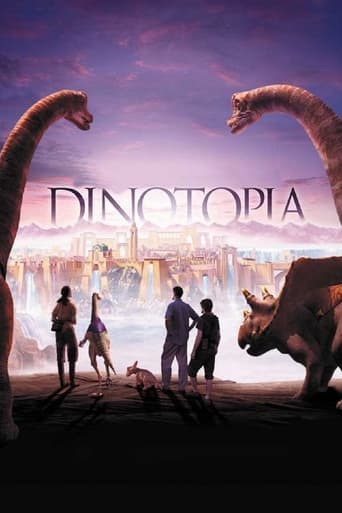 7.6
7.6After a plane crash strands two brothers on a lost continent where dinosaurs and humans live together in harmony, they disagree over escape plans. (Condensed cut of original mini-series to be a feature length as seen on Peacock).
Dinotopia
2002
 NR
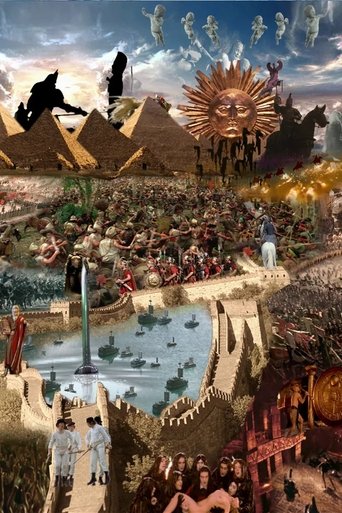
NRThe history of humankind is illustrated as a vast side-scrolling video mural depicting the spectacle of human conflict across time through the lens of cinema.
Evolution (Megaplex)
2012
 7.5
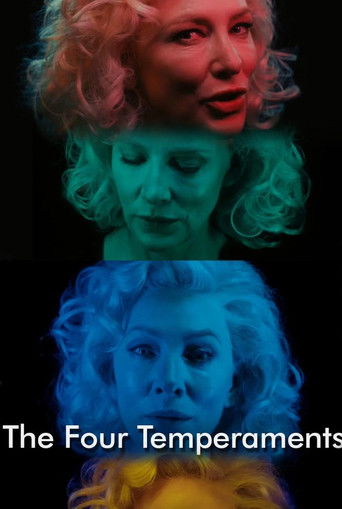
7.5The work follows Greek philosopher Galen’s classification of four personality dispositions—sanguine, choleric, phlegmatic, and melancholic. In the film, Blanchett is seen playing four characters, each representing one of the temperaments. Denoted by color, we see the actor’s face appear on the screen bathed in yellow portraying sanguine, red for choleric, blue as melancholic, and green for phlegmatic. As Blanchett’s personalities are displayed in a series of synchronized images, she begins establishing each distinguished character.
The Four Temperaments
2020
Behind the camera
6.8In 1996, brash L.A. detective John Spartan and maniac killer Simon Phoenix are both sentenced to decades in a cryogenic prison as punishment for a rescue mission gone wrong. When Phoenix escapes 36 years later to wreak havoc on the future, Spartan is awakened to capture his nemesis the old-fashioned way.
Demolition Man
1993
6.1A rich brat fakes her own kidnapping, but in the process ends up locked in the trunk of a car that gets stolen.
Excess Baggage
1997
4.3A compilation of erotic films intended to illuminate the points where art meets sexuality.
Destricted
2006
7.6After a plane crash strands two brothers on a lost continent where dinosaurs and humans live together in harmony, they disagree over escape plans. (Condensed cut of original mini-series to be a feature length as seen on Peacock).
Dinotopia
2002
NRThe history of humankind is illustrated as a vast side-scrolling video mural depicting the spectacle of human conflict across time through the lens of cinema.
Evolution (Megaplex)
2012
7.5The work follows Greek philosopher Galen’s classification of four personality dispositions—sanguine, choleric, phlegmatic, and melancholic. In the film, Blanchett is seen playing four characters, each representing one of the temperaments. Denoted by color, we see the actor’s face appear on the screen bathed in yellow portraying sanguine, red for choleric, blue as melancholic, and green for phlegmatic. As Blanchett’s personalities are displayed in a series of synchronized images, she begins establishing each distinguished character.
The Four Temperaments
2020
Cathedral was filmed at the Toronto Eaton Centre mega mall during the Christmas shopping season. Here is consumerism as spectacle: Throngs of shoppers circulate in slow motion, in superimposed and multi-layered images that transform the mall into a kaleidoscopic, hallucinatory space. The cyclical montage is inspired by the time and motion studies of Frederick Winslow Taylor and Frank Gilbreth, which date from the American industrial revolution of the late nineteenth century. The video is installed in a mirrored box, bringing the video into three dimensions and further multiplying the images.
Cathedral
2008
 4.0
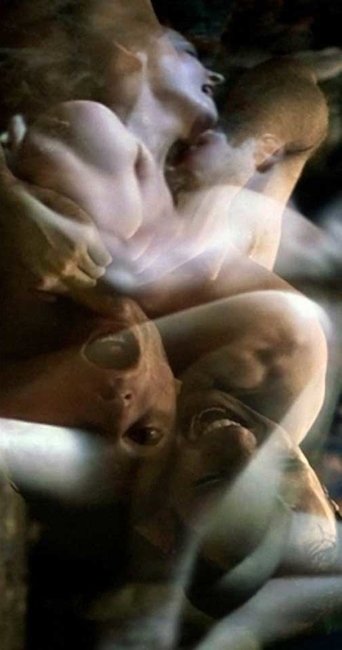
4.0'Sync' is made up of sampled images from sex scenes in mainstream and adult films. The formulaic and often derivative nature of the way this subject is interpreted in cinema is emphasised, creating a strong subliminal impression which gradually builds to a state of sensory overload. 'Sync' uses samples as short as single frames edited together to create the impression of motion. The original continuity and narrative in the source material is eliminated, and a new visual choreography emerges.
Sync
2006
 6.0
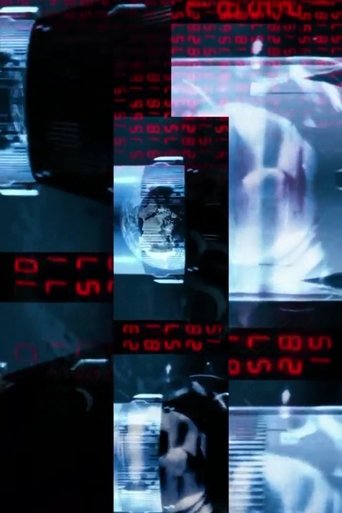
6.04K ultra-high definition, dual-screen video tile display in custom enclosure
Apollo XVIII
2015
Filmed in 35mm at nine revolving restaurants across North America—including ones in Seattle, Las Vegas, St. Louis, and New York—Cyclorama presents nine panoramas side by side in a cylindrical enclosure that mimics the restaurants’ architecture, creating the sense of one continuous, moving landscape. The sun rises at the same moment on each screen, erasing time zones and providing a 360-degree view of the Western horizon.
Cyclorama
1999
 NR
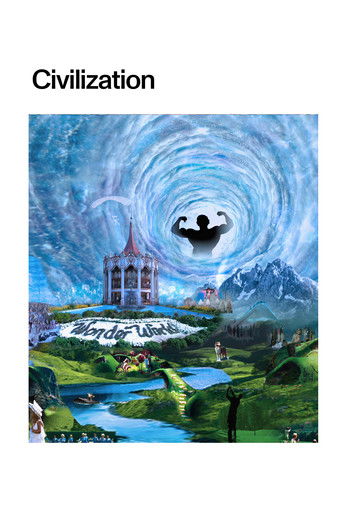
NRCivilization is a multi-layered tableau of interconnecting images that illustrates a contemporary, satirical take on the concepts of eternal punishment and celestial reward. More than 300 individual channels of looped video are blended into an expansive landscape that continuously scrolls upward, from the depths of hell to the gates of heaven.
Civilization
2008
Filmed at John F. Kennedy Airport, Approach catches passengers arriving from long-haul flights as they enter the terminal looking for contact with someone familiar. The footage was shot on camcorders equipped with telephoto lenses and the footage is slowed down to emphasize the moment of transition that each subject experiences as they arrive. The installation consists of 4 screens, with a 1-second delay between the identical images in each screen.
Approach
1999
Shot from the point of view of a passenger aircraft, Getaway begins with an aerial view of a generic industrial district and ends with a landing on the main runway at Los Angeles’s LAX airport. The video is presented on a small LCD screen in a plastic setting designed after a 1970s Pan Am airline tray—a relic from a time when passengers could fly in style
Gateway
1999
Inspired by Yves Klein’s Leap into the Void (1960), Superstar was commissioned by Creative Time to be presented on the Jumbotron screen in Times Square, New York City. The subject appears perpetually frozen in time while the document of the moment itself slowly descends. Filmed in a pre-Matrix era, the performance in Superstar was captured with 180 cameras mounted in a 360 degree ring that show a 1/500 second wedge of time.
Superstar
1999
The line between man and machine is blurred in this 3D video collage. Commissioned by Ferrari S.p.A., RPM presents a compelling psychological portrait of a Formula One driver's point-of-view during a race.
RPM
2011
Film footage of Sylvester Stallone in Brambilla's 1993 debut feature-film, Demolition Man, is re-photographed through the gate of a 35mm projector and presented as the Sequel. The movement of the film gradually begins to slow until the light from the projector lamp begins to disintegrate the celluloid film.
Sequel
2001
Sync features three screens of densely edited film footage, each organized around a different theme—fight scenes, sex scenes, and theater audiences—all progressing at the rate of 12 shots per second. Overlaying all three is a violently percussive audio montage. The result is a new visual choreography that rapidly builds to a state of sensory overload, emphasizing how viewers develop a resistance to graphic sex and brutality, both in the movies and in the news media in general. Only Syn Watch is included here, but you can find an excerpt of Sync Sex in the Destricted collection.
Sync: Watch
2005
 NR
NRCreating a continuous loop through cinematic history, New York-based video artist Marco Bramilla satirizes seminal moments of the silver screen in large-scale video installation, Heaven’s Gate. Oscillating between hyper-saturated imagery, capturing the polarities of the Hollywood spectacle, the piece explores the tensions and intersections of religion, industry, and celebrity – the meteoric rise and catastrophic falls, and the loss of innocence to experience and excess.
Heaven’s Gate
2022
3-channel high-definition video installation
Nude Descending A Staircase No. 3
2019
FLashback deals with the collective subconscious and memory using film iconography, the work is presented in a thirty-six block video matrix spanning six distinct phrases. Mirroring the arc of life, each phrase evokes specific psychological responses depending on the associations each individual makes between the video loops.
Flashback
2011
In the carnival act “Wall of Death,” first performed in the 1930s, a motorcyclist rides around the inside of a wooden drum, maintaining a delicate state of equilibrium between centrifugal force and gravity. The video is made up of a series of motion loops that become progressively shorter, creating the illusion of continuous motion: The rider is caught in a never-ending, never decelerating circle. The editing technique, inspired by the Kinetoscope films popular during the time the act was widely performed.
Wall of Death
2001
The multi-channel video installation HalfLife juxtaposes surveillance footage of video gamers in cyber-cafés playing the popular video game, ‘Counter-Strike’, with a live video feed of the game they are playing. The surveillance channel shows their expressions from the cross-hairs’ point-of-view while the game engine channel captures their virtual actions inside the game-world and presents the interplay and interactivity between both.
HalfLife (Surveillance Channel)
2002
 NR
NRSet against a stark, monochromatic background with a hairless Poly as the centerpiece, the video gives you an unsettling feeling that something disturbing is stirring beneath her initial placidity. Poly then takes us through a range of emotions of what can only be described as a carthartic episode before ending on the same unnerving note it began with. Brambilla composes the video brilliantly, creating mesh-like layers of Poly’s face that scatter and converge as he explores the idea of mulitplicity within the human psyche.
Ghost (Natasha Poly: Multiple Exposure)
2009
Work by artist Marco Brambilla.
Pelleas et Melisande
2019
In this computer-generated “time-lapse study” of the 1969 Apollo 11 moon landing, the Eagle spacecraft and the American flag planted alongside are shown as they slowly disintegrate. Beginning with the original image transmitted on television, the video compresses years into seconds, until nothing remains but a pile of rubble—a cynical commentary on the decay of American idealism from the ’60s to the present day. The sound is taken from recorded radio transmissions between mission control and the lunar base, but the dialogue has been removed; all that remains are the beeping radio carrier signals, static, and interference.
Sea of Tranquility
2006