
Acting
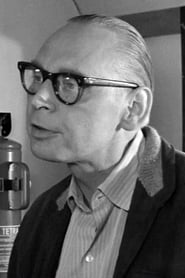
Walter Jupé
Born — Died
1916-04-06 — 1985-11-16
Place of birth
Berlin, Germany
Known for
Acting
Credits
33 titles
Known for
No synopsis available yet.
Fernsehpitaval
1958
 7.0
7.0No synopsis available yet.
Hans Beimler, Kamerad
1969
 10.0
10.0This is part one of a two-part biopic about Karl Liebknecht. In 1914, Germany is arming itself for war. Karl Liebknecht, left-wing revolutionary Social Democrat, workers’ leader and a virulent antimilitarist, is one among 110 SPD members of Parliament who vote against approving war loans. From then on, he is considered un-German and a traitor to the fatherland, and his own party’s leadership turns against him. Despite threats, Liebknecht speaks up against the war and writes the manifesto “The Main Enemy Is at Home.” Even when he is arrested and charged with treason, he does not surrender.
As Long as There’s Life in Me
1965
 9.0
9.0The love story of Emma and Johannes begins during the hard years of the Great Depression. Emma repeatedly tries to encourage her husband, who is suffering terribly from unemployment. However, the crisis continues to intensify and social disintegration affects millions.
Kleiner Mann – was nun?
1967
No synopsis available yet.
Das Abenteuer
1976
 NR
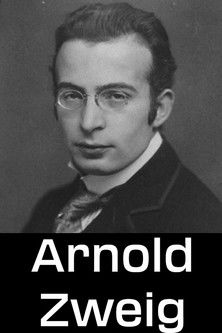
NRA short biography of Arnold Zweig, through the lens of East Germany state media.
Arnold Zweig
1963
Film credits
1980s · 4 titles
 6.7
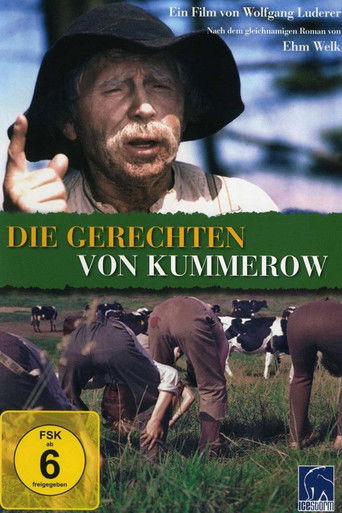
6.7In a remote Prussian village, the shepherd Krischan with his fantastic stories is the attraction point for the children. One day they experience together how the Müller Düker beats his horse to death and intervene. Düker sues her for body injury at the district court, and because the main accused, Krischan, lives illegally in the village without papers, the village community decides to deport him before the trial. Krischan disappears. The children feel the loss painfully, are outraged by the adults. The boys Martin and John search for Krischan on an adventurous ride and are put by the police. Krischan remains gone.
The Just People of Kummerow
1982
The young Walter Retzlow, drafted into the guard team of a foreign labor factory in the last year of the war, receives the papers of a murdered anti-fascist by chance. He adopts the new identity, which promises him security.
Der Mann und sein Name
1983
 5.3
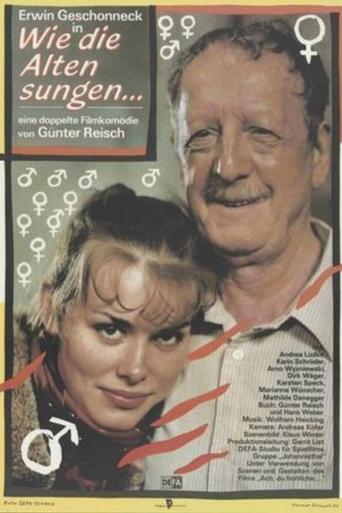
5.3Grandpa Lörke is preparing for a contemplative, quiet Christmas Eve. But nothing comes of it, because his daughter Anne informs him that his 17-year-old granddaughter has disappeared.
Like Father, Like Son
1987
Melanie van der Straaten has the courage to separate from her wealthy, unloved husband and settle down with a new partner, defying all societal restrictions, in humble living circumstances. When her first husband blackmails her after the divorce with the children, Melanie faces her new life with pain and dignity.
Melanie van der Straaten
1982
1970s · 3 titles
No synopsis available yet.
Das Abenteuer
1976
 5.2
5.2Dr. Gisa Tonius, a physicist in her thirties who has a nearly adult stepdaughter, cherishes the desire to have her own child. Suddenly, a big interdisciplinary research project threatens to significantly change Gisa′s life. Uncertain whether to look for professional or private fulfillment she asks her family and friends for their opinions. They all have different views on the point at issue. While her husband is afraid of losing her to her profession, her professor thinks that because of her talent she has an obligation towards science. In the end, Gisa reaches a decision: She wants to have a baby as well as take on the research project.
Declaration of Love to G.T.
1971
Private detective Fritsch from Munich had received a lucrative assignment: he was to obtain proof of inheritance for a Mr. Seligmann from Canada; this would bring the client a sum of five million dollars. He is therefore looking for an old document that was hidden in a valuable painting that disappeared decades ago. The starting point is a trail that leads to a town in Poland. The painting in question is said to have disappeared there in the final years of the Second World War. But the object of desire cannot be found here, and a new clue points to a grave in Frankenthal in the German state of Rhineland-Palatinate. Fretsch then found out that the painting must probably be in the villa of a personality with significant influence in the economy and politics of West Germany. Fretsch manages to get in touch with the wife of the presumed new owner of the painting and to find out the secret of his rise to multimillionaire status. But the people concerned use their resources to counterattack.
Sein letzter Fall
1976
1960s · 11 titles
10.0This is part one of a two-part biopic about Karl Liebknecht. In 1914, Germany is arming itself for war. Karl Liebknecht, left-wing revolutionary Social Democrat, workers’ leader and a virulent antimilitarist, is one among 110 SPD members of Parliament who vote against approving war loans. From then on, he is considered un-German and a traitor to the fatherland, and his own party’s leadership turns against him. Despite threats, Liebknecht speaks up against the war and writes the manifesto “The Main Enemy Is at Home.” Even when he is arrested and charged with treason, he does not surrender.
As Long as There’s Life in Me
1965
NRA short biography of Arnold Zweig, through the lens of East Germany state media.
Arnold Zweig
1963
 6.7
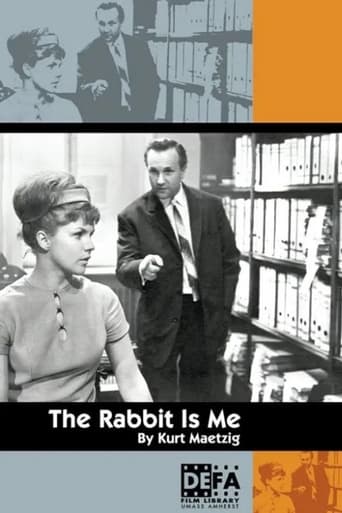
6.7Maria, a young student sees her brother Dieter going to prison for sedition against the state. She starts an affair with Paul, a judge who turns out to be the one who sentenced her brother, which eventually leads to a confrontation.
The Rabbit Is Me
1965
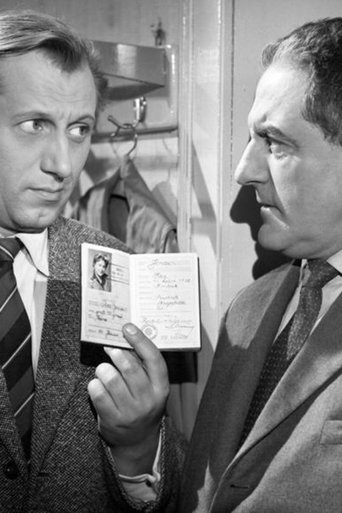 7.0
7.0After participating in more than 100,000 euthanasia crimes during the Nazi era, the former SS psychiatrist and physician Dr. Werner Heyde leads an unmolested life in West Germany after the war under a false name ("Fritz Sawade"). With the help of confidants, he manages to get a job as a medical expert. His true identity remains in the dark for many years. His wife has him declared dead and draws the pension of a psychology professor's widow. After remaining unidentified for ten years, Dr. Heyde is unmasked and arrested one day and found dead in his cell shortly before the start of the trial. The film plot is based on the authentic case of Dr. Werner Heyde.
Bonner Pitaval - Die Affäre Heyde-Sawade
1963
 6.3
6.3Bad planning and shortages prevail on an East German construction site. Foreman Hannes Balla uses unconventional methods to overcome the problems. New Socialist Unity Party secretary Werner Horrath is charged with bringing the rough-and-ready builder crew into line. The task seems doomed to fail as the two men compete for the affections of young engineer Kati Klee. But when she gets pregnant by married man Horrath, he is in danger of being expelled from the party, and Balla takes his side...
Trace of Stones
1966
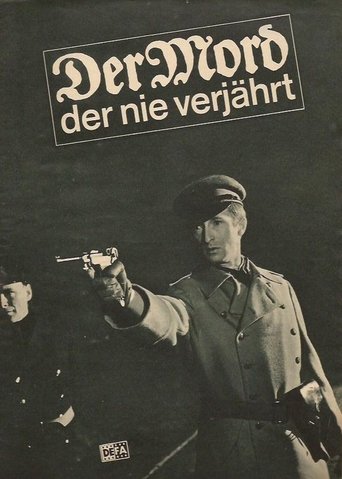 10.0
10.0In 1929 Berlin, the progressive editor-in-chief Bornstein is on trial for libel. An article in his magazine attempted to uncover the role that Reichsanwalt Jörns had played ten years earlier in the "clarification" of the murders of Rosa Luxemburg and Karl Liebknecht. The article explained that the then court martial judge knowingly covered up for the murderers and delayed the trial. At the trial, the testimony of witnesses succeeded in proving the truth of the publication and exposing those behind the murders as those who were preparing fascism.
Der Mord, der nie verjährt
1968
 8.0
8.0Engineer Strebel′s apprentices think of nothing else but music and dancing, although they should really concentrate on their marks. Consequently, Strebel is anything but delighted with his pupil. To top it all, a TV show becomes interested in a performance by Strebel′s apprentices. To calm down their teacher, Jutta Fröhlich, who has already cast an eye on Strebel, makes him an offer: When they better their marks, Strebel would permit them to make a performance on television.
Guten Tag, lieber Tag
1961
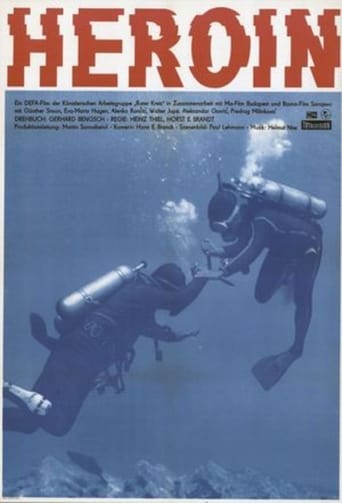 6.0
6.0This East German movie was co-produced with studios in Hungary and Yugoslavia, with many interesting location shots (border checkpoint to West Berlin, the Gellert bath in Budapest, and more). The plot is about French drug dealers, who obtain heroin somewhere in the Middle East, and smuggle it in several steps to East Berlin, and from there to France (or so it appears), killing when necessary. The hero is an officer of East German customs, who with detective work, some masquerade, and occasional violent action ultimately unravels the whole network, of course with the support of the local customs departments.
Heroin
1968
 7.0
7.0On a pasture in a small village stand the cows and calves of the herder Bürle. Since many years, there is also a wooden calve standing among them. One day, all calves are stolen, even the wooden one. Although they are innocent, all poor villagers are brought to trial. Thereupon, the farmers join forces and discover who really is responsible for the theft.
Das hölzerne Kälbchen
1961
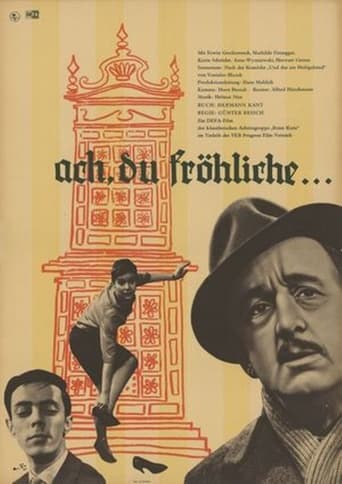 5.5
5.5It was supposed to be a cozy Christmas evening with the family. Labor Director Walter Lörke was particularly looking forward to it. But then his daughter Anne surprised him with her future son-in-law Thomas Ostermann. And that's not all: Lörke is to become a grandfather. This doesn't suit him at all, especially as the young man clearly shows his critical attitude towards the state whose ideals Lörke has fought for all his life. An argument ensues - on Christmas Eve. Lörke leaves the apartment in a rage. But he is driven by unrest: He wants to know what kind of person his future son-in-law is and why he has such a negative attitude towards the state. It turns out that Thomas has had bitter experiences with the opportunistic attitudes of many adults and that, although he was the best student in his class, he was not admitted to university because of his critical opinions.
Ach, du fröhliche
1962
 8.0
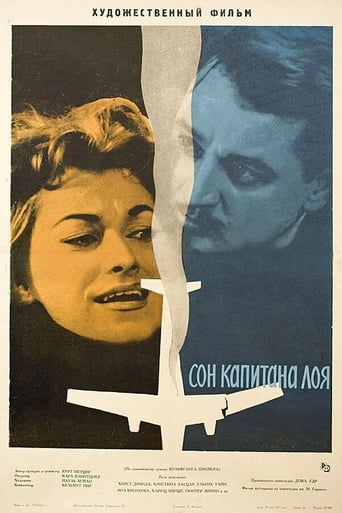
8.0An American military plane takes six people, who have taken part in a NATO maneuver, from Tripoli to Oslo. Among them are the British Captain Loy and the United States Air Force Corporal Doris Graves. During the flight, the two become closer, and they regret that the trip will end that evening. But everything turns out differently. The flight captain has received orders to pick up an agent at a German NATO airport, who is to be dropped off again on a Soviet island …
The Dream of Captain Loy
1961
1950s · 7 titles
 8.0
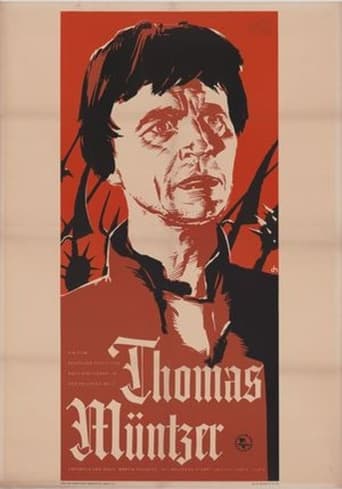
8.0In 1523, young Thomas Müntzer arrives with his wife Ottilie in the Thuringian village Allstedt to assume the rectorate. As a follower of Luther′s teachings, he finds in the Bible not only reasons for clerical, but also for secular reforms. But when Luther turns away from the rural population after a discord with Müntzer, it is Müntzer who becomes the peoples′ spokesman. He is forced to go to Southern Germany, where he convenes with revolting farmers. But his way leads him back to Thuringia. In 1525, he and Heinrich Pfeiffer form the centre of the Thuringian peasant uprising in Mühlhausen, but their success is diminished by the fact that peasants and craftsmen don′t seem to be able to work together. In Frankenhausen, Müntzer becomes the leader of a peasants′ army that is set to fighting the ruler′s army – and sustains a devastating loss. Müntzer is arrested and sentenced to death by decapitation for his insurgency.
Thomas Müntzer
1956
 10.0
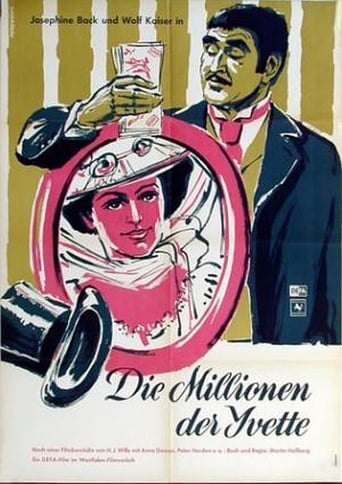
10.0French milliner Yvette has a small fashion salon in Düsseldorf. The young gentlemen of society fall at her feet, but she is not accepted into their circles. That's why her former lover Maurice Daurignac manages to persuade her to pull off a big coup to get revenge on "high society". She pretends to be the heiress to ten million gold francs. A notary arrives from Paris accompanied by two supposed policemen and delivers the alleged money in a sealed parcel to the Bleichstetter bank in Düsseldorf, where it remains until the end of the inheritance process. The case drags on, and in the meantime the two are living large. When the bombshell bursts, Yvette has the young lawyer Dr. Hellmer to thank for the fact that she cannot be thrown to the angry citizens.
Die Millionen der Yvette
1956
 6.0
6.0The magnificent cow Senta has escaped from an LPG. Matuschek, a single farmer, joins the search. However, the valuable animal is not found and is believed to have strayed across the border into Poland. Meanwhile, Senta is in Matuschek's barn. His maid Mathilde and neighbor Dattelmann have captured her and brought her there. Matuschek conceals a letter to Poland because of the supposedly border-crossing cow and is embarrassed when the cattle farmer Franze Flohr discovers the cow in his barn. Nevertheless, Matuschek and Franze become a couple who also become closer to the LPG.
Senta's Gone Missing
1959
No synopsis available yet.
Das Loch in der Mauer
1958
 5.5
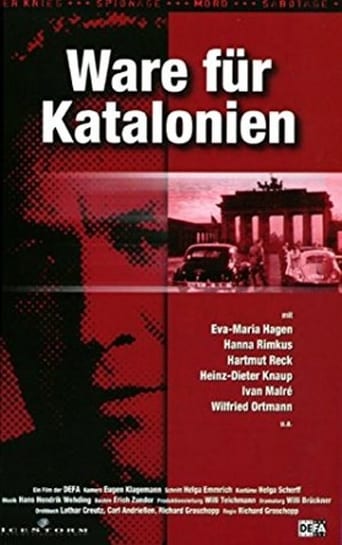
5.5At the end of the 1950s, the production of optics in the German Democratic Republic has reached top quality and instigates interest in the West. When national demand rises strongly and at the same time the export to South America heavily decreases, the Volkspolizei - the GDR police force - starts to look into the case. Two seemingly unrelated cases are the starting point for the investigation by second lieutenant Schellenberg of the department for optics racketeering: An old woman who was arrested in the Berlin city railway for trying to smuggle a pair of binoculars to West Berlin, and a dead person in an area of allotments who was involved in obscure dealings with optical devices.
Ware für Katalonien
1959
 9.0
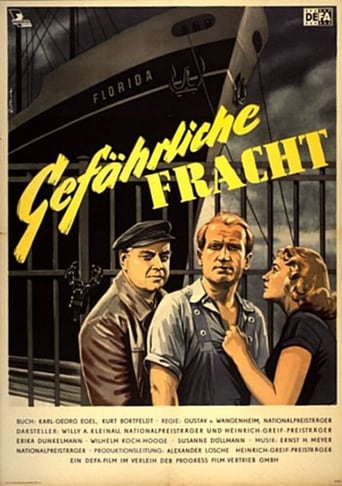
9.0During the unloading of the freighter "Florida", West German dock workers discover napalm bombs instead of the specified precision machines - and a deceptive maneuver by the American occupying forces: the workers had already refused to unload the ship in France, where it was named "Chicago". It was refloated on the voyage to Germany. The German dockers also went on strike. Among them was Hein Jensen, who found it particularly difficult to take part. He had just found work again with difficulty. He needs the money because he wants to get married. His bride Helga has just given birth. When the Americans try to blackmail him into changing his colleagues' minds, he knows where his place is. The strike turns into a huge peace demonstration.
Gefährliche Fracht
1954
 7.0
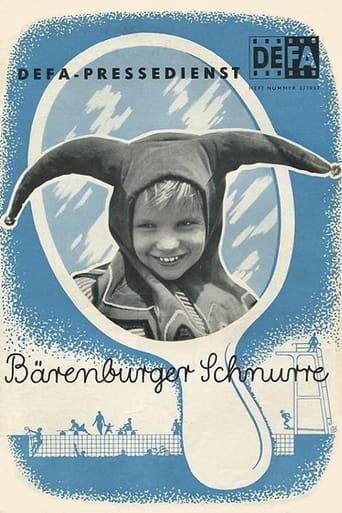
7.0A story about a group of children in German town of Bahrenburg who are trying to build themselves a swimming pool.
Bahrenburg Stories
1957
Series credits
No synopsis available yet.
Fernsehpitaval
1958
7.0No synopsis available yet.
Hans Beimler, Kamerad
1969
9.0The love story of Emma and Johannes begins during the hard years of the Great Depression. Emma repeatedly tries to encourage her husband, who is suffering terribly from unemployment. However, the crisis continues to intensify and social disintegration affects millions.
Kleiner Mann – was nun?
1967
Behind the camera
7.0After participating in more than 100,000 euthanasia crimes during the Nazi era, the former SS psychiatrist and physician Dr. Werner Heyde leads an unmolested life in West Germany after the war under a false name ("Fritz Sawade"). With the help of confidants, he manages to get a job as a medical expert. His true identity remains in the dark for many years. His wife has him declared dead and draws the pension of a psychology professor's widow. After remaining unidentified for ten years, Dr. Heyde is unmasked and arrested one day and found dead in his cell shortly before the start of the trial. The film plot is based on the authentic case of Dr. Werner Heyde.
Bonner Pitaval - Die Affäre Heyde-Sawade
1963
 7.0
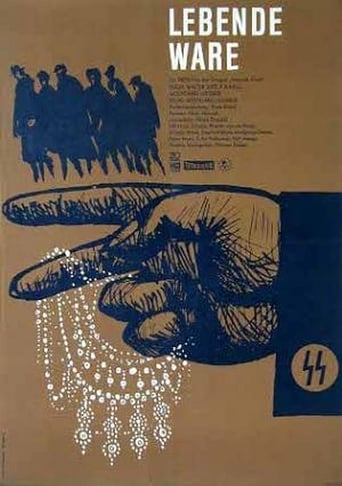
7.0In 1944, SS-Obersturmbannführer Becher arrives in Budapest in order to obtain material for the Waffen-SS. At the same time, he starts to gather private property by offering an insidious choice to the corporation′s Jewish majority shareholder, Dr. Chorin: Either Chorin assigns the company to Becker "on his own free will" – thereby obtaining the permission to travel abroad - or he his family will end up in an extermination camp.
Lebende Ware
1966
10.0In 1929 Berlin, the progressive editor-in-chief Bornstein is on trial for libel. An article in his magazine attempted to uncover the role that Reichsanwalt Jörns had played ten years earlier in the "clarification" of the murders of Rosa Luxemburg and Karl Liebknecht. The article explained that the then court martial judge knowingly covered up for the murderers and delayed the trial. At the trial, the testimony of witnesses succeeded in proving the truth of the publication and exposing those behind the murders as those who were preparing fascism.
Der Mord, der nie verjährt
1968
 6.3
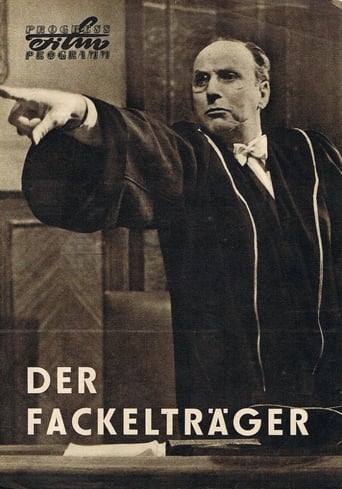
6.3Senior public prosecutor Sänger from West Berlin has only one goal in mind: to finally be appointed to the Federal Court of Justice.
Der Fackelträger
1957