
Acting
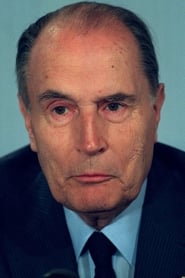
François Mitterrand
Born — Died
1916-10-26 — 1996-01-08
Place of birth
Jarnac, Charente, France
Known for
Acting
Credits
66 titles
François Maurice Adrien Marie Mitterrand (26 October 1916 – 8 January 1996) was a French politician and statesman who served as President of France from 1981 to 1995, the longest holder of that position in the history of France. As a former Socialist Party First Secretary, he was the first left-wing politician to assume the presidency under the Fifth Republic. Due to family influences, Mitterrand started his political life on the Catholic nationalist right. He served under the Vichy regime during its earlier years. Subsequently, he joined the Resistance, moved to the left, and held ministerial office several times under the Fourth Republic. Mitterrand opposed Charles de Gaulle's establishme…
Known for
 3.6
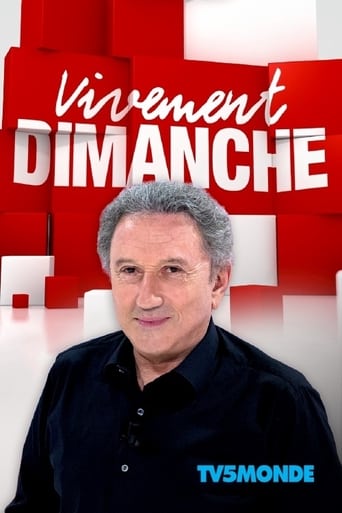
3.6No synopsis available yet.
Vivement dimanche
1998
 8.5
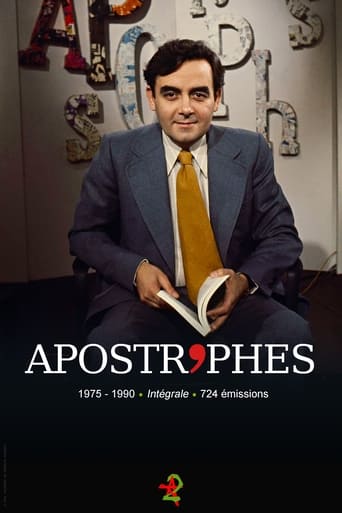
8.5Apostrophes was a live, weekly, literary, prime-time, talk show on French television created and hosted by Bernard Pivot. It ran for fifteen years (724 episodes) from January 10, 1975, to June 22, 1990, and was one of the most watched shows on French television (around 6 million regular viewers). It was broadcast on Friday nights on the channel France 2 (which was called "Antenne 2" from 1975 to 1992). The hourlong show was devoted to books, authors and literature. The format varied between one-on-one interviews with a single author and open discussions between four or five authors.
Apostrophes
1975
 8.0
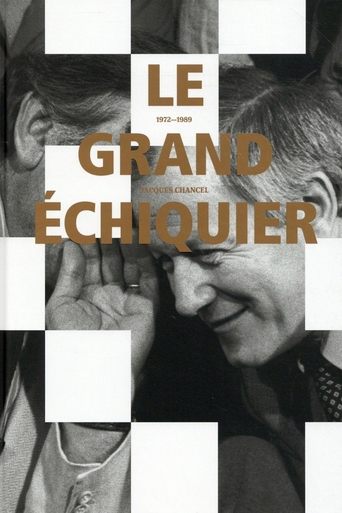
8.0Le Grand Échiquier is a French variety television program created and presented by Jacques Chancel. It aired at 8:30 pm on the first channel of the ORTF from January 12, 1972 to July 12, 1972, then on the second color channel of the ORTF from September 1972 to December 1974, and finally on Antenne 2 from January 1975 to December 21, 1989. The program returned to France 2 on December 20, 2018 and is hosted by Anne-Sophie Lapix.
Le Grand Échiquier
1972
 6.2
6.2No synopsis available yet.
30 millions d'amis
1976
No synopsis available yet.
L'Heure de vérité
1982
 7.5
7.5How did Sarah and Victor get along for more than 45 years? Who was this enigmatic woman living in the shadow of her husband? Love, ambition, betrayals and secrets feed the story of this extraordinary couple, as they experience both the large and small moments of the last century's history.
Mr & Mme Adelman
2017
Film credits
2020s · 15 titles
 7.0
7.0No synopsis available yet.
De Charles de Gaulle à Emmanuel Macron, les gardiens de l'empire
2022
 7.5
7.5No synopsis available yet.
The Revenge of Bernadette Chirac
2023
 6.0
6.0In the summer of 1963, François Mitterrand was going through a deep existential crisis. His political career was at a standstill and, after 19 years of marriage, the couple had grown apart. It was at this point that François Mitterrand met the woman who was to give new meaning to his life. Anne Pingeot, aged 19, was to become the companion of a lifetime, a woman who would be with him throughout his rise to power and who would remain by his side until his last breath. For the first time, Anne Pingeot has agreed to allow the fragments of this passionate love story — hundreds of letters and a diary — to be shown on television, before being donated to the National Library.
François Mitterrand & Anne Pingeot: Pieces of a Love Story
2021
 6.5
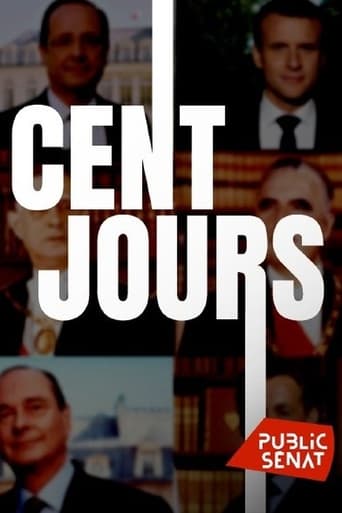
6.5From the first minutes after his inauguration, the newly elected president wants to translate his promises and his campaign project into action. "Change is now", "Change life", "Together everything becomes possible": all campaign slogans promising a break with the past, a change. The first few months were decisive: it was a matter of making a mark, asserting one's style, imposing one's authority and taking the first measures, those that would make a mark on public opinion and set the first lines of the political narrative in history. From 1959 to 2017, the eight successive presidents have acted without delay. Thanks to the many witnesses and actors of these first hundred days, the film retraces the stakes and decisive moments that marked the beginning of each mandate.
Cent jours
2022
 7.2
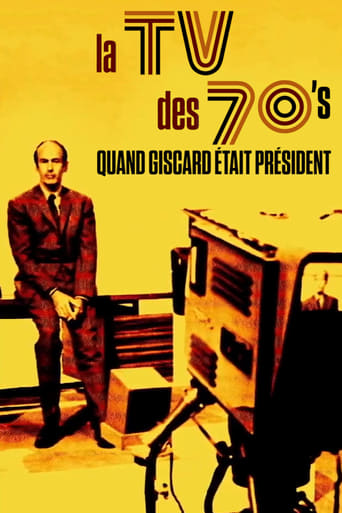
7.2In May 1974, Valéry Giscard d'Estaing became President of the Republic and wanted to bring about a new era of modernity. One of his first decisions was to break up the ORTF with the creation of three new television channels: TF1, Antenne 2 and FR3. Three new public channels but autonomous and competing. It is a race for the audience which is engaged then, and from now on the channels will make the war! This competition will give birth to a real golden age for television programs, with variety shows in the forefront. The stars of the song are going to invade the living rooms of the French for their biggest pleasure. This unedited documentary tells the story of the metamorphosis of this television of the early 1970s, between freedom of tone, scandals, political intrigues and programs that have become mythical.
La TV des 70's : Quand Giscard était président
2022
 7.0
7.0No synopsis available yet.
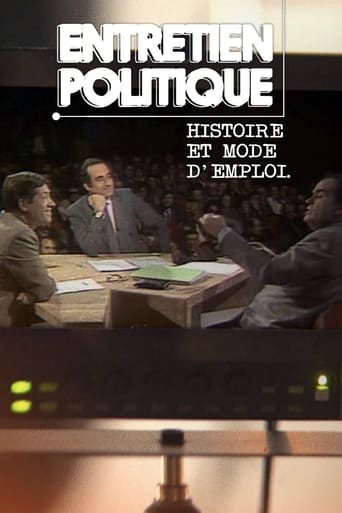
Entretien politique : Histoire et mode d'emploi
2020
 NR
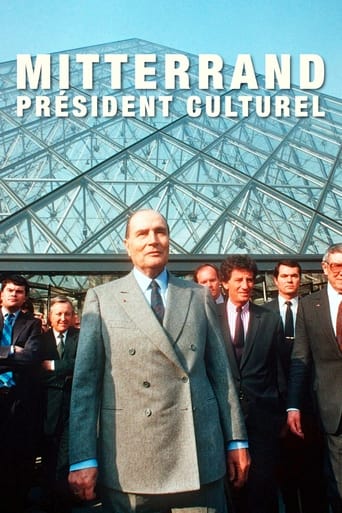
NROn the occasion of the fourty years anniversary of François Mitterand's election, a look back to the relationship between the President and artists, from admiration to manipulation.
Mitterrand, président culturel
2021
 6.3
6.3In the 1960s, the suburbs were meant to be modern havens for newcomers from rural France, Portugal, Spain, North Africa, and Africa, helping rebuild post-war France. Large housing complexes symbolized this ideal, offering comfort, heating, and electricity. But by the 1980s, disillusionment set in as economic crisis, unemployment, poverty, crime, racism, and police violence took hold. Mohamed Bouhafsi tells the story of a dream that didn’t last.
La banlieue, c’est le paradis
2025
 8.0
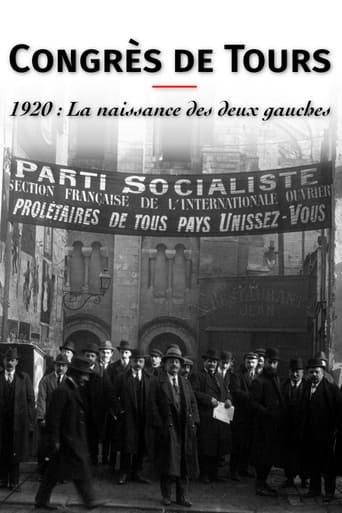
8.0No synopsis available yet.
Congrès de Tours 1920: The Birth of the French Communist Party
2020
 8.0
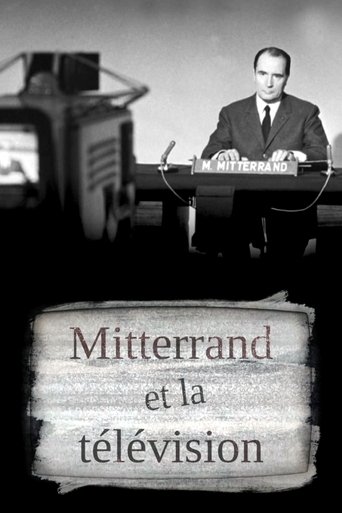
8.0May 10th, 1981. François Mitterrand is elected President of the Republic. The “soviet tanks” supposedly coming upon the Champs-Élysées dressed in red, feared by some, did not march. Serge Moati takes a personal look at this episode, focusing on the relationship the president had with television, that he witnessed and played a role in.
Mitterrand et la télé
2021
 6.0
6.0No synopsis available yet.
La Malédiction de la Grande Arche
2023
 7.7
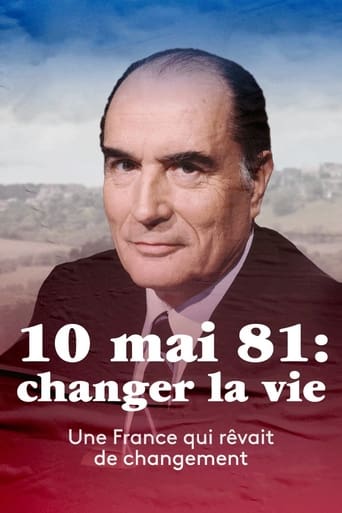
7.7Fourty years ago, in May 1981, with François Mitterrand's election, some people were letting themselves dream about a better life while others were predicting the coming of soviet tanks upon the Champs-Élysées. If we gladly remember the turning point of austerity in 83, there were also the wage rises, the fifth week of paid leave, the abolition of death penalty, the decriminalisation of homosexuality, or the advent of independent radio stations. Rare archives and accounts by those who were at the heart of this story give an overview of it and shed light on lesser-known aspects.
10 mai 1981 : Changer la vie ?
2021
 7.0
7.0No synopsis available yet.
North Korea: A Plan to Survive
2023
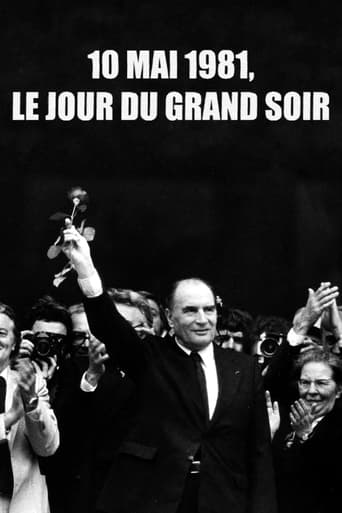 NR
NRNo synopsis available yet.
10 mai 1981, le jour du grand soir
2021
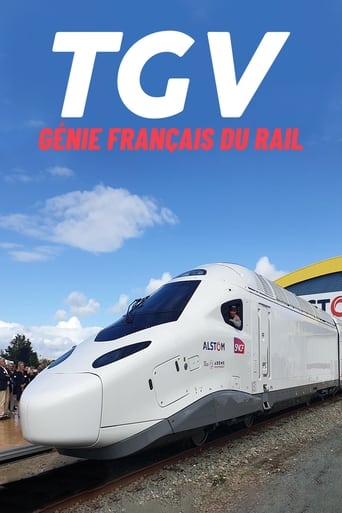 7.5
7.5No synopsis available yet.
TGV, génie français du rail
2022
2010s · 24 titles
7.5How did Sarah and Victor get along for more than 45 years? Who was this enigmatic woman living in the shadow of her husband? Love, ambition, betrayals and secrets feed the story of this extraordinary couple, as they experience both the large and small moments of the last century's history.
Mr & Mme Adelman
2017
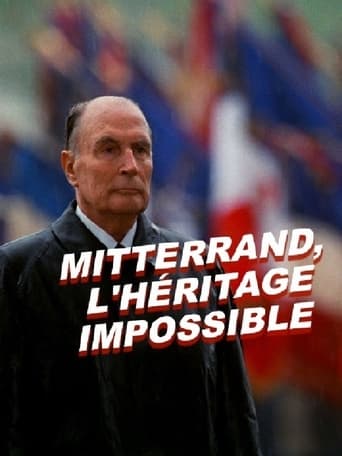 NR
NR“I am the last of the great Presidents. After me, there will be no more ..." said François Mitterrand at the end of his life. What legacy left the first socialist president of the Fifth Republic? Documentary filmmaker Bertrand Delais and a host of French intellectuals such as Laurent Fabius, Hubert Védrine, Julien Dray, Dominique Bertinotti, Jean-Pierre Chevènement and Bruno Roger-Petit take a look into what that means.
Mitterrand, the impossible legacy
2016
 10.0
10.0A historical perspective to understand Neoliberalism and to understand why this ideology today so profoundly influences the choices of our governments and our lives.
Laissez-faire
2015
 6.9
6.9This documentary examines the life and work of the late fashion designer Yves Saint-Laurent, recounting how a frail prodigy prone to bouts of depression became an icon of the fashion world. Initially appointed head of the House of Dior in 1957 before growing into a globally recognized designer in his own right, Saint-Laurent overcomes his struggles with substance abuse, accumulating a large art collection alongside his lifelong personal and professional partner, Pierre Bergé.
L'Amour Fou
2010
 6.5
6.5The extraordinary life of Orson Welles (1915-85), an enigma of Hollywood, an irreducible independent creator: a musical prodigy, an excellent painter, a master of theater and radio, a modern Shakespeare, a magician who was always searching for a new trick to surprise his audience, a romantic and legendary figure who lived only for cinema.
Magician: The Astonishing Life and Work of Orson Welles
2014
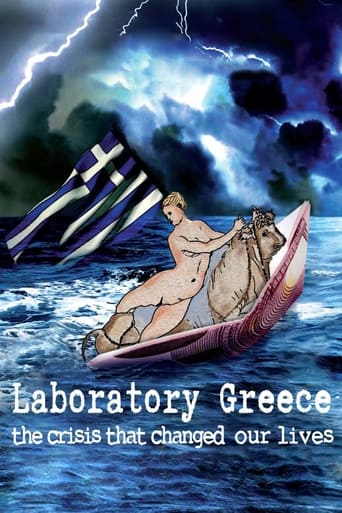 8.0
8.0A journey through Greece and Europe’s past and recent history: from the Second World War to the current crisis. It is a historical documentary, a look into many stories. «If Democracy can be destroyed in Greece, it can be destroyed throughout Europe» Paul Craig Roberts
Laboratory Greece
2019
 6.5
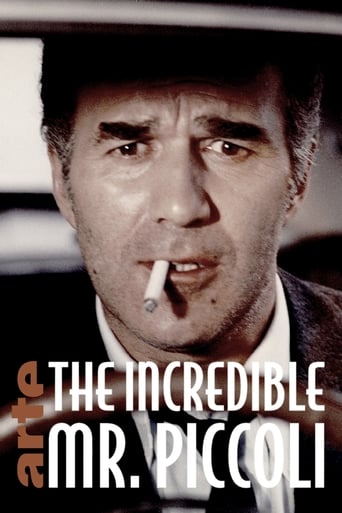
6.5A captivating portrait of French actor Michel Piccoli, who has worked with the greatest filmmakers of his time and has built a dazzling career of remarkable merit and success, focusing on his work during the 1970s and his professional relationship with Claude Sautet, Romy Schneider, Marco Ferreri and Luis Buñuel.
The Incredible Mr. Piccoli
2017
 6.0
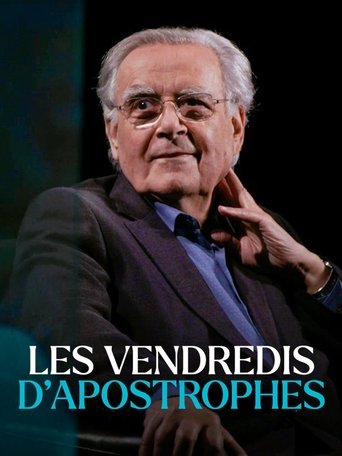
6.0Hours and historical meetings, Pierre Assouline has composed an anthology of the best extracts presented in the form of a primer, which he had commented on by a surprised Bernard Pivot.
Les vendredis d'Apostrophes
2015
 7.0
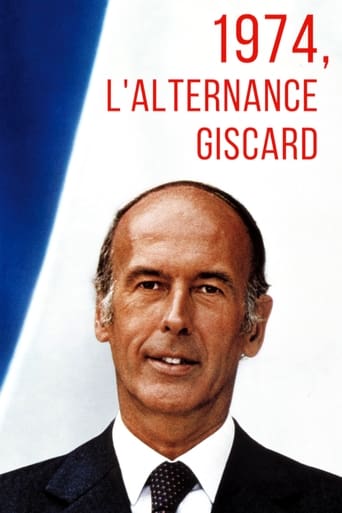
7.0In May 1974, Valéry Giscard d'Estaing became the third President of the Fifth Republic. An alternation of power that did not speak its name opened the doors of power to a reforming president. Abortion, divorce by mutual consent, lowering the age of majority to 18 - in less than two years, the youngest President of the Republic - at the time - carried out reforms with a vengeance, without a united majority in Parliament, before failing in the economic sphere and losing the battle against unemployment. At the age of 90, the former President of the Republic has agreed to look back on these years and gives us a valuable account of his time in power.
1974, l'alternance Giscard
2019
 6.6
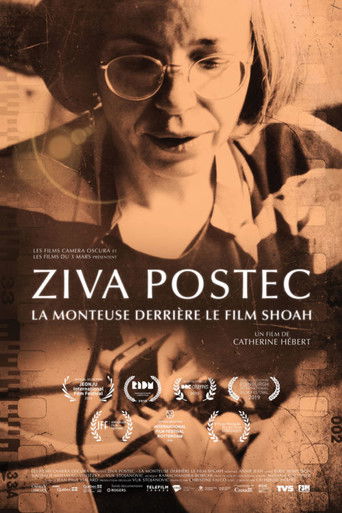
6.6This film tells the life story of Ziva Postec, emphasizing the period when she was editing Shoah from 350 hours of footage.
Ziva Postec: The Editor Behind the Film Shoah
2018
 9.0
9.0No synopsis available yet.
De Gaulle, le géant aux pieds d'argile
2012
 NR
NROwners of Portugal is a documentary about one hundred years of economic power. The film portrays the State protection to families that dominated the country's economy, their strategies for power and wealth accumulation. Mello, Champalimaud, Espírito Santo - big families intersect by marriage and integrate by finance. Threatened by the end of the dictatorship, their power is restored under democracy, through privatization and promiscuity with politics. New economic groups - Amorim, Sonae, Jerónimo Martins - grow on the same basis. As the crisis unravels the limits of Portuguese economic development model, this film presents the actors and the main choices that brought us here.
Owners of Portugal
2012
 8.0
8.0On October 4, 2018, France celebrated the 60th anniversary of the Fifth Republic. It is a republic born in the throes of the Algerian War and one which—from the day it was founded by General de Gaulle until the presidency of a very Jupiterian Emmanuel Macron—has been assailed as a “Republican monarchy” by partisans of a more assertive parliamentarian state. By revisiting the struggle of those who dared oppose the new regime — only to suffer a crushing defeat on September 28, 1958, when they were barely able to garner 20% of the vote against the constitutional text — this film shines a powerful new light on the origins of the Fifth Republic and its consequences for the next 60 years. It is a constitutional debate that planted the seeds for a complete upheaval of the French political landscape, on the left in particular, and set the country in motion toward what would be called the Union of the Left.
1958: Those Who Said No
2018
 9.0
9.0"What could be more unsettling than a man close to death whose profound arrogance drives him relentlessly to hang onto both his power and his writing, to the bitter end?" In the twilight of his second seven-year term, François Mitterrand was alone. Ravaged by illness and abandoned by a large majority of the Socialist Party, who would not forgive him for the disastrous outcome of the March 1993 elections, the Head of State was preparing to tackle a second round of cohabitation with the right wing. However a series of unexpected tragedies and revelations would arise, casting a shadow over the end of his reign…
François Mitterrand, à bout portant : 1993-1996
2011
 7.0
7.0Charles de Gaulle, the first president (1958-1969) of the Vth Republic, France’s current system of government, left his mark on the country . He was statesman of action and has been compared to a monarch. This film depicts the general’s personality through the great events of his presidential term, at a time when the world was undergoing considerable changes.
De Gaulle, the Last King of France
2017
 8.0
8.0No synopsis available yet.
Gare du Nord : La Plus Grande Gare d'Europe
2018
 NR
NRNo synopsis available yet.
François Mitterrand : Bâtisseur de mystères
2017
 NR
NRNo synopsis available yet.
François Mitterrand, la maladie au secret
2015
 7.0
7.0No synopsis available yet.
Un peu, beaucoup, passionnément... Les Présidents et les Français
2019
 10.0
10.0No synopsis available yet.
François Mitterrand et la guerre d'Algérie
2010
 NR
NRNo synopsis available yet.
Roland Dumas, le mauvais garçon de la république
2018
 NR
NRNo synopsis available yet.
Un mort à L'Elysée: François de Grossouvre
2013
A mental journey - historical, political, musical and metaphysical - in contemporary times, from the Sixties until nowadays.
Stupor Mundi: Livre 2, Les Hommes qui mangèrent la montagne
2016
 NR
NRNo synopsis available yet.
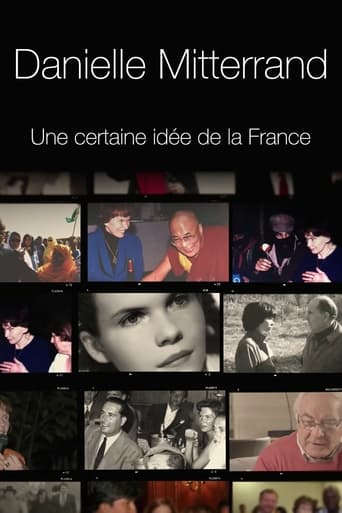
Danielle Mitterrand, une certaine idée de la France
2019
2000s · 3 titles
 6.6
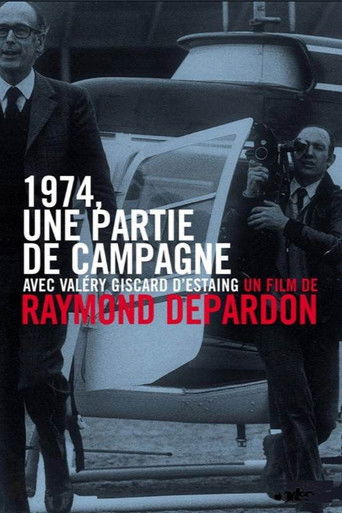
6.6Following the 1974 French presidential campaign with Valéry Giscard d’Estaing.
1974, une partie de campagne
2002
 NR
NRFrançois Mitterrand has dominated French history over the last 30 years. Through the longevity of his political career, which spanned two republics; through his rise to the highest office, which he held for 14 years; and through his leadership of the Left, François Mitterrand’s political destiny has been exceptional. Successively leader of a Resistance party a year after leaving Vichy, a minister at the age of 29, leader of the anti-Gaullist movement, the man who reinvented the Socialist Party, President of the Republic and architect of the Maastricht Treaty establishing the European Union, he appears to be a character straight out of a novel, whose life is divided into distinct chapters.
François Mitterrand, le roman du pouvoir
2002
 4.8
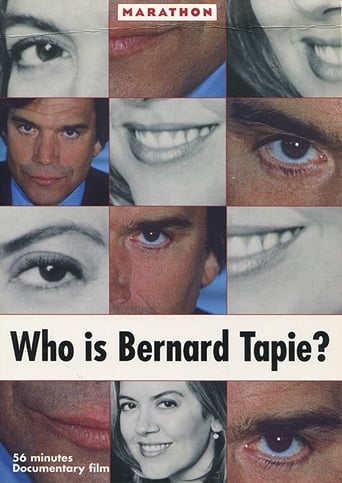
4.8This documentary tells two stories simultaneously: it's a profile of Bernard Tapie, a wealthy man who rises and falls spectacularly in French society and may be on the rise again; and, it's a look at Marina Zenovich's fascination with Tapie, behaving oddly in spite of her awareness that she's being irrational. Politicians, athletes, friends, companions, and journalists comment on Bernard's charm, his rise to prominence in sports and politics, and his subsequent trouble with the law. Zenovich becomes fixated on her need to interview Tapie, becoming virtually a stalker in her quest.
Who Is Bernard Tapie?
2001
1990s · 2 titles
1980s · 2 titles
 7.0
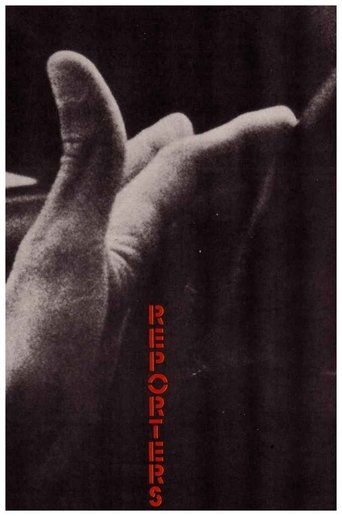
7.0The co-founder of the Gamma press agency, Raymond Depardon, created this documentary of press photographers in Paris and their subjects by following the photographers around for one month, in October, 1980. In-between long hours waiting for a celebrity to emerge from a restaurant or a hotel, boredom immediately switches to fast action as the cameras click and roll when the person appears. The reaction to the gaggle of photographers is as varied as the people they often literally chase all around town. While some of the celebrities, such as Jacques Chirac who was mayor of Paris at the time, are perceived as comical caricatures, others are shown simply going about ordinary pursuits - including Catherine Deneuve, Gene Kelly, and Jean-Luc Godard.
Reporters
1981
 10.0
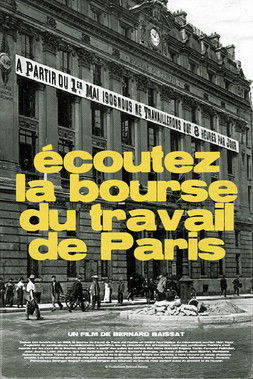
10.0Since its opening in 1882, the Paris Bourse du Travail (Labor Exchange) has remained a nerve center of the labor movement. Once a hotbed of revolutionary syndicalism, and now a meeting place for the main labor federations, history is etched into the walls of the Bourse. It is from the rooms bearing the names of illustrious figures—Eugène Varlin, Fernand Pelloutier, Jean Jaurès, Léon Jouhaux—that historians (Jean Bruhat, Bernard Georges, Jacques Julliard, Jean Maitron, Madeleine Reberioux, Denise Trintant) and the Bourse's general secretary, Jean Braire, have sought to bring to life a century of social history. The general secretaries of the five major labor federations (André Bergeron, Jean Bornard, Edmond Maire, Jacques Pommateau, Georges Seguy) discuss the origins of the Bourses du Travail, but also address the present and the future.
Écoutez La Bourse Du Travail De Paris
1982
1970s · 2 titles
Series credits
3.6No synopsis available yet.
Vivement dimanche
1998
8.5Apostrophes was a live, weekly, literary, prime-time, talk show on French television created and hosted by Bernard Pivot. It ran for fifteen years (724 episodes) from January 10, 1975, to June 22, 1990, and was one of the most watched shows on French television (around 6 million regular viewers). It was broadcast on Friday nights on the channel France 2 (which was called "Antenne 2" from 1975 to 1992). The hourlong show was devoted to books, authors and literature. The format varied between one-on-one interviews with a single author and open discussions between four or five authors.
Apostrophes
1975
8.0Le Grand Échiquier is a French variety television program created and presented by Jacques Chancel. It aired at 8:30 pm on the first channel of the ORTF from January 12, 1972 to July 12, 1972, then on the second color channel of the ORTF from September 1972 to December 1974, and finally on Antenne 2 from January 1975 to December 21, 1989. The program returned to France 2 on December 20, 2018 and is hosted by Anne-Sophie Lapix.
Le Grand Échiquier
1972
6.2No synopsis available yet.
30 millions d'amis
1976
No synopsis available yet.
L'Heure de vérité
1982
 8.7
8.7Featuring revealing interviews with survivors speaking publicly for the first time, alongside rare insight into the CIA and Soviet responses, this series exposes a web of secrecy, miscalculation, and human cost. Astonishing new footage from inside the nuclear exclusion zone reveals how this scarred landscape is once again under siege as war encroaches on one of the most dangerous places on Earth.
Chernobyl: Inside the Meltdown
2026
 6.5
6.5No synopsis available yet.
Il était une fois Champs-Élysées
2022
 7.0
7.0North Africa, 1954. The Algerian war of independence begins, a traumatic and extremely violent catastrophe that for eight long years will shake and finally overthrow the foundations of the colonial regime established by France in 1830.
At War for Algeria
2022
 7.0
7.0Ironic portrait of the strong men of the Chilean military dictatorship commanded by General Augusto Pinochet after September 11, 1973. As a counterpoint, the families of the victims and the missing bear witness to a different reality.
Chili Impressions
1978
 5.4
5.4The show tries to decipher the life of a public figure.
Un jour, un destin
2007
 9.0
9.0A portrait of Palestinian political leader Yasser Arafat (1929-2004).
Unveiling Arafat
2023
 10.0
10.0The behind-the-scenes story of French television… This documentary unveils the lesser-known history of two audiovisual decades that have shaped today's television. To explain from the break up of the French broadcasting service ORTF, in 1974, to the creation of Arte, via the birth of Canal+, the life and death of La Cinq and the privatization of TF1 — the succession of political, economic and cultural decisions that have shaped what is known as the “PAF” (French Audiovisual Landscape).
Télévision (histoires secrètes)
1996
 6.0
6.0Jean Lacouture and Patrick Rotman interview the witnesses of François Mitterrand's life. Their testimonies, which both complement and contradict each other, write the story of a life: the youth, the Vichy regime and the Resistance during the Second World War, the Fifth Republic and the Algerian war, the conquest of the Elysée, the backstage of power and the secrets of a president.
François Mitterrand : le roman du pouvoir
2000
 7.0
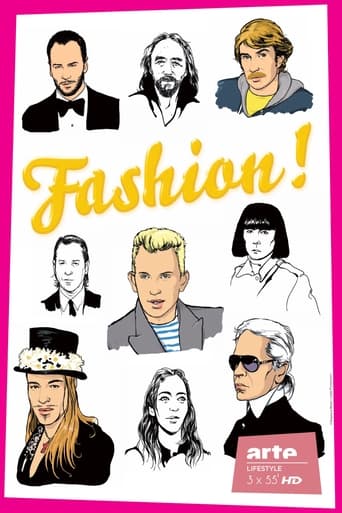
7.03 decades told via the careers of emblematic designers, combining major historical events with minor happenings, anecdotes with fate and fortune, and pop nuggets with collective drama. The collection looks back over 3 decades of fashion (from 1980 to date), from the carefree emergence of the star-designer of the 1980s, to the arrival on the market of the major luxury groups and the toughening-up of the system.
Fashion !
2012
 NR
NRNo synopsis available yet.
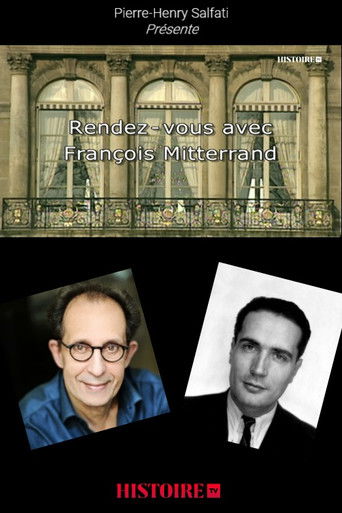
Rendez-vous avec François Mitterrand
2005
 7.0
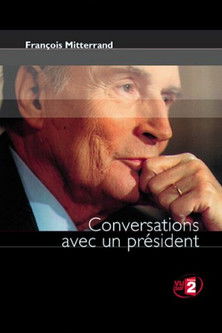
7.0At the end of his presidency, Francois Mitterrand is interviewed by Jean-Pierre Elkabbach to reflect on his legacy
François Mitterrand : Conversations avec un Président
2001