
Directing
Mike Dibb
Known for
Directing
Credits
33 titles
Mike Dibb (born Wharfedale, Bradford, West Yorkshire, 29 April 1940) is an English documentary filmmaker. In almost half a century of making films mainly for television – on subjects including cinema, literature, art, jazz, sport and popular culture – "he has defined and re-defined not only the televisual art documentary genre but has been able to make moving image pieces as a form of self portraiture". Dibb has made many acclaimed films, including on Federico García Lorca, C. L. R. James, Astor Piazzolla, Miles Davis, Keith Jarrett, Barbara Thompson and other notable subjects. In the words of Sukhdev Sandhu in The Guardian: "In a career spanning almost five decades, it's possible Dibb has …
Known for
Bette Davis talks with Joan Bakewell and members of the audience at the National Film Theatre, London.
Bette Davis
1972
 NR
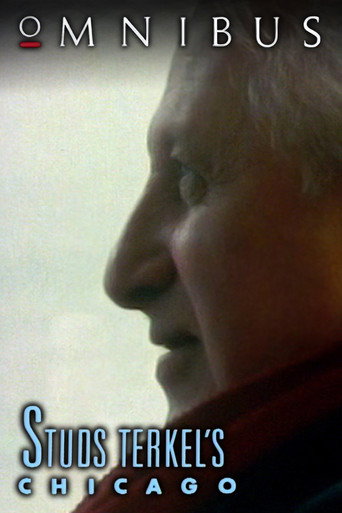
This documentary features acclaimed Chicagoan broadcaster and Pulitzer Prize winner Studs Terkel talking about the value of oral history and the voice of ordinary working Americans.
Studs Terkel's Chicago
1985
 NR
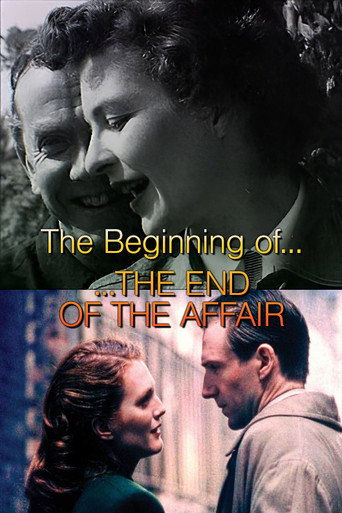
Oliver Walston investigates his mother Catherine's 20-year relationship with the writer Graham Greene, which gave rise to Greene's famous novel The End of the Affair, twice adapted as a feature film. The documentary follows the second film during its production, where screenwriter/director Neil Jordan and stars Ralph Fiennes and Julianne Moore offer their personal perspectives on the novel's continuing resonance.
The Beginning of the End of the Affair
2000
 3.8
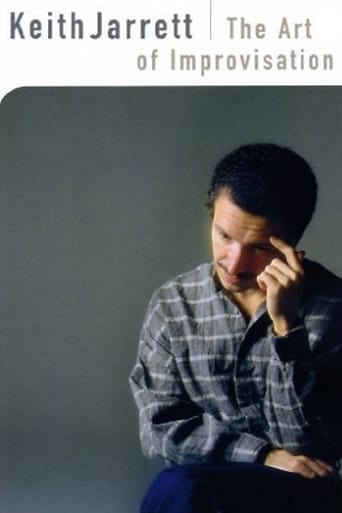
A documentary portrait of one of the world's superstars of Jazz, pianist Keith Jarrett, exploring his life and work.
Keith Jarrett: The Art of Improvisation
2004
 NR
Talking with Michael Parkinson and members of the audience at the National Film Theatre, London. An informal discussion illustrated with extracts from some of his most famous films: Champion (1949), Ace in the Hole (1951), Paths of Glory (1958), Lonely are the Brave (1962), In Harm's Way (1965), The Arrangement (1970).
Kirk Douglas
1972
Recording of the actor in conversation with Joan Bakewell at the National Film Theatre, London.
Paul Newman
1973
Film credits

Behind the camera
Bette Davis talks with Joan Bakewell and members of the audience at the National Film Theatre, London.
Bette Davis
1972
NRThis documentary features acclaimed Chicagoan broadcaster and Pulitzer Prize winner Studs Terkel talking about the value of oral history and the voice of ordinary working Americans.
Studs Terkel's Chicago
1985
NRThis documentary features acclaimed Chicagoan broadcaster and Pulitzer Prize winner Studs Terkel talking about the value of oral history and the voice of ordinary working Americans.
Studs Terkel's Chicago
1985
NROliver Walston investigates his mother Catherine's 20-year relationship with the writer Graham Greene, which gave rise to Greene's famous novel The End of the Affair, twice adapted as a feature film. The documentary follows the second film during its production, where screenwriter/director Neil Jordan and stars Ralph Fiennes and Julianne Moore offer their personal perspectives on the novel's continuing resonance.
The Beginning of the End of the Affair
2000
3.8A documentary portrait of one of the world's superstars of Jazz, pianist Keith Jarrett, exploring his life and work.
Keith Jarrett: The Art of Improvisation
2004
3.8A documentary portrait of one of the world's superstars of Jazz, pianist Keith Jarrett, exploring his life and work.
Keith Jarrett: The Art of Improvisation
2004
NRTalking with Michael Parkinson and members of the audience at the National Film Theatre, London. An informal discussion illustrated with extracts from some of his most famous films: Champion (1949), Ace in the Hole (1951), Paths of Glory (1958), Lonely are the Brave (1962), In Harm's Way (1965), The Arrangement (1970).
Kirk Douglas
1972
Recording of the actor in conversation with Joan Bakewell at the National Film Theatre, London.
Paul Newman
1973
 8.3
Appalachian Journey is one of five films made from footage that Alan Lomax shot between 1978 and 1985 for the PBS American Patchwork series (1991). It offers songs, dances, stories, and religious rituals of the Southern Appalachians. Preachers, singers, fiddlers, banjo pickers, moonshiners, cloggers, and square dancers recount the good times and the hard times of rural life there. Performers include Tommy Jarrell, Janette Carter, Ray and Stanley Hicks, Frank Proffitt Jr., Sheila Kay Adams, Nimrod Workman and Phyllis Boyens, Raymond Fairchild, and others, with a bonus of a few African-Americans from the North Carolina Piedmont.
Appalachian Journey
1991
 5.5
Film Essay based on “And Our Faces, My Heart, Brief As Photos” by John Berger.
About Time
1985
Actor Rex Harrison talks entertainingly about his long stage and screen career with David Lewin and members of the audience of the National Film Theatre.
Rex Harrison at the N.F.T.
—
 NR
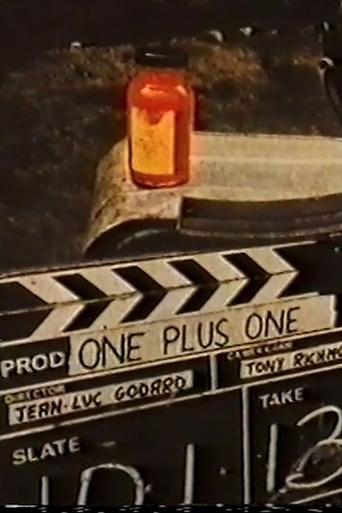
A short film Mike Dibb directed for the BBC in July 1968 in Cowdray Park, where Godard was shooting a sequence with the Rolling Stones for ONE PLUS ONE. It was broadcast on BBC2 within the framework of the arts magazine RELEASE on the 30 November 1968 to coincide with the screening (which has become famous…) of ONE PLUS ONE at the London Film Festival.
The Making of Jean Luc Godard's 'One Plus One'
—
 7.2
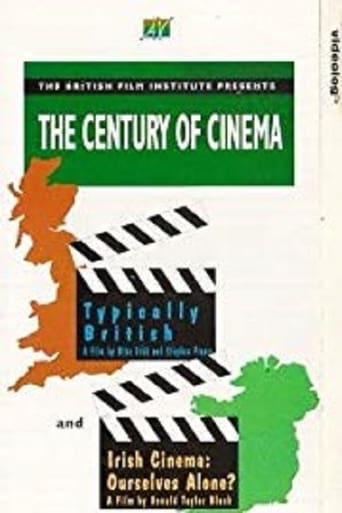
Stephen Frears and a quartet of film industry notables - representing different cinematic periods - drink tea and discuss ups and downs of British cinema.
Typically British: A Personal History of British Cinema
1995
 NR
Short film, going behind-the-scenes of shooting for One Plus One (1968) in London, featuring an interview with Godard sitting beside a tree. Many crew members from this shoot were then borrowed by him, playing the press in the film's Eve Democracy sequence. Originally broadcast on the BBC programme 'Release' (30th Nov. '68).
One to One: Jean-Luc Godard Speaks
1968
 7.0
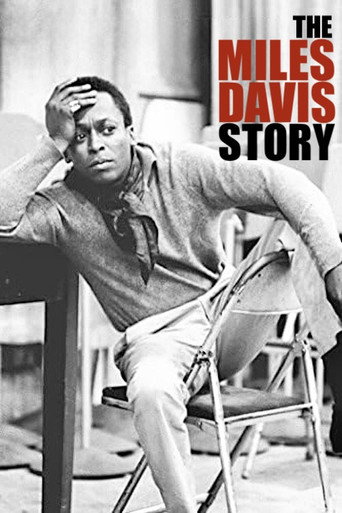
This British documentary shows the complex layers of legendary jazz trumpeter Miles Davis, who was a major innovator in post-bop, cool jazz, hard-bop and fusion. Davis's raw-edged trumpet tones were some of the most evocative sounds ever heard. This profile captues the magnificent and mercurial artist -- one of the most identifiable and misunderstood pop icons of the 20th century -- through rare footage and interviews.
The Miles Davis Story
2001
 NR
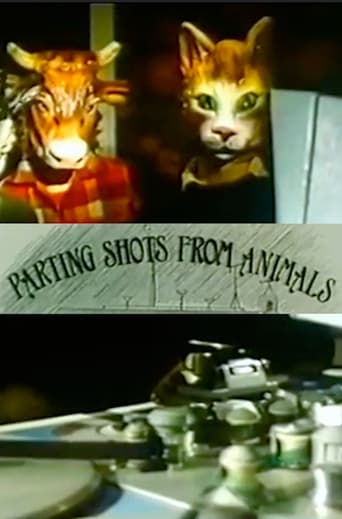
“Parting Shots from Animals” was inspired by essays by John Berger and developed in collaboration with Chris Rawlence. Shot entirely in the UK, it consists of a diverse series of arresting ‘films within a film’, each presented as if made about us from the perspective of the animals whose lives we may appear to celebrate, but continue to exploit and to destroy. While John Berger doesn’t appear in the film and wasn’t directly involved in it’s making, he narrates to great effect the text he co-wrote to accompany the film’s provocative opening sequence.
Parting Shots from Animals
1980
 NR
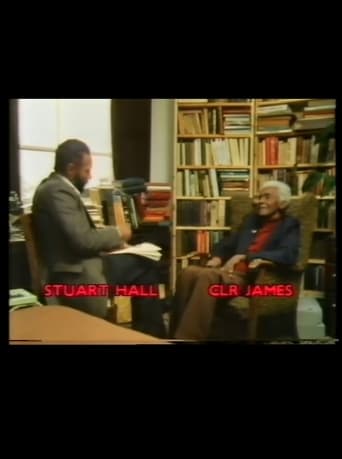
Cyril Lionel Robert James (1901-1989) was a historian, journalist and contributor to Marxist thought. Stuart Hall was able to interview him for Channel 4 in the UK . The interview discusses his thoughts on revolution, socialism, and politics. His involvement in activism lasted decades. Born in Trinidad, much of his life was spent in the UK. C.R.L James became a teacher and notably taught Eric Williams. Williams went on to lead Trinidad and Tabago to independence. C.L.R. James also wrote fiction and about cricket. During his youth he did play the sport and wrote Beyond a Boundary (1963) describing cricket’s cultural significance. One of his favorite novels was Vanity Fair. This novel followed the lives of Becky Sharp and Amelia Sedley during the Napoleonic Wars. James was a figure in the Pan-African movement and the anti-colonial freedom struggle. What tends to be ignored is his concern about class exploitation.
CLR James Talking to Stuart Hall
1984
 NR
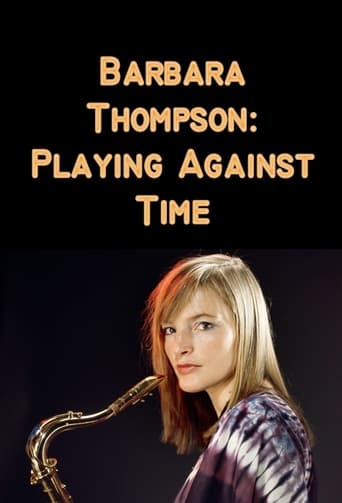
For over forty years, virtuoso saxophonist/composer Barbara Thompson has been Britain's most brilliant and best-known female jazz musician. But in 1997, the same year that she received an MBE for her services to music, disaster struck. Barbara was diagnosed with Parkinson's disease. This is the story of Barbara's inspiring and creative struggle with this disease, whose physical effects are particularly cruel, and visible, in the life of an improvising jazz musician.
Barbara Thompson: Playing Against Time
2012
NRFor over forty years, virtuoso saxophonist/composer Barbara Thompson has been Britain's most brilliant and best-known female jazz musician. But in 1997, the same year that she received an MBE for her services to music, disaster struck. Barbara was diagnosed with Parkinson's disease. This is the story of Barbara's inspiring and creative struggle with this disease, whose physical effects are particularly cruel, and visible, in the life of an improvising jazz musician.
Barbara Thompson: Playing Against Time
2012
 NR
The rarely-seen 1994 BBC TV documentary on the legacy and influence of John Berger, featuring interviews with Alain Tanner, Geoff Dyer, Jean Mohr, Ernst Neizvestny and many more.
A Telling Eye: The Work of John Berger
1994
 NR
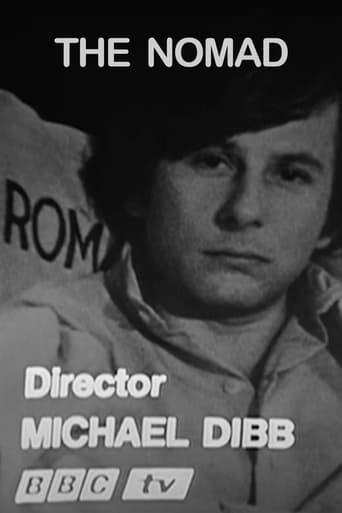
An interview with film director Roman Polanski, recorded for BBC TV in 1967.
The Nomad
1967
 7.0
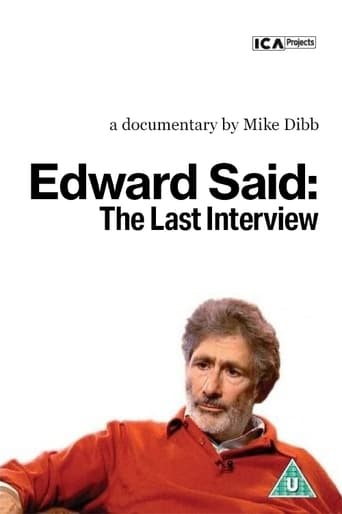
Edward Said, Professor of English & Comparative Literature at Columbia University, was a prominent literary critic of the late 20th century and a leading spokesperson for the Palestinian cause in the US. Born to a Palestinian family in Al-Quds (Jerusalem) in 1935, he and his family were dispossessed in 1948 and settled in Cairo. Educated in the US, he lived in New York for many years. Said was a member of the Palestine National Council. After resigning from the PNC in 1991, Said wrote critically about the post-Oslo peace process, the political failures of Yasser Arafat and the PLO. Said was diagnosed with leukemia in 1991 and struggled with the disease while continuing to write and teach. He stopped giving interviews but made an exception less than a year before his death in 2003, speaking about his illness, work, Palestine, politics, life, and education. The last interview is the final testament of this passionately committed intellectual.
Edward Said: The Last Interview
2004
 NR
A film based on Beyond a Boundary, the classic book by C. L. R. James,
Beyond a Boundary
1976
NRA film based on Beyond a Boundary, the classic book by C. L. R. James,
Beyond a Boundary
1976
 NR
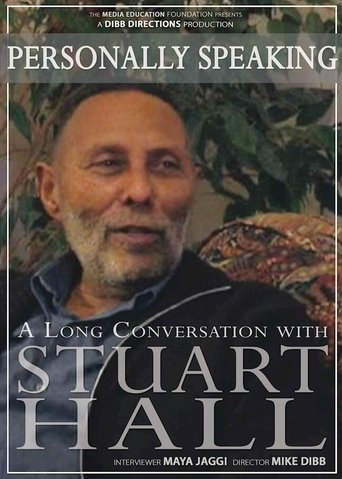
In this stimulating and eloquent four-hour interview, conducted by the literary journalist Maya Jaggi and directed by Mike Dibb, Hall reflects on his life and career, talking personally and in depth about the trajectory of his work and how it has intersected with broader political movements. In a conversation both intimate and sweeping in scope, Hall describes his migration from Jamaica to England, his immersion in left-wing politics in London, the influence of Raymond Williams and E.P. Thompson on the evolution of his thought, and the context within which the early classic texts of cultural studies were written. Hall also shares his pessimism about the economic recession and his optimism about Barack Obama's victory. Future analysis of Hall's work, and of cultural studies in general, will need to take account of this fascinating and indispensable first-person account of his life and ideas.
Personally Speaking: A Long Conversation with Stuart Hall
2009
 NR
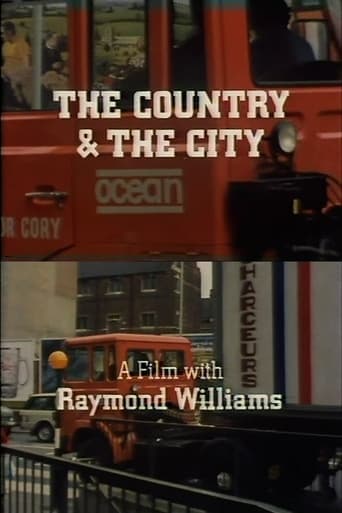
A translation to film of Raymond Williams’ 1973 book of the same title which traces images of ‘nature’ and ‘town’ through 200 years of English literature.
The Country and the City
1979
NRA translation to film of Raymond Williams’ 1973 book of the same title which traces images of ‘nature’ and ‘town’ through 200 years of English literature.
The Country and the City
1979
 NR
“Pig Earth” marked John Berger’s first return to television after “Ways of Seeing”. The film, boldly using mostly still photographs, is based on John’s book of the same name, which was both a work of fiction as well as a history of French Peasant experience, as told by John ‘the story teller’, as if in the peasant’s own voices. All of which was given brilliant visual expression in the film through a series of beautifully edited sequences, each constructed from vivid and moving photographs of peasants and their lives, in black and white and colour, by John’s friend and long-time collaborator, the Swiss photographer Jean Mohr.
Pig Earth
1979
NR“Pig Earth” marked John Berger’s first return to television after “Ways of Seeing”. The film, boldly using mostly still photographs, is based on John’s book of the same name, which was both a work of fiction as well as a history of French Peasant experience, as told by John ‘the story teller’, as if in the peasant’s own voices. All of which was given brilliant visual expression in the film through a series of beautifully edited sequences, each constructed from vivid and moving photographs of peasants and their lives, in black and white and colour, by John’s friend and long-time collaborator, the Swiss photographer Jean Mohr.
Pig Earth
1979
 NR
In a brief life filled with prodigious artistic achievements, Federico García Lorca’s greatest legacy may well be his complex and compelling personality. Filmed on location in Spain, this BBC Arena documentary profiles the immortalized poet/dramatist, capturing the potent essence of Spanish culture in the process. Extracts from his poems, plays, and letters demonstrate his duende—burning passion—for the arts, while the details of his life and violent death, as told by his biographer Ian Gibson, contemporaries Rafael Alberti and Luis Rosales, and others, present a thoughtful perspective on Spain’s revered literary icon.
The Spirit of Lorca
1986
 NR
The first novel ever written, Cervantes’ Don Quixote, lives on in a thousand adaptations, in film, opera, art and even computer games. This film examines how the chivalrous knight and his sidekick have become enduring cultural icons around the world.
The Further Adventures of Don Quixote
1995