
Directing
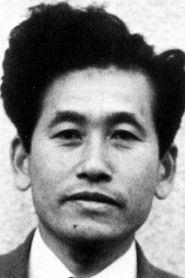
Hiromichi Horikawa
Born — Died
1916-12-28 — 2012-09-05
Place of birth
Kyoto Prefecture, Japan
Known for
Directing
Credits
33 titles
Hiromichi Horikawa (28 November 1916 – 5 September 2012) was a Japanese director and assistant director. Akira Kurosawa’s assistant on numerous films including Ikiru (1952) and Seven Samurai (1954), Horikawa never achieved his mentor’s fame. Kurosawa himself scripted his directorial debut, Tomorrow I’ll Be a Fire-Tree (1955), about an adolescent and the first three women in his life. A concern with youthful experience was also visible in Horikawa’s second and third films, Summer in Eclipse (1956), a taiyōzoku (“sun tribe”) film based on a Shintarō Ishihara novel, and Last Days of the Samurai (1957), a reworking of the Chūshingura story that focused particularly on the youngest of the partic…
Known for
 7.0
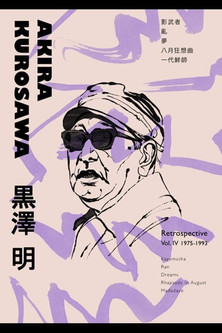
7.0Documentary on film maker Akira Kurosawa
Kurosawa
2000
 7.5
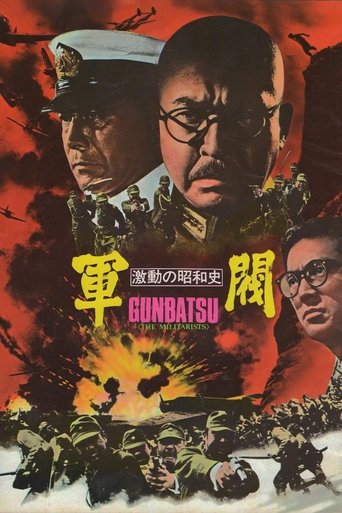
7.5The second film in Toho's series on the military history of the Showa era, Hiromichi Horikawa's war drama offers a look at the career of controversial politician Hideki Tojo and the strained relationships between Japan's government, military, and the media.
The Militarists
1970
 8.0
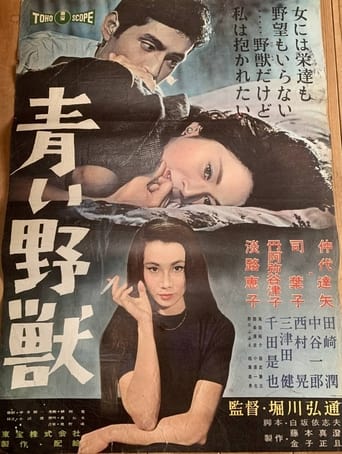
8.0The ruthless and ambitious Yasuhiko uses his charm to manipulate and exploit those around him to climb the corporate social ladder. His cold-blooded ascent eventually leads to moral decay as his past actions begin to catch up with him.
The Blue Beast
1960
 7.7
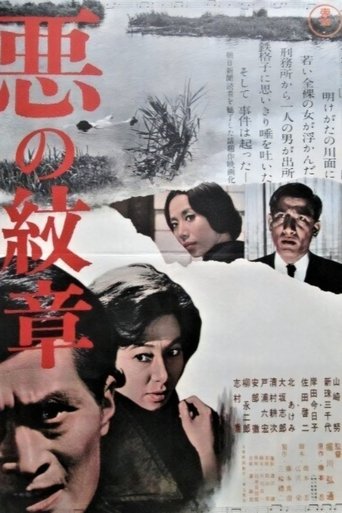
7.7A Jonan Station detective, Kikuchi, is framed for smuggling drugs and sent to prison. When he is paroled, he joins a private detective agency, where he is asked to investigate Mitsue Takazawa, the wife of a local trading firm president. While secretly conducting his own research, he finds out that Takazawa's husband is the one, responsible for Kikuchi's imprisonment, who also have set sights on Setsuko, a woman Kikuchi becomes romantically involved with.
Brand of Evil
1964
 8.0
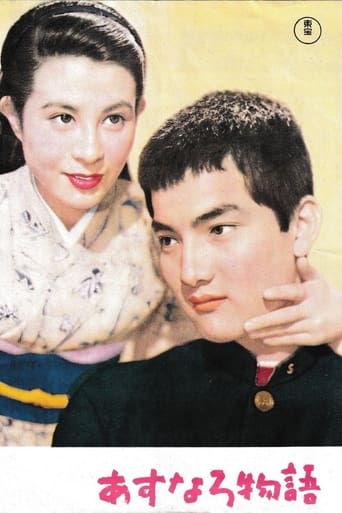
8.0No synopsis available yet.
Tomorrow I'll Be a Fire-Tree
1955
 7.5
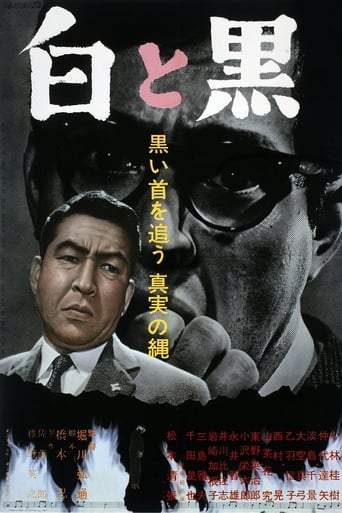
7.5A seasoned prosecutor uncovers the perfect crime committed by a young lawyer.
Pressure of Guilt
1963
Film credits
2000s · 1 titles
Behind the camera
7.5The second film in Toho's series on the military history of the Showa era, Hiromichi Horikawa's war drama offers a look at the career of controversial politician Hideki Tojo and the strained relationships between Japan's government, military, and the media.
The Militarists
1970
8.0The ruthless and ambitious Yasuhiko uses his charm to manipulate and exploit those around him to climb the corporate social ladder. His cold-blooded ascent eventually leads to moral decay as his past actions begin to catch up with him.
The Blue Beast
1960
7.7A Jonan Station detective, Kikuchi, is framed for smuggling drugs and sent to prison. When he is paroled, he joins a private detective agency, where he is asked to investigate Mitsue Takazawa, the wife of a local trading firm president. While secretly conducting his own research, he finds out that Takazawa's husband is the one, responsible for Kikuchi's imprisonment, who also have set sights on Setsuko, a woman Kikuchi becomes romantically involved with.
Brand of Evil
1964
7.7A Jonan Station detective, Kikuchi, is framed for smuggling drugs and sent to prison. When he is paroled, he joins a private detective agency, where he is asked to investigate Mitsue Takazawa, the wife of a local trading firm president. While secretly conducting his own research, he finds out that Takazawa's husband is the one, responsible for Kikuchi's imprisonment, who also have set sights on Setsuko, a woman Kikuchi becomes romantically involved with.
Brand of Evil
1964
8.0No synopsis available yet.
Tomorrow I'll Be a Fire-Tree
1955
7.5A seasoned prosecutor uncovers the perfect crime committed by a young lawyer.
Pressure of Guilt
1963
 5.4
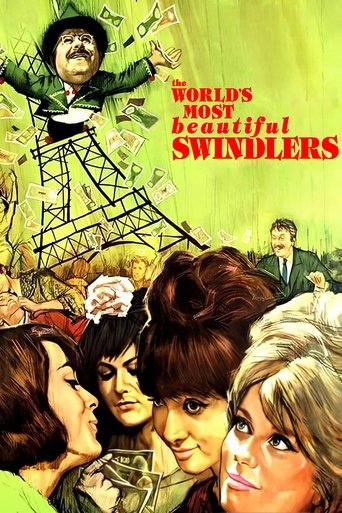
5.4Five swindle stories, taking place in five international cities: Tokyo, Japan ("Fumiko's Five Benefactors" by Hiromichi Horikawa); Amsterdam, The Netherlands ("A River of Diamonds" by Roman Polanski); Naples, Italy ("The Road Map" by Ugo Gregoretti); Paris, France ("The Man Who Sold the Eiffel Tower" by Claude Chabrol); and Marrakesh, Morocco ("The Confidence Man" by Jean-Luc Godard). Godard's segment was not included in the original French cinema release, and Polanski's segment was not included on the 2016 home disc release.
The World's Most Beautiful Swindlers
1964
 7.5
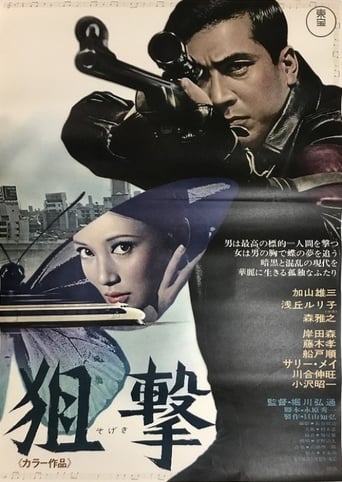
7.5Suspense drama about an assassin charged with breaking up a gold smuggling ring, and the contract subsequently purchased against him and his employer.
Sun Above, Death Below
1968
 8.0
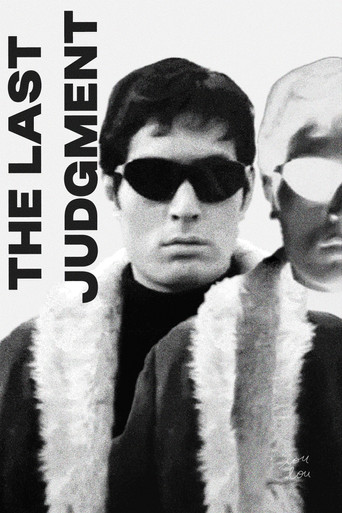
8.0Driven by greed and a desire for his cousin's wife, Jiro orchestrates a complex frame-up to have his cousin arrested for murder.
The Last Judgment
1965
 5.0
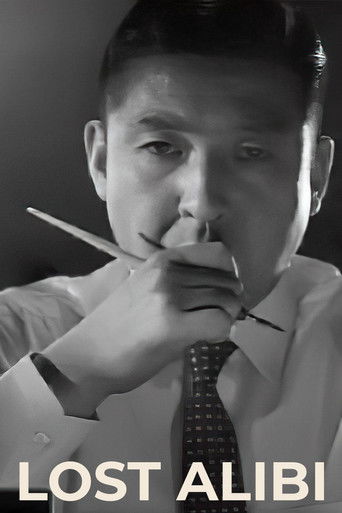
5.0Suspense drama about a married salaryman whose affair with one of his co-workers is compromised when, returning from a clandestine meeting with his lover, he runs into a neighbor who is later accused of murder. Questioned by police about the neighbor, and blackmailed by his lover's neighbor, the salaryman's lies lead him on a path to destruction.
The Lost Alibi
1960
 7.0
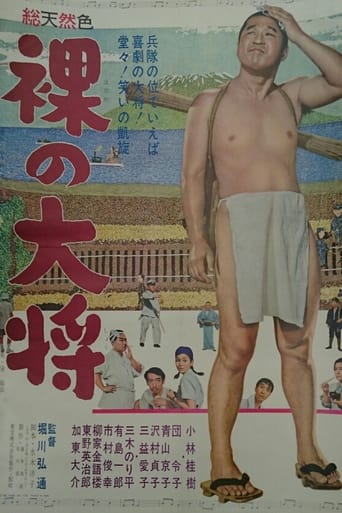
7.0A film about the life of Kiyoshi Yamashita, a Japanese painter with disabilities.
The Naked General
1958
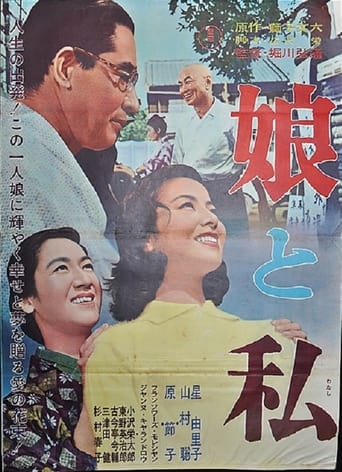 10.0
10.0No synopsis available yet.
Musume to watashi
1962
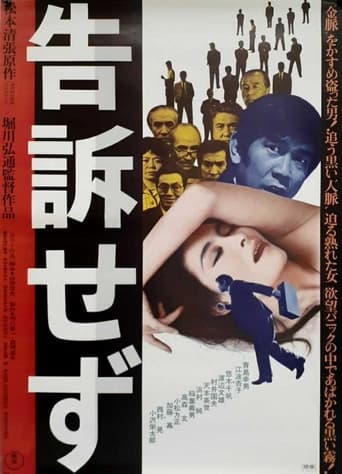 10.0
10.0Based on the novel of the same name by Seichô Matsumoto.
Without Complaint
1975
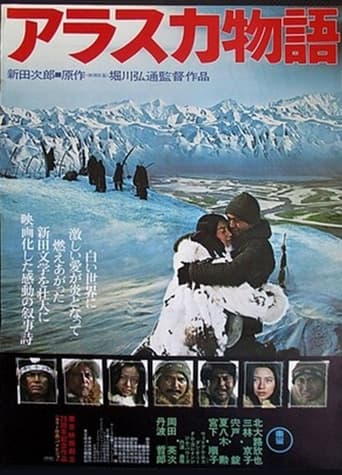 8.0
8.0A Japanese sailor finds a colony of Eskimos in the Arctic and decides to stay with them. He comes off at a certain moment to look for his luck in the gold rush in Alaska. But he does not forget them.
The Alaska Story
1977
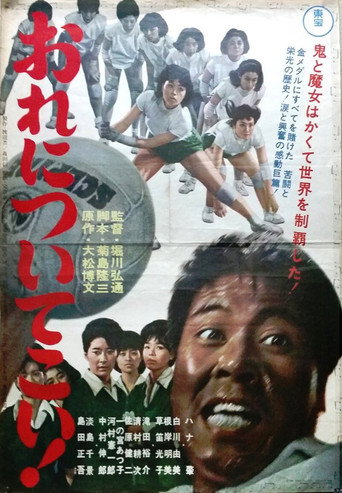 NR
NRNo synopsis available yet.
You Can If You Try
1965
 8.0
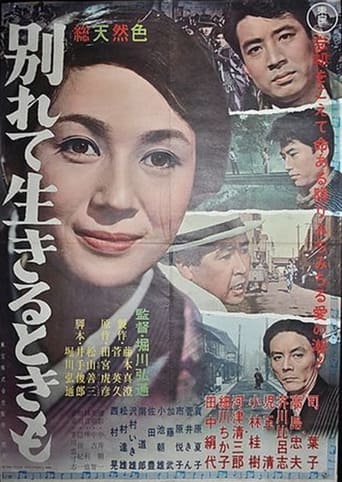
8.0A Hiromichi Horikawa movie
Eternity of Love
1961
8.0A Hiromichi Horikawa movie
Eternity of Love
1961
 7.0
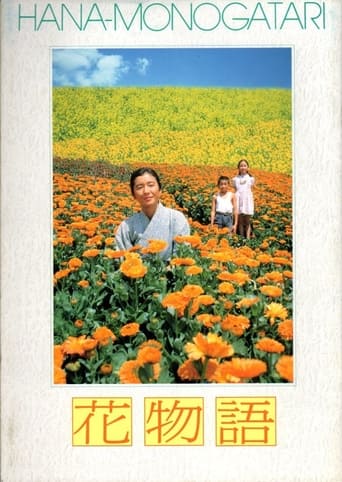
7.0Japanese Drama film about the female experience during the war years.
War and Flowers
1989
 NR
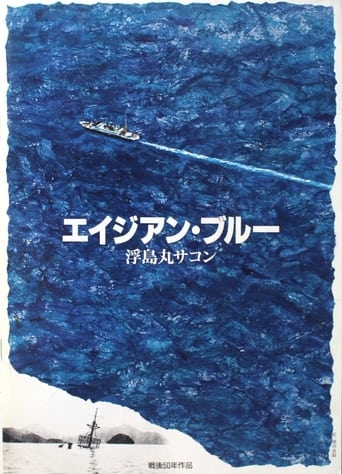
NRAsian Blue focuses on Koreans brought to Japan to work in forced-labor brigades during World War II
Asian Blue: Ukishima-maru Incident
1995
Tragedy about a terminally ill girl.
Have Wings on Your Heart
1978
Tragedy about a terminally ill girl.
Have Wings on Your Heart
1978
 NR
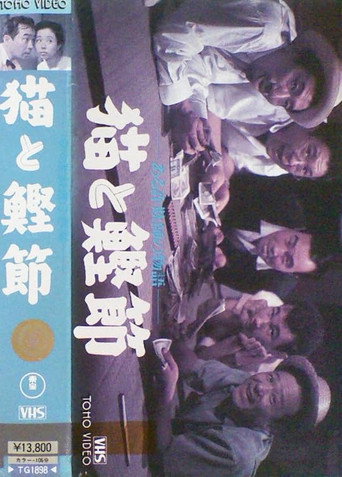
NRBased on the story "Tokyo Station" by Tsunehiko Sagawa.
A Cat and Dried Bonito Flakes: The Story of a Swindler
1961
 NR
NRDrama of a disillusioned youth, with writer-actor Ishihara starring as the young man at odds with his bickering parents and scheming brother, while finding little happiness when he begins a liaison with an older woman.
Summer in Eclipse
1956
 9.0
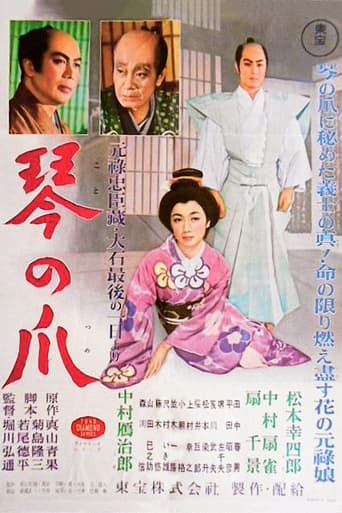
9.0Seppuku Day 17 Ako ronins, including Kuranosuke Oishi, who were entrusted to the Hosokawa family, and the events of the two days before are depicted as a tragic romance between one of the ronins, Jurozaemon Isogai, and Omino. An adaptation of Seika Mayama play "Genroku Chusingura, the Last Day of Oishi", which tells about the torments of life and death of samurai living in feudal times.
Last Days of the Samurai
1957
 5.5
5.5A greedy Japanese barmaid serves her aged escort too many noodles.
Fumiko's Five Benefactors
1964
 NR
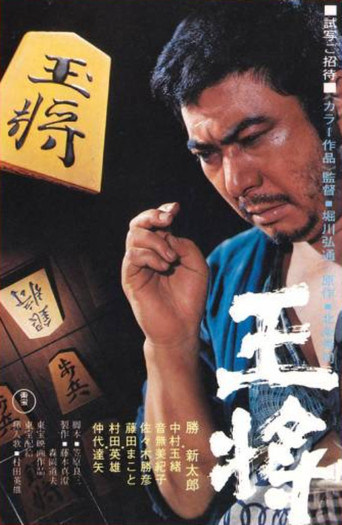
NRSakata Sankichi, an amateur shogi player living in the slums of Osaka, is so obsessed with the board game that he spends all of his family's money to keep playing in the hope of defeating star player Sekine.
The King
1973
 7.0
7.0Ex-jazz pianist turned promoter finds he is successful, but empty. When an entrepreneur sends him to Moscow with a jazz combo, he falls in with the dissident youth of the city, and again finds life empty.
Good-bye Moscow
1968
 7.0
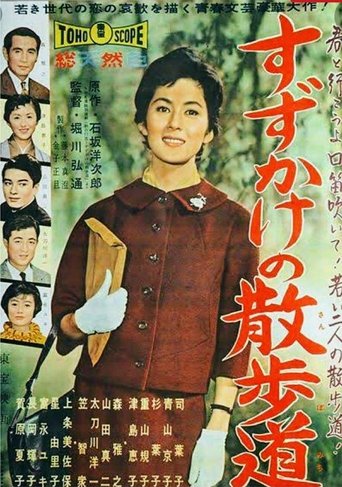
7.0Romantic drama about three beautiful sisters, based on the acclaimed play.
The Path Under the Platanes
1959
 7.0
7.0A privileged son betrays his family for the favors of a geisha in 18th century Osaka.
The Oil-Hell Murder
1957
 NR
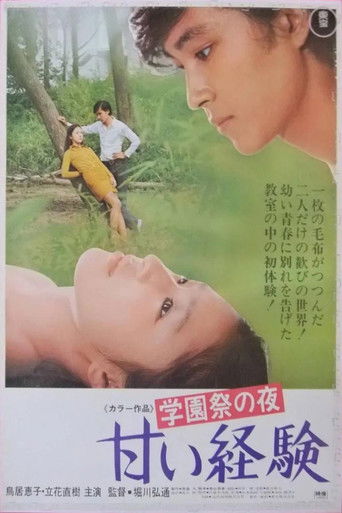
NRA teenage drama film about Makiko Hayashi, a top student who is aiming to get into University of Tokyo, together with a group of other students. She befriends one of the school's misfits, Yoshiyuki Mizuno, which starts to change her life. The film follows the way Makiko Hayashi's life changes throughout the time, from a model student with high ambitions, to someone who is uncertain enough about her future, that she feels the only way out is to start anew.
School Festival Night: A Sweet Experience
1970
A Japanese adaption of the story of the Prodigal Son.
The Prodigal Son
1964
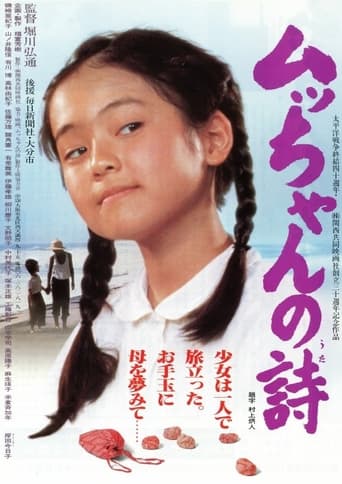 NR
NRNo synopsis available yet.
Mutchan
1985