

Directing
Andrey Torstensen
Born — Died
1936-07-06 — 2021-10-11
Known for
Directing
Credits
9 titles
Known for
 NR
The evil spirit Caliban tries to oppose the world of Good that Prospero creates around him. The dual image of Prospero-Ariel represents two human souls, striving to unite people divided by hatred... This is a version of the play directed by Anatoly Efros in 1983 as part of the December Evenings at the A.S. Pushkin State Museum of Fine Arts. It was specially revived for a television recording in 1988 to mark the anniversary of Efros’s death.
The Tempest
1988
 NR
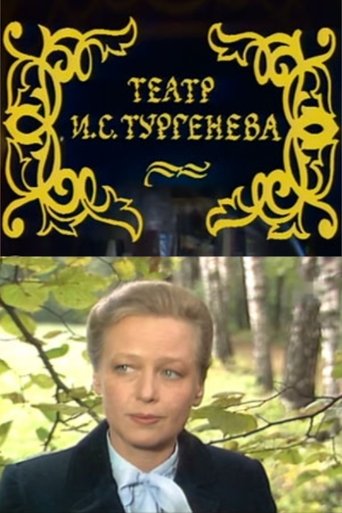
On the uniqueness and significance of I.S. Turgenev's theater, and the connection between his dramaturgy and prose.
The Theater of I.S. Turgenev
1986
 NR
The film is dedicated to the heroines of Ostrovsky’s plays—wives, cooks, actresses, matchmakers. For the most part, these are composite characters, but many of them have real-life prototypes. The author was a keen observer and recorded everything interesting in his diary. This is how the gallery of images from his native Zamoskvorechye, where Ostrovsky was born, came into being. Later, after traveling along the Volga, portraits of residents from small towns along the river were added. Alexander Nikolaevich never overlooked the details. When the playwright described daily life, the details of clothing, or the manner of speaking of a character, the hero would literally come to life.
Heroines of Ostrovsky's Plays
1983
 NR
The telefilm is dedicated to one of the greatest conductors of the 20th century, Yevgeny Fyodorovich Svetlanov.
Yevgeny Svetlanov. A Memory...
2008
 NR
Memoirs of F.M. Dostoevsky about N.A. Nekrasov, performed by the actor Alexander Filippenko.
It Was a Wounded Heart... Nekrasov and Dostoevsky
1988
 NR
The film is based on the memoirs of Klavdiya Shulzhenko and her songs: "The Blue Scarf", "Three Waltzes", "Silence", "Hands", "The Note". The film features archival footage, as well as scenes shot in Kharkiv and Paris.
Three Waltzes
2006
Film credits
Behind the camera
NRThe evil spirit Caliban tries to oppose the world of Good that Prospero creates around him. The dual image of Prospero-Ariel represents two human souls, striving to unite people divided by hatred... This is a version of the play directed by Anatoly Efros in 1983 as part of the December Evenings at the A.S. Pushkin State Museum of Fine Arts. It was specially revived for a television recording in 1988 to mark the anniversary of Efros’s death.
The Tempest
1988
NROn the uniqueness and significance of I.S. Turgenev's theater, and the connection between his dramaturgy and prose.
The Theater of I.S. Turgenev
1986
NRThe film is dedicated to the heroines of Ostrovsky’s plays—wives, cooks, actresses, matchmakers. For the most part, these are composite characters, but many of them have real-life prototypes. The author was a keen observer and recorded everything interesting in his diary. This is how the gallery of images from his native Zamoskvorechye, where Ostrovsky was born, came into being. Later, after traveling along the Volga, portraits of residents from small towns along the river were added. Alexander Nikolaevich never overlooked the details. When the playwright described daily life, the details of clothing, or the manner of speaking of a character, the hero would literally come to life.
Heroines of Ostrovsky's Plays
1983
NRThe telefilm is dedicated to one of the greatest conductors of the 20th century, Yevgeny Fyodorovich Svetlanov.
Yevgeny Svetlanov. A Memory...
2008
NRMemoirs of F.M. Dostoevsky about N.A. Nekrasov, performed by the actor Alexander Filippenko.
It Was a Wounded Heart... Nekrasov and Dostoevsky
1988
NRMemoirs of F.M. Dostoevsky about N.A. Nekrasov, performed by the actor Alexander Filippenko.
It Was a Wounded Heart... Nekrasov and Dostoevsky
1988
NRThe film is based on the memoirs of Klavdiya Shulzhenko and her songs: "The Blue Scarf", "Three Waltzes", "Silence", "Hands", "The Note". The film features archival footage, as well as scenes shot in Kharkiv and Paris.
Three Waltzes
2006
 NR
Gubaidulina is one of the most prominent and profound composers of the second half of the 20th century. According to many, she is the most outstanding female composer of our time. Her work reflects a desire to organically unite the qualities of Western and Eastern art, influenced by spiritual and religious concepts. Through faith, she also finds meaning in her creative work. Along with Alfred Schnittke and Edison Denisov, Gubaidulina is part of the so-called "trio" of Moscow composers associated with the avant-garde movement.
A Garden of Joy in a World of Sorrow
2011